
Research article · 2025 · Full text
International Journal of Veterinary Sciences and Animal HusbandryOvercoming idiopathic cystitis: A cat’s success to recovery
Volume 10(1) · Pages 144–146 · DOI: 10.22271/veterinary.2025.v10.i1c.2010 ↗
Research areasVeterinary Medicine and SurgeryUrinary Bladder and Prostate ResearchPediatric Urology and Nephrology Studies
Abstract
Author-writtenFeline Idiopathic Cystitis (FIC) is a common condition in small animal practice, presenting with signs such as frequent, painful and strained urination, with bloody urine which can significantly impair the affected cat's quality of life. Appropriate diagnosis and management are vital to ensure successful outcomes. A three year old domestic short haired cat was presented with signs of dyspnoea, frequent episodes of dribbling of urine and open mouth breathing since morning. On clinical examination, the animal was comatosed with the tongue being cyanotic. The cat was supplemented with oxygen. Abdominal ultrasonography revealed an enlarged urinary bladder with anechoic fluid. Blood samples were analysed which revealed an increase in creatinine and phosphorus levels. A tom cat catheter was fixed and around 200 ml of reddish urine was removed. Urinalysis revealed the presence of RBCs. Injection Ringers lactate was administered to correct the dehydration and electrolyte imbalances. On Day 5 the catheter was removed and the animal started urinating normally. Pain management was advised throughout the course of treatment with Butorphanol at the rate of 0.2 mg/kg TID PO. Manage mental practices were advised accordingly. The cat had an uneventful recovery. The case will be discussed in detail.
Summary
Source-checkedPlain-language reading of the full paper, prepared with AI and checked against the text. Each point links to the authors' own words.
Why it matters
- Feline Idiopathic Cystitis (FIC) is a frequent condition in small animal veterinary practice that causes painful urination and bloody urine, reducing a cat's quality of life. View evidence ↗
- FIC is the most common urinary emergency in cats, typically affecting those between 2 and 7 years of age. View evidence ↗
- The cause of FIC is not fully understood but is believed to involve a complex mix of factors, including infection and stress. View evidence ↗
The question
- The study aims to demonstrate how appropriate diagnosis and management can lead to a successful outcome in a cat with FIC. View evidence ↗
What they did
- The subject was a 4 kg, three-year-old male domestic short-haired cat presenting with anorexia, dyspnoea, open-mouth breathing, and urine dribbling. View evidence ↗
- Diagnosis involved a left lateral abdominal radiograph and abdominal ultrasonography, both of which showed a severely enlarged urinary bladder. View evidence ↗
- A 3.5FG tom cat catheter was used to remove approximately 200 ml of dark reddish urine. View evidence ↗
- To treat dehydration and electrolyte imbalances, the cat received intravenous Ringer's Lactate at an initial dose of 45 ml/kg. View evidence ↗
- Initial medical treatment included intravenous Amoxicillin-Cloxacillin (12.5 mg/kg) for potential infection and Butorphanol (0.2 mg/kg) for pain. View evidence ↗
What they found
- Initial blood tests showed elevated levels of Blood Urea Nitrogen (96.13 mg/dL), Creatinine (13.89 mg/dL), and potassium (6.5 mg/dL). View evidence ↗
- Urinalysis showed a specific gravity of 1.025, acidic pH, and proteins; microscopy confirmed red blood cells but no crystals. View evidence ↗
- The cat recovered its normal appetite and water intake, allowing for the removal of the urinary catheter. View evidence ↗
- The cat achieved a full and uneventful recovery following the combined medical and environmental management. View evidence ↗
What it means
- The authors conclude that early presentation and accurate diagnosis are essential for veterinarians to create effective treatment plans for FIC. View evidence ↗
- The authors emphasize that managing pain, the environment, and diet is critical for the long-term care of cats with FIC. View evidence ↗
Visual summary
1 visualsIllustrations explain the paper; they do not show study data.
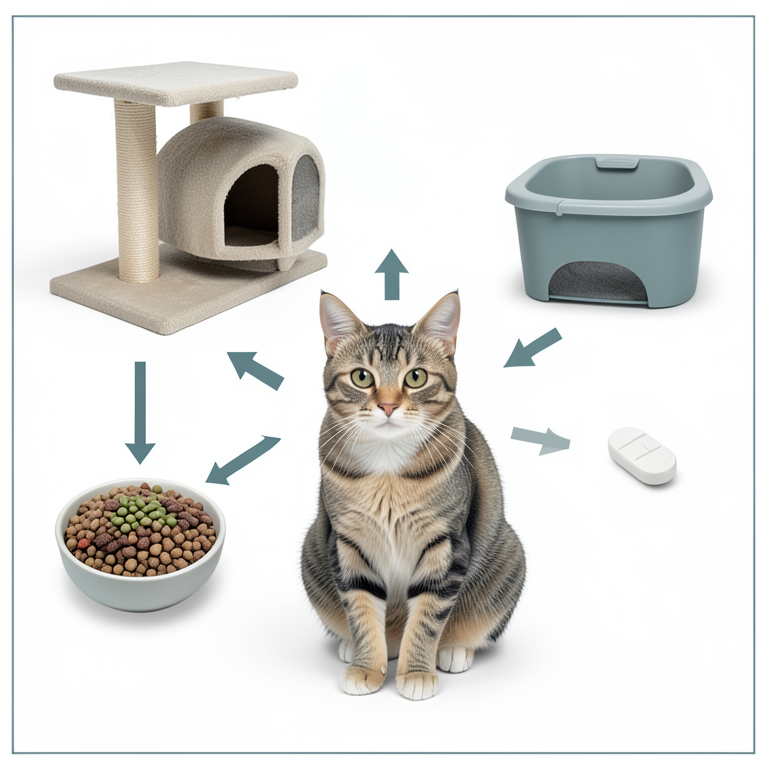
Holistic Management of FIC
AI-generated conceptual illustration (domestic cat). It explains the idea and does not show study data.
View source evidence ↗Figures & tables
From the original paper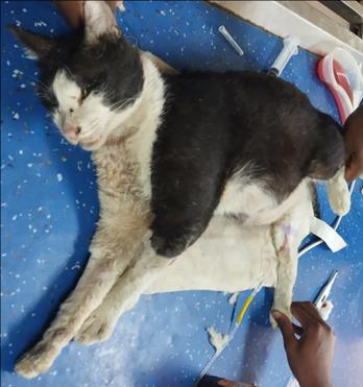 Figure 1
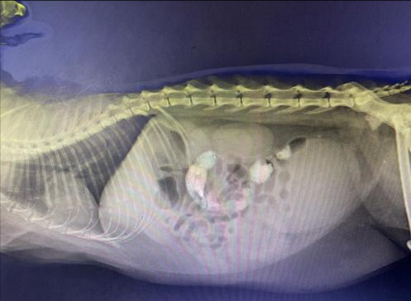 Figure 2
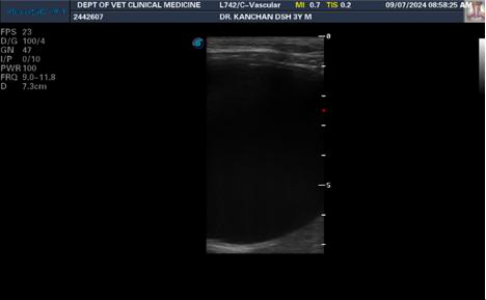 Figure 3
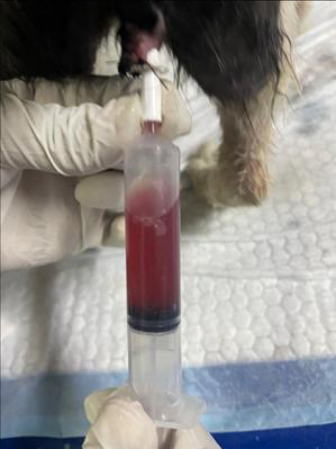 Figure 4
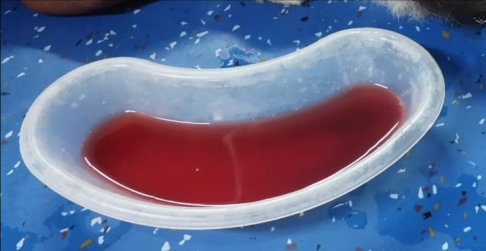 Figure 5
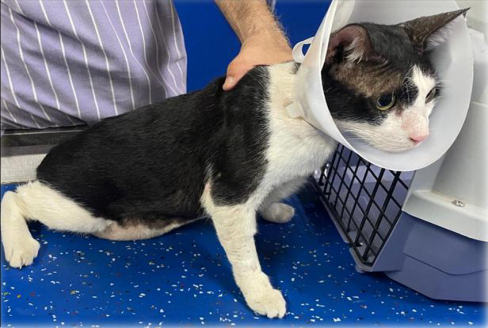 Figure 6
Introduction Case History and Treatment
A three year old male domestic short haired cat weighing 4 kg was presented in lateral recumbency with signs of dyspnoea, open mouth breathing, anorexia and frequent episodes of dribbling of urine since morning (Figure 1). On clinical examination, the animal was in a comatosed condition. The SPO 2 was 85% and the tongue was cyanotic. Oxygen supplementation was provided to the cat. The colour of the tongue slowly returned to pink and the cat regained consciousness. The cat was severely dehydrated (STT > 4 seconds). Whole blood sample was collected for complete blood count, and the haematological parameters were within the normal range. Serum samples were subjected to serum biochemical analysis which revealed an elevation of Blood Urea Nitrogen (96.13 mg/dL), Creatinine (13.89 mg/dL) and potassium (6.5 mg/dL), (Defauw et al, 2011) [3] . An abdominal radiograph was obtained in left lateral view which revealed severe distension of the urinary bladder (Figure 2). Abdominal ultrasonography was performed which revealed a severely enlarged urinary bladder with anechoic contents (Figure 3). A tom cat catheter (3.5FG) was fixed (Figure 4) and around 200 ml of dark reddish coloured urine was removed (Figure 5). The collected urine samples were subjected to Urinalysis by strip method which revealed a specific gravity of 1.025, an acidic pH and presence of proteins. Microscopic examination was performed which revealed the presence of red blood cells with no crystals. The urine collected was subjected to bacterial culture which was negative. Fluid therapy was initiated with Inj. Ringer's Lactate at a dose of 45 ml/kg body weight slowly by intravenous route to correct dehydration and electrolyte imbalances. On subsequent days, the dose rate of fluid therapy was tapered to 10ml/ kg body weight based on the hydration status, daily urine volume, serum creatinine and potassium levels.
Amoxicillin-Cloxacillin was administered at 12.5 mg/kg Body weight intravenously to eliminate the occurrence of bacterial infection. The associated pain was managed with Butorphanol at the rate of 0.2 mg/kg intravenously. (Westroop and Buffington, 2004) [5] . On Day 2, there was a reduction in the serum creatinine level (7 mg/dL) and the serum potassium was within the normal range (4.5 mg/dL). On Days 3, 4 and 5, the creatinine levels were 2.78 mg/dL, 1.98 mg/dL and 1.02 mg/dL and thus on Day 5, the creatinine level was within the normal range. The animal regained normal appetite and water intake during treatment and hence the urinary catheter was removed. Amoxicilliin-Clavulonate was administered at a dose of 12.5 mg/kg body weight twice orally till 4 weeks. Pain Management was continued with Butorphanol administered at a dose of 0.2 mg/kg Body Weight thrice orally till the second week. Environmental management was advised to provide a stress-free environment with toys and preventing loneliness. Dietary management was also advised, by means of providing commercially available urinary diet to prevent further occurrence of crystals in the urine. The cat had an uneventful recovery (Figure 6). Feline Idiopathic Cystitis, also known as feline interstitial cystitis, feline urologic syndrome, feline low urinary tract disease and Pandora syndrome, is the most common urinary system emergency in cats, most commonly in cats between 2-7 years of age. (Forrester and Towell, 2015) [1] . The etiology is complex and incompletely understood, as it results from various factors, including stress and infections (Jones et al, 2021) [2] . Pain management, environmental management and dietary management are important in managing cats with feline idiopathic cystitis (Sparkes, 2018) [4] .
Conclusion
The successful management of feline idiopathic cystitis relies on early presentation and accurate diagnosis, allowing veterinarians to devise treatment plans to the affected cats. By prioritizing prompt presentation and diagnostic evaluation, cat owners and veterinarians can work together to minimize the impact of FIC, optimize treatment outcomes, and ensure the best possible quality of life for affected cats.
Conflict of Interest Not available
Conflict of Interest Not available
Financial Support
Financial Support
References
5 in the original paper- Forrester SD, Towell TL. Feline idiopathic cystitis. Vet Clin North Am Small Anim Pract. 2015;45(4):783-806.
- Jones E, Palmieri C, Thompson M, Jackson K, Allavena R. Feline idiopathic cystitis: pathogenesis, histopathology and comparative potential. J Comp Pathol. 2021;185:1829.
- Defauw PA, Maele VDI, Duchateau L, Polis IE, Saunders JH, Daminet S. Risk factors and clinical presentation of cats with feline idiopathic cystitis. J Feline Med Surg. 2011;13(12):967-975.
- Sparkes A. Understanding feline idiopathic cystitis. In Pract. 2018;40(3):95-101.
- Westropp JL, Buffington CT. Feline idiopathic cystitis: current understanding of pathophysiology and management. Vet Clin North Am Small Anim Pract. 2004;34(4):1043-1055.