
Research article · 2025 · Full text
International Journal of Biology SciencesThe role of Caffine in the regulation of obesity: Mechanism and implications
Volume 7(1) · Pages 83–89 · DOI: 10.33545/26649926.2025.v7.i1b.273 ↗
Research areasFatty Acid Research and Health
Abstract
Author-writtenObesity is a global health concern characterized by excessive accumulation of body fat, leading to adverse metabolic and cardiovascular outcomes. Lifestyle changes, such as altering diet and increasing physical activity, are key strategies for managing obesity. Additionally, caffeine has been proposed as a useful tool for weight loss and weight maintenance. Caffeine, a naturally occurring stimulant found in coffee, tea, and various beverages, has been investigated for its potential effects on metabolism and energy balance. These elements are believed to counteract the reduction in metabolic rate that happens during weight loss and may increase energy expenditure. Through thermogenesis, fat oxidation, caffeine can improves weight maintenance and sparing fat free mass. This article offers a thorough overview of the mechanisms by which caffeine affects obesity regulation, based on evidence from both preclinical and clinical studies. It also explores the role of caffeine consumption as part of a comprehensive strategy for managing obesity. By elucidating the mechanisms of action and summarizing the current evidence, this article aims to contribute to the understanding of caffeine's potential role in combating the obesity epidemic.
Summary
Source-checkedPlain-language reading of the full paper, prepared with AI and checked against the text. Each point links to the authors' own words.
Why it matters
- Obesity is a worldwide health issue involving the excessive buildup of body fat, which can cause cardiovascular and metabolic problems. View evidence ↗
- The main cause of obesity is an imbalance where energy consumption exceeds energy expenditure. View evidence ↗
- Caffeine is a natural stimulant found in beverages like tea and coffee that is studied for its ability to influence energy balance and metabolism. View evidence ↗
The question
- The authors aim to explore and understand how caffeine can potentially be used to fight the obesity epidemic. View evidence ↗
What they did
- The paper is a review that synthesizes evidence from clinical and preclinical studies to explain the mechanisms of caffeine's effect on obesity. View evidence ↗
What they found
- Green tea extract increased 24-hour energy expenditure by 4% (328 kJ) and improved fat oxidation more effectively than caffeine alone or a placebo. View evidence ↗
- Consuming 100 mg of caffeine increased energy expenditure by 16% over a 2-hour period compared to decaffeinated coffee. View evidence ↗
- Caffeine (4 mg/kg five times daily) increased thermogenesis in both groups, but the effect was lower in obese participants (4.9±2.0%) than in slender ones (7.6±1.3%). View evidence ↗
- Over one year, a daily mixture of 100 mg EGCG and 87 mg caffeine led to greater weight loss (2.7 kg) compared to a placebo (2.0 kg). View evidence ↗
- Ingesting 300 mg of caffeine reduced energy intake by 22% in men, though no such effect was seen in women. View evidence ↗
- Caffeine promotes the breakdown of fats (lipolysis) by increasing cAMP levels and activating hormone-sensitive lipase. View evidence ↗
- Differences in the COMT enzyme (specifically the COMTL allele common in Caucasians) may explain why some ethnic groups respond differently to green tea and caffeine. View evidence ↗
- High doses of caffeine (400 mg) can cause an average blood pressure increase of 6.3 mm Hg across both systolic and diastolic levels. View evidence ↗
What it means
- The authors conclude that combining green tea and caffeine can help manage obesity by boosting energy expenditure and preventing the metabolic slowdown typical of weight loss. View evidence ↗
- Future research needs to focus on personalized approaches and optimized combination therapies to turn these findings into clinical treatments. View evidence ↗
Visual summary
1 visualsIllustrations explain the paper; they do not show study data.
Caffeine's Metabolic Pathway
AI-generated conceptual illustration (Adipocyte (white fat cell)). It explains the idea and does not show study data.
View source evidence ↗Figures & tables
From the original paper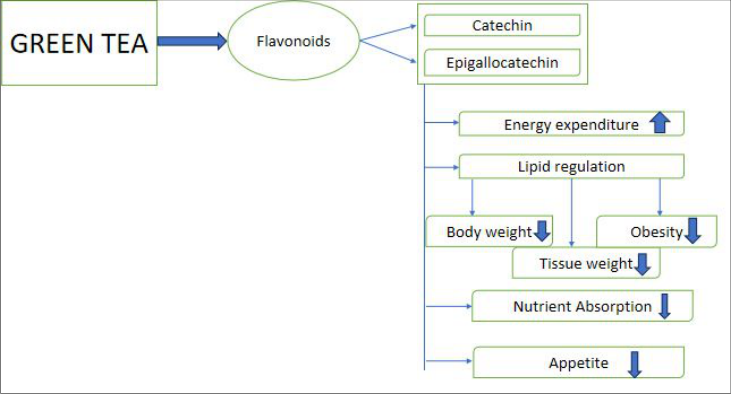 Figure 1
Introduction
In a growing number of countries, the threat posed by overweight and obesity to population health is on the rise [1] . An imbalance between energy expenditure and consumption is the primary cause of obesity (EE) [2] . To lose weight, there must be a negative energy balance, which can be reached by cutting back on intake or raising expenditure [3,4] . There is significant interest in using natural herbal nutrients, such as green tea and caffeine, to stimulate energy expenditure (EE) or prevent its decline during dieting. The primary markets for green tea are China, Japan, and several countries in the Middle East and North Africa [5,6] . Tea is made from the leaves of the Camellia sinensis L. plant; the unoxidized and unfermented form is known as green tea (GT. Green tea contains significant amounts of polyphenolic compounds, with epicatechin, epicatechin gallate, epigallocatechin, and epigallocatechin gallate being the most abundant and potentially the most pharmacologically active [7] . Additionally, green tea includes caffeine, which has been shown to possess thermogenic properties and promote fat burning in vitro, partly through activation of the sympathetic nervous system [8] . Caffeine has been shown to enhance human fat oxidation and thermogenesis [9][10][11] . It has been found that GT extracts, which contain catechin polyphenols and caffeine, affect EE and body weight [7,12,13] . The discovery that green tea (GT) stimulates thermogenesis cannot be solely attributed to its caffeine content. The thermogenic effect of GT extract, which includes both caffeine and catechin-polyphenols, is greater than that of an equivalent amount of caffeine alone [13] .
Compared to the placebo and caffeine alone, treatment with the green tea extract significantly increased 24-hour energy expenditure (EE) by 4% (328 kJ) and fat oxidation. This suggests that green tea has thermogenic properties beyond those explained by its caffeine content alone [14] . Rudelle et al [15] A similar trial involved participants drinking three 250 ml portions of a thermogenic beverage per day for three days. Each portion contained 100 mg of caffeine and 94 mg of EGCG. After consuming the beverage, there was a notable increase in 24-hour energy expenditure (EE) of 4.6% (445.2 kJ). [15] . After consuming a beverage containing 161 mg of caffeine and 156 mg of EGCG, Komatsu et al. observed a 4% increase in energy expenditure (EE) over 2 hours, amounting to 49.5 kJ [16] . By measuring the subject's 24-hour energy expenditure with respiratory chambers and administering various doses of green tea, these observations were verified [17] . These 24-hour studies involved 10-24 participants, including both Caucasian and Asian males and females aged 18-60 years. Their BMI ranged from 21 to 35 kg/m², and they had a habitual caffeine intake of 100-300 mg per day. Following a 24-hour increase in energy expenditure (EE) of 4-8% and enhanced fat oxidation of 3.5-9.9%, subjects consumed a green tea/caffeine mixture containing between 270-1200 mg of green tea and 100-161 mg of caffeine. However, a recent 13.5-hour study involving 15 male Caucasian volunteers, aged 24, with a BMI of 22.4 kg/m², and who typically drank 250 mg of coffee daily, only showed a modest 2.3% increase in EE and fat oxidation after consuming 645 mg of green tea and 150 mg of caffeine [18] . It's possible that the effect may develop over 24 hours and that the trial duration was too short to capture the full impact.
Caffeine
Normal-weight participants consumed the same meal, but when caffeinated coffee (8 mg/kg body weight) was added, they showed a higher thermic impact during 3 hours [19] . Furthermore, compared to decaffeinated coffee, the energy expenditure during 2 hours increased by 16% while using 100 mg of caffeine [20] . After consuming 100, 200, or 400 mg of caffeine orally, individuals with a daily caffeine intake of less than 200 mg experienced a dose-dependent increase in thermogenesis that lasted for over three hours [10] . In a study with twenty female participants (10 slender and 10 obese), those given 4 mg/kg of caffeine five times a day experienced increased thermogenesis. However, the increase was smaller in obese participants (4.9±2.0%) compared to slender participants (7.6±1.3%). The thermogenic effect of caffeine persisted throughout the night, suggesting a potential long-term impact [11] .
Tahe effectiveness of green tea and caffeine 3.1 In a study involving 70 overweight Caucasian participants, divided into four groups based on body weight, waist circumference decreased by 4.5% and body weight by 4.6% after three months [12] . Findings indicating that Asian individuals experienced reductions in body fat and body fat indices after taking 400-700 mg of tea catechins daily for 12 weeks support this conclusion [21][22][23][24][25][26]27] . It was demonstrated that consuming a 350 ml tea beverage containing 592.2 mg of catechins daily for 12 weeks led to increases in energy expenditure and dietary fat oxidation. Additionally, a recent study with Asian participants found that drinking 340 ml of tea with 576 mg of catechins daily for 24 weeks reduced waist circumference and body fat ratio compared to the control group, which consumed 340 ml of tea with only 75 mg of catechins. In a study with 104 Caucasian overweight or moderately obese volunteers, it was shown that after a four-week very low-energy diet (2.1 MJ/day), during a thirteen-week weight maintenance period, subjects who were given green tea (104/573 mg per day) or a placebo. [29] . There was no significant difference in the rate of body weight regain or the amount of weight gained between the green tea and placebo groups. However, post hoc analysis revealed that body weight maintenance after weight reduction was notably better in individuals who habitually consumed high levels of caffeine. Specifically, 16% of those who habitually consumed low caffeine and 39% of those who habitually consumed high caffeine experienced body weight recovery, highlighting the impact of habitual caffeine consumption on weight maintenance [29] . Subsequent studies confirmed that consistently consuming high doses of caffeine was associated with significantly greater weight loss (6.7 kg vs. 5.1 kg) as well as higher levels of thermogenesis and fat burning. Conversely, regularly ingesting low amounts of caffeine was linked to better weight maintenance among green tea consumers, suggesting increased fat combustion and thermal activity [30] . Therefore, consistent caffeine consumption may influence the effects of drinking green tea. [30] . In a different trial, 46 female Caucasian subjects on a low-energy diet were given either a placebo or green tea (225/1125 mg of caffeine and catechins daily) as a supplement for 12 weeks. Caffeine consumption was maintained at 300 mg per day, and idle energy expenditure was measured. The study found that the association between fat mass and fat-free mass did not show a significant decline over time when green tea was consumed, without accounting for frequent caffeine consumption [31] . Fortunately, the study did not suggest that the rates of body weight loss between the green tea and placebo groups were significantly different [31] . In this case, a moderate caffeine intake may have rendered the green tea supplement useless [30] . In long-term weight-loss research involving Asian obese patients, the group consuming a green tea mixture (100 mg EGCG and 87 mg caffeine daily) lost significantly more weight after one year compared to the placebo group (2.7 kg vs. 2.0 kg). Both groups received the same standardized meals throughout the study. Additionally, after a 12-week course of green tea supplementation, there was a notable increase in resting energy expenditure (REE), which contributed to a reduction in body weight [32] . In a trial conducted by Hsu et al., 78 Asian obese women were divided into two groups: one received a placebo, while the other was given green tea (491 mg catechins, 302 mg EGCG). After three months of treatment, there was no significant difference between the two groups, with the green tea group gaining only 0.15 kg. [33] . According to a recent study by Wang et al., over 13 weeks, 139 Asian overweight patients who consumed a green tea catechin mixture lost more weight and had less body fat than 43 participants who received a placebo [34] Drinking green tea mixtures is strongly associated with fat loss and helps prevent weight regain, with an average reduction of 1.3 kg, as highlighted by most studies on their benefits for fat reduction and weight maintenance after weight loss, such as the analyses previously mentioned. Variations in findings were influenced by factors like caffeine consumption and ethnicity, which may impact the outcomes of different studies [35] . That analysis led to the conclusion that a combination of green tea catechin and caffeine is a promising bodyweight regulating agent [35] . Included are the following study details: length (12-24 weeks), sample size (25-182 individuals), and BMI (18.5-35 kg m-2). Physiology & Behavior 100 (2010) / M.S.
Westerterp-Plantenga 42-46 43 Green tea and caffeine intake, respectively, 270-1207 mg/day and 75-237 mg/day, in participants ranging in age from 18 to 69 [35] . In obese patients, longer-term weight reduction was not greater when caffeine was consumed compared to a placebo, despite the fact that caffeine appears to improve thermogenesis in the short term [36,37] . The study's findings indicate that individuals with consistently high caffeine intake (over 300 mg/day) who consumed the green tea-caffeine combination did not show greater strength retention after weight loss compared to a high-caffeine group receiving a placebo. This suggests that the body's response to caffeine may diminish over time. [30] . Caffeine ingestion (300 mg) showed to decrease energy intake (by 22%) in men (but not in women) [36] . Additionally, it was demonstrated that daily caffeine consumption and satiety were positively correlated in both men and women [30] . The impact of caffeine on long-term weight change was investigated by Lopez-Garcia et al. in a prospectiv research. Within their group, the researchers discovered that those who consumed more caffeine during a 12-year period acquired less weight than those who consumed less [38] . Caffeine may therefore affect energy intake as well as energy expenditure.
Mechanism of actions
Green tea's catechins prevent the breakdown of catecholic substances like norepinephrine (NE) by inhibiting the enzyme catechol Omethyltransferase (COMT), which is found in practically all tissues [13,30] . COMT reduces water solubility by introducing a methyl group, which occurs through the action of sulphur ions and glucose conversion, facilitating its excretion via urine and bile [39] . Because NE binds to β-adrenoceptors and increases energy expenditure and fat oxidation, it cannot be destroyed by inhibiting COMT, which means that NE will constantly stimulate the sympathetic nervous system (SNS) [40,41] . Although the SNS is crucial for maintaining energy homeostasis, not all ethnic groups exhibit the behavior mentioned above in the same way. Research involving Asian participants appears to yield more favorable outcomes in comparison to studies with Caucasian participants. This could result in variations in the sensitivity to certain compounds due to variations in the appropriate enzyme activity. Regarding that, Hodgson et al [42] . claimed that the flavonoid O-methylation process, which is a key step of flavonoid metabolism and is regulated by the enzyme COMT, varies greatly. There could be a three-fold variation in the inter-individual variability in COMT activity. Furthermore, data suggests that the activity of the COMT enzyme varies throughout ethnic groups [43]. The thermostable, high activity enzyme, COMTH allele (Val/Val polymorphism), is more common in Asian populations than in Caucasian cultures. The thermolabile, low activity enzyme COMTL allele (Met/Met polymorphism) is more common in Caucasian cultures [43] . This could account for variations in the sensitivity to green tea caffeine combination interventions as well as the lack of impact observed after consuming green tea in some investigations with Caucasian participants. The higher consumption of dairy proteins among Caucasians could be another reason. It has been proposed that a protein-polyphenol combination that is resistant to gastric degradation forms in the upper portion of the digestive system causes a decrease in absorption [44] . Because green tea contains caffeine as well, its effects will also occur after consuming green tea. Because it inhibits the enzyme phosphodiesterase, caffeine has an impact on thermogenesis. Intracellular cyclic amino monophosphate (cAMP) is broken down by this enzyme [45] . Caffeine boosts cAMP levels, stimulates the central nervous system, and activates hormone-sensitive lipase (HSL), which promotes lipolysis when active. cAMP plays a critical role in initiating lipolysis and enhancing sympathetic nervous system (SNS) activity by activating protein kinase A. [46] Besides inhibiting phosphodiesterase, caffeine influences thermogenesis through substrate cycles like the free fatty acid (FFA)-triglyceride cycle and the Cori cycle. As a methylxanthine, caffeine exhibits thermogenic properties. During the Cori cycle, lactate is transported from tissues to the liver, where it is converted by lactate dehydrogenase into pyruvate. Pyruvate is then transformed into glucose, which is carried back to the tissues via the bloodstream. [40,41] . It has been demonstrated by Acheson et al. that caffeine ingestion increases both FFA turnover and lipid oxidation, but that a minor increase in lipid oxidation necessitates a higher FFA turnover rate. There is a higher increase in nonoxidative lipid turnover-that is, triacylglycerol hydrolysis and reesterification-than oxidative lipid disposal. They discovered that caffeine counteracts adenosine's lipolysis-inhibiting actions via activating adenylyl cyclase. Sarcoplasmic reticulums. The pathway in muscle tissues responsible for delivering calcium ions, which supports processes such as ATP turnover and glycolysis after stimulation, acts antagonistically to the ryanodine receptor. This suggests that non-adrenergic thermogenic mechanisms may also contribute to these effects. [46] . Two enzymes that block the norepinephrine-activated thermogenesis pathway are inhibited by catechins and caffeine [47] . Norepinephrine (NE) concentration regulates sympathetic nervous system (SNS) activity, with higher NE levels leading to increased energy expenditure. The metabolic rate during rest, which accounts for most of regular energy utilization, is influenced by SNS activity. NE facilitates ion pumping and substrate cycling, boosting ATP consumption. Enhanced thermogenesis, driven by inefficient ATP production and heat generation, is also affected by the rate of mitochondrial oxidation. Furthermore, catechins directly impact the expression of uncoupling proteins (UCPs), which regulate thermogenesis by generating heat. Caffeine, by inhibiting phosphodiesterase, increases cAMP levels, which activate protein kinase A. This activation promotes the expression of UCP genes and facilitates the conversion of triglycerides into free fatty acids, further increasing UCP activity and contributing to thermogenesis [41,48,49] . Since Dulloo et al. shown that supplementing with green tea increased fat oxidation, there is a change in substrate oxidation that coincides with the rise in energy expenditure. The tea catechins initiate an additional mechanism wherein they impede the phosphorylation of IκB, hence blocking the activation of nuclear factor-κ B (NFκB) [13,50] . The transcription factor NFκB, which is sensitive to oxidative stress, regulates the expression of numerous genes associated with processes like cellular growth and inflammation. However, NFκB loses its ability to inhibit peroxisome proliferator-activated receptors (PPARs), which are key genetic factors in fat metabolism. This leads to an upregulation of mRNA expression for lipid-metabolizing enzymes, such as medium-chain acyl-CoA dehydrogenase (MCAD) and acyl-CoA oxidase (ACO).
MCAD is a liver-resident mitochondrial β-oxidation enzyme, and ACO is a peroxisomal β-oxidation enzyme.
The increased expression of these lipid-metabolizing enzymes suggests that the supplementation of tea catechins enhances β-oxidation activation, which is subsequently followed by an increase in fat oxidation [51] .
Fig 1: Effect of green tea on obesitys
Obesity and receptive nervous system stimulation Enzyme that breaks down norepinephrine (NE), promote thermogenesis by preventing the phosphodiesterase-induced breakdown of cAMP. Furthermore, the development of overweight and obesity may be prevented by the antiangiogenic properties of tea catechins 44 M.S. Westerterp-Plantenga / Physiology & Behavior 100 (2010) 42-46. In order to maintain energy homeostasis through hormonal and neurological regulation, the sympathetic nervous system (SNS) is thought to be a crucial part of the autonomic nervous system. As a complex regulatory system, the SNS is influenced by the sympathetic nervous system, which supplies the majority of body tissues, as well as catecholamines, NE, and, to a lesser extent, adrenal medulla-released catecholamines, which have an indirect effect on the Numerous studies and a meta-analysis have shown evidence for the use of green tea and caffeine to regulate body weight [30,35] . Both caffeine and green tea's catechins, which block catechol O-methyl-transferase (COMT), a body's tissues, realize that the sympathetic nervous system (SNS) selectively activates certain body tissues or systems in a given condition, either without affecting or even inhibiting other areas. This is significant because the SNS does not consistently stimulate all connective tissues that are innervated by sensory nerves. It should be understood, then, that the NE turnover as well as alterations in the electrophysiological activity of the efferent neurons innervating brown fat, muscle, or kidney that are specific to those tissues [40,41] . A crucial component of maintaining body weight is thought to involve sympathetic activity to the effector organs of metabolism. The outcomes suggest controlled metabolism in addition to the thermogenic symptomize-induced modifications to the energy balance through increases in EE are examples of thermogenic effects. The majority of daily EE, or resting EE (resting metabolic rate assessed following an overnight fast), has been demonstrated to be modulated by SNS activity, which is governed by NE concentrations. Given that NE can enhance ATP utilization via ion pumping and substrate cycling, or accelerate mitochondrial oxidation with inadequate ATP synthesis coupling, resulting in heightened heat generation, it is hypothesized that the SNS plays a role in thermogenesis, in-fact, research on humans has shown that when NE or epinephrin were infused, there was a considerable increase in thermogenesis as determined by whole body calorimetry. It has been demonstrated that β1-, β2-, and β3-receptors work together to mediate the thermogenic response to catecholamines. Numerous methods have been used to measure the activity of the SNS, including muscular sympathetic nerve activity, urine catecholamine excretion, plasma catecholamine levels, and catecholamine turnover [41] . In the cardiac and brown adipose tissues of non-human animals, SNS activation seems to be a key component of the counter-regulatory response to overeating. This suggests that SNS sensitivity to positive energy balance is crucial in managing overfeeding. By increasing thermogenesis, SNS activation compensates for excess energy intake by converting it into heat and dissipating it. Preventing weight gain in the body is the outcome. Additionally, rather than the SNS being suppressed, human obesity is associated with SNS activation. Overall sympathetic activity is indicated by the total body NE spillover rate, which is usually normal in human obesity. Renal NE spillover, a sign of about doubled renal sympathetic activity, is observed in contrast to decreased cardiac sympathetic activity [41] . SNS activity appears to be negatively affected primarily in cases of negative energy balance. Reduced sympathetic nerve activity in resting muscles-a marker of diminished SNS activity-has been associated with lower energy expenditure (EE) in individuals prone to obesity, contributing to weight gain and the development of obesity. Additionally, a negative energy balance was linked to a decrease in muscle sympathetic activity, which lowers resting EE and increases survival. Additionally, a negative energy balance was linked to a higher rate of lipolysis in adipose tissue in response to catecholamines [41] .
Administration of green tea and caffeine safely
It seems that caffeine is a safe thermogenic weight-loss agent. The short-term fatal dose of caffeine in adults is thought to be 5-10 g per day (orally or intravenously), which is equal to 200 cola drinks, 125 cups of tea, or 75 cups of coffee [52] . Caffeine consumption over an extended period of time may have some mild negative consequences on human health. Following 100 and 200 mg of caffeine, Astrup et al. found only minor and negligible increases in blood pressure and heart rate. On the other hand, 400 mg of caffeine markedly raised blood pressure on both the systolic and diastolic levels, with an average increase of 6.3 mm Hg. Additionally, compared to placebo, a considerably higher number of participants experienced adverse symptoms such as palpitations, anxiety, headaches, restlessness, and dizziness after consuming 400 mg of caffeine [10] . Robertson et al. [53,54] administered oral caffeine (250 mg) to nine volunteers who had never had coffee. One hour after consuming coffee, there was a 10 mm Hg increase in systolic blood pressure. After the first hour, heart rate decreased, and after two hours, it increased above baseline. However, after 1-4 days, tolerance to the long-term effects of caffeine consumption (150 mg/day for 7 days) was observed in a follow-up study [53,54] . Consequently, no longterm impact of caffeine on heart rate, blood pressure, or plasma renin activity was demonstrated. Additionally, in the near future, Bracco et al [11] . Found that when 4 mg of coffee per kg of body weight was taken five times a day, there was no discernible change in heart rate during the day. Caffeine consumption appears to be harmless so far. Green tea is thought to be harmless and has been consumed extensively for many years in China and Japan. A little rise in blood pressure has been observed by BerubeParent et al. as a potential adverse consequence of consuming green tea [17] . They found that the 24-hour diastolic blood pressure increased significantly (5 mm Hg) but the 24-hour systolic blood pressure increased nonsignificantly (7 mm Hg). There was no rise in heart rate observed [17] . Since green tea had no effect on heart rate, diastolic blood pressure, or systolic blood pressure in other short-term studies, it may be appropriate to ignore this slight short-term elevation in blood pressure [13] or extended study [12,[21][22][23][24][25][26][27][28][29][30][31][32][33][34][35] . Green tea and caffeine together can support obesity management by increasing energy expenditure and mitigating the decrease in metabolic rate that often accompanies weight loss. Catechol O-methyl-transferase and phosphodiesterase are inhibited by green tea, which contains caffeine and tea catechins; both mechanisms may work in concert. A blend of green tea and caffeine enhances fat oxidation, thermogenesis, and the preservation of fat-free mass to help with weight maintenance. Green tea and caffeine together are still regarded as reasonably safe. Thermogenic components might be viewed as useful agents that could aid in the prevention of obesity and a positive energy balance. A multidisciplinary approach is necessary to study the bioavailability and bioactivity of catechin, caffeine, and their combinations. Such research should examine the influence of genetic background, related enzyme activities, interactions with nutrient absorption, and potential habituation from regular consumption.
Future Scope
The future scope of research into the role of caffeine in obesity regulation holds significant potential. Expanding our knowledge of the underlying mechanisms, optimizing its use in combination therapies, and exploring personalized approaches will be crucial in translating these findings into effective treatments for obesity. Additionally, understanding the broader behavioral, social, and safety implications will help integrate caffeine-based strategies into public health efforts and clinical practice.
Conflict of Interest:
There is no conflict of interest between the authors in publication of this paper.
Author's Contribution: Priya Rani Ghosh conducted the complete literature review, while Dr. Rupali Dhara Mitra conceptualized the idea and title of the paper and provided thorough editing of the entire manuscript.
Acknowledgement
AcknowledgementWe sincerely appreciate and extend our heartfelt gratitude to Swami Vivekananda University for their consistent guidance and unwavering support during the course of our research.
Figures and tables from the paper
References
53 in the original paper- World Health Organization. Obesity: preventing and managing the global epidemic. Report of a WHO consultation. World Health Organ Tech Rep Ser. 2000;894:1-253.
- Stunkard AJ. Current views on obesity. Am J Med. 1996;100(3):230-236.
- Wadden TA, Stunkard AJ, Liebschutz J. Three-year follow-up of the treatment of obesity by very lowcalorie diet, behavior therapy, and their combination. J Consult Clin Psychol. 1988;56(6):925-928.
- Pasman WJ, Saris WH, Muls E, Vansant G, WesterterpPlantenga MS. Effect of exercise training on long-term weight maintenance in weight-reduced men. Metabolism. 1999;48(1):15-21.
- Graham HN. Green tea composition, consumption, and polyphenol chemistry. Prev Med. 1992;21(3):334-350.
- Weisburger JH. Tea and health: a historical perspective. Cancer Lett. 1997;114(2):315-317.
- Kao YH, Hiipakka RA, Liao S. Modulation of endocrine systems and food intake by green tea epigallocatechin gallate. Endocrinology. 2000;141(3):980-987.
- Dulloo AG, Seydoux J, Girardier L. Potentiation of the thermogenic antiobesity effects of ephedrine by dietary methylxanthines: adenosine antagonism or phosphodiesterase inhibition? Metabolism. 1992;41(11):1233-1241.
- Dulloo AG, Geissler CA, Horton T, Collins A, Miller DS. Normal caffeine consumption: influence on thermogenesis and daily energy expenditure in lean and postobese human volunteers. Am J Clin Nutr. 1989;49(1):44-50.
- Astrup A, Toubro S, Cannon S, Hein P, Breum L, Madsen J. Caffeine: a double-blind, placebo-controlled study of its thermogenic, metabolic, and cardiovascular effects in healthy volunteers. Am J Clin Nutr. 1990;51(5):759-767.
- Bracco D, Ferrarra JM, Arnaud MJ, Jequier E, Schutz Y. Effects of caffeine on energy metabolism, heart rate, and methylxanthine metabolism in lean and obese women. Am J Physiol. 1995;269(5 Pt 1):E671-E6718.
- Chantre P, Lairon D. Recent findings of green tea extract AR25 (Exolise) and its activity for the treatment of obesity. Phytomedicine. 2002;9(1):3-8.
- Dulloo AG, Duret C, Rohrer D, Girardier L, Mensi N, Fathi M, et al. Efficacy of a green tea extract rich in catechin polyphenols and caffeine in increasing 24-h energy expenditure and fat oxidation in humans. Am J Clin Nutr. 1999;70(6):1040-1045.
- Borchardt RT, Huber JA. Catechol Omethyltransferase. Structure-activity relationships for inhibition by flavonoids. J Med Chem. 1975;18(2):120122.
- Rudelle S, Ferruzzi MG, Cristiani I, Moulin J, Mace K, Acheson KJ, et al. Effect of a thermogenic beverage on 24-hour energy metabolism in humans. Obesity. 2007;15(2):349-355.
- Komatsu T, Nakamori M, Komatsu K, Hosoda K, Okamura M, Toyama K, et al. Oolong tea increases energy metabolism in Japanese females. J Med Invest. 2003;50(3-4):170-175.
- Berube-Parent S, Pelletier C, Dore J, Tremblay A. Effects of encapsulated green tea and Guarana extracts containing a mixture of epigallocatechin-3-gallate and caffeine on 24 h energy expenditure and fat oxidation in men. Br J Nutr. 2005;94(3):432-436.
- Gregersen NT, Bitz C, Krog-Mikkelsen I, Hels O, Kovacs EM, Rycroft JA, et al. Effect of moderate intakes of different tea catechins and caffeine on acute measures of energy metabolism under sedentary conditions. Br J Nutr. 2009;102(8):1187-1194.
- Acheson KJ, Zahorska-Markiewicz B, Pittet P, Anantharaman K, Jequier E. Caffeine and coffee: their influence on metabolic rate and substrate utilization in normal weight and obese individuals. Am J Clin Nutr. 1980;33(5):989-997.
- Hase T, Komine Y, Meguro S, Takeda Y, Takahashi H, Matsui Y, et al. Anti-obesity effects of tea catechins in humans. J Oleo Sci. 2001;50(11):599-605.
- Nagao T, Meguro S, Soga S, Otsuka A, Tomonobu K, Fumoto S, et al. Tea catechins suppress accumulation of body fat in humans. J Oleo Sci. 2001;50(12):717728.
- Tsuchida T, Itakura H, Nakamura H. Reduction of body fat in humans by long-term ingestion of catechins. Prog Med. 2002;22:2189-2203.
- Nagao T, Hase T, Tokimitsu I. A green tea extract high in catechins reduces body fat and cardiovascular risks in humans. Obesity. 2007;15(6):1473-1483.
- Nagao T, Komine Y, Soga S, Meguro S, Hase T, Tanaka Y, et al. Ingestion of a tea rich in catechins leads to a reduction in body fat and malondialdehydemodified LDL in men. Am J Clin Nutr. 2005;81(1):122-129.
- Kozuma K, Chikama A, Hishino E, Kataoka K, Mori K, Hase T, et al. Effect of intake of a beverage containing 540 mg catechins on the body composition of obese women and men. Prog Med. 2005;25(4):185-197.
- Harada U, Chikama A, Saito S, Takase H, Nagao T, Hase T, et al. Effects of long-term ingestion of tea catechins on energy expenditure and dietary fat oxidation in healthy subjects. J Health Sci. 2005;51(2):248-252.
- Matsuyama T, Tanaka Y, Kamimaki I, Nagao T, Tokimitsu I. Catechin safely improved higher levels of fatness, blood pressure, and cholesterol in children. Obesity. 2008;16(2):1-9.
- Kovacs EM, Lejeune MP, Nijs I, Westerterp-Plantenga MS. Effects of green tea on weight maintenance after body-weight loss. Br J Nutr. 2004;91(3):431-437.
- Westerterp-Plantenga MS, Lejeune MP, Kovacs EM. Body weight loss and weight maintenance in relation to habitual caffeine intake and green tea supplementation. Obes Res. 2005;13(7):1195-1204.
- Diepvens K, Kovacs EM, Nijs IM, Vogels N, Westerterp-Plantenga MS. Effect of green tea on resting energy expenditure and substrate oxidation during weight loss in overweight females. Br J Nutr. 2005;94(6):1026-1034.
- Auvichayapat P, Prapochanung M, Tunkamnerdthai O, Sripanidkulchai BO, Auvichayapat N, Thinkhamrop B, et al. Effectiveness of green tea on weight reduction in obese Thais: a randomized, controlled trial. Physiol Behav. 2008;93(4-5):486-491.
- Tsai TH, Hsu CH, Kao YH, Tseng TY, Hwang KC, Chou P. Effect of green tea extract on obese women: a randomized, double-blind, placebo-controlled clinical trial. Clin Nutr. 2008;27(3):363-370.
- Wang H, Wen Y, Du Y, Yan X, Guo H, Rycroft JA, et al. Effects of catechin enriched green tea on body composition. Obesity. 2009;17(Suppl 1):S203.
- Hursel R, Viechtbauer W, Westerterp-Plantenga MS. The effects of green tea on weight loss and weight maintenance: a meta-analysis. Int J Obes. 2009;33(9):956-961.
- Tremblay A, Masson E, Leduc S, Houde A, Despres JP. Caffeine reduces spontaneous energy intake in men but not in women. Nutr Res. 1988;8(6):553-558.
- Pasman WJ, Westerterp-Plantenga MS, Saris WH. The effectiveness of long-term supplementation of carbohydrate, chromium, fibre and caffeine on weight maintenance. Int J Obes Relat Metab Disord. 1997;21(12):1143-1151.
- Lopez-Garcia E, van Dam RM, Rajpathak S, Willett WC, Manson JE, Hu FB. Changes in caffeine intake and long-term weight change in men and women. Am J Clin Nutr. 2006;83(3):674-680.
- Shixian Q, VanCrey B, Shi J, Kakuda Y, Jiang Y. Green tea extract thermogenesis-induced weight loss by epigallocatechin gallate inhibition of catechol-Omethyltransferase. J Med Food. 2006;9(4):451-458.
- Westerterp-Plantenga M, Diepvens K, Joosen AM, Berube-Parent S, Tremblay A. Metabolic effects of spices, teas, and caffeine. Physiol Behav. 2006;89(1):85-91.
- Diepvens K, Westerterp KR, Westerterp-Plantenga MS. Obesity and thermogenesis related to the consumption of caffeine, ephedrine, capsaicin, and green tea. Am J Physiol Regul Integr Comp Physiol. 2007;292(1):R77R85.
- Hodgson JM, Puddey IB, Burke V, Croft KD. Is reversal of endothelial dysfunction by tea related to flavonoid metabolism? Br J Nutr. 2006;95(1):14-17.
- Palmatier MA, Kang AM, Kidd KK. Global variation in the frequencies of functionally different catechol-Omethyltransferase alleles. Biol Psychiatry. 1999;46(5):557-567.
- Hursel R, Westerterp-Plantenga MS. Green tea catechin plus caffeine supplementation to a high-protein diet has no additional effect on body-weight maintenance after weight loss. Am J Clin Nutr. 2009;89(3):822-830.
- Cornelis MC, El-Sohemy A, Campos H. Genetic polymorphism of the adenosine A2A receptor is associated with habitual caffeine consumption. Am J Clin Nutr. 2007;86(1):240-244.
- Acheson KJ, Gremaud G, Meirim I, Montigon F, Krebs Y, Fay LB, et al. Metabolic effects of caffeine in humans: lipid oxidation or futile cycling? Am J Clin Nutr. 2004;79(1):40-46.
- Kao YH, Hiipakka RA, Liao S. Modulation of obesity by a green tea catechin. Am J Clin Nutr. 2000;72(5):1232-1234.
- Klaus S, Pultz S, Thone-Reineke C, Wolfram S. Epigallocatechin gallate attenuates diet-induced obesity in mice by decreasing energy absorption and increasing fat oxidation. Int J Obes. 2005;29(6):615-623.
- Lowell BB, Spiegelman BM. Towards a molecular understanding of adaptive thermogenesis. Nature. 2000;404(6778):652-660.
- Yang F, Oz HS, Barve S, de Villiers WJ, McClain CJ, Varilek GW. The green tea polyphenol (-)- epigallocatechin-3-gallate blocks nuclear factor-kappa B activation by inhibiting IκB kinase activity in the intestinal epithelial cell line IEC6. Mol Pharmacol. 2001;60(4):528-533.
- Murase T, Nagasawa A, Suzuki J, Hase T, Tokimitsu I. Beneficial effects of tea catechins on diet-induced obesity: stimulation of thermogenesis and fat oxidation. Obesity. 2006;14(4):608-618.
- Curatolo PW, Robertson D. The health consequences of caffeine. Ann Intern Med. 1983;98(5 Pt 1):641-653.
- Robertson D, Frolich JC, Carr RK, Watson JT, Hollifield JW, Shand DG, et al. Effects of caffeine on plasma renin activity, catecholamines and blood pressure. N Engl J Med. 1978;298(4):181-186.
- Robertson D, Wade D, Workman R, Woosley RL, Oates JA. Tolerance to the humoral and hemodynamic effects of caffeine in man. J Clin Invest. 1981;67(5):1111-1117.
Cited by 1
From OpenAlex, OpenCitations and reference lists read by Scinovex
- Comparing the Effect of Spinning Training with the Actual and Placebo Effects of Caffeine on Cardio-metabolic Health and Physical Performance in Obese or Overweight Women ↗
Mozhgan Hajian, Somayeh Rajabi, Nasrin Razavianzadeh, Seyed Javad Ziaolhagh · Jundishapur Journal of Natural Pharmaceutical Products · 2026
Background: Spinning, a popular high-intensity indoor cycling workout, and caffeine may exert synergistic effects on lipid profile, body composition, and functional fitness in overweight or obese women. Objectives: This study aimed to examine the effects of an eight-week spinning program combined with caffeine on lipid profile, body composition, and functional fitness in overweight and obese women. Methods: Thirty-nine women (BMI:…
❝ 0PDF