
Research article · 2025 · Full text
International Journal of Agriculture and Food ScienceBiotechnology: A sustainable approach to insect pest management: A review
Volume 7(1) · Pages 89–94 · DOI: 10.33545/2664844x.2025.v7.i1b.243 ↗
Research areasInsect Resistance and Genetics
Abstract
Author-writtenInsect pests are one of the main obstacles to increased food and fiber production worldwide. Biological control agents such as arthropod natural enemies, entomopathogens (Bacteria, nematode, virus, and fungus), botanical insecticides, and insect hormones are generating a lot of attention as alternatives to chemical pesticides and crucial elements of integrated pest management system. Biotechnology plays a major part in increasing the bio-insecticide efficacy, cost effectiveness, and market reach. A genetic engineering and insect transformation technology offers ways for the generation of insect natural enemies including pesticide resistance, cold tolerance, and sex ratio alteration. Modern technologies which offer an efficient extraction process, formulation solvents and adjuvants which can improve insecticidal efficacy of plant derived insecticides. Bacillus thuringiensis (Bt) genes that encode insect toxic proteins can be genetically altered to create more powerful strains and transgenic plants that express that Bt toxin. Biotechnology has a positive impact on food security from insect attack and can contribute to the sustainability of modern agriculture. Biotechnology plays a significant role in insect pest management by providing innovative and sustainable solutions to reduce pest populations while minimizing environmental impacts and dependency on chemical pesticides. In this review, we have discussed some important strategies like GMO crops, RNA interference (RNAi), Sterile Insect Technique (SIT), CRISPR Cas9, and Host Plant Resistance in Biotechnology in Integrated Pest Management.
Summary
Source-checkedPlain-language reading of the full paper, prepared with AI and checked against the text. Each point links to the authors' own words.
Why it matters
- Insect pests significantly impact global food security, causing damage to approximately 20% to 30% of global food production. View evidence ↗
- Conventional chemical insecticides often lack selectivity, which can inadvertently harm natural enemies and lead to pest resurgence. View evidence ↗
- Biotechnology is viewed as a sustainable alternative to chemical pesticides, offering ways to reduce pest populations with lower environmental impact. View evidence ↗
The question
- The authors aim to review key biotechnological strategies, including GMO crops, RNAi, SIT, CRISPR/Cas9, and host plant resistance, within the framework of Integrated Pest Management (IPM). View evidence ↗
What they did
- The paper is a review that synthesizes existing research on various genetic and molecular tools used for insect control. View evidence ↗
What they found
- Genetically engineered Bt cotton saw widespread adoption, peaking in 2008 with more than 98% of acreage. View evidence ↗
- Bt brinjal has been shown to almost entirely control the eggplant fruit and shoot borer (EFSB), significantly reducing pesticide requirements. View evidence ↗
- RNA interference (RNAi) using dsRNA targeting the chitin synthase 1 gene reduced populations of the cotton-melon aphid (Aphis gossypii) by 41% and 48%. View evidence ↗
- The Sterile Insect Technique (SIT) successfully eliminated screw-worm flies (Cochliomyia hominivorax) from North and Central America. View evidence ↗
- Early host plant resistance research produced transgenic tobacco expressing a cowpea trypsin inhibitor protein at a 1.0% level to defend against Helothis virescens. View evidence ↗
- While successful in tobacco, the cowpea trypsin inhibitor gene failed to provide sustainable protection when used in transgenic rice and potato plants. View evidence ↗
- Bt genes expressing Cry-proteins proved more effective for transforming tobacco and tomato plants than the trypsin inhibitor gene. View evidence ↗
What it means
- The authors conclude that biotechnology has the potential to transform entomology and contribute significantly to agricultural and environmental conservation. View evidence ↗
- The authors note that the application of these technologies faces ethical, environmental, and regulatory challenges, specifically regarding biosafety and public acceptance. View evidence ↗
Visual summary
1 visualsIllustrations explain the paper; they do not show study data.
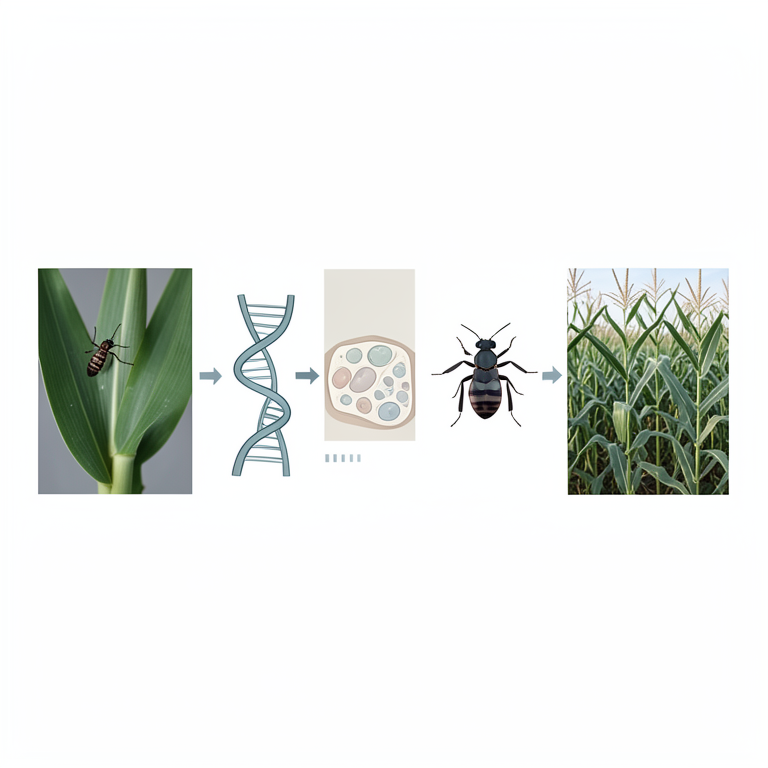
Biotech IPM Framework
AI-generated conceptual illustration (maize plants and agricultural pests). It explains the idea and does not show study data.
View source evidence ↗Figures & tables
From the original paper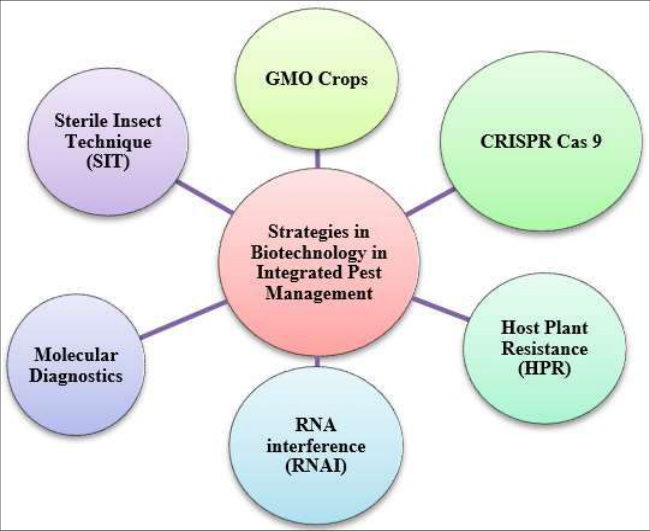 Figure 1
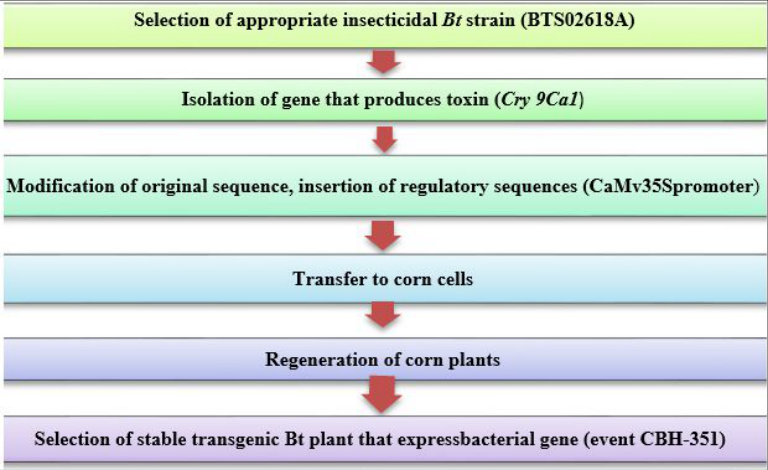 Figure 2
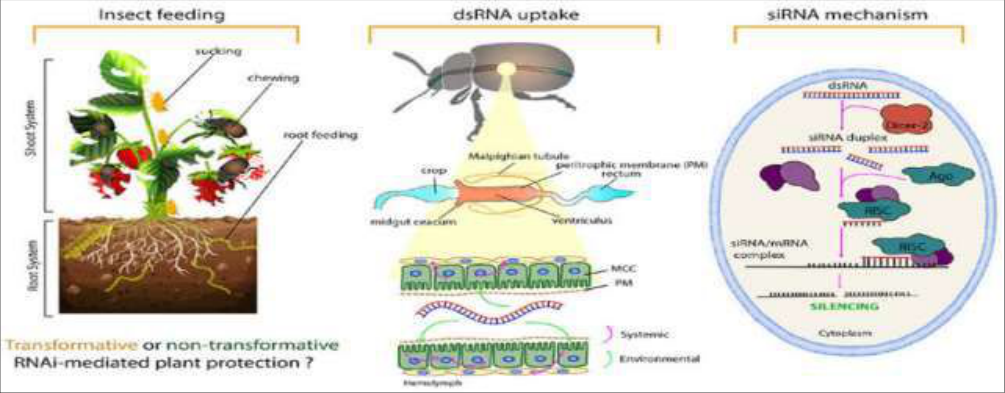 Figure 3
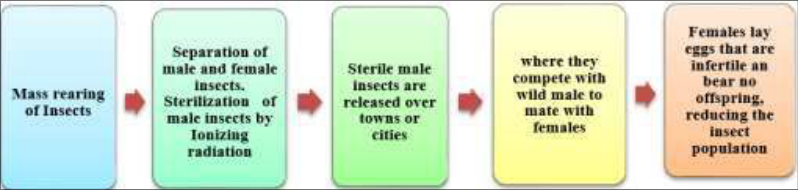 Figure 4
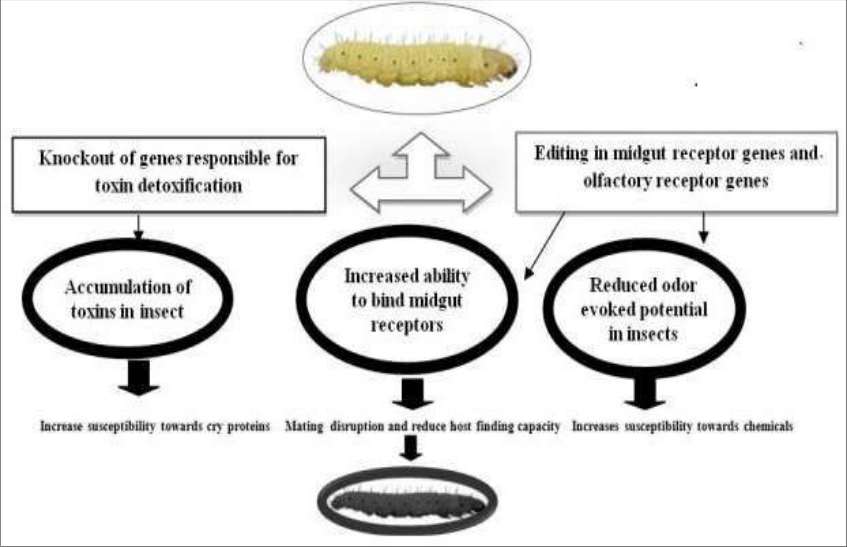 Figure 5
 Table 1
Introduction
Insects have been one of the biggest causes of damage in food production, accounting for between 20 to 30 per cent of global production. Around 67,000 species of insect cause damage to plantations and tropical areas, most affected by the high incidence of insect pests. The insecticides used in pest control are often of low selectivity, they can have an impact on the natural enemy population, boosting the growth of pests and even the resurgence of others. Due to this, there is a need for alternatives that could reduce or even eliminate the use of conventional pesticides. Today, the new strategies include a number of alternatives, including parasitoids, entomopathogenic microorganisms (Bacillus thuringiensis, or Bt), resistant plants, and selective insecticides. One example of this is the use of bacterial gene technology (Cry) to manage the primary Lepidoptera pests. The Bt gene technology aims to reduce the amount of inert products in food and create a more sustainable, pollution-free, residue-free environment. Though biotechnology plays a vital role, there are still many challenges to overcome, in order to seek new research, sustainable in modern day farming.
Role of Bio-technology in Insect Pest Management
Biotechnology is the branch of biology that uses living systems and organisms to generate products for specific use. However, the planned change of natural processes to achieve effective insect pest control can be referred to as insect pest management. Living organisms have developed an enormous number of biological roles and by beneficial organisms with particular traits, such insect pest species can be effectively controlled. Biotechnology has significant ability to provide sustainable biological components in integrated pest management (IPM). A new era in agriculture started with the development of modern biotechnology as agriculture biotechnology varieties are used as a tool for agricultural research that involves the safe transfer of genes of agronomic interest (and, consequently, or desired characteristics) between a donor agency (which may be a plant, a bacterium, fungus, etc.) and plants. Plant genetic advances have the consequence of reducing the excessive reliance on improvements in agriculture, machinery, and chemicals. Modern biotechnology can reduce production costs, improve food quality, and create less harm to the environment in addition to increasing productivity. Biotechnology plays a significant role in insect pest management by providing innovative and sustainable solutions to reduce pest populations while minimizing environmental impacts and dependency on chemical pesticides.
Key contributions in Biotechnology in Insect Pest
Management include 1. Development of Genetically Modified (GM) Crops ''Biotechnology'' was known as ''the use of biological processes, organisms, or systems to create products that are expected to enhance human lives''. It is the ability to use living systems or to influence natural processes to produce products, systems, or environment that support human progress (Bhatia and Goli, 2018 a) [3] . The term ''Biotechnology'' was defined as the genetic modification of organisms for human use when rDNA technology first developed around 1972. There are several uses for biotechnology, including creating hybrid genes and introducing them in desirable organisms (Husby, 2007) [16] . The development of rDNA technology has given rise to the terms like Genetically Modified Organisms (GMOs) or Living Modified Organisms (LMOs) or Genetically Edited Organisms (GEOs). Under the umbrella of ''synthetic biology'' a comprehensive collection of gene editing techniques are accessible to scientists. The term ''green biotechnology'' refers to the use of biotechnology in agriculture to create genetically modified crops or GM crops (Bhatia and Goli, 2018 b) [4] . Crops genetically engineered to produce Bt toxins have a benefit that these crops work well with other pest management strategies, particularly biological control, their advantages go beyond the decrease in the usage of insecticides (Figure 1). Bt crops have genes from Bacillus thuringiensis (Bt), a soil bacterium, are inserted into crops like cotton, maize, and soybean. These crops produce Bt toxins that are specifically toxic to certain lepidopteran and coleopteran pests (e.g., bollworms, stem borers) while being safe for humans and non-target organisms. A new era of selective pest management was ushered in 1996 with the introduction of Bt cotton varieties that contains Cry1Ac gene (Figure 2). This characteristic successfully gave cotton immunity against pink bollworm. Coincidentally, two selective insect growth regulators (IGRs) for whitefly management were introduced in the same year. The use of foliar insecticide was reduced, although broad spectrum insecticides were still needed to control Lygus bugs. With the start of a grower organized pink bollworm eradication program, the success of the GE cotton cultivars was characterized by remarkable adoption rates, reaching a peak in 2008 with over 98% of acreage under Bt cotton (Naranjo and Ellsworth, 2010; Tabashnik et al., 2010) [22,29] . The Bt eggplant was developed to protect Brinjal against certain lepidopteran pests, such as eggplant fruit and shoot borer (EFSB), is provided by the Cry1Ac gene. Efficacy trials were part of the Bt eggplant research and development, and contained greenhouse testing showed that EFSB could be controlled (Choudhary and Gaur, 2008) [7] . According to studies, Bt brinjal offers farmers significant economic, health, and environmental advantages by controlling EFSB almost entirely and drastically lowering the need for pesticides (Shelton et al., 2018) [18] . Spodoptera frugiperda (Fall armyworm) is the major pest of maize. When Spodoptera frugiperda larvae feed on plant tissue different Bt proteins (Including Cry1Ab, Cry1F, Cry1A.105, Cry2Ab, and Vip3Aa, are produced by GE maize that are toxic to Spodoptera frugiperda larvae (at varying levels). 2016) [30,18] . It acts only on target species while leaving nontarget species unharmed (Bachman et al., 2013, and Whyard et al., 2009) [1,34] . The trigger for gene silencing is doublestranded RNA (dsRNA) generated from an endogenous genomic locus or a foreign source, such as a transgene or virus. This method is highly specific, targeting only the intended pest species without harming beneficial insects. It is extremely widespread sequence-specific method that prevents the expression of a certain gene, which makes it a useful technique to control insects in a species-specific manner (Figure 3). The United States (2017) and Canada (2016) approved the transgenic maize SmartStax®Pro, which is designed to express dsRNA to control Diabrotica virgifera DVsnf7. The unavailability of genetic transformation technology in certain crops and public concerns about the safety of transgenic plants have significantly hindered the adoption of RNAi-based transgenic plants (Rank and Koch, 2021) [37] . [2,23,26] and more than 15 countries recently approved the cultivation of first maize crop (MON87411), that expresses dsRNA against the western corn rootworm, Diabrotica virgifera (ISAAA. 2020) [17] . Lu et al., (2020) [20] reported that gene-specific dsRNA can effectively lower the survival of the pest beetle, Henosepilachna vigintioctopunctata. Similar results were obtained by Ullah et al., (2020) [31] , who revealed that the cotton-melon aphid, Aphis gossypii, was decreased significantly by 41% and 48%, respectively, after exposure to dsRNA targeting the chitin synthase 1 gene. These and numerous other research findings demonstrate its goal of using RNA interference (RNAi) for pest management. However, the effectiveness of the RNAimethod depends on the particular characteristics of the target insect species, such as the structural features, hostpathogen interaction mechanisms, and the efficiency of the RNAi machinery. The stability of dsRNA in the environment and in the digestive tract of insects is a significant factor influencing the effectiveness of RNA interference for pest management (Christiaens et al., 2020) [8] . Impact of digestive nucleases on RNAi efficacy was provided by Giesbrecht et al., 2020 [10] in the mosquito, Aedes aegypti. Compared to mosquitoes that were not given the nuclease specific dsRNA, silencing efficiency increased when dsRNA targeting two midgut specific nuclease and dsRNA targeting a reporter gene were delivered together. Applying micro-organisms that produce insect-specific dsRNA instead than naked dsRNA could be one method to overcome the problems with dsRNA persistence. The bacteria may cause the dsRNA to remain in the environment and in insects for a longer period of time. Zhang et al. (2019) [36] revealed that the application of dsRNAexpressing bacteria could be used to target the leaf beetle, Plagiodera versicolora.
Sterile Insect Technique (SIT)
Biotechnology enhances Sterile Insect Technique (SIT) by allowing for the mass production of genetically sterile insects. For example, transgenic techniques can ensure sterility or alter sex ratios to suppress pest populations effectively. Sterile Insect Technique (SIT) is a method of biological insect management technique that releases a large number of sterile insects into the wild (Dyck et al., 2021) [9] . The sterile males mate with the females and the females that mate with a sterile male produce no offspring, thus the following generation is reduced (Figure 4). Sterile insects cannot reproduce themselves and cannot become established themselves in the environment and repeated release of sterile males can eliminate pest populations (Vreysen et al., 2007) [32] . Using the Sterile Insect Technique (SIT) screw-worm flies (Cochliomyia hominivorax) have been effectively eliminated from North and Central America. Numerous fruit fly pests have been successfully controlled, most notably the Mexican fruit fly (Anastrepha ludens) and the Mediterranean fruit fly (Ceratitis capitata). The usefulness of this method in controlling the Queensland fruit fly (Bactrocera tryoni) is now being investigated (Luigi, 2013) [21] . The insect's reproductive cells get sterilized as a result of X-ray photon irradiation.
Precision Breeding for Pest Resistance:
Advances in gene-editing technologies like CRISPR/Cas 9 allow precise modifications to plant genomes, enhancing resistance to specific insect pests. CRISPR/Cas9 has gained a lot of attention due to its unique benefits in controlling insect pest, which ensures a high crop yield and food security. A number of gene editing and insect manipulation tools have been used in Drosophila melanogaster Meigen, and several tephritids (Figure 5). The development in genome editing methods has created genetically modified insects and other innovative pest control methods (Mir et al., 2018, Handler et al., 2002) [25,12] . The CRISPR/Cas9 technology is developing because it is highly advantageous for effective gene editing and modification. The CRISPR/Cas tools components-sgRNA and the Cas9 protein can be introduced into the target organism as plasmid DNA, RNA or a ribonucleo-protein (RNP) complex (Heinrich et al., 2002, Schetelig et al., 2016). Some of the insect orders that have been evaluated for pest management by genome editing using CRISPR/Cas system are in Table 1. [24] Trobolium castaneum EGFPI mRNA injection + DNA Gilles et al. (2015) [11]
| Insect | Targeted genes | Delivery method | References |
|---|---|---|---|
| Ceratitis capitata | Eye pigmentation gene white eye (We) | Micro-injection | Meccariello et al. (2017) [24] |
| Trobolium castaneum | EGFPI | mRNA injection + DNA | Gilles et al. (2015) [11] |
| Helicoverpa armigera | HaCad | mRNA+ DNA | Wang et al. (2016) [33] |
| Plutella xylostella | Pxabd-A | mRNA+ DNA | Huang et al. (2016) [15] |
| Agrotis ipsilon | Yellow-Y-Gene | Micro-injection | Chen et al. (2016) [6] |
| Locust migratoria | Ocro | Micro-injection | Li et al. (2016) [19] |
Table text extracted from the original PDF; superscript letters are shown inline. The original table image is below.
View original table image
Helicoverpa armigera
HaCad mRNA+ DNA Wang et al. (2016) [33]
Plutella xylostella
Pxabd-A mRNA+ DNA Huang et al. (2016) [15]
Agrotis ipsilon
Yellow-Y-Gene Micro-injection Chen et al. (2016) [6] Locust migratoria Ocro Micro-injection Li et al. (2016) [19] 5. Molecular Diagnostics Molecular diagnostics in pest control refers to the use of advanced molecular biology techniques to detect, identify, and monitor pests or pathogens that threaten crops, animals, or humans. This approach provides highly accurate, rapid, and sensitive tools for pest management, enabling targeted and efficient control measures.
Biotechnology and host-plant resistance
Plant resistance is as a result of inherited traits that make a plant comparatively less susceptible to damage than a plant without these qualities. Biotechnology in host plant resistance refers to the application of biotechnological tools and techniques to improve the natural ability of plants to resist pests, pathogens, and other stressors. This approach complements traditional breeding methods and enables the development of crops with improved resistance traits in a more precise and efficient manner. During last 30 years, the major biochemical principles driving such resistance and the genes involved have been identified for their directed application through biotechnological means, but most emphasis has been given to primary protein products of specific genes. Genes of major importance are those whose protein product, depending on the method of insecticidal action of gene product, may be detrimental to the target insect-pests normal growth and development in order to provide host plant resistance. The first transgenic plant (tobacco) expressed a cowpea trypsin inhibitor gene (cpti-an insecticidal gene) and generated the inhibitor protein at 1.0% level to improve defense against the lepidopteran pest Helothis virescens (Hilder et al., 1987) [14] . However, subsequently developed transgenic rice (Xu et al., 1996) [35] and potato plants that were created with this gene failed to provide sustainable insect protection. On the other hand, Bacillus thuringiensis, genes that express insecticidal Cryproteins were more effective in transforming tomato and tobacco plants.
Reduced Reliance on Chemical Pesticides
By integrating biotech tools into Integrated Pest Management (IPM) programs, the dependence on chemical pesticides is reduced, leading to better environmental and human health outcomes.
Conclusion
Biotechnology has revolutionized the field of entomology, offering innovative tools and approaches to better understand, manage, and utilize insects. By integrating advanced techniques such as genetic engineering, RNA interference (RNAi), and CRISPR-Cas9, sustainable solutions can be developed for pest control and enhance pollinator health. However, these advancements also have some ethical, environmental and regulatory challenges.
Ensuring biosafety, addressing ecological concerns, and gaining public acceptance are critical to the responsible application of biotechnological innovations in entomology.
In conclusion, biotechnology offers immense potential to transform entomology, contributing to agriculture, and environmental conservation. With continued research and responsible implementation, it can address global challenges and improve the balance between human needs and ecosystem health.
Acknowledgement
AcknowledgementAuthors express their sincere gratitude and are very thankful to colleagues for their valuable support and guidance during the writing of this review paper.
References
35 in the original paper- Bachman PM, Bolognesi R, Moar WJ, Mueller GM, Paradise MS, Ramaseshadri P, et al. Characterization of the spectrum of insecticidal activity of a doublestranded RNA with targeted activity against Western Corn Rootworm (Diabrotica virgifera virgifera LeConte). Transgenic Res. 2013;22(6):1207-1222.
- Baum JA, Bogaert T, Clinton W, Heck GR, Feldmann P, Ilagan O, et al. Control of coleopteran insect pests through RNA interference. Nat Biotechnol. 2007;25(11):1322-1326.
- Barton KA, Whiteley HR, Yang NS. Bacillus thuringiensis δ-endotoxin expressed in transgenic Nicotiana tabacum provides resistance to lepidopteran insects. Plant Physiol. 1987;85(4):1103-9.
- Chen L, Wang G, Zhu YN, Xiang WWH. Advances and perspectives in the application of CRISPR/Cas9 in insects. Zool Res. 2016;37(3):136.
- Choudhary B, Gaur K. The Development and Regulation of Bt brinjal in India (Eggplant/Aubergine). Ithaca, NY: ISAAA; 2008.
- Christiaens O, Whyard S, Vélez AM, Smagghe G. Double-stranded RNA technology to control insect International Journal of Agriculture and Food Science https://www.agriculturaljournals.com pests: Current status and challenges. Front Plant Sci. 2020;11:451.
- Dyck VA, Hendrichs J, Robinson AS, editors. Sterile insect technique: Principles and practice in area-wide integrated pest management. 2nd ed. CRC Press; 2021.
- Giesbrecht D, Heschuk D, Wiens I, Boguski D, LaChance P, Whyard S. RNA interference is enhanced by knockdown of double-stranded RNases in the yellow fever mosquito Aedes aegypti. Insects. 2020;11(5):327.
- Gilles AF, Schinko JB, Averof M. Efficient CRISPRmediated gene targeting and transgene replacement in the beetle Tribolium castaneum. Development. 2015;142(16):2832-2839.
- Handler AM. Prospects for using genetic transformation for improved SIT and new biocontrol methods. Genetica. 2002;116(1):137-149.
- Heinrich JC, Li X, Henry RA, Haack N, Stringfellow L, Health AC, et al. Germ line transformation of the Australian sheep blowfly Lucilia cuprina. Insect Mol Biol. 2002;11(1):1-10.
- Hilder VA, Gatehouse AM, Sheerman SE, Barker RF, Boulter D. A novel mechanism of insect resistance engineered into tobacco. Nature. 1987;300(5890):160163.
- Huang Y, Chen Y, Zeng B, Wang Y, James AA, Gurr GM, et al. CRISPR/Cas9 mediated knockout of the abdominal-A homeotic gene in the global pest, diamondback moth (Plutella xylostella). Insect Biochem Mol Biol. 2016;75:98-106.
- Husby J. Definitions of GMO/LMO and modern biotechnology. In: Biosafety First: Holistic Approaches to Risk and Uncertainty in Genetic Engineering and Genetically Modified Organisms. Trondheim: Tapir Academic Press; 2007. p. 569-81.
- ISAAA. GMA Approval Database. Available from: https://www.isaaa.org/gmapprovaldatabase/event/defaul t.asp?EventID=367. 2020.
- Joga MR, Zotti MJ, Smagghe G, Christiaens O. RNAi efficiency, systemic properties, and novel delivery methods for pest insect control: What we know so far. Front Physiol. 2016;7:553.
- Li Y, Zhang J, Dafen C, Yang P, Jiang F, Wang X, et al. CRISPR-Cas9 in locusts: Successful establishment of an olfactory deficiency line by targeting the mutagenesis of an odorant receptor co-receptor (Orco). Insect Biochem Mol Biol. 2016;79:27-35.
- Lu J, Guo M, Shimin C, Noland JE, Guo W, Sang W, et al. Double-stranded RNA targeting vATPase B reveals a potential target for pest management of Henosepilachna vigintioctopunctata. Pestic Biochem Physiol. 2020;165:104555.
- Luigi DA. Des insect's transgeniques control la dengue. Sous quelncontrole et avec quells dangers? Stop OGM infos. 2013, 52.
- Naranjo SE, Ellsworth PC. Fourteen years of Bt cotton advances IPM in Arizona. Southwestern Entomol. 2010;35(4):437-444. DOI: 10.3958/059.035.0329.
- Mao YB, Cai WJ, Wang JW, Hong GJ, Tao XY, Wang LJ, et al. Silencing a cotton bollworm P450 monooxygenase gene by plant-mediated RNAi impairs larval tolerance of gossypol. Nat Biotechnol. 2007;25(11):1307-1313.
- Meccariello A, Monti SM, Romanelli A, Colonna R, Primo P, Inghilterra MG, et al. Highly efficient DNAfree gene disruption in the agricultural pest Ceratitis capitata by CRISPR-Cas9 ribonucleoprotein complexes. Sci Rep. 2017;7(1):10061.
- Mir A, Alterman JF, Hassler MR, Debacker AJ, Hudgens E, Echeverria D, et al. Heavily and fully modified RNAs guide efficient SpyCas9-mediated genome editing. Nat Commun. 2018;9:2641.
- Pitino M, Coleman AD, Maffei ME, Ridout CJ, Hogenhout SA. Silencing of Aphid Genes by dsRNA Feeding from Plants. PLoS ONE. 2011;6(11):e25709.
- Schetelig MF, Targovska A, Meza JS, Bourtzis M, Handler AM. Tetracycline suppressible female lethality and sterility in Anastrepha ludens. Insect Mol Biol. 2016;25(5):500-508.
- Shelton A, Hossain M, Paranjape V, Azad A. Bt eggplant project in Bangladesh: history, present status, and future direction. Front Bioeng Biotechnol. 2018;6:106. DOI: 10.3389/fbioe.2018.00106.
- Tabashnik BE, Sisterson MS, Ellsworth PC, Dennehy TJ, Antilla L, Liesner L. Suppressing resistance to Bt cotton with sterile insect releases. Nat Biotechnol. 2010;28(12):1304-7. DOI: 10.1038/nbt.1704.
- Taning CN, Arpaia S, Christiaens O, Dietz-Pfeilstetter A, Jones H, Mezzetti B, et al. RNA-based bio-control compounds: Current status and perspectives to reach the market. Pest Manag Sci. 2019;76(3):841-5.
- Ullah F, Gul H, Tariq K, Desnuex N, Gao X, Dunlun Song. Thiamethoxam induces transgenerational hormesis effect and alteration of genes expression in Aphis gossypii. Pestic Biochem Physiol. 2020;165:104557.
- Vreysen MJ, Hendrichs J, Enkerlin WR. The sterile insect technique as a component of sustainable areawide integrated pest management of selected horticultural insect pests. J Fruit Ornamental Plant Res. 2007;14:107.
- Wang J, Zhang H, Wang H, Zhao S, Zuo Y, Yang Y, et al. Functional validation of cadherin as a receptor of BT toxin Cry1Ac in Helicoverpa armigera utilizing the CRISPR/Cas9 system. Insect Biochem Mol Biol. 2016;5:11-17.
- Whyard S, Singh AD, Wong S. Ingested doublestranded RNAs can act as species-specific insecticides. Insect Biochem Mol Biol. 2009;39(12):824-32.
- Xu DP, Xue QZ, McElroy D, Mawal Y, Hilder VA, Wu R. Constitutive expression of a cowpea trypsin inhibitor gene, CpTi, in transgenic rice plants confers resistance to two major rice insect pests. Mol Breed. 1996;2(2):167-173.
- Zhang Y, Xu L, Li S, Zhang J. Bacteria-Mediated RNA Interference for Management of Plagiodera versicolora (Coleoptera: Chrysomelidae). Insects. 2019;10(11):415.
- Rank AP, Koch A. Lab-to-field transition of RNA spray applications-how far are we?. Frontiers in Plant Science. 2021 Oct 15;12:755203.