
Research article · 2025 · Full text
International Journal of Agriculture and Food ScienceAloe vera: A novel natural edible coating for post-harvest application on fruits and vegetables: A review
Volume 7(1) · Pages 109–113 · DOI: 10.33545/2664844x.2025.v7.i1b.246 ↗
Research areasFood Science and Nutritional StudiesNanocomposite Films for Food PackagingPhytochemistry and biological activity of medicinal plants
Abstract
Author-writtenNow a days, fruits and vegetables have high demand in market because of its nutritional value but they are highly perishable as they contain 80-90% water by weight. About 30% fruits and vegetables are affected by insects, microorganisams during transportation and storage. Therefore preservation of fruits and vegetables is a big challenge for the present world to counteract that edible coating is a best option as an effective method. Edible coating can be defined as thin layer of edible material applied to the product surface in addition to or as a replacement for natural protective waxy coatings to provide a barrier to moisture, oxygen and solute movement for the food commodity. It extend the shelf life of fresh fruits and vegetables by reducing moisture and solute migration, gas exchange, respiration and oxidative reaction rates as well as by reducing or even suppressing physiological disorders. This review article revealing the Aloe vera gel preparation, compostion, mechanism, as well as advantageous effect of natural edible coating such as Aloe vera gel on physico-chemical properties of fruits and vegetables.
Summary
Source-checkedPlain-language reading of the full paper, prepared with AI and checked against the text. Each point links to the authors' own words.
Why it matters
- Fruits and vegetables are highly perishable due to their high water content (80-90% by weight), despite their high market demand for nutritional value. View evidence ↗
- Post-harvest losses are a significant challenge; approximately 30% of produce is affected by insects and microorganisms, with India seeing annual losses between 4.6% and 15.9%. View evidence ↗
- Edible coatings serve as a thin layer of material that acts as a barrier against moisture, oxygen, and solute movement, replacing or supplementing natural waxy coatings. View evidence ↗
The question
- The review aims to examine the preparation, composition, and mechanism of Aloe vera gel, and its effects on the physico-chemical properties of fruits and vegetables. View evidence ↗
What they did
- Aloe vera gel is prepared by harvesting 3-4 year old mature leaves, washing them with a 25% chlorine solution, and grinding the colorless hydro-parenchyma at 25°C. View evidence ↗
- The preparation process includes adding ascorbic acid (1.9-2.0 g/L) and citric acid (4.5-4.6 g/L) to maintain pH 4, followed by pasteurization and flash cooling to 5°C or below. View evidence ↗
- A 1% commercial gelling agent is added to the Aloe vera gel to enhance its viscosity and the efficiency of the coating. View evidence ↗
What they found
- In 'Arctic Snow' nectarines, uncoated fruits exhibited a respiration rate 41% higher than those coated with Aloe vera gel. View evidence ↗
- Aloe vera treatment reduced firmness loss in table grapes stored at 1°C and 95% RH, while control grapes lost more than 50% of their firmness. View evidence ↗
- Aloe vera gel coating reduced disease incidence in papaya from 100% in uncoated fruits to 27% in coated fruits. View evidence ↗
- Aloe vera gel demonstrates antibacterial activity against several foodborne pathogens, including E. coli and Salmonella typhimurium. View evidence ↗
What it means
- The authors conclude that Aloe vera gel is a safe, environmentally harmless, and appropriate alternative to conventional wax coatings containing fungicides. View evidence ↗
Visual summary
1 visualsIllustrations explain the paper; they do not show study data.
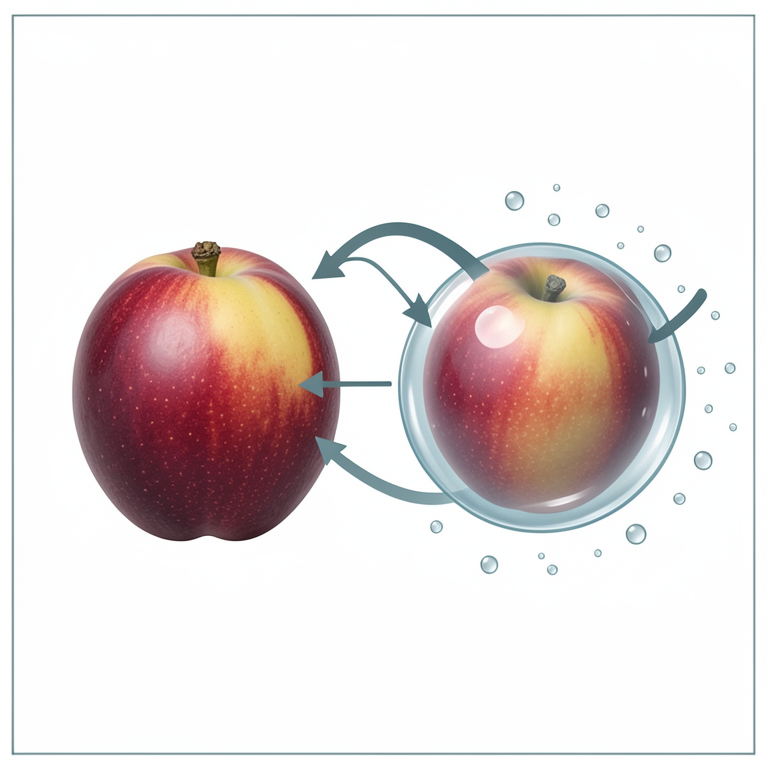
Mechanism of Aloe Vera Edible Coating
AI-generated conceptual illustration (fresh nectarines). It explains the idea and does not show study data.
View source evidence ↗Figures & tables
From the original paper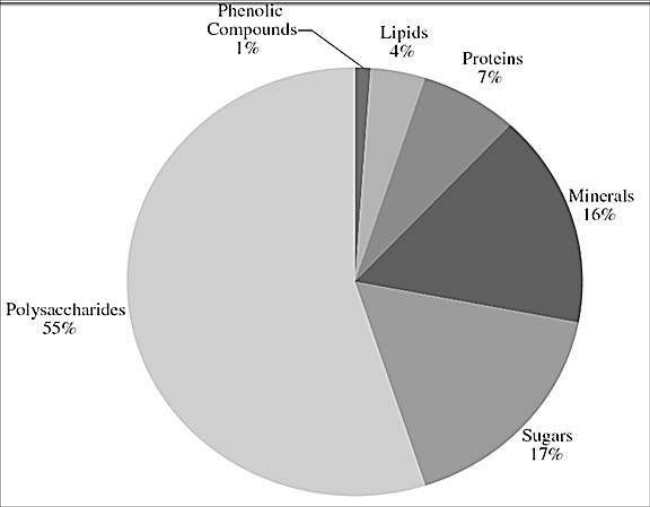 Figure 1
Introduction
India is the 2 nd largest producer of fruits and vegetable in world among that India witnessed nearly 4.6 to 15.9% losses in fruit and vegetables annually, and nearly 33% of post-harvest losses due improper handling, storage facility as well as microorganism's spoilage. The postharvest losses annually affect the livelihoods of nearly one-third of the population, the majority of whom are small holder farmers. Reducing these losses can not only improve farmers' incomes but could also encourage more consumption of this highly nutritious fruit and vegetables in a region where per capita consumption is only half of the recommended level. Consumers around the world demand for food of high-quality, without chemical preservatives, and an extended shelf life. Therefore, an increased effort has been made to develop new natural preservatives and antimicrobials (Lin et al., 2007) [14] . Many storage techniques have been developed to extend the marketing distances and holding periods for commodities after harvest. Different preservation methodologies have been developed. One method of extending post-harvest shelf life is the use of the edible coatings (Baldwin et al., 1995) [3] . Edible films and coatings have received considerable attention in recent years because of their advantages including use as edible packaging materials over synthetic films. Therefore preservation of fruits and vegetables is a big challenge for the present world to counteract that edible coating is a best option as an effective method.
Edible coating
Edible coating can be defined as thin layer of edible material applied to the product surface in addition to or as a replacement for natural protective waxy coatings to provide a barrier to moisture, oxygen and solute movement for the food commodity. It extend the shelf life of fresh fruits and vegetables by reducing moisture and solute migration, gas exchange, respiration and oxidative reaction rates as well as by reducing or even suppressing physiological disorders. the produce and carbon dioxide accumulates within the produce because it cannot escape as easily through coating. Eventually the fruit and vegetables will shift to partial anaerobic respiration that requires less oxygen (1-3%). With less oxygen, the production of ethylene is disrupted and physiological loss of water is minimized. Thus, the fruits and vegetables remain firm, fresh and nutritious for longer period and their shelf life almost doubles.
Different types of edible coating
Components used for the preparation of edible films/coatings can be classified into three categories: hydrocolloids (Such as proteins and polysaccharides), lipids (Such as fatty acids, acylglycerol, waxes) and composites (Donhowe and Fennema, 1993) [7] .
Polysaccharides: used for edible films or coatings include cellulose, starch derivatives, pectin derivatives, seaweed extracts, exudate gums, microbial fermentation gums and chitosan (Krochta and Mulder-Johnson, 1997) [13] . Polysaccharides are generally very hydrophilic resulting in poor water vapor and gas barrier properties. Although coatings by polysaccharide polymers may not provide a good water vapor barrier, these coatings can act as sacrificing agents retarding moisture loss from food products (Kester and Fennema, 1986) [12] . Lipid films: Lipid compounds utilized as protective coating consist of acetylated monoglycerides, natural wax, and surfactants. The most effective lipid substances are paraffin wax and beewax. The primarily function of a lipid coating is to block transport of moisture due to their relative low polarity.
Paraffin wax is permitted for use on raw fruit and vegetable and cheese. Carnauba wax is an exudate from palm tree leaves (Copoernica cerifera). Beewax (White wax) is produced from honeybees. Candelilla is obtained from candelilla plant. Mineral oil consists of a mixture of liquid paraffin and naphtheric hydrocarbon (Hernandez, 1994) [11] .
Composites: Consisting of a blend of polysaccharides, protein, and/or lipids. This approach enables one to utilize the distinct functional characteristics of each class of film former (Kester and Fennema, 1986) [12] .
Composites are divided into two categories
Composites are divided into two categories
Bilayer composites b. Conglomerates
Bilayer composites b. Conglomerates
Properities of edible coating
The coating should be water resistant so that it remains intact and covers a product adequately, when applied.
It should not deplete oxygen or build up excessive carbon dioxide. A minimum of 1-3% oxygen is required around a commodity to avoid a shift from aerobic to anaerobic respiration. Improve appearance, maintain structural integrity, imrove mechanical properties, carry active agents (Antioxidants, vitamins. etc.,) and retain volatile compounds It should be easily emulsifiable, non-sticky or should not be tacky, and have eual drying performance.
Herbal edible coatings
Herbal edible coating is new technique for food industry. It is made from herbs or combination of other edible coatings and herbs, most common herbs used in edible coatings are such as Aloe vera gel, Neem, lemon grass, rosemary, Tulsi and turmeric. Herbs have antimicrobial properties, it consists vitamins, antioxidants and essential minerals.
Recently Aloe vera gel is widely used in coating on fruits and vegetables because of its antimicrobial property, it also reduces loss of moisture and water.
Fruits which has been coated are:
Orange, Apple, grape fruit, cherry, lemon, strawberry, Mango, peach etc. and fresh-cut apple, fresh-cut peach, fresh-cut pear.
Aloe vera
Botanically Aloe vera L. originated in South Africa and South America, belongs to Family Liliaceae. More than 300 species are available in Aloe genus, traditionally being used therapeutically from roman times. The word Aloe derived from the word Arabic "Alloeh" or the Hebrew "Halal"
meaning "bitter, shinny substance". Aloe vera is known as "plant of immortality" by the Egyptians due to its beneficial effect on human health.
Aloe vera Gel: A Promising Alternative to Synthetic Preservative
A section of unscrupulous traders use carbide in fruits like bananas, pineapples, oranges, grapes, apricots, papayas, etc. to keep them fresh. They also use textile dye in papaya, pomegranate and other fruits. Harmful plant growth hormones and chemicals are also indiscriminately used in fruit orchards. to ripen faster, papaya fruits are dipped into calcium carbide and ethephone. These chemicals are highly toxic and pose great risk to consumers health. To avoid these problems Aloe vera is an edible, invisible, odorless and does not affect the taste of fruits and vegetables on which it is applied. It also poses no risk to human health. It holds the potentiality to preserve fruits effectively due to its anti-microbial action. By this way we can say that Aloe vera is a promising alternative to synthetic preservative.
Antimicrobial activity of Aloe vera gel:
An antimicrobial is a substance that kills or inhibits the growth of microbes such as bacteria fungi, viruses, or parasites. Habeeb et al.
(2007) [9] found that A. vera gel has inhibited the growth of both gram positive and gram negative bacteria Aloe gel composed of a wide range of constituents such as Anthraquinones presented antimicrobial activity against Staphylococcus aureus strains and against Escherichia coli, through inhibition of solute transport in membranes (Hamman, 2008 & Lone et al., 2009) [10,15] . Emodine has been reported to be effective against several gram positive bacteria. According to Shelton et al. (1991) [20] Aloe vera gel showed good antibacterial activity against some food borne pathogenic microorganisms such as Bacillus cereus, Salmonella typhimurium, Escherichia coli, Klebsialla pneumonia etc.
Effect of Aloe vera gel coating on physico-chemical properties of fruit Weight loss
Weight loss mainly occurs due to water loss by transpiration and loss of carbon reserves due to respiration. The rate at which water is lost depends on the water pressure gradient between the fruit tissue and the surrounding atmosphere. Aloe gel based edible coating act as barrier, thereby restricting water transfer and protecting fruit skin from mechanical injuries (Vogler et al., 1999) [22] . An experiment was conducted by (Tripathi and Dubey, 2004) [21] to maintain quality and safety of table grapes by coating with Aloe vera gel in cold storage (1°C, 95%). Weight loss increased during cold storage and it was significantly greater in control (uncoated fruits) than in Aloe-coated grapes.
Aloe vera gel (100%) has been used to preserve papaya fruit at room temperature 25 °C-29 °C and 82-84% RH. All samples demonstrated a gradual loss of weight during storage. Throughout storage, the weight loss of uncoated fruit (Sample) was significantly greater than that of Aloe gel coated fruit. At the end of the storage, uncoated papaya showed 22.5% loss in weight, whereas the weight losses of samples coated with Aloe vera gel was 7.93% (Brishti et al., 2013) [4] .
Total Soluble Solid, Titrable Acidity and Ascorbic Acid
Fruits are essential for the proper maintenance of human health. Fruits are foods rich in vitamins, minerals and supply arrays of colors, flavor, texture and bulkiness to the pleasure of eating. (Tripathi and Dubey, 2004) [21] Reported that A. vera led to a lower increase in TSS (Total Soluble Solid) and greater TA content (Titrable Acidity) retention of coated berries, which shows that uncoated fruits presented a more pronounced maturation development than coated berries during storage periods (1 °C, 95% RH+ 4 days at 20 °C, 90% RH).
In case of Aloe coated and uncoated oranges (12 ºC, 96-98%RH), there were no significant differences in TSS and TA content of fruits during storage periods. The value of ascorbic acid content for coated oranges was found to be higher than that of uncoated fruits (Arowora et al., 2013) [2] . Brishti et al. (2013) [4] found that ascorbic acid content was higher in Aloe coated papaya fruits (86.55 mg) than the control fruits (61.10 mg) during the storage period at temperatures 25 °C-29 °C and 82-84% RH.
Respiration rate
It is known that the environmental temperature affects the fruit respiration and the respiration affects the fruit temperature in return (Luo et al., 2001) [16] . When the temperature around the fruit rises, the respiration increases which leads to the increase of the temperature inside the fruit. The lower the respiration rate during storage the higher the shelf life of fruits and vice versa. The Aloe vera gel coating has significantly reduced the breathing rate. According to Ahmed et al. (2009) [1] 'Arctic Snow' nectarines was treated with Aloe gel and stored at 20±1 °C to evaluate the ripening and quality attributes. Initially, Aloe vera gel coated and uncoated fruit did not exhibit any significant change in respiration rate. Later on, the control fruit's respiration rate increased more rapidly and exhibited a 41% higher respiration rate compared to the Aloe vera gel coated fruit.
Firmness
Texture is a critical quality attribute in the consumer acceptability of fresh fruit and vegetables. The rate and extension of firmness loss during storage are the main factors determining fruit quality and postharvest shelf life. Fruits softening considerably occur as a result of degradation of the middle lamella of cell wall. Changes in cell wall structure and in their composition is mainly due to joint action of enzymes hydrolases, particularly polygalacturonase (PG), pectinestarage (PE),β-Galactosidase (β-Gal), pectate lyase (PL) and cellulose (Cel). Aloe treatment significantly reduced the firmness losses of table grapes during cold storage (1 °C, 95% RH) whereas losses of >50% were detected in control grapes after 21 days of cold storage plus 4 days at 20 °C. This may be due to the effect of A. vera gel on the reduction of â-galactosidase, polygalacturonase, and pectinmethyl-esterase activities (Nunan et al., 1998) [18] .
Color: Visual assessment is the first impression and a key feature in the choice of fruits. Color is one of the most important visual attributes of fruits. According to Ergun et al (2012) [8] , Aloe vera gel treatment delayed the green color loss on the fruit skin of apples stored at 2 °C for 6 months. Skin color of table grapes showed lower increases in Aloe treated than in control (Untreated) fruits. [5] . At the end of cold storage (1 °C, 95% RH), control fruits exhibited a redder and darker color than Aloe-treated ones, showing the aspect of overripe fruit, which is considered to be detrimental to color quality (Tripathi and Dubey, 2004) [21] . The modified atmosphere created by the Aloe vera gel coating material retarded the ethylene production rate, therefore, delaying ripening, chlorophyll degradation, anthocyanin accumulation and carotenoid synthesis thus ultimately delaying color change of fruits (Carrillo et al., 2000) [6] .
Decay Percentage
Decay percentage was used to observe the effectiveness of coated material on fruit in retarding fruit disease. In case of Aloe vera coated papaya fruits, no disease signs were observed until 1 week after the beginning of the storage period. At the end of the storage period, 100% disease incidence was observed in uncoated fruits, whereas for Aloe gel coated fruits disease incidence was only 27%. This was due to the anti-microbial potentiality of coated materials which has been discussed earlier (Brishti et al., 2013) [4] . Aloe vera gel was successful in reducing microorganism proliferation in table grape, the effect being higher for yeast and molds than for mesophillic aerobics (Tripathi and Dubey, 2004) [21] . Interestingly, the Aloe vera gel coating was effective in controlling microbial growth of 'Starking' cherry and 'Crimson' table grape without incorporation of other antimicrobial compounds such as garlic oil, potassium sorbate and nisin to increase the activity. (Pranoto et al., 2005) [19] .
Overall appearance
Overall appearance is the first impression and a key feature in the choice of fruits (Tripathi and Dubey, 2004) [21] . Found that Aloe vera coated table grapes (1 °C, 95% RH+ 4 days at 20 °C, 90% RH) looked shiny and attractive. The coated fruits did not produce any bad odor or off-flavor. According to the judging panel, cherry fruit coated with Aloe vera gel (16 days 1 °C + 2 days at 20 °C) had a better appearance than the control fruits. Control cherry fruits showed severe symptoms of dehydration and browning during storage periods. None of the judges detected the appearance of offflavors or aromas in cherries coated with Aloe vera gel (Martinez et al., 2006) [17] .
Conclusion
Aloe vera gel is an appropriate alternative to the conventional wax/other coatings with incorporated fungicides. Having natural biocidal activity, it is effective against the fruit spoiling fungi. Reduces the PLW of fruits to a greater extent due to hygroscopic nature of acemannan.
Retards the ripening process by creation of modified atmosphere around the fruit surface as well as retains the firmness of many fruits due to its activity against cell wall degrading enzymes.
Figures and tables from the paper
References
20 in the original paper- Ahmed MJ, Singh Z, Khan AS. Postharvest Aloe vera gel-coating modulates fruit ripening and quality of 'Arctic Snow' nectarine kept in ambient and cold storage. Int. J Food Sci Technol. 2009;44(5):10241033.
- Arowora KA, Williams JO, Adetunji CO, Fawole OB, Afolayan SS, Olaleye OO, et al. Effects of Aloe vera coatings on quality characteristics of oranges stored under cold storage. Greener J Agric Sci. 2013;3(1):3947.
- Baldwin EA, Nisperos-Carriedo MO, Baker RA. Edible coatings for lightly processed fruits and vegetables. HortScience. 1995;30(1):35-38.
- Brishti FH, Misir J, Sarker A. Effect of biopreservatives on storage life of papaya (Carica papaya L.). Int. J Food Stud. 2013, 2(1).
- Cantos E, Espin JC, Tomás-Barberán FA. Varietal differences among the polyphenol profiles of seven table grape cultivars studied by LC-DAD-MS-MS. J Agric Food Chem. 2002;50(20):5691-5696.
- Carrillo-Lopez A, Ramirez-Bustamante F, ValdezTorres JB, Rojas-Villegas R, Yahia EM. Ripening and quality changes in mango fruit as affected by coating with an edible film. J Food Qual. 2000;23(5):479-486.
- Donhowe G, Fennema O. Water vapor and oxygen permeability of wax films. J Am Oil Chem Soc. 1993;70(9):867-873.
- Ergun M, Satici F. Use of Aloe vera gel as biopreservative for 'Granny Smith' and 'Red Chief' apples. 2012.
- Habeeb F, Shakir E, Bradbury F, Cameron P, Taravati MR, Drummond AJ, et al. Screening methods used to determine the antimicrobial properties of Aloe vera inner gel. Methods. 2007;42(4):315-320.
- Hamman J. Composition and applications of Aloe vera leaf gel. Molecules. 2008;13(8):1599-1616.
- Hernandez D. Qualitative representation of spatial knowledge. Vol. 804. Springer Science & Business Media; 1994.
- Kester JJ, Fennema OR. Edible films and coatings: a review. Food Technol (USA). 1986.
- Krochta JM, Mulder-Johnston C. Food Technology: Edible and Biodegradable Polymer Films Challenges and Opportunities (Scientific Status Summary). 1997, 51(2).
- Lin D, Zhao Y. Innovations in the development and application of edible coatings for fresh and minimally processed fruits and vegetables. Compr Rev Food Sci Food Saf. 2007;6(3):60-75.
- Martínez-Romero D, Alburquerque N, Valverde JM, Guillén F, Castillo S, Valero D, et al. Postharvest sweet cherry quality and safety maintenance by Aloe vera treatment: a new edible coating. Postharvest Biol Technol. 2006;39(1):93-100.
- Nunan KJ, Sims IM, Bacic A, Robinson SP, Fincher GB. Changes in cell wall composition during ripening of grape berries. Plant Physiol. 1998;118(3):783-792.
- Pranoto Y, Rakshit SK, Salokhe VM. Enhancing antimicrobial activity of chitosan films by incorporating garlic oil, potassium sorbate and nisin. LWT-Food Sci Technol. 2005;38(8):859-865.
- Shelton RM. Aloe vera: Its chemical and therapeutic properties. Int. J Dermatol. 1991;30(10):679-683.
- Tripathi P, Dubey NK. Exploitation of natural products as an alternative strategy to control postharvest fungal rotting of fruit and vegetables. Postharvest Biol Technol. 2004;32(3):235-245.
- Vogler BK, Ernst E. Aloe vera: A systematic review of its clinical effectiveness. Br J Gen Pract. 1999;49(447):82-90.