
Research article · 2025 · Full text
International Journal of Agriculture and NutritionEvaluation the efficiency of leaf compost on soil microbes and wheat growth
Volume 7(1) · Pages 01–06 · DOI: 10.33545/26646064.2025.v7.i1a.195 ↗
Research areasAgriculture, Plant Science, Crop ManagementAgriculture and Biological StudiesAgricultural Productivity and Crop Improvement
Abstract
Author-writtenSince the beginning of the twenty-first century, Iraq has witnessed the introduction of many new plants, especially trees and shrubs, for multiple purposes, the most important of which is landscaping, as well as economic and environmental goals. Among these plants that have recently spread in the Iraqi environment are Moringa, Conocarpus, and Leucaena. This study aims to discover the possibility of using the leaves of these trees, in addition to the Eucalyptus tree and the Sesbania shrub, in making compost, improving soil properties, supporting the microbial community in the rhizosphere, and the effect of this on plant growth. Leaf compost was prepared separately for each species and the efficiency of this fertilizer in improving the growth and yield of wheat plants was tested. The treatment of compost of Leucaena LC and Sesbania leaves SC gave a positive and stimulating effect on the microbial community in the soil, addition of Moringa compost MC led to a reduction in the microbial community. Regarding the growth of wheat plants, the SC and MC treatments had the highest effect in improving growth rates and production. This study concluded the environmental importance of Leucaena, Moringa and Sesbania trees to improve the properties of Iraqi soils that suffer from salinity and high alkalinity, as well as the possibility of using these trees and shrubs in intercropping with economic crops as one of the sustainable agricultural methods.
Summary
Source-checkedPlain-language reading of the full paper, prepared with AI and checked against the text. Each point links to the authors' own words.
Why it matters
- Organic fertilization is used to improve soil structure, enhance water and air systems, and reduce soil erosion. View evidence ↗
- Certain tree species like Leucaena, Moringa, and Sesbania are considered environmentally important for improving Iraqi soils characterized by high alkalinity and salinity. View evidence ↗
- The rhizosphere is a critical area for microbial reproduction and metabolism, which directly influences soil fertility and agricultural production. View evidence ↗
The question
- The study aimed to evaluate if compost made from the leaves of Moringa, Conocarpus, Leucaena, Eucalyptus, and Sesbania could improve soil properties, support rhizosphere microbes, and enhance plant growth. View evidence ↗
What they did
- Leaf compost was prepared by mixing dried leaves with chicken manure and garden soil in an 8:1:1 ratio (1600g leaves, 200g soil, 200g manure). View evidence ↗
- A greenhouse pot experiment used a completely randomized design with six treatments and four replicates. View evidence ↗
- The study used the Egyptian wheat variety Al-Jamiza, planting 10 seeds per pot. View evidence ↗
What they found
- Leucaena (LC) and Sesbania (SC) composts significantly increased bacterial colonies (13 and 18.25 respectively) compared to the control (3). View evidence ↗
- Moringa compost (MC) resulted in the lowest microbial activity, with only 3.75 bacterial and 9.875 fungal colonies. View evidence ↗
- Sesbania (SC) and Moringa (MC) composts produced the tallest wheat plants (81.3 cm and 80 cm) compared to the control (72 cm). View evidence ↗
- Moringa compost (MC) achieved the longest spikes (16 cm), while Sesbania (13.67 cm) and Leucaena (13 cm) also outperformed the control (10.67 cm). View evidence ↗
- Grain production per spike was highest in Sesbania (50.333) and Moringa (46.666) treatments, significantly exceeding the control (20.333). View evidence ↗
- Sesbania and Moringa composts reduced soil pH to 7.4 (from 7.6 in control) and increased potassium (K+) to 1.3 mg/g (from 0.8 mg/g in control). View evidence ↗
- Conocarpus compost (CC) resulted in the highest increase in soil organic matter at 4.11%, compared to 0.18% in the control. View evidence ↗
What it means
- The authors conclude that Leucaena, Moringa, and Sesbania are valuable for improving saline and alkaline Iraqi soils and recommend their use in intercropping as a sustainable agricultural practice. View evidence ↗
Visual summary
3 visualsIllustrations explain the paper; charts are replotted from the paper's own table values.
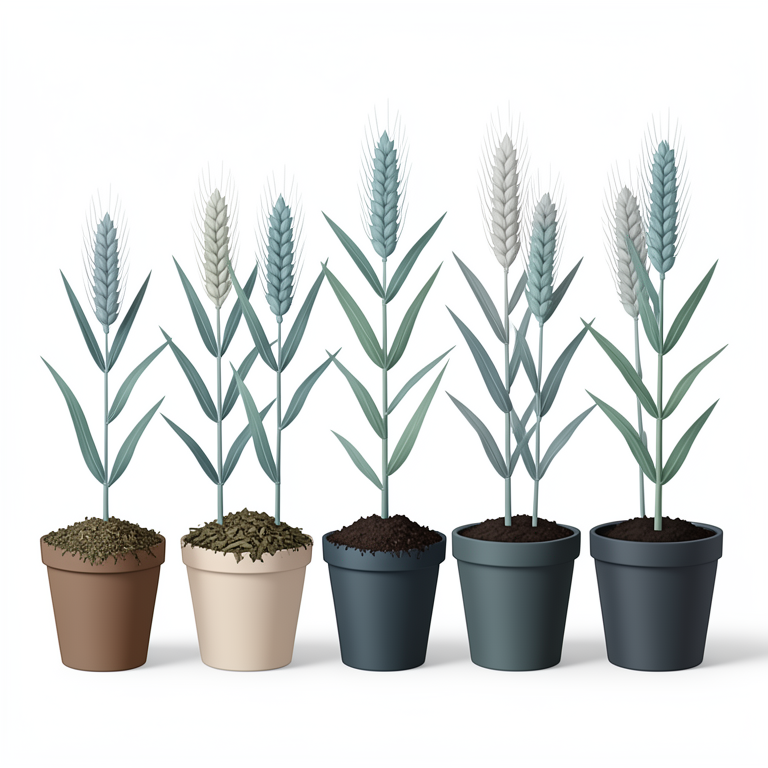
Experimental Setup Overview
AI-generated conceptual illustration (wheat plants in pots with leaf compost). It explains the idea and does not show study data.
View source evidence ↗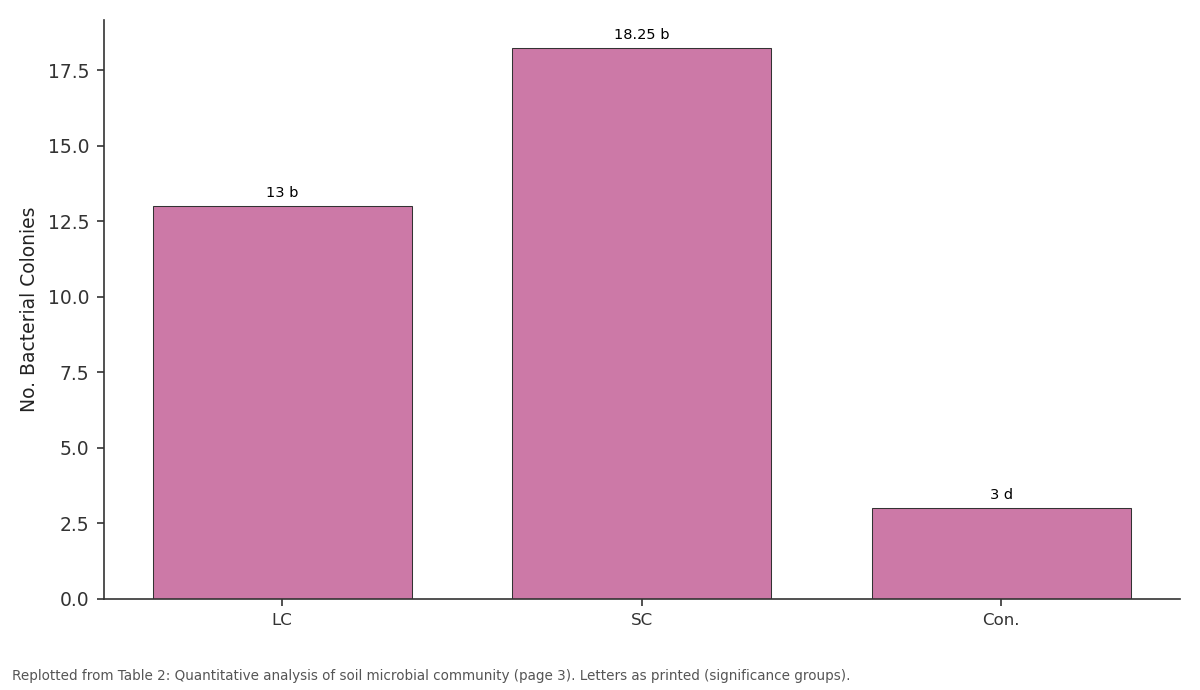
No. Bacterial Colonies: LC vs SC vs Con.
Replotted from Table 2 (page 3) of the original paper. Every bar is the paper's own table value.
View source evidence ↗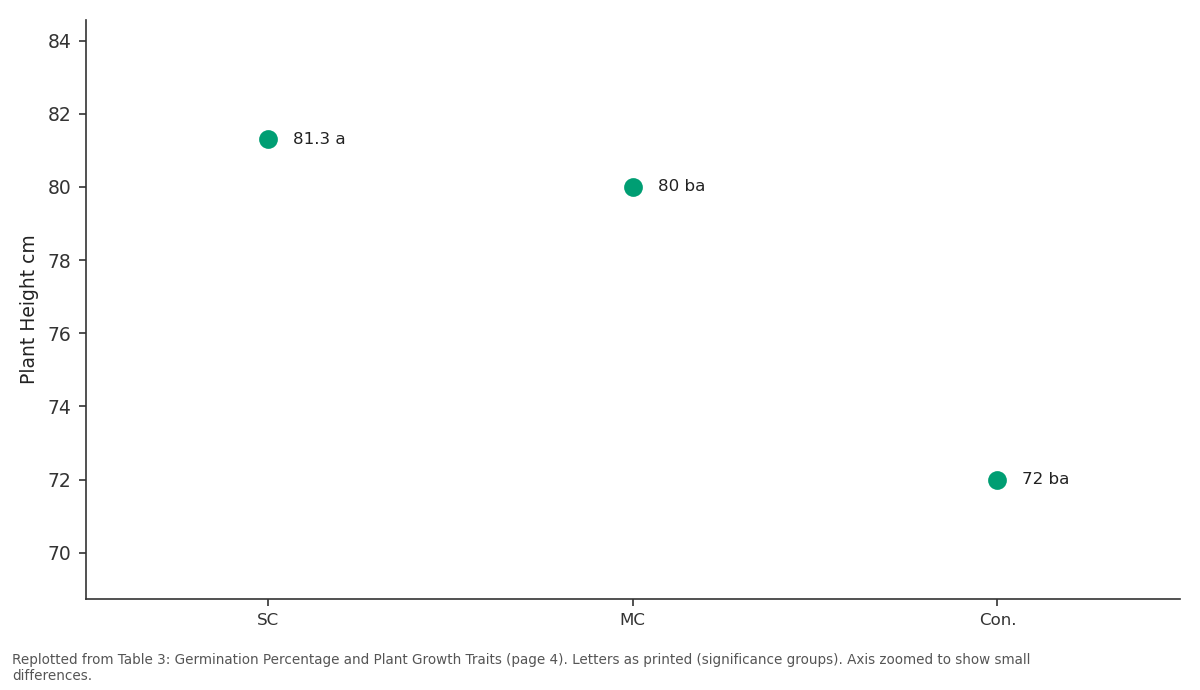
Plant Height cm: SC vs MC vs Con.
Replotted from Table 3 (page 4) of the original paper. Every bar is the paper's own table value.
View source evidence ↗Figures & tables
From the original paper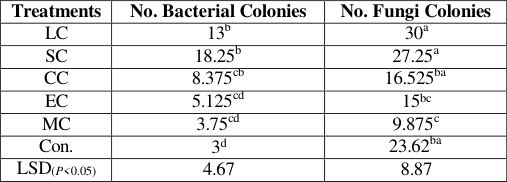 Table 2
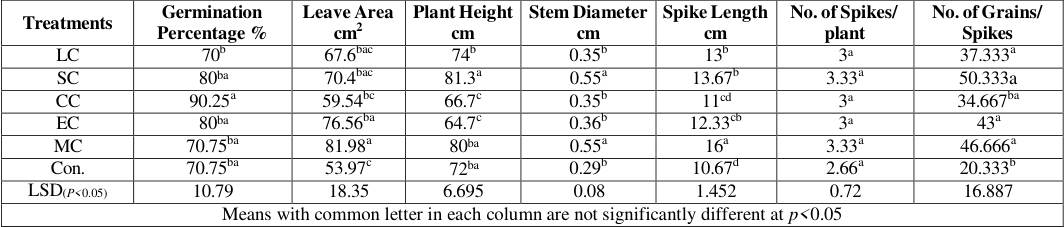 Table 3
 Table 4
Introduction
Fertilizers are defined as a mixture of materials remaining in the soil, plant and animal remains, fermented fertilizers, green manure, and other microorganisms that result from decomposition processes (ALnaass, et al., 2021) [4] . Organic substance in the soil is the result of the accumulation of partially or completely decomposed plant and animal parts in addition to the microorganisms contained in the soil. Therefore, organic matter, regardless of its sources, works as organic fertilizers to increase plant production, in addition to its role as a reformer of poor soil, as it plays a crucial role in enhancing the physical properties of the soil (Paul, 2016) [24] . Soil improvement by adding compost is an important agricultural activity and a basic strategy in waste management. Adding organic fertilizer helps improve soil structure by binding soil particles together, which leads to the aggregation of soil particles. Organic fertilization also upgrade the soil's water and air system, boost the soil's ability to form large aggregates, increases the stability of the structure, and thus reduces the soil's exposure to erosion. (Tahat, et al., 2020) [33] . The rhizosphere is considered one of the environmental media that are very suitable for the reproduction and metabolism of many types of microbes, as it has been shown that there is a relationship between microorganisms and plant roots. It has been found that microbes often do not show any harmful effects on, but rather cause beneficial effects on plant roots in this region. Therefore, the relationships between microorganisms and higher plants clearly affect soil fertility and agricultural production (Vetterlein, et al., 2020 & Ling, et al., 2022) [36,17] . In addition to the fact that adding mature compost to the soil enhances plant growth and improves soil properties, it also produces an inhibitory effect on many pathogens. Adding fertilizers and organic materials, especially compost fertilizer, can inhibit plant pathogens generated in the soil.
This inhibitory effect comes from converting the action of the microbial community in the soil after adding organic matter from harmful activity to beneficial activity for growing plants (On, et al., 2015, Milinkovic, et. al., 2018, Corato, 2020, Neher et al., 2022) [21,18,8,19] . Therefore, adding compost to the soil maintains and enhances soil fertility and productivity and is therefore key to sustainable agriculture (Pergola, et al., 2017, Ho, et al., 2022) [25,14] . Fallen tree leaves and tree pruning residues, whether ornamental trees in cities or fruit trees in orchards and gardens, are among the most important sources of raw materials for compost production. They are the main source of carbon in the compost mixture, in addition to containing plant compounds and nutrients (Parzych, 2022, Singh, et al., 2023) [23,32] . Among the trees whose leaves can be used in composting is Laucaena and the most common species, Leucaena leucocephala, which originates in Mexico and Central America. The Leucaena tree is grown for many purposes, including timber, grazing, organic fertilizer, combating desertification, improving soil properties, combating soil erosion, and other agricultural uses (Zayed, 2016, De Angelis, 2021 and Aleman-Ramirez 2022) [39,9,2] . Eucalyptus camaldolesis is a medicinal, ornamental and shade tree that is characterized by its rapid growth and prevents mosquitoes and fleas from approaching due to its repulsive smell. Man has exploited this property and expanded its cultivation to keep mosquitoes away from residential areas and as windbreaks. All species of this plant belong to the myrtle family (Hirsch, et al. 2019, Butt, et al., 2022) [13,6] . Conocarpus lancifolius is a medicinal plant from the Comperataceae family. The alcoholic extract of the dry aerial parts of Conocarpus lancifolius showed a high ability to reduce some bacterial species, yeast Saccharomyces scerevecia and some fungi such as: Aspergillus flavus, Aspergillus niger, Candida albicans, Fusarium oxysporum (Touqeer et al. 2014, Ali Elshair and Mohamed, 2019) [34,3] . Moringa oleifera, sometimes called the miracle tree, a member of the Moringaceae family, is an alternative to chemical and inorganic fertilizers. Its potential impact on crop growth and productivity has been studied, as well as the possibility of encouraging farmers to use it instead of inorganic fertilizers. Also, one of the characteristics of Moringa seeds is that the ground seeds or the pressed seeds (after oil extraction) contain polypeptides, which are suitable as natural coagulants with an antibacterial and antifungal effect (Zaffer, et al. 2015 [38,1,12,22] . Sesbania aculeate is a fast-growing shrub that adapts well to different types of soils and can be used in mixed cropping systems and as green manure (Bunma and Balslev, 2019, Rani, et al. 2020, Ghaffarian, et al. 2020) [5,27,11] . This research compared three plants introduced in last few decades to the Iraqi environment (Iraqi flora), namely the Conocarpus tree, the Leucaena tree and the Moringa tree, with two types of endemic plants, namely the Eucalyptus tree and the Sesbania shrub. The comparison was made in terms of the effect of organic fertilizer made from the leaves of these plants on the microbes life of soil (Fungi and bacteria) in the rhizosphere and plant growth. The effect of the prepared fertilizer on the growth and productivity of wheat was tested as it is one of the key crops grown in Iraq.
Materials and Methods
Materials and Methods
Compost Preparation
Green leaves were collected from Eucalyptus, Conocarpus, Moringa, Leucaena and Sesbania shrubs in the gardens of the Faculty of Agriculture / University of Misan (N 31.813292, E 47.142399 Coordinates) in August 2019. The leaves were left to dry at room temperature and then ground into small pieces by hand. The dried leaves were placed in perforated plastic containers mixed with chicken manure and garden soil at a ratio of 8:1:1 (1600 g tree leaves, 200 g soil and 200 g poultry manure). The dried plant leaves were mixed with soil and poultry manure to increase the microbial content and accelerate the formation of compost. The mixture was placed in the containers and the moisture of the mixture was maintained to suit the aerobic fermentation process by adding tap water left for more than 24 hours to get rid of chlorine so as not to affect the decomposing organisms.
Soil Amendment with Compost
The pot experiment was conducted in the Greenhouse of the College of Agriculture /University of Misan according to the completely randomized design (RCD) with six treatments and four replicates. Soil segments were taken from the garden of the College of Agriculture and mixed with sandy soil (Mixture) at a ratio of (1:1) (V: V) and distributed into 24 pots with a capacity of 4 kg. The soil texture was examined for some soil's chemical and physical properties (Table 1). Four (4) pots were left untreated as a control treatment and the remaining were treated with a different type of compost at a rate of (250 g) per pot and mixed well with the soil and watered thoroughly, six treatment were as following: LC: Leucaena Compost, SC: Sesbania Compost, CC: Conocarpus Compost, EC: Eucalyptus Compost, MC: Moringa Compost and the Control (Con.) The seeds of the wheat variety Al-Jamiza (Egyptian) were planted, which was grown in Babylon Governorate -Iraq for the 2018 season, 10 seeds were planted per pot. Then, agricultural service operations were carried out, including irrigation, weeding, pest control and fertilization, according to the recommended quantities.
Estimation of Microorganism Numbers
Soil samples were gathered during harvesting time from the rhizosphere area. The total numbers of both bacteria and fungi were estimated based on the weight of dry soil as follows:
1. 1 g of soil was taken from each pot and set in a test tube containing 9ml of sterile distilled water then shaken well until the soil is completely dissolved to obtaining a dilution of 1/10. 2. 1 ml was taken from the first tube and inserted into a second test tube containing 9 ml of sterile distilled water and shaken well to obtaining a dilution of 1/100. 3. The previous process was repeat to obtaining a dilution of 1/1000 (Three replicates for each dilution).
4. A 1ml was taken from the last dilution and placed on the surface of bacterial media NA (HiMedia Company) and fungal media PDA (HiMedia Company) supplemented with antibiotic, then the petri plates moved with a rotating motion to ensure the distribution of 1ml overall the surface of the medium. 5. Petri plates were placed in the incubator at 25 and 28 degrees for fungi and bacteria respectively and examined after 3 days. 6. The numbers of fungal and bacterial colonies are calculated using the Colony Counter device (IUL Micro -Spain). 7. The quantity of soils microorganisms were estimated using the following equation:
Germination Percentage
After the third day of planting, the seedlings in the pots were counted daily for a week (Until the tenth day of planting), where the germination percentage was calculated according to the following equation:
Plant Growth Traits
After the third week of sowing, two seedlings were kept in each pot and the rest were removed. During the first appearance of the spike, the measuring of leave area was conducted for the flag leave.
Flag Leave Area (cm 2 ) = Length * Width Area * 0.95
In the end of flowering period, stem diameter in the third internode and plant height from the top of the soil to the upper edge of top spike were measured. By using a graduated ruler, the lengths of the spikes of each plant were measured. Total spikes per plant and quantity of grains in each spike were measured too.
Soil Properties
In the end of the experiment, examination of some soil properties carried out with the aim of finding out the effect of leaf compost on soil, soil samples taken out from the pots for each replicates including control treatment, cleaned from the residue of wheat roots, pH value was determined, the organic matter was assessed according to Walkley-Black method, Na + , P and K + were determined according to (Jackson, 1958) [16] , (Olsen and Sommers, 1982) [20] and (Ryan, 1969) [40] respectively.
Results and Discussion
(Table 2) displays the results of quantitative calculation of bacterial and fungal colonies in soil samples isolated in the laboratory, which demonstrate the level of microbial activity after treatment with compost. We note that the highest bacterial and fungal activity was recorded in LC and SC compared to the Con. treatment, while MC soil contained the lowest activity of the microbial community. This can be elucidated by the fact that adding compost of the leaves of the two plants, Leucaena and Sesbania to the soil increased the activity of the microbial activity due to the high protein and organic content of these two plants belonging to the legume family Fabaceae (Leguminosae).
| Treatments | No. Bacterial Colonies | No. Fungi Colonies |
|---|---|---|
| LC | 13b | 30a |
| SC | 18.25b | 27.25a |
| CC | 8.375cb | 16.525ba |
| EC | 5.125cd | 15bc |
| MC | 3.75cd | 9.875c |
| Con. | 3d | 23.62ba |
| LSD(P<0.05) | 4.67 | 8.87 |
Table text extracted from the original PDF; superscript letters are shown inline. The original table image is below.
View original table image
On the other hand, although Moringa trees belong to the legume family and their leaves have a relatively high protein content, the MC treatment showed less activity for the microbial community in the soil compared to the rest of the treatments. These results are consistent with what was reached by (Rehman, et al. 2020, Vongsaka, et al. 2023) [28,37] regarding the antimicrobial effect found in the Moringa leaf extract, which was assigned to the dominance of phenolic acids. The results of (Table 3) showed the growth characteristics of wheat plants under the impact of different compost treatments, where the CC treatment had the highest germination percentage (90.25%), while the LC treatment showed the lowest germination percentage value (70%). However, there were no significant differences between the different treatments compared to the Con. treatment, in which the germination percentage rate was (70.75%). Based on the previous results, we cannot judge the presence of an allelopathic effect of plant leaf added to soil because it is not significantly different from the control treatment in terms of germination rate. Regarding the leaf area, the treatment MC was the superior, as the average area was (81.98 cm 2 ), while the control treatment was (53.97 cm 2 ). Also, adding compost of Sesbania leaves SC and Moringa leaves MC to the soil gave the highest height for the cultivated wheat plants which reached (81.3 cm) and (80 cm) respectively. While the average height of the Con. treatment plants reached (72 cm). For the stem diameter rate, the treatments SC and MC with (0.55 cm) for each showed a significant superiority overall treatments, the lowest of which was the Con. treatment with a value of (0.29 cm). Likewise, the MC treatment was significantly superior to the other treatments in spike length, as its average reached (16 cm). Likewise, the SC and LC treatments were significantly superior to the Con. treatment, as the values were (13.67 cm), (13 cm) and (10.67 cm) respectively. The No. of spikes per plant was close in all treatments, such that no significant differences appeared as it reached the highest value was 33.33 in SC and MC treatments, while the Con. treatment was (2.66). No. of grains per spike was the least in the Con. treatment where its average was (20.333) grains, while the SC and MC treatments showed a clear significant superiority where the average of grains per spike was (50.333) and (46.666) respectively. Through the results of this study, we find that the treatment compost of Sesbania and Moringa leaves has a significant positive effect on most growth characteristics of wheat plants. The high nitrogen content of Sesbania makes it one the promising environmental plants for use in sustainable agriculture due to its properties in improving poor soils and supplying them with important nutrients. In the study of (Sharma and Ghosh, 2020) [31] found that using Sesbania as an intercropped rice is useful for replacing urea fertilizer up to 40 kg N ha -36 also found that planting Sesbania optimized the soil properties and increased its nutritional content, where the organic matter content increased by 11.8%, available nitrogen by 4,7%, available phosphorus (kg/ha) by 3.3% and available potassium (kg/ha) increased by 4.9%. Many recent studies document the high content of nutritional and mineral elements and plant growth stimulants in Moringa leaves, making it a promising source for the production of green fertilizers and a safe alternative to traditional fertilizers. Aqueous extracts of Moringa leaves contain a range of antioxidants and rich in mbyproducts. Moringa leaves are also a source of several vitamins and oils, in addition to indole-3-acetic acid (IAA), cytokinins, gibberellins (GAs), and a range of minerals such as phosphorus, calcium, potassium, magnesium, iron, copper, zinc, and manganese (Rady, et al. 2015, Howladar, 2014, Abd El-Hack, et al. 2018) [26,15,1] . As shown in the Table 4, a Notable improvement in soil properties was carried out with amendment with leaf compost. There was a decreasing effect on pH level of soil, SC and MC treatment showed a significant effect on alkalinity with pH (7.4) for each compared to Con. treatment which was (7.6). All treatments showed a significant results in increasing organic matter content of treated soil, CC treatment was the highest with (4.11%) followed by MC and EC which reached (3.86) and (3.72) respectively. Organic Matter (OM) played an important role in repairing high alkalinity soils, the decomposition of organic substances can discharge organic acids, which can leads to decreasing soil pH (Tülp, et al. 2009) [35] . However, the continued add-on organic matter over the long term can contribute to reducing soil acidity by improving overall soil health, as shown by the study of (Chen, et al. 2022) [7] that adding organic fertilizer to soil for three years increased the surface soil pH by 0.49 to 0.75 units, compared to soils that were not fertilized. The content of macronutrients NPK was increased significantly in all treatments, SC and MC showed the heist content of Na + (3.3 mg. g-1) for each, while the Con. soil was (0.19 mg. g-1) only. The SC and MC treatments was superior in K + content too. While the highest value of phosphorus (P) was in the LC treatment (0.47 mg. g-1) followed by EC, MC, CC and SC where reached (0.446, 0.443, 0.433 and 0.43 mg. g-1) respectively, compared to Con. treatment (0.167 mg. g-1). Hence, we find that compost of the leaves of legume plants (SC, MC and LC treatments) has outperformed other plants in increasing the nitrogen content of the soil.
| Treatments | pH | Organic Matter % | Na+ mg. g-1 | P mg. g-1 | K+ mg. g-1 |
|---|---|---|---|---|---|
| LC | 7.5 ab | 3.21 d | 3.0 b | 0.47 a | 1.2 ab |
| SC | 7.4 b | 3.41 c | 3.3 a | 0.43 c | 1.3 a |
| CC | 7.5 ab | 4.11 a | 2.1 c | 0.433 bc | 1.2 ab |
| EC | 7.6 a | 3.72 b | 2.2 c | 0.446 b | 1.03 b |
| MC | 7.4 b | 3.86 b | 3.3 a | 0.443 c | 1.3 a |
| Con. | 7.6 a | 0.18 e | 1.73 d | 0.32 d | 0.8 c |
| LSD(P<0.05) | 0.19 | 0.155 | 0.19 | 0.014 | 0.167 |
| Means with common letter in each column are not significantly different at p<0.05 |
Table text extracted from the original PDF; superscript letters are shown inline. The original table image is below.
View original table image
| Treatments | Germination Percentage % | Leave Area cm2 | Plant Height cm | Stem Diameter cm | Spike Length cm | No. of Spikes/ plant | No. of Grains/ Spikes |
|---|---|---|---|---|---|---|---|
| LC | 70b | 67.6bac | 74b | 0.35b | 13b | 3a | 37.333a |
| SC | 80ba | 70.4bac | 81.3a | 0.55a | 13.67b | 3.33a | 50.333a |
| CC | 90.25a | 59.54bc | 66.7c | 0.35b | 11cd | 3a | 34.667ba |
| EC | 80ba | 76.56ba | 64.7c | 0.36b | 12.33cb | 3a | 43a |
| MC | 70.75ba | 81.98a | 80ba | 0.55a | 16a | 3.33a | 46.666a |
| Con. | 70.75ba | 53.97c | 72ba | 0.29b | 10.67d | 2.66a | 20.333b |
| LSD(P<0.05) | 10.79 | 18.35 | 6.695 | 0.08 | 1.452 | 0.72 | 16.887 |
| Means with common letter in each column are not significantly different at p<0.05 |
Table text extracted from the original PDF; superscript letters are shown inline. The original table image is below.
View original table image
Conclusion
The treatment of organic fertilizer extracted from Leucaena leaves (LC) and Sesbania (SC) resulted in a positive and stimulating effect on the microbial community in the soil, while the addition of Moringa fertilizer (MC) reduced the activity of fungi and bacteria community. As for the growth of wheat plants, the Sesbania (SC) and Moringa (MC) treatments achieved the highest effect in improving growth and production rates. The study concluded the importance of Leucaena, Moringa and Sesbania trees in improving the properties of Iraqi soils that suffer from high salinity alkalinity, indicating the possibility of using these trees and shrubs in intercropping with economic crops as one of the sustainable agricultural methods.
References
36 in the original paper- Abd El-Hack ME, Alagawany M, Elrys AS, Desoky EM, Tolba HMN, Elnahal ASM, et al. Effect of forage Moringa oleifera L. (Moringa) on animal health and nutrition and its beneficial applications in soil, plants and water purification. Agriculture. 2018;8:145. DOI:10.3390/agriculture8090145.
- Alemán-Ramirez JL, Okoye PU, Torres-Arellano S, Mejía-Lopez M, Sebastian PJ. A review on bioenergetic applications of Leucaena leucocephala. Industrial Crops and Products. 2022;182:114847.
- Ali Elshair MAS, Mohamed IS. Growth inhibitory effect of Conocarpus lancifolius plant aqueous extract on Fusarium oxysporum causal agent of wilt in some crops. Cell Biology and Development. 2019;3(2):8185. DOI:10.13057/cellbioldev/v030205.
- ALnaass NS, Agil HK, Ibrahim HK. Use of fertilizers or importance of fertilizers in agriculture. International Journal of Advanced Academic Studies. 2021;3(2):5257.
- Bunma S, Balslev H. A review of the economic botany of Sesbania (Leguminosae). Botanical Review. 2019;85:185-251. DOI:10.1007/s12229-019-09205-y.
- Butt NI, Saleem A, Mirza SN, Haneef M. Potential of Eucalyptus camaldulensis for agroforestry and energy plantation on problem soils. International Journal of Agricultural Extension. 2022;10(1):195-203. DOI:10.33687/ijae.010.01.4097.
- Chen D, Ye X, Jiang Y, Xiao W, Zhang Q, Zhao S, et al. Continuously applying compost for three years alleviated soil acidity and heavy metal bioavailability in a soil-asparagus lettuce system. Frontiers in Plant Science. 2022;13:972789. DOI:10.3389/fpls.2022.972789.
- Corato UD. Disease-suppressive compost enhances natural soil suppressiveness against soil-borne plant pathogens: A critical review. Rhizosphere. 2020;13:100192. DOI:10.1016/j.rhisph.2020.100192.
- De Angelis A, Gasco L, Parisi G, Danieli PP. A multipurpose leguminous plant for the Mediterranean countries: Leucaena leucocephala as an alternative protein source: A review. Animals. 2021;11:2230. DOI:10.3390/ani11082230.
- Effective microorganisms and green sunnhemp plants. Communications in Soil Science and Plant Analysis. 2023;56(3):411-424. DOI:10.1080/00103624.2023.2269187.
- Ghaffarian MR, Yadavi A, Dehnavi MM, Nassab ADM, Salehi M. Improvement of physiological indices and biological yield by intercropping of Kochia scoparia, Sesbania aculeata and Cyamopsis tetragonoliba under the salinity stress of irrigation water. Physiologia Plantarum. 2020. DOI:10.1007/s12298-020-00833-y.
- Granella SJ, Bechlin TR, Christa D, Coelho SRM, Paz CHO. An approach to recent applications of Moringa oleifera in agricultural and biofuel industries. South African Journal of Botany. 2021;137:110-116. DOI:10.1016/j.sajb.2020.10.006.
- Hirsch H, Allsopp MH, Canavan S, Cheek M, Geerts S, Geldenhuys CJ, et al. Eucalyptus camaldulensis in South Africa -past, present, future. Transactions of the Royal Society of South Africa. 2019. DOI:10.1080/0035919X.2019.1669732.
- Ho TTK, Tra VT, Le TH, Nguyen N-K, Tran C-S, Nguyen P-T, et al. Compost to improve sustainable soil cultivation and crop productivity. Case Studies in Chemical and Environmental Engineering. 2022;6:100211.
- Howladar SM. A novel Moringa oleifera leaf extract can mitigate the stress effects of salinity and cadmium in bean (Phaseolus vulgaris) plants. Ecotoxicology and Environmental Safety. 2014;100:69-75. DOI:10.1016/j.ecoenv.2013.11.022.
- Jackson ML. Soil chemical analysis. Englewood Cliffs: Prentice Hall, Inc.; 1958. p. 225-76.
- Ling N, Wang T, Kuzyakov Y. Rhizosphere bacteriome structure and functions. Nature Communications. 2022;13:836. DOI:10.1038/s41467-022-28448-9.
- Milinkovic M, Lalevic B, Jovicic-Petrovic J, Golubovic-Curguz V, Kljujev I, Raicevic V. Biopotential of compost and compost products derived from horticultural waste -effect on plant growth and plant pathogens' suppression. Process Safety and Environmental Protection; c2018. DOI:10.1016/j.psep.2018.09.024.
- Olsen SK, Sommers LE. Phosphorus. In: Page AL, editor. Methods of Soil Analysis. Madison: American Society of Agronomy Inc.; 1982.
- On A, Wonga F, Q, Tweddell RJ, Antoun H, Avis TJ. Antifungal effects of compost tea microorganisms on tomato pathogens. Biological Control. 2015;80:6369.
- Pareek A, Pant M, Gupta MM, Kashania P, Ratan Y, Jain V, et al. Moringa oleifera: An updated comprehensive review of its pharmacological activities, ethnomedicinal, phytopharmaceutical formulation, clinical, phytochemical, and toxicological aspects. International Journal of Molecular Sciences. 2023;24:2098. DOI:10.3390/ijms24032098.
- Parzych A. Urban leaf litters as a potential compost component. Journal of Ecological Engineering. 2022;23(4):250-260. DOI:10.12911/22998993/146327.
- Paul EA. The nature and dynamics of soil organic matter: Plant inputs, microbial transformations, and organic matter stabilization. Soil Biology and Biochemistry. 2016;98:109-126.
- Applied Soil Ecology. 2017. Available from: http://dx.DOI.org/10.1016/j.apsoil.2017.10.016.
- MM, Mohamed GF, Abdalla AM, Ahmed YHM. Integrated application of salicylic acid and Moringa oleifera leaf extract alleviates the salt-induced adverse effects in common bean plants. Journal of Agricultural Technology. 2015;11(7):1595-1614.
- Rani TS, Ramulu C, Kumar TS, Rao PJ. Evaluation of Dhaincha (Sesbania aculeata L.) accessions for green manuring traits and soil fertility improvement. Journal of Pharmacognosy and Phytochemistry. 2020;9(6):1932-1936.
- Rehman K, Hamayun M, Khan SA, Khan SS, Wali S. Competence of Benzoil tree (Moringa oleifera L.) as antibacterial and antifungal agent. Advances in Life Sciences. 2020;7(3):135-139.
- Rhizosphere Spatiotemporal Organization-A Key to Rhizosphere Functions. Frontiers in Agronomy. 2020;2:8. DOI:10.3389/fagro.2020.00008.
- Sharma AR, Ghosh A. Effect of green manuring with Sesbania aculeata and nitrogen fertilization on the performance of direct-seeded flood-prone lowland rice. Nutrient Cycling in Agroecosystems. 2000;57:141-153.
- Singh AK, Goswami T, Majumdar B, Kar G. Mitigation of CO2 emissions in agro-ecosystem by composting of tree leaf litter. [Internet]. Available from: https://DOI.org/10.1016/j.jfoodeng.2023.112.
- Tahat MM, Alananbeh KM, Othman YA, Leskovar DI. Soil health and sustainable agriculture. Sustainability. 2020;12:4859. DOI:10.3390/su12124859.
- Combretaceae). Journal of Applied Pharmaceutics. 2014;6(2):153-155.
- Tülp HC, Fenner K, Schwarzenbach RP, Goss KP. pHdependent sorption of acidic organic chemicals to soil organic matter. Environmental Science and Technology. 2009;43(24):9189-9195. DOI:10.1021/es902272j.
- Vongsaka B, Sithisarna P, Mangmool S, S, Wongkrajang Y, Gritsanapan W. Maximizing total phenolics, total flavonoids contents and antioxidant activity of Moringa oleifera leaf extract by the appropriate extraction method. Industrial Crops and Products. 2013;44:566-571. DOI:10.1016/j.indcrop.2012.09.021.
- Zaffer M, Ganie SA, Gulia SS, Yadav SS, Singh R, Ganguly S. Antifungal efficacy of Moringa oleifera Lam. American Journal of Phytomedicine and Clinical Therapeutics. 2015;3(1):28-33.
- Zayed MZ, Samling B. Phytochemical constituents of the leaves of Leucaena leucocephala from Malaysia. International Journal of Pharmaceutical Sciences. 2016;8(12):174-179.