
Research article · 2025 · Full text
International Journal of Agriculture and Food ScienceOptimizing the solubility of low-grade rock phosphate to enable its use as a fertilizer in agriculture
Volume 7(1) · Pages 26–34 · DOI: 10.33545/2664844x.2025.v7.i1a.234 ↗
Research areasPlant Growth Enhancement TechniquesSoil and Environmental StudiesFood Industry and Aquatic Biology
Abstract
Author-writtenPhosphorus (P) is the second most limiting nutrient for crop production, with 43% of global arable soils deficient in P, significantly restricting crop growth. In India, the rising demand for P-fertilizers is challenged by reliance on imported high-grade rock phosphate (RP) and sulphur. Low-grade RP, suitable for acid soils, offers potential for alternative applications through methods such as mixing with elemental sulphur, partial acidulation and dry compaction with soluble P-fertilizers. RP has been a fundamental raw material for producing phosphatic fertilizers like single super phosphate, diammonium phosphate and nitro phosphates. Despite large reserves of total P in soils, only a small fraction is available to plants, necessitating the continuous application of phosphatic fertilizers to enhance crop yield. The efficiency of water-soluble P fertilizers is low (15–20%) under acidic and neutral to alkaline conditions. Various factors influence the effectiveness of RP as a direct P-fertilizer, including soil properties, plant species and fertilizer management. Efforts to enhance RP's immediate availability include partial acidulation, dry granulation, phospho-composts, microbial solubilization, earthworm casts, calcination and transgenic approaches, offering promising pathways to improve P availability for sustainable agriculture.
Summary
Source-checkedPlain-language reading of the full paper, prepared with AI and checked against the text. Each point links to the authors' own words.
Why it matters
- Phosphorus is a critical nutrient for crops, but 43% of global arable soils lack enough of it, which limits plant growth. View evidence ↗
- India struggles with the cost and availability of phosphorus fertilizers because it depends on importing high-grade rock phosphate and sulphur. View evidence ↗
- Most of India's indigenous rock phosphate is low-grade, which the fertilizer industry typically rejects due to low phosphorus content and high calcium carbonate. View evidence ↗
The question
- The authors aim to explore ways to make low-grade indigenous rock phosphate soluble enough to be used directly as a soil fertilizer. View evidence ↗
What they did
- The review examines several methods to increase phosphorus availability, including partial acidulation, dry granulation, composting, microbial use, and thermal calcination. View evidence ↗
What they found
- Partial acidulation (PARP) significantly improves phosphorus recovery compared to raw rock phosphate, increasing it from 0.25% to between 1.2% and 1.6% for North Carolina RP. View evidence ↗
- Rock phosphate enriched compost provides a sustained release of phosphorus, reaching 15.1 mg/kg (alone) or 20.6 mg/kg (with 50% NPK) after 120 days, compared to 5.7 mg/kg in the control. View evidence ↗
- Plants infected with Vesicular-Arbuscular Mycorrhiza (VAM) can absorb phosphorus at rates 2 to 6 times higher than non-mycorrhizal plants. View evidence ↗
- Thermal processing to create fused calcium magnesium phosphate results in a product where 80-90% of the phosphorus is citrate-soluble. View evidence ↗
- Calcination drastically increases phosphorus solubility in non-apatite rocks; for Sapucaia PR, NAC solubility rose from 1.30 g/kg (uncalcined) to 114 g/kg (calcined). View evidence ↗
- Using a citric acid loaded nano clay polymer composite (CA-NCPC) with indigenous rock phosphate achieves phosphorus levels (17.4-17.6 mg/kg) nearly equal to those of commercial DAP (18.4 mg/kg). View evidence ↗
- Combining phosphorus-rich organic manure (PROM) with DAP results in the best plant growth, including a maximum root length of 9 cm. View evidence ↗
What it means
- The authors conclude that low-grade rock phosphate can be effective even in neutral or alkaline soils if combined with organic matter, acids, or phosphorus-solubilizing bacteria. View evidence ↗
- By utilizing indigenous low-grade rock phosphate through these methods, India can reduce its economic burden and reliance on imported fertilizer raw materials. View evidence ↗
Visual summary
3 visualsIllustrations explain the paper; charts are replotted from the paper's own table values.
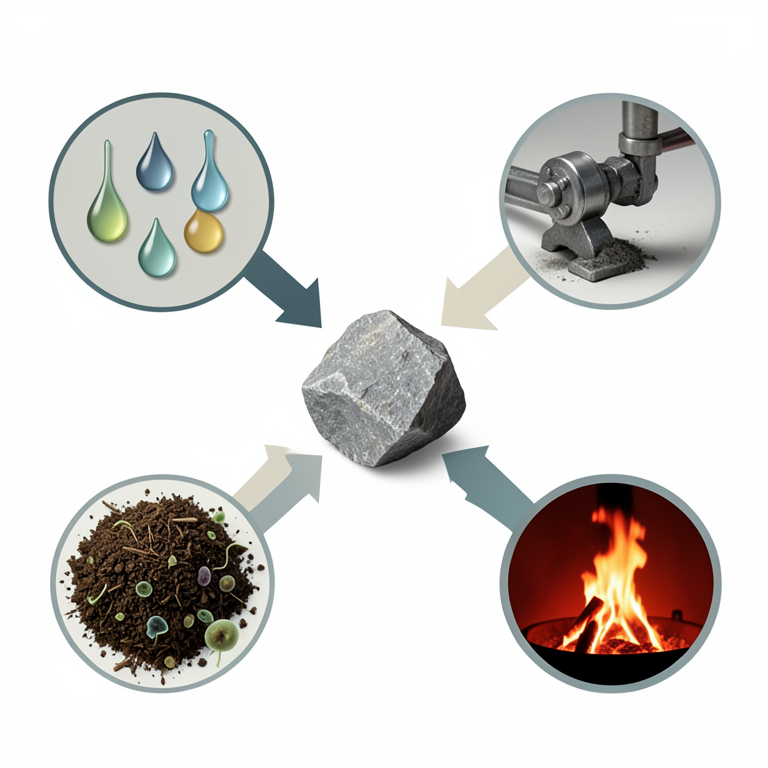
Phosphorus Solubilization Pathways
AI-generated conceptual illustration (low-grade rock phosphate minerals). It explains the idea and does not show study data.
View source evidence ↗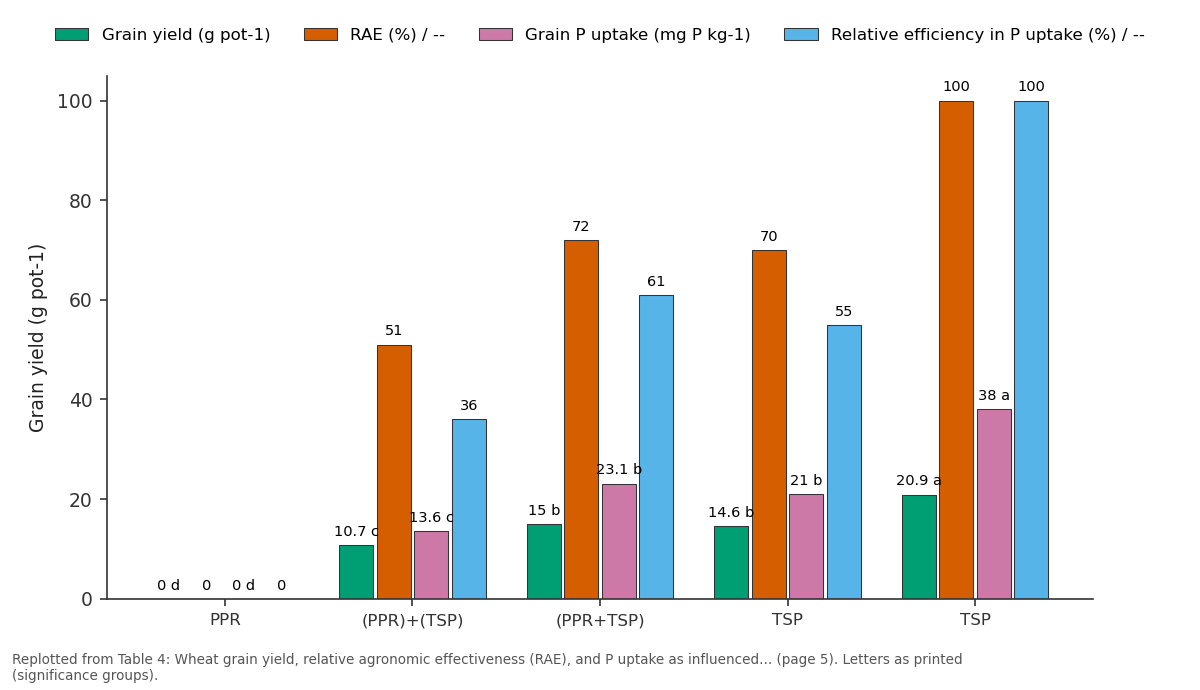
Grain yield (g pot-1) and RAE (%) / -- and more: PPR vs (PPR)+(TSP) vs (PPR+TSP) vs TSP vs TSP
Replotted from Table 4 (page 5) of the original paper. Every bar is the paper's own table value.
View source evidence ↗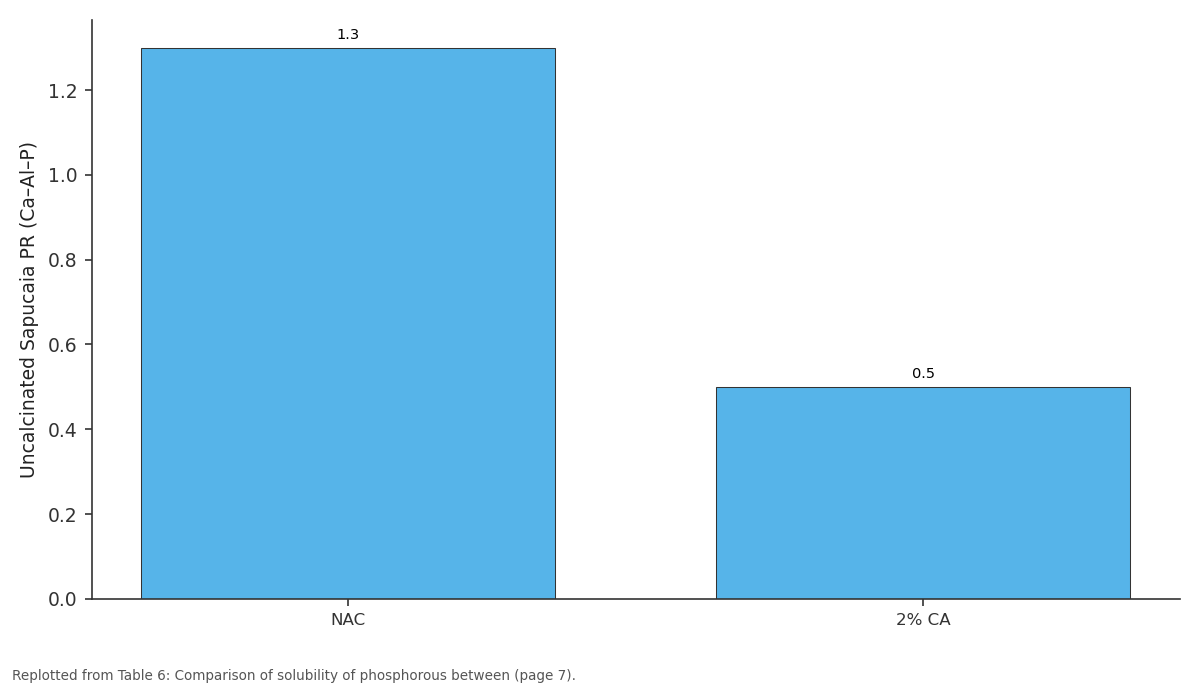
Uncalcinated Sapucaia PR (Ca–Al–P): NAC vs 2% CA
Replotted from Table 6 (page 7) of the original paper. Every bar is the paper's own table value.
View source evidence ↗Figures & tables
From the original paper Table 1
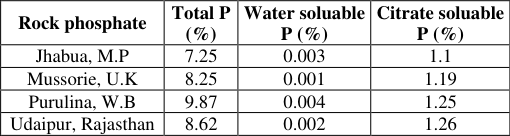 Table 2
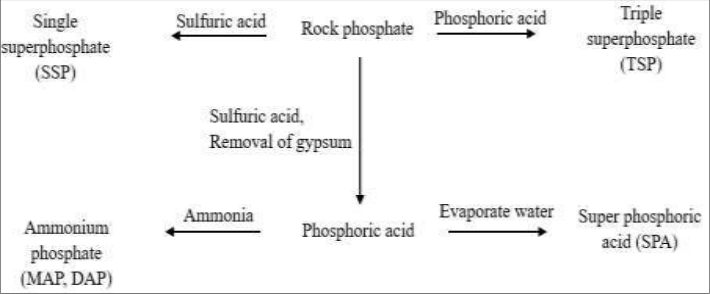 Figure 1
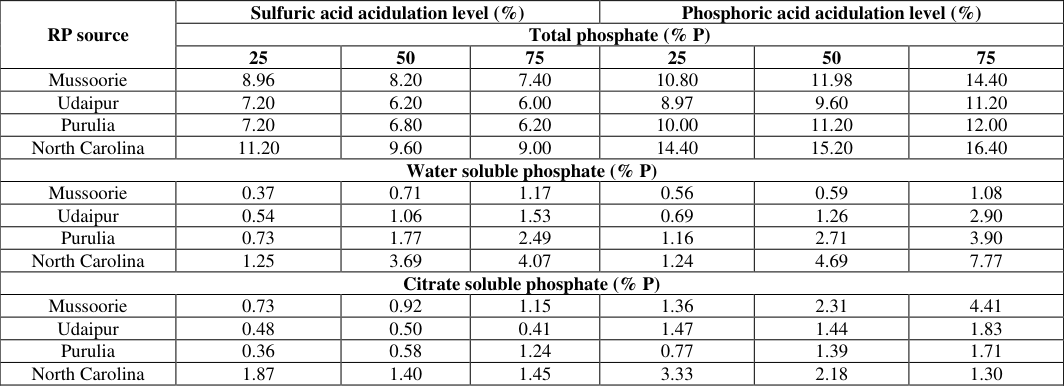 Table 3
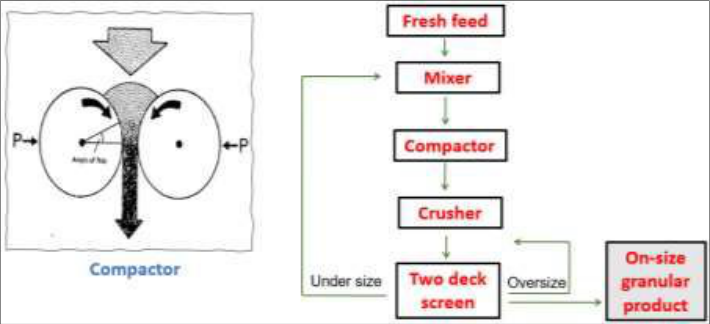 Figure 2
 Table 4
 Table 5
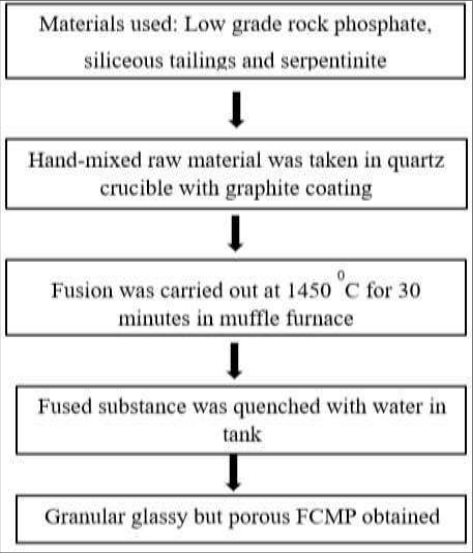 Figure 3
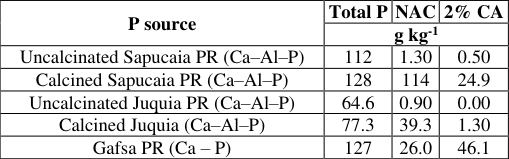 Table 6
Introduction
Phosphorus (P) is the second most limiting nutrient for crop production, with 43% of the world's arable soils being P-deficient, restricting crop growth (Liu et al., 2012) [20] . India faces a rising shortage of affordable P-fertilizers due to reliance on imported high-grade rock phosphate (RP) and sulphur for manufacturing. India's RP reserves are estimated at 260 Mt, but only 142 Mt are recoverable, sufficient for 94 years at the current extraction rate of 1.5 Mt/year (FAI, 2002) [13] . Low-grade RP, suitable for acid soils, holds potential for alternative use through methods like mixing with elemental sulphur (Basak et al., 1987) [5] , partial acidulation (Hammond et al., 1986) [15] , and dry compaction with soluble P fertilizers (Menon and Chien, 1996) [22] . Rock phosphate is one of the basic raw materials needed in the manufacture of phosphatic fertilizers like single super phosphate, diammonium phosphate, nitro phosphates etc. Liebig in 1840 pointed out that sulphuric acid added to ground bones gave a form of phosphate which was more quickly available to plants than raw bones. The discovery of low-grade mineral phosphates (Apatite) in France and England in 1840 led to the production of first 'artificial' fertilizer superphosphate in England in 1843 from apatite and sulphuric acid by J.
B. Lawes. The development of the phosphate industry was secured by the discovery of large sedimentary phosphate deposits in South Carolina (USA). Mining began in 1867 and by 1889 the USA was supplying 90 per cent of the apatite used worldwide for phosphate fertilizer production. Use of phosphoric acid instead of sulphuric acid for apatite dissolution resulted in TSP being commercialized in 1890. In 1917, a new phosphorus fertilizer was developed in the USA by reacting phosphoric acid with ammonia gas to form mono-and diammonium phosphate. H 3 PO 4 + NH 3 → NH 4 H 2 PO 4 (MAP), H 3 PO 4 + 2NH 3 → (NH 4 ) 2 HPO 4 (DAP). In the late 1920s, the nitro-phosphate process was developed by Erling Johnson in Norway, who named it as the ODDA process after the town of ODDA where it was developed. The apatites of igneous and metamorphic origin are generally regarded as less reactive because of their welldeveloped crystalline form. However, the apatites of sedimentary rock deposits are soft minerals possessing micro-crystalline structure and are of major commercial importance for direct application in the soil (Narayanasamy and Biswas, 1998) [25] .
Availability of rock phosphate
The known global resources of rock phosphate are of the order of 163,000 million tons of all grades and types even though globally adequate rock phosphate is inequitably distributed geographically. Africa contains RP of about 41per cent, USA has 21 per cent, erstwhile USSR 13 per cent, the Middle East 10 per cent, Asia 8 per cent, South America 3 per cent, while Australia, New-Zealand and Oceania together accounts for only 2 per cent and entire Europe less than 1 per cent. The rock phosphate scenario in India is, however, not very comfortable as it possesses a resource of only 260 million tones (0.19% of the world) of rock phosphate of all types and grades. Out of the total rock phosphate resource, the country has a predominance of lowgrade rock phosphate having only 15.27 million tones reserve of high-grade rock phosphate (Table 1), and the remaining low grade rock phosphate is unacceptable to Pfertilizer industry due to its very low P 2 O 5 and high CaCO 3 content (McLean and Ssali, 1977) [21] .
| Grade | P2O5 (%) | Reserve (Mt) | Generalized remarks |
|---|---|---|---|
| High | +30 | 15.27 | Could be considered for wet process production of fertilizers. |
| Medium | 25-30 | 18.95 | Could be considered mainly for partially acidulated rock phosphate and for processed phosphates after less benefication. |
| Low | 11-25 | 55.22 | About 20% P2O5 grade and relatively more reactive material may be considered for partially acidulated rock phosphate production and others for direct application. |
| Unclassified | -- | 170.04 | |
| Total | -- | 259.48 |
Table text extracted from the original PDF; superscript letters are shown inline. The original table image is below.
View original table image
Grades of rock phosphate
The classification of reserves of indigenous rock phosphate as done by Indian Bureau of Mines and the purpose for which each grade can be used is given in Table 1 and percent solubility in Table 2. [40] [40] P-fertilizer industry largely depends on sulphur, phosphoric acid, ammonia besides rock phosphate. India imports around 1.7 million tonnes of sulphur, 2-4 million tonnes of phosphoric acid, 1.5 million tonnes of NH 3 and 4.9 million tonnes of rock phosphate for phosphate industry which constitutes a substantial part of our international trade in fertilizer raw material. Thus, the rapidly increasing price of soluble phosphatic fertilizer has raised interest in cheaper alternatives. Under such conditions, we must explore new methodologies for the utilization of indigenous low grade rock phosphate by converting it into a potential resource of P for direct application to the soil. The direct utilization of indigenous rock phosphate deposits could only alleviate the dependence of the country on foreign supplies.
| Rock phosphate | Total P (%) | Water soluable P (%) | Citrate soluable P (%) |
|---|---|---|---|
| Jhabua, M.P | 7.25 | 0.003 | 1.1 |
| Mussorie, U.K | 8.25 | 0.001 | 1.19 |
| Purulina, W.B | 9.87 | 0.004 | 1.25 |
| Udaipur, Rajasthan | 8.62 | 0.002 | 1.26 |
Table text extracted from the original PDF; superscript letters are shown inline. The original table image is below.
View original table image
Factors affecting solubility of rock phosphate
Most of the soils have a large reserve of total P but the amount of P which is actually available to the plants to support optimum plant growth is very small. Therefore, continuous application of phosphatic fertilizers is essential for increasing crop yield. The efficiency of water-soluble phosphatic fertilizer is generally low (15 to 20%) under both acidic and neutral to alkaline conditions. Several factors influence the direct application of rock phosphate as Pfertilizer. The availability of rock phosphate-P to plant largely depends on the properties of rock phosphate affecting its rate of dissolution, soil characteristics, plant species and fertilizer management practices.
Rock phosphate properties affecting its solubility
Rate of dissolution of rock phosphate in a given soil is determined by its chemical composition which includes apatite lattice composition, the type of accessory minerals and particle size. It has been well established that increasing substitution of CO 3 for PO 4 in the lattice structure increases the solubility of carbonate apatites. This occurs due to decreased a-dimension of the unit cell, and crystal instability on increased incorporation of planar CO 3 and F-1 for PO 4 tetrahedral (Lehr and McClellan, 1972) [19] . Calcium carbonate is the most abundant accessory mineral in rock phosphates. As CaCO 3 is more soluble than the most chemically reactive apatites and its dissolution increases the concentration of Ca 2+ and pH at the surface of apatite (Silverman et al., 1952) [34] . Thus, it is not surprising that accessory CaCO 3 reduces the rate of rock phosphate dissolution in some soils (Anderson et al., 1985; Robinson et al., 1992) [2,32] . However, under field conditions where Calcium may be removed by plant uptake and due to leaching, this effect may be minimized. As the rock phosphates are relatively insoluble materials, their geometric surface area has an important bearing on their rate of dissolution in soil. Bagavathi Ammal et al. (2000) [3] reported that the finer particles of rock phosphate (100 mesh) resulted in higher values of dissolution than relatively coarser particles (60 mesh). This might be due to the fact that finer the particle size, the greater the degree of contact between rock phosphate and soil, and therefore, greater the rate of dissolution.
Soil properties affecting rock phosphate solubility
In addition to the properties of rock phosphate, the efficiency of rock phosphate also depends on its reaction and retention in the soil, and on the chemical properties and type of soil to which it is applied (Chien and Hammond, 1978) [9] , however, Anderson et al. (1985) [2] reported that no single soil characteristic has a consistent and predominant effect on P release. However, pH buffering capacity was nearly twice as important as any other soil parameter. Studies (Rajan 1991) [29] indicated that the amount of rock phosphate-P dissolved, decrease either exponentially or linearly with the increasing soil pH Following the law of mass action, the dissolution of rock phosphates is favored as long as Ca concentration in the soil solution is maintained at a lower level. A sensitivity analysis using the Kirk and Nye model (Kirk and Nye, 1986) [18] showed that the rate of dissolution of rock phosphate is highly sensitive to Ca 2+ activity in the soil solution. A linear relationship between the log of Ca 2+ activity and log of P in soil solution has been reported by Robinson and Syers (1991) [32] . Capacity of the soil to retain P and soil moisture are also important soil parameters affecting rock phosphate dissolution. Dissolution of rock phosphate is considerably enhanced by the soil if it remains sufficiently wet to allow the dissolution products to be transported away from the surface of the rock phosphate particles. The water retained at field capacity is sufficient to support near potential maximum dissolution. The positive influence of organic matter on rock phosphate dissolution has also been recognized which is due to its high cation exchange capacity (CEC) and organic acids produced as a result of microbial and chemical transformation of organic debris. The CEC of organic matter which exceeds even 200 cmol kg -1 soil enhance rock phosphates dissolution by increasing the Ca buffering capacity of the soil. Numerous organic acids (e.g., oxalic, citric, tartaric, gluconic etc.,) have been reported to be produced in the soil as a result of microbial and chemical transformation of organic debris.
Influence of plant species on rock phosphate solubility
There are marked differences in the ability of plant species to extract P from rock phosphates which has been recognized as early as 1898 (Flach et al., 1987) [14] . Plants can influence the rate of rock phosphates dissolution by the secretion of acid or alkali, uptake of large quantity of Ca, production of chelating organic acids (citric, malic and 2ketogluconic acid) which complex Ca and deplete P in the soil solution. A huge amount of literature is available on the root induced pH changes in the rhizosphere. The causes of the pH change are attributed to the imbalance in the proportion of anionic (usually NO 3 -, H 2 PO 4 -, SO 4 2-and Cl -) and cationic nutrient (K + , Ca 2+ , Mg 2+ and Na + ) uptake by the plants. This imbalance in the rhizosphere is corrected by the release of either H + or OH -/ HCO 3-as the case may be, thus altering the pH of the rhizosphere. Increased soil acidity in the rhizosphere can enhance rock phosphate dissolution. Since rock phosphates are essentially calcium phosphate compounds, removal of Ca from rock phosphate will release P into solution. Thus, effective utilization of rock phosphate by some plant species (e.g., buckwheat and rapeseed) has been attributed to their high Ca uptake. Flach et al., (1987) [14] determined the ability of maize, pearl millet and fingermillet to utilize P from rock phosphates in a pot experiment. They concluded that finger-millet utilized maximum P from rock phosphates followed by pearl-millet and maize. This was attributed to a greater Ca uptake by finger-millet. Thus, plant species influence P dissolution through secretion of acids, uptake of Ca, increased acidity of the soil etc. The choice of the crop is, therefore, very important for maximizing the solubility of rock phosphate.
Methods to improve solubility of low-grade rock phosphate
There are only a limited number of climatic and soil situations in which rock phosphate is sufficiently reactive for use as direct P-fertilizer. Keeping in view, numerous studies have been conducted to amend rock phosphate, in order to increase its immediate P availability and enhance its rate of dissolution after application to the soil. The various amendments include: partial acidulation of phosphate rock, dry granulation compaction process, phospho-composts, earthworm casts, use pf phosphorus solubilizing microorganisms, VAM, calcination of non-apatite phosphate rock and transgenic approach.
Partial acidulation of rock phosphate
Partially acidulated rock phosphates (PARP) are rock phosphates which have been acidulated, usually with sulphuric or phosphoric acid with less than the quantity of acid needed for making SSP or TSP. In the field, PARP has been found to enhance the dissolution of rock phosphate when compared with that of directly applied rock phosphate (Rajan and Watkinson, 1992) [28] . The PARPs are consistently inferior to any commercial fertilizer but markedly superior to rock phosphate, in terms of P uptake by plant, but the benefits of PARP were only for short term as in the long run the unacidulated part of PARP is unable to solubilize in alkaline conditions. Ca 10 (PO 4 ) 6 [16] reported that P recovery in the soil was 0.25 per cent for the North Carolina rock phosphate, whereas, it ranged between 1.2-1.6 per cent for the corresponding 50 per cent PARP. Various scientists have tried acidulation of rock phosphate with different acids, singly or in combination, in different ratios. Rajan et al. (1994) [30] compared the relative effectiveness of PARP prepared from 30 per cent acidulation of North Carolina rock phosphate with H 2 SO 4 and H 3 PO 4 . H 2 SO 4 -PARP was found inferior to H 3 PO 4 -PARP containing similar amounts of water-soluble P. This was attributed to the presence of CaSO 4 coatings. The performance of PARP prepared from the mixture of HNO 3 +H 2 SO 4 , HNO 3 +HCl, HNO 3 +H 3 PO 4 at 10 and 20 per cent acidulation was tried by Basak and De (1997) [4] . Research on the agronomic effectiveness of PAPR has been reviewed (Bolan et al., 1990) [7] and the general conclusion is that PAPR of 40-50 percent acidulation with H 2 SO 4 or 20-30 percent acidulation with H 3 PO 4 are as effective as fully acidulated SSP. In soils of a high pH (pH 6.5-8.0), PAPRs may be as effective as superphosphate (Hammond et al., 1986) [15] . [25] Dry granulation compaction process Under certain conditions, such as low RP reactivity, high soil pH, or short-term crop growth, the agronomic use of rock phosphate may not be optimum. Mixing rock phosphate with water soluble phosphorus (WSP) by compaction process (Fig. 2) can sometimes be an agronomically and economically effective. This is called as starter effect that results in better plant root development that may utilize rock phosphate more effectively than if rock phosphate is applied alone (Chien and Hammond 1978) [9] . Research on effectiveness of panda hills phosphate rock compacted with triple superphosphate as source of phosphorus for wheat and maize was conducted by Mnkeni et al., (2000) [23] in international fertilizer development center, Alice, South Africa.
The performance of the modified Panda PR products as reflected by yield and grain P uptake of wheat (Table 4) followed the order TSP>(RPR+TSP)>(RPR)+(TSP). The mixture of Panda PR and TSP resulted in significantly lower yields and P uptake than the compacted product even though they both had the same amount of water-soluble P. This International Journal of Agriculture and Food Science https://www.agriculturaljournals.com could be attributed to the fact that the water-soluble P in the (RPR)+(TSP) mixture being in powder form was more susceptible to fixation due to greater contact with soil minerals than in the compacted and granulated product. [23] P-sources P rate (mg P kg -1 ) Grain yield (g pot -1 ) RAE (%) Grain P uptake (mg P kg
| P-sources | P rate (mg P kg-1) | Grain yield (g pot-1) | RAE (%) | Grain P uptake (mg P kg-1) | Relative efficiency in P uptake (%) |
|---|---|---|---|---|---|
| Control | 0 | 0d | -- | 0d | -- |
| PPR | 100 | 0d | 0 | 0d | 0 |
| (PPR)+(TSP) | 100 | 10.7c | 51 | 13.6c | 36 |
| (PPR+TSP) | 100 | 15.0b | 72 | 23.1b | 61 |
| TSP | 50 | 14.6b | 70 | 21.0b | 55 |
| TSP | 100 | 20.9a | 100 | 38.0a | 100 |
Table text extracted from the original PDF; superscript letters are shown inline. The original table image is below.
View original table image
Phospho-Composts
The loss of soil organic matter due to intensive agriculture is responsible for a decrease in soil fertility. The most common practice to preserve and restore soil fertility is to add organic matter to these soils regularly. The feasibility of commercial production for P-fertilizers by partial acidulation and compaction are low due to the cost involved in those methods. Considering all these factors, there is a need to develop a cost effective, eco-friendly and sustainable system where the supply of P to plants can be ensured. Preparation of rock phosphate enriched compost (RP-compost) using crop residue holds a lot of promise in developing countries like India. To explore the possibility of increasing the availability of P from low-grade RP incorporated during decomposition of rice straw where potential biochemical transformations of P could be expected. Moharana et al. (2015) [25] conducted an experiment to evaluate mineralization of phosphorus in soil as influenced by rock phosphate enriched compost and chemical fertilizers. Changes in Olsen-P during the course of incubation period revealed that at the start of incubation, Olsen-P ranged from 6.1 to 20.4 mg kg -1 in different treatments. At 7 days of incubation, values of Olsen-P ranged from 6.1 mg kg -1 in control to 18.7 mg kg -1 in treatment receiving 100 per cent NPK. The Olsen-P in soil treated with 100 per cent NPK decreased rapidly up to 30 days of incubation, followed by a slower decrease during the remaining period of 120 days. The soil treated with RP enriched compost showed a declining trend in Olsen-P during the initial stages up to 30 days, but improved significantly with the progress of incubation period, indicating that RP enriched compost released P for a longer period. At the end of incubation of 120 days, the Olsen-P ranged from 5.7 mg kg -1 in control to 20.6 mg kg -1 in treatment receiving RP enriched compost + 50 per cent NPK. While, Olsen-P was 15.1 mg kg -1 in soil treated with only RP enriched compost. It is also observed that the Olsen-P in soil treated with any of the P sources declined up to 30 days of incubation which may be due to fixation of available P into unavailable forms.
Mobilization of Phosphorous by earthworm casts
Earthworm casts are the indurated soil material surrounding channels left in the soil by earthworms. Casts are initially quite unstable, since they are essentially puddled soil emitted from the earthworm's gut. Earthworm enhance nutrient availability through casting mainly in tropical soils. The positive effects of earthworms on the availability of Phosphorous to plants is due to increased microbial population and hence enzyme activity in the casts (Tiwari et al., 1989) [37] . Microorganisms in earthworm gut obtain their nourishment from the ingested organic material while earthworms promote soil microbial activity through their microorganism-rich casts. The abundance of fulvic acids, humic acids and enzymes in earthworm cast enhances the solubility of the RP.
Phosphorus solubilizing microorganisms
Microorganisms have evolved several mechanisms to mobilize and mineralize occluded and insoluble phosphorus (P), thereby promoting plant growth in terrestrial ecosystems. To access P of various forms, plants are aided by the growth and activity of soil microorganisms, which possess metabolic mechanisms to mineralize and mobilize plant inaccessible P into orthophosphate by enhanced dissolution of P containing minerals through soil acidification or release of metal chelating ligands e.g., organic acids, siderophores, etc., (Khan et al., 2014) [17] ; secretion of extracellular enzymes to mineralize organic P and reductive dissolution of Fe(Al)-complexed organic P (Chen et al., 2018) [8] . Although, a number of organisms e.g., Pseudomonas, Burkholderia, and Bacillus spp. have been identified as phosphate-solubilizing bacteria (PSB), Penicillium spp. and Aspergillus spp. as phosphorus solubilizing fungi and some phosphorus solubilizing actinomycetes.
Vesicular-Arbuscular Micorriza (VAM)
VAM improves P uptake by plants because of presence of special structures known as vesicles and arbuscules. The highly branched arbuscules help in the transfer of nutrients from the fungus to the plant-root cells. E.g., Glomus fasciculatum, G. mosseae, G. etunicatum, G. tenue and Giaspora margarita. Enhanced P uptake in VAM-infected plants seems to be facilitated by; fungal hyphae exploring a greater volume of soil for P, fungi dissolving sparingly soluble P minerals (e.g., RP), infected roots increasing the rate of P uptake, by increasing the diffusion gradient by depleting P to lower P concentrations than can nonmycorrhizal roots. The P inflow rates of mycorrhizal roots are calculated to be 2-6 times those of non-mycorrhizal roots. Compared with non-mycorrhizal plants, Pairunan et al. (1980) [27] have reported that mycorrhizal plants enhance the effectiveness of fertilizers by about 30 per cent.
Preparation of fused calcium magnesium phosphate (FCMP) -A thermal fertilizer
Fused Calcium Magnesium Phosphate (FCMP) is manufactured either by fusing phosphate rock with lime stone and quartzite at 1400-1450 °C in an open hearth or shaft fumace. Phosphate rock can also be fused at lower temperature of 1250-1350 °C in presence of magnesium minerals like serpentine i.e., hydrated magnesium silicate (H 4 Mg 3 Si 2 O 9 ) or olivine (Mg, Fe 2+ ) 2 SiO 4 . These additives form eutectics, which assists in reducing the fusion temperature. The melt leaving the furnace is quenched with water so as to disintegrate into fine granules and also assists in preserving high percentage of citrate soluble P 2 O 5 in the product. Fused phosphates contain about 80-90 percent P 2 O 5 in citric acid soluble form. (Dwivedi and Gupta, 2006) [10] FCMP is widely used in China, South Korea, Japan, Vietnam, Russia, Brazil and USA. The chemical reactions are as follows.
2Ca 10 (PO 4 ) 6 F 2 + 2MgFeSiO 4 = 6Ca 3 (P0 4 ) 2 + SiF 4 + 2MgO + 2FeO + Ca 2 SiO 4 2Ca 10 (PO 4 ) 6 F 2 + H 4 Mg 3 Si 2 O 9 = 6Ca 3 (PO 4 ) 2 + 4HF + 2CaSiO 3 + 3MgO Advantages of thermal phosphate includes; a) Utilizes secondary phosphate ores which are not suitable for beneficiation, b) Low cost as well as long lasting fertilizer, c) No adverse effect on soil fertility, d) Viable alternative to either SSP or DAP, e) Calcination removes impurities and increases P concentration, f) Do not fixed or revert to soil, not readily leached, h) Free running and will not cake, It is effective in acidic soils and is extensively used in Australia, Germany, Russia, USA, Malaysia, Indonesia, Vietnam England, Belgium etc., various types of calcined phosphate available in the international market are shown in the Table 6 and7. In India, calcined phosphate could be preferably used in acidic soils of high rainfall area of Kerala, Orrisa, West Bengal, North Eastern States, Tamil Nadu etc. Such area occurs to an extent of about 149 million hectares. In India, calcined phosphate could be preferably used in acidic soils of high rainfall area of Kerala, Orrisa, West Bengal, North Eastern States, Tamil Nadu etc. Such area occurs to an extent of about 149 million hectares.
| P source | Total P | NAC | 2% CA |
|---|---|---|---|
| g kg-1 | |||
| Uncalcinated Sapucaia PR (Ca–Al–P) | 112 | 1.30 | 0.50 |
| Calcined Sapucaia PR (Ca–Al–P) | 128 | 114 | 24.9 |
| Uncalcinated Juquia PR (Ca–Al–P) | 64.6 | 0.90 | 0.00 |
| Calcined Juquia (Ca–Al–P) | 77.3 | 39.3 | 1.30 |
| Gafsa PR (Ca – P) | 127 | 26.0 | 46.1 |
Table text extracted from the original PDF; superscript letters are shown inline. The original table image is below.
View original table image
Plants strategies Phosphorus acquisition
Plants are known to adapt several mechanisms to increase their P acquisition, uptake, absorption efficiency such as; modification of soil exploration by roots through increasing absorptive area. Better symbiosis with soil microbes such as arbuscular mycorrhizal fungi (Sukarno et al., 1993) [36] . Modification of rhizosphere to increase P availability through release of bio-molecules increased production of phosphatases enhanced rate of P uptake.
Phosphorus translocation
The P transporters actually are proton/phosphate (H + /H 2 PO 4 ) symporters, moving P ions against large gradients of charge and P concentration (From 2 mM to 10 mM) through proton-coupled co-transporter proteins. In active proteoidroot cells, H + and organic anions are exported separately by the modification of plasma membrane (Yan et al., 2002) [39] .
When external-P level drops low to micro-molar concentration, the high affinity transporter mRNA transcripts in roots increase, leading to enhanced capacity of roots for P uptake.
Preparation of metallic-humic-phosphate (MHP): a rhizosphere-controlled fertilizer (RCF)
The preparation of fertilizers containing MHP complexes with a large proportion of water-insoluble complexed P that can be solubilized by the organic anions released by plant roots as an expression of P metabolic need, these fertilizers are called as "rhizosphere-controlled fertilizers" (RCF).
These types of fertilizers are produced through the simultaneous reaction of rock phosphate with phosphoric acid in the presence of at least, two metals, and a specific proportion of an HA (Erro et al., 2007) [12] . This reaction leads to the formation of complexes between HA and P through metal bridges involving one or two metals. The formation of MHP involving two metals leads to the formation of water-insoluble MHP complexes, while the presence of only one metal in the complex is associated with a fraction of MHP complexes that are partially soluble in water. For instance, the reaction involving Mg and Zn oxides or carbonates favored the formation of a significant concentration of water-insoluble MHP complexes containing both Mg and Zn (around 70%), while the watersoluble fraction involving MPH complexes containing either Mg or Zn was minor (Fig. 7). The concentration of humic acid also influenced the water solubility of MHP complexes (Erro et al., 20011) [11] . Citric acid loaded nano clay polymer composite (CA-NCPC) for solubilization of Indian rock phosphates was studied by Roy et al. (2018) [33] . The surface morphology of synthesized NCPC with and without citric acid loading was observed under SEM. The NCPC formed by polymerization of acrylic acid and acrylamide in the N environment had a rough and irregular surface morphology with visible pore spaces on the surface. The crystal of citric acid was deposited on the surface as spindle and fine needle shaped objects when citric acid was loaded.
The periodic data of available soil P as influenced by variable P sources indicate that CA-NCPC + indigenous RP (Udaipur and Purulia) maintained available mean P status of 17.4 mg P kg -1 and 17.6 mg P kg -1 , respectively which was statistically at par with DAP (18.4 mg kg -1 ). The Purulia and Udaipur RP brought about 60.6 and 62.5 per cent increase in available P, respectively over unfertilized control; while DAP brought about 96.7 per cent increase in available P over control. Among the three levels of CA-NCPC employed for P solubilization from indigenous RP the maximum available P status was observed at 40 mg citric acid kg -1 (82.2% increase in mean P over control). The mean available P status was 13.8 mg kg -1 when no CA-NCPC was applied, while 18.9 and 19.8 mg P kg -1 were observed with application of CA-NCPC at the level of 20 and 40 mg kg -1 soil, respectively. Formulation of phosphorous rich organic manure (PROM) from rock phosphate and its dose optimization for the improvement of maize (Zea mays L.) was evaluated by Noor et al. (2020) [26] . Results revealed that gradually plant height increased under all five treatments ranging from 108.8 to 152 cm. Highest plant height was observed under the treatment T 5 (Combination of recommended dose of N, P, K from DAP, and full dose of P from PROM) and the lowest height was from the treatment T 2 (Recommended N and K but zero P) combination of recommended dose of N, P, K from DAP, and full dose of P from PROM, Plants with appropriate amount of nutrients ensure healthy plant roots resulting in good plant health. When PROM was applied, the root length significantly increased. T 5 (Recommended N, K, P from DAP and PROM) with full dose of N, K, P from both organic and inorganic source, which showed the highest root length (9 cm). The lowest length of roots was observed in T 2 (Recommended N, K, P 0 ) where phosphorus application was zero and only nitrogen and potassium source of fertilizers were used. This is because, growth of roots in soil is depend upon the availability of nutrients and water, more the nutrients longer will be the plants root. Root of the plants treated with phosphorus enriched compost was longer than the control. Weight of freshly harvested roots was recorded, and it was observed that as the amount of PROM increased, the weight of the plant roots also increased. Treatment T 5 (Recommended P, K, N from DAP and PROM) resulted in the highest weight of plant roots (3.88 g). As the amount of organic manure decreased the weight of the freshly harvested roots also decreased. From the study it is concluded that there was a significant increase in yield and various yield components with integrated use of organic manures and inorganic phosphorus source that is RP as compared to sole organic fertilizer or inorganic rock phosphorus.
Roy et al. (2018) [33] studied about citric acid loaded nano clay polymer composite (CA-NCPC) for solubilization of Indian rock phosphates and concluded that the combined action of CA-NCPC and indigenous RPs acted as a slow release fertilizer material which would help to synchronize the P supply with crop demand, reduce the chances of Pfixation and enhance the P use efficiency Tapping this green technology at field scale would allow to harness the benefits of indigenous RPs and help in replacing the costly phosphatic fertilizers, if not fully but partially. Mineralization of phosphorus in soil as influenced by rock phosphate enriched compost and chemical fertilizers was evaluated by Moharana et al. (2015) [25] . Results revealed that soils treated with different RP enriched compost along with chemical fertilizers mineralized greater amount of P. Soil treated with RP enriched compost showed a declining trend in Olsen-P during the initial stages up to 30 days, but improved significantly with the progress of time, indicating that RP enriched compost releases P for longer period which, in turn, supply P to crops for a longer growth period. Field experiment on effectiveness of panda hills phosphate rock compacted with triple superphosphate as a source of phosphorus for wheat and maize was conducted by Mnkeni et al. (2000) [23] . The mixture of PPR and TSP as well as the compacted product increased wheat and maize yields and phosphorous uptake significantly. Increase in the yield were, however, largely attributed to the TSP component of the (PPR)+ (TSP) mixture with little contribution from PPR. Mineralization of soluble P fertilizers and insoluble rock phosphate in response to phosphate-solubilizing bacteria and poultry manure was studied by Abbasi et al. (2015) [1] and results of incubation experiment indicated that chemical P fertilizers used in the study, i.e., SSP and DAP, released the highest P at the start of the experiment, but this mineral P significantly decreased with subsequent incubation periods. However, the use of PSB and PM with RP in the combined treatment (1/2 RP+1/2 PM+PSB) released a substantial amount of P (25 mg kg -1 ) that remained at high levels (Without any loss) until the end of incubation (Day 60), showing that the combination of PSB and PM with RP may be a feasible option for releasing P from insoluble RP for a longer period. Release of phosphorous by using phosphate rich organic manure (PROM) from RP and to determine the amount of released phosphorus uptake by maize plants was evaluated by Noor et al. (2020) [26] . It was revealed by results that by using combination of PROM and DAP sufficiently increased various yield components like height and biomass yield. PROM also indicated changes to other soil associated properties like EC (dSm -1 ) and pH. Treatment receiving PROM and Recommended NKP) showed maximum plant growth, yield, and concentration of nutrients among all the treatments.
Conclusion
Partially acidulated low-reactive RP (PARP) proved to be an agronomically effective P source. Phosphorus uptake from low-grade RP (LGRP) in presence of water-soluble phosphate (compacted RP) was higher than that from RP alone, indicating the starter effect of water-soluble P on improving the effectiveness of LGRP. The reactivity of lowreactive non-apatite RP can be significantly increased through calcination and the calcined RP can indeed be used for upland and flooded rice. RCF was more efficient P source than SSP or dicalcium phosphate (DCP) in relation to P extraction in acid soil. Even low-grade rock phosphate can be efficiently used in alkaline and neutral soil conditions if it is amended with organic matter, composted with organic/farm waste, incorporated with green manure, partially acidulated with commercial acids, use of PSB or used in conjunction with certain chemicals.
Partially acidulated low-reactive RP (PARP) proved to be an agronomically effective P source. The reactivity of lowreactive non-apatite RP can be significantly increased through calcination. Thus, we can reduce a lot of financial burden from our economy by reducing the import of rock phosphate and other byproducts required in the manufacture of commercial P-fertilizer.
Figures and tables from the paper
| RP source | Sulfuric acid acidulation level (%) | — | — | Phosphoric acid acidulation level (%) | — | — |
|---|---|---|---|---|---|---|
| Total phosphate (% P) | ||||||
| 25 | 50 | 75 | 25 | 50 | 75 | |
| Mussoorie | 8.96 | 8.20 | 7.40 | 10.80 | 11.98 | 14.40 |
| Udaipur | 7.20 | 6.20 | 6.00 | 8.97 | 9.60 | 11.20 |
| Purulia | 7.20 | 6.80 | 6.20 | 10.00 | 11.20 | 12.00 |
| North Carolina | 11.20 | 9.60 | 9.00 | 14.40 | 15.20 | 16.40 |
| Water soluble phosphate (% P) | ||||||
| Mussoorie | 0.37 | 0.71 | 1.17 | 0.56 | 0.59 | 1.08 |
| Udaipur | 0.54 | 1.06 | 1.53 | 0.69 | 1.26 | 2.90 |
| Purulia | 0.73 | 1.77 | 2.49 | 1.16 | 2.71 | 3.90 |
| North Carolina | 1.25 | 3.69 | 4.07 | 1.24 | 4.69 | 7.77 |
| Citrate soluble phosphate (% P) | ||||||
| Mussoorie | 0.73 | 0.92 | 1.15 | 1.36 | 2.31 | 4.41 |
| Udaipur | 0.48 | 0.50 | 0.41 | 1.47 | 1.44 | 1.83 |
| Purulia | 0.36 | 0.58 | 1.24 | 0.77 | 1.39 | 1.71 |
| North Carolina | 1.87 | 1.40 | 1.45 | 3.33 | 2.18 | 1.30 |
Table text extracted from the original PDF; superscript letters are shown inline. The original table image is below.
View original table image
| S.L. No. | Trade name of calcined product | Country | Available phosphate (%) | Citric acid solubility (%) |
|---|---|---|---|---|
| 1 | Rhenania | Germany | 33 | 100 |
| 2 | Base Phosphate | Belgium | N.A | N.A |
| 3 | Supra Phosphate Belgium N.A N.A | Belgium | N.A | N.A |
| 4 | Thermo Phosphate | Senegal 20-40 | 80-90 | |
| 5 | Phospal | Senegal | 34 | 80 |
| 6 | Chrismas Island calcined phosphate | Chrismas Island | N.A | 26 |
Table text extracted from the original PDF; superscript letters are shown inline. The original table image is below.
View original table image
References
40 in the original paper- Abbasi MK, Musa N, Manzoor M. Mineralization of soluble P fertilizers and insoluble rock phosphate in response to phosphate-solubilizing bacteria and poultry manure and their effect on the growth and P utilization efficiency of chilli (Capsicum annuum L.). Biogeosciences. 2015;12(15):4607-4619.
- Anderson DL, Kussow WR, Corey RB. Phosphate rock dissolution in soil: Indications from plant growth studies. Soil Sci Soc Am J. 1985;49(4):918-925.
- Bagavathi Ammal U, Mathan KK, Mahimairaja S. Dissolution of low-grade Udaipur rock phosphate in a red noncalcareous soil. J Trop Agric. 2000;38:59-62.
- Basak RK, De GK. Release of phosphorus from partially acidulated rock phosphate in a Typic Ustifluvent. J Indian Soc Soil Sci. 1997;45(4):759-762.
- Basak RK, Halder RR, Debnath NC. Efficiency of biosuper as fertilizer in sesame-rice cropping sequence in non-acid soil. J Ecol Environ. 1987.
- Begum M, Narayanasamy G, Biswas DR. Phosphorus supplying capacity of phosphate rocks as influenced by compaction with water-soluble P fertilizers. Nutr Cycling Agroecosyst. 2004;68:73-84.
- Bolan NS, White RE, Hedley MJ. A review of the use of phosphate rocks as fertilizers for direct application in Australia and New Zealand. Aust J Exp Agric. 1990;30(2):297-313.
- Chen KY, Hsu LC, Chan YT, Cho YL, Tsao FY, Tzou YM, et al. Phosphate removal in relation to structural development of humic acid-iron coprecipitates. Sci Rep. 2018;8(1):1-10.
- Chien SH, Hammond LL. A comparison of various laboratory methods for predicting the agronomic potential of phosphate rocks for direct application. Soil Sci Soc Am J. 1978;42(6):935-939.
- Dwivedi AD, Gupta DK. Calcined phosphate fertilizer from Jhamarkotra secondary phosphate ore and rock phosphate beneficiation plant bulk circuit tail. Sci Rep. 2006, 382-389.
- Erro J, Baigorrí R, Yvin JC, García-Mina JM. 31P NMR characterization and efficiency of new types of water-insoluble phosphate fertilizers to supply plantavailable phosphorus in diverse soil types. J Agric Food Chem. 2011;59(5):1900-1908.
- Erro J, Urrutia O, San Francisco S, García-Mina JM. Development and agronomical validation of new fertilizer compositions of high bioavailability and reduced potential nutrient losses. J Agric Food Chem. 2007;55(19):7831-7839.
- FAI. The Fertilizer Association of India, New Delhi. Fertilizer Statistics. 2002, 39-47.
- Flach EN, Quak W, Diest AV. A comparison of the rock phosphate-mobilizing capacities of various crop species. Trop Agric. 1987;64:347-352.
- Hammond LL, Chien SH, Mokwunye AU. Agronomic value of unacidulated and partially acidulated International Journal of Agriculture and Food Science https://www.agriculturaljournals.com phosphate rocks indigenous to the tropics. Adv Agron. 1986;40:89-140.
- Kato N, Zapata F, Axmann H. Evaluation of the agronomic effectiveness of natural and partially acidulated phosphate rocks in several soils using 32P isotopic dilution techniques. Fertil Res. 1995;41:235242.
- Khan MS, Zaidi A, Ahmad E. Mechanism of phosphate solubilization and physiological functions of phosphatesolubilizing microorganisms. In: Phosphate solubilizing microorganisms: principles and application of microphos technology. Springer Sci Rev; 2014. p. 3162.
- Kirk GJD, Nye PH. A simple model for predicting the rates of dissolution of sparingly soluble calcium phosphates in soil: II. Applications of the model. J Soil Sci. 1986;37(4):541-554.
- Lehr JR, McClellan GH. A revised laboratory reactivity scale for evaluating phosphate rocks for direct application. Muscle Shoals. 1972, 43.
- Liu L, Gundersen P, Zhang T, Mo J. Effects of phosphorus addition on soil microbial biomass and community composition in three forest types in tropical China. Soil Biol Biochem. 2012;44(1):31-38.
- McLean EO, Ssali H. Effects of phosphorus rate and form in combination with lime and gypsum on yields and compositions of German millet and alfalfa from highly weathered soils. Soil Sci. 1977;123(3):155-164.
- Menon RG, Chien SH. Compaction of Phosphate Rocks with Soluble Phosphates: An Alternative Technology to Partial Acidulation of Phosphate Rocks with Low Reactivity: IFDC Experience. International Fertilizer Development Center, 1996.
- Mnkeni PNS, Chien SH, Carmona G. Effectiveness of Panda Hills phosphate rock compacted with triple superphosphate as source of phosphorus for rape, wheat, maize, and soybean. Commun Soil Sci Plant Anal. 2000;31(19-20):3163-3175.
- Moharana PC, Biswas DR, Datta SC. Mineralization of nitrogen, phosphorus and sulphur in soil as influenced by rock phosphate enriched compost and chemical fertilizers. J Indian Soc Soil Sci. 2015;63(3):283-293.
- Narayanasamy G, Biswas DR. Phosphate rocks of India: Potentialities and constraints. Fertil News. 1998, 43(10).
- Noor K, Sarwar G, Shah SH, Muhammad S, Zafar A, Manzoor MZ, et al. Formulation of phosphorous rich organic manure from rock phosphate and its dose optimization for the improvement of maize (Zea mays L.). J Plant Nutr. 2020;44(1):96-119.
- Pairunan AK, Robson AD, Abbott LK. The effectiveness of vesicular-arbuscular mycorrhizas in increasing growth and phosphorus uptake of subterranean clover from phosphorus sources of different solubilities. New Phytol. 1980;84(2):327-338.
- Rajan SS, Watkinson JH. Unacidulated and partially acidulated phosphate rock: Agronomic effectiveness and the rates of dissolution of phosphate rock. Fertil Res. 1992;33:267-277.
- Rajan SS, Fox RL, Saunders WMH, Upsdell M. Influence of pH, time and rate of application on phosphate rock dissolution and availability to pastures. Fertil Res. 1991;28:85-93.
- Rajan SS, O'Connor MB, Sinclair AG. Partially acidulated phosphate rocks: Controlled release phosphorus fertilizers for more sustainable agriculture. Fertil Res. 1994;37:69-78.
- Robinson JS, Syers JK. Effects of solution calcium concentration and calcium sink size on the dissolution of Gafsa phosphate rock in soils. J Soil Sci. 1991;42(3):389-397.
- Robinson JS, Syers JK, Bolan NS. Influence of calcium carbonate on the dissolution of Sechura phosphate rock in soils. Fertil Res. 1992;32:91-99.
- Roy T, Biswas DR, Datta SC, Sarkar A, Biswas SS. Citric acid loaded nano clay polymer composite for solubilization of Indian rock phosphates: a step towards sustainable and phosphorus secure future. Arch Agron Soil Sci. 2018;64(11):1564-1581.
- Silverman SR, Fuyat RK, Weiser JD. Quantitative determination of calcite associated with carbonatebearing apatites. Am Mineralogist: J Earth Planet Sci. 1952;37(3-4):211-222.
- Soil Association. A rock and a hard place: Peak phosphorus and the threat to our food security. Soil Association. 2010.
- Sukarno N, Smith SE, Scott ES. The effect of fungicides on vesicular-arbuscular mycorrhizal symbiosis: I. The effects on vesicular-arbuscular mycorrhizal fungi and plant growth. New Phytol. 1993;125(1):39-147.
- Tiwari SC, Tiwari BK, Mishra RR. Microbial populations, enzyme activities and nitrogenphosphorus-potassium enrichment in earthworm casts and in the surrounding soil of a pineapple plantation. Biol Fertil Soils. 1989;8:178-182.
- Wang X, Shen J, Liao H. Acquisition or utilization, which is more critical for enhancing phosphorus efficiency in modern crops? Plant Sci. 2010;179(4):302-306.
- Yan F, Zhu Y, Muller C, Zöber C, Schubert S. Adaptation of H+-pumping and plasma membrane H+ ATPase activity in proteoid roots of white lupin under phosphate deficiency. Plant Physiol. 2002;129(1):5063.
- Biswas AK, Seoka M, Tanaka Y, Takii K, Kumai H. Effect of photoperiod manipulation on the growth performance and stress response of juvenile red sea bream (Pagrus major). Aquaculture. 2006 Aug 31;258(1-4):350-356.
Cited by 2
From OpenAlex, OpenCitations and reference lists read by Scinovex
- Redefining P fertilization in wheat, soil P biogeochemistry and ecosystem resilience with PSB-activated low grade rock phosphate ↗
Siddhartha Sankar Biswas, D.R. Biswas, Avijit Ghosh, Abhijit Sarkar, Madhumonti Saha, Trisha Roy et al. · Journal of environmental chemical engineering · 2026
❝ 4 - Amendment-assisted low-grade rock phosphate enhances maize productivity and phosphorus availability in contrasting soil orders ↗
Ankita Mohapatra, V. Girijaveni, Cherukkumalli Srinivasa Rao, Gobinath Rajendran, Sumanta Kundu, Savitha Santosh · Frontiers in Sustainable Food Systems · 2026
Introduction Efficient phosphorus (P) management is essential for improving crop productivity while reducing dependence on energy-intensive, highly soluble P fertilisers. Low-grade rock phosphate (RP) is an underutilised, economical indigenous P source, but its agronomic effectiveness is often limited by low solubility and slow P release. This study evaluated the effectiveness of indigenous low-grade Udaipur rock phosphate (URP) amended with elemental…
❝ 0PDF