
Research article · 2025 · Full text
International Journal of Biology SciencesCore and balance: Advancing rehabilitation for multiple sclerosis patients
Volume 7(1) · Pages 06–09 · DOI: 10.33545/26649926.2025.v7.i1a.263 ↗
Research areasMultiple Sclerosis Research StudiesFibromyalgia and Chronic Fatigue Syndrome ResearchAmyotrophic Lateral Sclerosis Research
Abstract
Author-writtenBackground: Multiple Sclerosis (MS) is a chronic neurological disorder marked by demyelination in the central nervous system, leading to impairments in balance, coordination, and mobility. Balance dysfunction is a frequent symptom in MS, significantly affecting quality of life. Core muscle strengthening is proposed as an effective intervention for improving balance in MS patients. Objective: This case study evaluates the effectiveness of a core strengthening program in improving balance in a patient with MS. Methods: A 32-year-old male with relapsing-remitting MS (RRMS) and moderate balance difficulties, assessed by the Berg Balance Scale (BBS) and Timed Up and Go (TUG) test, underwent a 6-week physiotherapy intervention focused on core strengthening exercises including planks, bridges, pelvic tilts three times weekly. Balance was reassessed post-intervention. Results: Significant improvements were observed, with BBS scores increasing from 32 to 38 and TUG time decreasing from 14 to 11 seconds, indicating enhanced balance and functional mobility. The patient also reported greater confidence during daily activities. Conclusion: Core strengthening appears effective in improving balance in MS patients. Further research with larger samples is recommended to generalize these findings.
Summary
Source-checkedPlain-language reading of the full paper, prepared with AI and checked against the text. Each point links to the authors' own words.
Why it matters
- Multiple Sclerosis (MS) is a chronic neurological condition characterized by the loss of myelin in the central nervous system, which impairs a patient's mobility, coordination, and balance. View evidence ↗
- Dysfunction in balance is a common symptom of MS that has a significant negative impact on the patient's quality of life. View evidence ↗
- The core muscles, comprising the pelvic floor, back muscles, and abdominals, serve as the essential foundation for dynamic balance and posture. View evidence ↗
The question
- The study aimed to evaluate whether a core strengthening program could effectively improve balance in a patient diagnosed with Multiple Sclerosis. View evidence ↗
What they did
- The subject was a 32-year-old male with relapsing-remitting MS (RRMS) and moderate balance issues, who was evaluated using the Timed Up and Go (TUG) test and the Berg Balance Scale (BBS). View evidence ↗
- The physiotherapy intervention consisted of 45-minute sessions conducted three times per week. View evidence ↗
What they found
- The patient's Berg Balance Scale (BBS) score increased from 32 to 38, demonstrating an improvement in balance. View evidence ↗
- Functional mobility improved as the patient's Timed Up and Go (TUG) test time decreased from 14 seconds to 11 seconds. View evidence ↗
- The patient reported increased stability during daily tasks such as climbing stairs, walking, and moving from a sitting to a standing position. View evidence ↗
- The patient reported a reduction in the fear of falling and an increase in confidence when performing daily activities. View evidence ↗
What it means
- The authors conclude that core strengthening exercises are a crucial component of rehabilitation for MS patients, particularly those with coordination and balance struggles. View evidence ↗
- The authors suggest that integrating core exercises into comprehensive rehabilitation can reduce the overall impact of MS by enhancing various aspects of mobility. View evidence ↗
- The generalizability of the results is limited because the study used a single-subject methodology. View evidence ↗
- It remains unknown if patients who are older or have more severe balance impairments would experience similar benefits. View evidence ↗
Visual summary
1 visualsIllustrations explain the paper; they do not show study data.
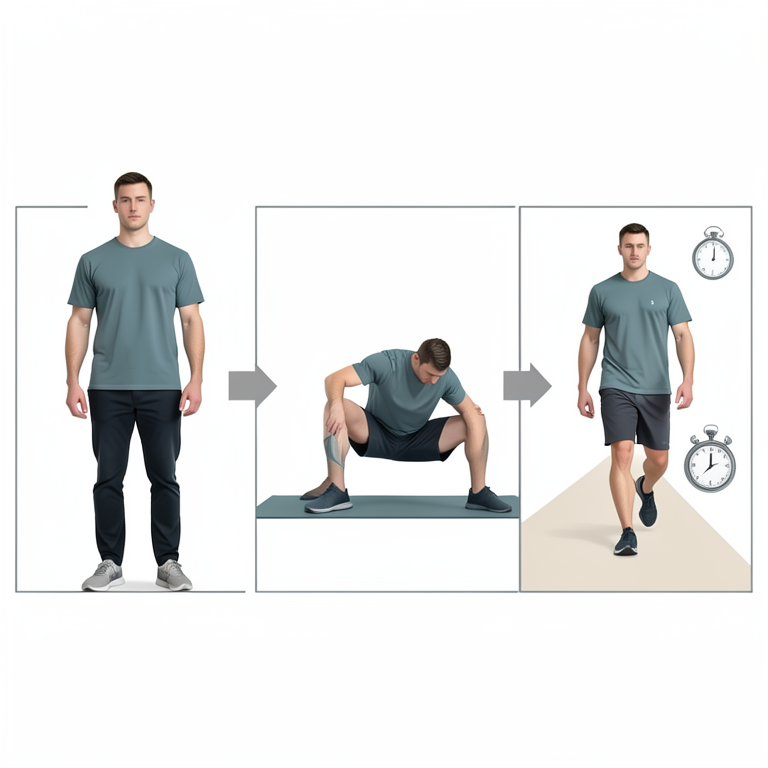
Study overview
AI-generated conceptual illustration (a 32-year-old male with multiple sclerosis). It explains the idea and does not show study data.
View source evidence ↗Introduction
Multiple Sclerosis (MS) is a chronic, progressive, and demyelinating disease of the central nervous system (CNS) that affects an estimated 2.8 million individuals globally (Multiple Sclerosis International Federation, 2020) [7] . MS is characterized by periods of exacerbation and remission, where the immune system attacks the myelin sheath, the protective covering of nerves, leading to impaired nerve transmission. This can result in various symptoms, including motor, sensory, and cognitive dysfunction, and notably, balance and coordination impairments. The frequency and severity of these symptoms vary widely, but for many patients, difficulties with balance and coordination are common and disabling, often leading to reduced mobility and a lower quality of life (Larochelle et al., 2016) [5] . In recent years, core muscle strengthening has been proposed as a key intervention to mitigate balance dysfunction in individuals with MS. Core muscles, including the abdominals, back muscles, and pelvic floor, provide a foundation for maintaining posture and dynamic balance. By targeting these muscles, physical therapists aim to enhance the stability and coordination required for daily functional movements (Freeman et al., 2018) [3] . This case study explores the impact of a core strengthening regimen on balance in a 36-yearold male patient with relapsing-remitting MS (RRMS), a common subtype characterized by alternating periods of symptom exacerbation and remission.
Case Presentation 2.1 Patient Background
The patient, a 32-year-old man, was diagnosed at age 28 with relapsing-remitting multiple sclerosis (RRMS). Moderate balance and coordination issues are his main complaints, and they have gotten worse over the last three years. The Berg Balance Scale (BBS) and the Timed Up and Go (TUG) test are two established measures of balance that were used to [2] , the patient exhibited a moderate deficit in balance, as shown by their preintervention BBS score of 32.
Timed
Up and Go (TUG) Test: Timing how long it takes a person to get up from a seated position, walk three meters, turn, walk back, and sit down is how the TUG test gauges functional mobility. The patient's TUG time prior to intervention was 14 seconds, which is within the range of those with MS who have limited mobility (Huisinga et al., 2014) [4] .
Intervention 3.1 Physiotherapy Program
For six weeks, the patient received physiotherapy with the goal of strengthening their core. The deep stabilizing muscles, which are crucial for balance and postural stability, were the focus of the exercises' selection. Three times a week, the patient attended 45-minute physiotherapy sessions.
The primary exercises included Planks: A full-body workout that helps to stabilize the spine and strengthen the core. Bridges: Promotes pelvic stability by targeting the glutes and lower back. Pelvic tilts: Improve pelvic control, which is essential for preserving equilibrium when moving.
Every session started with a mild aerobic warm-up, which was followed by three sets of ten to fifteen repetitions of core exercises. Depending on the patient's performance and capacity to maintain correct form, increasing levels of exercise difficulty were introduced every two weeks.
Outcomes 4.1 Post-Intervention Results
By the end of the 6-week session, the patient's functional mobility and balance had significantly improved.
BBS Score: The patient's score improved from 32 to 38, indicating that their balance has improved. According to Cattaneo et al. (2006) [1] , a clinically significant gain of six points in the BBS score indicates improved postural control and a decreased risk of falls.
TUG Test Time: This indicates improved functional mobility as the patient's TUG time dropped from 14 to 11 seconds. Faster TUG times are linked to improved mobility and decreased impairment in MS patients, therefore this improvement is noteworthy (Whitney et al., 2011) [9] .
Subjective Feedback
The patient reported feeling more stable during daily activities, including walking, climbing stairs, and transitioning from sitting to standing. He expressed increased confidence in his ability to perform these tasks without fear of falling, which had been a primary concern prior to the intervention.
Discussion
The case study's findings support previous research by showing that people with Multiple Sclerosis (MS) can greatly enhance their balance by strengthening their core muscles. Subjective reports of increased confidence in daily activities, along with the observed improvements in the patient's Timed Up and Go (TUG) and Berg Balance Scale (BBS) test scores, indicate that core stability exercises may be an effective way to address the underlying neuromuscular deficits causing balance dysfunction in multiple sclerosis. This conversation explains the physiological processes by which strengthening the core may improve balance, contrasts results with earlier studies, and considers the wider ramifications for MS patients' recovery.
Core Stability and Neuromuscular Control in MS
Balance and functional mobility depend on postural stability, which is maintained in large part by core muscular strength. For the limbs to move efficiently, the core musculature-which includes the diaphragm, pelvic floor muscles, internal and external obliques, transverse abdominis, and multifidus-provides a stable platform. Demyelination in MS impairs postural control and coordination by interfering with the CNS's ability to communicate with muscles (Fjeldstad et al., 2015) [12] . By enhancing neuromuscular control-the brain's capacity to synchronize muscle contractions and preserve balance throughout both static and dynamic activities-core strengthening helps the body make up for these deficiencies. Improvements in the BBS and TUG scores in this case study suggest that the patient's core strengthening program probably boosted neuromuscular activation. Planks, bridges, and pelvic tilts are examples of core workouts that target several muscle groups at once, improving the integration of sensory and motor pathways, which are frequently impaired in multiple sclerosis (MS). By using different neural circuits, this neuromuscular adaptation may enable the central nervous system to avoid some of the damaged pathways. This phenomenon is called neuroplasticity, and it has been found to be a crucial component of MS rehabilitation (Prosperini & Di Filippo, 2019) [8] .
Comparison with Previous Research
Numerous studies have demonstrated how core strengthening helps people with MS improve their balance.
After an 8-week intervention, Freeman et al. (2018) [3] [1] investigated the impact on MS patients of a balance training program that included core stability exercises. According to the Dynamic Gait Index (DGI) and other clinical evaluations, the study found that dynamic balance had significantly improved (Cattaneo et al., 2006) [1] . According to the findings of the current case study and Cattaneo et al., strengthening the core muscles enhances dynamic control during activities requiring direction changes or posture transitions, which is
crucial for daily functioning, in addition to improving static balance.
Psychological and Functional Impacts
The patient in this case study reported feeling more confident when walking and climbing stairs, among other everyday activities, in addition to the noticeable improvements in balance. Given that MS patients frequently experience a crippling dread of falling, which frequently results in decreased activity levels and additional physical deconditioning, this psychological benefit is substantial (Finlayson et al., 2017) [11] . The decrease in TUG duration from 14 to 11 seconds indicates improved functional mobility, which is essential for MS patients to preserve their independence and lower their risk of falling. Faster TUG times are linked to improved functional outcomes and reduced degrees of disability in MS patients, according to Huisinga et al. (2014) [4] . As a result, strengthening the core not only increases physical ability but also aids in removing psychological obstacles to mobility, resulting in a positive feedback loop whereby heightened confidence motivates more exercise.
Implications for MS Rehabilitation
The results of this case study highlight how crucial it is to include core strengthening exercises in MS patients' rehabilitation regimens, especially for those who struggle with balance and coordination. Early intervention with core strengthening may be able to slow the decline in mobility and lower the risk of falls because MS is a progressive disease. Furthermore, the very brief 6-week intervention period shows that significant improvements in balance can be made in a condensed amount of time, indicating that core strengthening may be an economical and efficient part of MS rehabilitation. Furthermore, the benefits of core stability exercise can go beyond just enhancing balance. According to study, for instance, MS patients' posture, walking, and general functional independence may all be improved by strengthening their core. Integrating core exercises into a thorough rehabilitation program could enhance several aspects of mobility and lessen the overall impact of MS on patients' everyday lives, as balance and gait abnormalities are among the most incapacitating symptoms of the condition.
Limitations and Future Directions
Although this case study's results are encouraging, the findings' generalizability is constrained by its single-subject methodology. [13] . Furthermore, there may be synergistic effects when core strengthening is combined with other therapy modalities like aerobic exercise or cognitive rehabilitation, which could improve outcomes for MS patients even more.
Conclusion
This case study demonstrates how core strengthening exercises might help a patient with relapsing-remitting multiple sclerosis (MS) with their balance and functional mobility. Core stability training may be a useful intervention for treating balance impairment in MS, as seen by the noted improvements in BBS scores, TUG times, and the patient's confidence in day-to-day activities. Although these results are in line with earlier research, more investigation is required to verify their generalizability and examine the long-term advantages of core strengthening in wider MS patient populations. A multidimensional approach to addressing the physical and psychological issues of living with multiple sclerosis may be provided by incorporating core exercises into complete rehabilitation programs, which may enhance balance as well as gait, posture, and general quality of life.
References
13 in the original paper- Cattaneo D, Jonsdottir J, Repetti S. Reliability of four scales on balance disorders in persons with multiple sclerosis. Mov Disord. 2006;21(11):1656-1662. https://doi.org/10.1002/mds.21159
- Downs S, Marquez J, Chiarelli P. The Berg Balance Scale has high intra-and inter-rater reliability but absolute reliability varies across the scale: a systematic review. J Physiother. 2013;59(2):93-99. https://doi.org/10.1016/j.jphys.2013.02.001
- Freeman J, Fox E, Gear M, Hough A. Pilates-Based Core Stability Training in People With Multiple Sclerosis: A Randomized Controlled Trial. Arch Phys Med Rehabil. 2018;99(9):1796-1803. https://doi.org/10.1016/j.apmr.2018.01.013
- Huisinga JM, Mancini M, George R, Horak FB. Accelerometry reveals differences in gait variability between patients with multiple sclerosis and healthy controls. J Neurol Sci. 2014;345(1-2):159-166. https://doi.org/10.1016/j.jns.2013.10.031
- Larochelle C, Uphaus T, Prat A, Zipp F. Immunological aspects of multiple sclerosis. Nat Rev Neurol. 2016;12(8):469-482. https://doi.org/10.1038/nrneurol.2016.63
- Morrison S, Hong SL, Newell KM. Postural and resting tremor in multiple sclerosis: evidence for a tremorspecific central oscillator. Neurosci Lett. 2014;567:8387. https://doi.org/10.1016/j.neulet.2014.07.033
- Multiple Sclerosis International Federation. Atlas of MS 2020. [Internet]. Available from: https://www.msif.org/about-us/what-we-do/atlas
- Prosperini L, Di Filippo M. Beyond clinical changes: Rehabilitation-induced neuroplasticity in MS. Mult Scler Relat Disord. 2019;28:203-209. https://doi.org/10.1016/j.msard.2019.02.001
- Whitney SL, Marchetti GF, Schade A. The sensitivity and specificity of the Timed "Up & Go" and the Dynamic Gait Index for self-reported falls in persons International Journal of Biology Sciences https://www.biologyjournal.net with vestibular disorders. J Vestib Res. 2011;21(1):1319. https://doi.org/10.2522/ptj.20100125
- Cattaneo D, Regola A, Meotti M. Validity of six balance disorders scales in persons with multiple sclerosis. Disabil Rehabil. 2007;29(24):1920-1925. https://doi.org/10.1080/09638280600756430
- Finlayson M, Peterson EW, Cho C. Risk factors for falling among people aged 45 to 90 years with multiple sclerosis. Mult Scler Relat Disord. 2017;17:38-43. https://doi.org/10.1016/j.msard.2017.06.010
- Fjeldstad C, Fjeldstad AS, Pardo G, Stopka CB. Impact of aerobic exercise on quality of life in patients with multiple sclerosis. Neurosci Lett. 2015;633:68-72. https://doi.org/10.1016/j.neulet.2015.06.022
- Karimi M, Shahraki M, Okhovatpoor MA. Balance training in patients with multiple sclerosis: Effects on posture and mobility outcome measures. J Neurol Sci. 2018;390:154-159. https://doi.org/10.1016/j.jns.2018.05.026