
Research article · 2024 · Full text
International Journal of Advanced Chemistry ResearchScreening of different germplasm of urdbean against pod borer complex: An integrated biochemical and molecular approach
Volume 6(2) · Pages 209–214 · DOI: 10.33545/26646781.2024.v6.i2c.245 ↗
Research areasAgricultural pest management studiesGenetic and Environmental Crop StudiesAgricultural Practices and Plant Genetics
Abstract
Author-writtenThe productivity of Vigna mungo (urdbean) is significantly threatened by the pod borer complex, comprising Helicoverpa armigera and Maruca vitrata, causing substantial yield losses globally. Traditional chemical control measures have shown limited sustainability due to environmental hazards, pest resistance, and pesticide residue concerns. This study adopts an integrated approach combining morphological, biochemical, chemical, and molecular analyses to screen urdbean germplasm for pod borer resistance. Morphological traits, including trichome density, pod wall thickness, pod compactness, and seed coat hardness, were identified as key physical barriers contributing to resistance. Biochemical markers such as chitinase, polyphenol oxidase (PPO), and peroxidase (POD) demonstrated significant roles in disrupting pest physiology and reinforcing plant defense structures. Chemical profiling using High-Performance Liquid Chromatography (HPLC) and Gas Chromatography-Mass Spectrometry (GC-MS) revealed elevated concentrations of phenolic acids, flavonoids, alkaloids, and tannins in resistant genotypes, correlating strongly with reduced pest damage scores. Molecular marker analysis validated the presence of resistance-associated genes, including those coding for PR proteins, chitinase, and protease inhibitors, and highlighted the involvement of jasmonic acid (JA) and salicylic acid (SA) signaling pathways in activating these resistance mechanisms. The findings emphasize the importance of integrating morphological traits, biochemical defenses, secondary metabolite profiling, and molecular marker validation for identifying pest-resistant genotypes. This multidisciplinary approach provides a foundation for Marker-Assisted Selection (MAS) in breeding programs, contributing to the development of durable pest-resistant urdbean varieties and promoting sustainable pest management practices.
Summary
Source-checkedPlain-language reading of the full paper, prepared with AI and checked against the text. Each point links to the authors' own words.
Why it matters
- Urdbean (Vigna mungo) is an economically vital pulse crop in tropical and subtropical regions, providing essential plant-based protein for millions of people, particularly in developing nations. View evidence ↗
- The pod borer complex, including Helicoverpa armigera, Maruca vitrata, and Spodoptera litura, severely threatens urdbean productivity by attacking reproductive structures, which can lead to yield losses exceeding 80% under severe conditions. View evidence ↗
- Synthetic insecticides are unsustainable due to environmental pollution, health risks, and the development of pesticide resistance, making Host Plant Resistance (HPR) a necessary sustainable alternative. View evidence ↗
The question
- The study aims to identify pod borer-resistant urdbean genotypes by integrating field-based pest scoring, biochemical assays (chitinase, PPO, POD), chemical profiling (GC-MS, HPLC), and PCR-based molecular marker analysis. View evidence ↗
What they did
- Morphological resistance is assessed using a 1-9 visual damage scale and measurements of pod wall thickness, trichome density, seed coat hardness, and leaf texture via digital calipers, microscopy, and imaging software. View evidence ↗
- Biochemical markers are quantified using spectrophotometric assays: chitinase is measured with colloidal chitin, PPO with catechol, POD with guaiacol, and phenolics/flavonoids via Folin-Ciocalteu and aluminum chloride assays. View evidence ↗
- Secondary metabolites are identified and quantified using High-Performance Liquid Chromatography (HPLC) for polar extracts and Gas Chromatography-Mass Spectrometry (GC-MS) for volatile compounds. View evidence ↗
- PCR-based molecular markers are used to identify the presence of genes encoding Pathogenesis-Related (PR) proteins, protease inhibitors, and chitinase. View evidence ↗
What they found
- Resistant urdbean genotypes are characterized by a combination of high trichome density, thick pod walls, compact pod structures, and hard seed coats. View evidence ↗
- Resistant genotypes exhibit higher levels of chitinase activity, which degrades the chitin in insect exoskeletons, especially during infestation. View evidence ↗
- Polyphenol Oxidase (PPO) activity is consistently higher in resistant genotypes than in susceptible ones, creating toxic quinones that interfere with pest digestion. View evidence ↗
- Higher peroxidase (POD) activity in resistant genotypes strengthens cell walls through lignification and neutralizes reactive oxygen species. View evidence ↗
- Resistant genotypes show higher concentrations of phenolic acids, flavonoids, and alkaloids in pod tissues during peak infestation. View evidence ↗
- There is a strong negative correlation between secondary metabolite concentrations and pest damage scores, meaning higher metabolite levels lead to lower damage. View evidence ↗
- Molecular analysis shows that genes for PR proteins, protease inhibitors, and chitinase are expressed at significantly higher levels in resistant genotypes during infestation. View evidence ↗
- The Jasmonic Acid (JA) and Salicylic Acid (SA) signaling pathways are induced to regulate the production of defense proteins and secondary metabolites. View evidence ↗
What it means
- The authors conclude that integrating morphological, biochemical, and molecular markers into Marker-Assisted Selection (MAS) is a reliable way to develop high-yielding, pest-resistant urdbean varieties. View evidence ↗
- Identifying single reliable markers is difficult because resistance traits are genetically complex, governed by multiple genes, and influenced by the environment. View evidence ↗
Visual summary
1 visualsIllustrations explain the paper; they do not show study data.
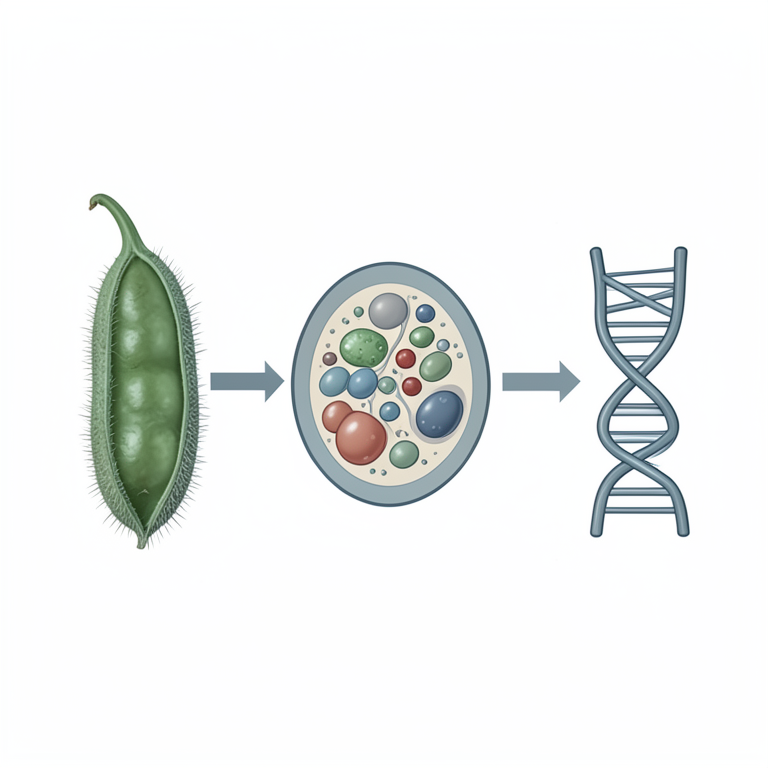
Integrated Defense Network of Urdbean
AI-generated conceptual illustration (urdbean plants (Vigna mungo) and pod borer larvae). It explains the idea and does not show study data.
View source evidence ↗Introduction
Urdbean (Vigna mungo), commonly known as black gram, is one of the most economically significant pulse crops, widely cultivated in tropical and subtropical regions. It serves as a crucial source of plant-based protein, contributing to the dietary needs of millions, especially in developing countries. Additionally, its nitrogen-fixing ability enhances soil fertility, making it an integral part of sustainable cropping systems. The productivity of urdbean is severely threatened by insect pests, particularly the pod borer complex, which includes Helicoverpa armigera, Maruca vitrata, and Spodoptera litura. These pests target the reproductive structures of urdbean, leading to seed damage, poor grain filling, and significant yield losses. Studies estimate that under severe infestation conditions, yield losses can exceed 80%. Although synthetic insecticides are commonly used to manage pod borer infestations, they are associated with several issues, including environmental pollution, human health hazards, and the emergence of pesticide-resistant pest populations. These drawbacks emphasize the need for Host Plant Resistance (HPR) as a sustainable alternative for pest management. Plants employ a diverse array of biochemical markers and secondary metabolites as defense mechanisms against insect pests. Key biochemical markers include chitinase, Polyphenol Oxidase (PPO), and Peroxidase (POD), which disrupt pest digestion, reinforce plant cell walls, and neutralize reactive oxygen species generated during pest attacks. Similarly, secondary metabolites such as phenolic acids, flavonoids, and alkaloids act as chemical barriers, deterring pest feeding and reproduction. Recent advances in PCR-based molecular techniques have enabled the identification of resistance-associated genes, including those encoding Pathogenesis-Related (PR) proteins and protease inhibitors. These markers provide valuable insights for targeted breeding and Marker-Assisted Selection (MAS). Despite significant advancements, limited research has been conducted on the integration of field-based pest scoring, biochemical marker analysis, chemical profiling, and molecular screening for identifying pod borer-resistant urdbean genotypes. This study aims to bridge this gap by screening urdbean germplasm under natural infestation conditions using pest damage scoring, evaluating biochemical defense mechanisms through chitinase, PPO, and POD assays, profiling secondary metabolites using GC-MS and HPLC, and identifying resistance-associated genes using PCR-based molecular markers.
Screening approaches for pod borer resistance in urdbean Morphological traits as resistance markers
Morphological traits represent an essential defense mechanism in plants against insect pests, serving as the first line of defense in restricting feeding, oviposition, and larval establishment. In the context of urdbean (Vigna mungo), morphological traits have played a pivotal role in identifying pest-resistant genotypes, especially against the pod borer complex, including Helicoverpa armigera and Maruca vitrata. These pests primarily target the reproductive structures of the plant, causing severe yield losses. Several studies have highlighted the significance of specific physical traits such as trichome density, pod wall thickness, pod compactness, and seed coat hardness in conferring resistance to pod borers. Trichomes are hair-like projections found on plant surfaces, including pods, leaves, and stems. They serve as mechanical barriers that can physically injure insect larvae and restrict their movement. Additionally, trichomes act as deterrents for adult moths, reducing their inclination to lay eggs on the plant surface. The density, length, and type of trichomes have been shown to correlate strongly with resistance levels in urdbean genotypes. Higher trichome density in resistant genotypes has been associated with reduced egg-laying activity and slower larval development, ultimately leading to lower pod damage. Furthermore, pod wall thickness is another critical morphological trait contributing to pest resistance. Thicker pod walls make it difficult for larvae to bore through and access the seed tissue. Resistant urdbean genotypes with thicker pod walls have consistently shown lower pest damage scores in field screening experiments. Pod compactness is another trait influencing pest resistance. In compact pods, the close arrangement of seeds restricts larval movement and reduces the extent of internal damage caused by feeding. Field observations have shown that compact pod structures limit the ability of larvae to move freely within the pod, making them less effective in causing widespread damage. Similarly, seed coat hardness serves as a significant physical barrier against pod borers. Harder seed coats make it difficult for larvae to penetrate and feed on the seed contents, which significantly reduces seed damage and maintains yield quality. Additionally, leaf texture and thickness are also relevant morphological traits that play a role in deterring pests. Leaves with thicker cuticles and wax layers are often less preferred by pod borers for oviposition and feeding. Field-based morphological screening of urdbean germplasm typically involves evaluating these traits under natural infestation conditions. Visual damage scoring systems, such as the 1-9 scale, are commonly used to assess the extent of pod damage caused by larvae. Additionally, measurements of pod wall thickness, trichome density, seed coat hardness, and leaf texture are performed using digital calipers, microscopy, and imaging software. Studies have consistently demonstrated that resistant genotypes display a combination of high trichome density, thick pod walls, compact pod structures, and hard seed coats, which collectively contribute to their resilience against pod borers. For instance, genotypes with denser trichomes and thicker pod walls often exhibit reduced pest damage scores and lower larval counts per plant. Despite the apparent advantages of morphological traits in pest resistance screening, reliance on these traits alone is insufficient to fully explain resistance mechanisms. Morphological resistance often interacts with biochemical and molecular defense mechanisms, creating a complex resistance network within the plant. For example, while thicker pod walls can prevent larval entry, biochemical compounds such as chitinase, peroxidase, and polyphenol oxidase are required to actively disrupt pest digestion and development once the larvae breach physical barriers. Similarly, environmental factors, including humidity, temperature, and soil fertility, can influence the expression and efficacy of morphological traits, potentially introducing variability in resistance performance across different environments. Morphological screening must, therefore, be complemented with biochemical marker analysis and molecular techniques to ensure reliable identification of pest-resistant genotypes. While traits like trichome density and pod wall thickness can serve as valuable initial indicators, their role is most effective when combined with biochemical assays and molecular validation. For instance, trichome density can be correlated with elevated chitinase or polyphenol oxidase activity, while pod wall thickness can be linked to peroxidase-mediated lignification processes. Additionally, the presence of resistance-associated genes validated through PCR-based molecular markers can provide further confidence in the resistance status of a genotype. Recent studies on urdbean germplasm screened under natural infestation conditions have shown promising results, with certain genotypes consistently outperforming others in terms of reduced pest damage and increased resistance marker expression. These findings reinforce the importance of morphological traits as primary indicators of pest resistance in urdbean. However, the variability in morphological trait expression under diverse environmental conditions necessitates multi-environmental field trials to validate the stability and reliability of these traits.
Biochemical defense mechanisms
Biochemical markers play a crucial role in plant defense against insect pests, offering active resistance mechanisms beyond the physical barriers provided by morphological traits. In Vigna mungo (urdbean), biochemical markers are essential components of the defense system against the pod borer complex, including Helicoverpa armigera and Maruca vitrata. These markers, primarily in the form of enzymes, defensive proteins, and secondary metabolites, are involved in disrupting insect physiology, preventing pest development, and strengthening plant cell structures. Screening urdbean germplasm based on biochemical markers provides valuable insights into the pest resistance mechanisms at the metabolic level and helps identify resistant genotypes for breeding programs. One of the most extensively studied biochemical markers in pest resistance is chitinase, an enzyme that targets and degrades chitin, a primary component of insect exoskeletons. Chitinase disrupts the structural integrity of insect cuticles and midgut linings, inhibiting their development and survival. In resistant urdbean genotypes, higher levels of chitinase activity have been reported, particularly in response to pod borer infestation. The enzyme is typically induced upon pest attack as part of the plant's defense signaling pathway, highlighting its significance in pest resistance. Another critical biochemical marker is Polyphenol Oxidase (PPO), an enzyme involved in the oxidation of phenolic compounds into quinones. Quinones have toxic effects on insect pests, as they interfere with the pest's digestive enzymes and create unfavorable feeding conditions in plant tissues. PPO activity has been consistently higher in resistant urdbean genotypes compared to susceptible ones. The enzyme also contributes to cross-linking phenolic compounds in plant cell walls, making them more resistant to pest penetration. Elevated PPO activity in urdbean plants infested with pod borers suggests an active oxidative defense response, reducing insect feeding efficiency. Peroxidase (POD) is another enzyme associated with pest resistance in urdbean. It plays a significant role in the lignification of plant cell walls, a process that strengthens cell structures and reduces larval penetration. Additionally, POD activity is involved in neutralizing Reactive Oxygen Species (ROS) generated during pest attacks, preventing oxidative damage to plant cells. Resistant genotypes often show higher peroxidase activity, contributing to enhanced structural barriers and improved resilience against pod borer damage. In addition to enzymatic markers, Pathogenesis-Related (PR) proteins are key biochemical defense molecules in urdbean. These proteins are induced in response to pest attacks and play direct and indirect roles in defense. PR proteins such as β-1,3-glucanase and protease inhibitors are widely studied for their role in plant resistance. Protease inhibitors, for example, interfere with pest digestive enzymes, reducing the ability of larvae to extract nutrients from plant tissues. In resistant urdbean varieties, elevated levels of protease inhibitors have been detected, leading to reduced larval growth rates and increased mortality. Secondary metabolites such as phenolic compounds, flavonoids, and alkaloids also act as biochemical markers in urdbean resistance. Phenolic compounds, including phenolic acids and tannins, are well-known for their role in plant defense against insect pests. These compounds disrupt insect digestive processes, reduce nutrient absorption, and act as deterrents to feeding. In urdbean, resistant genotypes often exhibit higher levels of phenolic compounds in their pod tissues, particularly during pest infestation. Phenolic acids also participate in reinforcing cell walls through lignin deposition, further preventing pest penetration. Flavonoids, another class of secondary metabolites, are known for their antifeedant properties and their ability to disrupt insect growth and reproduction. In urdbean, flavonoids accumulate in response to pest infestation, creating a chemical environment that deters insect feeding. Resistant genotypes have been shown to produce higher concentrations of flavonoids in pod tissues, contributing to their defense capabilities. Similarly, alkaloids disrupt insect nervous systems, impairing their feeding and reproductive behavior. These compounds act as neurotoxins for pests, causing paralysis and eventual mortality. The production of these biochemical markers is tightly regulated by the plant's defense signaling pathways, including the Jasmonic Acid (JA) and Salicylic Acid (SA) pathways. These signaling molecules coordinate the synthesis and activation of defense enzymes, PR proteins, and secondary metabolites in response to pest attacks. Jasmonic acid, in particular, has been shown to play a key role in activating PPO and peroxidase pathways in urdbean plants under pod borer infestation. From a screening perspective, biochemical markers are quantified using well-established spectrophotometric assays and enzyme activity assays. For example, chitinase activity is measured using colloidal chitin as a substrate, PPO activity is quantified using catechol as a substrate, and peroxidase activity is determined through the guaiacol assay. The total phenolic and flavonoid contents are often estimated using the Folin-Ciocalteu assay and aluminum chloride colorimetric assay, respectively. These analytical methods provide reproducible and reliable data for evaluating the biochemical resistance profiles of different urdbean genotypes. Despite their significant role in pest resistance, biochemical markers are not standalone indicators of resistance. They often interact with morphological traits and molecular resistance factors, creating an integrated defense network. For example, higher chitinase activity is more effective when paired with physical barriers like thicker pod walls and trichome density. Similarly, the presence of PR proteinencoding genes, confirmed through PCR-based molecular screening, enhances the functional role of these biochemical markers in pest resistance.
Chemical profiling of secondary metabolites
Secondary metabolites play a significant role in plant defense mechanisms against insect pests, acting as chemical barriers that deter feeding, disrupt digestion, and impair pest reproduction. In Vigna mungo (urdbean), these metabolites are essential components of the plant's resistance arsenal against the pod borer complex, including Helicoverpa armigera and Maruca vitrata. Unlike primary metabolites, which are directly involved in growth and development, secondary metabolites are synthesized in response to external stressors, including pest infestation. Among the most important classes of secondary metabolites associated with pod borer resistance are phenolic acids, flavonoids, alkaloids, tannins, and terpenoids. These compounds interfere with pest physiology, reduce feeding efficiency, and, in some cases, act as toxins that inhibit larval development. Phenolic acids are among the most studied secondary metabolites in urdbean resistance against pod borers. These compounds disrupt the pest's digestive system by inhibiting midgut enzymes, reducing nutrient absorption, and impeding larval development. Phenolic acids also contribute to strengthening plant cell walls through lignification, creating physical barriers against larval penetration. Similarly, flavonoids are known for their antifeedant properties and their ability to disrupt larval metabolic processes. These compounds interfere with insect gut enzymes, reduce digestion efficiency, and act as repellents. Alkaloids, another important group of secondary metabolites, are nitrogen-containing compounds with neurotoxic effects on pests. They impair nerve signal transmission, causing feeding inhibition, paralysis, and, in severe cases, mortality. Tannins, known for their astringent properties, bind to proteins in the insect midgut, making them indigestible and reducing nutrient assimilation. Terpenoids, although less studied in urdbean, have been shown to act as oviposition deterrents and repellents, reducing egg-laying by adult moths. Chemical profiling of these metabolites in urdbean germplasm has provided valuable insights into their role in pest resistance. Modern analytical techniques such as High-Performance Liquid Chromatography (HPLC) and Gas Chromatography-Mass Spectrometry (GC-MS) are widely employed to identify, quantify, and characterize these compounds. In HPLC, plant tissues such as leaves, pods, and seeds are extracted using organic solvents like methanol or ethanol. The resulting extracts are analyzed based on the polarity and retention time of individual metabolites, allowing precise identification and quantification. On the other hand, GC-MS is used to analyze volatile secondary metabolites, such as alkaloids and terpenoids, by vaporizing plant extracts and separating compounds based on their interaction with the chromatographic column. The mass spectrometer provides structural information about each compound based on its mass-to-charge ratio, enabling researchers to identify novel metabolites linked to resistance mechanisms. Comparative chemical profiling of resistant and susceptible urdbean genotypes has revealed distinct differences in the levels and types of secondary metabolites. Resistant genotypes consistently exhibit higher concentrations of phenolic acids, flavonoids, and alkaloids, particularly in pod tissues during peak infestation stages. For example, higher levels of compounds such as gallic acid, ferulic acid, and catechin have been detected in resistant varieties, all of which are known to inhibit insect digestion and feeding. Similarly, flavonoids such as quercetin, kaempferol, and rutin have been identified in resistant genotypes, acting as feeding deterrents and growth inhibitors. Alkaloids like nicotine, berberine, and quinoline have also shown increased accumulation in resistant lines, disrupting larval nervous systems and reducing pest survival rates. Correlation studies between pest damage scores and metabolite concentrations have demonstrated strong negative associations. Genotypes with higher metabolite levels consistently display lower pest damage scores, supporting the hypothesis that secondary metabolites play a direct role in deterring pod borer infestation. Furthermore, these metabolites often interact synergistically with biochemical markers such as chitinase, Polyphenol Oxidase (PPO), and Peroxidase (POD). For instance, flavonoids often work in tandem with PPO to produce toxic quinones, which further inhibit larval digestion. Phenolic acids complement POD activity by contributing to lignin biosynthesis, reinforcing cell walls, and preventing larval penetration. The regulation of secondary metabolite synthesis in urdbean is tightly controlled by plant signaling pathways, particularly the Jasmonic Acid (JA) pathway and the Salicylic Acid (SA) pathway. Jasmonic acid plays a central role in activating the production of flavonoids, phenolic acids, and alkaloids during pest attacks, while salicylic acid regulates responses to environmental stressors. Understanding these pathways is crucial for manipulating secondary metabolite synthesis through biotechnological interventions, potentially enhancing pest resistance in urdbean breeding programs. Despite the significant progress made in chemical profiling, certain challenges remain in fully understanding the role of secondary metabolites in pest resistance. The dynamic nature of metabolite production across different growth stages, environmental variability, and genotype-specific responses add complexity to their analysis. Additionally, linking specific metabolites to resistance-associated genes requires advanced genomic and transcriptomic studies. The integration of chemical profiling with molecular marker analysis can help address these challenges by identifying the genetic basis of secondary metabolite production and regulation. Future research should focus on employing advanced metabolomics tools, including Ultra-Performance Liquid Chromatography (UPLC) and Nuclear Magnetic Resonance (NMR) spectroscopy, to identify novel metabolites associated with pest resistance. Moreover, validation of metabolite roles through transgenic approaches can provide conclusive evidence of their contribution to resistance mechanisms. Marker-Assisted Selection (MAS) programs should incorporate metabolite profiles as selection criteria for identifying and breeding pest-resistant urdbean genotypes.
Molecular markers and genetic analysis
Molecular markers and genetic analysis have revolutionized the screening and identification of pest-resistant genotypes in crop breeding programs, including Vigna mungo (urdbean). These tools provide precise insights into the genetic basis of resistance mechanisms, enabling breeders to identify and select resistant genotypes more efficiently. While traditional screening methods based on morphological and biochemical markers remain essential, molecular markers offer a faster, more accurate, and reproducible approach to identifying resistance-associated genes and validating their inheritance patterns. In the context of resistance against the pod borer complex (Helicoverpa armigera and Maruca vitrata), molecular markers help in uncovering the genetic architecture of resistance traits, tracking resistance alleles, and facilitating Marker-Assisted Selection (MAS) in breeding programs. The success of molecular markers in pest resistance breeding lies in their ability to identify Quantitative Trait Loci (QTLs) associated with resistance. These QTLs are genomic regions containing genes that govern resistance traits, including the production of defense proteins, secondary metabolites, and signaling molecules. Various types of molecular markers, including Simple Sequence Repeats (SSRs), Random Amplified Polymorphic DNA (RAPD), Amplified Fragment Length Polymorphism (AFLP), and Single Nucleotide Polymorphisms (SNPs), have been employed in urdbean resistance studies. SSR markers, in particular, have gained prominence due to their high reproducibility, co-dominance inheritance, and abundant distribution across the genome. These markers have been successfully used to identify regions in the urdbean genome linked to resistance traits against pod borers. PCR-based molecular markers have played a pivotal role in identifying Pathogenesis-Related (PR) proteins, protease inhibitors, and chitinase genes in resistant urdbean genotypes. PR proteins are induced in plants during pest attacks and contribute to resistance through various mechanisms, including disrupting larval digestion, interfering with insect midgut enzymes, and forming toxic compounds. Protease inhibitors are another class of defense molecules frequently identified using molecular markers. These inhibitors interfere with pest digestive enzymes, reducing nutrient absorption and causing developmental delays in larvae. Chitinase genes, known for their role in breaking down the chitin component of insect exoskeletons, have also been successfully identified in resistant urdbean genotypes through PCR-based techniques. Functional validation of these genes often involves gene expression analysis through quantitative PCR (qPCR). In resistant genotypes, PR proteins, protease inhibitors, and chitinase genes exhibit significantly higher expression levels during pest infestation compared to susceptible genotypes. This differential expression underscores the importance of these genes in activating defense responses in resistant plants. Transcriptomic studies have further revealed the induction of key signaling pathways, including the Jasmonic Acid (JA) and Salicylic Acid (SA) pathways, which regulate the production of defense proteins and secondary metabolites. These pathways are tightly coordinated and often exhibit cross-talk to optimize defense responses under pod borer attack. The identification of resistance-associated genes through molecular markers has also enabled the development of gene-specific primers for marker-assisted breeding programs. Marker-Assisted Selection (MAS) uses these primers to screen large populations for the presence or absence of resistance alleles, enabling the rapid identification of promising genotypes. MAS significantly reduces the breeding cycle, accelerates the introgression of resistance traits into high-yielding varieties, and eliminates the reliance on time-consuming field evaluations under natural infestation conditions. Recent advances in Next-Generation Sequencing (NGS) technologies have further expanded the scope of molecular marker applications in urdbean resistance research. Wholegenome sequencing and transcriptomic analyses have facilitated the identification of novel resistance genes and regulatory elements associated with pest resistance. For example, transcriptomic profiling of resistant urdbean genotypes during pod borer infestation has revealed the upregulation of defense-related genes, including those coding for PR proteins, chitinases, protease inhibitors, and peroxidases. These findings provide a deeper understanding of the genetic and molecular mechanisms underlying resistance and offer potential targets for genetic engineering and transgenic approaches.
Despite the advancements in molecular marker technology, several challenges remain in their application to urdbean pest resistance breeding. The genetic complexity of resistance traits, often governed by multiple genes and influenced by environmental factors, makes it difficult to identify single markers reliably associated with resistance. Additionally, the limited availability of comprehensive urdbean genomic resources has hindered large-scale marker discovery and QTL mapping studies. The integration of molecular markers with other screening methods, such as biochemical assays and morphological trait evaluations, is essential to overcome these challenges and ensure reliable identification of resistance genes. Future research should focus on fine-mapping of QTLs, identifying novel molecular markers linked to pod borer resistance, and developing gene pyramiding strategies to stack multiple resistance genes in elite urdbean varieties. The adoption of Genome-Wide Association Studies (GWAS) can further enhance our understanding of the genetic architecture of resistance traits, providing a more targeted approach to molecular breeding. Additionally, CRISPR-Cas9-based genome editing holds great potential for directly manipulating resistance-associated genes, offering a precise and efficient tool for enhancing pest resistance in urdbean.
Conclusion
This study underscores the significance of adopting an integrated approach for screening urdbean germplasm against the pod borer complex, combining morphological traits, biochemical markers, chemical profiling, and molecular genetic analysis. Morphological traits such as trichome density, pod wall thickness, pod compactness, and seed coat hardness were identified as critical physical barriers that significantly reduced pest damage by limiting oviposition, feeding, and larval establishment. These morphological defenses were further supported by biochemical markers, including chitinase, Polyphenol Oxidase (PPO), and Peroxidase (POD), which actively disrupted pest digestion, reinforced structural barriers, and mitigated oxidative stress caused by pest activity. The chemical profiling of secondary metabolites using HPLC and GC-MS revealed elevated levels of phenolic acids, flavonoids, alkaloids, and tannins in resistant genotypes, highlighting their role as antifeedants, neurotoxins, and digestive inhibitors. These metabolites exhibited strong correlations with reduced pest damage scores, demonstrating their direct contribution to pest resistance. At the molecular level, PCR-based markers and transcriptomic analysis validated the presence and expression of resistanceassociated genes, including those encoding PR proteins, chitinases, and protease inhibitors. The involvement of Jasmonic Acid (JA) and Salicylic Acid (SA) signaling pathways was evident in activating these genes, underscoring the complexity of the plant's defense response. The findings of this study emphasize that morphological, biochemical, and molecular markers do not function in isolation but instead interact synergistically to provide robust resistance against pod borers. Integrating these markers into breeding programs through Marker-Assisted Selection (MAS) offers a reliable pathway for developing pest-resistant, high-yielding urdbean varieties. Moving forward, multi-environmental validation trials, functional gene characterization, and advanced genomic tools should
References
13 in the original paper- Kol U, Singh V, Chandrakar G. Screening of germplasm of mungbean against pod borer complex. J Curr Res Food Sci. 2022;3(2):37-40. https://www.foodresearchjournal.com/article/71/3-2-1586.pdf
- Dhaliwal GS, Jindal V, Dhawan AK. Insect pest problems and crop losses: Changing trends. Indian Journal of Ecology. 2010;37(1):1-7.
- War AR, Paulraj MG, War MY, Ignacimuthu S. Role of secondary metabolites in plant defense against insect herbivores. Journal of Plant Interactions. 2012;7(1):6773.
- Pandey P, Rajkumar S, Subramanian S. Advances in understanding host plant resistance to insect pests using omics technologies. Plant Biotechnology Reports. 2018;12(3):157-171.
- Sarkar T, Mondal T. Recent advances and achievements in mutation breeding of fruit crops. Int J Agric Food Sci. 2024;6(2):166-72.
- Singh SK, Dixit GP, Verma PS, Kumar S. Screening of urdbean (Vigna mungo) genotypes for resistance against pod borers (Helicoverpa armigera) under field conditions. Journal of Entomology and Zoology Studies. 2019;7(5):1143-1148.
- Chandekar P, Singh V, Katlam BP. Screening of different germplasm of uredbean against pod borer complex. J Curr Res Food Sci. 2022;3(2):94-97.
- Dutta S, Shrestha A, Thakur J. Genetic and molecular approaches to enhance resistance against insect pests in legumes. Frontiers in Plant Science. 2020;11:583750.
- Patil SB, Biradar DP. Molecular markers in pulses: Progress and prospects. International Journal of Genetics and Genomics. 2021;9(4):56-67.
- Ramesh K, Pandey AK, Singh M. Mechanisms of insect resistance in pulses: A biochemical perspective. Annals of Plant Protection Sciences. 2015;23(1):43-52.
- Karthikeyan A, Uthamasamy S, Ramasamy S. Evaluation of biochemical markers in urdbean for resistance against Helicoverpa armigera. Indian Journal of Agricultural Sciences. 2016;86(9):1187-1191.
- Saroj SK, Kaur J, Kumar S. Role of chitinase and polyphenol oxidase in pest resistance in legumes. Plant Molecular Biology Reporter. 2021;39(2):154-166.
- Singh AK, Singh DP, Tripathi NN. Biochemical and molecular markers for insect resistance in pulses: A review. Legume Research. 2021;44(3):310-320.