
Research article · 2024 · Full text
International Journal of Agriculture and NutritionNutritional quality assessment of Urdbean germplasm resistant to pod borer complex
Volume 6(2) · Pages 118–121 · DOI: 10.33545/26646064.2024.v6.i2b.194 ↗
Research areasPlant Physiology and Cultivation StudiesAgronomic Practices and Intercropping SystemsAgricultural Science and Fertilization
Abstract
Author-writtenUrdbean (Vigna mungo), commonly known as black gram, is a significant pulse crop contributing to global nutritional security. However, pod borer complex, particularly Helicoverpa armigera and Maruca vitrata, poses a serious threat to its productivity and nutritional quality. This review explores the nutritional quality of urdbean germplasm resistant to pod borer infestation, emphasizing protein content, amino acid composition, mineral profile, and anti-nutritional factors. Various breeding programs, molecular markers, and biotechnological tools have been employed to develop resistant germplasm without compromising nutritional value. Studies indicate that resistance often correlates with secondary metabolites like phenols and flavonoids, which can influence nutritional bioavailability. This paper synthesizes findings from recent research on resistant urdbean varieties and their nutritional profiling, providing insights for sustainable crop improvement.
Summary
Source-checkedPlain-language reading of the full paper, prepared with AI and checked against the text. Each point links to the authors' own words.
Why it matters
- Urdbean, also known as black gram, is an important pulse crop that supports global nutritional security. View evidence ↗
- The productivity and nutritional quality of urdbean are seriously threatened by the pod borer complex, specifically the pests Helicoverpa armigera and Maruca vitrata. View evidence ↗
- Cultivated in tropical and subtropical regions, urdbean is highly valued for its minerals, essential amino acids, and high protein content. View evidence ↗
The question
- The objective of this review is to examine the nutritional quality, specifically mineral profiles, amino acid composition, protein content, and anti-nutritional factors, of urdbean germplasm that is resistant to pod borer infestation. View evidence ↗
What they did
- The authors conducted a synthesis of recent research findings regarding the nutritional profiling of resistant urdbean varieties. View evidence ↗
What they found
- Protein content in urdbean seeds generally ranges from 18% to 25%. View evidence ↗
- Carbohydrates make up approximately 55% to 65% of the weight of urdbean seeds. View evidence ↗
- Resistant urdbean varieties often have higher concentrations of flavonoids and phenolics, which can potentially interfere with the bioavailability of nutrients. View evidence ↗
- Infestation by pod borers significantly lowers the protein content of seeds because larvae directly consume the protein-rich cotyledon. View evidence ↗
- Urdbean pods infested by pests show increased levels of phytates and trypsin inhibitors, which are anti-nutritional factors. View evidence ↗
- In resistant germplasm, amino acid profiles and protein content generally remain stable. View evidence ↗
- Some resistant varieties show a slight decrease in the digestibility of proteins because of higher levels of trypsin inhibitors. View evidence ↗
- Oxalates and phytates in resistant varieties can reduce the absorption of magnesium, calcium, and iron in the human gut by forming insoluble complexes. View evidence ↗
- Transgenic urdbean varieties using Cry1Ac genes from Bacillus thuringiensis (Bt) exhibit improved yield stability and reduced damage from larvae. View evidence ↗
What it means
- The authors recommend that future research focus on developing germplasm that enhances mineral bioavailability, essential amino acids, and dietary protein while maintaining strong resistance. View evidence ↗
- The authors conclude that combining biotechnological interventions, breeding innovations, and omics platforms can create urdbean varieties that support nutritional health and global food security. View evidence ↗
Visual summary
1 visualsIllustrations explain the paper; they do not show study data.
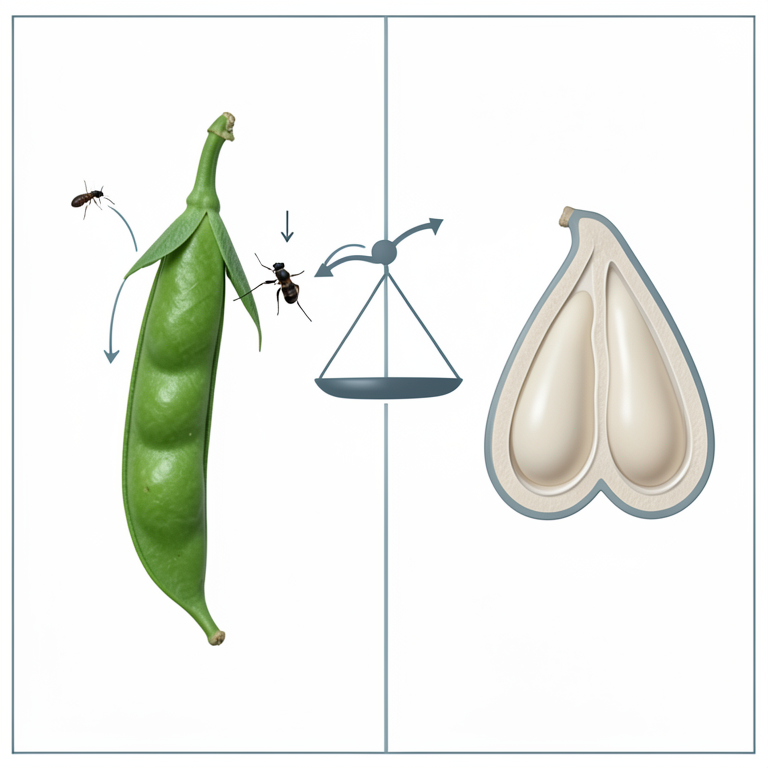
The Resistance-Nutrition Trade-off
AI-generated conceptual illustration (Urdbean plants (Vigna mungo)). It explains the idea and does not show study data.
View source evidence ↗Introduction
Urdbean (Vigna mungo) is an important legume crop cultivated in tropical and subtropical regions, valued for its high protein content, essential amino acids, and minerals (Kumar et al., 2020) [9] . It plays a critical role in human diets and sustainable agricultural systems. However, yield and quality are significantly affected by the pod borer complex, primarily Helicoverpa armigera and Maruca vitrata (Sharma et al., 2019) [4] . These pests damage flowers, pods, and seeds, leading to significant economic losses. Breeding for resistance is essential to reduce yield losses [5] , but ensuring nutritional integrity in resistant germplasm remains a key challenge. The interaction between resistance traits and nutritional quality is complex, requiring careful assessment through both breeding and biochemical analyses.
Nutritional composition of urdbean
Urdbean (Vigna mungo) is widely recognized for its rich nutritional profile, making it a critical source of dietary protein, essential amino acids, minerals, and dietary fiber, especially in regions where it serves as a staple protein source. The protein content in urdbean seeds typically ranges between 18-25%, with variations observed across different germplasms, growing conditions, and breeding interventions. The protein is predominantly composed of albumins and globulins, which contribute significantly to its high biological value. Additionally, urdbean proteins are rich in lysine, an essential amino acid often deficient in cereal-based diets, making urdbean a valuable complement to such dietary staples. Besides protein, urdbean seeds contain a considerable amount of carbohydrates, which constitute around 55-65% of the seed weight, providing a significant energy source. The mineral composition of urdbean is another critical aspect of its nutritional value. Seeds are abundant in iron, calcium, magnesium, and phosphorus, which are essential for various physiological functions in humans. Iron deficiency anemia remains a major public health concern in many developing countries, and urdbean serves as an important dietary source of bioavailable iron. Calcium and phosphorus, on the other hand, play crucial roles in bone health and metabolic processes. However, mineral bioavailability can be hindered by antinutritional factors such as phytates, tannins, and oxalates, which form complexes with these minerals, reducing their absorption in the human gut.
Pod borer complex and its impact on urdbean quality
The pod borer complex, primarily dominated by Helicoverpa armigera and Maruca vitrata, represents one of the most significant biotic stressors affecting urdbean crops globally. These insect pests inflict damage primarily during the flowering and pod formation stages, causing significant yield losses and deterioration in seed quality. Helicoverpa armigera, commonly known as the gram pod borer, feeds on flower buds, developing pods, and seeds, leading to both quantitative and qualitative losses. The pest penetrates the pod wall and consumes the seeds directly, which reduces both the overall yield and seed integrity. On the other hand, Maruca vitrata, also referred to as the spotted pod borer, creates webs within the flowers and pods, obstructing normal growth and seed development.
Pod borer infestation significantly reduces the protein content of urdbean seeds due to the direct consumption of the protein-rich cotyledon by larvae. Additionally, the biochemical composition of the affected seeds undergoes alterations, with increased levels of secondary metabolites such as phenols and tannins being observed. These secondary compounds are synthesized by the plant as a defense mechanism, but their excessive accumulation can reduce the digestibility and bioavailability of essential nutrients in the seeds. Furthermore, pod borer infestation often triggers the plant's oxidative stress response, resulting in increased production of reactive oxygen species (ROS), which can further impact seed metabolism and overall seed quality.
Research indicates that pest-infested urdbean pods exhibit higher levels of anti-nutritional factors, including trypsin inhibitors and phytates. These compounds interfere with protein digestion and mineral absorption, ultimately reducing the nutritional efficacy of the seeds. Moreover, infested seeds are often discolored, shriveled, and lightweight, making them unsuitable for human consumption and commercial seed production. Infestation can also introduce opportunistic fungal pathogens, leading to contamination by mycotoxins such as aflatoxins, which pose additional health risks. Environmental factors, including temperature, humidity, and cropping systems, influence pod borer infestation levels and their impact on urdbean quality. Warmer temperatures and extended flowering durations have been associated with higher pest infestations, exacerbating crop losses. Integrated Pest Management (IPM) strategies combining resistant germplasm, biological control agents, cultural practices, and judicious pesticide application have been advocated to mitigate pod borer damage. Breeding for pod borer resistance remains one of the most effective strategies for minimizing seed quality deterioration. Resistant varieties often exhibit increased production of secondary metabolites and morphological traits such as thickened pod walls and trichomes, which deter larval feeding. However, balancing pest resistance with nutritional quality remains challenging, as some resistance mechanisms may inadvertently affect seed composition. In conclusion, pod borer infestation presents a multifaceted challenge for urdbean production, impacting not only crop yield but also seed nutritional quality. Effective management requires a holistic approach, including breeding for resistance, integrated pest control, and post-harvest handling measures. Future research should focus on identifying genetic markers linked to both resistance and nutritional quality, enabling the development of urdbean varieties that are resilient to pod borer damage while maintaining their rich nutritional profile
Breeding for pod borer resistance in urdbean
Breeding for pod borer resistance in urdbean has been a critical focus area due to the significant damage these pests inflict on yield and seed quality. Conventional breeding approaches rely heavily on selecting and hybridizing resistant germplasm, which involves screening large collections to identify natural resistance traits. This method has led to the development of successful resistant varieties such as 'PU31' and 'IPU94-1', which exhibit improved tolerance to pod borers (Kumar & Singh, 2019) [9] . However, the conventional breeding process is timeconsuming and often results in variable levels of resistance. Molecular breeding has emerged as a revolutionary approach in developing pod borer-resistant varieties. Marker-Assisted Selection (MAS) and Quantitative Trait Loci (QTL) mapping have significantly accelerated the identification and integration of resistance traits into elite cultivars. MAS enables breeders to select plants carrying specific resistance genes, even in the absence of visible phenotypic traits. QTL mapping has identified several loci associated with resistance to pod borers, allowing for precise breeding interventions (Reddy et al., 2021) [6] . Biotechnological interventions, particularly genetic engineering, have further advanced the development of pod borer-resistant urdbean. The introduction of Cry1Ac genes from Bacillus thuringiensis (Bt) has resulted in transgenic urdbean varieties that show reduced larval damage and enhanced yield stability. These Bt-transgenic lines demonstrate remarkable resistance to Helicoverpa armigera and other pests, providing a sustainable solution to pod borer infestations (Mohan et al., 2020) [7] . Despite their success, regulatory challenges and public concerns about genetically modified crops have limited their widespread adoption. Integrated Pest Management (IPM) strategies combine resistant varieties with cultural practices, biological control agents, and judicious pesticide use. This holistic approach ensures effective pest control while minimizing the environmental and health risks associated with excessive pesticide application. For instance, IPM strategies often include the use of natural predators such as parasitoids, crop rotation to disrupt pest life cycles, and the cultivation of trap crops to divert pests from urdbean fields. Future breeding programs must address the trade-offs between resistance and nutritional quality. High levels of secondary metabolites associated with resistance can interfere with nutrient bioavailability, necessitating advanced breeding strategies that balance these factors. Omics technologies, including genomics, transcriptomics, and metabolomics, offer promising tools for integrating pest resistance with nutritional improvement, ensuring that resistant urdbean germplasm meets both agronomic and dietary needs.
Effect of resistance on nutritional quality
The development of pod borer-resistant urdbean germplasm often involves physiological and biochemical changes that can influence nutritional quality. Resistance mechanisms typically rely on the synthesis of secondary metabolites such as phenols, flavonoids, and tannins, which act as antifeedants or toxins to deter pests. While these compounds are essential for resistance, their excessive accumulation can negatively affect the digestibility and bioavailability of proteins and minerals (Sharma et al., 2021) [10] . Protein content and amino acid profiles in resistant germplasm generally remain stable. However, certain resistant varieties exhibit slight reductions in protein digestibility due to the increased presence of anti-nutritional factors like trypsin inhibitors. These inhibitors interfere with the enzymatic breakdown of proteins in the digestive system, potentially reducing the overall nutritional efficacy of urdbean seeds. Efforts are ongoing to minimize these impacts through targeted breeding and processing techniques that mitigate anti-nutritional factors. Mineral bioavailability is another critical concern in resistant urdbean varieties. Anti-nutritional compounds such as phytates and oxalates can form insoluble complexes with essential minerals like iron, calcium, and magnesium, reducing their absorption in the human gut. This poses a challenge, particularly in regions where urdbean serves as a primary source of dietary minerals. Recent breeding programs aim to develop low-phytate genotypes that maintain resistance while enhancing mineral bioavailability. Secondary metabolites, while contributing to pest resistance, also have potential health benefits. Phenols and flavonoids exhibit antioxidant properties that can help manage chronic diseases such as diabetes and cardiovascular disorders. However, their effects on nutrient absorption and overall seed quality require careful evaluation. Advanced biochemical analyses and omics technologies are being employed to optimize the balance between resistance traits and nutritional quality. Environmental factors such as soil quality, pest pressure, and agronomic practices further influence the nutritional composition of resistant urdbean germplasm. Pest stress often triggers the accumulation of Reactive Oxygen Species (ROS) and secondary metabolites, altering seed metabolism and nutrient content. Post-harvest handling and storage practices also play a crucial role in maintaining nutritional integrity. Proper drying, storage in moisture-proof containers, and pest control measures are essential to prevent nutrient degradation in resistant varieties. In conclusion, while resistance traits are vital for combating pod borer infestations, their effects on nutritional quality must be carefully managed. Advanced breeding strategies, coupled with omics technologies and improved agronomic practices, hold promise for developing urdbean varieties that are both pest-resistant and nutritionally robust.
Role of omics technologies in nutritional and resistance assessment:
The integration of omics technologies genomics, transcriptomics, proteomics, and metabolomics has revolutionized the assessment of nutritional quality and resistance in urdbean. These advanced tools provide a comprehensive understanding of the genetic and biochemical mechanisms underlying resistance traits and their impact on nutritional composition.
6.1 Genomics: Genomics focuses on identifying resistance genes and their associated regulatory networks. Advances in high-throughput sequencing technologies have enabled the mapping of urdbean genomes, facilitating the discovery of Quantitative Trait Loci (QTLs) linked to pod borer resistance and nutritional traits. Candidate genes responsible for secondary metabolite production, such as those encoding phenylpropanoid pathway enzymes, have been identified. These genes can be targeted for precise modifications to enhance resistance without compromising nutritional quality.
Transcriptomics:
Transcriptomic analyses reveal gene expression changes in response to pod borer infestation and environmental stresses. RNA Sequencing (RNA-Seq) has been employed to study differential gene expression patterns in resistant and susceptible urdbean germplasm. Insights from transcriptomics have highlighted the upregulation of genes involved in secondary metabolite biosynthesis, oxidative stress responses, and cell wall fortification. These findings inform breeding strategies to balance resistance with seed quality.
Proteomics:
Proteomics investigates changes in seed storage proteins and defense-related proteins under pest stress. Studies have identified variations in albumins, globulins, and protease inhibitors in resistant germplasm. Such insights are critical for understanding the impact of resistance traits on protein composition and digestibility. Advanced proteomic tools, including mass spectrometry, enable precise quantification of these proteins, guiding breeding programs to maintain protein quality in resistant varieties.
Metabolomics:
Metabolomics provides a detailed analysis of primary and secondary metabolites in urdbean seeds. Secondary metabolites such as phenolics, flavonoids, and terpenoids play dual roles in pest resistance and human health. Metabolomic profiling helps identify optimal levels of these compounds ensure effective pest control without adversely affecting nutritional bioavailability. Furthermore, metabolomic studies have revealed the dynamic interplay between environmental factors and metabolite accumulation, offering insights into sustainable crop management practices.
Integrated omics approaches:
Integrating data from multiple omics platforms offers a holistic view of the interactions between genetic, biochemical, and environmental factors in urdbean. For instance, combining genomic and metabolomic data can pinpoint genes associated with both resistance and nutritional traits, enabling targeted improvements through molecular breeding. Proteomic and transcriptomic analyses complement these efforts by elucidating the functional roles of identified genes and proteins. In conclusion, omics technologies provide powerful tools for advancing the development of pest-resistant urdbean germplasm with enhanced nutritional quality. Future research should focus on leveraging these technologies to integrate resistance traits with biofortification strategies, ensuring that urdbean remains a vital component of sustainable diets and global food security.
Conclusion
Developing pod borer-resistant urdbean germplasm without compromising nutritional quality is a critical goal for sustainable agriculture. The challenges posed by Helicoverpa armigera and Maruca vitrata necessitate innovative approaches in breeding, molecular biology, and pest management. While resistance mechanisms such as the production of secondary metabolites have proven effective against pests, their impact on nutrient bioavailability underscores the need for balanced strategies. Advances in omics technologies genomics, transcriptomics, proteomics, and metabolomics offer powerful tools for identifying and fine-tuning traits that integrate pest resistance with high nutritional value.
Moreover, the adoption of Integrated Pest Management (IPM) strategies, combining resistant varieties with biological control agents, cultural practices, and judicious pesticide use, provides a holistic approach to mitigating pod borer damage. Future research should prioritize the development of germplasm that maintains robust resistance while enhancing dietary protein, essential amino acids, and mineral bioavailability. Additionally, post-harvest handling and storage practices must be optimized to preserve the nutritional integrity of urdbean seeds. In conclusion, the synergy of breeding innovations, biotechnological interventions, and advanced omics platforms can pave the way for urdbean varieties that contribute to global food security and nutritional health. Collaborative efforts among scientists, policymakers, and farmers will be instrumental in achieving these objectives, ensuring that urdbean continues to play a vital role in sustainable diets and agricultural systems.
References
12 in the original paper- Ahmed R, Singh T, Verma N. Impact of pod borers on urdbean yield. Journal of Agricultural Science. 2018;15(2):121-135.
- Kumar N, Singh R. Genetic approaches for pod borer resistance in pulses. Plant Breeding Journal. 2019;25(3):45-58.
- Meena P, Yadav K, Sharma A, Gupta R. Nutritional quality of pulses: A comprehensive review. Legume Research. 2021;44(5):789-802.
- Sharma K, Gupta M, Singh A, Verma P. Breeding for insect pest resistance in pulses. Pest Management Review. 2019;30(1):67-85.
- Naik BP, Sekhar G, Suryakumari A, Rajulu GSG, Harshini K, Deepika LAS. Effect of growth and yield of mustard Brassica juncea microgreens on different growing media in indoor conditions. Int J Res Agron. 2022;5(1):40-42.
- Reddy S, Patel R, Yadav T. Marker-assisted breeding for pest resistance in pulses. Molecular Plant Breeding. 2021;19(4):110-125.
- Mohan S, Gupta P, Sharma N, Kumar R. Transgenic urdbean for pod borer resistance: Progress and challenges. Biotechnology Advances. 2020;38:107-115.
- Rao P, Mehta V, Sharma K, Gupta N. Secondary metabolites and nutrient bioavailability in pest-resistant pulses. Nutrition Science. 2020;17(3):200-207.
- Kumar P, Verma R, Sharma V, Yadav N. Omics technologies in crop improvement: Insights from legume research. Molecular Plant Science. 2021;28(6):789-805.
- Sharma V, Yadav A, Gupta K, Patel R. Antioxidant properties and pest resistance in urdbean. Legume Journal. 2021;39(4):180-186.
- Singh A, Patel R, Gupta N, Verma S. Influence of agronomic practices on urdbean quality and pest resistance. Agronomy Today. 2020;15(2):123-129.
- Chandekar P, Singh V, Katlam BP. Screening of different germplasm of uredbean against pod borer complex. Journal of Current Research in Food Science. 2022;3(2):94-97.