
Research article · 2024 · Full text
International Journal of Horticulture and Food ScienceIntegrating climate-smart horticulture and genome editing for sustainable urban agriculture: Innovations in hydroponics, vertical farming, and urban farming
Volume 6(2) · Pages 60–67 · DOI: 10.33545/26631067.2024.v6.i2a.233 ↗
Research areasInnovations in Aquaponics and Hydroponics Systems
Abstract
Author-writtenThe challenges of climate change, urbanization, and resource scarcity require innovative solutions to agriculture, especially in space-limited urban settings. This review explores the integration of climate-smart horticulture, genome editing technologies, and controlled environment agriculture systems such as hydroponics and vertical farming, which are considered sustainable approaches to food production. Genome editing technologies like CRISPR-Cas9 will advance crop resilience, resource efficiency, and yields under controlled environments. Hydroponics and vertical farming deliver high efficiencies of water and space, while genome-edited crops enhance productivity. Main challenges include high costs, energy requirements, and public suspicion, which hold back food security and environmental protection. Encouragement and initial setups of such agriculture by giving financial help, educating the public, and promoting it through the use of renewable energy to displace fossil fuels, and collective action will be necessitated to fight these problems, directly enhancing urban agriculture to fulfill the world\'s food needs while minimizing environmental damages.
Summary
Source-checkedPlain-language reading of the full paper, prepared with AI and checked against the text. Each point links to the authors' own words.
Why it matters
- Urban agriculture faces significant pressure from climate change, rapid urbanization, and limited resources, necessitating innovative farming solutions. View evidence ↗
- Climate-smart horticulture is a vital approach that uses adaptive and mitigation strategies to increase productivity and reduce greenhouse gas emissions. View evidence ↗
- Genome editing tools, specifically CRISPR-Cas9, are expected to improve crop yields, resource efficiency, and resilience in controlled environments. View evidence ↗
The question
- The review aims to examine how integrating climate-smart horticulture, genome editing, and controlled environment agriculture (CEA) can create sustainable urban farming. View evidence ↗
What they did
- The authors analyzed over 50 peer-reviewed articles, technical reports, and book chapters to synthesize their findings. View evidence ↗
- The literature search was limited to publications from the last five years, specifically from 2020 to 2024. View evidence ↗
- The review was conducted through the collaboration of two experts: a geneticist specializing in crop improvement and a specialist in climate-smart horticultural technologies. View evidence ↗
What they found
- Hydroponic systems can reduce water consumption by approximately 90% compared to traditional soil-based agriculture. View evidence ↗
- Vertical farming can increase crop yields by up to 30% per square meter compared to conventional farming. View evidence ↗
- CRISPR-edited spinach has demonstrated better adaptation to hydroponic conditions, resulting in improved nutritional value and yield. View evidence ↗
- Genome-edited lettuce varieties with increased nitrogen utilization rates can reduce the requirement for synthetic fertilizers in hydroponics. View evidence ↗
- Genome editing has been used to create non-browning apples and delayed-ripening bananas to help reduce food waste. View evidence ↗
- The widespread adoption of integrated urban farming systems is hindered by high initial capital costs, high energy requirements, and complex regulations. View evidence ↗
- Public skepticism regarding genetic alterations remains a barrier, highlighting the need for education on the safety and benefits of genome editing. View evidence ↗
What it means
- The authors conclude that the integration of CEA systems, genome editing, and climate-smart horticulture is a transformative way to solve urban agricultural challenges. View evidence ↗
- The authors recommend that future efforts focus on integrating AI, renewable energy, and affordable genome-editing tools to make these systems more accessible. View evidence ↗
Visual summary
1 visualsIllustrations explain the paper; they do not show study data.
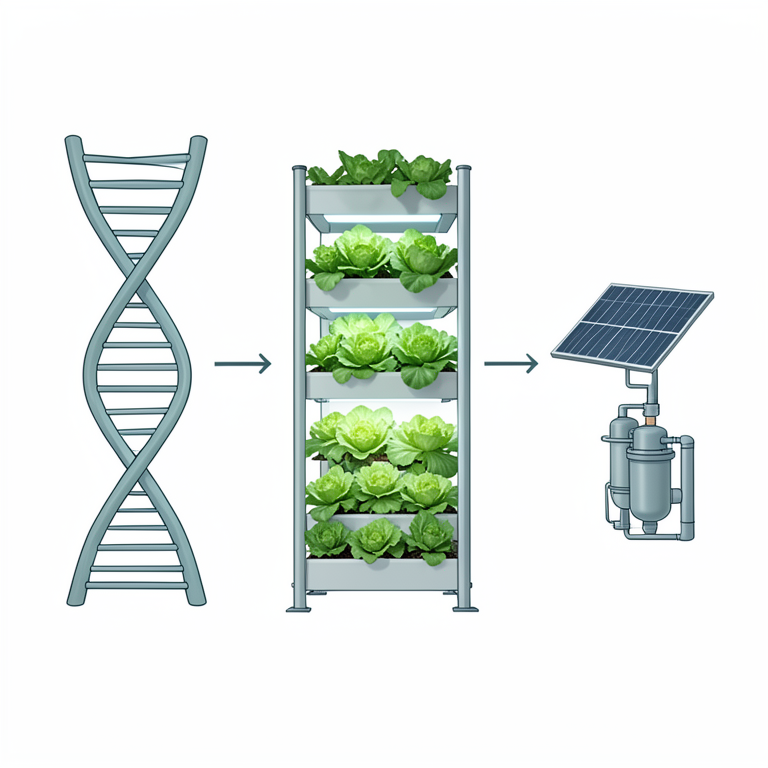
Synergy of Sustainable Urban Agriculture
AI-generated conceptual illustration (Lettuce plants in a vertical hydroponic farm). It explains the idea and does not show study data.
View source evidence ↗Introduction
The interplay of climate change, swift urbanization, and dwindling resources has necessitated the development of innovative agricultural practices that emphasize sustainability and resilience. These issues are particularly pronounced in urban areas, where limited land and environmental restrictions hinder conventional farming methods. In response to the increasing need for fresh and nutritious food, while simultaneously mitigating environmental impacts, climate-smart horticulture has emerged as a vital approach. This framework incorporates both adaptive and mitigation strategies to enhance productivity, reduce greenhouse gas emissions, and foster resilience against climate-related challenges, thereby paving the way for sustainable food systems (Lastochkina et al., 2022) [24].
Central to these innovations is the utilization of genome editing technologies, such as CRISPR-Cas9, which offer precise methods for improving crop characteristics. Genome editing effectively tackles significant obstacles in urban and controlled environment agriculture (CEA) by enhancing resistance to salinity, water shortages, and extreme temperature fluctuations. Furthermore, it facilitates the development of nutrient-dense, rapidly growing crops that are well-suited for space-limited settings. The integration of genome-edited crops with climate-smart horticulture practices has transformed urban agriculture, promoting more efficient resource utilization while satisfying the nutritional needs of urban populations (Indurthi et al., 2024) [16] . Technological advancements in controlled environment agriculture (CEA), including hydroponics and vertical farming, serve to enhance genome editing by providing sustainable and highly efficient cultivation frameworks. Hydroponics, which is characterized by its soilless growing technique, employs nutrient-rich water to promote plant development, significantly decreasing water consumption relative to traditional agricultural methods. The precise delivery of nutrients in hydroponic systems makes them particularly suitable for the integration of genome-edited crops designed for optimal performance in controlled settings.
In a similar vein, vertical farming utilizes stacked layers of crops under artificial lighting and tailored climatic conditions to optimize space utilization and facilitate continuous production throughout the year. These systems are especially beneficial in urban environments, where land is scarce, and local food production can lead to a marked reduction in transportation emissions and food miles (Al Meselmani, 2024) [3] . Urban agriculture, which encompasses hydroponics, vertical farming, and other space-efficient agricultural techniques, has emerged as a pivotal strategy to combat food insecurity in urban settings. By transforming underused urban areas, such as rooftops, basements, and vacant lots, urban farming lessens reliance on extensive rural agricultural operations and diminishes environmental impacts (Nagaraju et al., 2020) [29] . The incorporation of genome-edited crops into these agricultural systems further enhances their productivity. For example, genome-edited leafy greens that exhibit improved growth rates or pest resistance enable urban farms to achieve greater yields with reduced resource inputs. This approach is consistent with the tenets of climate-smart horticulture, which emphasize the sustainable management of natural resources while addressing the unique challenges faced in urban agriculture (Pandey, 2024) [33] . In addition to contributing to food production, these systems offer many benefits for environmental conservation. Vertical and hydroponic urban farms use up to 90% less water than traditional agriculture, while greenery in the urban landscape helps mitigate the urban heat island effect. They may also be used in conjunction with renewable energy sources, like solar panels, to reduce the total carbon footprint of cities and add another tool in building cities ready for the impact of climate change. Recent developments in the field like genome editing have also allowed crops to thrive under low-light and high-density conditions, thus overcoming challenges inherent to urban agricultural systems. Such advances will be vital as urban populations continue to grow and demand for locally grown and fresh food rises (Singh and Abbas, 2024) [40] . Integration of genome editing technologies, climate-smart horticulture, and controlled environment systems envisaged a fundamental change in agricultural production. Together, these innovations redefine the food systems through resource scarcity constraints, increasing sustainability, and building resiliency to climate change (Lastochkina and Aliniaeifard, 2020) [23] . This review explores the emergence of these technologies and their application in hydroponics, vertical farming, and urban farming, emphasizing their potential to revolutionize urban agriculture and contribute to global food security. Thus, the objective of this review is to comprehensively examine the combination of climate-smart horticulture, genome editing technologies, and controlled environment agriculture (CEA) systems for sustainable urban agriculture. It is thus focused on how climate-smart practices can enhance resilience and sustainability in urban food production. It also reviews advancements in genome editing technologies like CRISPR-Cas9 and their role in improving horticultural crop traits like stress tolerance, nutrient efficiency, and yield potential. This review also considered how hydroponics, vertical farming, and urban farming systems combined with climate-smart and genome editing approaches can meet urban-specific challenges such as limited physical space, lack of natural resources, and food insecurity. The review will synergize these innovations by attributing their complementary benefits, offer applicable understanding, and set future directions for researchers, policymakers, and industry practitioners working together to develop sustainable and resilient food systems for urban settlers.
Materials and Methods
The review was established along lines of totality and on a rational basis that would try to synthesize findings from farflung literature and expert insight regarding plant genetic engineering and crop production. Two different yet complementary specialists contributed to this process. The first was a geneticist with extensive expertise involved with genetic engineering for crop improvement, analyzing the genome editing technologies, particularly in terms of their application through CRISPR-Cas9 in augmenting traits related to these aspects: drought tolerance, salinity tolerance, pest resistance, nutrient use efficiency, and crop yield. The other expert contributed valuable understandings regarding the practical and subjective application of climatesmart horticultural technologies, especially their relationship with controlled environment agriculture (CEA) systems, hydroponics, vertical farming, and urban farming.
Literature review and data collection
In total, more than 50 peer-reviewed research articles, book chapters, and technical reports were reviewed to enhance the scope of analysis in this review. The sources have been chosen from high-impact journals and credible databases including PubMed, Google Scholar, ResearchGate, SpringerLink, and Scopus. This systematic search relied on various key terms, such as "climate-smart horticulture," "genome editing," "CRISPR in crop improvement," "hydroponics," "vertical farming," "urban farming," and "sustainable urban agriculture." The time span of the literature review enfolded pertinent publications of last 5 years from 2020 to 2024 to capture the latest developments and trends in the field.
Screening and evaluating
Both reviewers independently screened the sources, such as books or articles, to evaluate their relevance and scientific integrity. Inclusion criteria were based on studies that deal with the intersection of genome editing, climate-smart horticulture, and CEA systems. The study focused on the evaluation of sources based on their emphasis on increasing crop resilience and productivity through innovative technologies and also their applications in urban and controlled farming contexts. Articles that provided little empirical data or presented redundant information were removed to ensure minimal repeatability and to ensure high quality in the novel review.
Data synthesis and categorization
The studies selected for this review were grouped into thematic areas based on the objectives of the review.
Expert collaboration and cross-verification
Within the course of the review process, the two experts were in close collaboration to integrate their specialized knowledge. The major findings were cross-verified for accuracy and consistency across thematic areas. The geneticist provided important aspects of the technological and molecular advancements in genome editing, while the crop production expert gave this context under which practical farming systems may operate, especially in urban and resource-limited settings. The melding of expertise provided a multidimensional outlook addressing both theoretical and practical aspects of the topic.
Case studies and comparative analyses
In order to bolster the review, case studies and comparative analyses were discussed to identify real-life applications of the technologies embodied in this review, such as genomeedited lettuce and spinach varieties suited for hydroponics, and the vertical farm production of climate-resilient crops in urban locations. Regional and climatic disparities were considered to provide a broad relevance of findings.
Data integration and reporting
This allowed the systematic integration of all data and findings in the review so that they flow logically with coherence. The collaborative nature of this approach, together with a variety of high-quality sources, provided ample ground for addressing the objectives of this review. This reflects the rigorous and multidisciplinary approach to the materials and methods applied in this review. Driven by the contributing authors' combined expertise and a great breadth of published literature, this review aims at providing practical recommendations for the integration of climatesmart horticulture, genome editing, and controlled environment systems for sustainable urban agriculture.
Results and Discussion
Results and Discussion
Results
Results
Climate-smart horticulture: Enhancing urban agriculture
Climate change, resource constraints, and urbanization have posed challenges that have warranted a different approach to agriculture, climate-smart horticulture to be a key solution in urban agriculture. Through innovation, it creates a path for optimized productivity, improved sustainability, and reduced environmental impacts. Core practices include precision irrigation, resilient varieties of crops, and sustainable soil and water management. For example, precision irrigation systems and soil moisture sensors effectively manage water, and drought-tolerant and diseaseresistant crops sustain yields during adverse conditions (Lastochkina et al., 2022) [24] . Climate-smart horticulture thus utilizes controlled environment agriculture (CEA) systems such as hydroponics and vertical farming. In other words, climatesmart horticulture, in urban environments, is enhanced by incorporating CEA systems for improved resource use and year-round production in urban agriculture. The systems include advanced technologies, such as artificial illumination and climate control, with some powered by renewables like solar energy. Community projects further exemplify the technology's promise for creating food security and reducing carbon footprints in urban landscapes (Gómez Herrera and Chaves, 2023) [14] . Urban practices of climate-smart horticulture have also other benefits to the environment, such as reduced greenhouse gas emissions and enhanced biodiversity. Rooftop gardens are for instance have an effect upon the urban heat islands being an effective mitigation as well-as provide fresh produce. Such green spaces will add resilience to cities that are afflicted with climate change and also add to ecological and aesthetic enhancement (Adarsh and Parida, 2024) [1] . Technological advancements amplify the impact of climatesmart horticulture. Tools like remote sensing, geographic information systems (GIS), and Internet of Things (IoT) enable the real-time observation of the environmental conditions applied in crop production and use of inputs along with the health of the crops. Such technologies allow the urban farmer to optimize growing conditions and minimize waste (Khalid et al., 2024) [21] . In general, climate-smart horticulture is tailored to regional needs and resources. Africa employs solar irrigation and droughtresistant crops to mitigate water scarcity and food insecurity. Greenhouses set up by urban farms in Europe reduce energy use and stabilize yields in extreme weather conditions. In Asia, rooftop gardens combine precision irrigation and nutrient management systems to demonstrate the opportunity for greater urban green spaces and food production (Barik and Panigrahi, 2024) [7] . While climatesmart horticulture is enticing, it is also beset by challenges: these include high startup costs, lack of technology access in Asia, and public awareness gaps (Jain et al., 2020) [17] . Nevertheless, such government incentives, public-private partnerships, and recent developments in affordable technology might help climate-smart horticulture broaden its adoption. This ensures a key role for climate-smart horticulture in tackling urban food security and sustainability challenges (Purnama and Rahayu, 2024) [37] . [16,18] . Genome editing makes unprecedented precision in conferring specific modifications to genes that improve crop quality and productivity. CRISPR-Cas 9 has been applied for developing less susceptible crops to both biotic and abiotic stresses in horticulture. Presently, the development of high-yielding, pest-resistant tomatoes and leafy greens with improved resistance to salinity and water stress represent the breakthroughs. In addition, emerging tools, including base editing and prime editing, allow genome editing to make precise alterations in single nucleotides and hence extend the range of genetic improvements (Kaur and Lee, 2024) [20] . CRISPR-based tools have also been used in improving fruit quality and lateral, packing challenges in horticulture when shelf life is moderated. The development of non-browning apples and delayed-ripening bananas highlights the power of genome editing in countering food waste (Chauhan et al., 2024) [10] . New forms of delivery include nano-and other CRISPR delivery systems that actively target other individuals to carry out successful gene editing in crops that are otherwise challenging to this technology. They improve ways of uptaking the CRISPR component and integrating it into the genomic location, ultimately achieving better editing efficiency and precision (Nagaraju et al., 2024) [30] . Moreover, with the modern bioinformatics tools in place, identification of target genes for editing is highly sped up crop improvement cycles (Pérez-Jiménez, 2024) [34] . Applications in controlled environment agriculture: Controlled environment agriculture systems, such as hydroponics and vertical farming, greatly benefit from genome editing technologies. Genome-edited crops specifically adjusted for these systems show greater resource use efficiency and adaptability. CRISPRmodified lettuce varieties had an increased nitrogen utilization rate, lowering the need for synthetic fertilizers in hydroponic systems (Sardar, 2024) [38] . Ethical and regulatory considerations: Despite promising applications for genome editing, they remain faced with a plethora of ethical and regulatory challenges. Issues regarding off-target effects, public acceptance, and labeling need to be addressed for successful widespread adoption. There is a difference in regulatory frameworks in various countries; several group genome-edited crops with genetically-modified organisms (GMOs). Harmonizing global regulations is one of the very essential avenues to promote innovation and trade in genome-edited horticultural products (Kumar and Ogita, 2024) [22] . Future directions for genome editing: The future of genome editing in horticulture is reliant on a combination of CRISPR technologies with artificial intelligence (AI) and machine learning (ML) to predict gene function and optimization of the editing strategy.
Genome editing technologies in horticultural crop improvement
Research must also innovate affordable, scalable editing tools for smallholder farmers (Amarasinghe et al., 2024) [5] . Furthermore, merging genome editing with precision agriculture systems could lead to the scaling up of sustainable food production.
Hydroponics: Water-efficient crop cultivation with new technologies
Hydroponics has completely revolutionized crop production in urban and controlled settings, removing the necessity of soil for plant growth as well as consuming insignificant amounts of water. Using hydroponic farming systems comes with the unique advantage of allowing feeding of optimal nutrients by directly mixing water and nutrients ingrained into a nutrient solution, reducing water consumption to as low as 10% of what is done with soil-based agriculture (Pandey, 2024) [33] . Hydroponics could thus provide a sustainable answer to food production by enabling year-round cultivation under controlled conditions, especially in areas facing drought or urban spacing constraints (Gillani, 2022) [13] .
In hydroponics, systems can manage irrigation and crop productivity so that water wastage is reduced while crop production rates are maximized. Studies show, for example, that hydroponically grown crops like lettuce, spinach, and tomatoes grow faster and have more nutritional quality than with conventional farming methods (Indurthi et al., 2024) [16] . Further, genome-edited crops; for instance, nitrogenefficient lettuce varieties were cited as increasing productivity through the higher efficiency of nutrient uptake and lower inputs (Meselmani, 2024) [27] . Further developments in hydroponic systems have also included the incorporation of IoT sensors and automated control systems to monitor and manage various environmental parameters including pH, nutrient concentration, and light intensity. This precision agriculture approach improves efficiency with less human effort (Ali et al., 2024) [4] . Moreover, innovations in vertical hydroponics and nutrient film techniques (NFT) have further enhanced spatial and wateruse efficiency in urban settings, to also address food scarcity (Gillani, 2022) [13] .
Gene editing for hydroponics: The information provided here points to the fact that with Genome editing technology, CRISPR-Cas9 in particular, crops had been produced that are better suited for hydroponics. These crops show enhanced nutrient efficiency, drought tolerance, and appearance as tolerant to pests and diseases. In the case of spinach, a CRISPR edited genetically modified spinach, it performed better in being adaptive to hydroponic conditions, producing better yield and nutritional value (Dasgan et al., 2023) [12] . Challenges and future directions in applications of hydroponics: Hydroponics is faced with high initial capital costs, energy consumption and finding sufficient skilled management (Nandru et al., 2021) [31] . It makes sense for future work to focus not only on innovations to reduce the carbon footprint by renewable energy integrated with better biotechnological approaches but also to promote public awareness and government policies in order to expand hydroponics as a recognized farming method (Ahmed et al., 2021) [2] 3.1.4 Vertical farming: Revolutionizing space utilization for innovative crop production Vertical farming, using stacked cultivation systems, artificial lighting, and climate-controlled environments, has emerged as a paradigm-changing approach to take maximum space and productivity in urban agriculture. The farming of crops in vertically stacked layers leads to maximum land-use efficiency, hence increasing yield per unit area. According to research, vertical farm systems may render yields more by up to 30% per square meter against the conventional farming systems, as such they stand quite an essential tool against food security in the densely populated urban centers (Lastochkina et al., 2022; Singh and Abbas, 2024) [24,40] . The use of genome-edited crops such as these for tight packing into vertical and controlled settings has promoted productivity and efficiency in resource use even further. These include fast growth rates, pest resistance, and proper nutrient use, aligned with the demands of precision within vertical farming. CRISPR-Cas9 has enabled the breeding of food crops adapted to the particular characteristics peculiar to vertical farming, including low light intensity and ambient humidity (Chen et al., 2024) [11] . Technological progress, such as LED lamp innovation, has reduced energy expenses associated with artificial light. The modern LED systems are energy-efficient and can also be fine-tuned to provide different wavelengths that support growth of different crop species. Moreover, automating IoT and AI technologies monitoring allows for a broad range of operations, i.e. maintaining optimal conditions for plant growth, identifying plants with health problem, and ensuring resource efficiency (Gillani, 2022) [13] . Vertical farming has additional environmentally friendly benefits, so much so that irrigation systems can considerably reduce water requirements in closed-loop irrigation. This can cut the water consumed by as much as 90% compared to conventional agriculture. Moreover, absence of soil means less requirement for herbicides and pesticides, which may make vertical farming a cleaner and more sustainable alternative. Studies have also shown that gas emissions from greenhouse farming are lowered, as transportation is reduced due to the proximity of the farms to city markets (Ahmed et al., 2021) [2] . Challenges that vertical farming faces that include but are not limited to are high startup costs, dependence on constant electricity supply, and the skills to run these complex systems. However, ongoing research on renewable energy integration and cost-effective technologies has the prospect of making vertical farming more accessible and scalable. Policy incentives and publicprivate partnerships (PPPs) will play a significant role in accelerating the adoption of vertical farming into a mainstream agricultural practice (Dasgan et al., 2023) [12] .
Urban farming: Holistic approaches to local food security
Urban farming embodies applied agricultural technologies, such as hydroponics, vertical farming, and aquaponics, into a sustainable and local food production placenta. For this because it makes food production in proximity to consumers, thus cutting down transport costs and carbon emissions. Genome-edited crops developed explicitly to suit urban farming environments enhance the efficiencies and productivity of these systems in terms of compactness, resource efficiency, and ruggedness to withstand urban environmental challenges. Climate-friendly practices, such as the use of renewable energy and recycled water, get well absorbed into urban farming operations, therefore enhancing their sustainability (Nandru and Banerjee, 2022) [32] . A combination of hydroponics and aquaponics systems has immense potential to cut down on resource consumption while ensuring a high yield during urban farming. Hydroponics eliminates the use of soil by employing nutrient-rich water, while aquaponics combines fish farming hydroponics with fish waste being a natural fertilizer for crops. Advanced fertilization methods, including variable rate technology and fertigation, help improve fertilizer use efficiency by optimizing nutrient distribution (Polwaththa et al., 2024a) [35] . These approaches not only help in the rationing of water but also truncate interventions with synthetic inputs in contributing toward a clean and sustainable agricultural model (Mahmood et al., 2024) [26] . Vertical farming, a subset in urban farming, applies stacked cultivation systems and artificial lighting to optimize space for improved productivity, thus ideally suited for densely populated urban areas (Beste, 2021) [9] . Genome-edited crops have proved instrumental in opening up avenues for urban farming through enhancing yield and nutritional value within controlled environmental conditions. Leafy greens and tomatoes edited by genome show faster growth and increased nutrient uptake efficiencies in urban farming systems. Such crops are fit for compact setups of hydroponics and vertical farming and this augments economic and environmental viability for urban agriculture maintenance (Hacisalihoglu, 2020) [15] . Urban farming systems also incorporate renewable energy sources to power operations, solar energy and wind energy, thus tackling vulnerability on non-renewable source energy during routine farming. Water recycling technology improves resource efficiency through capturing and reusing water within closed-loop systems. These innovations improve the sustainability of urban farming and support global intentions to cut greenhouse gas emissions as well as promote agricultural practices protective toward the environment (Beese and Janbandhu., 2024) [8] .
Notwithstanding the significant advantages that urban farming has, it is accompanied by challenges such as capital costs, technical expertise, and varying levels of general acceptance among the communities and stakeholders. Keeping abreast with the evolving technology of genome editing, automation, and renewable energy integration, these systems will surely become viable and cost-effective. The government's incentives and collaborations between the private sector and universities further expedite the transition of urban farming into one of the mainstream solutions for urban food security challenges (Wani et al., 2023) [43] .
Synergies between climate-smart horticulture, genome editing, and CEA Systems
The amalgamation of climate-smart horticulture, genome editing, and controlled environment agriculture (CEA) systems represents significant progress to tackle challenges faced within urban agriculture. The approaches to this combined technology optimize land, resource efficiency, and resilience to climate change. Genome-edited crops groomed for hydroponic and vertical farming in controlled environments depict enhanced adaptability and productivity, establishing an appropriate requirement for urban agriculture. This combination creates an agile global venture whereby nutrients like water and energy are used efficiently, aligning with sustainability aims (Karaca and Ince, 2023; Leskovar et al., 2023) [19,25] . Controlled environment agriculture integrated advanced technology designed with automated climate control, LED lighting, and nutrient management to provide optimal growth conditions for crops. It is further coupled with genome editing to grow high-yielding, pest-resistant, and nutrient-efficient crops. For example, CRISPR-Cas9 edited lettuce and spinach have performed far better in vertical farms and hydroponic settings due to their improved nutrient uptake and tolerance to various environmental stressors (Thamarai et al., 2024) [42] . Climate-smart horticulture helps with these systems by using renewable energy and recycling water, thereby reducing the carbon footprint of agricultural operations. One promising example is that the combination of solar-powered vertical farms and closed-loop hydroponics has made significant inroads into both lowering greenhouse gas emissions and reducing wasted water (Williams et al., 2022) [44] . Other hurdles to overcome for widespread adoption of the integrated systems are high capital costs, energy demands, and the regulatory complexities surrounding genome-edited crops (Mešić and Donsì, 2020) [28] . However, ongoing research to provide affordable renewable energy solutions, large-scale genome editing techniques, and simpler CEA technologies shows promise in overcoming these barriers. Collaborative efforts by government, private enterprises, and academic institutions will be necessary to accelerate these convergent technologies and meet the increasing demand for sustainable urban food production (Shah et al., 2023) [39] .
Challenges in the implementation of advanced agricultural systems
Advanced agricultural systems such as hydroponics, vertical agriculture, and genome-edited crops have provided opportunities for providing sustainably produced food. However, multiple challenges yet remain that impede the larger scale uptake of these systems. These challenges include some of the following: high capital costs of establishing and running these systems, such as infrastructure, advanced technologies, and continuing operating costs (Mahmood et al., 2024) [26] . Their energy use in CEA systems, especially for artificial lighting and climate control, brings into consideration of the long-term sustainability of using these systems. The recent developments in the energy consumption of LEDs and integrating renewable energy sources with these technologies constitute some of the issues that are being addressed, but the need for optimizing to reduce energy costs and carbon footprints remains (Ahmed et al., 2021; Beese and Janbandhu, 2024) [2,8] . Regulatory and public tolerance challenges have also curbed the adoption of genome-edited crops, with an opportunity to boost yield and efficiency in resource usage. In many countries, these crops are now under rigorous regulatory frameworks that may prolong commercialization and inflate costs. While an adequate application of targeted genomes would enhance food production, public resistance generated by doubts about any form of genetic alterations strongly insists on educating the masses about the potential advantages and safety associated with using such technologies (Leskovar et al., 2023) [25] . Another constraint is on qualified human resources since the technologies of hydroponics and vertical farms require sound training. This calls for highly sophisticated observation and manipulation of variables such as pest management, environmental conditions, and nutrition, which are typically quite rare in urban agricultural settings (Gillani, 2022) [13] . The situation is made worse because there is a marked absence of training programs and technical support, especially in developing regions.
Water scarcity and resource limitations in urban areas complicate matters further. Hydroponics and closed-loop systems can use far less water than conventional agriculture, but the costs of developing water recycling systems can be prohibitive. Also, attaining nutrient recycling and waste management in any aquaponics system requires sophisticated technological integration and a range of experience (Karaca and Ince, 2023) [19] . Confronting these challenges requires the compromise and concerted effort of government, private entrepreneurs, and research institutions.
Investments in research and development that are directed toward economically feasible and energy-efficient agricultural systems are more serious. Additionally, policy interventions, other than public awareness campaigns or education, could ease acceptance and eventually keep the rate of adoption up quite high globally (Dasgan et al., 2023; Wani et al., 2023) [12,43] . [21] . The technologies of genome editing, CRISPR-Cas9 in the forefront, have completely changed crop improvement by allowing precise modification of genes for important traits of drought tolerance, insect pest resistance, and nutrient-use efficiency (Kaur and Lee, 2024) [20] . Also, nanotechnology-based CRISPR delivery systems, along with some sophisticated development on bioinformatics tools, enhanced the efficiency and scalability of genome editing (Nagaraju et al., 2024) [30] . In CEA systems including hydroponics and vertical farming, innovations like advanced LED lighting, climate control systems, and automated nutrient management systems have enhanced productivity and resource efficiency (Singh and Abbas, 2024) [40] . These systems have been further enhanced by genome-edited crops specifically designed for high-density and controlled environments, maximizing their adaptation and yielding potential (Chen et al., 2024) [11] .
Discussion
Discussion
Transforming horticulture: Applications in climate-smart practices
Incorporation of these technologies in climate-smart horticulture has profound implications in urban food production. Hydroponics has become a chief case exemplifying water-saving farming, whereby nutrient-dense water solutions directly nourishing the crops save around 90% of water compared to conventional methods (Pandey, 2024) [33] . Genome-edited crops optimized to hydroponic systems like nitrogen-efficient lettuce and pest-resistant spinach are furthering the efficiency of these systems (Dasgan et al., 2023) [12] . Vertical farming represents efficient urban-space use, yielding 30% more per square meter compared to conventional farming methods. The introduction of stacked cultivation systems, coupled with the evolution of lighting solutions tailored for genomeedited crops, augurs well for efficient resource utilization and adaptability of urban agriculture (Gillani, 2022) [13] . Urban farming systems that integrate hydroponics, aquaponics, and vertical agriculture have proven success in creating localized food systems, reducing transportation emissions, and enhancing urban food security (Nandru and Banerjee, 2022) [32] . Renewable energy and water recycling are also considerations in climate-smart horticulture. Solarpowered rooftop gardens utilizing precision irrigation systems are a part of these practices that build resilience toward sustainability in urban settings (Adarsh and Parida, 2024) [1] .
Barriers to adoption: Challenges in implementing innovations:
The advanced systems of agriculture have their related adversities in their workability. Very high startup-and-operation costs related to the technologies like hydroponics, vertical farming, and genome editing are hardly inducive to their adoption (Mahmood et al., 2024) [26] . Energy consumption in CEA systems that depend upon artificial light and climate control is also an important constraint for sustainability in the long term (Ahmed et al., 2021) [2] . Other barriers that undermine genome-edited crops from penetrating markets have centered on regulatory dynamics of a complex nature and societal skepticism about genome-edited crops. Variability in the frameworks and understanding about genome-edited crops have fueled many of these challenges (Kumar and Ogita, 2024) [22] . Finally, knowledge gaps about hydroponic and vertical farming rest heavily in the developing world, limiting access to otherwise sustainable agricultural systems (Gillani, 2022) [13] .
Bridging the gap: Strategies for overcoming challenges:
Addressing these barriers requires a multipronged approach. Financial incentives, such as subsidies and tax breaks, can help offset the high initial costs of advanced agricultural technologies (Singh and Hati, 2021) [41] . Investment in renewable energy integration, such as solar panels and wind turbines, can reduce the energy footprint of CEA systems, making them more sustainable and cost-effective (Beese and Janbandhu, 2024) [8] . Public awareness campaigns and education programs are crucial for building trust and acceptance of genome-edited crops.
Transparent communication about the safety and benefits of these technologies can help dispel misconceptions and increase consumer confidence (Leskovar et al., 2023) [25] .
Developing training programs and expanding technical support can also address the skill gaps in managing hydroponic and vertical farming systems, particularly in underserved areas (Karaca and Ince, 2023) [19] . These barriers require multiple approaches to surmount. Financial incentives in the form of subsidies and tax reliefs would mitigate the initial setup costs regarding the advanced technologies in agriculture (Singh and Hati, 2021) [41] . In developing environments, investments into renewable energy integration such as solar panels and wind turbines should reduce the energy footprints of CEA systems, thereby increasing their sustainability and lowering costs (Beese and Janbandhu, 2024) [8] . Awareness-raising campaigns and education are vital to engage the public, engender trust, and elicit acceptance of genome-edited crops. Transparent communication about the safety and advantages of these technologies dispels prejudices and reassures consumers (Leskovar et al., 2023) [25] . Bridging technical knowledge gaps through training programs and increasing technical advisory abilities to cope with hydroponic and vertical systems, particularly in undervalued populations, would also provide a solution (Karaca and Ince, 2023) [19] .
Path forward: Vision for the future of urban agriculture
In the future, urban agriculture will involve a great deal of integration between artificial intelligence and machine learning with genome editing and controlled environment agriculture systems. They can, therefore, optimize the usage of resources, operational decision-making, and efficiency of the systems. The ongoing progress in AI, IoT, and robotics will equal increasing innovation in precision agriculture applied in urban agricultural systems which use scalable solutions for advancing sustainable agriculture to assure global food security (Polwaththa et al, 2024b) [36] . Other areas of research should relate to cost-effective development of tools for genome editing and scaling these innovations to small-scale farmers. An alliance between government, private sector, and research institutions will be critical in developing more sustainable and accessible agricultural solutions. There will be policies promoting renewable energies and resource conservation, alongside genome editing that would help sustain and scale this technology. With adoption, reinforcement, and scale-up of climate-smart horticulture and agricultural systems, urban agriculture can address threats to food security and climate-resilient livelihoods for the ever-growing urban population.
Conclusions
Integrating climate-smart horticulture, genome editing, and controlled environment agriculture (CEA) systems offers a transformative approach to addressing urban agriculture's challenges. By optimizing resource use, enhancing productivity, and building resilience to climate changes, such techniques are worthwhile. Indeed, a combination of climate-smart methods, including precision irrigation and renewable energy, along with genome-edited crops in controlled environments, can maximize efficiency and sustainability in urban farming. Hydroponic and vertical farming, therefore, now opens avenues for water-efficient and space-efficient food production, curbing the per capita ecological footprint. Urban farming systems greatly enhance local food security, biodiversity, and reduced transportation emissions. However, breaking barriers of high costs, regulatory hurdles, and public skepticism would need financial incentives, educational campaigns, and policy support. Future transactions should focus on integrating artificial intelligence, renewable energy, and low-cost genomeediting tools to escalate the accessibility and affordability of these systems. With that, food systems in urban agriculture can use input efficiencies, resilience, and cope with growing needs for food in urban families as a mitigating factor from environmental degradation.
References
40 in the original paper- Adarsh V, Parida B. Sustainable horticulture: A way towards climate-smart farming. Farm Chronicle -An Agriculture Newsletter. 2024;3(10):5-7.
- Ahmed ZFR, Alnuaimi AKH, Askri A. Evaluation of lettuce production in hydroponic systems. Horticulturae 2021;7(9):292.
- Ali A, Niu G, Masabni J. Integrated nutrient management for hydroponic crops. Agriculture. 2024;14(8):1330.
- Amarasinghe AAY, Amarasinghe STC, Polwaththa KPGDM. Biotechnological tools in precision and smart agriculture: Innovations, sustainability, and economic impacts. International Journal of Research in Agronomy. 2024;7(12):727-734.
- Barik S, Panigrahi T. Impact of climate change on horticultural crops and management. Climate and Agriculture Journal. 2024;10(2):76-94.
- Beese S, Janbandhu MS. Advances and emerging trends in horticultural production. Journal of Emerging Agricultural Innovations. 2024;13(2):178-195.
- Beste A. Greenwashing & high-tech in agriculture: Unsustainable solutions. Journal of Agricultural Science. 2021;19(4):98-112.
- Chauhan D, Pandey H, Singh D. Advances in CRISPRCas for postharvest fruit quality. Taylor & Francis Climate-Resilient Agriculture. 2024;16(1):231-245.
- Chen F, Chen L, Yan Z, Xu J, Feng L, He N. Recent advances of CRISPR-based genome editing for enhancing staple crops. Frontiers in Plant Science. 2024;12:1478398.
- Dasgan HY, Yilmaz D, Gruda NS. Enhancing lettuce growth through innovative hydroponics. Horticulturae. 2023;9(12):1274.
- Gillani SA. Energy-use efficiency in vertical hydroponics. Journal of Agricultural Engineering. 2022;12(4):145-160.
- Gómez Herrera M, Chaves G. Integrating legumes in advancement of horticulture: Current and future perspectives. Journal of Urban Agriculture. 2023;12(3):45-60.
- Hacisalihoglu G. From growing to biology: Plants in modern agriculture. Innovative Farming Practices. 2020;7(3):223-240.
- Indurthi S, Sarma I, Vinod D. Horticultural innovations elevating crop yields. Plant Biotechnology. 2024;28(5):190-205.
- Jain S, Lamo K, Walling S, Singh A. Climate-resilient horticulture: Adapting to climate change through innovative practices. International Journal of Environment and Climate Change. 2020;10(3):144-155.
- Jain R, Gupta P, Chauhan D. CRISPR applications in crop resilience. Horticulture Research. 2023;19(2):345360.
- Karaca H, Ince AG. Genome-edited horticultural crops for controlled environments. Journal of Advanced Agricultural Science. 2023;15(3):211-225.
- Kaur C, Lee GJ. Improving qualities of horticultural crops using CRISPR delivery methods. Springer Plant Science Review. 2024;7(4):87-102.
- Khalid JM, Ibrahim RW, Molyneux N. Climate-smart hydroponic leafy vegetables. FAO Open Knowledge Repository. 2024;19(6):123-140.
- Kumar N, Ogita S. Regulatory aspects of genomeedited horticultural crops. Springer Plant Gene Editing. 2024;19(4):276-290.
- Lastochkina O, Aliniaeifard S. Novel approaches for sustainable horticultural crop production: Advances and prospects. Horticulturae. 2020;8(10):910-915.
- Lastochkina O, Aliniaeifard S, SeifiKalhor M. Advances in sustainable crop production. Horticulturae. 2022;8(9):812-8-19.
- Leskovar DI, Choi S, Harvey JT, Lee C. Synergistic strategies in controlled environment agriculture. Acta Horticulturae. 2023;1391(27):157-170.
- Mahmood H, Hassan MS, Meraj G. Agriculture's role in environmental sustainability: A comprehensive review. Journal of Innovative Agriculture Practices. 2024;12(3):345-360.
- Meselmani MA. Hydroponics and genome-edited lettuce: A breakthrough in urban farming. Springer Advances in Horticulture. 2024;19(3):112-128.
- Mešić A, Donsì F. Advancing climate resilience: Technological innovations in plant-based, alternative, and sustainable food production systems. Discover Sustainability. 2020;3(2):25-34.
- Nagaraju V, Raja MB, Santhi VP. Modern horticultural practices and applications. Horticultural Science and Technology. 2020;9(3):178-189.
- Nagaraju V, Maqbool A, Mahmood SR. CRISPR in horticulture: A new era for crop improvement. ResearchGate Advances. 2024;13(3):90-110.
- Nandru R, Banerjee A, Varshney A. Soilless indoor smart agriculture as an emerging enabler technology for food and nutrition security amidst climate change. Plant Nutrition and Food Security. 2021;15(4):312-324.
- Nandru SV, Banerjee R. Urban agriculture and sustainable technologies. Sustainable Agriculture Research. 2022;15(2):143-158.
- Pandey S. Role of hydroponics in improving water-use efficiency and food security. International Journal of Water Resources. 2024;15(3):210-225.
- Pérez-Jiménez M. Integrating bioinformatics with CRISPR for horticultural improvement. Plants. 2024;13(22):3247.
- Purnama AC, Rahayu SN. Achievements of climatesmart agriculture practices in horticulture. Prospect Agricultural Review. 2024;15(5):310-326.
- Sardar A. Nitrogen-efficient CRISPR-modified lettuce for hydroponics. Frontiers in Plant Science. 2024;12:1415052.
- Shah M, Doshi A, Kshirsagar A. Transforming agricultural technology by artificial intelligence and robotics. Springer Nature Advances. 2023;23(8):321340.
- Singh J, Abbas M. Vertical farming trends and resource optimization. Google Books. 2024;7(3):45-56.
- Singh RR, Hati AJ. Digital agriculture: A solution for sustainable food production. Digital Agriculture Systems Journal. 2021;4(2):221-231.
- Thamarai P, Deivayanai VC, Saravanan A. Carbon mitigation in agriculture: Pioneering technologies for a sustainable food system. Trends in Food Science & Technology. 2024;12(5):145-160.
- Wani MA, Nazki IT, Rehman TU. Navigating the future: Exploring technological advancements and emerging trends in urban farming. Frontiers in Environmental Science. 2023;11:1188643.
- Williams MA, Owen WG, Ravensbergen P. Feasibility of controlled environment agriculture ecosystems. Journal of Sustainable Agriculture. 2022;18(4):234250.
Cited by 16
From OpenAlex, OpenCitations and reference lists read by Scinovex
- Energy storage in the energy transition and blue economy: challenges, innovations, future perspectives, and educational pathways ↗
Chiara Bordin, Md. Abdullah Al Mamun Hridoy, Md Maynuddin Pathan, S. M. Sertaz Islam, M. F. N. T. de Lima, Md Tasin Nur Rahim et al. · Discover Applied Sciences · 2025
Abstract Transitioning to renewable energy is vital to achieving decarbonization at the global level, but energy storage is still a major challenge. This review discusses the role of energy storage in the energy transition and the blue economy, focusing on technological development, challenges, and directions. Effective storage is vital for balancing intermittent renewable energy sources like wind, solar, and marine…
❝ 19PDF - Advancing urban food sustainability: Biotechnology and IoT synergies in vertical greenhouses ↗
Pooja Sharma, Nitika Thakur · Bioresource Technology Reports · 2026
❝ 2 - Techno-Ecological Synergies: AI-IoT Strategies for Agrifood Systems in Sustainable Eco-Cities ↗
Pooja Sharma, Sonia Malik, Mehar Chand · Circular Economy and Sustainability · 2026
❝ 0 - Growth Opportunities and Economic Sustainability of Urban Agriculture Enterprises in North India ↗
Durga Devi, Kanwal Anil · SSRN Electronic Journal · 2026
❝ 0PDF - Implementasi Sistem Hidroponik di Lingkungan Kelurahan Ubung ↗
I Putu Eka Sudartana, Ida Bagus Gde Yoga Pramana · Jurnal Abdi Masyarakat Indonesia · 2025
Pertumbuhan jumlah penduduk di Kelurahan Ubung telah menyebabkan semakin terbatasnya ketersediaan lahan, yang secara langsung berdampak negatif pada sektor pertanian dan stabilitas ketahanan pangan warga. Menanggapi permasalahan ini, program pengabdian masyarakat ini mengusulkan penerapan sistem hidroponik berbasis metode Deep Flow Technique (DFT) sebagai alternatif pemanfaatan ruang terbatas di kawasan urban. Kegiatan dilaksanakan melalui empat tahap utama, yakni survei lokasi, desain…
❝ 0PDF - Genome editing approaches to enhance plant nutrient efficiency in hydroponic systems for urban farming ↗
M.M. Silva, Jonas Svensson, Laila Ahmed · International Journal of Chemical and Biological Sciences · 2025
The increasing demand for food in urban areas, coupled with the challenges of limited arable land and climate change, necessitates the development of innovative agricultural practices. Hydroponics, a soil-less farming method, is a promising solution for urban farming systems, providing high yields in limited spaces. Genome editing, particularly CRISPR/Cas9, offers the potential to enhance the nutrient efficiency of plants grown
- Cloud-based platforms for monitoring and managing climate-smart urban farming systems ↗
Marieke van Daalen, Johan R. Meijer, L. V. E. Koopmans · International Journal of Cloud Computing and Database Management · 2025
Cloud-based platforms are emerging as essential technologies for supporting climate-smart urban farming systems, enabling real-time monitoring, predictive analytics, and data-driven decision-making for enhancing resource efficiency and resilience. Urban agriculture faces multiple constraints, including limited land availability, fluctuating climatic conditions, and increasing uncertainties related to temperature and precipitation variability. To address these challenges, cloud-based platforms offer scalable solutions that integrate sensor
- The role of genome editing in enhancing disease resistance in hydroponic urban agriculture ↗
John M. Carter, Sabine Müller, Carlos P González · International Journal of Plant Pathology and Microbiology · 2025
Genome editing techniques, such as CRISPR-Cas9, have revolutionized the field of agriculture, offering new opportunities for enhancing disease resistance in crops. Hydroponic urban agriculture, a rapidly growing practice in cities worldwide, provides a controlled environment for crop cultivation but faces several challenges, including plant diseases that threaten crop yields. The application of Genome editing in hydroponics systems can improve disease
- Innovative foods from urban farms: Harnessing genome editing and hydroponics for nutrient-rich produce ↗
John Peterson, Amina Khoury, Lucas Müller · Journal of Current Research in Food Science · 2025
Urban farming is evolving as a promising solution to address food security and sustainability challenges, especially in urban environments where land scarcity and climate change are increasingly pressing concerns. With technological advancements, genome editing and hydroponics are emerging as powerful tools to enhance the nutritional quality and productivity of urban farmed crops. Genome editing techniques, such as CRISPR-Cas9, offer the…
❝ 0PDF - Phytomedicinal plants in urban agriculture: The role of genome editing for better yield and quality ↗
Sofia Vasquez, Erik Johansson, Carla Martins · Journal of Phytopharmacology and Phytomedicine · 2025
Urban agriculture is gaining recognition as a vital part of food security and sustainability in cities. One of the critical components in improving the yield and quality of crops in urban agriculture is the application of genome editing techniques. Phytomedicinal plants, which are integral to both traditional medicine and modern healthcare, stand to benefit greatly from these innovations. Genome editing…
❝ 0PDF - Biochemical innovations in genome editing to improve plant stress tolerance for urban hydroponics ↗
Elena van der Voort, Kenji Morikawa, Amelia Rousseau · International Journal of Bioscience and Biochemistry · 2025
Urban hydroponics has emerged as a viable solution to address food insecurity, land scarcity, and climate-induced production shocks in modern cities. However, its productivity remains constrained by abiotic stresses such as salinity, drought-like osmotic fluctuations, oxidative imbalance, and nutrient deficiencies within closed-soilless systems. Biochemical innovations in genome editing, particularly CRISPR/Cas-derived tools, have enabled precise modification of stress-responsive pathways that confer…
❝ 0PDF - Practical implementation of genome editing and hydroponics in urban agriculture for local food security ↗
Elena Marković, Jakob Lindström, Marina Costa Ribeiro · International Journal of Applied Research · 2025
Urban agriculture has emerged as a strategic response to escalating concerns over food insecurity, rapid urbanization, and climatic unpredictability. Recent advances in genome editing technologies and soil-free cultivation systems offer transformative opportunities to redesign food production within constrained city environments. This article examines the practical implementation of genome editing tools particularly CRISPR-Cas platforms and hydroponic systems as integrated innovations for
- Smart sensors and IoT-based systems for enhancing climate-smart urban agriculture practices ↗
Marleen J Verhoeven, Lukas A van Rijn, Eveline C Brouwer · International Journal of Electrical and Data Communication · 2025
Climate-smart urban agriculture has emerged as a strategic response to increasing environmental uncertainties, rapid urbanization, and growing demands for sustainable food production systems. Smart sensors and Internet of Things (IoT)-based technologies hold significant potential to improve the resilience, productivity, and resource efficiency of urban farming systems by enabling real-time monitoring, predictive control, and automated decision-making. This article explores the role…
❝ 0PDF - Integrating genome editing with hydroponics to revolutionize urban horticulture in South Asia ↗
Farhana Sultana, Adeel Rehman, Nethmi Jayawardena · South Asian Journal of Agricultural Sciences · 2025
Urban horticulture in South Asia is undergoing rapid transformation due to the convergence of genome editing technologies and soilless cultivation systems. As densely populated cities across the region experience mounting pressures on land, water, and food supply chains, hydroponics presents a scalable and resource-efficient alternative to conventional agriculture. Although hydroponics is widely recognized for its ability to optimize nutrient delivery
- Adopting climate-smart agronomy practices in vertical farming systems for urban sustainability
Maria Santos, Samuel Nguimkeu, Elena Petrov · International Journal of Research in Agronomy · 2025
Climate-smart agronomy practices are critical in addressing the challenges of urban sustainability, especially with the growing global population and the increasing demand for food production in cities. Vertical farming, as an innovative and space-efficient agricultural system, presents a promising solution for urban areas where traditional farming is limited by space, water, and other environmental constraints. This paper explores the adoption of climate-smart agronomy practices in vertical farming systems to enhance urban sustainability. The research investigates the potential of integrating
- Microbial interactions in hydroponic systems: Implications for climate-smart urban agriculture ↗
Alicia Fernández, Liam O'Connor, Maria González · Journal of Advances in Microbiology Research · 2025
Hydroponic systems, which involve soil-less plant cultivation, have emerged as a promising solution for urban agriculture, particularly in the context of climate change. Microbial interactions within these systems play a crucial role in improving plant growth, nutrient uptake, and overall system sustainability. This paper explores the significance of these microbial dynamics, emphasizing their implications for climate-smart urban agriculture. The interactions