
Research article · 2024 · Full text
International Journal of Veterinary Sciences and Animal HusbandryThe productive and reproductive performance of Barka cattle: A review
Volume 9(6) · Pages 302–306 · DOI: 10.22271/veterinary.2024.v9.i6e.1929 ↗
Research areasGenetic and phenotypic traits in livestock
Abstract
Author-writtenThis review examines the productive and reproductive performance of Barka cattle, also known as Begait, found predominantly in the southwestern lowlands of Eritrea and the northern parts of Ethiopia. The breed, valued for its hardiness and adaptability to harsh climates, is known for high-quality beef, milk production, and draft power. Key parameters assessed include age at first mating, age at first calving, calving interval, services per conception, days open, lactation length, and daily milk yield. Studies indicate variability in performance outcomes across different management systems and regions. For instance, the age at first mating for Barka cattle ranges from 32 to 40 months, while the age at first calving spans from 41 to 50 months. Calving intervals for Barka cattle are reported between 16.6 and 18.4 months, with daily milk yields varying from 2.5 to 6.8 liters depending on feed, breed type, and management practices. This review highlights the need for standardized management and breeding interventions, and breed improvement strategies to optimize the productivity and reproductive efficiency of Barka cattle.
Summary
Source-checkedPlain-language reading of the full paper, prepared with AI and checked against the text. Each point links to the authors' own words.
Why it matters
- Barka cattle are valued for their ability to adapt to harsh climates and provide high-quality beef, milk, and draft power. View evidence ↗
- Also known as Begait, these cattle are primarily located in northern Ethiopia and the southwestern lowlands of Eritrea. View evidence ↗
- The profitability of dairy production is heavily dependent on the productive and reproductive performance of the cattle. View evidence ↗
The question
- The review aims to establish baseline information on the reproductive and productive performance of Barka dairy cows to inform future breeding and management strategies. View evidence ↗
What they did
- The review assesses several key performance indicators, including age at first mating and calving, calving intervals, services per conception, days open, and milk yield metrics. View evidence ↗
- The analysis considers data across different management systems, such as smallholder and investor-managed systems. View evidence ↗
What they found
- The age at first mating for Barka cattle is reported to range between 32 and 40 months. View evidence ↗
- The age at first calving for the breed typically spans from 41 to 50 months. View evidence ↗
- Calving intervals for Barka cattle are reported to be between 16.6 and 18.4 months. View evidence ↗
- The number of services per conception for Barka cattle was reported as 1.62 ± 0.6. View evidence ↗
- Days open vary significantly by management: 90.5 ± 16.5 days in one study, 182 ± 38 days in investor systems, and 229 ± 36 days in smallholder systems. View evidence ↗
- The mean lactation length for Barka cattle was reported as 250 ± 26.8 days. View evidence ↗
- Daily milk yields vary from 2.5 to 6.8 liters, influenced by management practices, feed, and breed type. View evidence ↗
- Milk production increases with better nutrition and crossbreeding, rising from an average of 6 liters on normal grazing to 10-16 liters in well-nourished crossbred herds. View evidence ↗
What it means
- The authors conclude that improved breeding and management practices are necessary to reduce reproductive inefficiencies and optimize the productivity of Barka cattle. View evidence ↗
- The authors recommend developing breed-specific improvement strategies that are adapted to local management and ecological conditions. View evidence ↗
Visual summary
1 visualsIllustrations explain the paper; they do not show study data.
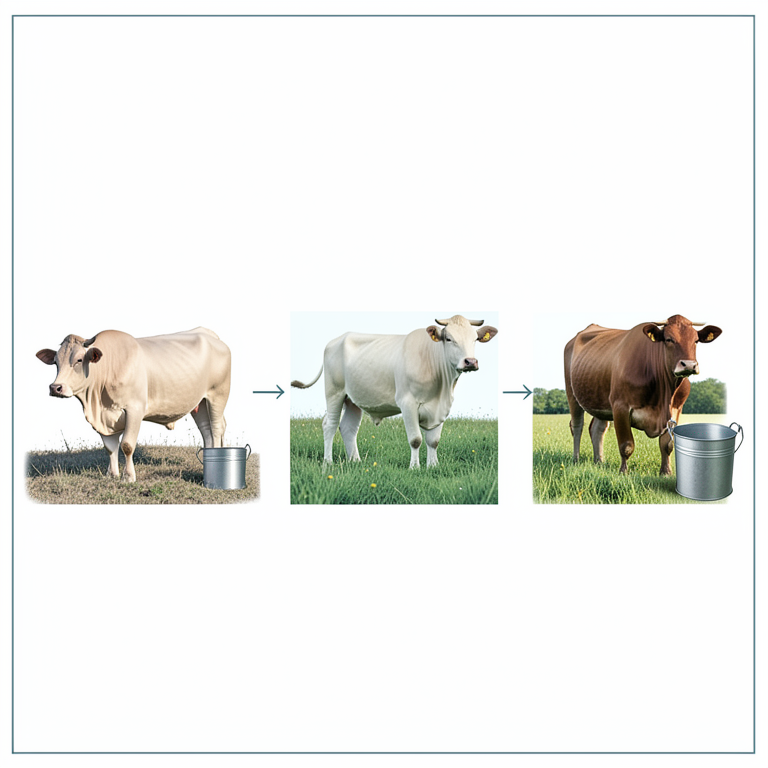
Impact of Nutrition and Breeding on Milk Yield
AI-generated conceptual illustration (Barka cattle). It explains the idea and does not show study data.
View source evidence ↗Figures & tables
From the original paper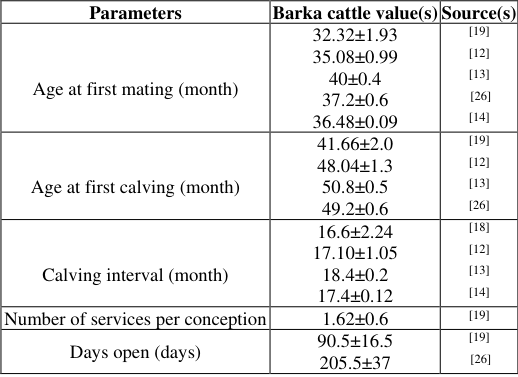 Table 1
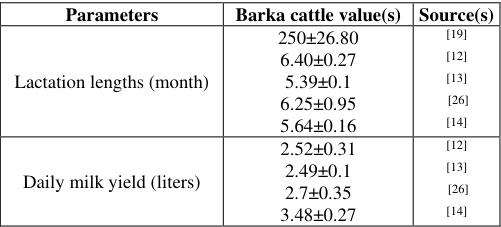 Table 2
Introduction
The Barka breed, alternatively called Begait, is predominantly found in the southwestern lowlands of Eritrea and the northern part of Ethiopia, specifically in the Humera area [27] ; [36] . The specific origin of Barka/Begait cattle is not clearly known. Some believe they originate from Eritrea (Gash-Barka), others from Sudan (Kessela), and yet others suggest a dual origin in both Eritrea and Sudan. [12] reported that most farmers lacked knowledge regarding the origin of Barka cattle, with some believing they originated from the highlands of Eritrea and later spread to the northern part of Ethiopia, while others thought they came from Sudan. [40] also indicated that the origin of Barka cattle is believed to be the lowlands of Eritrea and Sudan. Additionally, [36] stated that their origin can be traced to the southwest region of Eritrea, specifically the Gash-Barka region. In Eritrea, Barka cattle are traditionally herded in large numbers by pastoral and agro-pastoral communities in the vast open rangelands of the northern and southwestern lowland zones. The Eritrean herders move from place to place in search of water and pasture within these zones and sometimes as far as the Republic of Sudan and Ethiopia. However, before the eruption of the 1998 war with Ethiopia, due to continuous migration and crossbreeding for security reasons, the Barka breed became highly exposed to genetic adulteration and extinction. Consequently, it has become one of the four major breeds found in Ethiopia [24] . This breed is renowned for its high-quality beef, milk production, and draft power. Barka cattle have large, well-developed, yet pendulous udders [36] . Known for their hardiness and high milk production, they produce an average of 6 liters of milk per day from normal grazing forage, and approximately 9 to 10 liters during the initial stages of cross-breeding with improved dairy bulls. When kept in well-nourished dairy herds and crossbred with improved dairy cattle breeds, they can yield 10 to 16 liters of milk per day [18] ; [36] . These cattle are well adapted to the hot and dry climate of the area where they are raised and serve multiple purposes in farming societies, including providing food, draft power, income, and other services.
Performance of cows refers to how well cows function or operate in various aspects, often evaluated in the context of agricultural or livestock management. Productive and reproductive traits and performance are key determinants of the profitability of dairy production [19,21,23] . Reproductive performance is a major determinant of biological and economic efficiency in livestock production in the tropics [19] . High reproductive efficiency is essential for efficient milk production and significantly influences herd profitability [12] ; [32] . Improved reproductive performance is crucial not only for enhanced milk production but also for better genetic progress [1] . Information on productive and reproductive performance, along with interacting factors, is of paramount importance to livestock owners, extension agents, veterinarians, and researchers. Such information assists in developing strategies and prioritizing intervention options for performance improvement. However, there is a lack of information regarding the productive and reproductive performance of Barka dairy cows in subsistence smallholder dairy farms in the tropics and the factors affecting these parameters. Therefore, this review aims to assess the status of reproductive and productive performance of Barka dairy cows to obtain baseline information and to understand the breed's potential, which will aid in designing future management and breed improvement strategies.
Reproductive performance
Reproductive performance is a significant concern within the modern dairy industry worldwide, playing a crucial role in dairy cattle farming and serving as a major determinant of biological and economic efficiency in livestock production, particularly in tropical regions [34] . When evaluating the strengths and weaknesses of breeds within specific production environments, reproductive performance stands as an important criterion [5] . The impact of reproductive traits on profitability is three to nine times greater than that of other production traits [31] . Reproductive inefficiency leads to extended calving intervals, increased rates of involuntary culling, reduced milk production, delayed genetic progress, and various other issues, resulting in significant economic losses [30] . The better-managed and well-fed heifers grew faster, served earlier and resulted in more milk and calves produced during the lifetime of the animal [12] . The reproductive performance of the breeding female is probably the single most important factor that is a prerequisite for sustainable dairy production system and influencing the productivity [2] . The key indicators considered in evaluating reproductive performance include age at first calving, calving interval, days open, and the number of services before conception [3] . A summary of the reproductive performance of the Barka dairy cattle is presented in Table 1. The reproductive measures considered include the following five factors of i. age at first mating; ii. age at first calving; iii. calving interval; iv. number of services per conception and v. days open. These are considered and briefly discussed.
Age at first mating
Age at first mating (AFM) is the age at which heifers attain the body condition and sexual maturity necessary to accept service for the first time [16] . AFM marks the beginning of the heifer's reproductive and productive life, directly influencing her lifetime calf crop and milk production, and indirectly affecting the costs invested in her upbringing [38] .
The age at first mating (AFM) for Barka cattle varies across studies and management systems [19] . Reported an AFM of 32.32 ± 1.9 months, while [14] recorded 36.48 ± 0.09 months. In investor-managed systems [26] , found an AFM of 34.8 ± 0.7 months, compared to 38.4 ± 0.6 months in smallholder systems. [12] reported an average AFM of 35.52 months, and [13] observed 39.96 months. These variations in AFM are likely due to differences in feed supply and management practices across regions [11] .
Age at first calving
Age at first calving (AFC) defined as the period between birth and first calving, is a crucial factor contributing to economic returns and is partially determined by farmer policies [35] . It is recommended that heifers calve between 23 and 25 months of age, an optimum range that enhances dairy business profitability [17] . The AFC for local breeds being 3 years and 2 years in cross breed cattle is desirable for dairy farming [22] . The AFC directly influences the reproductive and productive life of the female through its effect on her lifetime calf crop and milk production, the costs invested and the magnitude of genetic progress [17,37] ). Delayed sexual maturity in dairy cows leads to economic loss due to an additional, nonlactating, unproductive period of the cow over several months [29] . The age at first calving for Barka cattle shows variation. [19] reported an age of 41.66 ± 2 months, while [12] found it to be 48.7 months, and [13] recorded 50.8 months. In the investormanaged system [26] , reported an age of 46.8 ± 0.7 months, compared to 50.4 ± 0.6 months in the smallholder system. Delays in puberty and fertility can be attributed to factors such as poor nutrition, insufficient reproductive management (including accurate heat detection and timely insemination), and varying agro-ecological conditions.
Calving interval
The calving interval (CI) is the period between two consecutive parturitions and ideally should be 12 to 13 months [37] . This interval is also determined by the days open (the period from calving to the next conception) and gestation length. Consequently, the calving interval aligns closely with the annual production cycle and significantly affects the amount of milk a cow can produce within a given period [29] . A CI of 365 days is generally considered optimal for profitable milk production. Longer calving intervals reduce the total number of calvings in a cow's lifetime and consequently decrease her total lifetime milk production. Milk production levels and lactation persistency are crucial factors influencing the appropriate calving interval [4] . The calving interval (CI) for Barka cattle, [19] reported a CI of 16.6 ± 2.24 months, while [14] found it to be 17.4 ± 0.12 months, and [12] recorded an average CI of 17.06 months. [13] observed a slightly longer CI of 18.4 months. These differences in CI may be attributed to both genetic factors and management practices, including the cow's age and breed, calving season, and forage availability [6] .
Number of services per conception
According to [16] , the number of services per conception (NSC) refers to the number of mating attempts, either natural or artificial, required for successful conception. The number of services per conception is a critical reproductive trait, essential for determining the profitability of dairy production [34] . An NSC value higher than 2 is considered suboptimal [29] . Variations in NSC can be attributed to differences in management practices and the agro-ecological conditions of specific areas [22] . Effective and timely heat detection and insemination practices can lead to variations in the number of services per conception [39] . The NSC for Barka cattle was 1.62±0.6 [19] .
Days open
Days open (DO) refers to the interval from calving to conception. According to [11] and [35] cited by [8] , a herd average of less than 85 open days indicates that cows are being bred early, while 85 to 115 days is considered optimal for a dairy herd. An interval of 116 to 130 days suggests a slight problem, 131 to 145 days indicates moderate issues, and more than 145 open days is considered a severe reproductive problem in the dairy herd. Days open (DO) for Barka cattle were reported to be 90.5 ± 16.5 days [19] . In an investor management system, DO extended to 182 ± 38 days, while smallholder-managed cattle had a DO of 229 ± 36 days [26] . Contributing factors to extended DO include feed shortages, silent estrus, and inadequate heat detection [22] .
Number of services per conception 1.62±0.6 [19] Days open (days) 90.5±16.5 205.5±37 [19] [26]
Productive performance
The productivity of an individual cow encompasses the combined value of her milk production, offspring, and individual market worth upon leaving the herd. Numerous factors impact the productivity of each cow, which also relies on longevity and the proportion of time spent producing milk over her lifetime [9] . In developing countries, animals often exhibit lower milk yields and shorter lactation periods. The performance of livestock in small-scale dairy systems within these countries can be attributed to various factors, such as unfavorable climate conditions (high ambient temperature, humidity), low-quality feed, inadequate concentrate supplementation, limited genetic potential for milk production in multi-purpose animals (which often serve as a source of both milk and meat as well as provide draught power), and a high incidence of diseases [10] . The severity of these challenges is more pronounced in developing nations [20] due to a lack of technical resources, financial constraints for cattle genetic improvement, insufficient nutritional quality of feeds, and the persistence of major diseases [20] . Productive performance of cows is measured by daily and lactation milk yield and is dependent on the animal genetics [30], [39] . The productive measurements are presented in Table 2. These parameters basically include lactation length and daily milk yield which are important for dairy cows.
Lactation Length
Lactation length (LL) is the period of milk secretion. In most dairy farms, a lactation length of 305 days is commonly accepted as standard. However, such a standard lactation length LL might not be applicable for smallholder dairy cows, where the lactation length LL is often extended considerably [28] . As noted by [33] , lactation length LL has a genetic basis and is a major limiting factor for milk production in the tropics. Genetic group and parity have a significant effect on LL lactation length [6] ; [22] . The profitability of short or extended lactation lengths LL depends on the additional days cows are not pregnant beyond the optimal time post-calving, which can be costly [25].
The mean lactation length (LL) for Barka cattle was reported as 250 ± 26.8 days [19] . [12] recorded an LL of 6.38 months, while [14] found it to be 5.64 ± 0.16 months. [26] provided detailed data: under investor management, LL was 5.3 ± 0.5 months for older cows and 5.7 ± 0.6 months for randomly selected cows, while under smallholder management, LL was 6.3 ± 1.0 months for older cows and 6.6 ± 0.9 months for randomly selected cows. At Humera Agricultural Research Center (HuARC), LL for Barka cows was seven months, and [13] reported a LL of 5.39 months for the breed.
Daily milk yield
The mean daily milk yield (DMY) for Barka cattle has been reported to vary widely. [12] recorded a DMY of 2.52 liters, while [14] reported 3.48 ± 0.27 liters. [15] found an on-station DMY of 4.31 liters cited by [7] , and [26] noted an average DMY of 6.8 liters per cow at HuARC. [13] reported a DMY of 2.49 liters with a peak yield of 3.21 liters, and [36] observed an average yield ranging between 6 and 8 liters. The lactation milk yield (LMY) was reported as 459 liters [13] . Variations in LMY are attributed to both genetic and non-genetic factors, including genetic group, herd size, calving season, and parity [6] ; [13] .
References
37 in the original paper- Abe H, Masuda Y, Suzuki M. Relationships between reproductive traits of heifers and cows and yield traits for Holsteins in Japan. J Dairy Sci. 2009;92(8):4055-4062. doi:10.3168/jds.2008-1896
- Abera Y, Mengistu U, Ajebu N. Productive and reproductive performance of local dairy cows in selected districts of Sidama Zone, Southern. Int J Livest Prod. 2018;9(5):88-94. doi:10.5897/IJLP2018.0447
- Adisu A, Zewdu W. Reproductive performance of indigenous cow breeds of Ethiopia: A review. J Anim Health Behav Sci Open. 2021;5(2):10-13.
- Arbel R, Bigun Y, Ezra E, Sturman H, Hojman D. The effect of extended calving intervals in high lactating cows on milk production and profitability. J Dairy Sci. 2001;84(3):600-608. DOI:10.3168/jds.S0022-0302(01)74513-4
- Browning RJ, Payton T, Donnelly B, Leite-Browning ML, Pandya P, Hendrixson W, Byars M. Evaluation of three meat goat breeds for doe fitness and reproductive performance in the Southeastern United States. 8th World Congress on Genetics Applied to Livestock Production. August 2006, Belo Horizonte, MG, Brazil. 2006;1:11-32.
- Denbarga Y, Woldegebriel B, Sheferaw D. Reproductive performance of Boran cows at Tatesa Cattle Breeding Center. Anim Biotechnol Res. 2012;6(3):101-105. DOI:10.5829/idosi.abr.2012.6.3.63145
- Desta KB. Analysis of dairy cattle breeding practices in selected areas of Ethiopia. PhD thesis. HumboldtUniversität zu Berlin; 2002.
- Dinkissa AF, Guye ME. Review on dairy cattle reproductive performance under different production systems in Ethiopia. Am J Food Sci Technol. 2022;1(1):1-10.
- FAO. Genomic characterization of animal genetic resources. FAO Animal Production and Health. 2023. Available from: https://doi.org/10.4060/cc3079en
- Gebeyehu G, Asmare A, Asseged B. Reproductive performances of Fogera cattle and their Friesian crosses in Andassa ranch, Northwestern Ethiopia. Trop Anim Health Prod. 2005;17(12):1-7.
- Gebru T, Yigrem S, Banerjee S, Sciences R. Some morphometrical, production and reproduction traits of Begait cattle reared in Tigray region of Ethiopia. J Anim Sci. 2017;1498735834:1571-1585.
- Goitom S. Morphological and genetic characteristics of Bos indicus indigenous cattle of Eritrea. PhD thesis. Jomo Kenyata University of Agriculture and Technology; 2019.
- Goshu M. Analyses of dairy cattle breeding practices in selected areas of Ethiopia. MSc Dissertation. 1981;175 pp.
- Haile B, Yoseph M. Reproductive performance of Holstein Friesian dairy cows at Alage Dairy Farm, Ethiopia. J Dairy Vet Sci. 2018;7(3). doi:10.19080/jdvs.2018.07.555713
- Hammoud MH, EI-Zarkouny SZ, Oudah EZM. Effect of sire, age at first calving, season and year of calving, and parity on reproductive performance of Friesian cows under semiarid conditions in Egypt. Trop Anim Health Prod. 2010;13(1):60-82.
- IUCN. Pastoralism as a conservation strategy and contributing towards livelihood security and improvement in Eritrea. 2006.
- Kassa ST. Productive and reproductive performance of dairy cows under smallholder production system in western zone of Tigray region. Haramaya University; 2018.
- Kosgey IS, Mbuku SM, Okeyo AM, Amimo J, Philipsson J, Ojango JM. Institutional and organizational frameworks for dairy and beef cattle recording in Kenya: A review and opportunities for improvement. Anim Genet Resour. 2011;48:1-11. DOI:10.1017/s2078633610001220
- Kubkomawa HI. Indigenous breeds of cattle, their productivity, economic and cultural values in SubSaharan Africa: A review. 2017;3(1):27-43.
- Kumar N, Abadi Y, Gebrekidan B, Hagos Y. Productive and reproductive performance of local cows under farmer's management in and around Mekelle, Ethiopia. Int J Agric Sci. 2014;7(5):21-24. doi:10.9790/238007532124
- Lobago F, Bekana M, Gustafsson H, Kindahl H. Longitudinal observation on reproductive and lactation performances of smallholder crossbred dairy cattle in Fitche, Oromia region, central Ethiopia. Trop Anim Health Prod. 2007;39:395-403. doi:10.1007/s11250-0079027-z
- Mason IL. A World Dictionary of Livestock Breeds, Types and Varieties. 4th ed. C.A.B. International; 1996. 273 pp.
- Meadows C, Rajala-Schultz PJ, Frazer GS. A spreadsheet-based model demonstrating the nonuniform economic effects of varying reproductive performance in Ohio dairy herds. J Dairy Sci. 2005;88(3):1244-1254. doi:10.3168/jds.S0022-0302(05)72791-0
- Mekonnen T. Characterization of production system, productive and reproductive performance and morphological traits of Begait cattle in western zone of Tigray region, Ethiopia. Haramaya University; 2016. doi:10.13140/RG.2.2.12525.77287
- Mekuriaw G, Kebede A. A review on indigenous cattle genetic resources in Ethiopia: Adaptation, status and survival. 2015;5(5):125-137.
- Msangi BSJ, Bryant MJ, Thorne PJ. Some factors affecting variation in milk yield in crossbred dairy cows on smallholder farms in North-East Tanzania. Trop Anim Health Prod. 2005;37:403-412.
- Mukasa-Mugerwa E. A review of reproductive performance of female Bos indicus (Zebu) cattle. ILCA Monograph. 1989;(6):1-36.
- Peñagaricano F. Genetics and genomics of dairy cattle. In: Animal Agriculture: Sustainability, Challenges, and Innovations. Elsevier Inc.; 2020. doi:10.1016/B978-0-12817052-6.00006-9
- Pohler KG, Franco GA, Reese ST, Smith MF. Physiology and pregnancy of beef cattle. In: Animal Agriculture: Sustainability, Challenges, and Innovations. Elsevier Inc.; 2020. doi:10.1016/B978-0-12-817052-6.00003-3
- Pryce JE, Royal MD, Garnsworthy PC, Mao IL. Fertility in the high-producing dairy cow. Livest Prod Sci. 2004;86:125-135. doi:10.1016/S0301-6226(03)00145-3
- Rege JEO, Tawah CL. The state of African cattle genetic resources II. Geographical distribution, characteristics and uses of present-day breeds and strains. Anim Genet Resour Inform. 1999;26:1-25. DOI:10.1017/s1014233900001152
- Tadesse G, Tegegne A. Reproductive performance and wastage in large ruminant (cattle) in Ethiopia -review. J Dairy Vet Sci. 2018;8(1):555729. DOI:10.19080/jdvs.2018.08.555729
- Tadesse M, Thiengtham J, Pinyopummin A, Prasanpanich S. Productive and reproductive performance of Holstein Friesian dairy cows in Ethiopia. J Vet Med. 2010;22(2):1-11.
- Tola DB. On-farm phenotypic characterization of indigenous cattle and their production systems in Bako Tibe and Gobu Sayo districts of Oromia region, Ethiopia. Haramaya University; 2015.
- Weldeslasse GT, Zeleke ZM, Gangwar SK. Productive and reproductive performance of dairy cattle in Central zone of Tigray, Northern Ethiopia. J Dairy Vet Sci. 2012;2(1):58-63.
- Wondatir Z. Livestock production systems in relation with feed availability in the highlands and central rift valley of Ethiopia. Haramaya University; 2010.
- Zerabruk M, Bennewitz J, Kantanen J, Olsaker I, Vangen O. Analysis of genetic diversity and conservation priorities for six north Ethiopian cattle breeds. Anim Genet. 2007;124:236-241.