
Research article · 2024 · Full text
International Journal of Veterinary Sciences and Animal HusbandryBlood sugar levels of Eid al-Adha sacrificial cows in Denpasar, Bali, Indonesia
Volume 9(6) · Pages 503–505 · DOI: 10.22271/veterinary.2024.v9.i6h.1918 ↗
Research areasLivestock Farming and Management
Abstract
Author-writtenSacrifice animals slaughtered in mosques must be in good health. Many sacrifice animals are brought from places far from the mosque as a place of slaughter. Generally, the animals are exhausted. Blood sugar levels can be used to predict the health status of animals, for example, tired/exhausted conditions. Animals with low blood sugar levels indicate that the animal is tired (exhausted), conversely normal blood sugar levels reflect adequate rest and feed consumption before being slaughtered. It is important to conduct research on blood sugar levels in sacrifice cattle before or animals are slaughtered to determine whether the sacrifice cattle are healthy. The purpose of this study was to determine the blood sugar levels of cattle that were slaughtered, so that the health status of the sacrifice animals could be known. This study used 10 blood samples from sacrifice cattle that were slaughtered in a mosque in Denpasar. Blood sugar level testing used the Accutrend Plus tool. The results showed that the sugar levels of kurban cattle that were slaughtered during Eid al-Adha were an average of 55mg/dL, SD9.4. This result is lower when compared to the sugar levels of normal Balinese cattle. This indicates that the sacrifice cattle before being slaughtered may not have received enough feed consumption or had less rest. The t-test with normal cattle showed a lower tendency although not significantly different (p≥0.05).
Summary
Source-checkedPlain-language reading of the full paper, prepared with AI and checked against the text. Each point links to the authors' own words.
Why it matters
- Animals used for sacrifice in mosques are required to be in good health. View evidence ↗
- Blood sugar levels serve as a physiological indicator to predict an animal's health status, specifically whether it is exhausted. View evidence ↗
- High blood sugar levels can indicate stress and potentially negatively impact the taste, texture, and shelf life of the meat. View evidence ↗
The question
- The study aimed to determine the blood sugar levels of sacrificial cattle to assess their health status. View evidence ↗
What they did
- The researchers employed a cross-sectional study design with purposive sampling. View evidence ↗
- The sample consisted of 20 male Balinese cattle intended for sacrifice at a mosque, from which approximately 3 ml of blood was collected. View evidence ↗
- Blood sugar levels were measured using the Accutrend Plus tool. View evidence ↗
- A t-test was used to analyze differences between the study data and other cattle data. View evidence ↗
What they found
- Sacrificial cattle slaughtered during Eid al-Adha had an average blood sugar level of 54.8 mg/dL (SD 7.64). View evidence ↗
- Compared to normal cattle with sufficient rest and feed, the sacrificial cattle showed a tendency toward lower blood sugar, though the difference was not statistically significant (p≥0.05). View evidence ↗
- The lower blood sugar levels suggest that the sacrificial cattle may have lacked adequate rest or feed before slaughter. View evidence ↗
- Insufficient food intake triggers glycogenolysis (the breakdown of fat and protein for energy), which leads to a decrease in blood sugar levels. View evidence ↗
What it means
- The authors concluded that the observed low blood sugar levels (hypoglycogenemia) likely resulted from fatigue and malnutrition prior to slaughter. View evidence ↗
- The authors recommend providing sacrificial cows with adequate food, water, and rest before they are slaughtered. View evidence ↗
Visual summary
2 visualsIllustrations explain the paper; charts are replotted from the paper's own table values.
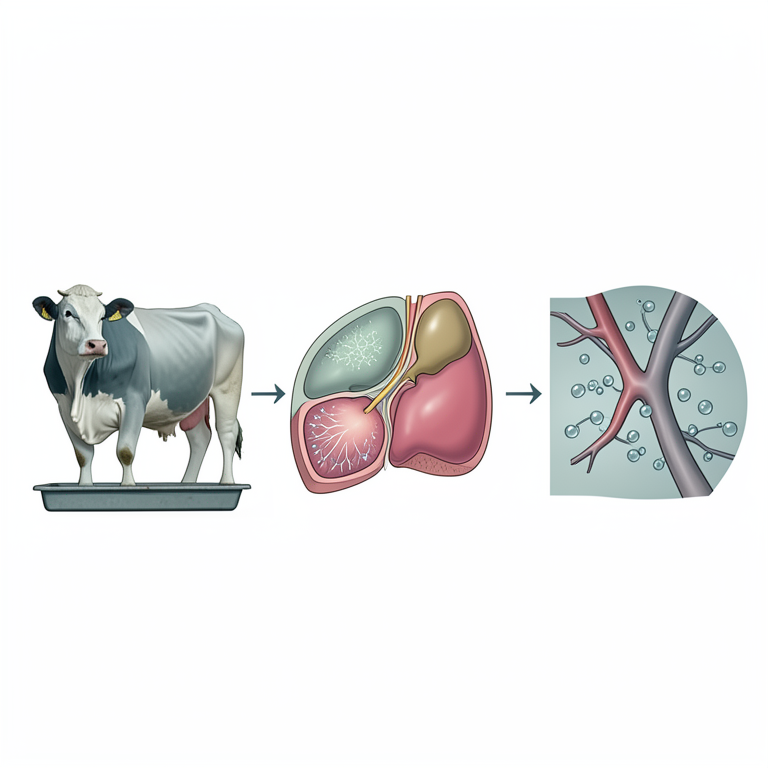
Metabolic Response to Lack of Feed
AI-generated conceptual illustration (Bos taurus cows). It explains the idea and does not show study data.
View source evidence ↗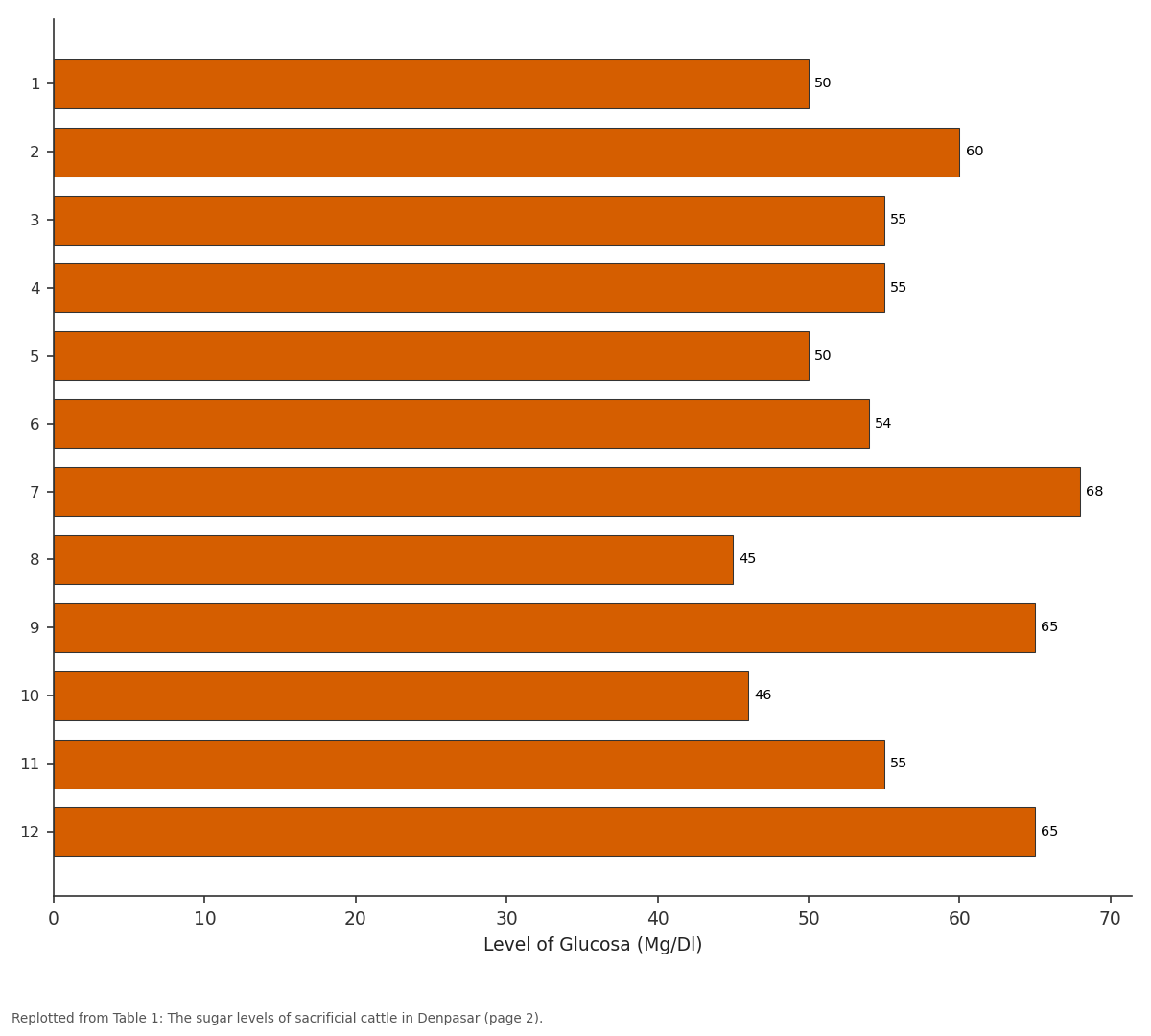
Level of Glucosa (Mg/Dl): 1 vs 2 vs 3 vs 4 vs 5
Replotted from Table 1 (page 2) of the original paper. Every bar is the paper's own table value.
View source evidence ↗Figures & tables
From the original paper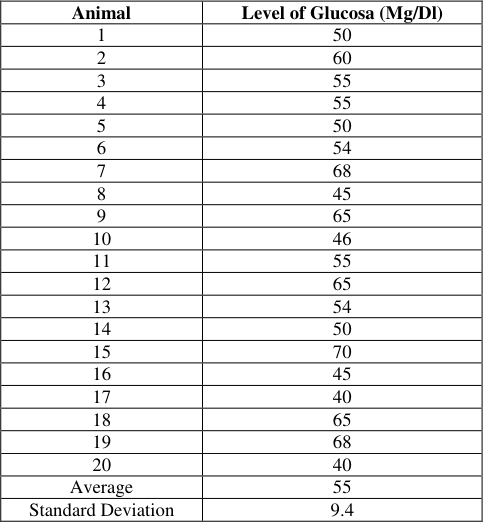 Table 1
Introduction
Eid al-Adha, also known as the Festival of Sacrifice, is a significant religious event celebrated by Muslims worldwide, including in Bali, Indonesia. During this festival, sacrificial animals such as cows are offered in a ritual that symbolizes devotion and sharing. The health and welfare of these animals before slaughter is a crucial consideration, not only for ethical reasons but also to ensure the quality and safety of the meat. Blood sugar levels serve as an important physiological parameter, reflecting the animal's metabolic state, stress levels, and overall health. This study aims to investigate the blood sugar levels of sacrificial cows in Denpasar, Bali, during Eid al-Adha. Understanding these levels can provide insights into the handling and welfare practices employed and identify areas for improvement to enhance animal welfare and meat quality. In Indonesia, where Islam is the predominant religion, Eid al-Adha. is marked by large-scale livestock sacrifice. Bali, a province with a significant Hindu population, also observes this festival in regions like Denpasar, where the Muslim community performs the ritual. The preparation of sacrificial animals involves transportation, feeding, and handling, all of which can influence their physiological state. Blood sugar levels in livestock are influenced by multiple factors, including diet, stress, and health conditions. Stressful situations, such as transportation and handling before slaughter, can lead to increased cortisol secretion, triggering gluconeogenesis and hyperglycemia. Elevated blood sugar levels not only indicate stress but may also affect meat quality, particularly its texture, taste, and shelf life. Given the cultural and religious significance of sacrificial practices, there is a growing emphasis on improving animal welfare.
Studying the physiological parameters of sacrificial animals, including blood sugar levels, can contribute to better management practices and support the alignment of religious rituals with modern standards of animal ethics and health. Several studies on sugar levels in cattle have been conducted. Sugar levels in cattle were found to be 57.40 mg/dL, SD. 7.9 [1] ; 67-75 mg/dL [2] ; 43 mg/dL [3] and 65.2 mg/dL, SD. 11.1 [4] .
Research Methods
Research Methods
Research design
A cross-sectional study design used in this research an the purposive method was used in sampling.
Sample
Twenty male cows as sacrificial animals in the mosque were used used as research objects. Approximately 3 ml of blood was taken from 20 male Balinese cattle to be slaughtered. The blood is collected into a test tube with EDTA, then placed in a cold box. This is then continued with laboratory tests.
Data analysis
The data obtained from the test using the Accutrend Plus tool were recorded and then tabulated. The range and standard deviation were determined. Data were analyzed using excel to determine the range and standard deviation. The t-test was used to determine the difference with other data.
Results and Discussion
Results and Discussion
Results
The results showed that the sugar levels of sacrificial cattle slaughtered during the Eid al-Adha were an average of 54.8 mg/dL, SD 7.64. The t-test with normal cattle (sufficient feed and rest) showed a lower tendency although not significantly different (p≥0.05). The complete results are presented in Table 1 below.
| Animal | Level of Glucosa (Mg/Dl) |
|---|---|
| 1 | 50 |
| 2 | 60 |
| 3 | 55 |
| 4 | 55 |
| 5 | 50 |
| 6 | 54 |
| 7 | 68 |
| 8 | 45 |
| 9 | 65 |
| 10 | 46 |
| 11 | 55 |
| 12 | 65 |
| 13 | 54 |
| 14 | 50 |
| 15 | 70 |
| 16 | 45 |
| 17 | 40 |
| 18 | 65 |
| 19 | 68 |
| 20 | 40 |
| Average | 55 |
| Standard Deviation | 9.4 |
Table text extracted from the original PDF; superscript letters are shown inline. The original table image is below.
View original table image
Discussion
The results of research on the blood sugar level profile in cattle show mixed results. The average blood glucose level of Bali cattle before feeding was 43.11±2.98 mg/dL and 2 hours after feeding was 66.44±2.87 mg/dL [5] . The results showed that the blood glucose levels of male Bali cattle after transportation at Pesanggaran Slaughterhouse Denpasar was 50,67 mg/dL±13,25 [6] Meanwhile, the results of research obtained the average blood glucose level of female Bali cattle in the three weeks prepartum of 65.41±5.61 mg/dL, on the day of parturition of 46.50±3.22 mg/dL and three weeks postpartum of 55.07±5.81 mg/dL [7] On the other hand, the glucose levels found 87.4±7.9 to 93.7±14.9 (mg/dL) [8] and 86.2 mg/dL [9] and 59.07 mg/dL [10] .
The variety of research results on blood sugar levels can be caused by, among other things, different environmental and animal conditions, and no less importantly, the tools used are also different. However, the results of our study on sugar levels in Balinese cattle slaughtered in mosques as sacrificial animals using the Accutrend Plus tool made by Roche Germany obtained an average of 55 mg/dL, SD 9.4. These results tend to be lower when compared to Balinese cattle in normal conditions. This shows that sacrificial cattle before being slaughtered may not have received enough feed consumption or rest. Cows that do not get enough nutritional intake cause cows to become weak due to the lack of available energy. Lack of food intake causes the body to undergo glycogenolysis metabolism, which is the breakdown of body fat and protein to provide energy [11][12][13][14] . This condition causes blood sugar levels to decrease.
Conclusions and Suggestions Conclusions
It was concluded that low blood sugar levels (hypoglycogenemia) were possible due to lack of food (malnutrition) and fatigue before slaughter.
Suggestions
It is recommended that cows used as sacrificial animals are given sufficient food, drink and rest before being slaughtered
Conflict of Interest Not available
Conflict of Interest Not available
Financial Support
Financial Support
References
14 in the original paper- Mohammed SE, Ahmad FO, Frah EAM, Elfaki I. Determination of blood glucose, total protein, certain minerals, and triiodothyronine during late pregnancy and postpartum periods in crossbred dairy cows. Vet Med Int. 2021;2021:6610362. DOI: 10.1155/2021/6610362.
- Umar M, Kurnadi B, Rianto E, Pangestu E, Purnomoadi A. The effect of energy level of feeding on daily gain, blood glucose, and urea on Madura cattle. J Indones Trop Anim Agric. 2015;40(3):159-66. DOI: 10.14710/jitaa.40.3.159-166.
- Rkhan Barson S, Padder A, Sayam Md, Rahman MM, Bhuiyan MMU, Bhattacharjee J. Serum glucose, urea nitrogen, cholesterol, and total proteins in crossbred repeat breeder and normally cyclic cows. J Adv Vet Anim Res. 2019;6(1):82-5. DOI: 10.5455/javar.2019.f316.
- Cihan H, Kasap S, Akgül G, Evci FZ, Şentürk S. Comparison of glucose levels in blood samples taken from coccygeal, jugular, and mammary vein of cows in lactation. J Res Vet Med. 2023;42(1):44-47. DOI: 10.30782/jrvm.1195467.
- Purwitasari MS, Widyastuti SK, Erawan IGMK. Glucose levels of non-pregnant Bali cattle at Bali's cattle breeding center of Sobangan, Badung, Bali. Indones Medicus Veterinus. 2020;9(6):896-904. Available from: http://ojs.unud.ac.id/php.index/imv. DOI: 10.19087/imv.2020.9.6.896.
- Dewi NLPYL, Sulabda IN, Dharmawan NS. Blood glucose levels of Bali cattle after transportation in the Pesanggaran slaughterhouse Denpasar. Indones Medicus Veterinus. 2022;11(1):49-57. P-ISSN: 2301-7848; EISSN: 2477-6637. Available from: http://ojs.unud.ac.id/php.index/imv. DOI: 10.19087/imv.2022.11.1.49.
- Merdana IM, Sulabda IN, Putra IDAMW, Agustina IPS. Blood glucose levels of Bali cattle in the periparturient period. Indones Medicus Veterinus. 2020;9(2):295-304. DOI: 10.19087/imv.2020.9.2.295.
- Luan SE, Tahuk PK, Bira GF. Blood glucose and urea profile of male Bali cattle fattened with complete feed containing different levels of crude protein. J Anim Sci. 2020;5(4):67-9. DOI: 10.32938/ja.v5i4.1048.
- Taebenu A, Sobang YUL, Kune P. Blood metabolism of Balinese cattle fed with breeder's feed and mixed silage of Kume grass -Clitoria ternatea. Jurnal Peternakan Lahan Kering. 2024;6(1):79-86. DOI: 10.57089/jplk.v6i1.1992.
- Tahuk PK, Dethan AA, Sio S. Blood glucose and urea profile of male Bali cattle during greenlot fattening in community farms. Jurnal Agripet. 2017;17(2). Available from: https://jurnal.usk.ac.id/agripet/article/view/8114.
- McAker R, Denbow DM. Anatomy and physiology of domestic animals. 2 nd Ed. Iowa, USA: Wiley Blackwell, 2013.
- Frandson RD, Wilke WL, Fails AD. Anatomy and physiology of farm animals. 7 th Ed. Wiley Blackwell, 2013.
- Reece WO. Functional anatomy and physiology of domestic animals. 4 th Ed. Iowa, USA: Wiley-Blackwell, 2013.
- Reece WO. Dukes' physiology of domestic animals. 13 th Ed. Iowa, USA: Wiley-Blackwell, 2015.