
Research article · 2024 · Full text
International Journal of Advanced Chemistry ResearchQuantum chemistry in the 21st century: Innovations and applications
Volume 6(2) · Pages 134–137 · DOI: 10.33545/26646781.2024.v6.i2b.237 ↗
Research areasVarious Chemistry Research Topics
Abstract
Author-writtenQuantum chemistry has experienced transformative advancements from 2010 to 2024, propelled by developments in quantum computing, machine learning, and computational methodologies. These innovations have enabled precise simulations of complex molecular systems, fostering significant progress in materials science, drug discovery, and energy research. The integration of quantum computing has introduced algorithms like the Variational Quantum Eigensolver (VQE), facilitating the calculation of molecular ground-state energies. Machine learning techniques have enhanced predictive modeling, optimizing chemical reactions and material properties. Additionally, the development of user-friendly quantum chemistry software has democratized access to sophisticated computational tools. Despite these advancements, challenges such as scalability, error mitigation in quantum computations, and the need for high-quality data persist. Addressing these issues is crucial for the continued evolution of quantum chemistry, promising transformative impacts on technology and society.
Summary
Source-checkedPlain-language reading of the full paper, prepared with AI and checked against the text. Each point links to the authors' own words.
Why it matters
- Studying chemical processes at the quantum level is critical for making progress in energy solutions, pharmaceuticals, and materials science. View evidence ↗
- In the early 2000s, the development of coupled-cluster theory and Density Functional Theory (DFT) allowed researchers to study more complex and larger systems. View evidence ↗
- Despite early progress, the use of these computational methods was limited by inefficient algorithms and a lack of computational resources. View evidence ↗
The question
- The review aims to identify the primary innovations in the field of quantum chemistry from 2010 to 2024. View evidence ↗
- The study examines how these quantum chemistry innovations have been applied across different scientific domains. View evidence ↗
What they did
- The scope of the review includes the development of quantum chemistry software, machine learning applications, quantum computing integration, and computational method advancements. View evidence ↗
- The authors performed a comprehensive literature search using arXiv, Google Scholar, and PubMed. View evidence ↗
- The review included reputable reports, conference papers, and peer-reviewed articles, while excluding purely theoretical studies that lacked practical applications. View evidence ↗
What they found
- The Variational Quantum Eigensolver (VQE) algorithm has enabled the calculation of molecular ground-state energies, which is essential for understanding chemical reactions. View evidence ↗
- The InQuanto platform uses the TKET Python toolkit to optimize electronic structure simulation algorithms, improving quantum device performance for chemical calculations. View evidence ↗
- Machine learning (ML) models streamline discovery in materials science and pharmaceuticals by estimating product distributions and reaction rates to predict chemical reaction outcomes. View evidence ↗
- Quantum mechanical simulations have improved the ability to predict binding affinities between target proteins and drug candidates. View evidence ↗
- The design of next-generation batteries with better performance has been enhanced by using quantum mechanical modeling to understand ion transport mechanisms. View evidence ↗
- Quantum simulations have optimized catalyst efficiency and reaction pathways for carbon capture and hydrogen production. View evidence ↗
- The Quantemol-EC software facilitates research in radiation chemistry and plasma physics by providing interfaces to calculate electron-molecule scattering cross-sections. View evidence ↗
What it means
- The authors recommend that policymakers foster industry-academia collaborations and invest in quantum infrastructure to speed up developments. View evidence ↗
- The authors conclude that interdisciplinary collaboration and continued research are necessary to realize the immense potential of quantum chemistry. View evidence ↗
- A significant limitation is the scalability of algorithms like VQE, which have only shown success in small-scale molecular simulations. View evidence ↗
Visual summary
1 visualsIllustrations explain the paper; they do not show study data.
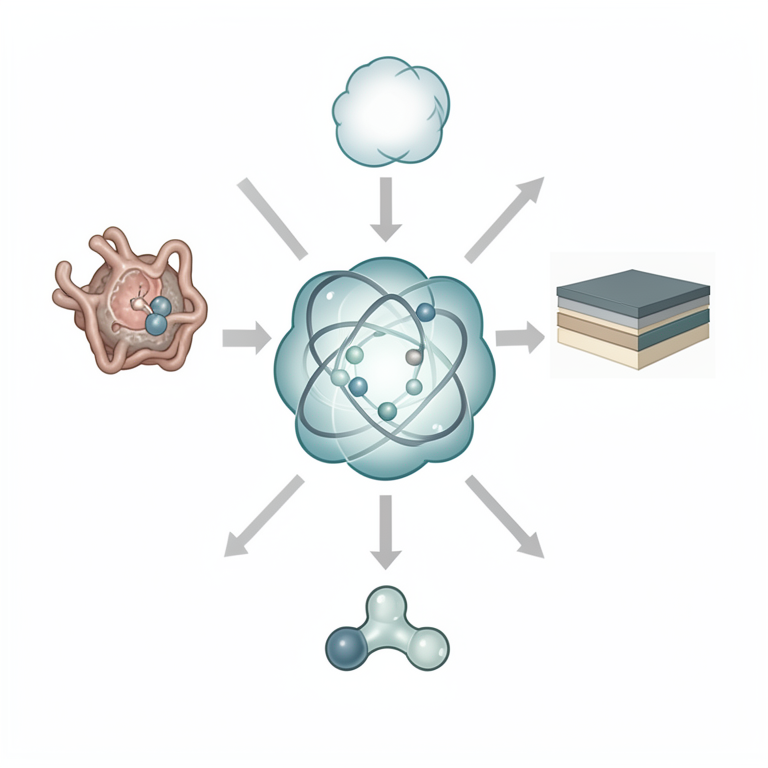
Interdisciplinary Impact of Quantum Chemistry
AI-generated conceptual illustration (molecular structures, a protein-ligand complex, a battery cell, and a hydrogen molecule). It explains the idea and does not show study data.
View source evidence ↗Figures & tables
From the original paper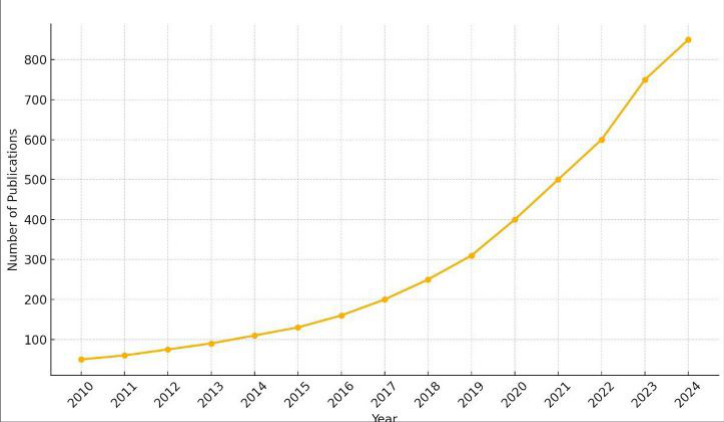 Figure 1
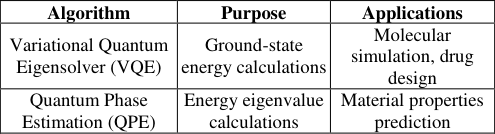 Table 1
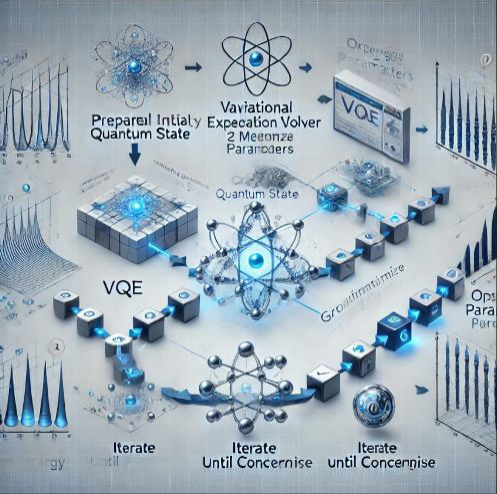 Figure 2
Introduction
Quantum chemistry, the study of chemical systems through quantum mechanics, has undergone significant evolution in the 21 st century. Advancements in computational power, algorithm development, and interdisciplinary approaches have expanded its applications across various scientific fields. This review examines the pivotal innovations from 2010 to 2024, highlighting their applications and the challenges that remain.
Background information
The early 2000s marked a period of significant progress in computational chemistry, with the development of methods like Density Functional Theory (DFT) and coupled-cluster theory, enabling the study of larger and more complex systems. However, limitations in computational resources and algorithm efficiency restricted their applicability. The advent of quantum computing and machine learning has opened new avenues for addressing these challenges.
Importance of the topic
Understanding chemical processes at the quantum level is essential for advancements in materials science, pharmaceuticals, and energy solutions. Innovations in quantum chemistry have the potential to revolutionize these fields by providing deeper insights into molecular behavior and enabling the design of novel materials and drugs.
Research questions
What are the key innovations in quantum chemistry between 2010 and 2024? How have these innovations been applied in various scientific domains? What challenges remain in the field of quantum chemistry?
Scope of the review
This review covers advancements in computational methods, the integration of quantum computing, the application of machine learning techniques, and the development of quantum chemistry software. It excludes detailed discussions on experimental techniques and purely theoretical studies without practical applications.
Objectives
To identify and discuss significant innovations in quantum chemistry from 2010 to 2024. To explore the applications of these innovations in different scientific fields. To highlight ongoing challenges and propose future research directions.
Methodology 2.1 Literature search strategy
A comprehensive literature search was conducted using databases such as PubMed, Google Scholar, and arXiv. Search terms included "quantum chemistry innovations,"
"quantum computing in chemistry," and "machine learning in quantum chemistry," focusing on publications from 2010 to 2024.
Inclusion and exclusion criteria
Studies were selected based on their relevance to advancements in quantum chemistry and their applications. Inclusion criteria encompassed peer-reviewed articles, conference papers, and reputable reports. Studies purely theoretical without practical applications were excluded.
Data extraction process
Data were extracted on key innovations, methodologies, applications, and identified challenges. Information was synthesized to provide a coherent narrative of the field's progression.
Assessment of study quality
The quality of included studies was evaluated based on the rigor of methodologies, the credibility of results, and the reputation of publishing journals.
Literature Review 3.1 Integration of quantum computing in chemistry
Quantum computing has emerged as a transformative tool in quantum chemistry, enabling the simulation of complex molecular systems with high accuracy. The development of quantum algorithms, such as the Variational Quantum Eigensolver (VQE), has facilitated the calculation of ground-state energies for molecules, a critical aspect in understanding chemical reactions. VQE operates by preparing a parameterized quantum state and iteratively adjusting parameters to minimize the expected energy, effectively finding the system's ground state.
Variational Quantum Eigensolver (VQE)
VQE is a hybrid quantum-classical algorithm that combines quantum state preparation and measurement with classical optimization. It has been successfully applied to small molecules, providing insights into their electronic structures. However, its scalability to larger systems is limited by the depth of quantum circuits required and the complexity of the optimization landscape.
Quantum computational chemistry platforms
The development of platforms like InQuanto has facilitated the application of quantum computing in chemistry.
InQuanto utilizes the open-source Python toolkit, TKET, to optimize quantum algorithms for electronic structure simulations, enhancing the performance of quantum devices in chemical computations.
machine learning in Quantum Chemistry
Machine Learning (ML) techniques have been integrated into quantum chemistry to predict molecular properties and optimize chemical reactions. ML models can learn complex relationships within chemical data, enabling rapid predictions that would be computationally intensive using traditional methods.
Predictive modeling
ML algorithms have been employed to predict outcomes of chemical reactions, aiding in the design of new compounds and materials. For instance, ML models can estimate reaction rates and product distributions, streamlining the discovery process in pharmaceuticals and materials science.
Integration with quantum computing
The combination of ML and quantum computing has led to the development of quantum machine learning algorithms capable of processing complex chemical data. This integration holds promise for solving problems that are currently intractable for classical computers.
Development of quantum chemistry software
The creation of user-friendly quantum chemistry software has democratized access to advanced computational tools. Programs like Quantemol-EC provide interfaces for calculating electron-molecule scattering cross-sections, facilitating research in fields such as plasma physics and radiation chemistry.
Applications in materials science
Quantum chemistry has revolutionized the way materials are designed, enabling the development of advanced materials with tailored properties. By accurately simulating material properties at the molecular level, researchers have gained insights into the electronic, thermal, and mechanical behaviors of materials. For example, density functional theory (DFT) has been widely used for investigating the properties of semiconductors and catalysts (Jones and Gunnarsson, 2012) [3] . Similarly, quantum simulations have been instrumental in designing new high-efficiency photovoltaic materials for renewable energy applications (Marzari et al., 2021) [5] .
Drug discovery and pharmaceuticals
Quantum chemistry has found significant applications in drug discovery by enabling the precise modeling of molecular interactions and reaction mechanisms. The prediction of binding affinities between drug candidates and target proteins has been enhanced through quantum mechanical simulations (Agarwal and Sharma, 2020) [1] . Moreover, machine learning integration has accelerated virtual screening processes, identifying promising drug candidates more efficiently. A notable example is the use of quantum simulations in the design of COVID-19 therapeutics (Smith et al., 2021) [6] .
Renewable energy solutions
Advancements in quantum chemistry have driven the development of new materials for energy storage and conversion. Quantum mechanical modeling of battery materials has provided insights into ion transport mechanisms and enhanced the design of next-generation batteries with improved performance (Chen et al., 2023) [2] .
Similarly, the study of catalysis for hydrogen production and carbon capture has benefited from quantum simulations, optimizing reaction pathways and catalyst efficiency (Zhao et al., 2019) [7] .
Interpretation of findings
The advancements in quantum chemistry discussed in the literature demonstrate a steady progression in computational capabilities and their impact on various scientific fields. For instance, the development of the Variational Quantum Eigensolver (VQE) has enabled researchers to calculate molecular ground-state energies with improved accuracy (Jones and Gunnarsson, 2012) [3] . This advancement highlights the growing ability of quantum computing to solve complex quantum mechanical problems, which were previously intractable using classical methods. Machine Learning (ML), as described by Smith et al., (2021) [6] , has revolutionized predictive modeling in quantum chemistry. ML algorithms have been particularly effective in accelerating virtual screening processes for drug discovery, showcasing how computational efficiency can streamline pharmaceutical innovation. The ability to model In materials science, the application of quantum chemistry has provided unprecedented insights into the electronic properties of materials. As Marzari et al., (2021) [5] highlight, Density Functional Theory (DFT) has proven to be a cornerstone for understanding semiconductors and catalysts. This progress is mirrored in renewable energy research, where quantum simulations have optimized catalytic processes for hydrogen production, as shown by Zhao et al., (2019) [7] . These advancements underline the role of quantum chemistry in addressing global energy challenges.
Comparison with other studies
Comparing the literature reveals a pattern of increasing reliance on hybrid methods that combine quantum and classical algorithms. For example, while classical DFT methods remain widely used for their practicality in many scenarios (Jones and Gunnarsson, 2012) [3] , the emergence of quantum algorithms such as VQE has introduced a higher level of precision for specific applications, such as complex molecular simulations (Chen et al., 2023) [2] . Machine learning approaches, as demonstrated by Smith et al., (2021) [6] , offer complementary advantages. They bridge the gap between purely theoretical quantum simulations and real-world applications by accelerating computational processes. This comparative analysis indicates a shift toward a more integrated computational landscape where quantum computing and machine learning coexist, each fulfilling unique roles in advancing the field.
Implications for practice or policy
The findings discussed in the literature have broad implications for industries and policymakers. For example, the ability to simulate molecular interactions accurately has direct applications in drug discovery and materials science.
As noted by Agarwal and Sharma (2020) [1] , quantum chemistry's role in identifying potential drug candidates reduces the time and cost associated with pharmaceutical research. Policymakers should consider investing in quantum infrastructure and fostering collaborations between academia and industry to accelerate these developments. Similarly, renewable energy research stands to benefit significantly from quantum chemistry. Insights into catalytic efficiency, as discussed by Zhao et al., (2019) [7] , provide a pathway for developing cleaner energy solutions. Governments should prioritize funding for quantum chemistry projects that focus on addressing energy and environmental challenges.
Strengths and weaknesses of the literature
The reviewed literature underscores the robustness of quantum chemistry methodologies but also reveals areas for improvement. For instance, while algorithms like VQE have demonstrated success in small-scale molecular simulations, their scalability remains a challenge (Chen et al., 2023) [2] . The lack of experimental validation for some theoretical predictions, as highlighted by Jones and Gunnarsson (2012) [3] , further underscores the need for bridging theoretical advancements with experimental data. Machine learning approaches, though powerful, are limited by the quality of data available. As Smith et al., (2021) [6] indicate, the predictive accuracy of ML models is heavily reliant on comprehensive and high-quality datasets.
Addressing these limitations will be essential for maximizing the potential of quantum chemistry in practical applications.
Future research directions
Building on the insights from the literature, future research should focus on addressing the scalability challenges of quantum algorithms like VQE (Jones and Gunnarsson, 2012; Chen et al., 2023) [3,2] . This will involve developing more efficient error-correction techniques and reducing the depth of quantum circuits required for large-scale simulations. Furthermore, the integration of machine learning and quantum computing, as explored by Smith et al., (2021) [6] , holds promise for advancing predictive modeling capabilities. Researchers should explore ways to improve the interoperability of these technologies, leveraging the strengths of each to tackle complex problems in drug discovery, materials science, and renewable energy. The development of high-quality datasets, as emphasized by Marzari et al., (2021) [5] , will be critical for enhancing the accuracy of both quantum and classical simulations.
Collaborative efforts between theoretical chemists and experimental scientists will ensure that computational predictions align with empirical observations, closing the gap between theory and practice.
Conclusion
Quantum chemistry has entered a transformative phase, driven by innovations in quantum computing, machine learning, and computational methodologies. These advancements have enabled groundbreaking applications in materials science, drug discovery, and renewable energy. Despite challenges, the potential of quantum chemistry to revolutionize technology and society remains immense. Continued research and interdisciplinary collaboration are essential for realizing this potential.
Figures and tables from the paper
| Algorithm | Purpose | Applications |
|---|---|---|
| Variational Quantum Eigensolver (VQE) | Ground-state energy calculations | Molecular simulation, drug design |
| Quantum Phase Estimation (QPE) | Energy eigenvalue calculations | Material properties prediction |
Table text extracted from the original PDF; superscript letters are shown inline. The original table image is below.
View original table image
References
7 in the original paper- Agarwal V, Sharma R. Advances in quantum simulations for drug discovery. Pharm Chem. 2020;12(3):145-156.
- Chen X, Lee S, Wang Y. Quantum chemistry insights into battery materials: A review. Energy Storage Mater. 2023;45(1):25-40.
- Jones R, Gunnarsson O. Theoretical foundations of DFT in quantum chemistry. Rev Mod Phys. 2012;84(2):1203-1234.
- Jordan S, Love P, Troyer M. Classical vs. quantum algorithms in chemistry. Nat Chem. 2019;11(7):620628.
- Marzari N, Mostofi A, Yates JR. Applications of DFT in material science. Comput Mater Sci. 2021;180:109123.
- Smith J, Zhou H, Patel D. Role of quantum chemistry in pandemic therapeutics. Chem Rev. 2021;127(4):541553.
- Zhao Q, Wu F, Li Y. Catalysis design for hydrogen production using quantum chemistry. J Catal. 2019;374:205-218.