
Research article · 2024 · Full text
International Journal of Agriculture and Food ScienceBioreactor for coffee fermentation (Design, operation, and applications): A review
Volume 6(2) · Pages 178–186 · DOI: 10.33545/2664844x.2024.v6.i2c.224 ↗
Research areasTransgenic Plants and ApplicationsCoffee research and impactsViral Infectious Diseases and Gene Expression in Insects
Abstract
Author-writtenFermentation is an important step in washing and producing specialty coffee. Bioreactors are apparatuses capable of supporting biologically active materials under controlled conditions during the fermentation process. They enable the production of high concentrations of microorganisms, cells, or cellular products. In laboratory-scale designs, microbiological and enzymatic processes are performed in a certain volume of liquid media in the presence of oxygen, pressure, light, or heat in a well or a flask. The key parameters that should be observed according to biological goals are dissolved gas and substrate concentrations, agitation, temperature, pH, and light incidence. Consequently, the success of the fermentative process mainly depends on the knowledge and advanced technology used in the bioreactors.
Summary
Source-checkedPlain-language reading of the full paper, prepared with AI and checked against the text. Each point links to the authors' own words.
Why it matters
- Coffee is a globally significant commodity with annual production exceeding seven billion kilograms and a market value near six billion dollars. View evidence ↗
- A primary challenge for the coffee industry is the inconsistent quality of the raw coffee material. View evidence ↗
- Efficient fermentation is a key process for increasing the quality and economic value of the final coffee beverage. View evidence ↗
The question
- The authors aim to address the need to replace manual coffee fermentation systems with sustainable technology that ensures product security and repeatability. View evidence ↗
What they did
- The review focuses on bioreactors, which are devices that maintain controlled conditions for biologically active materials during fermentation. View evidence ↗
- Key operational parameters for bioreactors include temperature, pH, agitation, light incidence, and the concentrations of substrates and dissolved gases. View evidence ↗
- One described prototype for a small coffee fermentative bioreactor consists of a thermostated acrylic reservoir with an electromagnetic stirring system. View evidence ↗
What they found
- Controlled fermentation is found to be faster and produces a crisper flavor and aroma compared to traditional open fermentation tanks. View evidence ↗
- Maintaining dissolved oxygen levels below 1.0 mg O2/L is necessary to prevent negative oxidative effects on coffee beans while ensuring adequate aeration. View evidence ↗
- In Continuous Stirred-Tank Reactors (CSTR), velocities above 0.25 m/s allow for nearly equal movement of the liquid and suspended solid phases. View evidence ↗
- Using specific bacteria in fermentation can improve coffee aroma by increasing succinic acid and reducing ethanol and acetic acid levels. View evidence ↗
- Motor velocity control strategies for coffee fermentation reactors achieved satisfactory tracking results with a signal-to-noise ratio (SNR) greater than 13 dbar. View evidence ↗
- Successful upscaling was demonstrated using a 1-L glass jar fermenter after strains were collected from the top of the fermenter. View evidence ↗
What it means
- The authors conclude that bioreactors are superior to traditional methods because they guarantee process monitoring and system reproducibility. View evidence ↗
- The authors recommend investing in real-time intelligence and monitoring tools to help industrial operators optimize the fermentation process. View evidence ↗
Visual summary
1 visualsIllustrations explain the paper; they do not show study data.
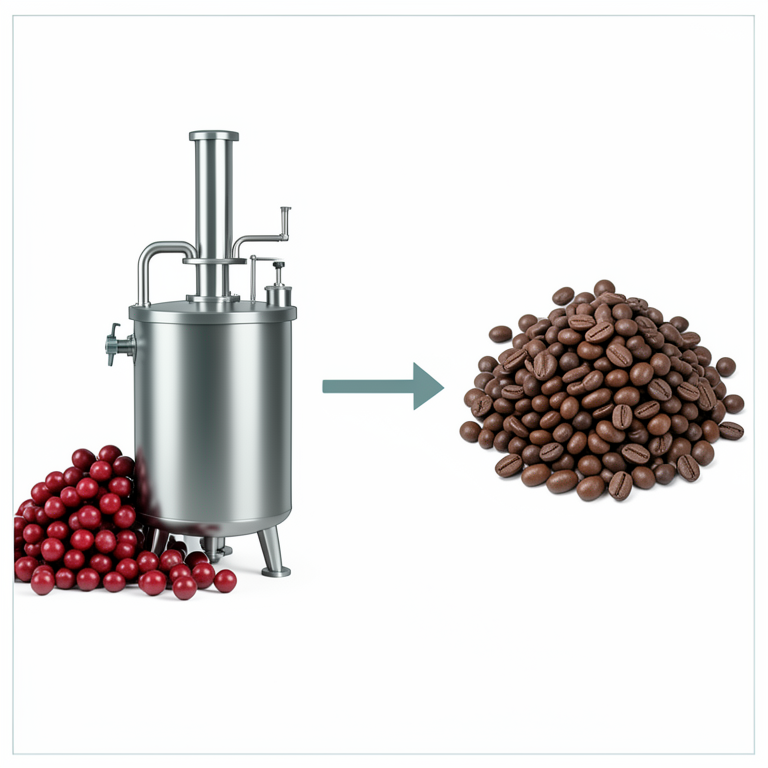
Study overview
AI-generated conceptual illustration (stainless steel stirred-tank bioreactor and coffee cherries). It explains the idea and does not show study data.
View source evidence ↗Introduction
Coffee is an important commodity in the international market. The annual world coffee production exceeds seven billion kilograms of green coffee, with a social product nearing six billion dollars. The world coffee production has Arabica coffee in first place, followed by Robusta coffee, and the adherence to healthy habits, such as quality of life, which also includes the consumption of coffee, propels the exponential increase in the demand for this product. Nowadays, there are several research projects in economic, social, and environmental fields that are committed to increasing the quality of coffee through genetic and biotechnological improvement. One of the biggest problems and major challenges faced by producers and industries is related to the erratic quality of the raw material, which is coffee. One pound of coffee sells for a high price, while the other is cheaper; therefore, the differentiation between these two markets is a success in any market: the commercial one or the gourmet market of high added value, which brings some benefits to the producer, such as better income, stability of trade, and the constitution of a business plan. With a great search program encouraged by the public and private sectors in the genetic and biotechnological improvement sectors, we expect to obtain in the near future resistance to major pests and diseases, as well as withstand climatic variations, maintaining its flavors, aromas, and pleasant characteristics in the beverage. Efficient fermentation increases the quality of the coffee, bringing extra value to the beverage, such as the wine or cachaça market; for the beverage with excellent characteristics, the producer may achieve better prices than the standard prices for the product when it is sold in the aberrant situation of random poor quality. However, the manual system for fermentation of coffee should be replaced by sustainable technology that provides security and repetition of a fermented or naturally dried product to be consumed either within or outside the country (Braga et al., 2023) [3] (Silva et al., 2024) [4] (Prakash et al., 2022) [5] (Aloo et al., 2024) [6] . Coffee fermentation is a bottleneck in the coffee processing. Traditionally, coffee beans are placed inside open or covered fermentation tanks, which contribute to changes in the physicochemical and microbial contents of the beans. Schedules for various controlled fermentations in the traditional method depend on the geographical location, ambient temperature, humidity, initial raw material, fruit ripeness, substrate composition, and design of the equipment. Thus, the typical stored conditions used in traditional fermentation of coffee decrease both fermentation rate and control. During the process, temperatures have seasonal variation. The presence of bacteria and yeast in fresh, matured coffee cherry fruits is also sometimes outside the quality standard. The decrease in bean quality depends on the rainy and sunny months when coffee harvesting occurs. Overall, fluctuations in the environment cause undesired variation and decrease in the quality of the end product. Because of this, an increasing number of investigations focus on the controlled fermentation of alcoholic drinks (Da et al., 2023) [7] (Cordoba et al., 2020) [8] (Júnior et al., 2021) [9] (Coral-Velasco et al., 2024) [10] .
Compared to traditional open fermentation tanks, controlled fermentation offers a faster process and crisper flavor and aroma. Also, controlled fermentation offers the ability to use specific yeasts, which can provide desired effects like enzymes, flavor and aroma compounds, ethanol concentration, and reduced fermentation time, enhancing bean quality. However, some implementations of controlled fermentation methods require large financial investments and specialized human expertise. Differing in concepts, bioreactor technology offers advantages and better control than the traditional method for fermentation. It enables coffee processing industries to develop new methodologies to monitor and standardize their coffee beans, ensuring the same final parameters throughout the year. These potential benefits improve competitiveness and increase demand during the off-season in yield and greater efficiency. In addition, the use of bioreactors with specific yeasts is a naturally directed approach. Because of this, we also focus on the applications of free and immobilized cell yeast in the controlled traditional fermentation of coffee during the review.
Literature Review Coffee fermentation
Coffee is one of the most popular drinks around the world. It has been estimated that 7.33 billion kg of coffee have been produced, of which 7.21 billion kg were consumed, with 7.5 billion produced in 70 countries. In Africa, there are three main coffee-producing areas: east, center, and west. The largest coffee-producing countries in these regions are Ethiopia, Uganda, and Côte d'Ivoire, respectively. Coffee is one of the main commodities produced by family farmers, who use it to support their income. The coffee drink presents several sensory characteristics that make each of them unique. The difference in taste and aromatic characteristics can be related to different origins, climate, treatment, pest and disease attacks, and fermentation conditions. Fermentation is an important step in washing and producing coffee cherry products (Sánchez-Riaño et al., 2024) [12] (Blumenthal et al., 2022) [13] . Fermentation is an oxidative treatment by which the transformation of pulp and mucilage components occurs into soluble solids and gases. The skin floating in the fermentation tank is removed before drying the coffee. Fermentation becomes efficient when sugar is transformed into alcohol, which also exerts a selective pressure on the population of phenolic bacteria that subsequently participate in the drying process of coffee. This fermentation process has a high economic value and contributes significantly to the decline in the quality of coffee by timing the fermentation process, accelerating it, and ensuring the uniformity of the coffee pulp, avoiding the imperfections caused by over-fermented berries. Fermentation is a controlled culture process using an inoculant prepared from a strain, replacing the natural microbiota from the ripe coffee kernel, resulting in the uniformity of the microorganisms present during this process, guaranteeing control of the fermentation through the activity of the yeast. The over-ripening of the fermentative process is avoided essentially by an exchange of heat with thermolated water in the thermal exchanger of the bioreactor, which, together with the alcoholic transformation of the pre-fermented coffee mash, constitutes the basis of the method (You et al., 2021) [14] (Villarreal-Delgado et al., 2024) [15] .
Basic principles of bioreactors
Bioreactors are apparatuses capable of supporting biologically active materials under controlled conditions. They enable the production of high concentrations of microorganisms, cells, or cellular products. Bioreactors commonly found in literature refer to systems used for fermentation and other activities focused on transformation processes, such as complex enzyme assemblies and tissue cultures. The wide range of biological applications reinforces the importance of developing new systems for bioreactor optimization. Biochemical engineering, biotechnology, and biological sciences are continuously evolving fields due to the growing demand for biopharmaceuticals, metabolites, food, feed, chemicals, and materials. Research in these areas is increasing the lifespans of people, revolutionizing industrial production, and modifying environmental solutions (Ganeshan et al., 2021) [16] (Akkoyunlu et al., 2021) [17] (Sharma et al., 2022) [18] . In laboratory-scale designs, microbiological and enzymatic processes are performed in a certain volume of liquid media in the presence of oxygen, pressure, light, or heat in a well or a flask. The key parameters that should be observed according to biological goals are dissolved gas and substrate concentrations, agitation, temperature, pH, and light incidence. However, these vessels are limited in performance with low productivities and insufficient mass and heat transfer, enabling the conversion of just a few substrates to desired products, resulting in low yields, product stability, selectivity, and productivity. Moreover, it is necessary to remember the balance between parameter control and operational cost. The utilization of too much energy in a bioreactor can increase the cost of the produced product, especially by microorganisms. Even distinct bioreactor models for similar biological objectives usually differ in specific operation. Consequently, the success of the fermentative process mainly depends on the knowledge and advanced technology used in the bioreactors (Lee et al., 2023) [19] .
Types of bioreactors used in coffee fermentation
The main purpose of the bioreactors is to provide an environment for the growth of microorganisms and the optimal distribution of the fermentation process. Therefore, the choice of bioreactor is very important in any fermentation process. Coffee is no exception to this rule. Besides being a process that still demands a high level of manual inputs, the use of bioreactors has been sought to make this process more efficient. The production bioreactors vary in complexity and size and have been developed to produce a wide variety of products (Iram et al., 2022) [20] . Regarding the use of bioreactors in coffee fermentation, research is still limited since this process began to be better studied in detail in the 1970s. These bioreactors are generally small laboratory bioreactors with a 25 mL cup volume that controls temperature, mixing, and the atmosphere. Several studies have already been carried out using this method. There are also hydrodynamic tests of bioreactors larger than 40 L. All these tests were carried out on self-developed fermenter prototypes for coffee and do not mention what type of bioreactor and its general size. Although there are a considerable number of small fermenters of up to 0.3 L used in the research, during the production process, the coffee still requires an artisanal fermentation system (Catalán and Sánchez, 2020) [21] (Vandenberghe et al., 2021) [22] .
Optimization of fermentation conditions
The quality, flavors, and aroma of coffee are a result of chemical changes produced by a series of physical, microbiological, and chemical reactions that modify the green coffee. It has been widely demonstrated that the inherent quality of coffee, and in particular the concentration of compounds such as organic acids, is directly related to the applied processing technologies and their thermodynamic management, particularly the fermentation step. In this regard, the goals of coffee fermentation to improve quality are mostly aimed at microbial control, stabilization of enzymes, and the breakdown of mucilage. Mucilage represents only about 0.5% of the weight of the berry, but is a viscous substance made up of simple sugars, mainly glucose, mannose, and arabinose, which constitutes a reservoir of nutrients that is important for bacteria and yeasts involved in the formation of many fermentation products and aroma compounds. (Arya et al., 2022) [30] (Caporaso et al., 2022) [31] . The enzymatic hydrolysis of mucilage releases fermentable sugars and allows microbial metabolism to take its course. Sugar consumption is associated with ethanol production, which can significantly change the final product quality. The objective of a good fermentation design is to control the metabolic activities that occur in order to suppress the production of compounds detrimental to the final flavor while promoting by-products that positively influence the organoleptic characteristics of the raw bean. The evolution of the fermentation profile has a direct correlation with the microbial ecology involved, including the native microbiota of the fruit, the fruit physiology, and the operational conditions. Due to the importance of coffee fermentation in the quality of the final product, the objectives of optimization are usually to obtain more reproducibility and better flavors and aromas, to reduce processing time, and to save water by using less and at a higher temperature, as well as regulating temperature, ventilation, and heat. All these operations must be coupled with control system strategies to maintain good quality control of the fermentation (Wu et al., 2021) [32] . The development of mathematical models that simulate critical stages of coffee fermentation and predict product development over operational periods may be used as a helpful tool for process simulation and optimization, the development of new control strategies, or the generation of technological innovations. However, the validation of such models remains a challenge because of the complexity of the chemical, biochemical, and microbiological processes that occur during fermentation and cellular metabolism. Despite this, several models have shown the feasibility of predicting the products of the saccharification of mucilage from arabica coffee motivated by acid, alkaline, and enzymatic degradation of the endosperm of the berry (Polanía et al., 2024) [33] . In response to the wide options currently offered by secondgeneration designs for the control of bioprocesses regarding high levels of metabolic capacity in confined spaces and the continuous interaction of cells with a complex microenvironment, and aiming for better flavors and aromas, it is believed that these new tools will help to increase the rationality of the process and the awareness of the original contributors, from cultivation in a field to the final transformation of green coffee. Indeed, despite the majority of practical studies on coffee fermentation being performed under a range of common industrial processing conditions, it has been shown that a strategically oriented design that is more attuned to the quality generation process, combined with existing empirical knowledge and the support of industry professionals and advanced analytical chemistry tools, represents an optimal strategy (Pereira et al. 2020) [34] .
Temperature and pH control
The coffee fermentation by-products influence the biochemical and sensorial properties of the final product. Many of these compounds are released during the fermentation process until the cell collapse or the programmed cell death. The temperature has a positive influence on the microbial activities and coffee chemistry reactions; however, high temperatures can kill the coffee beans' microorganisms. pH is an essential factor in bacterial metabolism, and it also influences the attachment of some species to the coffee mucilage. The bacterial activities are widely reported; therefore, countries with greater pH values have longer coffee fermentation times. It is not easy to have a control system; therefore, countries with minimal pH values must be attentive to the process development. During the development of the project, the pH value must be monitored because the project contains various bacterial species that provoke pH oscillations. The temperature and pH are two critical control factors for the coffee fermentative process. Some improved control conditions promote the desirable microbial activities without reducing the physicochemical and sensorial properties. For this, the design of a small coffee fermentative bioreactor is addressed, which will allow for better control during the process. The developed system is a thermostated acrylic reservoir integrated with an electromagnetic stirring system. The rheological and mixing time studies validate the system. The obtained results demonstrate that the integrative system can mix the cocktail's components and uniform the temperature and pH values for future use as a coffee fermentative bioreactor. This study develops the structural prototype, exploring and solving the previous bioreactor concept's failures from the previous phase's experiments and requirements (Peñuela-Martínez et al., 2023) [35] (Sánchez-Riaño et al., 2024) [12] .
Oxygenation and agitation
Oxygen is essential for the growth and metabolism of aerobic cells. Most coffee fermentation microbes are facultative or strictly aerobic anaerobes, which carry a great demand for dissolved oxygen within the CSTR, particularly because of the increasing volume fraction occupied by coffee beans as the fermentation proceeds. However, an excess of dissolved ozone can also lead to lower quality results, particularly by partial oxidation of coffee phenols. This implies that particular attention must be given to perform adequate oxygenation of the broth while preventing unnecessary oxygen exposure to the coffee beans. Our results with in vitro and in situ oxygenation measurements show that adequate aeration of the broth can be obtained and maintain dissolved oxygen levels below 1.0 mg O2/L to prevent an unsuitable oxidative effect on the coffee beans (Viesser et al., 2021) [36] (Viesser et al., 2020) [37] . Agitation of the fermenting broth is relatively straightforward with the mechanical stirrers commonly employed for CSTR equipment. Convective movement allows close to equal suspended solid and liquid phase movements inside the CSTR for velocities above 0.25 m/s. For conventional agitator speeds and paddle-blade configurations, this requires a series of 1 to 3 hours of agitation every 6 to 12 hours, respectively. However, unconventional agitator designs or design modifications of agitator setups could provide better solutions to enhance mass transfer over the entire volume occupied by coffee beans inside the CSTR (Zeng et al., 2022) [38] .
Monitoring and control systems
Control and monitoring systems are required for the biooxidative fermentation of coffee at both pilot and industrial scales. These systems will ensure the repeatable biological and physicochemical outcomes for different starting materials. In pilot-scale experiments, it was possible for an operator to effectively manage the relationship between the oxygen mass transfer rate and the metabolic rates of the yeast and bacteria throughout the pilot scale fermentations of coffee and cacao. Essentially, the relationship between the oxygen mass transfer rate and the C, H, and N mass balances during a pilot scale biooxidative fermentation is critical for the efficient and repeatable fermentation of the different classes of substrates: cacao bean, coffee fruit, black tea, and chocolate (Finore et al., 2023) [39] . In this way, the oxygen mass transfer rate is provided by the gas balance in the fermenter headspace as well as by the O2 consumption of the immobilized yeast and the bacteria; CO2 production by the yeast, principally during fermentation of the coffee; and O2, CO2, and possibly other gaseous products from the bacterial activity accumulate. The C rates are calculated based only on the gaseous metabolites CO2 and O2 and from the CHN content of entering and fermenting fruit. It was observed that in many cases, a large but not limiting excess of O2 was introduced into the biooxidative fermentations because of the relatively slow CO2 production rates and low O2 consumption rates. However, with a large excess of O2 in the headspace, the rate of oxygen mass transfer from the headspace to the yeast and the bacteria (And from the bacteria to the yeast) is high, and a non-limiting supply of oxygen is present. Furthermore, at that high oxygen mass transfer rate, the other nutrient concentrations (CO2 and volatile products) for the yeast and the bacteria corresponded well to the expected nutrient concentrations in a dynamic fermentation with excess oxygen (Hein et al., 2023) [40] (Li et al., 2020) [41] (Lian et al., 2022) [42] .
Sensors and analytical techniques:
Monitoring conditions inside bioreactors implies using different types of sensors and analytical techniques. Some of the most important parameters are temperature, pH, gas composition, liquid velocity, and concentration of specific elements, microorganisms, or small solutes. For coffee fermentation, the most important issues refer to matrix characteristics, microorganism quantification, and bioactive compound extraction and quantification. Hence, using conventional sensors from other applications is usually not applicable to the study without modifying or adapting them to diverse and complex composite liquid effluents. Thus, finding good sensors to be used in these cases is a subject of continuous research. On the other hand, analytical methods and chemical sensors have been widely used to complement conventional techniques. In this review, some of the most recent studies are presented and classified according to the sensor and analytical techniques used. Most of them have been used in beverage monitoring, while others have been used only for coffee assessment (Reyes et al., 2022) [43] (Reardon, 2021) [44] . As regards sensor integration inside bioreactors, the number of sensors depends on bioreactor types and their objectives. Traditional batch, semi-continuous, and continuous bioreactors operating under thermophilic or mesophilic conditions, which are used for coffee fermentation, require at least three physical-chemical sensors, considering aeration and agitation conditions. If system automation should be attained, other sensors for biomass and cell quantification need to be considered. Other sensors are only added to optimize fermentation parameters and control units. Integrating all of these sensors normally generates a high wire point, especially when sanitation is required for high hygiene conditions. The adoption of wireless sensors is the optimum, provided other necessary conditions are also satisfied (Padhan et al., 2023) [45] (Lafuente-Rincón et al., 2022) [46] .
Automated control strategies
Designing a control strategy able to adjust operational parameters according to certain established thresholds for an automated bioreactor is a task of the utmost importance to promote the full development of Saccharomyces cerevisiae. These thresholds could be associated with the main products of coffee fermentation: CO2, temperature, or exometabolite concentrations, such as ethanol, acetic acid, or pyruvic acid. In the same way, it is important to control the fermentation volume, since the decrease of pH promotes the release of organic acids, such as acetic acid, which will eventually affect the taste of the coffee. Currently, most control systems for monitoring microbial fermentations are based on the implementation of information and control technology. The Input-Output Feedback Linearization is the control strategy that can be used to maintain the main products of coffee fermentation at their optimum value. The proposed control strategies are able to maintain constant substrate consumption rates and carry out this process at the required fermentation rates. Batch, fed-batch, and continuous fermentations were considered in the development of the proposed control strategies (Meng, 2020) [47] (Wahlgreen, 2023) [48] . Automated multi-input-multi-output feedback control strategies were considered. The feedback control strategy was selected based on the proportional-integral-derivative filter. The controlled system was the nonlinear dynamical model of the operation of anaerobic and aerobic fermentations. The output-feedback controller considers the estimation of the unmeasured states without modifying the original model, resulting in a simpler control structure. The estimation was based on the EKF, and the controller was tuned based on the Lyapunov criterion approach. In this way, a relevant contribution associated with the optimization of the exothermic phenomenon in coffee fermentation operation is made. With the task of implementing motor velocity control strategies able to achieve the current and future set points for an application of an experimental study to analyze the operation of medium and large scale coffee fermentation reactors, satisfactory tracking results for biotechnology operation in coffee fermentation reactors with SNR > 13 dbar were reached. The strategies compensated for the impact of the SNR of the temperature sensor signals. Overall, a clear area for investment in research in the coffee fermentation field is in the development of intelligence and monitoring tools, which can help industrial biotech reactor operators to make decisions in real-time in order to optimize the process (Ravaglio-Pasquini et al., 2021) [49] .
Scaling up from lab to industrial scale
Coffee fermentations in some processes should be performed at a scale ranging from bench to large scale that involves high volumes. Batch bioreactors are needed to do so, and therefore, the demonstration of performing controlled coffee fermentation in bioreactors is an essential step before developing bioreactor scale-up. Since the bioreactor system, coffee pulp, and microorganisms are different from the demonstrated results, there might be differences that occur. Before scale-up, the seed culture condition of microorganisms in bioreactors should be established to avoid differences in fermentation performance. The condition should allow only target microorganisms to grow well and even climb high inside yields. This is done in two ways: supplementing the bioreactor with selective media and allowing only the microorganisms that are growing positively in the system to enter the large scale. Selection of bioreactors can be done separately for acetic or alcoholic fermentations. Acid-stable substances are preferred for the acetic fermentation process, and microorganisms should have the ability to grow in high volumetric conditions. Different microorganisms might require different volumes, sizes, or types of bioreactors. Process success is limited by how well bioreactors allow for microorganism growth. Previously, the strains managed to climb high inside the fermenter and were collected for upscaling, allowing us to use a 1-L glass jar fermenter. High efficiency was obtained from our modified glass bottle without a rotor-stator fermenter. We designed our stirrerless, adjustable pipe-equipped glasses and tested them by collecting the most climaxed microflora in small scales before scaling up to our 50-L fermenters. On the contrary, many previous yeast fermentations used specialized tanks with intricate and expensive devices. Therefore, the timeconsuming and complex technique may fail to modify fermenters in public domains, and prototyping the air-lift fermenter for other kinds of natural fermentations may contribute to further progress (Ezemba et al., 2022) [50] (Fonseca et al., 2020) [51] (González-Gloria et al., 2022) [52] (Wu et al., 2023) [53] .
Challenges and considerations
Regardless of the operation scale and the type of fermentation used, coffee fermentation presents unique aspects that distinguish this biological process from others well established in biotechnology. First, fermented coffee beans are the final product, rather than a raw material. This implies that any microbes that remain viable in it may grow again and modify its sensory attributes. Secondly, the beans are the largest substrate processed in comparison with the substrates of other fermentative bioprocesses. Consequently, the CO2 production by coffee fermentation is significantly larger, although predominantly absorbed by the beans. This fact, combined with the absence of efficient mechanisms for its release in the coffee pulp, either juice or water, requires adapted designs for both fed-batch and continuous upflow bioreactors used for this fermentation. Low active biomass concentration is one of the difficulties encountered in both non-churning and churning continuously stirred coffee fermentations, reducing the fermentation rates. Continuous upflow bioreactors designed for highly productive industrial-scale beer and fuel alcohol production contain biomass retention devices to enable replication of the process for many weeks or even months. These devices, however, fail to differentiate collapsed yeasts from lees, promoting the increase of defective molecules that impair the beer and alcohol quality. When not used, the dissolved CO2 generates fluid current velocities strong enough to drag off growing yeast cells. Ridges with different inclinations relative to the vertical axis were used as retaining devices in anaerobic continuous upflow coffee fermentations to hold the light submerged biomass under the outlet vertical tube and select for less spherical cells. In some experiments, rod-shaped cells were formed by the repeated application of an oscillating water current, permitting a significant reduction in fermentation time. In other experiments, incomplete coffee fermentation was observed when multi-compartment continuous upflow anaerobic bioreactors were used. Phase separation was not totally achieved, making it necessary to increase the retention time.
Quality improvement
A significant purpose of using bioreactor technology for coffee fermentation is the improvement of the final quality of coffee through homogenization of the fermentation process and the control of the relevant variables. Moreover, the quality improvement is ensured by using selected bacteria previously characterized for their properties. The use of specific bacteria for coffee fermentation helps to reduce acetic acid and ethanol content in the final product, while increasing the succinic acid content, thus positively affecting coffee aroma. In addition, the starter culture could reduce the spontaneous growth of ethanol-producing yeasts in the fermenting mass, further improving the fermentation process. Similarly, the use of certain bacteria isolated from natural coffee fermentations adversely affected the growth of the main spoilage yeasts in the fermentation process, in particular one known for producing large amounts of unwanted volatile compounds in the fermenting mass (De Vuyst and Leroy, 2020) [62] (De et al., 2022) [63] . Despite many studies dedicated to the isolation of potential starter bacteria, some of them with particularly intriguing properties, they remain somehow underexploited. This is due to different reasons that, however, mainly converge into the lack of full characterization and the difficulty of introducing the isolates into the bioreactor. However, the availability of selected bacteria could lead, in the end, to the production of new bioproducts, such as fermented functional beverages, where both the properties of coffee and bacterial strains could be exploited.
Future trends and innovations
With the irruption of coffee globally and locally, as well as the speed of production and demand, the main processing process must make an effort to accelerate the task without affecting the processes that are considered their main characteristics. So, it was transformed to make fermentations shorter and more efficient to reduce the time for compound precursor formation without affecting their quality attributes. This is the huge challenge that currently meets coffee fermentations and seeks to address it with research and development, from raw material management to fermentation systems and the application of novel technologies. Optimizing coffee fermentations is challenging; several factors must be addressed. Among them, the endosperm hemicelluloses can release enzymes with different functions that undermine the eugenol production. So, especially, create and implement efficient management strategies based on heat treatment and rapid fermentation systems that avoid the for substrates and precursors between specialized and nonspecialized coffee endoglucanases. Optimize the pH and temperature control of the fermentation polymicrobial consortium to reduce the time of endosperm impurities hydrolysis and avoid the formation of enzymes endogenously to achieve the target processing time without detriment to the cup quality.
Emerging technologies in coffee fermentation
Coffee fermentation is an essential step in the processing of coffee, a process in which a set of microorganisms is responsible for degrading and metabolizing compounds that confer off-flavors to the drink. This fermentation has evolved over time from a natural, uncontrolled process to a controlled, artificial process. The control of the process has been achieved by improving the way the process is conducted, either by selecting the microorganisms involved or using designs that can monitor and guarantee that the required operating conditions will be achieved. Although beneficial, it is only possible to use this control on an industrial scale through the use of modern technologies. In this chapter, relevant information about the technological tools that have been developed and used for the control of the process, such as bioreactors, is presented, and there is a detailed analysis of how they interact with the natural characteristics of the fermentation, the coffee it processes, and whether combined techniques can compensate for the loss of properties that occurs when it is used individually (Cardoso et al., 2021) [67] (Bastian et al., 2021) [68] . Food biotechnological applications have effectively demonstrated the potential of multifunctional bioreactors that come with advances in automation and an integration of several functions. These bioreactors are used for fermentation but also come with special designs and controls in order to enhance process performance and achieve the desired result. Although the use of bioreactors in coffee fermentation is not common, the use and study of these types of bioreactors is undoubtedly a fascinating subject area. The main reason lies in the fact that using a bioreactor guarantees system reproducibility and process monitoring in order to carry out the process under controlled parameters. In addition, the flexibility to adjust operational parameters can provide a scientific contribution toward elucidation of coffee fermentation processes (Rivera-Ordaz et al., 2021) [69] . Typical problems caused by lack of control may now be mitigated by modern technology-based tools. A few years from the creation of a new product because the required parameters have not yet been able to be reproduced, it seems anywhere between one or two iterations is more than enough. All academic disciplines are connected to the digital world by synergy with technological and electronic elements, such as management, renewable energies, and design. But more than anything else, sensors and actuators are just one reason for their closeness to food engineering as well. Systems designed to optimize fermentation or any other process occurring within a bioreactor are no exception. Everything is closely connected. Consider the reduction of yield variability or process duration and the achievement of a more controlled and robust operating regime (Iram et al., 2022) [20] . This is no truer than in control targeted at the fermentation of coffee, which is undoubtedly worth moving these paradigms forward given the importance of these factors. If the process changes through reactor strategies and new controlled fermentations have to be tested to compensate for the loss of organoleptic or chemical properties, this could well be worth the effort. Though bench-test devices for food processing have benefited from state-of-the-art technology in crucial stages, bioreactors are still undervalued, and current technologies being introduced to gather process data and control it are probably not being used to their full potential.
Conclusion
In conclusion, this chapter presents the advances of the ongoing application of coffee processing techniques, including the role of bioreactors during the fermentation stage. However, there is still an extensive future in this area. For example, many technological advances have enabled massive progress in tissue culture in most crops. For coffee, efforts have been ongoing. Still, many recent considerations have identified problems in tissue culture as possibly the main obstacle to rapid progress in this area. Perhaps the solution can be an effective bioreactor design. In short, we are enthusiastic about the potential utility of our suspension bioreactors for coffee fermentation. Rather than ruminating on these methods, our overriding goal has been to inform and inspire biotechnologists who may recognize applications in coffee that are instructive for their pursuits of related technologies. In developing our suspension cultures, we improved conditions at every possible stage, beginning with the proven preparation of inocula and extending through bioreactor design and media development. Armed with these tools and tips, and with a bit of creativity and rigor, we believe that much can be accomplished in applying bacterial matrices suspension cultures to critical coffee production challenges.
References
40 in the original paper- Pregolini VB, et al. Influence of environmental microbiota on the activity and metabolism of starter cultures used in coffee beans fermentation. Fermentation. 2021;7(4):278. Available from: https://www.mdpi.com
- Braga AVU, et al. Study on coffee quality improvement by self-induced anaerobic fermentation: Microbial diversity and enzymatic activity. Food Res Int. 2023;165:112528. Available from: https://www.sciencedirect.com
- Silva MEDS, et al. Coffee fermentation as a tool for quality improvement: an integrative review and bibliometric analysis. Int. J Food Sci Technol. 2024;59(9):5912-5925. Available from: https://www.sciencedirect.com
- Aloo OS, et al. Harnessing fermentation for sustainable beverage production: A tool for improving the nutritional quality of coffee bean and valorizing coffee byproducts. Biocatal Agric Biotechnol. 2024, 103263. Available from: https://www.sciencedirect.com
- Da Silva Vale A, et al. Perspective on the use of synthetic biology in rudimentary food fermentations. Syst Microbiol Biomanufacturing. 2023;3(1):150-165. Available from: https://www.researchgate.net
- Cordoba N, et al. Coffee extraction: A review of parameters and their influence on the physicochemical characteristics and flavour of coffee brews. Trends Food Sci Technol. 2020;96:45-60. Available from: https://www.sciencedirect.com
- Júnior AIM, et al. A critical techno-economic analysis of coffee processing utilizing a modern fermentation system: Implications for specialty coffee production. Food Bioprod Process. 2021;125:14-21. Available from: https://www.sciencedirect.com
- Coral-Velasco DA, et al. Process design and technoeconomic assessment of cellulolytic enzymes production from coffee husk through process simulation. Biomass Convers Biorefinery. 2024;14(7):8353-8373. Available from: https://www.springer.com
- Feng F, et al. Research on the integration of microbial fuel cells with conventional wastewater treatment technology: Advantages of anaerobic fermentation. Energy Convers Manage X. 2024, 100680. Available from: https://www.sciencedirect.com
- Sánchez-Riaño AM, et al. Effects of cherries sanitization methods and fermentation times on quality parameters of coffee beans. Heliyon. 2024, 10(13). Available from: https://www.cell.com
- Blumenthal P, et al. Production of coffee cherry spirits from Coffea arabica varieties. Foods. 2022;11(12):1672. Available from: https://www.mdpi.com
- Vandenberghe LPS, et al. Solid-state fermentation technology and innovation for the production of agricultural and animal feed bioproducts. Syst Microbiol Biomanufacturing. 2021;1:142-165.
- Da Mota MCB, et al. Influence of fermentation conditions on the sensorial quality of coffee inoculated with yeast. Food Res Int. 2020;136:109482. Available from: https://www.sciencedirect.com
- Zhao H, et al. Effects of inoculation timing and mixed fermentation with Pichia fermentans on Oenococcus oeni viability, fermentation duration and aroma production during wine malolactic fermentation. Food Res Int. 2022;159:111604. Available from: https://www.sciencedirect.com
- Toledo-Alarcón J, et al. Impact of the microbial inoculum source on pre-treatment efficiency for fermentative H2 production from glycerol. Int J Hydrog Energy. 2020;45(3):1597-1607. Available from: https://hal.science
- Ourique LJ, et al. Bioreactor production of 2, 3butanediol by Pantoea agglomerans using soybean hull acid hydrolysate as substrate. Bioprocess Biosyst Eng. 2020;43(9):1689-1701. Available from: https://www.springer.com
- Jones RJ, et al. Continuous recovery and enhanced yields of volatile fatty acids from a continually-fed 100 L food waste bioreactor by filtration and electrodialysis. Waste Manag. 2021;122:81-88. Available from: https://www.journals.elsevier.com International Journal of Agriculture and Food Science https://www.agriculturaljournals.com
- Wu Q, et al. Can we control microbiota in spontaneous food fermentation?-Chinese liquor as a case example. Trends Food Sci Technol. 2021;110:321-331. Available from: https://www.sciencedirect.com
- Polanía Rivera AM, et al. Development of Starter Inoculum for Controlled Arabica Coffee Fermentation Using Coffee By-Products (Pulp and Mucilage Broth), Yeast, and Lactic Acid Bacteria. Fermentation. 2024;10(10):516. Available from: https://www.mdpi.com
- Pereira LL, et al. New propositions about coffee wet processing: Chemical and sensory perspectives. Food Chem. 2020;310:125943. Available from: https://www.sciencedirect.com
- Peñuela-Martínez AE, Moreno-Riascos S, MedinaRivera R. Influence of temperature-controlled fermentation on the quality of mild coffee (Coffea arabica L.) cultivated at different elevations. Agriculture. 2023;13(6):1132. Available from: https://www.mdpi.com
- Viesser JA, et al. Co-culturing fructophilic lactic acid bacteria and yeast enhanced sugar metabolism and aroma formation during cocoa beans fermentation. Int J Food Microbiol. 2021;339:109015. Available from: https://www.sciencedirect.com
- Viesser JA, et al. Exploring the contribution of fructophilic lactic acid bacteria to cocoa beans fermentation: Isolation, selection and evaluation. Food Res Int. 2020;136:109478. Available from: https://www.sciencedirect.com
- Zeng J, Zeng H, Wang Z. Review on technology of making biofuel from food waste. Int J Energy Res. 2022;46(8):10301-10319. Available from: https://www.sciencedirect.com
- Finore I, et al. Thermophilic bacteria and their thermozymes in composting processes: A review. Chem Biol Technol Agric. 2023;10(1):7. Available from: https://www.springer.com
- Li T, Liu S, Yao X. Addition of reactive oxygen scavenger to enhance PH3 biopurification: Process and mechanism. Process Saf Environ Prot. 2020. Available from: https://www.sciencedirect.com
- Lian Z, et al. Efficient aerobic fermentation of gluconic acid by high tension oxygen supply strategy with reusable Gluconobacter oxydans HG19 cells. Bioprocess Biosyst Eng. 2022;45(11):1849-1855. Available from: https://www.springer.com
- Padhan B, Ray M, Patel M, Patel R. Production and bioconversion efficiency of enzyme membrane bioreactors in the synthesis of valuable products. Membranes. 2023. Available from: https://www.mdpi.com
- Ravaglio-Pasquini F, et al. Caffeinating the biofuels market: Effect of the processing conditions during the production of biofuels and high-value chemicals by hydrothermal treatment of residual coffee pulp. J Clean Prod. 2021;302:127008. Available from: https://www.rug.nl
- Fonseca BG, et al. Bioconversion in batch bioreactor of olive-tree pruning biomass optimizing treatments for ethanol production. Biochem Eng J. 2020;164:107793. Available from: https://www.sciencedirect.com
- González-Gloria KD, et al. Bubble column bioreactor design and evaluation for bioethanol production using simultaneous saccharification and fermentation strategy from hydrothermally pretreated lignocellulosic biomass. Biochem Eng J. 2022;187:108645. Available from: https://www.sciencedirect.com
- Kiani MKD, et al. Different bioreactor configurations for biogas production from sugarcane vinasse: A comprehensive review. Biomass Bioenergy. 2022;161:106446. Available from: https://www.sciencedirect.com
- Stazi V, Annesini MC, Tomei MC. Anaerobic domestic wastewater treatment in a sequencing granular UASB bioreactor: Feasibility study of the temperature effect on the process performance. J Environ Chem Eng. 2022;10(5):108512. Available from: https://www.sciencedirect.com
- Liberman K. Tasting coffee: An inquiry into objectivity. 2022. Available from: https://www.zhaw.ch International Journal of Agriculture and Food Science https://www.agriculturaljournals.com
- Serna-Jiménez JA, et al. A review on the applications of coffee waste derived from primary processing: Strategies for revalorization. Processes. 2022;10(11):2436. Available from: https://www.mdpi.com
- Alcaraz-Ibarra S, et al. Treatment of chocolateprocessing industry wastewater in a low-temperature pilot-scale UASB: Reactor performance and in situ biogas use for bioenergy recovery. Biomass Bioenergy. 2020;142:105786. Available from: https://www.sciencedirect.com
- De Jesus Cassimiro DM, et al. Coinoculation of lactic acid bacteria and yeasts increases the quality of wet fermented Arabica coffee. Int. J Food Microbiol. 2022;369:109627. Available from: https://www.sciencedirect.com
- Elhalis H, et al. The role of wet fermentation in enhancing coffee flavor, aroma and sensory quality. Eur Food Res Technol. 2021;247:485-498. Available from: https://www.academia.edu
- Mariyam S, et al. Improving coffee quality through yeast addition in the fermentation process to support sustainable coffee production. IOP Conf Ser Earth Environ Sci. 2022, 1005(1). Available from: https://iopscience.iop.org
- Bastian F, et al. From plantation to cup: Changes in bioactive compounds during coffee processing. Foods. 2021;10(11):2827. Available from: https://www.mdpi.com