
Research article · 2024 · Full text
International Journal of Advanced Chemistry ResearchSynthesis, characterization and biological evaluation of quinazoline-4-one derivatives via cyclization of hydrazones
Volume 6(2) · Pages 125–133 · DOI: 10.33545/26646781.2024.v6.i2b.236 ↗
Research areasQuinazolinone synthesis and applicationsSynthesis and Characterization of Heterocyclic CompoundsPhenothiazines and Benzothiazines Synthesis and Activities
Abstract
Author-writtenThis study investigates the synthesis and biological activity of novel quinazoline-4-one derivatives, synthesized through Schiff base reactions involving hydrazine and various substituted benzaldehydes in ethanol. The synthetic route commenced with the reaction of phthalic anhydride with an amino acid, resulting in the formation of an aromatic amino acid. This intermediate underwent esterification with thionyl chloride and ethanol to yield an aromatic ester. The ester was subsequently converted to an aromatic hydrazide by reaction with 80% aqueous hydrazine in ethanol. The hydrazide was then reacted with different aromatic aldehydes in the presence of a small amount of glacial acetic acid to form the corresponding hydrazone derivatives. In the final step, quinazoline-4-one derivatives were synthesized by reacting the hydrazone with anthranilic acid. The structures of the synthesized compounds were characterized using various spectroscopic techniques, including FT-IR, ¹H-NMR, and ¹³C-NMR. The biological activities of these novel derivatives were evaluated, offering insights into their potential applications in medicinal chemistry.
Summary
Source-checkedPlain-language reading of the full paper, prepared with AI and checked against the text. Each point links to the authors' own words.
Why it matters
- Heterocyclic compounds are distinct from homocyclic ones because they include elements other than carbon in their cyclic structures. View evidence ↗
- Quinazolin-4(3H)-one derivatives are nitrogen-containing heterocycles known for their potential biological activity. View evidence ↗
- Depending on their substituents, 4(3H)-quinazolinones have shown a wide range of activities, including antibacterial, anticancer, and antiviral effects. View evidence ↗
The question
- The study aims to synthesize novel quinazoline-4-one derivatives using Schiff base reactions and evaluate their biological activity. View evidence ↗
What they did
- The synthesis followed a multi-step process: phthalic anhydride and an amino acid formed an aromatic amino acid, which was esterified, converted to a hydrazide using 80% aqueous hydrazine, reacted with aromatic aldehydes to form hydrazones, and finally reacted with anthranilic acid to produce quinazoline-4-one derivatives. View evidence ↗
- The resulting compounds were characterized using FT-IR, 1H-NMR, and 13C-NMR spectroscopy. View evidence ↗
- Biological activity was tested against Staphylococcus aureus and Escherichia coli by measuring the Minimum Inhibitory Concentration (MIC) at 25, 50, and 75 mg/mL in DMSO. View evidence ↗
What they found
- Hydrazone derivative 4a (with X=H) was obtained as a yellow solid with a melting point of 251-253 °C and a yield of 69%. View evidence ↗
- Quinazoline-4-one derivative 5a (with X=H) was obtained as a white solid with a melting point of 240-241 °C and a yield of 70%. View evidence ↗
- The inhibitory activity of the compounds was dose-dependent, with the highest activity observed at the 75 mg/mL concentration. View evidence ↗
What it means
- The authors conclude that the synthesized compounds exhibit significant biological activity, suggesting they may be useful in pharmaceutical contexts and require further study. View evidence ↗
Visual summary
2 visualsIllustrations explain the paper; charts are replotted from the paper's own table values.
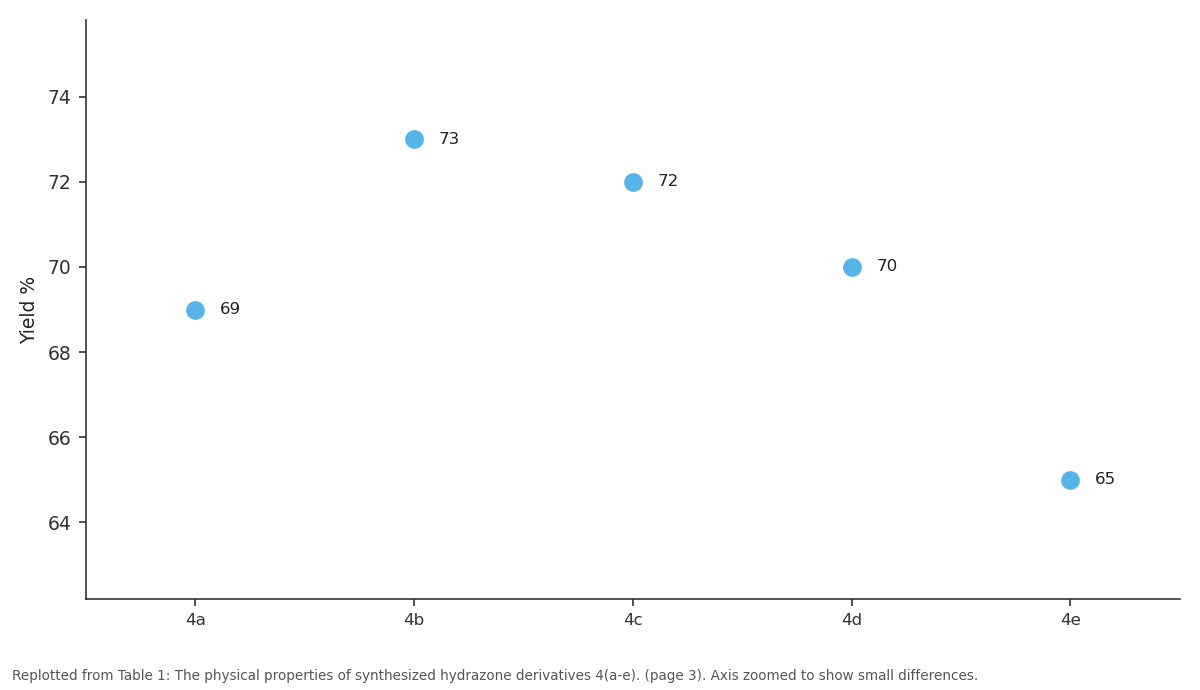
Yield %: 4a vs 4b vs 4c vs 4d vs 4e
Replotted from Table 1 (page 3) of the original paper. Every bar is the paper's own table value.
View source evidence ↗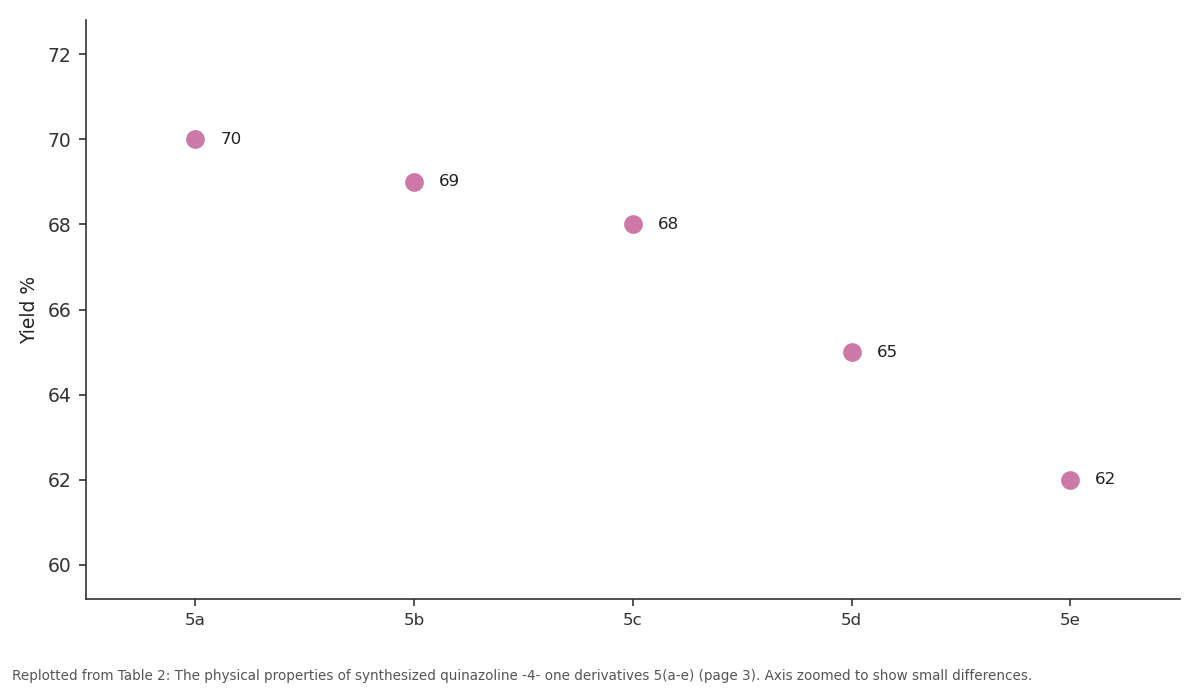
Yield%: 5a vs 5b vs 5c vs 5d vs 5e
Replotted from Table 2 (page 3) of the original paper. Every bar is the paper's own table value.
View source evidence ↗Figures & tables
From the original paper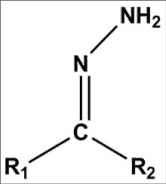 Figure 1
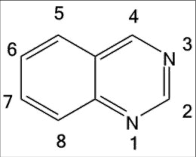 Figure 2
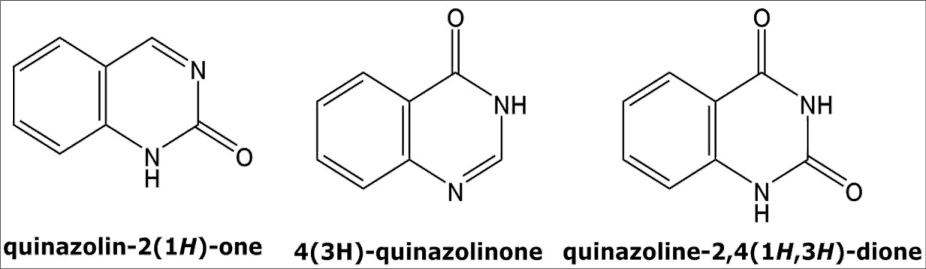 Figure 3
 Table 1
 Table 2
 Table 3
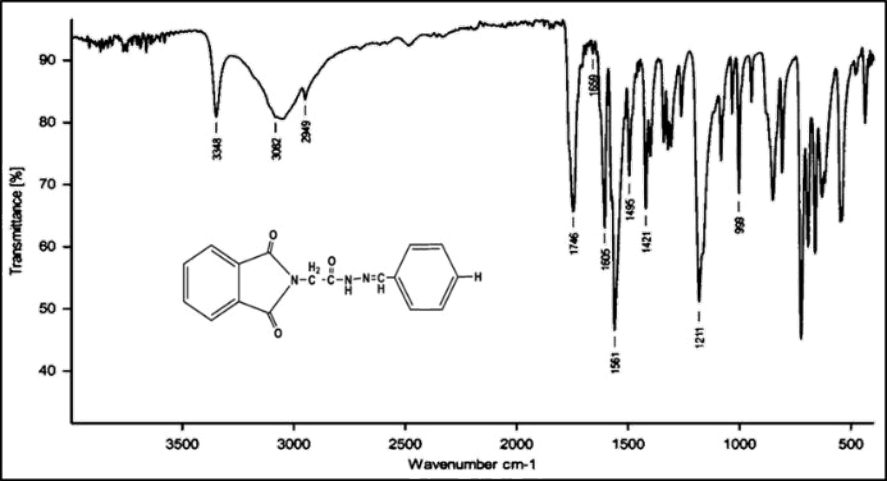 Figure 4
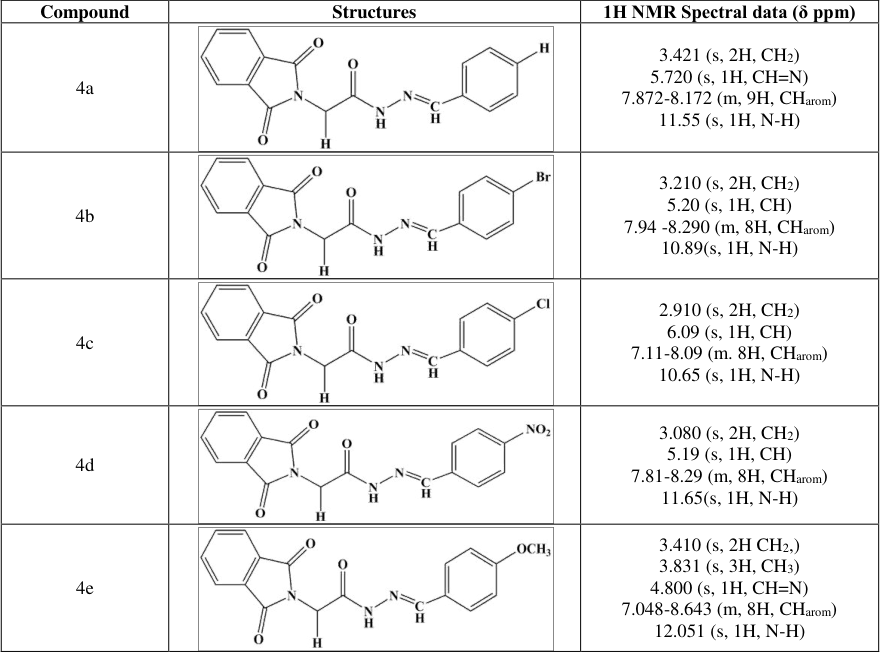 Table 4
 Table 5
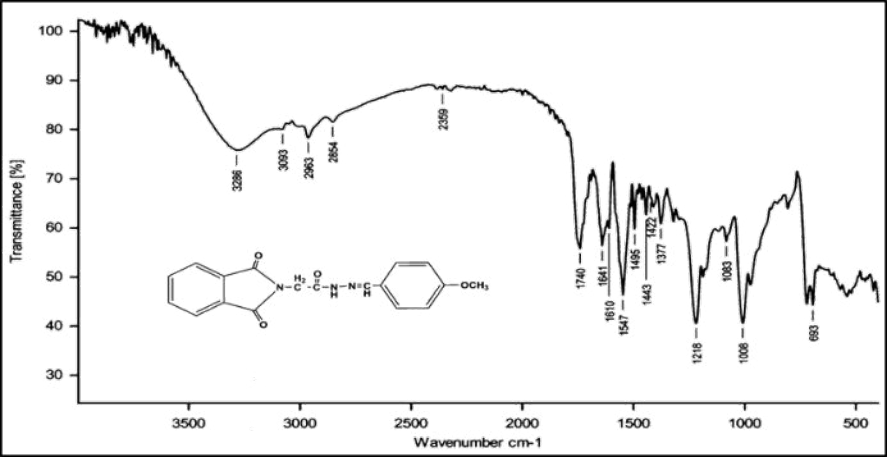 Figure 5
 Table 6
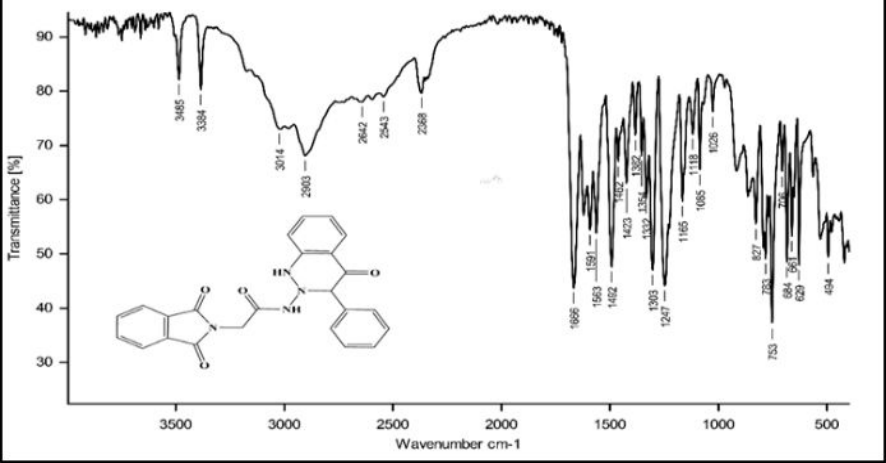 Figure 6
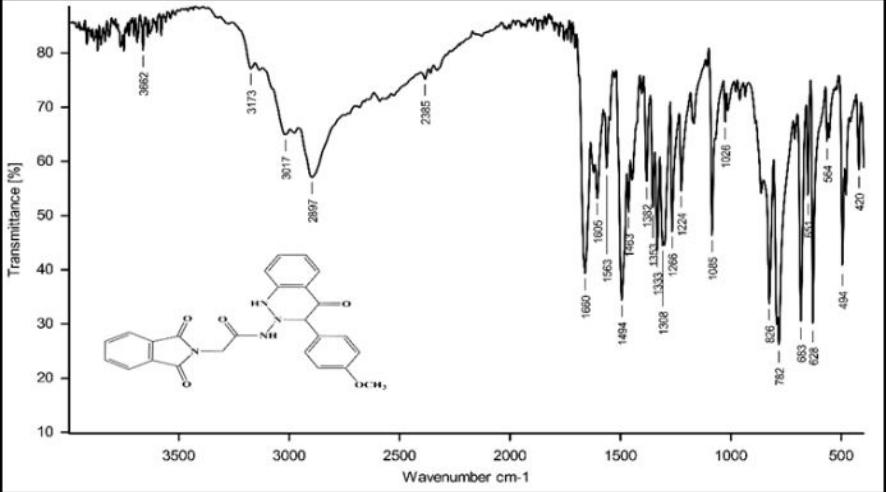 Figure 7
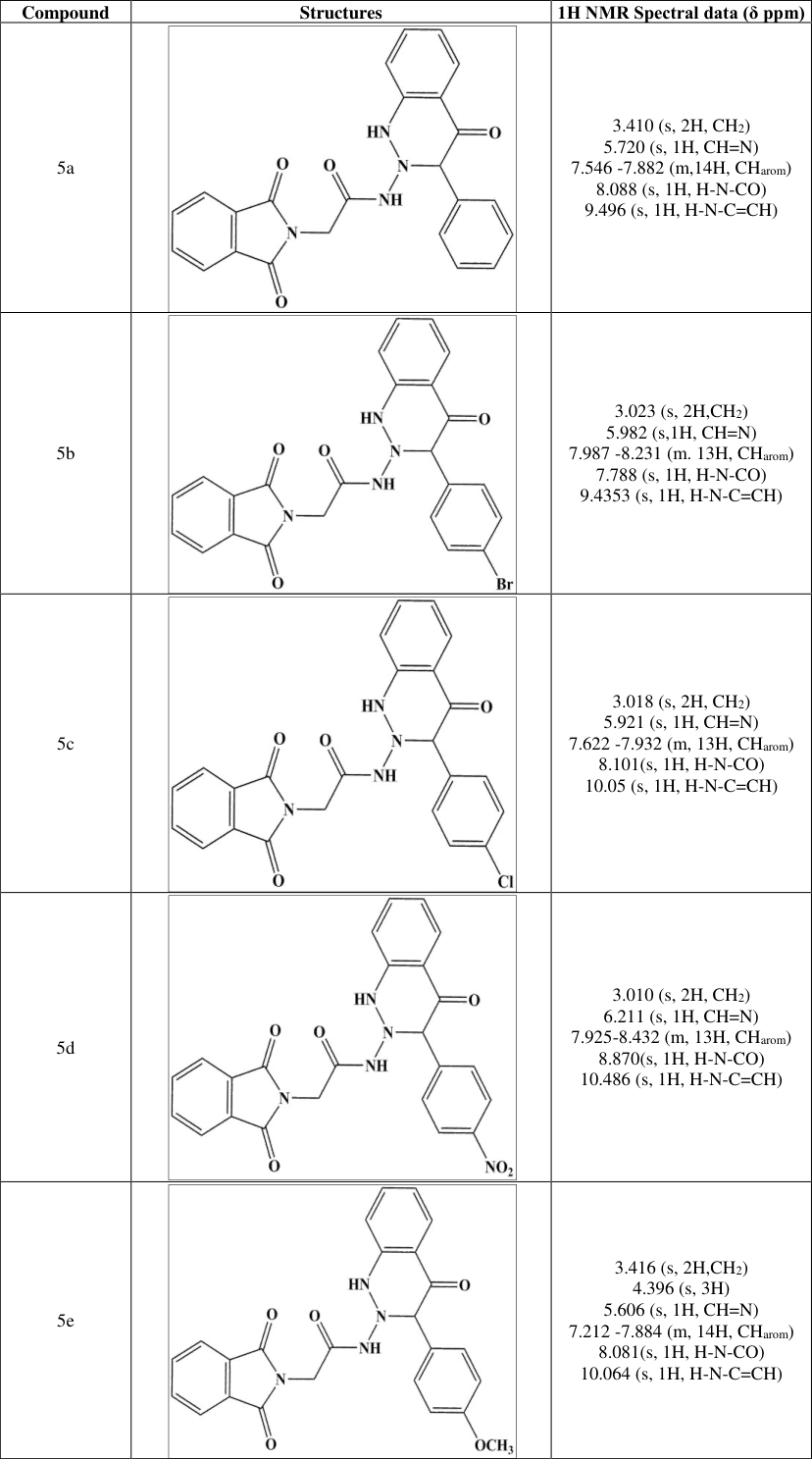 Table 7
 Table 8
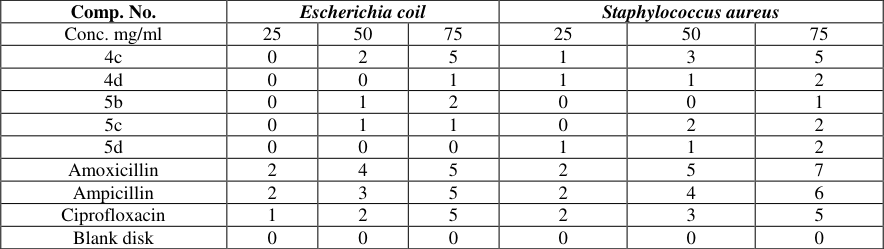 Table 9
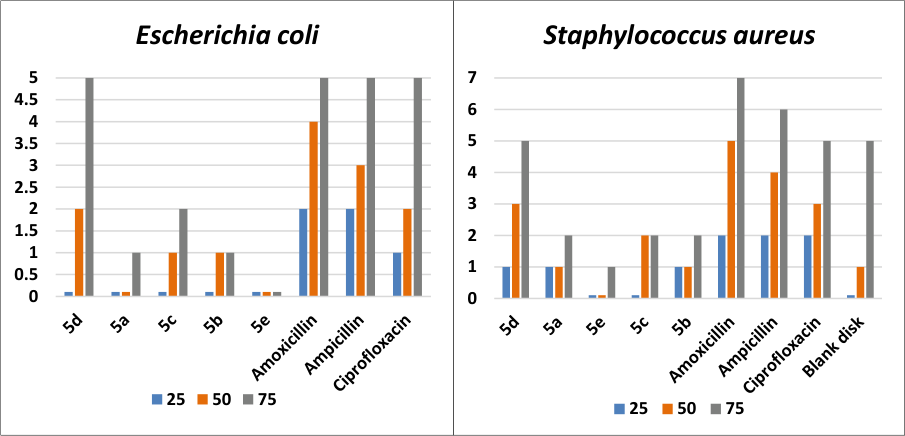 Figure 8
Introduction
Heterocyclic compounds differ significantly from homocyclic compounds due to their incorporation of various elemental constituents alongside carbon in cyclic structures. While homocyclic rings consist of a single element, heterocycles feature carbon atoms along with other components such as oxygen, nitrogen, and sulfur [1,2] . Hydrazones represent a category of azomethines characterized by a -C=N-NH2 bond [3] . Within hydrazones, the azomethine moiety has garnered significant attention due to the dual electrophilic and nucleophilic properties of carbon, juxtaposed with both nitrogen atoms possessing nucleophilic attributes. A typical formula of hydrazone class of organic compounds is R₁R₂C-NNH₂ Where R1 and R2 similar or different aryl, alkyl groups as show in Figure 1.
Fig 1: Structural formula of hydrazone
The term hydrazone was coined by Fischer in 1888 [4] . Due to the simplicity of these venerable ligation reactions, hydrazones has also had a pervasive influence on numerous other research fields ever since. The total of hydrazone derivatives displays keto-enol tautomerism facilitated by intermolecular proton transference, where the configuration of cis-trans depends on various factors including the azomethine linkage, solvent conditions, pH level, and concentration. These derivatives are acknowledged as entities capable of functioning as both proton donors and acceptors, exhibiting both intermolecular and intramolecular interactions through hydrogen bonding. The distinct characteristics observed in hydrazone derivatives highlight their significant importance in the field of organic compounds [5] . Quinazoline comprises a fused benzene ring and a pyrimidine ring (Figure 2), with a chemical formula of C8H6N2. This compound, formerly identified as benzo-1,3-diazine, is a fused bicyclic compound. The initial synthesis of quinazoline took place in 1903 by Gabriel, following its first isolation from the Chinese plant aseru. The first documented instance of a compound containing the quinazoline nucleus was reported by Peter Gries in 1869. 3, the 4(3H)-quinazolinones stand out as the most commonly found. They exist either as intermediates or as natural products in numerous suggested biosynthetic pathways [6] . This prevalence can be attributed in part to their structural origin from the anthranilates, such as anthranilic acid, various esters, isatoic anhydride, anthranilamide, and anthranilonitrile [7,8] . Literature reviews indicate that the synthesis of quinazolinones can be accomplished using anthranilic acid [9][10][11][12] , 2-aminobenzamide [13] , and 2-aminobenzonitrile, along with their derivatives [6] . Natural products based on quinazolinones that require more structurally complex precursors have been synthesized indirectly through methods such as thioamide formation, oxidation of dehydroquinazolinone, and aza-Wittig condensation [14,15] . Quinazolin-4(3H)-one derivatives are heterocyclic compounds featuring multiple nitrogen atoms and are recognized as promising biologically active substances [16] . The biological properties of 4(3H)-quinazolinones vary depending on the nature of the substituents within the ring system, with reported activities including antifungal, antibacterial, antitubercular, antiviral, anticancer, and anticonvulsant effects [17,24] .
Materials and Methods
Materials and Methods
Materials
All reagents used in this study (Benzaldehyde, 4-Chlorobenzaldehyde, 4-nitrobenzaldehyde, 4-Bromobenzaldehyde, 4-methoxybenzaldehyde, 2-amino benzoic acid, 1, 4-dioxane, methanol, and acetone) were sourced from Aldrich, Fluka, and BDH they used without further purification.
Instrumentation
The instrumentations used in this study were Fourier Transform Infrared (FT-IR) Shimadzu FTIR-8400 spectrometer, and NMR analysis was conducted on a Bruker spectroscopic ultra-shield magnets 400 MHz. Melting points of the compounds were recorded on electrothermal melting point apparatus Procedure Synthesis of aromatic amino acid (N-phthaloyl amino acid) (1a): Combine 15 g of phthalic anhydride with 7.5 g of amino acid in 75 mL of acetic acid. Heat the mixture gradually over a period of 4 hours. After the heating process is complete, cool the mixture, which will result in the precipitation of N-phthaloyl amino acid.
Synthesis of ester (2a)
Dissolve 10 g of aromatic amine in 100 mL of absolute ethanol. Next, in an ice bath, add 0.1 mol of thionyl chloride (SOCl2) to the solution. Maintain the reaction for 30 minutes while keeping the mixture chilled.
Synthesis of hydrazide (3a)
Combine 0.01 mol of carboxylic acid esters with 3.5 mL of an 80% aqueous solution of hydrazine. Then, add 50 mL of absolute ethanol to the mixture and reflux the solution for 4 hours. After refluxing, allow the mixture to cool, then perform filtration and wash the resulting precipitate with cold distilled water. Finally, measure the melting point of the obtained product.
General synthesis method hydrazone analogues 4(a-e)
All novel hydrazone analogues 4(a-e) were obtained from the reaction of 1,5-hydrazide (3a) and aldehydes according to the general synthesis method for hydrazone analogues. Dissolve 0.01 mol of the prepared hydrazide in 100 mL of absolute ethanol. Next, add 0.05 mol of the suitable aldehydes and a small amount of glacial acetic acid. Allow the resulting mixture to react for 6 hours, then cool to room temperature. After filtration, the solvent evaporated, and the resulting residues 4(a-e) were recrystallised using absolute ethanol. Table 1 shows the physical properties of synthesized hydrazones 4(a-d). General synthesis quinazoline-4-one derivatives 5(a-e) All novel quinazoline-4-one derivatives were synthesized from the reaction of 2-amino benzoic acid (Anthranilic acid) and hydrazones, following the standard procedure for quinazoline -4-one synthesis. In a heat-resistant glass flask, 0.01 mol of hydrazones was mixed with 0.01 mol (1.37 g) of 2-amino benzoic acid. The mixture was heated on a hotplate for 10-15 min to initiate fusion. After cooling to room temperature, the resulting residue was collected and recrystallized from a mixture of 1,4-dioxane and ethanol.
| Compound | X | Molecular formula | Melting point (°C) | Color | Yield % |
|---|---|---|---|---|---|
| 4a | H | C17H13O3N3 | 251-253 | Yellow | 69 |
| 4b | 4-Br | C17H12O3N5Br | 222-224 | Red | 73 |
| 4c | 4-Cl | C17H12O3N3Cl | 229-231 | Light yellow | 72 |
| 4d | 4-NO2 | C17H12O5N4 | 234-236 | brown | 70 |
| 4e | 4-OCH3 | C18H15O4N3 | 200-202 | Yellow | 65 |
Table text extracted from the original PDF; superscript letters are shown inline. The original table image is below.
View original table image
Table 2 shows the physical properties of synthesized quinazoline-4-one derivatives 5(a-e).
| Compound | X | Molecular formula | Melting point (°C) | Color | Yield% |
|---|---|---|---|---|---|
| 5a | H | C24H17O4N3 | 240-241 | White | 70 |
| 5b | 4-Br | C24H16O4N3Br | 230-232 | Yellow | 69 |
| 5c | 4-Cl | C24H16O4N3Cl | 240-241 | Reddish brown | 68 |
| 5d | 4-NO2 | C24H16O6N4 | 172-174 | Brown | 65 |
| 5e | 4-OCH3 | C25H19O5N3 | 208-210 | Yellow | 62 |
Table text extracted from the original PDF; superscript letters are shown inline. The original table image is below.
View original table image
Biological activity study
The biological activity of the synthesized quinazoline-4-one derivatives was assessed against two pathogenic bacterial strains: Staphylococcus aureus and Escherichia coli. The study involved determining the Minimum Inhibitory Concentration (MIC) of the compounds 5(a-e). Solutions of the compounds were prepared at concentrations of 25, 50, and 75 mg/mL using dimethyl sulfoxide (DMSO) as a solvent. The results were assessed after 24 hours, evaluating the sensitivity of the bacterial strains to the derivatives based on the diameter of the inhibition zones formed around the wells in the agar plates. A larger inhibition zone diameter indicated higher biological activity of the compounds. The inhibition zones of the synthesized compounds were compared to those of standard antibiotics for reference.
Results and Discussion
The synthesis of novel compounds commenced with the preparation of an aromatic amino acid through the reaction of phthalic anhydride with the corresponding amino acid. This was followed by the formation of an aromatic ester via the reaction of the aromatic amino acid with ethanol in the presence of thionyl chloride. Subsequently, the aromatic hydrazide was synthesized from the ester using 80% aqueous hydrazine in an ethanol medium. The hydrazide was then reacted with a variety of aromatic aldehydes, with the addition of a small quantity of glacial acetic acid, to yield hydrazone derivatives. Finally, quinazoline-4-one derivatives were successfully synthesized through the reaction of the hydrazones with anthranilic acid. This sequence of reactions not only illustrates the efficacy of the synthetic approach but also sets the stage for discussing the resulting compounds and their potential applications. All synthesized thioanthraquinone analogues are presented in Scheme 1.
Scheme 1: Synthesis pathway for hydrazone 4(a-e) and quinazoline-4-one 5(a-e) derivatives.
Characterization of hydrazone derivatives 4(a-e)
The analysis demonstrated distinct physical characteristics in the synthesized compounds compared to the starting materials, as revealed by infrared spectroscopy. The spectra indicated various functional group vibrations, including those related to carbonyl amide, C=N stretching, and aromatic C=C vibrations. Additional peaks were observed for N-H and C-H stretching, as detailed in Table 3 and illustrated in Figure 4 and5. The 1 H-NMR spectrum of compounds was obtained using dimethyl sulfoxide as the solvent with deuterium lock. The 1 H-NMR spectral data of Hydrazone are shown in Table 4. The 13 C-NMR spectrum of compounds was obtained using DMSO with deuterium lock. The 1 H-NMR spectral data of Hydrazone are shown in Table 5.
| Compound | 13C-NMR Spectral data (δ ppm) |
|---|---|
| 4a | 165.10, 178.55, (124.29, 125.59, 127.61, 128.62, 129.36, 131.81 and 133.04 Carom), 69.29, 53.49. |
| 4b | 168.12, 182.33, (127.53, 128.55, 128.84, 129.12, 129.82, 132.01 and 133.17 Carom), 71.15, 55.33. |
| 4c | 169.43, 180.21, (126.35, 126.49, 127.24, 128. 21, 128.28, 131.11 and 132.57 Carom), 70.55, 52.11. |
| 4d | (173.03, 184.23, (125. 25, 125.59, 127.33, 127. 66, 129. 21, 133.16 and 133.67 Carom), 74.52, 57.16, 29.88. |
| 4e | (180. 180.16, 161.10, (121.70, 123.71, 125.65, 126.12, 127.52, and 129.16 Carom) 76.54, 55.85, 26.05. |
Table text extracted from the original PDF; superscript letters are shown inline. The original table image is below.
View original table image
| Com. No. | FT-IR, (KBr), cm-1 Fixed bands in structure | — | — | — | — | — | — | Altered structural bands |
|---|---|---|---|---|---|---|---|---|
| νN–H | ν(=CH) arom. | ν(C-H) aliph | νC=O | νC=N | νC=CAr | νC-N | ||
| 4a | 3348 | 3082 | 2949 | 1746 | 1605 | 1561 | 1211 | |
| 4b | 3220 | 3045 | 2978 | 1665 | 1610 | 1580 | 1248 | ν (C-Br),625 |
| 4c | 3224 | 3086 | 2988 | 1667 | 1597 | 1558 | 1258 | ν (C-Cl), 820 |
| 4d | 3341 | 3079 | 2888 | 1677 | 1595 | 1537 | 1279 | ν (NO2) 1350 |
| 4e | 3286 | 3093 | 2963 | 1740 | 1610 | 1495 | 1218 |
Table text extracted from the original PDF; superscript letters are shown inline. The original table image is below.
View original table image
Characterization of quinazoline-4-one derivatives 5(a-e)
The analysis demonstrated distinct physical characteristics in the synthesized compounds compared to the starting materials, as revealed by infrared spectroscopy. The spectra indicated various functional group vibrations, including those related to carbonyl amide, C-N stretching, and aromatic C=C vibrations. Additional peaks were observed for N-H and C-H stretching, as detailed in Table 6 and illustrated in Figure 6 and7. The 1 H-NMR spectral data of Quinazoline -4-one derivatives are shown in Table 7. The 13 C-NMR spectrum spectrum of compounds was obtained using dimethyl sulfoxide as the solvent with deuterium lock. The 1 H-NMR spectral data of Quinazoline -4-one derivatives are shown in Table 8.
| Compound | 13C-NMR Spectral data (δ ppm) |
|---|---|
| 5a | 161.10, 170.06, 184.20, (119.01, 122.40, 125.60, 127.61, 129.55, 130.49, 131.62, 133.06 and 134.20 Carom), 68.02, 31.28. |
| 5b | 162.08, 171.33, 183.43, (122.11, 126.10, 127.51, 128.05, 132.66, 134.12, 135.02 and 135.70 Carom), 73.27, 56.77. |
| 5c | 162.59, 170.43, 178.81, (123.16, 125.14, 126.31, 127.25, 133.56, 133.82, 136.05 and 135.66 Carom), 71.75, 57.37. |
| 5d | 159.07, 169.13, 179.21, (124.12, 125.24, 126.01, 127.35, 131.16, 132.42, 135.24 and 136.11 Carom), 73.23, 56.07. |
| 5e | (155.08, 161.10, 170.06, (125.60, 127.61, 129.55, 130.49, 131.62, 133.06, and 134.20 Carom), 70.02, 59.42, 29.88. |
Table text extracted from the original PDF; superscript letters are shown inline. The original table image is below.
View original table image
| Com. No. | FT-IR, (KBr), cm-1 | — | — | — | — | — | Altered structural bands |
|---|---|---|---|---|---|---|---|
| νN–H | ν(=CH) Ar | ν(C-H) Aliph | νC=O | νC=CAr | νC-N | ||
| 5a | 3384 | 3054 | 2903 | 1666 | 1563 | 1247 | |
| 5b | 3351 | 3094 | 2911 | 1653 | 1603 | 1228 | ν (C-Br),673 |
| 5c | 3331 | 3002 | 2908 | 1653 | 1599 | 1291 | ν(C-Cl),837 |
| 5d | 3223 | 3012 | 2914 | 1649 | 1597 | 1182 | ν (NO2)1366,1566 |
| 5e | 3173 | 3017 | 2897 | 1660 | 1563 | 1224 | ν(C-O),1494 |
Table text extracted from the original PDF; superscript letters are shown inline. The original table image is below.
View original table image
Assessment of the biological activity of the synthesized quinazoline-4-one deriviteves 5(a-e)
The synthesized quinazoline-4-one deriviteves demonstrated significant inhibitory efficacy against Staphylococcus aureus and notable inhibitory activity against Escherichia coli. As presented in Table 9 and Figure 8, the relationship between concentration and inhibition was dose-dependent, with higher inhibition percentages observed at a concentration of 75 mg/mL.
| Comp. No. | Escherichia coil | — | — | Staphylococcus aureus | — | — |
|---|---|---|---|---|---|---|
| Conc. mg/ml | 25 | 50 | 75 | 25 | 50 | 75 |
| 4c | 0 | 2 | 5 | 1 | 3 | 5 |
| 4d | 0 | 0 | 1 | 1 | 1 | 2 |
| 5b | 0 | 1 | 2 | 0 | 0 | 1 |
| 5c | 0 | 1 | 1 | 0 | 2 | 2 |
| 5d | 0 | 0 | 0 | 1 | 1 | 2 |
| Amoxicillin | 2 | 4 | 5 | 2 | 5 | 7 |
| Ampicillin | 2 | 3 | 5 | 2 | 4 | 6 |
| Ciprofloxacin | 1 | 2 | 5 | 2 | 3 | 5 |
| Blank disk | 0 | 0 | 0 | 0 | 0 | 0 |
Table text extracted from the original PDF; superscript letters are shown inline. The original table image is below.
View original table image
Figures and tables from the paper
References
19 in the original paper- Kölmel DK, Kool ET. Oximes and hydrazones in bioconjugation: mechanism and catalysis. Chemical reviews. 2017 Aug 9;117(15):10358-10376.
- Jabeen M. A comprehensive review on analytical applications of hydrazone derivatives. Journal of the Turkish Chemical Society Section A: Chemistry. 2022;9(3):663-698.
- Wiklund P, Bergman J. The chemistry of anthranilic acid. Current Organic Synthesis. 2006 Aug 1;3(3):379402.
- Kumar P, Tomar V, Joshi RK, Nemiwal M. Nanocatalyzed synthetic approach for quinazoline and quinazolinone derivatives: A review (2015-present). Synthetic Communications. 2022 Mar 19;52(6):795826.
- Ragipindi AR, Vanka KR, Bhavani R, Bhavani B. Synthesis and antibacterial activity of some novel hydrazone derivatives of anthranilic acid. World J Pharm Res. 2015 Aug 20;4(11):1219-1229.
- Tokalı FS, Taslimi P, Taskin-Tok T, Karakuş A, Sadeghian N, Gulçin İ. Novel hydrazones derived from anthranilic acid as potent cholinesterases and α-glycosidase inhibitors: Synthesis, characterization, and biological effects. Journal of Biochemical and Molecular Toxicology. 2024 Jan;38(1):e23521.
- Amrutkar RD, Amrutkar SV, Ranawat MS. Quinazolin4-one: A varsatile molecule. Current Bioactive Compounds. 2020 Jun 1;16(4):370-382.
- Jangam SS, Wankhede SB, Chitlange SS. Molecular docking, synthesis and anticonvulsant activity of some novel 3-(2-substituted)-4-oxothiazolidine-3-yl)-2phenylquinazoline-4 (3 H)-ones. Research on Chemical Intermediates. 2019 Feb 15;45(2):471-486.
- Bhat M, Belagali SL, Mamatha SV, Sagar BK, Sekhar EV. Importance of quinazoline and quinazolinone derivatives in medicinal chemistry. Studies in Natural Products Chemistry. 2021 Jan 1;71:185-219.
- Pedrood K, Montazer MN, Larijani B, Mahdavi M. Recent Advances in the Synthesis of Heterocycles by the Aza-Wittig Reaction. Synthesis. 2021 Jul;53(14):2342-2366.
- Mermer A, Keles T, Sirin Y. Recent studies of nitrogen containing heterocyclic compounds as novel antiviral agents: A review. Bioorganic Chemistry. 2021 Sep 1;114:105076.
- El-Badry YA, El-Hashash MA, Al-Ali K. Synthesis of bioactive quinazolin-4 (3H)-one derivatives via microwave activation tailored by phase-transfer catalysis. Acta Pharmaceutica. 2020 Jun 30;70(2):161178.
- Abdelmonsef AH, Mosallam AM. Synthesis, in vitro biological evaluation and in silico docking studies of new quinazolin-2, 4-dione analogues as possible anticarcinoma agents. Journal of Heterocyclic Chemistry. 2020 Apr;57(4):1637-1654.
- Asif M. Chemical characteristics, synthetic methods, and biological potential of quinazoline and quinazolinone derivatives. International journal of medicinal chemistry. 2014;2014(1):395637.
- Marzouk MI, Shaker SA, Farghaly TA, El-Hashash MA, Hussein SM. Synthesis of some novel quinazolinone derivatives with anticipated biological activity. Journal of Heterocyclic Chemistry. 2017 Nov;54(6):3331-3341.
- Dehbi O, Riadi Y, Geesi MH, Anouar EH, Ibnouf EO, Azzallou R. Synthesis, Characterization, Antibacterial Evaluation, and Molecular Docking of New Quinazolinone-Based Derivatives. Polycyclic Aromatic Compounds. 2023 Feb 7;43(2):1879-1887.
- Mikra C, Bairaktari M, Petridi MT, Detsi A, Fylaktakidou KC. Green Process for the Synthesis of 3Amino-2-methyl-quinazolin-4 (3 H)-one Synthones and Amides Thereof: DNA Photo-Disruptive and Molecular Docking Studies. Processes. 2022 Feb 17;10(2):384.
- Gatadi S, Lakshmi TV, Nanduri S. 4 (3H)- Quinazolinone derivatives: Promising antibacterial drug leads. European journal of medicinal chemistry. 2019 May 15;170:157-172.
- Tokalı FS, Taslimi P, Tuzun B, Karakuş A, Sadeghian N, Gulçin İ. Novel Quinazolinone Derivatives: Potential Synthetic Analogs for the Treatment of Glaucoma, Alzheimer's Disease and Diabetes Mellitus. Chemistry & biodiversity. 2023 Oct;20(10):e202301134.
Cited by 1
From OpenAlex, OpenCitations and reference lists read by Scinovex
- Spectrophotometric Stability Studies and Antimicrobial Assessment of Cu (II), Co (II), and V(IV) Complexes Derived from 2-[(E)-{2-[Hydroxy(phenyl)methyl] hydrazinylidene} methyl] phenol ↗
Kizito O Eberendu · Research Journal of Science and Technology · 2026
The present study investigates the stability behavior and antimicrobial activity of Cu (II), Co (II), and V(IV) complexes of the hydrazone ligand 2-[(E)-{2-[hydroxy(phenyl)methyl] hydrazinylidene} methyl] phenol (HMP). The ligand, previously synthesized via condensation of 2-hydroxy-6-methylbenzaldehyde with hydrazinephenylmethanol, acts as a bidentate donor through azomethine nitrogen and phenolic oxygen atoms. Metal complexes were prepared in a 2:1 (M: L) ratio and…
❝ 0