
Research article · 2024 · Full text
International Journal of Veterinary Sciences and Animal HusbandryStudies on the incidence of babesiosis in dogs in the YSR District of Andhra Pradesh
Volume 9(6S) · Pages 137–142 · DOI: 10.22271/veterinary.2024.v9.i6sc.1885 ↗
Research areasRabies epidemiology and controlVector-borne infectious diseasesYersinia bacterium, plague, ectoparasites research
Abstract
Author-writtenThe present study was aimed to report the prevalence of dogs with babesiosis in Y.S.R district of Andhra Pradesh. Overall prevalence of canine babesiosis was per cent 21.93% (136/620) based on peripheral blood smear examination. Among 136 positive cases canine babesiosis was found to be higher in dogs be 1-4 years of age and followed by 4-7years age group. Breed wise prevalence of canine babesiosis was highest in Labrador retriever (37.50%). The occurrence was higher in males (65.44%) compared to females (34.56%) in canine babesiosis. The occurrence of canine babesiosis most commonly observed in monsoon season (37.50%), less commonly observed in post-monsoon season (13.24%). More incidence was noticed in male dogs because male dog population was more than female dogs. The higher incidence observed in Labrador Retrievers may be due to the greater concentration of the breed in the locality. Monsoon season noticed higher incidence due to vector population is more and presence of ticks over the body consider as the chances for infection is more likely to occur.
Summary
Source-checkedPlain-language reading of the full paper, prepared with AI and checked against the text. Each point links to the authors' own words.
Why it matters
- Canine babesiosis is a globally significant disease transmitted by ticks. View evidence ↗
- The disease is serious because it can lead to multi-organ dysfunction in dogs during acute or chronic stages. View evidence ↗
- Tracking the incidence of babesiosis helps researchers understand how the disease behaves locally and how it varies by season. View evidence ↗
The question
- The study aimed to determine the prevalence of canine babesiosis in the YSR district of Andhra Pradesh. View evidence ↗
What they did
- Between October 2023 and September 2024, 620 dogs were screened at various veterinary facilities in the YSR district of Andhra Pradesh. View evidence ↗
- Diagnosis was performed using thin blood smears fixed in methanol and stained with Giemsa solution for 30 minutes. View evidence ↗
- Researchers used oil immersion microscopy to identify Babesia organisms within the red blood cells. View evidence ↗
What they found
- The overall prevalence of canine babesiosis was 21.93%, with 136 out of 620 screened dogs testing positive. View evidence ↗
- The highest incidence occurred in dogs aged 1-4 years (35.30%), while the lowest was in dogs above 13 years (6.62%). View evidence ↗
- Male dogs were more frequently affected (65.44%, 89/136) than female dogs (34.56%, 47/136). View evidence ↗
- Labrador retrievers had the highest breed-wise incidence at 37.50%, while pugs had the lowest at 2.20%. View evidence ↗
- The highest incidence was during the monsoon (June-September) with 51 cases (37.50%), and the lowest was in the post-monsoon season (October-December) with 18 cases (13.24%). View evidence ↗
- Most dogs with babesiosis had visible tick infestations (83.08%), while 16.92% did not. View evidence ↗
What it means
- The authors conclude that there is a high incidence of babesiosis (21.93%) in the region, driven by a favorable climate for tick populations. View evidence ↗
Visual summary
3 visualsIllustrations explain the paper; charts are replotted from the paper's own table values.
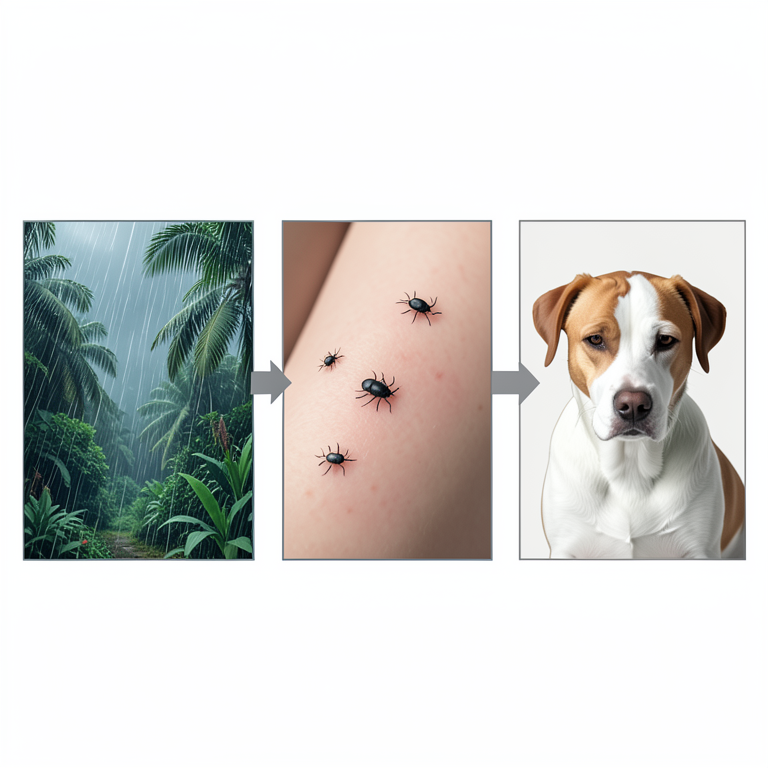
Environmental Drivers of Babesiosis
AI-generated conceptual illustration (domestic dogs and Ixodid ticks in a monsoon environment). It explains the idea and does not show study data.
View source evidence ↗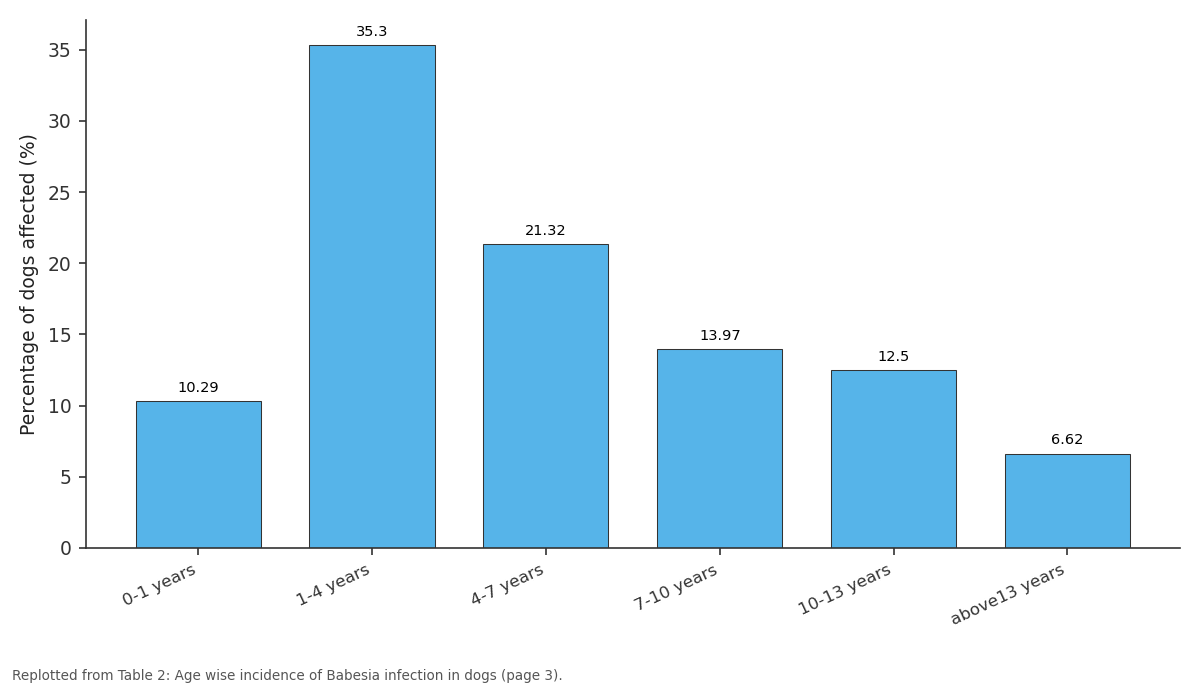
Percentage of dogs affected (%): 0-1 years vs 1-4 years vs 4-7 years vs 7-10 years vs 10-13 years
Replotted from Table 2 (page 3) of the original paper. Every bar is the paper's own table value.
View source evidence ↗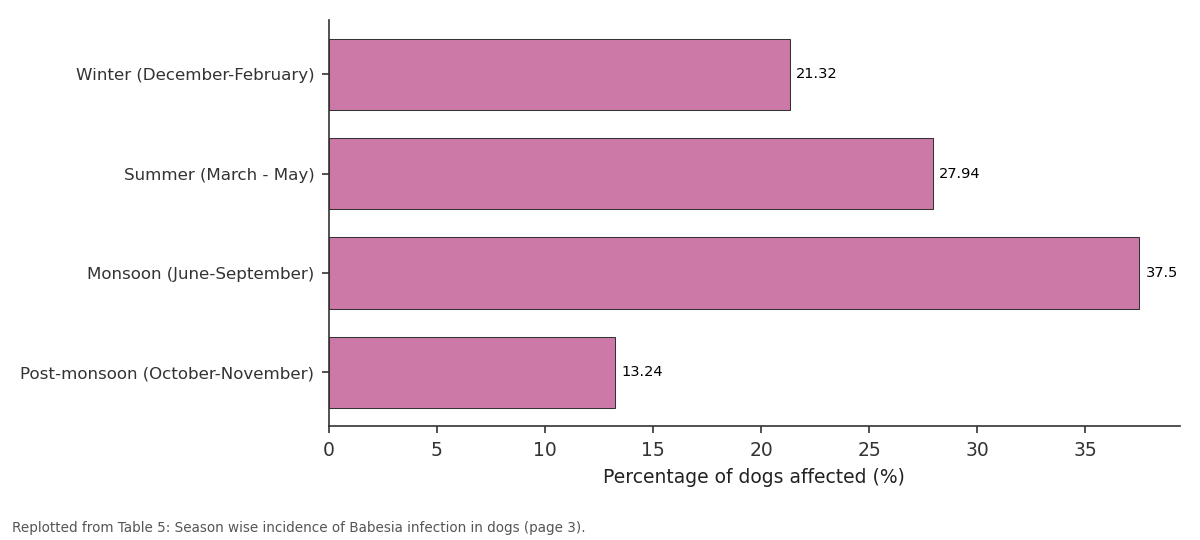
Percentage of dogs affected (%): Winter... vs Summer (March - May) vs Monsoon (June-September) vs Post-monsoon...
Replotted from Table 5 (page 3) of the original paper. Every bar is the paper's own table value.
View source evidence ↗Figures & tables
From the original paper Table 1
 Table 2
 Table 3
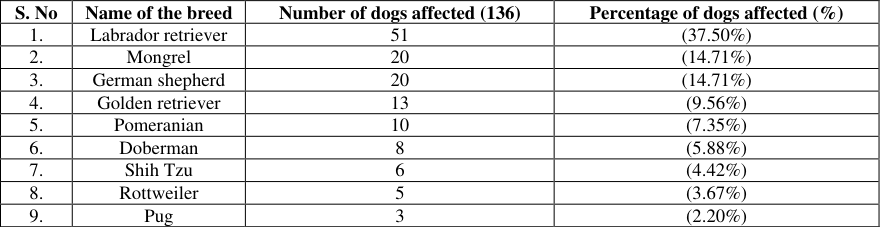 Table 4
 Table 5
 Table 6
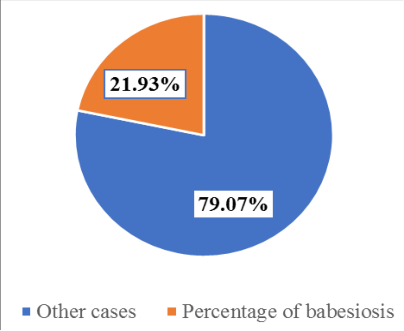 Figure 1
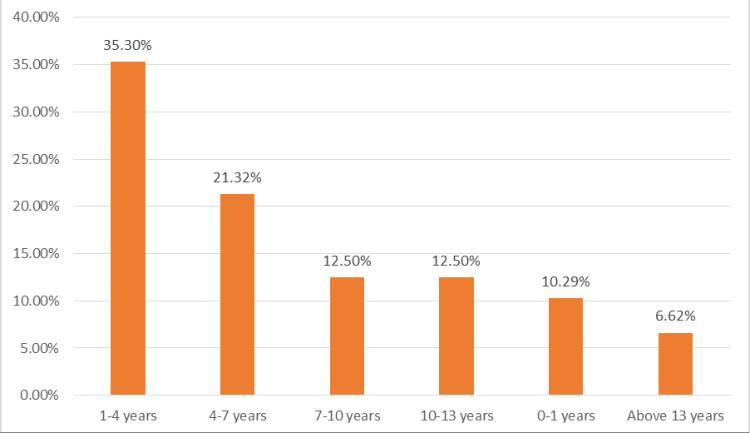 Figure 2
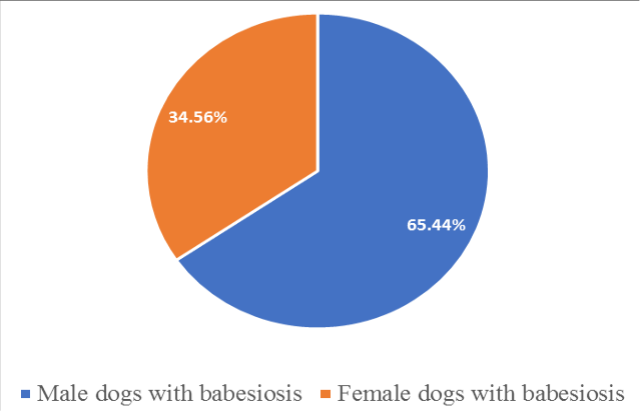 Figure 3
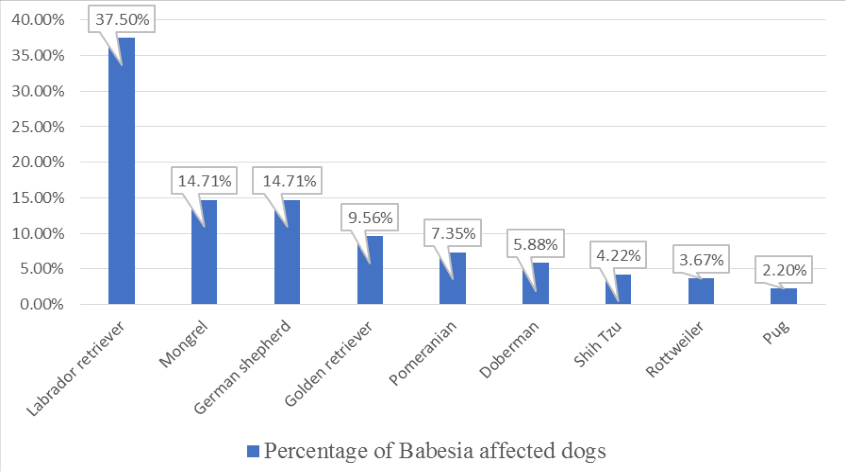 Figure 4
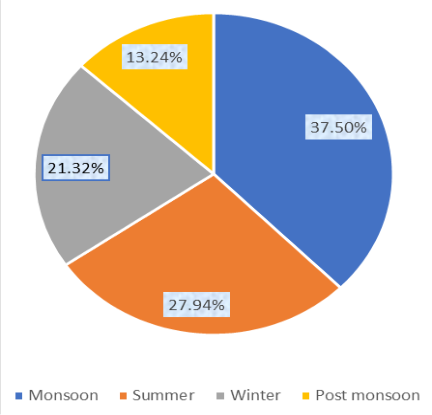 Figure 5
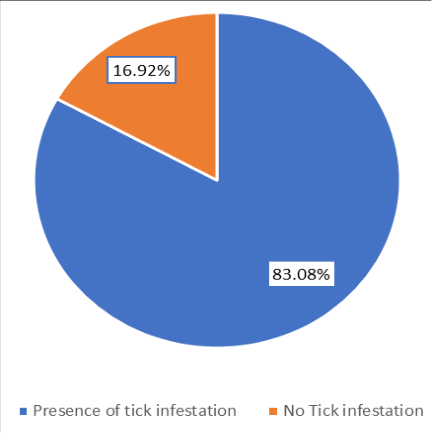 Figure 6
Introduction
Canine babesiosis is a tick-borne disease with worldwide distribution and global significance. Traditionally, babesiosis was diagnosed based on cytological examination of stained blood smears. Babesiosis is a group of tick-borne diseases of both medical and veterinary concerns caused by protozoan parasites of the genus Babesia (Dantas Torres et al., 2017) [5] . The clinical manifestations of canine babesiosis vary with different Babesia species involved and their specific virulence, and also with factors that determine the host's response to infection such as age, individual immune status, and coinfections with other pathogens (Baneth, 2018) [2] . Babesiosis can cause the development of multi organ disfunction in dogs especially in per acute and chronic disease condition. Recording the incidence of the disease provide the information about the localized disease and variations in the season (Reddy et al., 2016) [18] , hence present study carried to report the microscopic incidence of canine babesiosis in YSR district of Andhra Pradesh.
Materials and Methods
During the study period that was carried out at Department of Veterinary Medicine, College of Veterinary Science, Proddatur, veterinary dispensaries and clinics in YSR district of Andhra Pradesh from October 2023 to September 2024. A total of 620 dogs were screened for canine babesiosis. The age, gender, breed, tick infestation and season wise incidence was recorded during present study. Primary screening of dogs was done based on history of dogs with fever, anaemia, lymphadenopathy and tick infestation. Blood smear examination was done making a thin blood smears fixed in methanol and stained with Giemsa solution for 30 minutes (Reddy et al., 2022, Sivajothi et al., 2017) [19,23] . Oil immersion microscopy for the identification of Babesia organisms in the erythrocytes was carried out (Sivajothi et al., 2023) [24] .
Results and Discussion
Out of 620 dogs screened, 136 dogs were identified to have canine babesiosis by peripheral blood smear examination. In the present study, dogs were confirmed with babesiosis based on the microscopic examination of the stained peripheral blood smears. The results representing the overall incidence of 21.93 per cent (Table 1 and Figure 1). The age wise incidence of canine babesiosis was found to be higher occurrence in dogs 1-4 years of age (35.30%) followed by 4-7 years (21.32%), 7-10 years (13.97%), 10-13(12.50%), 0-1 years (10.29%) and above 13 years (6.62%) of age (Table 2 and Figure 2). Out of 136 affected dogs, canine babesiosis was more in males 65.44% (89/136) than in female dogs 34.56% (47/136) (Table 3 and figure 3). The breed wise incidence of canine babesiosis was recorded higher occurrence in Labrador retriever (37.50%) followed by mongrel (14.71%), German shepherd (14.71%), Golden retriever (9.56%), Pomeranian (7.35%), Doberman (5.88%), Shih Tzu (4.42%), Rottweiler (3.67%) and pug (2.20%) (Table 4 and Figure 4). In the present study, highest incidence of babesiosis was noticed in monsoon period (37.50%) and lowest in post monsoon period (13.24%) (Table 5 and Figure 5). In the present study, tick infestation seen in most of the dogs with babesiosis about (83.08%) and without tick infestation we were observed babesiosis in (16.92%) (Table 6 and Figure 6). In India, a variable prevalence of canine babesiosis has been reported. 56% in stray dogs of southern Kerala with Babesia gibsoni (Kumar et al., 2021) [10] , 21.7% in Assam (Chaudhuri and Varshney, 2007) [3] . (Singh et al., 2012) [22] reported the prevalence B. gibsoni and B. canis infections (5.45% and 0.37% respectively) in Punjab and (Venugopal et al., 2024) [25] reported the prevalence of Babesia gibsoni and Babesia vogeli infections (58.33% and 41.67% respectively) in Wayanad district, Kerala. Hot and humid conditions favour the proliferation of tick population, tick borne diseases like ehrlichiosis and babesiosis are of significant concern in tropical countries like India, as they are transmitted mainly by the brown dog tick, Rhipicephalus sanguineus (Shaw et al., 2001) [20] . Rhipicephalus is the most common tick present in urban India (Abd Rani et al., 2011) [1] . The incidence of canine babesiosis was 21.93 per cent in the present study which might be due to hot and humid climate favouring the development, survival of tick population and increased urbanisation. In the present study, incidence of canine babesiosis is mostly seen in 1-4 years age group as compared with other age groups. It might be probably due to a reflection of lowered maternal immunity/resistance associated with older dogs as well as frequent exposures to tick bites (Egege et al., 2008) [6] . Our findings agree with the previous studies of (Hornok et al., 2006) [7] who reported that the canine babesiosis increase with age, reaching its peak between the age of 3 and 5 years and then decline. In certain circumstances incidence of babesiosis in neonates of chronically infected mothers because of degree of immunity to the homologous parasites than those born of normal mothers (Obeta et al., 2009) [14] . Presence of maternal immunity in younger dogs helps them to resist infections with blood parasites (Opara et al., 2017) [17] . However, there are contrary reports from other researchers (Okubanjo et al., 2013) [15] , that younger dogs were more susceptible to Babesia canis infection than the adult dogs, due to their underdeveloped immune system. In this present study, male dogs were 65.44% and female dogs were 34.56% was observed. The gender of the animal may have influence in the occurrence of vector borne parasitic diseases. The temperament and hormonal status of male dogs may be a contributory factor as it could limit the attention and care given them even by their owners. Previous reports have shown an increase risk of canine babesiosis for male dogs as compared to female suggesting that the increased susceptibility may be due to differences in environmental exposure, such as increased roaming behaviour, or by sexlinked genetic or hormonal influences on the disease (Mellanby et al., 2011) [13] . The present findings are in agreement with that of Daniel et al. (2016) [4] , who reported higher rate of Babesia infections among male than the female dogs. The reports showed that male dogs were more exposed to tick infestations due to higher tendency to roam about in search of mates and establish territories, than the female counterparts. The present study disagrees with some other studies of (Omudu et al., 2010; Okubanjo et al., 2013; Jegede et al., 2014 and Opara et al., 2017) [16,15,8,17] who reported that the prevalence of hemoprotozoa was higher in the female than male dogs, and reasoned that female dogs may lead to stress and subsequent reduction in their immunity and resistance to tick-borne diseases. The occurrence of canine Babesia infections was significantly higher in Labrador retriever breed as compared with other dog breeds. This pattern is likely because these breeds were predominantly concentrated in the specific regions studied. The findings align with previous research indicating that highrisk breeds, including Labrador Retrievers, Dobermans, Mongrels, and German Shepherds, are among the most affected. For instance, studies in India reported Labradors accounting for 27.69% of cases, followed by Dobermans (16.92%), Mongrels (15.38%), and German Shepherds (12.3%). Researchers attributed these trends to the high population density of these breeds in the studied areas (Latha et al., 2016 and Mahalingaiah et al., 2017) [11,12] . The occurrence of canine Babesia infections was significantly higher in rainy season than in the dry season. The probable reason may be a correlation with the seasonal activity of Rhipicephalus sanguineus (brown dog ticks) which is most abundant in wet and humid period of the year, thus resulting to higher transmission rate and thus higher prevalence of B. canis infections in the season. In this study we recorded highest in monsoon period between June to September recorded 51 cases (37.50%), summer period between April to June 38 cases (27.94%), winter season between December to April 29 cases (21.32%) and least cases recorded in post monsoon season between October to December 18 cases (13.24%).This result is in agreement with findings of Konto et al. (2014) [9] , who reported high tick infestations in dogs during the months of wet season than the dry season months. The reason could be due to availability of vegetation cover which provides favourable environment for ticks during rainy season, as ticks are noted to drop off the host to moult and quest on blades and attach on hosts that come in contact with them during grazing or movement (Shitta et al., 2011) [21] . It has also been reported that optimum temperature and high humidity may encourage high fecundity in ticks (Konto et al., 2014) [9] . Monsoon (June-September) 51 37.50 4.
| S. No | Tick infestation | Number of dogs affected (136) | Percentage of dogs affected (%) |
|---|---|---|---|
| 1. | Present | 113 | 83.08 |
| 2. | Absent | 23 | 16.92 |
Table text extracted from the original PDF; superscript letters are shown inline. The original table image is below.
View original table image
| S. No | Seasons | Number of dogs affected (136) | Percentage of dogs affected (%) |
|---|---|---|---|
| 1. | Winter (December-February) | 29 | 21.32 |
| 2. | Summer (March - May) | 38 | 27.94 |
| 3. | Monsoon (June-September) | 51 | 37.50 |
| 4. | Post-monsoon (October-November) | 18 | 13.24 |
Table text extracted from the original PDF; superscript letters are shown inline. The original table image is below.
View original table image
| S. No | Name of the breed | Number of dogs affected (136) | Percentage of dogs affected (%) |
|---|---|---|---|
| 1. | Labrador retriever | 51 | (37.50%) |
| 2. | Mongrel | 20 | (14.71%) |
| 3. | German shepherd | 20 | (14.71%) |
| 4. | Golden retriever | 13 | (9.56%) |
| 5. | Pomeranian | 10 | (7.35%) |
| 6. | Doberman | 8 | (5.88%) |
| 7. | Shih Tzu | 6 | (4.42%) |
| 8. | Rottweiler | 5 | (3.67%) |
| 9. | Pug | 3 | (2.20%) |
Table text extracted from the original PDF; superscript letters are shown inline. The original table image is below.
View original table image
| S. No | Gender | Number of dogs affected (136) | Percentage of dogs affected (%) |
|---|---|---|---|
| 1. | Male | 89 | 65.44 |
| 2. | Female | 47 | 34.56 |
Table text extracted from the original PDF; superscript letters are shown inline. The original table image is below.
View original table image
| S. No | Age group | Number of dogs affected (136) | Percentage of dogs affected (%) |
|---|---|---|---|
| 1. | 0-1 years | 14 | 10.29 |
| 2. | 1-4 years | 48 | 35.30 |
| 3. | 4-7 years | 29 | 21.32 |
| 4. | 7-10 years | 19 | 13.97 |
| 5. | 10-13 years | 17 | 12.50 |
| 6. | above13 years | 9 | 6.62 |
Table text extracted from the original PDF; superscript letters are shown inline. The original table image is below.
View original table image
| S. No | — | Number of Dogs | Percentage (%) |
|---|---|---|---|
| 1. | Total dogs screened | 620 | |
| 2. | Dogs with Babesia infection | 136 | 21.93 |
Table text extracted from the original PDF; superscript letters are shown inline. The original table image is below.
View original table image
Post-monsoon (October-November) 18 13.24
Conclusion
In the present study, dogs with clinical signs suspected for haemoprotozoan diseases were screened and 21.93% were positive for babesiosis which indicative of presence of high rate of incidence. It is depended on the vector population and favourable compatible climate of population of vectors in the study region.
References
23 in the original paper- Rani APAM, Irwin PJ, Coleman GT, Gatne M, Traub RJ. A survey of canine tick-borne diseases in India. Parasit Vectors. 2011;4:1-8.
- Chaudhuri S, Varshney JP. Clinical management of babesiosis in dogs with homeopathic Crotalus horridus 200C. Homeopathy. 2007;96:90-94.
- Daniel LN, Kujul NB, Kemza SY, Ibukunoluwa MR. Retrospective study of the risk factors associated with canine babesiosis diagnosed at veterinary clinic federal college of animal health and production technology, Vom, north central Nigeria, 1999-2006. Int J Sci Appl Res. 2016;1:86-93.
- Egege SC, Okolocha EC, Nwanta JA, Mosimabale EO. Prevalence and seasonality of babesiosis in dogs treated at University Veterinary Clinic in Kaduna Nigeria from 1990-1999. Niger Vet J. 2008;29(3):21-26.
- Hornok S, Edelhofer R, Farkas R. Seroprevalence of canine babesiosis in Hungary suggesting breed predisposition. Parasitol Res. 2006;99(6):638-642.
- Jegede OC, Obeta SS, Faisal B. Infection of dogs with Babesia canis in Gwagwalada area of Federal Capital Territory, Abuja. Niger Sokoto J Vet Sci. 2014;12:37-41.
- Konto M, Biu AA, Ahmed MI, Charles S. Prevalence and seasonal abundance of ticks on dogs and the role of Rhipicephalus sanguineus in transmitting Babesia species in Maidugiri, North-Eastern Nigeria. Vet World. 2014;7(3):119-124.
- Kumar GS, Varghese A, Hembram PK. Molecular detection of Babesia gibsoni in stray dogs of Southern Kerala. 2021;10(12):1167-1170.
- Latha BR, Raja K, Sankar P. Prevalence of canine babesiosis in Chennai. Indian Vet J. 2016;93(5):40-42.
- Mahalingaiah MKC, Asoor M, Thimmaiah RP, Narayanaswamy HD, Mukartal SY, Elattuvalappil AM, et al. Prevalence of canine babesiosis in different breeds of dogs in and around Bengaluru. Adv Anim Vet Sci. 2017;5:140-144.
- Mellanby RJ, Handel IG, Clements DN, De C, Bronsvoort BM, Lengeling A, et al. Breed and sex factors for canine babesiosis in South Africa. J Vet Intern Med. 2011;25:1186-1189.
- Obeta SS, Idris HS, Azare BA, Simon MK, Jegede CO. Prevalence of haemoparasites of dogs in Federal Capital Territory, Abuja-Nigeria. Niger Vet J. 2009;385(3):7376.
- Okubanjo OO, Adeshina OA, Jatau ID, Natala AJ. Prevalence of Babesia canis and Hepatozoon canis in Zaria. Niger Sokoto J Vet Sci. 2013;11(2):15-20.
- Omudu EA, Atu BO, Ayashar JG. Epidemiological survey of canine babesiosis in Makurdi, Nigeria. Anim Res Int. 2010;4(3):745-749.
- Opara M, Adewumi N, Mohammed BR, Obeta SS, Simon MK, Jegede OC, et al. Investigations on the Haemoprotozoan parasites of Nigerian Local Breed of Dogs in Gwagwalada Federal Capital Territory (FCT), Nigeria. J Parasitol Res. 2017;10:1-7.
- Reddy BS, Sivajothi S, Reddy LSS, Raju KGS. Clinical and laboratory findings of Babesia infection in dogs. J Parasit. 2016;92:268-272.
- Reddy BS, Sivajothi S, Swetha K. Electrocardiographic findings and alterations of cardiac troponin in dogs with Babesia gibsoni. J Pharm Innov. 2022;11(11):2376-2378.
- Shaw SE, Day MJ, Birtles RJ, Breitschwerdt EB. Tickborne infectious diseases of dogs. Trends Parasitol. 2001;17:74-80.
- Shitta KB, Arong GA, James Rugu NN, Effanga EO. Seasonal variation in the abundance and distribution of Ixodid ticks on mongrel, Alsatian and mixed breeds of dogs (Canis familiaris) in Jos, Plateau State north central Nigeria. World J Sci Technol. 2011;1(4):24-29.
- Singh H, Haque M, Jyoti, Singh NK, Rath SS. Occurrence of parasitic infections in dogs in and around Ludhiana, Punjab (India). Appl Biol Res. 2012;14:108110.
- Sivajothi S, Reddy BS. Management of dermatological lesions associated with Babesia gibsoni in dogs. Explor Anim Med Res. 2017;7(2):213-215.
- Sivajothi S, Reddy BS, Swetha K. Cerebrospinal fluid analysis and haemato-biochemical variations in young buffalo calves with cerebral babesiosis. J Parasit Dis. 2023;47(4):815-819.
- Venugopal V, Deepa PM, Rathish RL, Janus A, Sulficar S, Ravisankar C. Climatic influences on canine babesiosis: Patterns of Babesia prevalence and dynamics. Uttar Pradesh J Zool. 2024;45(18):363-370.
Cited by 1
From OpenAlex, OpenCitations and reference lists read by Scinovex
- Prevalence of Babesia gibsoni in dogs: A hospital based studyC
Vishal Singh Bhati, Ravindra Jadhav, B. N. Ambore, Rajendra Ghadge, Prashant Pawar, Chandrakant Mote · International Journal of Veterinary Sciences and Animal Husbandry · 2026
Canine babesiosis is a significant tick-borne hemoprotozoan disease affecting dogs worldwide, with Babesia gibsoni being one of the most pathogenic species reported in India. The present study was conducted to determine the hospital prevalence of B. gibsoni in dogs and to evaluate its distribution based on age, breed, sex, and diagnostic methods. A total of 74 dogs exhibiting clinical signs suggestive of babesiosis were screened during May 2025 to January 2026. Diagnosis was carried out using Giemsa-stained blood smear examination and confirmed by polymerase chain reaction (PCR) targeting the