
Research article · 2024 · Full text
International Journal of Biology SciencesRegular exercise interfering lucid dreams: A review
Volume 6(2) · Pages 224–229 · DOI: 10.33545/26649926.2024.v6.i2d.256 ↗
Research areasSleep and Wakefulness ResearchSleep and related disorders
Abstract
Author-writtenExercise and lucid dreaming might seem unrelated, but there's an interesting connection between physical activity and the ability to experience lucid dreams. Several studies have shown evidence that it improves quality of sleep by increasing tendencies to reach rapid eye movement stage. It also lowers insomnia relating stress, anxiety and depression, so as rather help in having lucid dreams. Mindful exercise always enhance body awareness and aerobic exercise increase the tendencies of having lucid dreams more likely recall of dreams. Even researches showed that Exercising too close to bedtime might make it harder to fall asleep initially, but once you do, the intense physical fatigue could lead to deeper sleep and, subsequently, more vivid dreams. However, balance is key, as too much physical exertion might cause restlessness instead. By integrating exercise into daily routine and focusing on techniques that promote lucid dreaming, it can be said that dreams become more vivid, easier to recall, and more controllable. Different types of exercise, and their patterns control kind of dreaming in many ways which are yet to be nurtured and analysed.
Summary
Source-checkedPlain-language reading of the full paper, prepared with AI and checked against the text. Each point links to the authors' own words.
Why it matters
- Regular physical activity is beneficial for nearly every physiological system in the human body, enhancing overall health. View evidence ↗
- Exercise is known to improve sleep quality, specifically by increasing the likelihood of reaching the rapid eye movement (REM) stage. View evidence ↗
- By reducing stress, anxiety, and depression-related insomnia, exercise can create conditions that support lucid dreaming. View evidence ↗
The question
- The review aims to explore how different types and patterns of exercise influence the nature of dreaming. View evidence ↗
What they did
- This work is a review paper that synthesizes existing research on the relationship between regular exercise and lucid dreaming. View evidence ↗
What they found
- Aerobic exercises, such as running or swimming, promote longer REM sleep periods, which can lead to more vivid and memorable dreams. View evidence ↗
- Strength training increases deep slow-wave sleep, which provides a foundation for better overall sleep quality and potentially clearer REM sleep later. View evidence ↗
- Mind-body exercises like yoga and meditation foster mindfulness, which may increase the probability of achieving lucidity within dreams. View evidence ↗
- High-Intensity Interval Training (HIIT) performed late at night may overstimulate the body and delay sleep onset, potentially reducing total dreaming time. View evidence ↗
- Anaerobic exercises may lead to decreased dream recall because they increase deep non-REM sleep, which is less associated with vivid dreams. View evidence ↗
- Gentle stretching before bedtime calms the nervous system and improves sleep efficiency, increasing the potential for dreaming. View evidence ↗
- Intense physical exertion can trigger 'REM rebound,' where the body spends more time in REM sleep, thereby increasing the chances of lucid dreaming. View evidence ↗
- Exercise improves sleep quality and dream recall, which are essential prerequisites for training the mind to become lucid. View evidence ↗
- The contrast between a physically exhausted body and an alert mind following high-intensity exercise can act as a trigger for lucid dreams. View evidence ↗
What it means
- The author concludes that different exercise modalities affect dreams differently: aerobic activities promote REM and vividness, while strength training enhances deep sleep. View evidence ↗
- The author suggests that mind-body practices are particularly useful for encouraging positive or lucid dream experiences. View evidence ↗
- The author states that more extensive research is required to definitively determine if exercise can play a direct role in inducing lucid dreams. View evidence ↗
Visual summary
1 visualsIllustrations explain the paper; they do not show study data.
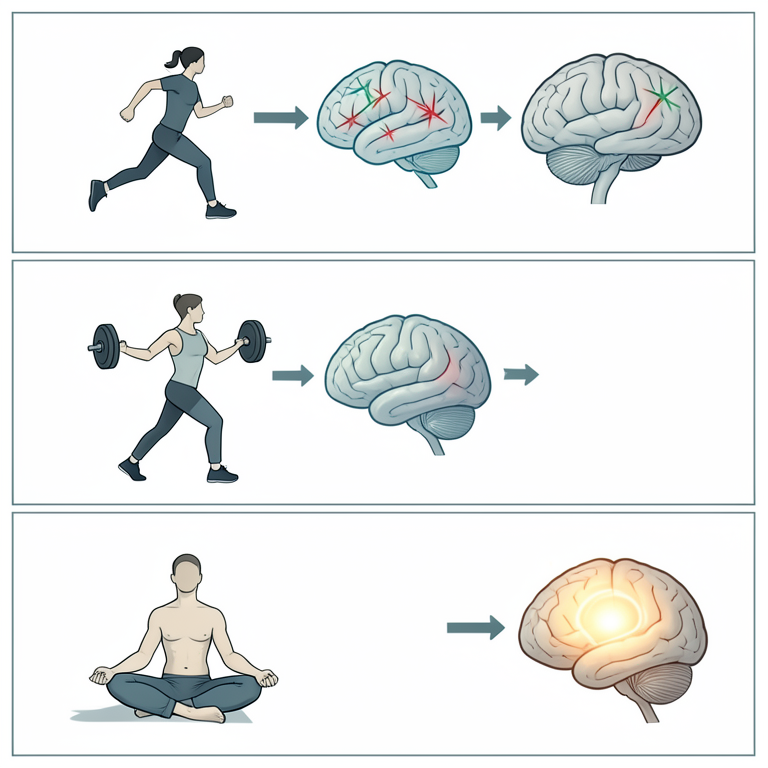
Exercise Modality and Sleep Stage Impact
AI-generated conceptual illustration (human brain and body in different exercise and sleep states). It explains the idea and does not show study data.
View source evidence ↗Introduction
Exercise benefits virtually every system of the body, leading to improved overall health and function. Regular physical activity positively impacts each physiological system. Out of which many odd and even aspects are already established by many researches. For example: Exercise strengthens the heart muscle, improves blood circulation, and increases the efficiency of the cardiovascular system. Regular physical activity helps lower resting blood pressure and reduces the risk of hypertension. Exercise improves the balance between HDL ("good") cholesterol and LDL ("bad") cholesterol, reducing the risk of atherosclerosis. Consistent physical activity lowers the likelihood of developing heart disease, stroke, and other cardiovascular conditions [1] . Though other physiological systems like respiratory, circulatory, musculoskeletal, brain and spinal cord, reproductive, integumentary, excretory, digestive and immune system acquire immense benefits from regular exercise [20] . Exercise increases lung capacity and improves the efficiency of oxygen exchange. Aerobic exercises like running or swimming enhance the ability to take in oxygen and expel carbon dioxide, which makes breathing easier and more efficient [3] . Activities that challenge your breathing, like high-intensity training, strengthen the diaphragm and intercostal muscles, which support breathing. Weight-bearing exercises (e.g., strength training, running) increase bone density and muscle mass, reducing the risk of osteoporosis and sarcopenia (muscle loss) [4] . Regular movement helps lubricate the joints, reduce stiffness, and improve flexibility, lowering the risk of arthritis and joint pain. Activities like yoga, tai chi, and strength training improve neuromuscular control, balance, and coordination, reducing the risk of falls, especially in older adults. Exercise increases metabolic rate, helping with weight control by burning calories even at rest [5] . Physical activity increases insulin sensitivity, allowing muscles to use glucose more efficiently, which helps control blood sugar levels and reduces the risk of type 2 diabetes [6] . Regular exercise shifts the body's energy usage toward burning fat, leading to better weight management and reduction of visceral fat. Exercise enhances blood flow to the brain, promoting cognitive function, memory, and concentration [7] . It also supports neurogenesis (the growth of new neurons) in areas like the hippocampus, which is involved in learning and memory [8] . Physical activity helps the nervous system become more efficient [9] . Exercise helps regulate hormone levels, including insulin, cortisol, and growth hormones, which are essential for metabolism, stress responses, and overall energy balance [10] . Physical activity stimulates the release of endorphins, which elevate mood, reduce pain, and contribute to feelings of well-being ("runner's high").
Resistance training triggers the release of growth hormone and testosterone, which are important for muscle repair and regeneration [11] . Regular moderate exercise enhances the circulation of immune cells (e.g., white blood cells, lymphocytes) that help the body fight infections and reduce the risk of illness. Physical activity helps lower systemic inflammation by reducing inflammatory markers like Creactive protein, improving immune regulation [12] . Exercise slows the age-related decline in immune function (immunesenescence), keeping the immune system more resilient in older adults. Exercise stimulates intestinal contractions, promoting more regular bowel movements and reducing the risk of constipation [13] . Regular physical activity promotes a healthy balance of gut bacteria, supporting digestion, metabolism, and immune function. Physical activity can help regulate hunger hormones (e.g., ghrelin and leptin), reducing cravings and helping with weight management [14] . Exercise boosts lymphatic flow by stimulating the movement of muscles and tissues, aiding in the removal of toxins and waste from the body. The enhanced lymph flow helps immune cells travel more effectively through the body, aiding in the detection and elimination of pathogens [15] . Regular exercise can improve hormone regulation, menstrual cycle regularity, and fertility. It also reduces the risk of Polycystic Ovary Syndrome (PCOS) in women [16] .
Exercise increases blood flow and improves cardiovascular health, which enhances sexual function and reduces the risk of erectile dysfunction in men. Exercise boosts circulation and helps deliver oxygen and nutrients to the skin, promoting a healthy complexion and reducing signs of aging [17] . Sweating during exercise helps eliminate toxins and impurities from the skin, contributing to clearer pores and a healthier glow. Exercise has been shown to alleviate symptoms of depression and anxiety by boosting moodregulating chemicals and hormones [18] . Physical activity helps lower cortisol levels, promoting relaxation and reducing the negative impact of chronic stress on the body. Regular exercise can improve body image, self-confidence, and overall psychological well-being [19] . Overall, exercise benefits every system in the body, contributing to better health, enhanced functioning, and improved quality of life [20] .
Effects of various types of exercises in dreaming
Incorporating regular exercise into your routine can improve both the quantity and quality of sleep, contributing to better overall health. Different types of exercise can influence the quality and content of your dreams by affecting sleep stages, particularly REM (Rapid Eye Movement) sleep, the stage most associated with vivid dreaming [21] . Many researches have shown that various modes of exercise have shown remarkable effects upon the health which are as follows.
Aerobic exercise (E.g., running, cycling, swimming) [12,23] Aerobic exercise helps promote longer periods of REM sleep, which is the sleep stage where most dreaming occurs. [24] .
Yoga and similar practices often lead to more restful sleep and a peaceful state of mind before bed. This relaxation can translate into more vivid and peaceful dreams. Mind-body practices also encourage a state of mindfulness, which may lead to more positive or emotionally balanced dreams. Meditation and yoga promote mindfulness and presentmoment awareness, skills that can extend into the dream world. This may lead to a higher likelihood of experiencing lucid dreams or heightened awareness during dream states. Since mind-body exercises reduce stress and anxiety, they can help mitigate nightmares or disturbing dreams often triggered by emotional distress [25,26] . [28,29] .
High-Intensity
High-Intensity
Endurance training can lead to physical exhaustion, which in some cases increases the likelihood of REM rebound, a phenomenon where the body compensates by spending more time in REM sleep after a period of REM deprivation. This can result in longer or more vivid dreams. During periods of intensive endurance training, dreams may incorporate elements of physical exhaustion or activity, such as running or chasing themes. This could be a mental reflection of the strain and focus endurance activities require [29] .
Anaerobic exercise (E.g., sprinting, high-intensity lifting) Anaerobic exercises increase sleep depth, particularly in non-REM stages, which may support overall sleep health.
As with strength training, it improves deep sleep, but the effects on REM sleep and dreaming are more indirect. Some individuals may experience less dream recall after anaerobic exercises, as these intense activities often lead to longer periods of deep, non-REM sleep, which is less associated with vivid dreaming [30] .
Evening exercise
While evening exercise has many health benefits, vigorous exercise close to bedtime can delay the onset of sleep by keeping the body temperature elevated and adrenaline levels high. This might result in reduced REM sleep early in the night and fewer dreams. However, if exercise is performed early enough in the evening (a few hours before bed), the body can still recover and enter deeper, more restorative sleep stages, increasing the likelihood of vivid dreams [31] .
Stretching and relaxation before Bed
Gentle stretching before bed helps calm the nervous system and relax the muscles, leading to smoother transitions into sleep. This relaxation may influence the types of dreams you experience, making them more peaceful and pleasant. By reducing muscle tension and physical discomfort, stretching improves overall sleep efficiency and allows the body to spend more time in REM sleep, increasing the potential for dreams [32,33] . On the contrary it can be said as exercise offers several benefits for sleep quality and overall sleep health by improving duration, quality, lowering insomnia, improving biological clock, by reducing stress and anxiety, and also by reducing sleep apnoea etc. [34] . Exercise at any time of day benefits sleep, but engaging in physical activity earlier in the day, such as in the morning or early afternoon, can be especially helpful. Strenuous exercise too close to bedtime may temporarily increase alertness, making it harder to fall asleep for some people [35] .
Exercise induces lucid dreams
Whether exercise can play a role in inducing lucid dreams or not required more extensive researches still some of the evidences provoke about, that sequential dreaming and can sometimes controlled by the dream's content. While exercise itself isn't a direct trigger for lucid dreaming, it can create favourable conditions for its occurrence by improving sleep quality and enhancing awareness during sleep [36] . Though there are no such psychological or neurological markers offer significant contribution to the effective lucid dreaming but other factors relating those can be enough to find significant correlation. Researches showed that, regular exercise, particularly aerobic and strength training, leads to more restorative sleep by increasing both deep sleep and REM sleep [37] . Better sleep quality means your mind is more refreshed, making it easier to recognize dream states and become aware of your dreams. Consistent physical activity stabilizes sleep patterns, resulting in more predictable and efficient sleep cycles. This consistency can help with timing lucid dreams, as they often occur during the later stages of the sleep cycle (when REM sleep is more prominent) [38] . Aerobic and endurance exercises tend to extend the amount of time spent in REM sleep, where most vivid dreaming happens. With longer REM periods, there are more opportunities for your brain to recognize and become aware that you're dreaming, which is essential for lucid dreaming. After intense physical exertion or a period of sleep deprivation, the body may experience REM rebound, meaning it spends more time in REM sleep to compensate [39] . This surge in REM sleep can increase the chances of lucid dreams, as more dreams are likely to occur during these periods. Exercises like yoga, tai chi, and meditation promote mindfulness and awareness [40] . These practices can carry over into the dream world, making it easier to achieve lucidity in dreams. Mind-body exercises train your mind to be more present and aware, both in waking life and during dreams [41] . Exercises like yoga, tai chi, and meditation promote mindfulness and awareness. These practices can carry over into the dream world, making it easier to achieve lucidity in dreams. Mind-body exercises train your mind to be more present and aware, both in waking life and during dreams [42] . Since regular exercise leads to improved sleep, you are more likely to wake up after REM sleep cycles, a key time when dreams are most vivid and easiest to recall. Enhanced dream recall is a key factor in achieving lucid dreams, as remembering dreams allows you to become more familiar with your dream patterns and triggers [43] . With regular exercise and consistent sleep schedules, your body becomes accustomed to certain sleep patterns. This predictability helps in dream journaling and recognizing common dream signs, both of which are essential for training the mind to become lucid during dreams [44] .
Discussion
Physical exhaustion from high-intensity or endurance exercise may lead to deeper physical relaxation during sleep, which allows the mind to remain more alert. This contrast where the body is exhausted but the mind is alert can sometimes trigger lucid dreams. Your body may rest deeply while your mind remains focused enough to recognize dream states. If exercise is done too close to bedtime, it can delay sleep onset and disturb the early stages of sleep, but it may also intensify REM sleep later in the night [45] . This heightened REM activity can enhance dream intensity and increase the potential for lucid dreaming. However, it's important to balance exercise timing to avoid overstimulation [46] . Some of the evidences based of human factors assessment leads to triggers many neurological pathways and mechanisms in lowering the stress and increasing REM sleep. Physical activity triggers a variety of neurological pathways that positively affect brain function and overall neural health. These pathways involve complex interactions between the brain, spinal cord, and peripheral nervous system [47] . Physical activity triggers a variety of neurological pathways that positively affect brain function and overall neural health. These pathways involve complex interactions between the brain, spinal cord, and peripheral nervous system [48] . Exercise triggers neurogenesis, especially in the hippocampus, a brain region involved in memory and learning. This happens through BDNF and other neurotrophic factors like Insulin-like Growth Factor 1
(IGF-1), which is released during physical activity. BDNF and other neurotrophic factors facilitate Long-Term Potentiation (LTP), a mechanism that strengthens the connections between neurons, improving memory formation and retention [49] . Physical activity, particularly intense exercise, stimulates the release of endorphins, natural opioids produced by the brain. Endorphins interact with opioid receptors in the brain to reduce pain perception and induce feelings of pleasure and euphoria, often referred to as the "runner's high. Exercise also triggers the release of endocannabinoids, neurotransmitters that bind to cannabinoid receptors in the brain. This pathway is involved in regulating mood, pain sensation, and stress [50] . Endocannabinoids contribute to the calming and euphoric effects experienced during and after exercise. Exercise stimulates the dopaminergic system, increasing the release of dopamine, a neurotransmitter associated with reward, motivation, and pleasure. This pathway enhances mood and reinforces the motivation to continue exercising, leading to a positive feedback loop [51] . Physical activity, particularly aerobic exercise, increases the production and release of serotonin, a neurotransmitter that regulates mood, anxiety, and sleep. Increased serotonin levels improve mood and reduce symptoms of depression and anxiety [52] . The serotonin pathway activated by exercise has effects similar to antidepressants, promoting a balanced mood and emotional well-being. This is why exercise is often recommended as a treatment for mild to moderate depression. Physical activity influences the HPA axis, which controls the body's response to stress [53] . Exercise helps regulate the release of cortisol, the body's primary stress hormone. Regular physical activity helps lower baseline cortisol levels, reducing chronic stress and improving the body's ability to handle stressors [54] . A well-regulated HPA axis results in lower anxiety levels and better overall mental health. Over time, exercise enhances the brain's ability to cope with stress by improving the regulation of cortisol and other stress-related hormones [55] . Physical activity increases the release of GABA, the brain's primary inhibitory neurotransmitter, which calms neuronal activity and reduces anxiety [56] . This helps balance the brain's excitatory and inhibitory functions, leading to relaxation and reduced stress. Exercise also stimulates the release of glutamate, the brain's major excitatory neurotransmitter [57] . Glutamate is involved in learning and memory, as it strengthens synaptic connections between neurons. The balance between glutamate and GABA is critical for maintaining cognitive function and emotional balance. Physical activity stimulates the spinal cord to send signals from the brain to muscles, improving the efficiency of motor neuron responses [58] . This leads to faster and more coordinated muscle movements, especially during repetitive or high-intensity activities. Lastly, Exercise enhances the body's reflexes by strengthening the neural circuits that mediate automatic responses. Faster reflexes improve balance, coordination, and injury prevention [59] .
Conclusion
Conclusion
References
36 in the original paper- Jafarzadeh Esfahani M, Salvesen AC, Picard-Deland C, Matzek T, Demsar E, van Buijtene T, et al. Highly effective verified lucid dream induction using combined cognitive-sensory training and wearable EEG: a multicentre study. bioRxiv. 2024 Jun.
- Schädlich M, Erlacher D, Schredl M. Improvement of darts performance following lucid dream practice depends on the number of distractions while rehearsing within the dream: a sleep laboratory pilot study. J Sports Sci. 2017;35(23):2365-2372.
- Peters E, Golembiewski S, Erlacher D, Dresler M. Extending mental practice to sleep: enhancing motor skills through lucid dreaming. Med Hypotheses. 2023;174:111066.
- Tholey P. Applications of lucid dreaming in sports. Lucidity Letter. 1991;10(1/2).
- Stumbrys T, Erlacher D, Schredl M. Effectiveness of motor practice in lucid dreams: A comparison with physical and mental practice. J Sports Sci. 2016;34(1):27-34.
- Bonamino C, Watling C, Polman R. The effectiveness of lucid dreaming practice on waking task performance: A scoping review of evidence and meta-analysis. Dreaming. 2023;33(3):292.
- Erlacher D, Schredl M. Cardiovascular responses to dreamed physical exercise during REM lucid dreaming. Dreaming. 2008;18(2):112.
- Schädlich M, Erlacher D. Lucid music: A pilot study exploring the experiences and potential of musicmaking in lucid dreams. Dreaming. 2018;28(3):278.
- Ribeiro N, Gounden Y, Quaglino V. Investigating the methodology effect when evaluating lucid dream. Front Psychol. 2016;7:1306.
- Hausberger A, Pollak P, Tran US. Physical self-concept and the frequency of lucid dreams and nightmares. Dreaming. 2016;26(4):293.
- Stumbrys T, Erlacher D, Malinowski P. Metaawareness during day and night: The relationship between mindfulness and lucid dreaming. Imagin Cogn Pers. 2015;34(4):415-433.
- Zink N, Pietrowsky R. Theories of dreaming and lucid dreaming: An integrative review towards sleep, dreaming and consciousness. Int J Dream Res. 2015;3553.
- Stumbrys T, Erlacher D, Johnson M, Schredl M. The phenomenology of lucid dreaming: An online survey. Am J Psychol. 2014;127(2):191-204.
- Erlacher D. Complicated movements should be practiced in dreams: Paul Tholey about sports, lucid dreams and consciousness. Int J Dream Res. 2018;230233.
- Picard-Deland C, Allaire MA, Nielsen T. Postural balance in frequent lucid dreamers: A replication attempt. Sleep. 2022;45(7):zsac105.
- Payami HS, Shojaeie M, Sanatkaran A. The effects of relaxation exercises on sleep quality and content of athlete's dreams at night before the competition. Int J Ecosyst Ecol Sci. 2018;8(1).
- Peters E, Golembiewski S, Erlacher D, Dresler M. Extending mental practice to sleep: Enhancing motor skills through lucid dreaming. Med Hypotheses. 2023;174:111066.
- Prasad ASV. Understanding dreams-the comprehensive, interdisciplinary way: A review. World J Adv Res Rev. 2022;14(1):308-323.
- Mota-Rolim SA, Araujo JF. Neurobiology and clinical implications of lucid dreaming. Med Hypotheses. 2013;81(5):751-756.
- Neider M, Pace-Schott EF, Forselius E, Pittman B, Morgan PT. Lucid dreaming and ventromedial versus dorsolateral prefrontal task performance. Conscious Cogn. 2011;20(2):234-244.
- Oldoni AA, Bacchi AD, Mendes FR, Tiba PA, MotaRolim S. Neuropsychopharmacological induction of (lucid) dreams: A narrative review. Brain Sci. 2024;14(5):426.
- Peters E, Golembiewski S, Erlacher D, Dresler M. Extending mental practice to sleep: enhancing motor skills through lucid dreaming. Med Hypotheses. 2023;174:111066.
- da Mota Gomes M. Unveiling sleep mysteries: neurobiology of dreaming. Rev Bras Neurol. 2020;56(2):35-44.
- Re T, Vitiello G. Non-linear dynamics and chaotic trajectories in brain-mind visual experiences during dreams, meditation, and non-ordinary brain activity states. OBM Neurobiol. 2020;4(2):1-11.
- Tzioridou S, Dresler M, Sandberg K, Mueller EM. The role of mindful acceptance and lucid dreaming in nightmare frequency and distress. Sci Rep. 2022;12(1):15737.
- Murillo-Rodríguez E, Coronado-Álvarez A, LópezMuciño LA, Pastrana-Trejo JC, Viana-Torre G, Barberena JJ, et al. Neurobiology of dream activity and effects of stimulants on dream. Curr Top Med Chem. 2022;22(15):1280-1295.
- Waters F, Barnby JM, Blom JD. Hallucination, imagery, dreaming: reassembling stimulus-independent perceptions based on Edmund Parish's classic misperception framework. Philos Trans R Soc B. 2021;376(1817):20190701.
- Ellis LA. Solving the nightmare mystery: The autonomic nervous system as missing link in the aetiology and treatment of nightmares. Dreaming. 2023;33(1):45.
- Rosen M. Dreaming as a virtual reality delusion simulator: Gaining empathy whilst we sleep. Int J Dream Res. 2022;73-85.
- Sam WSS, Yu C. A moderated mediation analysis of lucid nightmares and emotion regulation. Int J Dream Res. 2022;135-140.
- Sharon O, Ben Simon E, Shah VD, Desel T, Walker MP. The new science of sleep: From cells to large-scale societies. PLoS Biol. 2024;22(7):e3002684.
- Perrotta G. The state of consciousness: From perceptual alterations to dissociative forms. Analysis of neurobiological and clinical profiles. J Neurol Neurol Sci Disord. 2020;7(1):006-18.
- Mehta R, Giri S, Mallick BN. REM sleep loss-induced elevated noradrenaline could predispose an individual to psychosomatic disorders: A review focused on proposal for prediction, prevention, and personalized treatment. EPMA J. 2020;11:529-549.
- Tucker DM, Luu P, Johnson M. Neurophysiological mechanisms of implicit and explicit memory in the process of consciousness. J Neurophysiol. 2022;128(4):872-891.
- Baltzan M, Yao C, Rizzo D, Postuma R. Dream enactment behavior: review for the clinician. J Clin Sleep Med. 2020;16(11):1949-1969.
- Conte F, Cellini De Rosa O, Rescott ML, Malloggi S, Giganti F, et al. The effects of sleep quality on dream and waking emotions. Int J Environ Res Public Health. 2021;18(2):431.