
Research article · 2024 · Full text
International Journal of Biology SciencesEvaluation of cardiovascular risks through the assessment of cholesterol level
Volume 6(2) · Pages 152–156 · DOI: 10.33545/26649926.2024.v6.i2c.246 ↗
Research areasLipoproteins and Cardiovascular Health
Abstract
Author-writtenAbnormal cholesterol levels are crucial in assessing cardiovascular risk. Cardiovascular Diseases (CADs) account for a significant global health threat, with the World Health Organization (WHO) projecting that over 23 million people will die from CADs by 2030. Low-Density Lipoprotein (LDL) and High-Density Lipoprotein (HDL) levels play a key role in atherosclerosis and overall cardiovascular health. The build-up of plaque in the arterial walls impairs blood flow, leading to atherosclerosis. High cholesterol is also associated with myocardial infarction, coronary artery disease, and stroke. Risk factors for CADs include high blood sugar, obesity, smoking, and alcohol consumption, though some factors, such as family history, cannot be altered. Current evidence suggests that dyslipidemia is a strong predictor of cardiovascular disease. Statin therapy targeting LDL can reduce the incidence of major CADs. Individuals aged 50-70 are at higher risk for CADs, although age alone is not a definitive factor. Utilizing medical technology and diagnostic tools can help identify high-risk patients and prevent adverse outcomes effectively. Understanding the relationship between cholesterol levels and cardiovascular risk is essential for improving prevention strategies.
Summary
Source-checkedPlain-language reading of the full paper, prepared with AI and checked against the text. Each point links to the authors' own words.
Why it matters
- Cardiovascular diseases represent a major global health crisis, with projections suggesting more than 23 million deaths by 2030. View evidence ↗
- Atherosclerosis occurs when plaque accumulates in arterial walls, which restricts blood flow. View evidence ↗
- Levels of Low-Density Lipoprotein (LDL) and High-Density Lipoprotein (HDL) are critical factors in the development of atherosclerosis and general heart health. View evidence ↗
The question
- The authors aim to examine the link between cholesterol levels and cardiovascular risk to help improve disease prevention strategies. View evidence ↗
What they did
- This paper is a review of existing literature and did not use a new primary dataset. View evidence ↗
- The research was conducted through literature searches and the extraction of data from previously published studies. View evidence ↗
What they found
- LDL, which constitutes 60–70% of total plasma cholesterol, is identified as the primary cause of cholesterol-driven atherosclerosis. View evidence ↗
- In the NHLBI Type II Coronary Intervention Study, patients with type II hyperlipidaemia treated with cholestyramine saw a 25% drop in cholesterol and slowed coronary disease progression. View evidence ↗
- Data from Japan showed that animal fat intake rose from 26.1 g in 1961 to 54.8 g in 1979, which coincided with increased mean cholesterol levels despite a constant mean calorie intake of 2113 cal/day. View evidence ↗
- The Framingham Heart Study established that higher levels of HDL (good cholesterol) are associated with a lower mortality rate from cardiovascular disease. View evidence ↗
- For individuals aged 40 and older, cholesterol levels above 260 mg/dL are categorized as high risk. View evidence ↗
What it means
- The authors conclude that regular cholesterol testing is essential for early dyslipidemia diagnosis and the creation of personalized treatment plans to reduce CVD prevalence. View evidence ↗
- The authors recommend ongoing research and innovation in testing protocols to improve health outcomes for patients and the general population. View evidence ↗
Visual summary
1 visualsIllustrations explain the paper; they do not show study data.
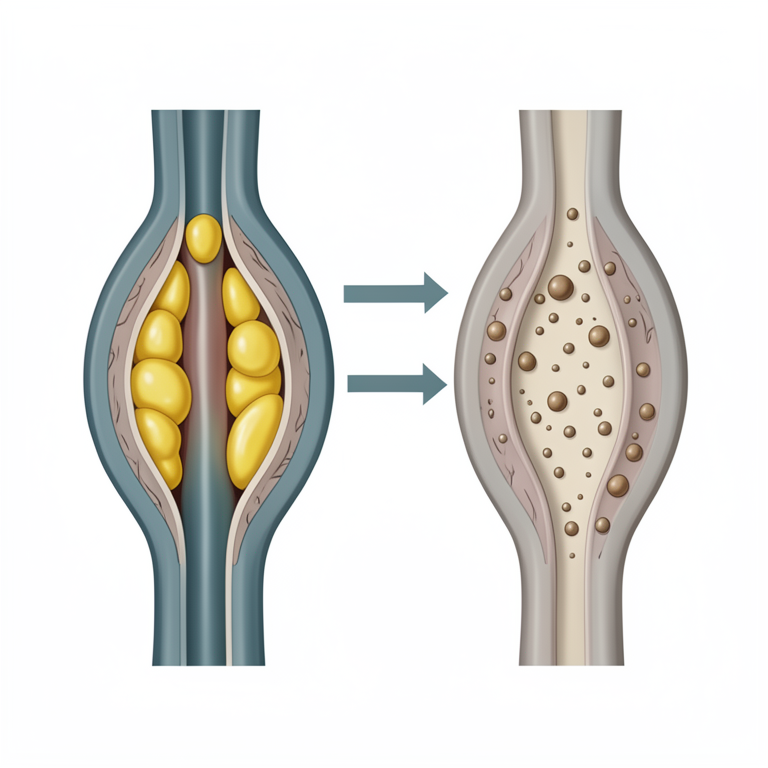
LDL vs HDL Impact
AI-generated conceptual illustration (human coronary artery). It explains the idea and does not show study data.
View source evidence ↗Introduction
The death rate from heart disease has decreased by approximately 30% in the United States during the past 20 to 25 years [1,2] . Heart disease remains the primary cause of mortality and disability worldwide. The following risk factors are highly linked to heart disease: Smoking, drinking, hypertension, hypercholesterolemia, diabetes mellitus, obesity, and family history etc. High serum Total Cholesterol (TC) levels are the primary cause of CVD, and atherosclerosis also contributes significantly to the disease [3] . CVD is a result of hypercholesterolemia in diabetic people. The relationship between Total Cholesterol (TC) and CVD in individuals with Type 2 Diabetes (T2D) is unclear [4] . Patients with elevated cholesterol should take the appropriate steps to educate themselves about their risk of CVD [5, 6] . Low density lipoprotein cholesterol (LDL-C) is the primary risk factor for CVD [7,8] . It is estimated that 4.3 million fatalities per year are caused by high LDL-C levels. By diagnosing the risk factors and predictors of CVD, we can successfully prevent the disease and identify patients who are at high risk. More predictors are being added to the earlier list of CVD risk factors in the modern day due to the rapid advancement of medical technology and diagnostic equipment. Therefore, in order to identify high-risk individuals early in life, we need to develop new risk assessment tools.
Cholesterol
Odorless and colorless in powder form, pure cholesterol has no smell. Food does not contain it, either. There is cholesterol in every food that comes from animals. The development of the cell membrane actually requires its use in every cell. When there are no carbs in the body, it is used as an energy source [9] . Additionally, it facilitates the synthesis of steroid hormones, such as testosterone and estrogen. Typical Range: 200 mg/dl and above.
Blood cholesterol risk groups
Because they can't travel freely in blood, the two main plasma lipids cholesterol and triglycerides often circulate in lipoprotein complexes. [10] .
There are three primary types of lipoproteins that are classified as follows:
The first is High Density Lipoprotein (HDL). LDL, or Low-Density Lipoprotein Triple-Negative Lipoprotein (VLDL)
High Density Lipoprotein (HDL)
The first study to show an inverse relationship between HDL and CVD was the Framingham Heart Study, which found that the mortality rate from CVD risk considerably lowered with high HDL levels [12] . As a result of the study's observations of HDL, also known as "good cholesterol," the HDL hypothesis which was backed by a number of animal studies and observations as well as Framingham's findings was developed. HDL may have the ability to lower the risk of atherosclerosis and shield against CVD. Another way is that by preventing the release of cholesterol into tissue, HDL (or a subclass of HDL that contains Apolipoprotein E) competes with LDL for receptor binding and cell absorption [10] . A moderate consumption of ethanol raises HDL levels because it raises HDL-3 levels, a subclass of HDL that has no known negative correlation with the development of atherosclerosis. Ethanol does not raise HDL-2 levels.
Low Density Lipoprotein (LDL)
Low density lipoproteins, which make up 60-70% of total plasma cholesterol, are the main cause of atherosclerosis caused by cholesterol build-up in blood arteries [10] . The primary factor that is frequently used to estimate a person's cardiovascular risk, guide therapeutic decision-making, and initiate statin therapy and other lipid-lowering medications is Low-Density Lipoprotein (LDL) [18] . In the liver and other tissues, LDL is extracted from plasma by interacting with certain receptors. Saturation of these receptors prevents intracellular cholesterol formation by blocking the ratelimiting enzyme in cholesterol synthesis, HMG-coAreductase [10] . The availability of extracellular LDL cholesterol thus fluctuates with intracellular cholesterol synthesis due to the presence of a negative feedback loop [19] . Lowering the level of Low-Density Lipoprotein (LDL) can assist reduce cardiovascular health risks and treatment duration [20] . Reducing LDL levels below the target set by the European Atherosclerosis Society (EAS) and the European Society of Cardiology (ESC) has been linked in several studies to a decreased risk of cardiovascular events [21][22][23][24] .
Very Low Density Lipoprotein (VLDL)
The liver and gut produce the very low density lipoprotein, which is rich in triglycerides and transports lipid to peripheral tissue. The lipoprotein lipase breaks down the triglycerides in VLDL, and the leftover material is processed into Intermediate Density Lipoprotein (IDL), which is a transitional form between LDL and VLDL [10] .
Atherosclerosis is an unresolved problem with Low-Density Lipoprotein (LDL) levels. Atherosclerosis is common in patients with Coronary Heart Disease (CHD); in some cases, this is caused by genetic hyperlipidaemias, but in other cases, it is caused by obesity or diabetes mellitus. Patients with CHD have high percentages of hypertriglyceridemia, but this is often a reflection of other lipoprotein abnormalities that are atherogenic factors [25] .
Lipoprotein classes by density and composition
For the assessment of a variety of diseases, the normal compositions of HDL, LDL, and VLDL are thought to be crucial [10] . This includes 18 parts of cholesterol, 2 parts of triglycerides, 50 parts of protein, and 30 parts of phospholipids in HDL (1.063-1.21g/ml). 43 parts of cholesterol, 10 parts of triglycerides, 25 parts of protein, and 22 parts of phospholipid are present in LDL (1.019-1.063g/ml). As opposed to this, the VLDL (0.95-1.006 g/ml) is composed of 12 phospholipids, 10 proteins, 65 triglycerides, and 13 cholesterols.
Atherosclerosis
Cardiovascular disease is caused by atherosclerosis, a slowmoving condition that mostly affects the large arteries and starts early in life. Over many years, the condition builds up lipid accumulation, fibrous proliferation, fatty streaks with varying degrees of smooth muscle cell proliferation, and eventually fibrous plaque [26] . During the course of plaque development, there may be periods of regression and quiescence interspersed with progression. This progressive narrowing of the affected vessel results in clinical disease, plaque haemorrhage, or the formation of an embolismthrombus with vessel occlusion at the plaque site; however, this cannot be detected until the first heart attack occurs, which is frequently fatal [10] . According to data from the Lipid Research Clinics Coronary Primary Prevention Trial (LRC-CPPT), a nine percent decrease in total cholesterol was linked to a nineteen percent decrease in the combined rate of fatal and nonfatal coronary events [27] . The National Heart, Lung, and Blood Institute Type II Coronary Intervention Study found that individuals with type II hyperlipidaemia receiving cholestyramine had a 25% drop in cholesterol and a decrease in the progression of coronary disease (as demonstrated by angiography) [28,29] . The first study on the subject was conducted by Glagov et al., using autopsy material of a patient who had 136 Left Main Coronary Artery (LMCA) lesions. From this study, he found that a positive correlation between internal elastic membrane area and plaque area and expansion of the compensator at an atheromatous load of less than 40% prevent luminal stenosis [30] . A patient receiving statin medication for asymptomatic coronary artery disease participated in the REVERSAL experiment. Atherosclerosis Atherosclerosis progression was noted in the pravastatintreated group as compared to baseline, but not in the atorvastatin-treated group. The study assessed volume, percentage of atheroma volume, and atheromatous change in the affected section [31] .
Cholesterol hypothesis and atherosclerosis
The 4S model (Scandinavian Simvastanin Survival Study) proposed that the presence of lipids triggers the development of atherosclerosis, and that a significant reduction in total cholesterol and LDL cholesterol levels play a major role in reducing major coronary events.
However, HDL cholesterol levels were elevated in the simvastatin-receiving group [32] . The association between hyperlipidemia and atherosclerosis was established by the 4S study, Reversal, Asteroid, and Saturn studies [33,34] .
Cardiovascular risk and cholesterol level
One significant study that made this connection between seven countries across the world (Greece, Finland, Japan, Italy, The Netherlands, United States, and Yugoslavia) showed a strong relationship between dietary saturated fat, serum cholesterol, and cardiovascular disease [35] . Elevated levels of Low Density Lipoprotein (LDL) cholesterol are linked to both dietary saturated fat and cholesterol as well as an increase in Cardiovascular Disease (CVDs). Nutritional patterns seen in Japan during an 18-year period demonstrate the point that epidemiologic data suggest a link between diet, cholesterol levels, and CVD [36] . Over this period, dietary fat intake (primarily in the form of animal fat) increased from 26.1 g in 1961 to 54.8 g in 1979. Net protein intake increased by 8.7 gas animal protein intake increased by 14.2 g while vegetable protein intake decreased by 5.4 g. notably, these increases did not affect mean calorie intake, which remained constant at 2113 cal/day in 1979 despite an increase in mean cholesterol in the Japanese population [36] . When dietary consumption of cholesterol and saturated fat is changed, the population's risk of CVD is rather predictable; this fact is by research conducted in seven different countries [35,37] . Elevated cholesterol levels and CVD death rates are strongly correlated; the Multiple Risk Factor Intervention Trial (MRFIT), the largest trial to investigate and validate this relationship, showed a gradual increase in the age-adjusted risk of CHD-related deaths [38] .
Role of cholesterol testing in preventive cardiovascular risk
Take Care The foundation of preventive cardiovascular treatment is the early identification of risk factors, of which cholesterol testing is one. Frequent cholesterol screening enables the prompt implementation of pharmacological and lifestyle interventions targeted at lowering LDL-C levels and lowering cardiovascular risk, especially in those with risk factors like obesity, diabetes, hypertension, and a family history of CVD. Adults 20 years of age and above should get standard cholesterol testing every four to six years, with more frequent testing recommended for those with preexisting risk factors, according to the American Heart Association (AHA) and other health groups [39] . Individualized cholesterol management measures are important, and this has been highlighted by advances in customized medicine. Targeted therapy selection is guided by the identification of people with Familial Hypercholesterolemia (FH) or other genetic predispositions to dyslipidaemia through genetic testing and biomarker analysis. Furthermore, cholesterol testing helps track how well a treatment is working, enabling doctors to change drugs or modify dosages to obtain the best possible lipid management. The most often given cholesterol-lowering medication, statins, have been demonstrated to dramatically cut LDL-C levels and the risk of cardiovascular events. But each person reacts differently to statin medication, which emphasizes the necessity of routine cholesterol testing in order to properly customize treatment regimens [40] .
Conclusion
A vital tool in the treatment of cardiovascular illness, cholesterol testing provides important information about a person's risk of heart disease and other cardiovascular disorders. Frequent testing helps in the early diagnosis of dyslipidemia, guides individualized treatment plans, and backs public health campaigns meant to lessen the prevalence of CVD. Progress in the understanding of cholesterol and its relationship to cardiovascular health necessitates continuous research and innovation in testing protocols in order to improve patient and population outcomes.
Acknowledgement
AcknowledgmentsThe authors are highly thankful to the Department of Medical Laboratory Technology, Swami Vivekananda University, Barrackpore. The authors also declare that no funds or grants were received during the preparation of this article.
References
39 in the original paper- Stamler J, Stamler R. Intervention for the prevention and control of hypertension and atherosclerotic diseases: United States and international experience. Am J Med. 1984;76(2A):13-36.
- Gillum RF, Folsom AR, Blackburn H. Decline in coronary heart disease mortality. Old questions and new facts. Am J Med. 1984;76:1055-1065.
- Stamler J, Daviglus ML, Garside DB, Dyer AR, Greenland P, Neaton JD et al. Relationship of baseline serum cholesterol levels in 3 large cohorts of younger men to long-term coronary, cardiovascular, and allcause mortality and to longevity. JAMA. 2000;284:311318.
- De Rosa S, et al. Type 2 diabetes mellitus and cardiovascular disease: Genetic and epigenetic links. Front Endocrinol. 2018;9:2.
- Cavill N, Bauman A. Changing the way people think about health-enhancing physical activity: do mass media campaigns have a role? J Sports Sci. 2004;22:771-790.
- Gans KM, Assmann SF, Sallar A, Lasater TM. Knowledge of cardiovascular disease prevention: an analysis from two New England communities. Prev Med. 1999;29:229-237.
- Knuuti J, Wijns W, Saraste A, et al. ESC Scientific Document Group. 2019 ESC Guidelines for the diagnosis and management of chronic coronary syndromes. Eur Heart J. 2020;41(3):407-477. DOI:10.1093/eurheartj/ehz425.
- Mattiuzzi C, Sanchis-Gomar F, Lippi G. Worldwide burden of LDL cholesterol: implications in International Journal of Biology Sciences https://www.biologyjournal.net cardiovascular disease. Nutr Metab Cardiovasc Dis. 2020;30(2):241-244. DOI:10.1016/j.numecd.2019.09.008.
- Steinberg D. Research related to underlying mechanisms in atherosclerosis. Circulation. 1979;60:1559-1565.
- Clark LT. Brooklyn, New York: Journal of the National Medical Association, VOL. 78, NO. 8, 1986.
- Rifkind BM. The plasma lipoproteins. Angiology. 1982;33(9):555-561.
- Kannel WB, Dawber TR, Friedman GD, Glennon WE, McNamara PM. Risk factors in coronary heart disease: An evaluation of several serum lipids as predictors of coronary heart disease: The Framingham study. Ann Intern Med. 1964;61:888-899.
- Di Angelantonio E, Gao P, Pennells L, Kaptoge S, Caslake M, Thompson A, et al. Lipid-related markers and cardiovascular disease prediction. JAMA. 2012;307:2499-2506.
- Lu Q, Tian G, Zhang Y, Lu M, Lin X, Ma A et al. Low HDL-C predicts risk and PCI outcomes in the Han Chinese population. Atherosclerosis. 2013;226:193197.
- Rubin EM, Krauss RM, Spangler EA, Verstuyft JG, Clift SM. Inhibition of early atherogenesis in transgenic mice by human apolipoprotein AI. Nature. 1991;353:265-267.
- Tangirala RK, Tsukamoto K, Chun SH, Usher D, Pure E, Rader DJ et al. Regression of atherosclerosis induced by liver-directed gene transfer of apolipoprotein A-I in mice. Circulation. 1999;100:1816-1822.
- Haskell WL, Camargo C, Williams PT, et al. The effect of cessation and resumption of moderate alcohol intake on serum high-density lipoprotein subfractions. N Engl J Med. 1984;310:805-810.
- Ray KK, Kastelein JJ, Boekholdt SM, Nicholls SJ, Khaw KT, Ballantyne CM, et al. The ACC/AHA 2013 guideline on the treatment of blood cholesterol to reduce atherosclerotic cardiovascular disease risk in adults: The good the bad and the uncertain: A comparison with ESC/EAS guidelines for the management of dyslipidaemias 2011. Eur Heart J. 2014;35:960-968.
- LaRosa JC. The mechanism of action of lipid-lowering drugs. Angiology. 1982;33(9):562-575.
- Baigent C, Keech A, Kearney PM, Blackwell L, Buck G, Pollicino C, Kirby A, Sourjina T, Peto R, Collins R. Efficacy and safety of cholesterol-lowering treatment: Prospective meta-analysis of data from 90,056 participants in 14 randomised trials of statins. Lancet. 2005;366:1267-1278.
- Cholesterol Treatment Trialists' (CTT) Collaboration, Baigent C, Blackwell L, Emberson J, Holland LE, Reith C, Bhala N, Peto R, Barnes EH, Keech A, et al. Efficacy and safety of more intensive lowering of LDL cholesterol: A meta-analysis of data from 170,000 participants in 26 randomised trials. Lancet. 2010;376:1670-1681.
- Hsia J, MacFadyen JG, Monyak J, Ridker PM. Cardiovascular event reduction and adverse events among subjects attaining low-density lipoprotein cholesterol <50 mg/dL with rosuvastatin. The JUPITER Trial (Justification for the Use of Statins in Prevention: An Intervention Trial Evaluating Rosuvastatin). J Am Coll Cardiol. 2011;57:1666-1675.
- McCormack T, Dent R, Blagden M. Very low LDL levels may safely provide additional clinical cardiovascular benefit: The evidence to date. Int J Clin Pract. 2016;70:886-897.
- Navarese EP, Robinson JG, Kowalewski M, Kolodziejczak M, Andreotti F, Bliden K, et al. Association between baseline LDL level and total and cardiovascular mortality after LDL lowering: A systematic review and meta-analysis. JAMA. 2018;319:1566-1579.
- Gotto AM, Gorry GA, Thompson JR, et al. Relationship between plasma lipid concentrations and coronary artery disease in 496 patients. Circulation. 1977;56:875-883.
- Lipid Research Clinics Program. The Lipid Research Clinics Coronary Primary Prevention Trial results: I. Reduction in incidence of coronary heart disease. JAMA. 1984;251:351-364.
- Lipid Research Clinics Program. The Lipid Research Clinics Coronary Primary Prevention Trial results: II. The relationship of reduction in incidence of coronary heart disease to cholesterol lowering. JAMA. 1984;251:365-374.
- Brensike JF, Levy RI, Kelsey SF. Effects of therapy with cholestyramine on progression of coronary arteriosclerosis: Results of the NHLBI Type II Coronary Intervention Study. Circulation. 1984;69(2):313-324.
- Levy RI, Brensike JF, Epstein SE, et al. The influence of change in lipid values induced by cholestyramine and diet on progression of coronary artery disease: Results of the NHLBI Type II Coronary Intervention Study. Circulation. 1984;69(2):325-337.
- Glagov S, et al. Compensatory enlargement of human atherosclerotic coronary arteries. N Engl J Med. 1987;316(22):1371-1375.
- Nicholls SJ, et al. Effects of obesity on lipid-lowering, anti-inflammatory, and anti-atherosclerotic benefits of atorvastatin or pravastatin in patients with coronary artery disease (from the Reversal Study). Am J Cardiol. 2006;97(11):1553-1557.
- Scandinavian Simvastatin Survival Study Group. Randomised trial of cholesterol lowering in 4444 patients with coronary heart disease: The Scandinavian simvastatin survival study (4S). Lancet. 1994;344(8934):1383-1389.
- Wiviot SD, et al. Safety and efficacy of achieving very low low-density lipoprotein cholesterol levels with rosuvastatin 40 mg daily (from the Asteroid study). Am J Cardiol. 2009;104(1):29-35.
- Nicholls SJ, et al. Impact of statins on progression of atherosclerosis: Rationale and Design of SATURN (Study of coronary atheroma by intravascular ultrasound: Effect of Rosuvastatin versus Atorvastatin). Curr Med Res Opin. 2011;27(6):1119-1129.
- Keys A. Coronary heart disease in seven countries. Circulation. 1970;41(suppl I):11-1211.
- Goto Y. Serum cholesterol and nutrition in Japan. Nutr Health. 1985;3:255-257.
- Keys A, Menotti A, Karvonen MJ, Aravanis C, Blackburn H, Buzina R, et al. The diet and 15-year International Journal of Biology Sciences https://www.biologyjournal.net death rate in the seven countries study. Am J Epidemiol. 1986;124:903-915.
- Martin MJ, Hulley SB, Browner WS, Kuller LH, Wentworth D. Serum cholesterol, blood pressure, and mortality: Implications from a cohort of 361,662 men. Lancet. 1986;2:933-936.
- Grundy SM, Stone NJ, Bailey AL, et al. 2018 AHA/ACC/AACVPR/AAPA/ABC/ACPM/ADA/AGS/ APhA/ASPC/NLA/PCNA guideline on the management of blood cholesterol. J Am Coll Cardiol. 2018;73(24):e285-e350.