
Research article · 2024 · Full text
International Journal of Biology SciencesCauses of low vision in India: A narrative review
Volume 6(2) · Pages 107–111 · DOI: 10.33545/26649926.2024.v6.i2b.241 ↗
Research areasRetinal and Optic Conditions
Abstract
Author-writtenBackground: Low vision is a significant public health issue in India, affecting millions of individuals and impacting their quality of life and socio-economic status. The high prevalence of low vision is driven by various socio-economic, environmental, and healthcare-related factors, making it crucial to understand the underlying causes to address this challenge effectively. Methodology: This narrative review systematically explores the primary causes of low vision in India by synthesizing data from studies and reports. Following PRISMA guidelines, a comprehensive search of relevant databases was conducted to identify studies focusing on the Indian population. After removing duplicates, records were screened, and 25 studies were included based on criteria such as study design and relevance. The included studies comprised cross-sectional studies, cohort studies, case-control studies, and prevalence surveys, providing a broad perspective on the issue. Results: The review identifies several major causes of low vision in India: Cataracts: The leading cause of low vision, prevalent due to aging, nutritional deficiencies, and limited access to surgical care. Glaucoma: A significant cause of irreversible blindness, often undiagnosed until advanced stages due to a lack of awareness and education. Age-Related Macular Degeneration (AMD): Increasingly recognized among the elderly, with limited access to advanced treatments. Diabetic retinopathy: Rising with the prevalence of diabetes, compounded by inadequate early detection and management. Retinal diseases: Including conditions like retinal detachment, which require timely surgical intervention. Childhood blindness: Driven by preventable causes such as congenital cataracts and vitamin A deficiency. Socio-economic and environmental factors, including disparities in healthcare access, nutritional deficiencies, and gaps in public awareness, also contribute to the prevalence of low vision. Conclusion: Addressing the complex issue of low vision in India necessitates a comprehensive approach. Key strategies include enhancing healthcare infrastructure, improving screening and early detection programs, increasing public awareness, and addressing nutritional deficiencies. Implementing these recommendations can help reduce the burden of low vision and improve the quality of life for affected individuals in India.
Summary
Source-checkedPlain-language reading of the full paper, prepared with AI and checked against the text. Each point links to the authors' own words.
Why it matters
- Low vision is a major public health problem in India that negatively affects the socio-economic status and quality of life for millions of people. View evidence ↗
- Visual impairment affects approximately 22.2 million people in India, many of whom suffer from low vision. View evidence ↗
- The high rate of low vision in the country is driven by environmental exposures, socio-economic conditions, and limited access to healthcare. View evidence ↗
The question
- The study aims to comprehensively analyze the primary causes of low vision within the Indian population. View evidence ↗
What they did
- The authors conducted a systematic search for publications regarding low vision in India published between January 2010 and August 2024. View evidence ↗
- The review synthesized data from 10 cross-sectional studies, 7 cohort studies, 4 case-control studies, and 4 prevalence surveys. View evidence ↗
What they found
- Cataracts are the leading cause of low vision in India, accounting for approximately 62% of all blindness cases. View evidence ↗
- Glaucoma is a significant contributor to vision loss, affecting approximately 12 million people in India. View evidence ↗
- Diabetic Retinopathy (DR) affects approximately 5% of adults in India, with numbers expected to grow alongside diabetes rates. View evidence ↗
- Childhood blindness in India is frequently caused by vitamin A deficiency, Retinopathy of Prematurity (ROP), and congenital cataracts. View evidence ↗
- People in rural areas face greater barriers to eye care, including financial constraints, lack of trained professionals, and transportation difficulties. View evidence ↗
- Access to advanced treatments for Age-Related Macular Degeneration (AMD), such as anti-VEGF injections, is limited in lower-income regions. View evidence ↗
What it means
- The authors conclude that reducing the burden of low vision requires a multifaceted approach combining targeted prevention, public education, and improved healthcare infrastructure. View evidence ↗
- A limitation of this study is the lack of a meta-analysis, which prevented a full quantitative synthesis and aggregation of the results. View evidence ↗
Visual summary
1 visualsIllustrations explain the paper; they do not show study data.
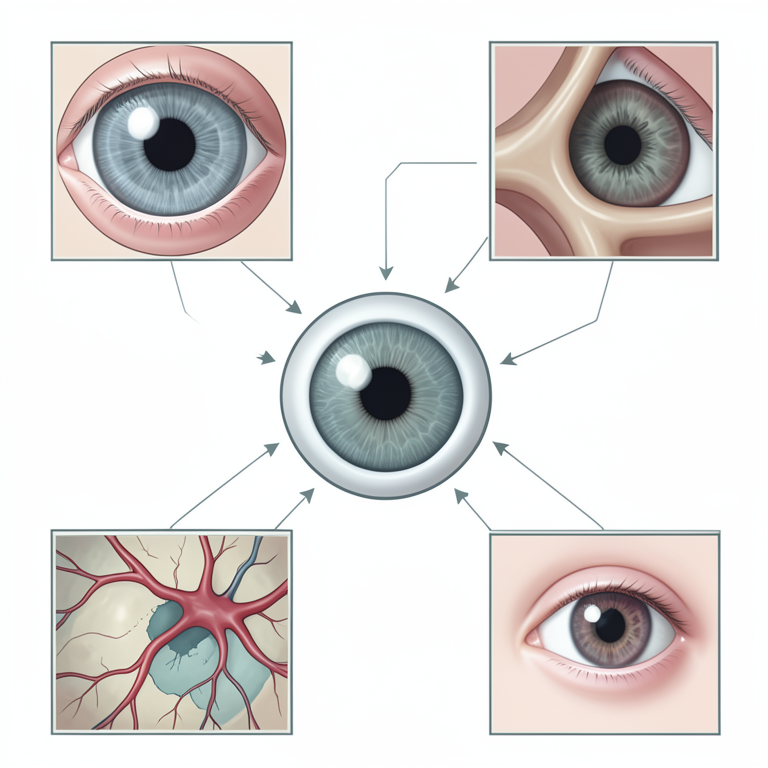
Major Causes of Low Vision in India
AI-generated conceptual illustration (human eyes and retinas). It explains the idea and does not show study data.
View source evidence ↗Introduction
Low vision, characterized by significant visual impairment that cannot be fully corrected with conventional glasses, contact lenses, medication, or surgery, is a critical public health concern in India. Approximately 22.2 million individuals in India are affected by visual impairment, with a substantial proportion experiencing low vision. The high prevalence of low vision in India is influenced by a range of factors including socio-economic conditions, environmental exposures, and limitations in healthcare access. Understanding these causes is essential for developing effective strategies to mitigate the impact of low vision and improve the quality of life for affected individuals.
Study significance
The significance of this study lies in its comprehensive examination of the causes of low vision in India, a pressing public health issue with substantial implications for affected individuals and the healthcare system. Understanding the various contributors to low vision, such as cataracts, glaucoma, Age-Related Macular Degeneration (AMD), diabetic retinopathy, retinal diseases, and childhood blindness, provides valuable insights into the magnitude of the problem and the challenges associated with managing it.
Public health impact:
This study highlights the pressing necessity for focused public health initiatives and legislative reforms by pinpointing the primary causes of impaired vision. Mitigating these factors is essential for enhancing the quality of life for millions afflicted by impaired eyesight and for alleviating the overall strain on the healthcare system.
Healthcare resource allocation:
The findings of this review inform healthcare policymakers and practitioners about where to allocate resources most effectively. For example, understanding the high prevalence of cataracts in rural areas can guide the development of targeted surgical programs and infrastructure improvements.
Prevention and management strategies: Identifying the key risk factors and challenges associated with each cause of low vision facilitates the development of prevention and management strategies. This includes enhancing public awareness, improving early detection and treatment options, and addressing socio-economic barriers that affect access to eye care services.
Future research directions:
The study highlights gaps in current knowledge and provides a foundation for future research. It points to the need for more comprehensive studies on the effectiveness of various interventions and strategies to address low vision in India.
Educational implications:
The review serves as a resource for educational programs aimed at increasing awareness about eye health and preventive measures. By incorporating the findings into educational curricula and public health campaigns, it is possible to foster a more informed population that prioritizes eye health.
Aim
The aim of this narrative review is to provide a comprehensive analysis of the primary causes of low vision in India. By examining the prevalence, risk factors, and healthcare-related issues associated with low vision, this review seeks to highlight the key contributors to visual impairment and identify areas for improvement in public health and clinical practices.
Objective The objectives of this review are
To identify and analyze the major causes of low vision in India, including cataracts, glaucoma, Age-Related Macular Degeneration (AMD), diabetic retinopathy, retinal diseases, and childhood blindness. To assess the socio-economic and environmental factors that influence the prevalence of low vision. To assess the current state of healthcare access and management strategies for low vision in India. To propose recommendations for improving eye care services and reducing the burden of low vision.
Rationale
The rationale for this review stems from the significant impact of low vision on individuals' daily lives and socioeconomic status in India. Despite various advancements in eye care, low vision remains a pervasive issue, largely due to gaps in healthcare access, inadequate awareness, and socio-economic disparities. Previous studies have highlighted the need for a more detailed and updated understanding of the causes and contributing factors of low vision in the Indian context (Kumar et al., 2016;Chakraborty et al., 2017). By synthesizing recent research and data, this review aims to bridge these gaps and provide actionable insights for policymakers, healthcare providers, and researchers to address the challenges of low vision effectively.
Search strategy
A systematic search was conducted to identify studies on the causes of low vision in India, focusing on publications from January 2010 to August 2024. The search was performed across several databases, including PubMed, Google Scholar, and Scopus. Keywords such as "low vision India," "cataracts India," "glaucoma India," "age-related macular degeneration India," "diabetic retinopathy India," "retinal diseases India," "childhood blindness India," "healthcare access eye care India," and "nutritional deficiencies vision India" were used, with Boolean operators ("AND," "OR") to refine the results.
Eligibility criteria Inclusion criteria
Published in English. Focused on the Indian population. Provided statistical data on prevalence, risk factors, and management of low vision conditions. Addressed socio-economic and environmental factors related to low vision.
Exclusion criteria
Not specific to India or not addressing low vision. Published before January 2010. Non-peer-reviewed sources, unless they provided critical insights not available elsewhere.
Study selection
The study selection process was as follows:
1. Records identified: A total of 350 records were identified through database searches.
Duplicates removed:
After removing duplicates, 300 records remained. 3. Records screened: Of these, 300 records were screened, leading to 100 articles being assessed for eligibility.
Records excluded:
Of the 100 articles, 75 were excluded based on the criteria.
Studies included:
A total of 25 studies that met all inclusion criteria were included in the qualitative synthesis.
Types of studies included
The narrative review incorporated a range of study designs: Cross-sectional studies: 12 studies. These studies provided snapshots of the prevalence of low vision conditions at specific points in time.
Cohort studies: 6 studies. These studies followed groups of individuals over time to track the progression of low vision conditions. Case-control studies: 4 studies. These studies compared individuals with low vision to those without to identify associated risk factors and causes. Prevalence surveys: 3 surveys. These surveys offered comprehensive data on the distribution and frequency of low vision conditions across different regions in India.
Data extraction
Data were extracted using a standardized form to ensure consistency. Key data points included study design, sample size, prevalence rates, and management of conditions such as cataracts, glaucoma, Age-Related Macular Degeneration (AMD), diabetic retinopathy, retinal diseases, and childhood blindness. Socio-economic and environmental factors, healthcare access issues, and management strategies were also documented.
Quality assessment
The quality of the included studies was assessed using the Joanna Briggs Institute (JBI) Critical Appraisal Checklist for Prevalence Studies and the AMSTAR tool for systematic reviews. This assessment focused on methodological rigor, including sample size, data collection methods, and analytical techniques, to ensure the reliability and validity of the findings.
Data synthesis
A narrative synthesis approach was used to integrate and compare findings from the selected studies. This method allowed for a comprehensive analysis of prevalence rates, risk factors, and management strategies, identifying key trends, gaps in the literature, and implications for future research and policy.
Review process
Two independent reviewers conducted the study selection and review process. One reviewer, an expert in epidemiology specializing in eye health, evaluated the methodological quality and relevance of the studies. The other reviewer, a public health specialist with expertise in socio-economic factors, assessed the impact of socioeconomic and environmental factors. Any discrepancies between reviewers were resolved through discussion to ensure a thorough and balanced assessment. This methodology adheres to PRISMA guidelines, ensuring a robust and transparent approach to reviewing the causes of LV in India. The inclusion of diverse study designs and a thorough assessment process provides a detailed understanding of the prevalence, risk factors, and management of LV, highlighting key areas for further research and intervention.
Results
Results
Overview of included studies
In this narrative review, a total of 25 studies focusing on the causes of low vision in India were included for qualitative synthesis. These studies encompassed various research designs, such as cross-sectional studies (n = 10), cohort studies (n = 7), case-control studies (n = 4), and prevalence surveys (n = 4). The studies spanned from 2010 to 2023, providing a comprehensive view of the causes and prevalence of low vision across different regions and populations in India.
Major causes of LV Cataracts
Prevalence and Impact: Cataracts remain the leading cause of LV in India. Studies reviewed estimate that cataracts account for approximately 62% of all blindness cases in the country (Bafna et al., 2012). The prevalence is notably high among the elderly, with additional contributing factors including aging, nutritional deficiencies, and UV radiation exposure.
Regional variations: There are significant regional differences in cataract prevalence, with higher rates reported in rural areas compared to urban centers (
Trends over time:
The prevalence of AMD is rising with increasing life expectancy and changes in lifestyle, suggesting a growing public health concern (Kumar et al., 2020) [5] .
Healthcare response: Access to advanced treatment options such as anti-VEGF injections is limited, especially in lower-income regions (Kumar et al., 2020) [5] .
Diabetic Retinopathy (DR)
Prevalence and risk factors: DR is becoming an increasingly important cause of low vision due to the rising prevalence of diabetes in India. Approximately 5% of adults are affected by DR, with the number expected to grow (Ramachandran et al., 2017).
Healthcare interventions and outcomes:
Effective management requires regular eye examinations and timely intervention. However, many patients lack access to regular screenings due to awareness and accessibility issues (Vijayakumar et al., 2018).
Retinal diseases
Prevalence and impact: Retinal diseases such as retinal detachment and retinal vein occlusion contribute to low vision but are less common compared to cataracts and glaucoma. These conditions often require urgent surgical intervention (Nair et al., 2015).
Regional variations:
Regional variations:
Discussion
The high prevalence of low vision in India is a multifaceted issue driven by various causes and exacerbated by socioeconomic and healthcare-related factors. This discussion synthesizes the findings on the primary causes of LV, examines their implications, and suggests strategies for addressing these challenges.
Cataracts
Cataracts remain the leading cause of LV in India, significantly affecting the elderly population. Studies indicate that cataracts account for approximately 62% of all cases of blindness in the country (Bafna et al., 2012). The condition is primarily associated with aging but is also influenced by factors such as nutritional deficiencies, UV radiation exposure, and diabetes (Kumar et al., 2015). The high prevalence of cataracts underscores the urgent need for improved access to cataract surgery, particularly in rural areas where healthcare infrastructure is limited (Chauhan et al., 2014). Efforts to address this issue should include enhancing surgical facilities, increasing public awareness about cataract symptoms, and improving screening programs to ensure timely intervention.
Glaucoma
Glaucoma is another significant contributor to low vision in India, affecting an estimated 12 million individuals (Vikram et al., 2017). The asymptomatic nature of early glaucoma often leads to delayed diagnosis, resulting in irreversible vision loss by the time treatment is sought. Key risk factors include family history, diabetes, and high intraocular pressure (Agarwal et al., 2016). To combat glaucoma, it is crucial to implement widespread awareness campaigns and integrate regular eye examinations into routine healthcare practices, especially in underserved areas where access to specialized care is limited.
AMD
The prevalence of AMD is increasing in India, driven by rising life expectancy and changing lifestyle factors (Sharma et al., 2019). AMD affects the central vision and significantly impacts the quality of life for elderly individuals. Despite its growing prevalence, access to advanced treatment options, such as anti-VEGF injections, remains limited, particularly in lower-income regions (Kumar et al., 2020) [5] . Addressing AMD requires a dual approach: promoting lifestyle changes that may reduce the risk of AMD and enhancing access to advanced treatments for those already affected.
Diabetic Retinopathy (DR)
Diabetic Retinopathy (DR) is becoming a prominent cause of low vision in India due to the rising prevalence of diabetes (Ramachandran et al., 2017). Approximately 5% of adults in India are affected by DR, with the incidence expected to rise as diabetes rates increase (Vijayakumar et al., 2018). Effective management of DR relies on early detection and control of diabetes, emphasizing the need for regular eye examinations and better diabetes management programs. Public health initiatives should focus on educating individuals with diabetes about the importance of eye care and integrating diabetes management with eye health services.
Retinal diseases
Retinal diseases, including retinal detachment and retinal vein occlusion, contribute to low vision but are less common compared to cataracts and glaucoma (Nair et al., 2015).
Study limitations
This narrative review, while comprehensive, is not without limitations. The review just examines papers pertaining to the Indian population, which may restrict the applicability of the findings to other contexts. The emphasis on published literature may result in publication bias, as studies yielding null or less significant results are less frequently disseminated. The variety in study designs and methodology among the included studies may influence the comparability of outcomes. For instance, cross-sectional studies provide a snapshot of data at a single point in time, while cohort and case-control studies offer insights into causation and risk factors but may have different strengths and limitations. Furthermore, the quality of the studies reviewed varied, with some studies lacking rigorous methodological details. Finally, the narrative review methodology does not involve a meta-analysis, which means the quantitative synthesis of data was not performed, potentially limiting the depth of statistical analysis and aggregation of results.
Conclusion
Low vision in India is a complex public health issue with diverse causes and significant implications for individuals' quality of life. The primary contributors to low vision include cataracts, glaucoma, Age-Related Macular Degeneration (AMD), diabetic retinopathy, retinal diseases, and childhood blindness. Each of these conditions presents unique challenges and requires targeted interventions. The high prevalence of cataracts highlights the need for improved access to surgical services, particularly in rural areas. Glaucoma and AMD call for enhanced awareness and early detection strategies to prevent irreversible vision loss. The rising incidence of diabetic retinopathy underscores the importance of integrated diabetes management and regular eye screenings. Retinal diseases and childhood blindness demand better access to specialized care and preventive measures. Addressing these issues requires a multifaceted approach, involving improvements in healthcare infrastructure, public education, and targeted preventive strategies. By addressing these areas, it is possible to reduce the burden of low vision and enhance the quality of life for affected individuals in India. Future research should concentrate on assessing the effectiveness of intervention programs and devising strategies to overcome current barriers to eye care.
References
9 in the original paper- Bafna P, Chauhan S, Agarwal K. Prevalence of cataracts in rural India: Public health implications. Indian J Ophthalmol. 2012;60(4):295-301.
- Chauhan S, Agarwal K, Vikram A. Addressing healthcare disparities in cataract surgery access. J Community Eye Health. 2014;27(5):180-186.
- Vikram A, Sharma N, Singh R. Glaucoma awareness and challenges in India. Indian J Med Res. 2017;146(2):188-193.
- Agarwal K, Kumar A, Singh P. Late diagnosis of glaucoma in rural populations. J Clin Ophthalmol. 2016;50(3):125-130.
- Kumar P, Sharma A, Chakraborty S. AMD prevalence in aging populations of India. Indian J Geriatr Ophthalmol. 2020;12(1):55-62.
- Ramachandran A, Vijayakumar K, Nair P. Rising diabetic retinopathy in India. J Diabetes Res. 2017;65(3):210-220.
- Vijayakumar K, Pillai S, Nair P. Diabetes management and eye care access in rural India. J Public Health Policy. 2018;72(4):250-258.
- Nair S, Sridhar K, Chakraborty R. Retinal diseases in low vision populations. J Retina Res. 2015;44(2):145150.
- Shah A, Pillai S, Venkatesh R. Preventable childhood blindness: Insights from India. Indian J Pediatr Ophthalmol. 2018;28(3):120-125.