
Research article · 2024 · Full text
International Journal of Advanced Chemistry ResearchLong-term follow-up program for heart failure patients, managing disease-modifying therapies and enhancing quality of life
Volume 6(2) · Pages 106–113 · DOI: 10.33545/26646781.2024.v6.i2b.233 ↗
Research areasHealth Systems, Economic Evaluations, Quality of Life
Abstract
Author-writtenBackground: Heart failure is a complex clinical syndrome that impacts a patient's health and quality of life. Pharmacological management, especially therapy that adheres to established clinical guidelines on patients' health status and quality of life (QoL), reduces mortality and hospitalization of HF patients and ejection fraction (HFrEF). Objective: To evaluate changing HRQOL and medication prescription in patients with HF during a long- term monitoring program. Methods: This observational analysis included 118 HF patients who were discharged from the Department of Cardiology after an episode of decompensated heart failure (ICD-10 code I50). HRQoL was observed using the Minnesota Living with Heart Failure Questionnaire (MLHFQ). Patients were divided into two groups. Group I (N=71, 60.2%) had a decrease in MLHFQ scores of more than 10 points, and Group II (N=47, 39.8%) had stable or less than 10-point increases in MLHFQ scores. Results: In Group I, there was a statistically significant decrease in the use of ACEI, an increase in the administration of ARNI, and the optimal use of RAAS inhibitors. This group demonstrated substantial improvements in HRQOL across emotional, physical, and social domains. In contrast, Group II exhibited suboptimal usage of RAAS inhibitors and modest improvements in HRQOL. Conclusion: Group I observed a lower mean LVEF and a higher NYHA class III-IV, pharmacotherapy optimization, ARNI switching, and full use of RAAS inhibitors, significantly improving HRQOL. Despite a higher mean LVEF and a lower NYHA class III-IV, Group II had limited use of RAAS inhibitors, resulting in modest improvement in HRQOL.
Summary
Source-checkedPlain-language reading of the full paper, prepared with AI and checked against the text. Each point links to the authors' own words.
Why it matters
- Heart failure is a complex clinical syndrome that negatively affects a patient's overall health and quality of life. View evidence ↗
- Following established clinical guidelines for pharmacological management can reduce hospitalization and mortality for heart failure patients. View evidence ↗
- Rapid introduction and adherence to primary medication groups, including RAAS blockers, MRAs, Beta-Blockers, and SGLT2 inhibitors, are essential for better health outcomes. View evidence ↗
The question
- The study aimed to evaluate how medication prescriptions and health-related quality of life (HRQOL) changed for heart failure patients during a long-term monitoring program. View evidence ↗
What they did
- This observational study followed 118 heart failure patients at the Hospital of Lithuanian University of Health Sciences Kaunas Clinics between March 2019 and December 2020. View evidence ↗
- Data were collected during four sequential educational consultations conducted over a one-year period. View evidence ↗
- HRQOL was measured using the 21-item MLHFQ, where higher aggregate scores indicate diminished quality of life. View evidence ↗
What they found
- At baseline, Group I had a significantly lower mean left ventricular ejection fraction (LVEF) of 24.72% compared to 29.01% in Group II (p=0.043). View evidence ↗
- Group II had a higher prevalence of severe comorbidities, including prior myocardial infarction (66.0% vs 46.5%, p=0.038) and significant coronary artery disease (74.5% vs 49.3%, p=0.006). View evidence ↗
- Group I showed statistically significant improvements in overall quality of life and across emotional, physical, and social domains compared to Group II (p<0.001). View evidence ↗
- In Group I, there was a significant shift in therapy, with ACEI use decreasing from 54.9% to 40.8% (p=0.0019) and ARNI prescriptions increasing from 5.6% to 26.8% (p=0.000061). View evidence ↗
- Overall RAAS inhibitor usage in Group I increased from 63.4% to 73.2% (p=0.0156). View evidence ↗
- In contrast, Group II saw a decrease in overall RAAS inhibitor usage from 82.9% to 70.2% (p=0.031) and no significant changes in ACEI or ARNI use. View evidence ↗
What it means
- The study may be subject to selection bias because it only included patients who completed the full 12-month follow-up. View evidence ↗
- The single-center design may limit the generalizability of the findings to other populations or healthcare settings. View evidence ↗
Visual summary
1 visualsIllustrations explain the paper; they do not show study data.
Medication Shift Comparison
AI-generated conceptual illustration (human heart). It explains the idea and does not show study data.
View source evidence ↗Figures & tables
From the original paper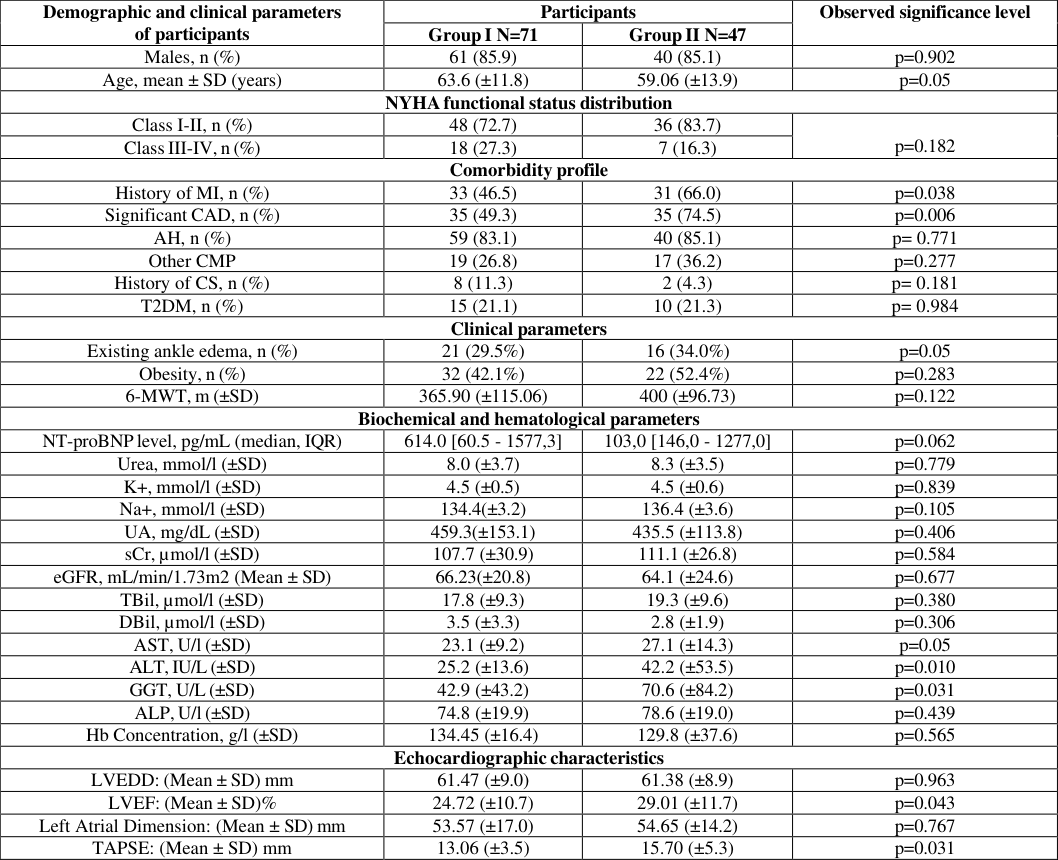 Table 1
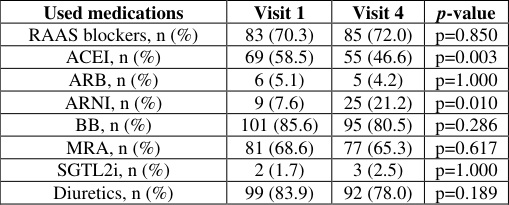 Table 3
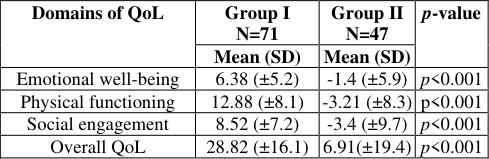 Table 2
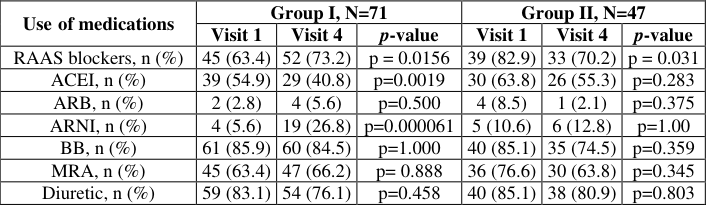 Table 4
Introduction
HF is a severe global health condition that significantly affects many aspects of patients' lives, significantly decreasing their HF QoL [1,2] . HRQOL serves as a crucial patient-reported metric that incorporates patients' viewpoints regarding the impact of HF on their daily lives and overall well-being [2,3] . An essential objective in the management of patients dealing with HF and Reduced Ejection Fraction (REF) is to enhance their overall well-being, encompassing the alleviation of symptoms, enhancement of functional capabilities, and the improvement of their QoL [4,5,6] . Ensuring medication adherence according to the HF management guidelines and introducing all primary groups of medications such as Renin-Angiotensin-Aldosterone System (RAAS) blockers, aldosterone receptor antagonists (MRAs), Beta-Blockers (BB), Sodium-Glucose Cotransporter-2 Inhibitors (SGLT2i's) [7] as fast as possible is vital for HF patients to attain improved health outcomes [5,6,8] . Consequently, medication adherence is presumed to be linked to an enhanced HRQOL [9,10] . Global efforts are underway to develop and implement monitoring programs to reduce HFrelated hospitalizations and improve patients' functional status and HRQOL [11,12] . Hobbs et al. showed that HF patients experienced statistically significant impairments in QoL in all aspects of life. Research has revealed a relationship between the emotional aspects of QoL and medication use [13,14] . Despite the established efficacy of recommended medicament treatment for HF patients, optimal treatment recommendations are not followed, resulting in decreased overall treatment efficacy. It is estimated that at least one in four patients with HF do not adhere to their prescribed medication [15,16,17] . Although increased survival is undoubtedly of the most significant clinical importance, it is also necessary to prioritize the well-being of individuals with HF, especially compared to other common chronic diseases, as HF patients experience a significantly more significant impact on their physical health [13,18,19] . The study aimed to investigate the effect of medication administration in HF patients in a long-term monitoring program.
Materials and Methods
Between March 2019 and December 2020, a study was conducted by the Department of Cardiology at the Hospital of Lithuanian University of Health Sciences Kaunas Clinics. This observational study analyzed a prospective cohort of 118 HF patients released from the Cardiology department after experiencing HF decompensation. These patients were diagnosed under the ICD-10 code I50, which includes both chronic decompensated and new onset cases. According to the Health Minister's directive No V-1330 from November 24, 2015, regarding the stipulations for cardiac consultations and patient education, each patient underwent four sequential educational consultations over a year. Data collection occurred during these sessions. The study included 118 patients who participated in four consultations with a cardiologist and an HF nurse over 12 months. All HF patients were treated and discharged from the Cardiology department because of HFrEF with the recommendation of medical treatment. All study participants provided written informed consent, allowing them to utilize their information for scientific investigation and sharing findings while preserving privacy and anonymity. Exclusion criteria excluded HF patients who did not participate in all four consultations, those with a life expectancy of less than one year, or those who died within a year of hospitalization for HF. Additionally, patients who were severely cognitively impaired, bedridden, or otherwise unable to participate effectively in assessments were also excluded. For detailed analysis, the study participants were segregated into two groups. Group I (N=71, 60.2%) decreased MLHFQ scores by more than 10 points, indicating improved HRQOL aligning with the November 2015 Ministerial Order No standards. V-1330. Group II (N=47, 39.8%) had stable or less than 10-point increases in MLHFQ scores, suggesting inadequate HRQOL improvement. The group in which the MLHFQ scores decreased by 10 points or more is identified as the group with improved QoL. This improvement is indicated by the inverse relationship between MLHFQ scores and QoL: a lower MLHFQ score corresponds to a higher QoL. Both patient groups were treated according to established clinical guidelines with pharmacological and non-pharmacological measures. Cardiology and laboratory tests were performed at each clinical visit following a standardized consultation protocol.
Clinical data collection
At the initial consultation, detailed demographic profiles and clinical characteristics of patients were collected, encompassing gender, age, physical activity level as assessed by the New York Heart Association (NYHA) classification, and the presence of comorbidities such as Cardiomyopathies (CMP), arterial hypertension (AH), history of Myocardial Infarction (MI), and significant Coronary Artery Disease (CAD), history of Cerebrovascular Stroke (CS), Type 2 Diabetes Mellitus (T2DM). Obesity, ankle edema, and symptoms of dyspnea were evaluated and recorded. The degree of obesity was determined based on a Body Mass Index (BMI) of ≥30 kg/m2. The severity of ankle edema was evaluated using a graded scale, ranging from 1+, indicating mild edema, to 4+, representing severe edema. Symptoms of dyspnea were evaluated using the 6-Minute Walk Test (6MWT), a standardized assessment tool for measuring functional exercise capacity [20] . Laboratory assessments performed during each visit included measurements of electrolytes (potassium, sodium), assessments included renal function tests (evaluating levels of urea, creatinine, and estimating the Glomerular Filtration Rate [GFR]), measurement of uric acid levels, and liver enzyme tests (assessing Aspartate Aminotransferase [AST], Alanine Transaminase [ALT], gamma-glutamyl transferase [GGT] activities) and bilirubin levels (total and direct), along with alkaline phosphatase, N-terminal pro-B-type natriuretic peptide (NT-proBNP). At the initial consultation and the fourth follow-up visit, an echocardiographic examination was performed to evaluate the systolic function of the left and right ventricles and assess cardiac status.
Assessment of QoL
MLHFQ was used to assess the impact of HF symptoms on participants' QoL during regular appointments. The 21-item MLHFQ, a disease-specific instrument, was initially employed to gauge participants' perceptions of the impact of HF on their physical and emotional states [3,21,22] . The responses to each question on the questionnaire were rated using a Likert scale ranging from 0 (representing 'No') to 5 (representing 'Very much'), and the aggregate score from all 21 items was computed. A higher MLHFQ score suggested a diminished HRQOL. Extensive research has been conducted on the MLHFQ's validity and reliability across different HF groups, verifying its effectiveness in evaluating HRQOL [3,21] . In this investigation, the Cronbach's alpha coefficient for the MLHFQ was determined to be 0.943, indicating its high reliability and consistency as an evaluative tool. Medication adherence data The information on patient's medication usage, including ACEIs, BBs, ARBs, ARNIs, MRAs, SGLT2i's (in the study population, SGLT2 inhibitors were not part of the prescribed treatments), and loop diuretics, was retrieved and recorded from the respective medical records. According to the ESC Heart Failure Management Guidelines 2021 guidelines, four conventional groups of medications for managing HFrEF must be prescribed, which include ACEIs or ARNI, beta-blockers, MRAs, and SGLT2i [5,6,23] . Loop diuretics are a choice as I class recommendation for patients with congestion until the symptoms are present [8] .
Analysis of the statistical
Data analysis was performed using SPSS 27 (Statistical Package for the Social Sciences) [24] . The continuous variables were expressed as the mean value accompanied by the Standard Deviation (SD). The McNemar test, a nonparametric method, was applied to dependent samples. The categorical variables were analyzed using the chi-square (χ2) test. The Wilcoxon test was employed to assess the normality of the data. A p-value of less than 0.05 was considered to indicate statistical significance.
Ethical considerations
Every participant was provided with written details outlining the study objectives and significance, which were accompanied by the guarantee of maintaining the confidentiality of their data and the assurance that they could withdraw their participation at any point. Informed consent was obtained in writing from all participants. To maintain anonymity, all data gathered from the participants were assigned unique, anonymized identifiers. The study was evaluated and approved by the Kaunas Regional Biomedical Research Ethics Committee (Date of Approval: October 11, 2022; Reference No.: P1-BE-2-5/2018).
Results
Baseline clinical parameters population of the study. The previously described division of participants into two groups (Group I, N=71, and Group II, N=47) exhibited a comparable gender distribution. An analysis revealed a comparable male predominance across Group I (85.9%) and Group II (85.1%), with a p-value of 0.902, indicating a lack of statistical dissimilarity (Table 1). .031 AH -arterial hypertension; ALT -alanine aminotransferase; AST -aspartate aminotransferase; ALP -alkaline phosphatase; CAD -coronary artery disease; CMP -cardiomyopathy; CS -cerebrovascular stroke; DBil -direct bilirubin; eGFR -estimated glomerular filtration rate; GGT -gamma-glutamyl transpeptidase; HB -hemoglobin; LVEDD -left ventricular end-diastolic diameter; LVEF -left ventricular ejection fraction; MI -myocardial infarction; 6-MWT -6-Minute Walk Test; NYHA -New York Heart Association; NT-proBNP -N terminal pro-btype natriuretic peptide; SCr -serum creatinine; TAPSE -tricuspid annular plane systolic excursion; TBil -total bilirubin; T2DM -type 2 diabetes mellitus; UA -uric acid.
| Demographic and clinical parameters of participants | Participants | — | Observed significance level |
|---|---|---|---|
| Group I N=71 | Group II N=47 | ||
| Males, n (%) | 61 (85.9) | 40 (85.1) | p=0.902 |
| Age, mean ± SD (years) | 63.6 (±11.8) | 59.06 (±13.9) | p=0.05 |
| NYHA functional status distribution | |||
| Class I-II, n (%) | 48 (72.7) | 36 (83.7) | p=0.182 |
| Class III-IV, n (%) | 18 (27.3) | 7 (16.3) | |
| Comorbidity profile | |||
| History of MI, n (%) | 33 (46.5) | 31 (66.0) | p=0.038 |
| Significant CAD, n (%) | 35 (49.3) | 35 (74.5) | p=0.006 |
| AH, n (%) | 59 (83.1) | 40 (85.1) | p= 0.771 |
| Other CMP | 19 (26.8) | 17 (36.2) | p=0.277 |
| History of CS, n (%) | 8 (11.3) | 2 (4.3) | p= 0.181 |
| T2DM, n (%) | 15 (21.1) | 10 (21.3) | p= 0.984 |
| Clinical parameters | |||
| Existing ankle edema, n (%) | 21 (29.5%) | 16 (34.0%) | p=0.05 |
| Obesity, n (%) | 32 (42.1%) | 22 (52.4%) | p=0.283 |
| 6-MWT, m (±SD) | 365.90 (±115.06) | 400 (±96.73) | p=0.122 |
| Biochemical and hematological parameters | |||
| NT-proBNP level, pg/mL (median, IQR) | 614.0 [60.5 - 1577,3] | 103,0 [146,0 - 1277,0] | p=0.062 |
| Urea, mmol/l (±SD) | 8.0 (±3.7) | 8.3 (±3.5) | p=0.779 |
| K+, mmol/l (±SD) | 4.5 (±0.5) | 4.5 (±0.6) | p=0.839 |
| Na+, mmol/l (±SD) | 134.4(±3.2) | 136.4 (±3.6) | p=0.105 |
| UA, mg/dL (±SD) | 459.3(±153.1) | 435.5 (±113.8) | p=0.406 |
| sCr, µmol/l (±SD) | 107.7 (±30.9) | 111.1 (±26.8) | p=0.584 |
| eGFR, mL/min/1.73m2 (Mean ± SD) | 66.23(±20.8) | 64.1 (±24.6) | p=0.677 |
| TBil, µmol/l (±SD) | 17.8 (±9.3) | 19.3 (±9.6) | p=0.380 |
| DBil, µmol/l (±SD) | 3.5 (±3.3) | 2.8 (±1.9) | p=0.306 |
| AST, U/l (±SD) | 23.1 (±9.2) | 27.1 (±14.3) | p=0.05 |
| ALT, IU/L (±SD) | 25.2 (±13.6) | 42.2 (±53.5) | p=0.010 |
| GGT, U/L (±SD) | 42.9 (±43.2) | 70.6 (±84.2) | p=0.031 |
| ALP, U/l (±SD) | 74.8 (±19.9) | 78.6 (±19.0) | p=0.439 |
| Hb Concentration, g/l (±SD) | 134.45 (±16.4) | 129.8 (±37.6) | p=0.565 |
| Echocardiographic characteristics | |||
| LVEDD: (Mean ± SD) mm | 61.47 (±9.0) | 61.38 (±8.9) | p=0.963 |
| LVEF: (Mean ± SD)% | 24.72 (±10.7) | 29.01 (±11.7) | p=0.043 |
| Left Atrial Dimension: (Mean ± SD) mm | 53.57 (±17.0) | 54.65 (±14.2) | p=0.767 |
| TAPSE: (Mean ± SD) mm | 13.06 (±3.5) | 15.70 (±5.3) | p=0.031 |
Table text extracted from the original PDF; superscript letters are shown inline. The original table image is below.
View original table image
When evaluating data, Group I had a higher percentage of patients in the III-IV NYHA functional class (27.3%) compared to Group II (16.3%) and a significantly lower LVEF (24.72% vs. 29.01%, p=0.043). Also, right ventricular dysfunction was more prominent in Group I patients (p=0.031). Group II patients had a higher prevalence of severe comorbidities, such as prior MI (66% vs. 46.5%, p=0.038) and significant CAD (74.5% vs. 49.3%, p=0.006). The prevalence of T2DM and AH was comparable between the study groups (p=0.984 and p=0.771, respectively). Ankle edema, a common clinical sign of worsening HF, tended to occur more often in Group II, with a p-value bordering significance (p=0.05). The prevalence of obesity and the 6-MWT performance did not exhibit statistically significant differences between the study groups (p=0.283 and p=0.122, respectively) Regarding laboratory parameters, NT-proBNP levels were higher in Group II (median 1030 pg/mL) compared to Group I (median 614.0 pg/mL); however, the difference between the groups did not reach the level of significance (p=0.062). Liver function tests, including ALT, AST, and GGT, were significantly elevated in Group II (p=0.010, p=0.05, and p=0.031, respectively). Additional biochemical and haematological parameters, including hemoglobin concentration, markers of renal function, and serum electrolyte levels, did not demonstrate statistically significant intergroup variations. Statistical differences in the groups were revealed in both the comprehensive score change of the MLHFQ (p<0.001) and all its subscales, encompassing emotional, physical, and social domains (p<0.001) (Table 2) during the long-term monitoring program. The intergroup differences in healthrelated QoL exhibited statistically significant variations across all domains (p<0.001), with the intervention cohort (Group I) demonstrating substantially superior improvements in QoL measures compared to the control group (Group II). These findings suggest that despite the two groups' distinct clinical profiles and comorbidity burdens, Group I benefited more from the interventions and treatments applied during the long-term monitoring program, significantly enhancing their emotional, physical, and social well-being and overall QoL. In contrast, group II showed only a tiny improvement in QoL, which may have been affected by a higher prevalence of comorbidities and less pronounced changes in the treatment regimen. The study evaluated changes in medication usage patterns between the initial (Visit 1) and follow-up (Visit 4) visits among HF patients undergoing a long-term monitoring program (Table 3). ACEI usage demonstrated a notable decline, with the proportion of patients receiving ACEIs decreasing from 58.5% at Visit 1 to 46.6% at Visit 4 (p=0.003). The reduction was likely attributed to a transition toward the newer ARNI class, whose utilization increased significantly from 7.6% at Visit 1 to 21.2% at Visit 4 (p=0.010). These observations suggest a strategic shift from ACEIs to ARNIs, which may offer improved therapeutic profiles and better tolerance in the management of HF.
| Used medications | Visit 1 | Visit 4 | p-value |
|---|---|---|---|
| RAAS blockers, n (%) | 83 (70.3) | 85 (72.0) | p=0.850 |
| ACEI, n (%) | 69 (58.5) | 55 (46.6) | p=0.003 |
| ARB, n (%) | 6 (5.1) | 5 (4.2) | p=1.000 |
| ARNI, n (%) | 9 (7.6) | 25 (21.2) | p=0.010 |
| BB, n (%) | 101 (85.6) | 95 (80.5) | p=0.286 |
| MRA, n (%) | 81 (68.6) | 77 (65.3) | p=0.617 |
| SGTL2i, n (%) | 2 (1.7) | 3 (2.5) | p=1.000 |
| Diuretics, n (%) | 99 (83.9) | 92 (78.0) | p=0.189 |
Table text extracted from the original PDF; superscript letters are shown inline. The original table image is below.
View original table image
63.8% at Visit 4, although this change was not statistically significant (p=0.345) (Table 4).
| Use of medications | Group I, N=71 | — | — | Group II, N=47 | — | — |
|---|---|---|---|---|---|---|
| Visit 1 | Visit 4 | p-value | Visit 1 | Visit 4 | p-value | |
| RAAS blockers, n (%) | 45 (63.4) | 52 (73.2) | p = 0.0156 | 39 (82.9) | 33 (70.2) | p = 0.031 |
| ACEI, n (%) | 39 (54.9) | 29 (40.8) | p=0.0019 | 30 (63.8) | 26 (55.3) | p=0.283 |
| ARB, n (%) | 2 (2.8) | 4 (5.6) | p=0.500 | 4 (8.5) | 1 (2.1) | p=0.375 |
| ARNI, n (%) | 4 (5.6) | 19 (26.8) | p=0.000061 | 5 (10.6) | 6 (12.8) | p=1.00 |
| BB, n (%) | 61 (85.9) | 60 (84.5) | p=1.000 | 40 (85.1) | 35 (74.5) | p=0.359 |
| MRA, n (%) | 45 (63.4) | 47 (66.2) | p= 0.888 | 36 (76.6) | 30 (63.8) | p=0.345 |
| Diuretic, n (%) | 59 (83.1) | 54 (76.1) | p=0.458 | 40 (85.1) | 38 (80.9) | p=0.803 |
Table text extracted from the original PDF; superscript letters are shown inline. The original table image is below.
View original table image
Discussion
The study population consisted of patients who were allocated to two distinct study groups. The first group, Group I, comprised 71 study participants, representing 60.2% of the cohort, whose MLHFQ scores decreased by more than 10 points between the first and fourth consultations. In the second group, Group II, 47 patients, representing 39.8% of the cohort, whose MLHFQ scores did not change or increase by less than 10 points between the first and fourth consultations, were included. Group I had a higher proportion of patients in NYHA functional class III-IV (27.3% versus 16.3% in Group II) and a significantly lower LVEF (24.72% versus 29.01%, p=0.043). Conversely, Group II had a higher prevalence of severe comorbidities, including prior MI (66% versus 46.5%, p=0.038) and significant CAD (74.5% versus 49.3%, p=0.006). These findings indicate that Group I presented with more severe HF symptoms and worse baseline cardiac function. These clinical differences may have influenced the observed changes in HRQOL. Previous studies have shown that a higher NYHA functional class is associated with poorer HR due to increased symptom burden and reduced physical functioning [25,26] . Similarly, lower LVEF often correlates with poorer HR [27] , indicating more severe cardiac dysfunction and more significant limitations in daily activities [28,29] .
A key finding was the significant reduction in ACEI usage from 54.9% to 40.8% (p=0.0019) in Group I, accompanied by a substantial increase in ARNI prescriptions from 5.6% to 26.8% (p=0.000061). This shift aligns with the latest 2024 guidelines from the European Society of Cardiology (ESC) and the American College of Cardiology/American Heart Association (ACC/AHA) [30,31,32] which prioritize ARNI therapy for managing HFrEF [4,5,7,33] . Studies such as the PARADIGM-HF trial have demonstrated that ARNIs, such as sacubitril/valsartan, are superior to ACEIs in reducing mortality and hospitalization rates and improving HRQOL in HFrEF patients [34,37] . In addition, total RAAS inhibitor use in group I increased from 63.4% to 73.2% (p=0.0156), indicating more complete RAAS inhibition. This comprehensive approach is critical to managing HFrEF as it helps reduce the severity of symptoms, slow disease progression, and improve survival [5, 38, 39] .
In contrast, Group II decreased RAAS inhibitor usage from 82.9% to 70.2% (p=0.031), potentially contributing to the modest HRQOL improvements observed. Despite having a higher mean LVEF, Group II patients had severe clinical conditions, evidenced by the pronounced predisposition towards previous MI and the substantial burden of significant CAD. The suboptimal RAAS inhibition in this group could have hindered more substantial improvements in HRQOL.
The study revealed that only 70% of patients received RAAS inhibitors, and similar adherence levels were observed for BB and MRA. This indicates suboptimal adherence to guideline-directed medical therapy [40] which could negatively impact patient outcomes. Optimal adherence is crucial for achieving the best possible clinical outcomes in HFrEF management [4,5,6,30] .
It is important to note that HRQOL assessments can be influenced by various factors such as age, gender, socioeconomic status, and comorbidities [41,42] . For instance, elevated liver enzyme levels, such as AST (p=0.050), ALT (p=0.010), and GGT (p=0.031) in Group II, could be associated with chronic HF and may have contributed to poorer HRQOL assessments [43,44,45] . Additionally, higher NT-proBNP levels in Group II (median 1030 pg/mL) compared to Group I (median 614.0 pg/mL), although not statistically significant (p=0.062), are typically associated with more severe HF progression and may negatively impact HRQOL [34,46,47,48] . The findings of this study are consistent with those of other significant clinical trials. The DAPA-HF trial showed that the SGLT2 inhibitor dapagliflozin and standard therapy significantly reduced the risk [49] of HF mortality and hospitalization and improved HRQOL [50] . Although this study did not directly evaluate the effects of ARNIs or RAAS inhibitors, it highlights the importance of optimizing drug therapy to improve outcomes, including quality of life.
The BIOSTAT-CHF prospective observational study evaluated the utility of biomarkers, such as NT-proBNP, in predicting outcomes and optimizing drug therapy in HF patients. The study found that monitoring biomarkers and tailoring drug therapy based on them can improve outcomes, including QoL [51] . This aligns with the present study's findings, which showed that higher NT-proBNP levels were associated with poorer QoL. Finally, the QUALIFY prospective observational study evaluated the impact of various factors, including drug therapy, on QoL in patients with HF. The results showed that an optimal combination of drugs, including ARNIs, beta-blockers, and MRAs, was associated with better QoL scores [52] . This further corroborates the conclusions of the present study regarding the importance of RAAS inhibitors and optimized drug therapy in improving the QoL in HF patients. In summary, these additional clinical trials provide important evidence supporting the importance of optimized drug therapy, particularly ARNIs, RAAS inhibitors, and biomarker monitoring, in improving the QoL in patients with HF. Limitation. Although this study provides valuable insights into the relationship between medication use and quality of life in heart failure patients, several limitations should be considered. First, selection bias may result from focusing on patients with a full 12-month follow-up, potentially excluding individuals with different experiences in the final sample. Second, although the study uses a widely accepted and reliable measure of health-related quality of life (Cronbach's alpha = 0.943), the inherent bias in patient interpretation and response to such measures should be acknowledged. Finally, the single-centre design of the Kaunas Clinics Hospital of the Lithuanian University of Health Sciences, the main tertiary referral centre in Lithuania, may influence the generalizability of the findings to other populations and healthcare facilities.
Conclusion
Group I observed a lower mean LVEF and a higher proportion of patients with NYHA class III-IV, pharmacotherapy optimization, ARNI switching, and full use of RAAS inhibitors, significantly improving HRQOL. Meanwhile, despite a higher mean LVEF and a lower percentage of NYHA class III-IV patients, the limited use of RAAS inhibitors in group II was associated with only a modest improvement in HRQOL.
References
49 in the original paper- Freedland KE, Rich MW, Carney RM. Improving Quality of Life in Heart Failure. Curr Cardiol Rep. 2021;23(11):159. DOI: 10.1007/s11886-021-01588-y.
- Virani SS, Alonso A, Benjamin EJ, et al. Heart Disease and Stroke Statistics-2020 Update: A Report from the American Heart Association. Circulation. 2020;141(9):e139-e596. DOI: 10.1161/CIR.0000000000000757.
- Rector TS, Tschumperlin LK, Kubo SH, et al. Use of the Living with Heart Failure questionnaire to ascertain patients' perspectives on improvement in quality of life versus risk of drug-induced death. J Card Fail. 1995;1(3):201-206.DOI:10.1016/1071-164(95)90025-x.
- Heidenreich PA, Bozkurt B, Aguilar D, et al. 2024 AHA/ACC/HFSA Focused Update of the 2017 ACC/AHA/HFSA Guideline for the Management of Heart Failure. J Am Coll Cardiol. 2024;79(17):e263e421. DOI: 10.1016/j.jacc.2024.05.011.
- McDonagh TA, Metra M, Adamo M, et al. 2024 ESC Guidelines for the diagnosis and treatment of acute and chronic heart failure: The Task Force for the diagnosis and treatment of acute and chronic heart failure of the European Society of Cardiology (ESC). Eur Heart J. 2024;45(1):1-112. DOI: 10.1093/eurheartj/ehaa612.
- Seferović PM, Ponikowski P, Anker SD, et al. Clinical practice update on heart failure 2019: Pharmacotherapy, procedures, devices and patient management. An expert consensus meeting report of the Heart Failure Association of the European Society of Cardiology. Eur J Heart Fail. 2019;21(10):1169-1186. DOI: 10.1002/ejhf.1531.
- Parlati ALM, Basile C, Perrone-Filardi P. Management of heart failure: similarities and discrepancies between the European Society of Cardiology and the American Heart Association guidelines. Eur Heart J Suppl. 2023;25(Suppl C):C271-C275. DOI:10.1093/eurhartjsupp/suad026.
- Jhund PS, McMurray JJV. The heart failure pandemic: prioritizing prevention strategies and optimizing treatment. Lancet. 2021;398(10314):1873-1876. DOI: 10.1016/S0140-6736(21)02087-4.
- Chui MA, Deer M, Bennett SJ, et al. Association between adherence to diuretic therapy and health care utilization in patients with heart failure. Pharmacotherapy. 2003;23(3):326-332. DOI: 10.1592/phco.23.3.326.32112.
- Li H, Morrow-Howell N, Proctor EK. Post-acute home care and hospital readmission of elderly patients with congestive heart failure. Health Soc Work. 2004;29(4):275-285. DOI: 10.1093/hsw/29.4.275.
- Jaarsma T, Hill L, Bayes-Genis A, et al. Self-care of heart failure patients: practical management recommendations from the Heart Failure Association of the European Society of Cardiology. Eur J Heart Fail. 2021;23(1):157-174. DOI: 10.1002/ejhf.2008.
- Choi EY, Park JS, Min D, Lee HS, Ahn JA. Association between self-management behavior and quality of life in people with heart failure: a retrospective study. BMC Cardiovasc Disord. 2022;22(1):90. DOI: 10.1186/s12872-022-02535-7.
- Hobbs FD, Kenkre JE, Roalfe AK, Davis RC, Hare R, Davies MK. Impact of heart failure and left ventricular systolic dysfunction on quality of life: a cross-sectional study comparing common chronic cardiac and medical disorders and a representative adult population. Eur Heart J. 2002;23(23):1867-1876. DOI: 10.1053/euhj.2002.3255.
- Silavanich V, Nathisuwan S, Phrommintikul A, Permsuwan U. Relationship of medication adherence and quality of life among heart failure patients. Heart Lung. 2019;48(2):105-110. DOI: 10.1016/j.hrtlng.2018.09.009.
- Masoudi FA, Rumsfeld JS, Havranek EP, et al. Age, functional capacity, and health-related quality of life in patients with heart failure. J Card Fail. 2004;10(5):368373. DOI: 10.1016/j.cardfail.2004.01.009.
- Riegel B, Moser DK, Carlson B, et al. Gender differences in quality of life are minimal in patients with heart failure. J Card Fail. 2003;9(1):42-48. DOI: 10.1054/jcaf.2003.1.
- Komanduri S, Jadhao Y, Guduru SS, Cheriyath P, Wert Y. Prevalence and risk factors of heart failure in the USA: NHANES 2013-2014 epidemiological follow-up study. J Community Hosp Intern Med Perspect. 2017;7(1):15-20. DOI: 10.1080/20009666.2016.1264696.
- Mehta PA, Dubrey SW, McIntyre HF, et al. Improving survival in the 6 months after diagnosis of heart failure in the past decade: population-based data from the UK. Heart. 2009;95(22):1851-1856. DOI: 10.1136/hrt.2008.156034.
- Stewart S, MacIntyre K, Hole DJ, Capewell S, McMurray JJ. More 'malignant' than cancer? Five-year survival following a first admission for heart failure. Eur J Heart Fail. 2001;3(3):315-322. DOI: 10.1016/s1388-9842(00)00141-0.
- Enright PL, Brill SE, Sherrill DL, et al. The 6-minute walk test: A standard measure for clinical practice and clinical trials. Am J Respir Crit Care Med. 2022;205(4):397-405. DOI: 10.1164/rccm.202108-1905ST.
- Chen X, Xin Y, Hu W, Zhao Y, Zhang Z, Zhou Y. Quality of life and outcomes in heart failure patients with ejection fractions in different ranges. PLoS One. 2019;14(6):e0218983. DOI: 10.1371/journal.pone.0218983.
- Paleckiene R, Zaliaduonyte D, Dambrauskiene V, Macijauskiene J. A follow-up program in patients after hospitalization for heart failure: long-term healthrelated quality of life and associated factors. Front Cardiovasc Med. 2024;11:1358390. DOI: 10.3389/fcvm.2024.1358390.
- Anker SD, Butler J, Filippatos G, et al. Empagliflozin in Heart Failure with a Preserved Ejection Fraction. N Engl J Med. 2021;385(16):1451-1461. DOI: 10.1056/NEJMoa2107038.
- IBM Corp. IBM SPSS Statistics for Windows, Version 27.0. Armonk, NY: IBM Corp; 2021.
- MacDonald BJ, Virani SA, Zieroth S, Turgeon R. Heart Failure Management in 2023: A Pharmacotherapy-and Lifestyle-Focused Comparison of Current International Guidelines. Elsevier. 2023;5(8):629-640.
- Felker GM, Shaw LK, O'Connor CM. A standardized definition of ischemic cardiomyopathy for use in clinical research. J Am Coll Cardiol. 2002;39(2):210218. DOI: 10.1016/s0735-1097(01)01738-7.
- Chandra A, Vaduganathan M, Lewis EF, et al. HealthRelated Quality of Life in Heart Failure with Preserved Ejection Fraction: The PARAGON-HF Trial. JACC Heart Fail. 2019;7(10):862-874. DOI: 10.1016/j.jchf.2019.05.012.
- Tran BX, Moir MP, Thai TPT, et al. Socioeconomic Inequalities in Health-Related Quality of Life among Patients with Cardiovascular Diseases in Vietnam. Biomed Res Int. 2018;2018:2643814. DOI: 10.1155/2018/2643814.
- De Smedt D, Kotseva K, De Bacquer D, et al. EQ-5D in coronary patients: what are they suffering from? Results from the ESC EORP European Survey of Cardiovascular Disease Prevention and Diabetes (EUROASPIRE IV) Registry. Qual Life Res. 2020;29(4):1037-1046. DOI: 10.1007/s11136-019-02334-2.
- Yancy CW, Jessup M, Bozkurt B, et al. 2013 ACCF/ AHA Guideline for the Management of Heart Failure: A Report of the American College of Cardiology Foundation/American Heart Association Task Force on Practice Guidelines. Circulation. 2013;128(16):e240e327. DOI: 10.1161/CIR.0b013e31829e8776.
- Verhestraeten C, Heggermont WA, Maris M. Clinical inertia in the treatment of heart failure: a major issue to tackle. Heart Fail Rev. 2021;26(6):1359-1370. DOI: 10.1007/s10741-020-09979-z.
- Severino P, D'Amato A, Prosperi S, et al. Heart Failure Pharmacological Management: Gaps and Current Perspectives. J Clin Med. 2023;12(3):1020. DOI: 10.3390/jcm12031020.
- Liu RC. Focused Treatment of Heart Failure with Reduced Ejection Fraction Using Sacubitril/Valsartan. Am J Cardiovasc Drugs. 2018;18(6):473-482. DOI: 10.1007/s40256-018-0280-5.
- Anholm C, Sørensen J, Andersen HU, et al. Comparison of BNP and NT-proBNP in Patients with Heart Failure and Reduced Ejection Fraction. Circ Heart Fail. 2020;13(4):e006541. DOI: 10.1161/CIRCHEARTFAILURE.119.006541.
- Kasprzak JD, Gorczyca-Głowacka I, Sobczak-Kaleta M, et al. Pharmacotherapy of heart failure A.D. 2023. Expert opinion of Working Group on Cardiovascular Pharmacotherapy, Polish Cardiac Society. Kardiol Pol. 2023;81(5):537-556. DOI: 10.33963/KP.a2023.0110.
- McMurray JJV, Packer M, Desai AS, et al. Angiotensin-Neprilysin Inhibition versus Enalapril in Heart Failure. N Engl J Med. 2014;371(11):993-1004. DOI: 10.1056/NEJMoa1409077.
- Lewis EF, Claggett BL, Hernandez AF, et al. Impact of Sacubitril/Valsartan on Health-Related Quality-of-Life Outcomes in Heart Failure with Reduced Ejection Fraction: Longitudinal Findings from the PARADIGMHF Trial. Circ Heart Fail. 2021;14(3):e007722. DOI: 10.1161/CIRCHEARTFAILURE.120.007722.
- Greene SJ, Butler J, Albert NM, et al. Medical therapy for heart failure with reduced ejection fraction: The CHAMP-HF Registry. J Am Coll Cardiol. 2018;72(4):351-366. DOI: 10.1016/j.jacc.2018.04.071.
- Ponikowski P, Anker SD, AlHabib KF, et al. Heart failure: preventing disease and death worldwide. ESC Heart Fail. 2014;1(1):4-25. DOI: 10.1002/ehf2.12005.
- Abe T, Jujo K, Kametani M, et al. Prognostic impact of additional mineralocorticoid receptor antagonists in octogenarian heart failure patients. ESC Heart Fail. 2020;7(5):2711-2724. DOI: 10.1002/ehf2.12862.
- Ludt S, Wensing M, Szecsenyi J, et al. Predictors of health-related quality of life in patients at risk for cardiovascular disease in European primary care. PLoS One. 2011;6(12):e29334. DOI: 10.1371/journal.pone.0029334.
- Petek D, Petek-Ster M, Tusek-Bunc K. Health Behavior and Health-related Quality of Life in Patients with a High Risk of Cardiovascular Disease. Zdr Varst. 2018;57(1):39-46. DOI: 10.2478/sjph-2018-0006.
- Poelzl G, Ess M, Mussner-Seeber C, Pachinger O, Frick M, Ulmer H. Liver dysfunction in chronic heart failure: prevalence, characteristics and prognostic significance. Eur J Clin Invest. 2012;42(2):153-163. DOI: 10.1111/j.1365-2362.2011.02571.x.
- Samsky MD, Patel CB, DeWald TA, et al. Cardiohepatic interactions in heart failure: an overview and clinical implications. J Am Coll Cardiol. 2013;61(24):2397-2405. DOI: 10.1016/j.jacc.2013.01.073.
- Harjola VP, Mullens W, Banaszewski M, et al. Organ dysfunction, injury and failure in acute heart failure: From pathophysiology to diagnosis and management. A review on behalf of the Acute Heart Failure Committee of the Heart Failure Association (HFA) of the European Society of Cardiology (ESC). Eur J Heart Fail. 2017;19(7):821-836. DOI: 10.1002/ejhf.795.
- Jourdain P, Jondeau G, Funck F, et al. Plasma brain natriuretic peptide-guided therapy to improve outcome in heart failure: the STARS-BNP Multicenter Study. J Am Coll Cardiol. 2007;49(16):1733-1739. DOI: 10.1016/j.jacc.2006.10.081.
- Wang Y, Zhang R, Huang Y, et al. Combining the use of amino-terminal pro-B-type natriuretic peptide and Btype natriuretic peptide in the prognosis of hospitalized heart failure patients. Clin Chim Acta. 2019;491:8-14. DOI: 10.1016/j.cca.2019.01.003.
- Januzzi JL Jr, Ahmad T, Mulder H, et al. Natriuretic Peptide Response and Outcomes in Chronic Heart Failure with Reduced Ejection Fraction. J Am Coll Cardiol. 2019;74(9):1205-1217. DOI: 10.1016/j.jacc.2019.06.055.
- Sapna F, Raveena F, Chandio M, et al. Advancements in Heart Failure Management: A Comprehensive Narrative Review of Emerging Therapies. Cureus. 2023;15(10):e46486. DOI: 10.7759/cureus.46486.