
Research article · 2024 · Full text
International Journal of Agriculture and Food ScienceHarnessing genome editing: Innovations and applications in crop science
Volume 6(2) · Pages 97–101 · DOI: 10.33545/2664844x.2024.v6.i2b.210 ↗
Research areasCRISPR and Genetic Engineering
Abstract
Author-writtenGenome editing has emerged as a revolutionary approach in crop science, offering precise modifications that enhance agricultural productivity and resilience. This review provides an in-depth exploration of various genome editing techniques, including Meganucleases (MNs), Zinc-Finger Nucleases (ZFNs), Transcriptional Activator-Like Effector Nucleases (TALENs), and the CRISPR/Cas9 system. Each technique is examined for its mechanisms, efficiencies, and applications in crop improvement. The CRISPR/Cas9 system, in particular, has become the most widely adopted method due to its simplicity and versatility, enabling targeted modifications that can lead to improved disease resistance, enhanced nutritional profiles, and better adaptation to abiotic stresses. This article aims to summarize the current advancements in genome editing technologies, highlighting their potential to address the challenges of global food security and the future of sustainable agriculture.
Summary
Source-checkedPlain-language reading of the full paper, prepared with AI and checked against the text. Each point links to the authors' own words.
Why it matters
- Global food production must increase significantly to support a population expected to surpass 9 billion by 2050. View evidence ↗
- Climate change further threatens food security by negatively impacting crop yields. View evidence ↗
- Traditional farming methods are not enough to meet future food demands, leading to the use of biotechnologies like genome editing. View evidence ↗
The question
- The paper aims to summarize advancements in genome editing and their potential to ensure global food security and sustainable agriculture. View evidence ↗
What they did
- The review examines four primary genome editing tools: Meganucleases (MNs), Zinc-Finger Nucleases (ZFNs), TALENs, and CRISPR/Cas9. View evidence ↗
- The analysis focuses on the principles, benefits, drawbacks, and specific crop improvement applications of each technology. View evidence ↗
What they found
- Meganucleases are highly specific due to their long DNA recognition sites, which range from 12 to 40 base pairs. View evidence ↗
- While ZFNs have worked in maize, tobacco, and Arabidopsis, they are less efficient and harder to design than newer tools. View evidence ↗
- TALENs are preferred over ZFNs for their easier design and fewer off-target effects, with successful use in wheat and rice. View evidence ↗
- CRISPR/Cas9 is the most widely used genome editing method because it is simple and versatile. View evidence ↗
- Knocking out SWEET11, SWEET13, and SWEET14 genes in rice using CRISPR/Cas9 provides resistance to bacterial blight. View evidence ↗
- Editing the MLO gene in wheat via CRISPR/Cas9 creates lines with strong resistance to powdery mildew. View evidence ↗
- CRISPR/Cas9-induced mutations in the ARGOS8 gene improve drought tolerance and grain yield in maize. View evidence ↗
- Knocking out the SIAGL6 gene in tomatoes using CRISPR/Cas9 improves fruit setting during high temperatures. View evidence ↗
- Seedless tomato varieties have been developed by mutating the SlIAA9 gene using CRISPR/Cas9. View evidence ↗
What it means
- Integrating genome editing into crop strategies is essential for achieving sustainable agriculture and global food security. View evidence ↗
- The full potential of genome editing is limited by regulatory obstacles, public perception, and the need for risk assessments. View evidence ↗
Visual summary
1 visualsIllustrations explain the paper; they do not show study data.
Genome Editing Tool Hierarchy
AI-generated conceptual illustration (DNA double helix and molecular protein complexes). It explains the idea and does not show study data.
View source evidence ↗Figures & tables
From the original paper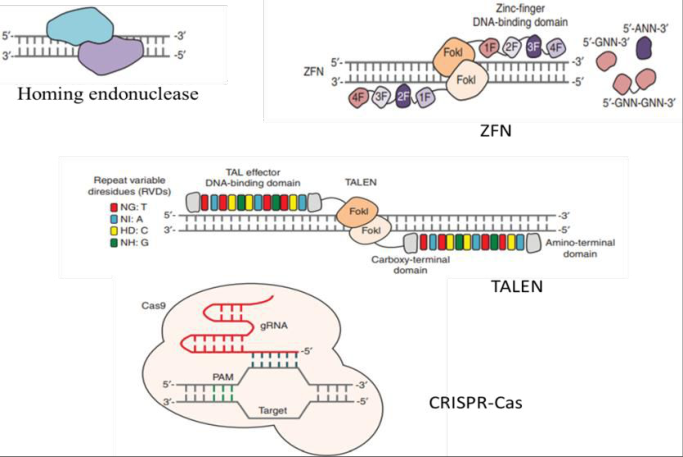 Figure 1
Introduction
The global population is projected to exceed 9 billion by 2050, necessitating a significant increase in food production to meet rising demands for food, biofuels, and livestock feed (Ahmar et al., 2020) [1] . Traditional agricultural practices are insufficient to achieve this goal, prompting the exploration of innovative biotechnological approaches such as genome editing. Genome editing techniques allow for precise modifications in the genetic makeup of crops, enabling the enhancement of desirable traits such as yield, disease resistance, and tolerance to abiotic stresses (Zhang et al., 2016) [14] . The need for increased agricultural productivity is compounded by the challenges posed by climate change, which affects crop yields and food security. As a result, there is an urgent need for technologies that can enhance crop resilience and adaptability to changing environmental conditions. Genome editing technologies have emerged as powerful tools in this context, providing researchers with the ability to make targeted modifications to plant genomes with unprecedented precision.
However, the design of MNs can be challenging, and their use has declined in favor of more versatile tools. Meganucleases are often referred to as homing endonucleases due to their natural occurrence in various organisms, where they play a role in DNA repair and recombination. The ability to design MNs for specific targets has been a significant advancement in the field of genome editing, allowing for precise modifications in diverse plant species, including Arabidopsis, Gossypium hirsutum (cotton), and maize (Zhang et al., 2016) [14] . However, the manipulation of MNs remains complex, and further research is needed to improve their efficiency and applicability in crop improvement.
Zinc-Finger Nucleases (ZFNs)
Zinc-Finger Nucleases (ZFNs) were among the first genome editing tools developed for targeted gene modification. They consist of a DNA-binding domain made up of zinc-finger motifs that recognize specific DNA triplets, coupled with a FokI nuclease domain that induces DSBs (Cermak et al., 2011) [2] . ZFNs have been successfully employed in several crops, including Arabidopsis, tobacco, and maize, but their application is often hindered by the difficulty in designing specific zinc-finger arrays and their relatively low efficiency compared to newer technologies (Voytas, 2013) [9] . The structure of ZFNs includes two main components: the zincfinger domain, which recognizes specific DNA sequences, and the FokI nuclease domain, which cleaves the DNA. ZFNs can target multiple sites within the genome, allowing for multiplexed editing. However, the design process is labor-intensive, and off-target effects can occur, necessitating careful validation of ZFN constructs before application in crop improvement. The development of ZFNs marked a significant advancement in the field of genome editing, as they provided the first truly targeted protein reagents for manipulating plant genomes. The ability to engineer ZFNs for specific targets has facilitated targeted gene modification in various plant species, leading to advancements in crop improvement (Liu et al., 2019) [7] . Despite their potential, the complexity of designing ZFNs and their relatively low efficiency compared to newer technologies have limited their widespread adoption in crop science.
Transcriptional Activator-Like Effector Nucleases (TALENs)
TALENs are another class of engineered nucleases that combine the DNA-binding properties of transcriptional activator-like effectors (TALEs) with the FokI nuclease domain. Each TALE repeat specifically recognizes a single nucleotide, allowing for precise targeting of DNA sequences (Cermak et al., 2011) [2] . TALENs have been used to edit genes in various crops, including rice and wheat, and are favored for their ease of design and lower off-target effects compared to ZFNs (Zhang et al., 2016) [14] . The TALEN system operates by fusing the TALE DNAbinding domain with the FokI nuclease domain. Each TALE repeat recognizes a specific nucleotide, enabling the construction of TALENs that can target virtually any sequence in the genome. This flexibility, combined with their relatively low off-target effects, makes TALENs a popular choice for genome editing in plants. TALENs were developed based on the natural ability of TALE proteins to bind to specific DNA sequences in plant pathogenic bacteria (Xanthomonas). The discovery of TALENs has significantly advanced the field of genome editing, allowing for precise modifications in various plant species (Liu et al., 2019) [7] . The ability to design TALENs for specific targets has facilitated targeted gene modification in crops, leading to advancements in disease resistance, stress tolerance, and other desirable traits.
CRISPR/Cas9
The CRISPR/Cas9 system has revolutionized genome editing due to its simplicity, efficiency, and versatility. It utilizes a guide RNA (gRNA) to direct the Cas9 nuclease to specific genomic locations, where it creates DSBs. The repair process can lead to targeted mutations or the insertion of new genetic material (Gao, 2021) [21] . CRISPR/Cas9 has been widely adopted in crop improvement, allowing for the development of varieties with enhanced traits such as drought resistance, disease resistance, and improved nutritional content (Zhang et al., 2016) [14] . CRISPR/Cas9 works by using a gRNA that is complementary to the target DNA sequence. The Cas9 protein binds to the gRNA and the target DNA, creating a DSB. The cell's repair mechanisms then attempt to fix the break, leading to either insertions or deletions (indels) that can disrupt gene function or the integration of new sequences if a donor template is provided. This system's ease of use and ability to target multiple genes simultaneously have made it the preferred method for genome editing in many research and agricultural settings. The discovery of the CRISPR/Cas9 system has transformed the landscape of genome editing, providing researchers with a powerful tool for precise genetic modifications in a wide range of organisms, including plants (Gao, 2021) [21] . The ability to easily design gRNAs for specific targets has facilitated rapid advancements in crop improvement, enabling the development of varieties with enhanced traits and better adaptability to environmental challenges.
New tools for plant genome editing
In addition to the established genome editing techniques, recent advancements have introduced new tools that enhance the capabilities of genome editing in plants. One such tool is CRISPR/Cpf1 (now known as Cas12a), which offers distinct advantages over the traditional CRISPR/Cas9 system. Cpf1 has a unique mechanism of action, recognizing a different protospacer adjacent motif (PAM) sequence and creating staggered cuts in the DNA, which can facilitate more efficient genome editing (Zhang et al., 2016) [14] . Cpf1's ability to generate staggered ends allows for greater flexibility in the design of donor templates for HDR, making it a valuable tool for precise genome editing. Additionally, Cpf1 does not require a separate trans-activating crRNA, simplifying the design and delivery process (Zhang et al., 2016) [14] . The introduction of Cpf1 has expanded the toolbox available for plant genome editing, providing researchers with more options for achieving specific genetic modifications. Another notable advancement is the development of base editing, which allows for the direct conversion of one DNA base into another without introducing DSBs. This technique, known as "base editing," provides a more refined approach to genome editing, enabling precise nucleotide substitutions that can enhance trait development in crops (Zhang et al., 2016) [14] . Base editing has shown promise in improving traits such as disease resistance and nutrient content, further expanding the potential applications of genome editing in crop science.
Applications in crop research
Genome editing technologies have vast applications in crop research, significantly enhancing agricultural productivity and sustainability. The following sections elaborate on the various applications of genome editing techniques, including Meganucleases (MNs), Zinc-Finger Nucleases (ZFNs), Transcriptional Activator-Like Effector Nucleases (TALENs), and CRISPR/Cas9, focusing on their contributions to disease resistance, nutritional quality, abiotic stress tolerance, and the acceleration of breeding programs.
Enhancing disease resistance
The development of disease-resistant crops is one of the most critical applications of genome editing technologies. Pathogen attacks can lead to significant yield losses, and traditional breeding methods often require several generations to achieve resistance. Genome editing allows for the precise modification of genes associated with disease susceptibility or resistance.
CRISPR/Cas9 applications Rice bacterial blight resistance:
The CRISPR/Cas9 system has been employed to knock out susceptibility genes in rice, such as the SWEET family genes (SWEET11, SWEET13, and SWEET14), conferring resistance to bacterial blight caused by Xanthomonas oryzae (Zhang et al., 2016) [14] . By targeting these genes, researchers have successfully developed rice varieties with enhanced resistance to this devastating disease.
Wheat powdery mildew resistance
The CRISPR/Cas9 system has also been utilized to edit the MLO (mildew resistance locus O) gene in wheat, which is known to be involved in susceptibility to powdery mildew. Mutations in this gene have resulted in wheat lines exhibiting strong resistance to the disease (Wang et al., 2016) [10] . Tomato Resistance to Viruses: In tomato, CRISPR/Cas9 has been used to introduce mutations in the ARGONAUTE 7 (SlAGO7) gene, which plays a role in the plant's immune response. The resulting knockout mutants have shown improved resistance to multiple pathogens, including bacterial and viral infections.
TALEN applications
Citrus canker resistance: TALENs have been used to target the promoter region of the CsLOB1 gene in citrus plants, leading to resistance against Xanthomonas citri, the causative agent of citrus canker. The resulting homozygous plants demonstrated enhanced resistance to this economically significant disease (Zhang et al., 2016) [14] .
Improving nutritional quality
Genome editing technologies also play a vital role in enhancing the nutritional profiles of crops, addressing global malnutrition and dietary deficiencies.
CRISPR/Cas9 applications Soybean Oil composition:
Researchers have utilized CRISPR/Cas9 to modify the FAD2 genes in soybean, which are responsible for the production of polyunsaturated fatty acids. By knocking out these genes, the oleic acid content in soybean oil has been significantly increased, resulting in healthier oil with improved oxidative stability (Zhang et al., 2016) [14] .
Biofortified crops
Genome editing has been applied to enhance the levels of essential vitamins and minerals in staple crops. For instance, CRISPR/Cas9 has been used to increase the provitamin A (beta-carotene) content in rice, leading to the development of biofortified varieties that can help combat vitamin A deficiency in developing countries (Zhang et al., 2016) [14] .
Tolerance to abiotic stresses
As climate change poses significant challenges to agriculture, developing crops that can withstand abiotic stresses such as drought, salinity, and extreme temperatures is crucial. Genome editing technologies have proven effective in enhancing stress tolerance in various crops.
CRISPR/Cas9 applications Drought tolerance in maize:
Mutations in the ARGOS8 gene in maize have been induced using CRISPR/Cas9, resulting in improved drought tolerance. The modified maize lines have demonstrated enhanced grain yield under drought conditions, showcasing the potential of genome editing to develop climate-resilient crops (Zhang et al., 2016) [14] .
Salt tolerance in rice
The OsNAC041 gene, associated with salt stress tolerance, has been targeted using CRISPR/Cas9. The knockout of this gene has resulted in rice varieties with improved salinity tolerance, enabling them to thrive in saline soils (Zhang et al., 2016) [14] .
Accelerating breeding programs
Genome editing can significantly accelerate traditional breeding programs by allowing for the rapid introduction of desirable traits without the lengthy backcrossing processes typically required in conventional breeding. Techniques such as speed breeding, combined with genome editing, enable the development of new crop varieties in shorter timeframes, facilitating quicker responses to changing agricultural demands (Zhang et al., 2016) [14] .
Speed breeding and genome editing
Speed breeding utilizes controlled environments with extended photoperiods to accelerate the breeding cycle. When combined with genome editing, this approach allows for the rapid generation of new crop varieties with specific traits. For example, researchers have successfully integrated CRISPR/Cas9 with speed breeding techniques to develop new wheat varieties in a fraction of the time required by traditional methods (Zhang et al., 2016) [14] .
Development of climate-resilient crops
The CRISPR technology is widely used to develop climateresilient crops that can withstand biotic and abiotic stresses. This application is crucial for ensuring food security in the face of changing environmental conditions.
Heat stress tolerance in tomatoes
The SIAGL6 gene has been targeted using CRISPR/Cas9 to improve heat tolerance in tomatoes. Knockout mutations in this gene have resulted in enhanced fruit setting under hightemperature conditions, demonstrating the potential of genome editing to develop crops that can thrive in a warming climate (Zhang et al., 2016) [14] .
Salinity tolerance in soybean
The Drb2a and Drb2b genes, which are involved in regulating salt and drought tolerance, have been edited using CRISPR/Cas9 in soybean. The resulting mutants have shown improved resistance to salinity, highlighting the role of genome editing in developing resilient crops (Zhang et al., 2016) [14] .
Applications in horticultural crops
Genome editing technologies have also found applications in horticultural crops, enhancing traits such as fruit quality, yield, and shelf life.
Seedless Fruits CRISPR/Cas9 has been employed to induce parthenocarpy in various fruit crops, leading to the development of seedless varieties. For example, mutations in the SlIAA9 gene in tomato have resulted in seedless fruits, which are increasingly popular among consumers (Zhang et al., 2016) [14] .
Improved shelf life in tomatoes
The Ripening Inhibitor (RIN) gene, which regulates fruit ripening in tomatoes, has been targeted using CRISPR/Cas9 to create mutants with delayed ripening and improved shelf life. These modifications can significantly reduce post-harvest losses and enhance marketability (Zhang et al., 2016) [14] .
Future prospects and challenges
While genome editing technologies hold immense promise for crop improvement, several challenges remain. These include regulatory hurdles, public acceptance, and the need for comprehensive risk assessments. As researchers continue to innovate and refine genome editing techniques, it is crucial to address these challenges to fully realize the potential of these technologies in sustainable agriculture. In conclusion, the applications of genome editing in crop research are vast and varied, with significant implications for enhancing disease resistance, improving nutritional quality, increasing tolerance to abiotic stresses, and accelerating breeding programs. As technologies continue to advance, the integration of genome editing into crop improvement strategies will play a critical role in ensuring global food security and sustainable agricultural practices.
Conclusion
Genome editing technologies represent a powerful suite of tools for advancing crop science and addressing global food security challenges. Techniques such as CRISPR/Cas9, ZFNs, and TALENs have demonstrated their potential to enhance crop traits, improve nutritional quality, and confer resistance to diseases and environmental stresses. As research continues to evolve, the integration of these technologies into breeding programs will likely lead to the development of innovative crop varieties that can meet the demands of a growing population in a changing climate. The future of agriculture may well depend on the successful application of genome editing to create resilient, highyielding crops that contribute to food security and sustainability.
Figures and tables from the paper
References
14 in the original paper- Ahmar S, Saeed S, Khan MHU, Khan SU, MoraPoblete F, Kamran M, Faheem A, Maqsood A, Rauf M, Saleem S, Hong W-J, Jung K-H. A revolution toward gene-editing technology and its application to crop improvement. Int J Mol Sci. 2020;21(15):5665.
- Cermak T, et al. Efficient design and assembly of custom TALEN and TAL effector nuclease expression vectors. PLoS One. 2011;6(10):e19712.
- Chen K, et al. CRISPR/Cas9-mediated genome editing in plants: A review. Front Plant Sci. 2019;10:1-12.
- Gao C. Genome editing in plants: The CRISPR/Cas9 system. Annu Rev Plant Biol. 2021;72:1-27.
- Kwon CT, et al. Genome editing for crop improvement: Current progress and future prospects. Mol Plant. 2019;12(1):1-14.
- Liu S, et al. Genome editing for crop improvement: Current progress and future prospects. Nat Rev Genet. 2020;21(1):1-18.
- Liu Y, et al. Advances in genome editing technology and its applications in crop improvement. Plant Biotechnol J. 2019;17(1):6-19.
- Ricroch AE, et al. The role of genome editing in plant breeding. Nat Biotechnol. 2017;35(2):122-123.
- Voytas DF. Plant genome engineering with sequencespecific nucleases. Annu Rev Plant Biol. 2013;64:327350.
- Wang H, et al. CRISPR/Cas9 for plant genome editing: Progress and prospects. Plant Cell Rep. 2016;35(10):2001-2011.
- Wang Y, et al. Advances in genome editing technology and its applications in crop improvement. Mol Plant. 2020;13(3):1-14.
- Xu R, et al. CRISPR/Cas9 technology in plants: Applications and future perspectives. Plant Biotechnol J. 2019;17(1):1-15.
- Zhang H, et al. Applications of CRISPR/Cas9 technology in plant genome editing. Plant Biotechnol J. 2020;18(4):845-856.
- Zhang Y, et al. CRISPR/Cas9-mediated genome editing in plants: A review. Front Plant Sci. 2016;7:1-10.