
Research article · 2024 · Full text
International Journal of Agriculture and Food ScienceThe role of grain storage in enhancing sorghum quality for agricultural and food systems
Volume 6(2) · Pages 173–175 · DOI: 10.33545/2664844x.2024.v6.i2c.221 ↗
Research areasCrop Yield and Soil FertilityBioenergy crop production and management
Abstract
Author-writtenSorghum, a vital cereal crop globally, is indispensable for food security, particularly in arid and semi-arid regions. Despite its resilience, post-harvest losses due to inadequate storage methods significantly impact its nutritional value, physical integrity, and marketability. This article explores how grain storage practices enhance sorghum quality by preserving its nutritional and physical attributes and ensuring its integration into sustainable agricultural and food systems. A comparative analysis of traditional and modern storage techniques highlights the transformative potential of advanced systems such as hermetic storage, controlled atmosphere systems, and biopolymer coatings.
Summary
Source-checkedPlain-language reading of the full paper, prepared with AI and checked against the text. Each point links to the authors' own words.
Why it matters
- Sorghum is a drought-resistant cereal crop essential for food security in parts of the Americas, Asia, and Africa. View evidence ↗
- In addition to being a staple food, sorghum is used as an industrial raw material for brewing and biofuels, as well as for animal feed. View evidence ↗
- Biochemical degradation, fungal contamination, and pests cause post-harvest losses that reduce market access, farmer income, and food availability. View evidence ↗
The question
- The paper aims to address post-harvest storage challenges for sorghum to minimize losses and preserve its culinary and nutritional qualities. View evidence ↗
What they did
- The author performed a comparative analysis between traditional storage and modern systems, including biopolymer coatings, controlled atmosphere systems, and hermetic storage. View evidence ↗
What they found
- Global estimates indicate that suboptimal storage, fungal contamination, and pest infestations lead to post-harvest grain losses of 20-30%. View evidence ↗
- Hermetic storage can preserve grain quality for more than 12 months and reduce post-harvest losses by as much as 90%. View evidence ↗
- Seeds stored under hermetic conditions maintain a germination rate exceeding 85%, whereas traditional systems only maintain a 50% rate. View evidence ↗
- By creating an oxygen-free environment that stops microbial and enzymatic activity, hermetic storage preserves micronutrient bioavailability and protein levels. View evidence ↗
- Biopolymer coatings like alginate and chitosan provide antimicrobial benefits and act as barriers against pests and moisture. View evidence ↗
- The use of IoT-enabled monitoring systems allows operators to optimize storage by providing real-time data on pest activity, humidity, and temperature. View evidence ↗
What it means
- The author concludes that the limitations of widespread traditional storage methods make a transition to biopolymer coatings, controlled atmospheres, and hermetic storage necessary. View evidence ↗
- The author recommends that stakeholders invest in farmer education and modern storage infrastructure to maximize sorghum's potential in global food systems. View evidence ↗
Visual summary
1 visualsIllustrations explain the paper; they do not show study data.
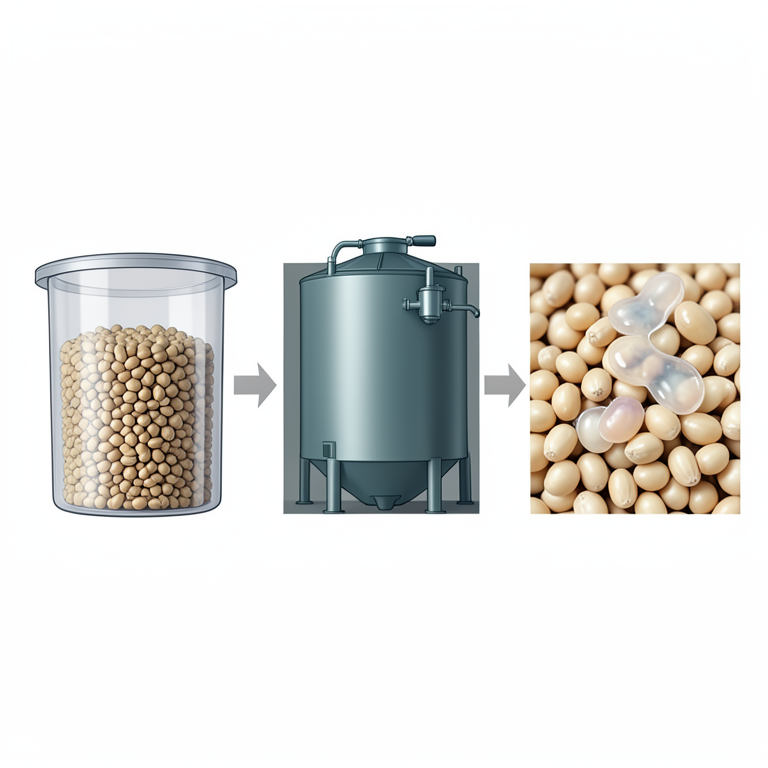
Comparison of Sorghum Storage Methods
AI-generated conceptual illustration (sorghum grains). It explains the idea and does not show study data.
View source evidence ↗Introduction
Sorghum (Sorghum bicolor), a drought-resistant cereal crop, plays a crucial role in ensuring food security across Africa, Asia, and parts of the Americas. With its rich nutritional composition and ability to thrive in harsh climates, sorghum supports millions of smallholder farmers and rural communities. Beyond its use as a staple food, sorghum also serves as animal feed and an industrial raw material for biofuels and brewing. However, one of the persistent challenges in sorghum production is the effective storage of harvested grains. Postharvest losses due to pests, fungal contamination, and biochemical degradation not only reduce food availability but also affect farmers' incomes and market access. Traditional storage systems, while affordable and widespread, are often inadequate in preserving grain quality. This paper explores the role of effective grain storage in enhancing sorghum quality, with a focus on advanced techniques that align with sustainable agricultural and food systems.
Objective
The objective of this paper is to explore and address the challenges associated with postharvest storage of sorghum in agricultural systems, with a focus on preserving its nutritional and culinary qualities while minimizing losses.
Storage challenges in agricultural systems
Agricultural systems, particularly in developing countries, face numerous challenges in postharvest storage, leading to significant economic losses, reduced food security, and compromised grain quality. Studies estimate that 20-30% of grains are lost post-harvest globally due to pest infestations, fungal contamination, and suboptimal storage conditions (FAO, 2021) [2] . In sorghum, these losses are exacerbated by the grain's sensitivity to moisture and environmental factors, which create a conducive environment for microbial growth and nutrient degradation. Traditional storage systems, such as woven bags and earthen silos, are often used in low-resource settings due to their affordability and accessibility. However, these systems are highly susceptible to pest infiltration and moisture accumulation, which lead to physical and nutritional deterioration (Tefera et al., 2011) [4] . Pests such as Sitophilus zeamais (maize weevil) and Prostephanus truncatus (larger grain borer) are among the primary culprits in traditional storage systems. They thrive in poorly sealed environments, causing extensive grain losses and rendering the stored sorghum unsuitable for consumption or sale.
Fungal infestations, particularly by Aspergillus species, result in the production of aflatoxins, which pose serious health risks to humans and animals (Murdock et al., 2012). The lack of temperature and humidity control in traditional storage exacerbates these issues, leading to the rapid deterioration of grain quality. Storage challenges are further compounded by socioeconomic factors. Limited access to modern storage technologies, insufficient farmer education, and the absence of supportive policies hinder the adoption of effective storage practices. Studies have highlighted the economic burden of post-harvest losses, which disproportionately affect smallholder farmers, reducing their income and financial resilience. Addressing these challenges requires a shift from traditional practices to sustainable, technologically advanced storage solutions that prioritize food safety, quality, and environmental sustainability.
Enhancing sorghum quality through storage
The quality of sorghum grains is directly influenced by storage conditions. Key quality parameters include nutritional content, physical integrity, germination potential, and sensory attributes such as flavor and aroma. Proper storage techniques play a crucial role in preserving these attributes, ensuring that sorghum remains a viable food source and an economically valuable commodity. Nutritional retention is a critical aspect of sorghum quality. Sorghum is rich in macronutrients like carbohydrates and proteins and micronutrients such as iron and zinc. However, traditional storage methods often fail to prevent the degradation of these nutrients. High humidity levels promote enzymatic activity and microbial growth, leading to nutrient loss and the formation of anti-nutritional factors. Hermetic storage systems have been shown to maintain protein levels and preserve the bioavailability of micronutrients by creating an oxygen-free environment that inhibits enzymatic and microbial activity (De Groote et al., 2020) [1] . The physical integrity of sorghum grains is another essential quality parameter. Grains stored in traditional systems are prone to breakage, discoloration, and pest-induced damage, which reduce their marketability. Modern storage techniques, such as controlled atmospheres, effectively preserve the physical attributes of grains by stabilizing environmental conditions and preventing oxidative damage (CGIAR, 2021) [7] . Biopolymer coatings further enhance physical integrity by forming a protective barrier against moisture and pests (Kumar et al., 2019) [3] . Germination potential is particularly important for sorghum seeds used in planting. Traditional storage systems often expose seeds to fluctuating temperatures and high humidity, resulting in reduced viability. Research has shown that seeds stored in hermetic conditions maintain a germination rate of over 85%, compared to 50% in traditional systems (Tefera et al., 2011) [4] . This high germination rate not only supports agricultural productivity but also reduces the need for frequent seed purchases, benefiting farmers economically.
Modern storage techniques and their benefits
Modern storage techniques address the limitations of traditional systems by integrating advanced technologies and scientific principles. These methods include hermetic storage, controlled atmosphere systems, biopolymer coatings, and solar-powered drying and cooling systems, each offering unique benefits. Hermetic storage, which involves the use of airtight containers, has emerged as a highly effective solution for preventing pest infestations and microbial growth. Studies have demonstrated that hermetic storage can reduce postharvest losses by up to 90% while preserving grain quality for over 12 months (De Groote et al., 2020) [1] . Popular solutions include GrainPro Bags and metal silos, which are reusable, durable, and adaptable to various agricultural contexts. Controlled atmosphere storage, another advanced technique, involves manipulating the composition of gases such as oxygen, carbon dioxide, and nitrogen to create conditions unfavorable for pests and fungi. This method has been shown to achieve spoilage reductions of up to 95%, making it particularly effective for commercial storage operations (CGIAR, 2021) [7] . Biopolymer coatings, such as chitosan and alginate, serve as protective barriers against moisture and pests while offering antimicrobial benefits. These coatings not only enhance the safety and longevity of stored grains but also align with sustainability goals due to their biodegradable nature (Kumar et al., 2019) [3] . Solar-powered drying and cooling systems provide an energy-efficient solution for moisture control, particularly in rural areas with limited access to electricity. These systems help reduce fungal contamination by maintaining optimal moisture levels, ensuring that grains remain safe and nutritious. The benefits of these modern techniques extend beyond grain preservation. They contribute to economic stability by reducing post-harvest losses and improving marketability. Additionally, they align with environmental conservation goals by minimizing reliance on chemical fumigants and incorporating renewable energy sources.
Integration with agricultural and food systems
The integration of modern storage techniques with broader agricultural and food systems is essential for maximizing their impact. These technologies must be embedded within supply chains to ensure seamless transitions from production to storage, processing, and distribution. For example, hermetic storage can be combined with solar drying systems to create a holistic post-harvest management approach that addresses multiple stages of the supply chain. The role of digital technologies, such as Internet of Things (IoT)-enabled monitoring systems, is becoming increasingly important in this integration. IoT devices can provide realtime data on temperature, humidity, and pest activity, enabling farmers and storage operators to make informed decisions and optimize storage conditions. This proactive approach reduces spoilage and enhances the efficiency of storage operations. Policy support and farmer education are critical components of this integration. Governments and agricultural organizations must invest in infrastructure, subsidies, and training programs to facilitate the adoption of modern storage techniques. For example, subsidies for metal silos and GrainPro Bags have proven effective in encouraging farmers to transition from traditional systems (Tefera et al., 2011) [4] . Finally, modern storage techniques must be scalable and adaptable to diverse agricultural contexts. Smallholder farmers, who constitute the majority of sorghum producers in developing countries, require affordable and user-friendly solutions that address their unique challenges. By tailoring storage technologies to the needs of different stakeholders, the agricultural sector can achieve greater equity and inclusivity in post-harvest management.
Conclusion
Grain storage plays a pivotal role in enhancing the quality of sorghum, ensuring its integration into sustainable agricultural and food systems. While traditional storage methods remain widespread, their limitations necessitate a transition to advanced systems such as hermetic storage, controlled atmospheres, and biopolymer coatings. These technologies not only preserve sorghum's nutritional and physical quality but also contribute to economic stability and food security. By investing in modern storage infrastructure and farmer education, stakeholders can unlock the full potential of sorghum in global food systems.
References
5 in the original paper- De Groote H, Kimenju SC, Likhayo P, et al. Hermetic storage technologies reduce post-harvest losses of maize and sorghum in Africa. Food Sec. 2020;12(3):435-446.
- Kumar R, Gupta A, Sharma S. Antimicrobial properties of chitosan coatings for grain storage. Int J Biol Macromol. 2019;132:124-130.
- Tefera T, Kanampiu F, de Groote H, et al. The metal silo: An effective grain storage technology for reducing post-harvest losses in Africa. Int J Pest Manag. 2011;57(3):177-186.
- Williams P, Okoye F, Adebayo A. Impact of storage methods on the nutritional quality of cereals in subSaharan Africa. J Agron Food Sci. 2022;14(4):345-360.
- Hussen A. Impact of grain storage method on sorghum grain quality in Ethiopia: A review. J Curr Res Food Sci. 2021;2(1):40-45.