
Research article · 2024 · Full text
International Journal of Agriculture and Food SciencePesticide resistance in insects: Challenges and sustainable solutions for modern agriculture
Volume 6(2) · Pages 121–127 · DOI: 10.33545/2664844x.2024.v6.i2b.215 ↗
Research areasInsect Pest Control StrategiesInsect Resistance and GeneticsEntomopathogenic Microorganisms in Pest Control
Abstract
Author-writtenPesticide resistance in insects is a growing challenge that threatens the sustainability of modern agricultural practices. This resistance, which arises from genetic adaptations within pest populations, reduces the effectiveness of chemical controls and necessitates higher doses or alternative, often more toxic, pesticides. The rise in resistance has profound implications for crop yields, economic costs, environmental health, and human safety. This paper investigates the underlying mechanisms of insect pesticide resistance, including genetic mutations, selection pressures, and cross-resistance. It also explores the broad-spectrum impacts of resistance, such as disruptions to ecological balance, harm to beneficial organisms, and increased pesticide residues in the environment. To address these challenges, the paper advocates for a shift towards Integrated Pest Management (IPM) strategies, which combine chemical, biological, and cultural controls. Emphasis is placed on practices such as rotation of active ingredients, use of resistant crop varieties, and the promotion of natural pest predators. By adopting these sustainable solutions, agriculture can mitigate the adverse effects of resistance, reduce reliance on chemical pesticides, and promote long-term ecological and economic resilience.
Summary
Source-checkedPlain-language reading of the full paper, prepared with AI and checked against the text. Each point links to the authors' own words.
Why it matters
- Insect pesticide resistance is an increasing problem that puts the sustainability of modern farming at risk. View evidence ↗
- The development of resistance negatively impacts agricultural productivity, financial costs, the environment, and human health. View evidence ↗
- Resistance is primarily driven by the misuse and overuse of chemicals, a lack of diverse management strategies, and poor monitoring. View evidence ↗
The question
- The paper aims to investigate the mechanisms behind insect pesticide resistance, such as selection pressures and genetic mutations. View evidence ↗
- The research explores how pesticide resistance impacts agricultural sustainability and identifies innovative strategies to mitigate these effects. View evidence ↗
What they did
- The authors conducted a review of the genetic and evolutionary mechanisms that allow insects to develop resistance. View evidence ↗
- The analysis focuses on sustainable solutions such as regulatory frameworks, natural enemies, and biopesticides. View evidence ↗
What they found
- There are four primary mechanisms of resistance: behavioral, metabolic, target-site, and penetration resistance. View evidence ↗
- Metabolic resistance is the most frequent form of resistance, occurring when pests increase their ability to detoxify chemicals. View evidence ↗
- Resistance in the Colorado potato beetle to multiple insecticides has led to significant yield losses in potato production. View evidence ↗
- Increased pesticide application to combat resistance causes environmental contamination that harms pollinators, soil microbes, and natural predators. View evidence ↗
- The high reproductive rate of Aphis gossypii allows it to evolve resistance quickly, making it a persistent pest in cotton. View evidence ↗
- The use of Bt cotton has been shown to maintain effective pest control while reducing the requirement for chemical insecticides. View evidence ↗
- Combining the SeMNPV virus with lower insecticide doses restored susceptibility in resistant populations of the beet armyworm. View evidence ↗
What it means
- The authors conclude that sustainable solutions depend on integrated strategies that reduce chemical reliance and promote ecological balance. View evidence ↗
- The authors state that global cooperation, policy reforms, and education are essential for adopting sustainable pest management. View evidence ↗
Visual summary
1 visualsIllustrations explain the paper; they do not show study data.
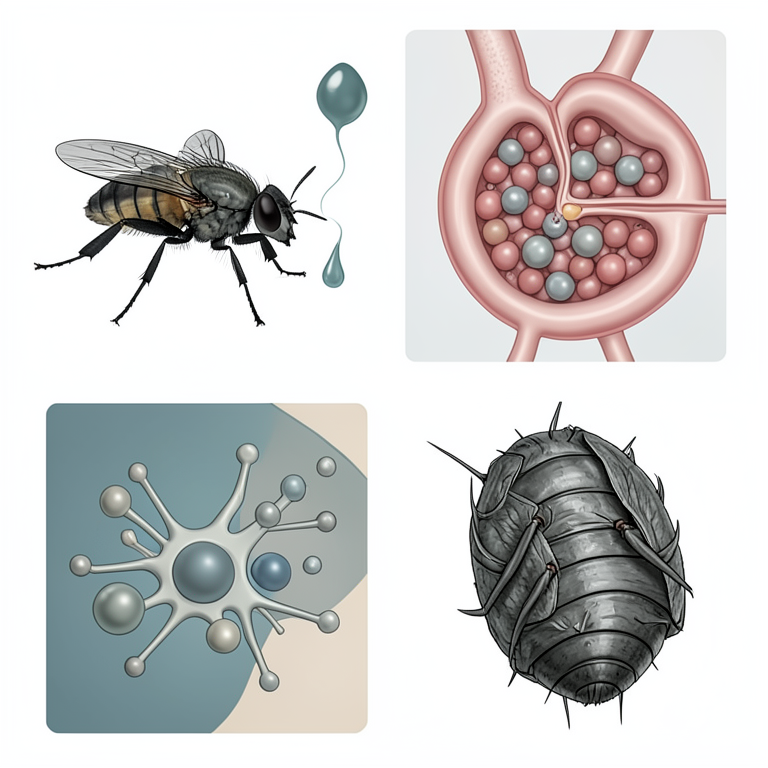
Mechanisms of Pesticide Resistance
AI-generated conceptual illustration (houseflies (Musca domestica)). It explains the idea and does not show study data.
View source evidence ↗Introduction
Pesticide resistance in insects has emerged as a critical challenge in modern agriculture, threatening crop productivity, food security, and environmental sustainability. Resistance arises when insect populations adapt to withstand the effects of pesticides, rendering these chemical controls less effective over time. This phenomenon poses a severe obstacle to pest management, as the continued reliance on pesticides often exacerbates resistance development, leading to a vicious cycle of increased pesticide use, rising control costs, and reduced efficacy. The agricultural sector, striving to meet the demands of a growing global population, faces the dual challenge of managing pests effectively while minimizing environmental and human health risks. Pesticide resistance complicates this balance, as it not only reduces the effectiveness of conventional pest control measures but also promotes the resurgence of resistant insect populations, secondary pest outbreaks, and biodiversity loss. Addressing pesticide resistance requires a multifaceted approach that integrates biological, chemical, and cultural strategies into sustainable pest management practices (Souto et al., 2021) [17] . Key factors contributing to pesticide resistance include the overuse and misuse of chemical pesticides, lack of diversified pest management strategies, and insufficient monitoring of resistance development. Moreover, agricultural intensification and monocropping systems create ideal conditions for pests to thrive and adapt (Campos et al., 2019) [4] . As a result, resistance has been documented in numerous insect species, including major agricultural pests such as Helicoverpa armigera, Plutella xylostella, and Bemisia tabaci. To combat pesticide resistance, integrated pest management (IPM) strategies have gained prominence. IPM emphasizes the combined use of biological control agents, crop rotation, habitat management, and judicious use of pesticides (Rauf, 2024; AwadFahad, 2023) [14,2] . Emerging technologies, such as genetic engineering, molecular diagnostics, and digital pest monitoring systems, also hold promise in enhancing the precision and effectiveness of pest management programs.
This article explores the underlying mechanisms of pesticide resistance, its impact on agricultural sustainability, and innovative strategies to mitigate its effects. Special attention is given to sustainable solutions, including the use of biopesticides, the promotion of ecological balance through natural enemies, and the implementation of regulatory frameworks to manage pesticide use. By fostering a deeper understanding of pesticide resistance and advocating for sustainable practices, the agricultural community can work towards preserving the long-term viability of pest management systems.
Understanding pesticide resistance
Pesticide resistance refers to the ability of a pest population, including insects, weeds, fungi, or other organisms, to survive and reproduce despite the application of a pesticide that was previously effective in controlling it. Over time, this results in the pesticide losing its efficacy, leading to significant challenges in pest management and agricultural productivity.
Definition of pesticide resistance
The Insecticide Resistance Action Committee (IRAC) defines pesticide resistance as: "A heritable change in the sensitivity of a pest population that is reflected in the repeated failure of a product to achieve the expected level of control when used according to the label recommendations for that pest species."
Concept of pesticide resistance
Pesticide resistance arises as a result of evolutionary processes. When a pesticide is applied, it exerts a selection pressure on the pest population. While most pests are susceptible and killed, a small proportion may naturally possess genetic variations that allow them to survive. These survivors reproduce, passing on their resistant traits to their offspring. Repeated pesticide applications intensify this selection, eventually leading to a predominantly resistant pest population. Key points in the concept of resistance include: 1. Genetic variation: Resistance arises due to genetic diversity within pest populations. Mutations or existing genetic traits may confer resistance to certain pesticides.
Selection pressure:
The more frequently a single pesticide or mode of action is used, the stronger the selection pressure, accelerating the development of resistance.
Heritability:
The resistance traits are inheritable, meaning the progeny of resistant pests will likely carry the same traits, perpetuating the issue. [9,5,16] .
Behavioral resistance
Behavioral resistance refers to changes in the pest's behavior that help it avoid exposure to pesticides. This can be one of the earliest forms of resistance to evolve. Behavioral adaptations may include: Avoidance of treated areas: Insects may develop an aversion to surfaces sprayed with pesticides, reducing their exposure. Change in activity patterns: Nocturnal pests may shift to diurnal behavior or vice versa to evade spraying times. Reduced ingestion of pesticides: Pests might change their feeding habits to consume untreated plant parts or avoid baits.
For example, the German cockroach (Blattella germanica) has shown reduced bait acceptance due to sugar aversion, a behavioral adaptation to avoid pesticide-laced baits.
Metabolic resistance
Metabolic resistance is the most common and versatile form of resistance. It occurs when pests enhance their ability to detoxify or degrade pesticides before they reach their target site. This is achieved through the overproduction of specific enzymes, including: Cytochrome P450 monooxygenases: These enzymes oxidize pesticides, reducing their toxicity. Carboxylesterases: These hydrolyze ester bonds in certain insecticides, such as organophosphates and pyrethroids. Glutathione-S-transferases (GSTs): These conjugate pesticides with glutathione, making them less harmful.
For instance, metabolic resistance in mosquitoes (Anopheles spp. and Aedes spp.) against pyrethroids and organophosphates has been linked to elevated P450 enzyme activity.
Target-site resistance
Target-site resistance occurs when mutations in the pest's genetic makeup alter the site of action where the pesticide binds, reducing its effectiveness. These mutations are usually point mutations in specific genes and include: Voltage-gated sodium channels: Mutations in these channels can confer resistance to pyrethroids and DDT, a phenomenon known as "knockdown resistance" or kdr. Acetylcholinesterase (AChE): Changes in AChE can prevent organophosphates and carbamates from effectively inhibiting this enzyme, leading to resistance. GABA receptors: Mutations in GABA-gated chloride channels reduce susceptibility to cyclodiene insecticides.
A well-documented example is kdr mutations in mosquito populations, which render pyrethroid-treated bed nets less effective in controlling malaria vectors.
Penetration resistance
Penetration resistance involves changes in the pest's cuticle or outer protective layer that reduce the absorption of pesticides. These changes include: Thicker cuticle formation: A thicker or waxier cuticle slows down the rate of pesticide penetration, giving pests more time to detoxify the chemical. Altered cuticle composition: Changes in lipid or protein composition can also impact pesticide uptake.
This mechanism is often observed in combination with metabolic or target-site resistance, compounding the problem of control. For example, bed bugs (Cimex lectularius) with thicker cuticles show reduced susceptibility to pyrethroids.
Cross-resistance and multiple resistance
While not a standalone mechanism, cross-resistance and multiple resistance amplify the challenges posed by resistance: Cross-resistance: Occurs when a single resistance mechanism provides tolerance to multiple pesticides with similar modes of action. For example, enhanced cytochrome P450 activity can confer resistance to both organophosphates and pyrethroids. Multiple resistance: Occurs when a pest population exhibits more than one resistance mechanism, making it resistant to multiple classes of pesticides.
Impacts of pesticide resistance
Pesticide resistance has profound and far-reaching effects on agricultural systems, the environment, and global food security. It compromises the effectiveness of chemical control measures, leading to the increased use of more toxic or higher doses of pesticides, and ultimately, escalating costs for farmers. The impacts of pesticide resistance can be categorized into several key areas:
Agricultural productivity losses
The primary impact of pesticide resistance is the reduction in the effectiveness of pest control strategies, which directly affects agricultural productivity. Pesticides are used to protect crops from a wide range of insect pests, weeds, and diseases that can cause significant damage. However, as pest populations become resistant to the chemicals, farmers are left with fewer options for controlling infestations.
Increased pest population: Resistant pests survive pesticide applications, leading to larger and more persistent pest populations. These pests continue to damage crops, reducing yield potential. For example, in the case of the Colorado potato beetle, which has developed resistance to multiple insecticides, farmers have seen a marked decrease in the effectiveness of traditional pest control methods, causing significant yield losses in potato production (Cohen et al., 2008) [6] . Secondary pest outbreaks: The overuse of a single pesticide can lead to an imbalance in pest populations, where non-target pests may proliferate. These secondary pest outbreaks can further harm crops, reducing overall productivity. For example, the use of broad-spectrum insecticides in cotton farming has led to outbreaks of pests like aphids, which were previously controlled by natural predators.
Increased costs for farmers
Resistance management is expensive, both in terms of increased pesticide applications and the adoption of alternative control methods. Farmers facing resistance issues must often apply higher doses or more frequent treatments of pesticides to achieve the same level of pest control. In some cases, this leads to the need for more expensive or less effective chemicals. Higher pesticide costs: Resistance can lead to the necessity of switching to newer or more potent pesticides, which are often more expensive. As pests develop resistance, farmers may also need to rotate between different pesticides or resort to a mix of chemicals, further driving up costs. Loss of profitability: The increased costs associated with pesticide resistance along with the potential for yield losses can make farming less profitable, particularly for small-scale farmers who may not have the financial resources to invest in additional pest control measures.
Environmental implications
Pesticide resistance not only affects crop production but also poses serious environmental risks. The continued reliance on chemical pesticides has several negative consequences for ecosystems, including: Pollution and contamination: Increased pesticide use due to resistance can lead to environmental contamination, especially if chemicals leach into the soil and water or drift to non-target areas. This has harmful effects on biodiversity, impacting beneficial organisms like pollinators, natural predators, and soil microbes (Geiger et al., 2010) [8] . Non-target organism harm: Overreliance on pesticides often harms non-target organisms, including natural enemies of pests, such as beneficial insects, birds, and aquatic life. The decline in beneficial insects like ladybugs and bees due to pesticide use can disrupt natural pest control mechanisms and harm pollination services. Development of resistance in other species: Just as pests develop resistance, beneficial species can also evolve resistance to pesticides, leading to the disruption of biological control. For example, the widespread use of insecticides has contributed to the decline in biocontrol agents like predatory beetles and parasitic wasps that are used to control pests.
Public health risks
Pesticide resistance can have indirect effects on public health. In some cases, it results in the use of more hazardous chemicals, which can pose risks to farmers and consumers alike.
Increased toxicity: As resistant pests require stronger, often more toxic pesticides to control, the risk of exposure for farmers, farm workers, and consumers increases. Pesticides, particularly older chemicals or those not well-regulated, may have adverse health effects, including poisoning, long-term chronic illnesses, or even cancer in extreme cases (Zhao et al., 2017) [19] . Residue in food: The increased use of pesticides due to resistance can result in higher pesticide residues in food products. Consumers may be exposed to these chemicals, leading to potential health risks, particularly in cases where pesticide residues exceed safety limits.
Threat to global food security
Pesticide resistance exacerbates food insecurity in several ways. As the effectiveness of pesticides declines, crops become more vulnerable to pest and disease attacks, which may lead to reduced agricultural output, especially in regions heavily dependent on pesticide-based pest management.
Reduced crop yields: The inability to effectively control pests and diseases due to resistance can lead to a reduction in crop yields, exacerbating food shortages, particularly in developing nations where alternative pest control strategies may not be readily available or affordable. Dependence on unsustainable practices: In regions where pesticide resistance is widespread, the dependence on chemical pest control may increase, further entrenching unsustainable farming practices. This dependency limits the adoption of more sustainable and ecologically balanced farming techniques, which are necessary to ensure long-term food security (Altieri et al., 2015) [1] .
Socioeconomic effects
The socioeconomic consequences of pesticide resistance can be devastating, particularly for smallholder farmers in developing countries who rely heavily on pesticides for pest control. Resistance can: Increased financial burden: As pesticide resistance escalates, farmers often face higher costs, either from purchasing more expensive chemicals or adopting Integrated Pest Management (IPM) strategies that require additional investment in training, equipment, and labor. Farmer vulnerability: Farmers may become more vulnerable to economic instability due to rising input costs and crop losses. In some cases, smallholders may be forced out of business or driven to abandon agriculture entirely.
Factors contributing to pesticide resistance
Pesticide resistance is a complex phenomenon influenced by a variety of biological, ecological, and management-related factors. These factors interact in ways that accelerate or slow the development of resistance in pest populations. Understanding these factors is crucial for developing effective strategies to manage and prevent resistance in agricultural systems. Below are the key factors contributing to pesticide resistance:
Over-reliance on pesticides
One of the primary factors contributing to pesticide resistance is the excessive and repeated use of chemical pesticides. When pesticides are applied frequently, they create strong selective pressure on pest populations. Most pests are killed by the pesticide, but a small percentage may survive due to genetic variations that provide resistance. These survivors then reproduce, passing on their resistance traits, which over time increases the proportion of resistant individuals in the population. This cycle of repeated pesticide application accelerates the development of resistance. The development of resistance in the Colorado potato beetle to multiple classes of insecticides is a result of over-reliance on chemical control methods without considering alternative strategies (Lu et al., 2024; Hu, 2020) [12, 10] .
Sub-lethal doses and poor application practices
Resistance can also develop when pesticides are used at sublethal concentrations or applied improperly. Sub-lethal doses are those that do not kill pests but may weaken them, allowing them to survive and reproduce. This allows for the selection of individuals with traits that enable them to survive under these sub-optimal conditions. Misapplication, such as incorrect dosing, poor timing, or inconsistent coverage, can lead to incomplete pest control, further fostering the development of resistance. Sub-lethal doses of insecticides on the cotton bollworm have been linked to the development of resistance, as the pests were exposed to inadequate pesticide levels without being killed, allowing them to pass on resistance traits.
Lack of crop and pest rotation
Crop rotation and pest rotation are essential practices in reducing the build-up of resistance. When the same crop is grown in the same location year after year, the same pests, and consequently the same pests' resistance traits, are likely to persist. Similarly, when the same pesticide is repeatedly used without rotating different modes of action, resistance develops more rapidly. By rotating crops and pesticides, farmers can disrupt pest life cycles and reduce selection pressure for resistance. In regions where cotton is grown continuously, resistance in cotton pests such as the boll weevil has increased due to a lack of crop rotation and the continuous use of the same insecticides.
Limited awareness and training
A significant factor contributing to pesticide resistance is a lack of knowledge among farmers about the proper use of pesticides and resistance management. Many farmers may not be aware of the long-term consequences of overusing pesticides or of best practices for resistance management, such as rotating pesticide modes of action or integrating non-chemical control methods. Without proper education and training, pesticide resistance can develop and spread more rapidly. A study in India found that poor pesticide use practices, such as improper timing of application and lack of adherence to recommended doses, were key factors in the rapid development of resistance in pests such as the whitefly.
High reproductive rate of pests
Pests that reproduce rapidly are more likely to develop resistance quickly. Insects, weeds, and pathogens with short life cycles can evolve faster than those with longer life cycles. High reproductive rates increase the genetic diversity within a pest population, which provides a larger pool of individuals that may have or develop resistance traits. These fast-reproducing pests can produce large numbers of offspring in a single generation, increasing the chances that some individuals will survive pesticide applications and pass on resistant traits. The high reproductive rate of the aphid species Aphis gossypii, coupled with its ability to develop resistance to insecticides, has made it a persistent pest in cotton fields (Bass et al., 2014; Croft and Van de Baan, 1988) [3,7] .
International Journal of Agriculture and Food Science https://www.agriculturaljournals.com
Environmental factors and pest migration
Environmental factors, such as climate conditions, and pest migration can influence the development of pesticide resistance. Warmer climates and longer growing seasons can lead to faster reproduction rates in pests, accelerating the development of resistance. Moreover, pest populations that migrate from untreated areas can introduce new genetic variants or resistant individuals into a population, spreading resistance to previously unaffected regions. Climate change has been linked to the increased spread of pesticide-resistant pests, as warmer temperatures can extend the reproductive periods of pests and allow resistant populations to thrive.
Strategies for managing pesticide resistance
Pesticide resistance is a growing concern in modern agriculture, threatening both crop yields and the effectiveness of pest management strategies. Managing pesticide resistance involves employing various approaches that limit the development and spread of resistance in pest populations. These strategies are often integrated and adaptive, recognizing the complexity of pest biology, pesticide use, and environmental factors. Below, we explore key strategies for managing pesticide resistance, supported by scientific research and field practices.
Integrated Pest Management (IPM)
Integrated Pest Management (IPM) is a holistic approach that combines multiple pest control methods to minimize reliance on chemical pesticides, thus reducing the risk of resistance. IPM incorporates a combination of cultural, biological, mechanical, and chemical controls, with an emphasis on monitoring and decision-making.
Key components of IPM
Monitoring and early detection: Regularly assessing pest populations and their response to control measures helps identify resistance early and allows for timely intervention. Thresholds for pesticide use: Pesticide applications are made based on pest population levels, ensuring that chemicals are only used when necessary. Biological control: Natural enemies such as predators, parasitoids, and pathogens can be introduced or conserved to keep pest populations under control. Cultural practices: Crop rotation, intercropping, and soil management can disrupt pest life cycles and reduce pest pressure. Chemical control as a last resort: When pesticides are necessary, they are used judiciously, rotating between products with different modes of action to prevent resistance buildup.
Rotation and combination of pesticides
Rotating pesticides with different modes of action or chemical classes is one of the most effective strategies to delay the development of resistance. This practice limits the opportunity for pests to adapt to a single pesticide and reduces the selection pressure that drives resistance. Mode of action rotation: Pesticides with different modes of action target pest physiology in different ways, minimizing the risk that pests will develop resistance to all chemicals in a given rotation.
Sequential applications: By switching between pesticides with diverse mechanisms of action, the potential for cross-resistance is reduced.
Use of biopesticides and biological control
Biopesticides, which include microbial, botanical, and biochemical pesticides, offer an alternative to traditional chemical pesticides. These natural products often have different modes of action, reducing the risk of resistance development.
Types of biopesticides
Microbial pesticides: These include naturally occurring microorganisms like Bacillus thuringiensis (Bt), which produces insecticidal proteins toxic to specific insect pests. Botanical pesticides: Plant-derived chemicals, such as neem oil and pyrethrins, can control pests while being less toxic to non-target organisms. Biochemical pesticides: Substances like insect pheromones can disrupt pest mating behavior or attract beneficial insects.
Role of biological control
Biological control involves using natural predators, parasitoids, and pathogens to regulate pest populations. These methods provide long-term control and can complement chemical and cultural strategies. The use of Bt crops (e.g., Bt cotton and Bt corn) has been successful in managing pests like the cotton bollworm and the European corn borer. Studies by Tabashnik et al. (2008) [18] . Demonstrated that Bt cotton reduced the need for chemical insecticides, while maintaining effective control of pest populations.
Adoption of Genetically Modified (GM) crops
Genetically Modified (GM) crops, particularly those expressing insect-resistant traits like Bt proteins, have been developed to help manage pest resistance. These crops can reduce the need for chemical insecticides, which helps delay resistance development.
Advantages of GM crops
Reduced chemical pesticide use: Bt crops, for example, produce a toxin that is toxic to specific insects, reducing the need for external chemical insecticides. Targeted pest control: GM crops can be designed to target specific pests, leaving beneficial insects and other non-target organisms unaffected.
Resistance management strategies and education
Resistance management strategies and education
Case studies
Here are some notable case studies related to pesticide resistance in insects, highlighting the challenges and sustainable solutions implemented in modern agriculture:
Bt cotton and resistance management
The cultivation of genetically modified Bt cotton has significantly reduced the need for chemical insecticides. However, pests like Helicoverpa armigera have developed resistance to Bt proteins in some regions. A case study in India revealed that improper refuge management (non-Bt plants to delay resistance) accelerated resistance development. Sustainable strategies such as multi-gene pyramiding (stacking multiple Bt genes), seed mixing, and compliance monitoring have been proposed to improve resistance management. These approaches aim to preserve Bt cotton's efficacy while reducing chemical inputs (Razzaq et al., 2023) [15] .
Beet armyworm (Spodoptera exigua)
This polyphagous pest has developed resistance to multiple insecticides, threatening crops like cotton and vegetables. A study combined the use of Spodoptera exigua nucleopolyhedrovirus (SeMNPV) with reduced insecticide dosages. This approach restored susceptibility in resistant populations and reduced environmental toxicity, showing promise as an eco-friendly pest control strategy (Zhou et al., 2023) [20] .
Fall armyworm (Spodoptera frugiperda)
The fall armyworm, a major agricultural pest, has exhibited resistance to both synthetic insecticides and Bt proteins.
Research in Brazil and Africa has focused on understanding cross-resistance mechanisms and the fitness costs associated with resistance. Biological control agents such as parasitoids and entomopathogens, alongside Integrated Pest Management (IPM) practices, have been effective in mitigating resistance spread
Diamondback moth (Plutella xylostella)
Known for its resistance to almost every class of insecticide, the diamondback moth affects cruciferous crops worldwide. Case studies highlight the use of biopesticides like Bacillus thuringiensis and the adoption of refuge strategies. Combining crop rotation, natural enemies, and selective pesticide application has shown success in slowing resistance evolution (Zolfaghari et al., 2024) [21] .
Conclusion
Pesticide resistance in insects presents a significant challenge to sustainable agricultural practices, threatening food security and environmental health worldwide. This complex phenomenon, driven by factors such as genetic adaptation, overuse of pesticides, and lack of Integrated Pest Management (IPM), necessitates a multifaceted approach to mitigation. Advances in research and technology offer promising avenues to combat resistance, including the development of novel pesticides, genetic tools like CRISPR, biological control agents, and precision agriculture techniques. However, the cornerstone of sustainable solutions lies in promoting integrated strategies that combine diverse pest management practices, reduce dependency on chemical controls, and foster ecological balance. Education, policy reforms, and global cooperation are critical to ensuring the adoption of these practices. By aligning scientific innovation with ecological stewardship, the agricultural community can overcome the challenges of pesticide resistance, paving the way for a resilient and sustainable agricultural future.
References
19 in the original paper- Awad FA. Modern techniques in integrated pest management to achieve sustainable agricultural development. Int J Fam Stud Food Sci Nutr Health. 2023;4(1):1-14.
- Bass C, Puinean AM, Zimmer CT, Denholm I, Field LM, Foster SP, et al. The evolution of insecticide resistance in the peach potato aphid, Myzus persicae. Insect Biochem Mol Biol. 2014;51:41-51.
- Campos EV, Proença PL, Oliveira JL, Bakshi M, Abhilash PC, Fraceto LF et al. Use of botanical insecticides for sustainable agriculture: future perspectives. Ecol Indic. 2019;105:483-495.
- Casida JE. Pest toxicology: the primary mechanisms of pesticide action. Chem Res Toxicol. 2009;22(4):609619.
- Cohen AC, Hendricks DE. Resistance of Colorado potato beetles (Leptinotarsa decemlineata) to insecticides in the field and laboratory. Pest Manag Sci. 2008;64(12):1209-1215.
- Croft BA, Van de Baan HE. Ecological and genetic factors influencing evolution of pesticide resistance in tetranychid and phytoseiid mites. Exp Appl Acarol. 1988;4(3):277-300.
- Geiger F, Bengtsson J, Berendse F, Weisser WW, Emmerson M, Morales MB, et al. Persistent negative effects of pesticides on biodiversity and biological control potential on European farmland. Basic Appl Ecol. 2010;11(2):97-105.
- Hawkins NJ, Bass C, Dixon A, Neve P. The evolutionary origins of pesticide resistance. Biol Rev. 2019;94(1):135-155.
- Hu Z. What socio-economic and political factors lead to global pesticide dependence? A critical review from a social science perspective. Int J Environ Res Public Health. 2020;17(21):8119.
- Lu XP, Xu L, Wang JJ. Mode of inheritance for pesticide resistance, importance and prevalence: A review. Pestic Biochem Physiol. 2024;105-964.
- Maino JL, Umina PA, Hoffmann AA. Climate contributes to the evolution of pesticide resistance. Global Ecol Biogeogr. 2018;27(2):223-232.
- Rauf S. Insecticide resistance in agricultural pests: challenges and solutions. Trends Biotech Plant Sci. 2024;2(1):36-41.
- Razzaq A, Zafar MM, Ali A, Li P, Qadir F, Zahra LT, et al. Biotechnology and solutions: insect-pestresistance management for improvement and development of Bt cotton (Gossypium hirsutum L.). Plants. 2023;12(23):4071. DOI:10.3390/plants12234071.
- Shehzad M, Bodlah I, Siddiqui JA, Bodlah MA, Fareen AGE, Islam W et al. Recent insights into pesticide resistance mechanisms in Plutella xylostella and possible management strategies. Environ Sci Pollut Res. 2023;30(42):95296-95311.
- Souto AL, Sylvestre M, Tölke ED, Tavares JF, Barbosa-Filho JM, Cebrián-Torrejón G et al. Plantderived pesticides as an alternative to pest management and sustainable agricultural production: prospects, applications and challenges. Molecules. 2021;26(16):4835.
- Tabashnik BE, Gassmann AJ, Crowder DW, Carrière Y. Insect resistance to Bt crops: evidence versus theory. Nat Biotechnol. 2008;26(2):199-202.
- Zhao Y, Yang J, Ren J, Hou Y, Han Z, Xiao J, et al. Exposure level of neonicotinoid insecticides in the food chain and the evaluation of their human health impact and environmental risk: an overview. Sustainability. 2020;12(18):7523.
- Zhou S, Zhang J, Lin Y, Li X, Liu M, Hafeez M, et al. Spodoptera exigua multiple nucleopolyhedrovirus increases the susceptibility to insecticides: a promising efficient way for pest resistance management. Biol. 2023;12(2):260. DOI:10.3390/biology12020260.
- Zolfaghari M, Xiao Y, Safiul Azam FM, Yin F, Peng ZK, Li ZY. Resistance mechanism of Plutella xylostella (L.) associated with amino acid substitutions in acetylcholinesterase-1: insights from homology modeling, docking and molecular dynamic simulation. Insects. 2024;15(3):144. DOI:10.3390/insects15030144.x
Cited by 18
From OpenAlex, OpenCitations and reference lists read by Scinovex
- Next-Generation Precision Breeding in Peanut (Arachis hypogaea L.) for Disease and Pest Resistance: From Multi-Omics to AI-Driven Innovations ↗
Xue Pei, Jinhui Xie, Chunhao Liang, Aleksandra O. Utkina · Insects · 2026
L.) is a globally important oilseed and food legume, yet its productivity is persistently constrained by devastating diseases and insect pests that thrive under changing climates. This review aims to provide a comprehensive synthesis of advances in precision breeding and molecular approaches for enhancing disease and pest resistance in peanut. Traditional control measures ranging from crop rotation and cultural practices…
❝ 7PDF - Antimicrobial peptides: emerging next-generation strategy for sustainable plant disease management ↗
Dipayan Das, Tasqeen Khan, Jinkee Kalita, Sarvesh Rustagi, Sujogya Kumar Panda, Niraj Kumar Singh et al. · Frontiers in Antibiotics · 2026
Plant diseases reduce agricultural productivity worldwide, and this decline is further accelerated by climate variability, monoculture cultivation systems, and the excessive use of synthetic agrochemicals. Overuse of chemical (synthetic) pesticides in agriculture results in ecological stress, including loss of beneficial microbes. As a solution, antimicrobial peptides (AMPs) are viable natural alternative to antibiotics and pesticides, due to their potent, broad-spectrum,…
❝ 3PDF - Sublethal deltamethrin induces transgenerational fitness costs in Neoseiulus agrestis (Karg) (Acari: Phytoseiidae): impaired parental reproduction and offspring development ↗
Jing Chang, Shu-Lei Zhang, Cheng Wang, Xiao-Tong Fu, Zhi‐Jia Huo, Rui‐Xia Meng · Experimental and Applied Acarology · 2025
❝ 2 - DNA metabarcoding confirms Copsychus saularis, the common insectivorous species in oil palm plantations as biological control of ground-dwelling insect pests ↗
Naim Mustafa, Salmah Yaakop, Farah Shafawati Mohd‐Taib · Scientific Reports · 2025
Pests pose a major challenge to the oil palm industry, causing significant yield losses and economic damage. While entomopathogenic pesticides have been used for pest control, repeated applications have led to insect immunity. Chemical pesticides, on the other hand, risk secondary poisoning of natural predators. As a sustainable alternative, biological pest control using insectivorous birds has gained attention. However, previous…
❝ 2PDF - Entomopathogenic microbial potential in the management of fall armyworm, Spodoptera frugiperda (J. E. Smith) in maize production ↗
Iwebaffa Amos Edet, Akinbode, George Oluwadamilare Iwebafa, Clement Gboyega Afolabi · Discover Applied Sciences · 2026
Abstract Fall armyworm (Spodoptera frugiperda) poses a significant threat to maize production in sub-Saharan Africa, particularly in Nigeria, where infestation levels continue to disrupt food security. This study investigates the efficacy of entomopathogenic microbial inoculants, delivered through biochar-based formulations, as a sustainable strategy for managing S. frugiperda in maize cultivation. Field and screenhouse trials were conducted to evaluate the effects…
❝ 0PDF - More than a Thickener: Xanthan Gum as a Vehicle for the Herbicidal Extract of Saussurea lappa and Its Rheological Characterization ↗
Shafiu Mustapha, Bryan Nickson Santana Pinto, Ângelo M. L. Denadai, Elson S. Alvarenga · Plants · 2026
The increasing demand for food is the driving force behind the search for novel, more selective, and less hazardous agrochemicals. Natural products are gaining prominence recently due to the promise of being green agrochemicals, but many natural products are poorly soluble in water, which reduces their applicability. In this work, we successfully formulated a water-insoluble Saussurea lappa root extract into…
❝ 0PDF - Detection of novel Wolbachia strains in Aedes aegypti populations from a recent arbovirus outbreak region in Pune District, Maharashtra, India (2024) ↗
Irrusappan Hari, Tharani Priya Panner Selvam, Sanket Kumar Ray, Kalichamy Alagarasu, Vikas Sharma, Kannan Thiruvengadam et al. · Frontiers in Microbiology · 2026
Aedes aegypti mosquitoes are principal vectors of arboviruses such as dengue, chikungunya, and Zika. The intracellular symbiont Wolbachia pipientis is known to inhibit viral replication and induce cytoplasmic incompatibility, making it a promising candidate for biological vector control. While Wolbachia is commonly found in Ae. albopictus , its natural presence in Ae. aegypti remains under debate, particularly in India. This…
❝ 0PDF - Challenges and Threats to Food Security in Modern Agriculture, Based on the Agriculture Sector in EU Countries ↗
Natalia Górka, Karolina Palimąka, Adam Andrzej Masłoń · Sustainability · 2026
The paper analyses the key challenges and threats to contemporary food security, highlighting the interconnections between large-scale agricultural production and environmental degradation. Selected issues are only a part of this complex phenomenon. The main aim is to initiate a discussion and identify the risks and challenges currently facing agriculture in the context of ensuring food security, and to highlight the…
❝ 0PDF - Lethal and Physiological Effects of Spiromesifen and some Insect Growth Regulators on the Cotton Leafworm, Spodoptera littoralis (Lepidoptera: Noctuidae) ↗
Davoud Mohammadi, Negin Alipour, Moosa Saber · SSRN Electronic Journal · 2026
❝ 0PDF - Genomic changes in insect body resistance against insecticides
KS Kolhe, AS Mahale, PB Toradmal, AK Mali, PS Magdum · International Journal of Advanced Biochemistry Research · 2026
Insecticide resistance has emerged as one of the most critical challenges threatening sustainable agriculture, food security, and ecosystem stability worldwide. The extensive and repeated use of synthetic insecticides has imposed strong selection pressure on insect populations, resulting in the rapid evolution and spread of resistant pest strains. This review highlights the major factors responsible for insecticide resistance development under field conditions, including biological characteristics, genetic variability, operational practices, agricultural management systems, and ecological and
- Phytosanitary practices, soil physicochemical quality patterns, and environmental risk assessment in pesticide-treated agricultural fields of Western Algeria ↗
Hiba Hamal, Yamina Merzouk, Zergui Amina, Yahia Khelef, Younes ZABOURI, Amel Alioua Berrebbah · Journal of Environmental Science and Health Part B · 2026
Pesticides remain central to crop protection and agricultural productivity, but inappropriate application practices may increase environmental and occupational risks. This study provides an integrated assessment of phytosanitary practices, soil physicochemical quality patterns, and Tier 1 environmental risk in pesticide-treated agricultural fields of western Algeria. A semi-structured survey was conducted in 70 agricultural fields across Oran, Mostaganem, Ain Temouchent, and Saida…
❝ 0 - Advances in integrated plant protection: Current trends and future perspectives
S. Padhan, Shivam Dinkar, Sonali Sharma, Shivnath Babu, Sonali Sangwan, Pawan Bishnoi · International Journal of Research in Agronomy · 2025
Integrated Plant Protection (IPP) represents a holistic and sustainable framework that merges biological, cultural, physical, and chemical methods to manage plant health threats while minimizing ecological disruption. In response to increasing concerns over pesticide resistance, environmental degradation, and consumer demand for safer food, IPP has seen significant innovation. This review elaborates on recent advances in biological control, selective chemical interventions, precision technologies, agroecological approaches, and regulatory frameworks. It also projects future directions, includi
- A study of water pollution special references with marine water pollution ↗
Anil Kumar Saini · International Journal of Chemical Research and Development · 2025
From human work use and human activities a lot of gray and black polluted water produce. It is released outside homes, factories, hotels, animal farms etc. if it’s quantity is low and the population or density of population is low then it dries up there, but when the population is high and it’s quantity is high, it turns into drains
- Exploring household pesticide use and its impact on food safety: A study on resistance mechanisms ↗
Herculina S. Kruger, Lukas Steinbach, E. Vogt · International Journal of Social Science and Education Research · 2025
Household pesticide use has become a common practice in many regions as families seek to protect their food and living spaces from insects and other pests. While this practice is often perceived as necessary for ensuring cleanliness and preventing crop damage in small home gardens, it carries hidden risks for food safety and long-term public health. This study explores the
- The chemistry of pesticide resistance in insects: Molecular mechanisms and sustainable alternatives ↗
Emily Robertson, Liam Carter, Samuel H Mitchell · Journal of Entomology and Zoology Studies · 2025
Pesticide resistance in insects has emerged as one of the most formidable challenges in modern agriculture and public health, undermining the efficacy of chemical control strategies and threatening food security worldwide.The accelerated development of resistance is largely driven by the widespread and repetitive use of synthetic pesticides, which exert strong selective pressure on insect populations.This review synthesizes current understanding of
- Networking agricultural engineering solutions: Integrating technologies to address insecticide resistance ↗
Anna Lindström, Erik Holmberg, Karin Nyqvist · International Journal of Electronic Devices and Networking · 2025
❝ 0Found by Scinovex - Exploring pesticide resistance in agriculture: Implications for human health and educational approaches ↗
Grace Mwangi · International Journal of Humanities and Education Research · 2025
Background: Reliance on a narrow set of pesticide modes of action has accelerated resistance in key agricultural pests, with parallel concerns about human exposure and food-residue safety. Objectives: To quantify resistance magnitudes across major pest-chemistry combinations, characterize residue exceedance in food and soil, examine acute health symptoms across exposure tiers, and evaluate whether a targeted educational program improves knowledge and
- Safety profile of essential oils in pest control: Toxicological studies and regulatory perspectives ↗
Emma Larsson, Lars Johansson, Karin Nilsson · International Journal of Pharmacognosy and Life Science · 2024
The escalating reliance on synthetic pesticides for crop protection has led to severe environmental contamination and significant human health risks, driving an urgent global need for sustainable alternatives. Essential oils, derived from plants, have emerged as highly promising candidates due to their natural origin and potent biological activities. However, their path to widespread adoption is hindered by a critical knowledge