
Research article · 2024 · Full text
International Journal of Agriculture and Food ScienceIdentification, impact, and management of pathogens in the soil.
Volume 6(2) · Pages 108–111 · DOI: 10.33545/2664844x.2024.v6.i2b.212 ↗
Research areasPlant Disease Management Techniques
Abstract
Author-writtenSoilborne pathogens pose significant challenges to global agricultural productivity, affecting a wide range of crops by causing diseases that lead to substantial yield losses. These pathogens, including fungi, bacteria, nematodes, and viruses, thrive in the soil and infect plants through roots, often resulting in symptoms such as root rot, wilting, damping-off, and stunted growth. Identifying soilborne pathogens is critical for effective disease management and involves various diagnostic techniques, from traditional culture methods to advanced molecular tools like Polymerase Chain Reaction (PCR) and Next-Generation Sequencing (NGS). These methods enable accurate detection and identification, facilitating timely and targeted interventions. The impact of soilborne pathogens is profound, as they can persist in the soil for long periods, making eradication challenging. They can reduce crop vigor, diminish yield quality, and lead to increased production costs due to the need for repeated treatments and soil amendments. Additionally, soilborne diseases can spread through contaminated soil, water, and plant materials, exacerbating their impact across regions and cropping systems. Managing soilborne pathogens requires an integrated approach combining cultural, biological, and chemical strategies. Crop rotation with non-host plants, use of resistant cultivars, and maintaining soil health through organic amendments and proper drainage are crucial cultural practices. Biological control involves the application of beneficial microbes that antagonize pathogens, enhancing soil biodiversity and disease suppression. Chemical treatments, though effective, must be used judiciously to avoid resistance development and environmental harm.
Summary
Source-checkedPlain-language reading of the full paper, prepared with AI and checked against the text. Each point links to the authors' own words.
Why it matters
- Soilborne pathogens are a major threat to global agriculture because they cause diseases that lead to significant losses in crop yields. View evidence ↗
- These pathogens consist of fungi, bacteria, nematodes, and viruses that typically infect plants via the root system, causing symptoms like wilting and root rot. View evidence ↗
- The resilience of soilborne pathogens stems from their ability to persist in the soil matrix or organic residues, making them hard to eradicate. View evidence ↗
The question
- The paper aims to examine the biology, crop impact, diagnostic techniques, and integrated management strategies for soilborne pathogens to help protect global food security. View evidence ↗
What they did
- Traditional diagnostic methods rely on culturing pathogens from soil or plant tissue, followed by biochemical tests or microscopic analysis. View evidence ↗
- Modern molecular diagnostics utilize Polymerase Chain Reaction (PCR) and Next-Generation Sequencing (NGS) for more accurate identification. View evidence ↗
- PCR identifies pathogens by amplifying specific DNA sequences, allowing for the detection of very small amounts of pathogen DNA. View evidence ↗
- NGS provides a comprehensive analysis by sequencing all genetic material in a sample, enabling the simultaneous identification of multiple pathogens. View evidence ↗
What they found
- In the United States, soilborne pathogens are responsible for approximately 90% of major crop diseases. View evidence ↗
- The global economic impact of soilborne diseases is estimated at approximately $220 billion in annual crop yield losses. View evidence ↗
- Depending on the environment and pathogen, some crops experience yield reductions between 50% and 75%. View evidence ↗
- Root-knot nematodes (Meloidogyne spp.) are highly versatile pathogens that infect more than 5,500 different host plants. View evidence ↗
- The fungal pathogen Fusarium oxysporum infects more than 150 agricultural species, causing significant losses in tomatoes, bananas, and cucurbits. View evidence ↗
- Trichoderma spp. are beneficial fungi used in biological control because they can parasitize and compete with plant pathogens. View evidence ↗
What it means
- The authors conclude that an Integrated Pest Management (IPM) approach combining cultural, biological, and chemical controls is the most effective way to reduce pathogen impact while maintaining environmental health. View evidence ↗
- The authors state that continuing research into innovative technologies is essential for sustainable agriculture to support a growing population. View evidence ↗
Visual summary
1 visualsIllustrations explain the paper; they do not show study data.
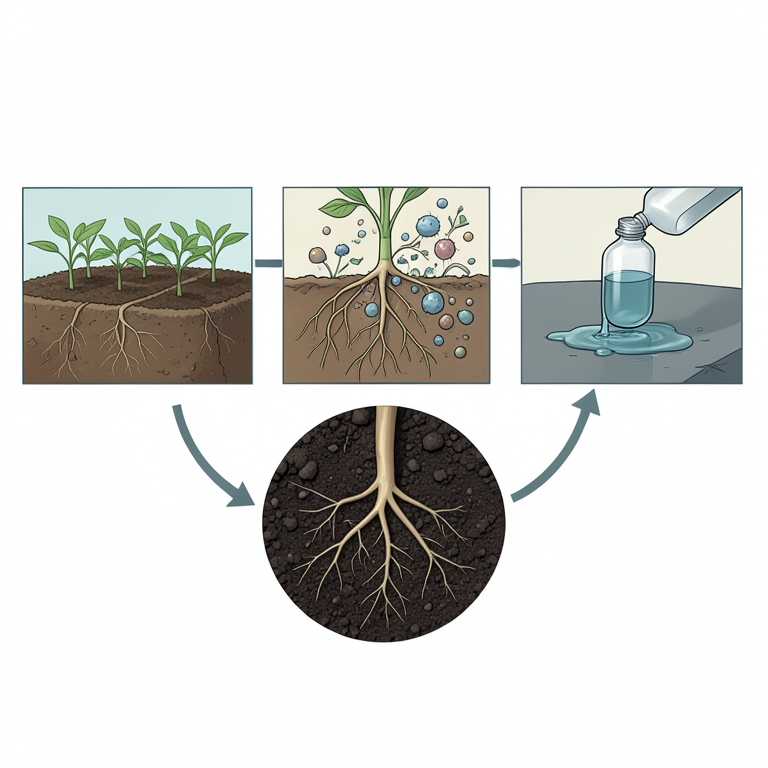
Integrated Pest Management (IPM) Framework
AI-generated conceptual illustration (Agricultural soil with crop roots and soil-borne fungi). It explains the idea and does not show study data.
View source evidence ↗Introduction
Soilborne pathogens are a major threat to agricultural productivity worldwide, as they cause diseases that severely reduce both the yield and quality of various crops. These pathogens are primarily comprised of fungi, bacteria, nematodes, and viruses, which thrive in soil environments and often infect plants through their root systems. Once established, these pathogens can disrupt essential processes like nutrient uptake, water absorption, and root growth, ultimately stunting plant development and leading to substantial crop losses. Common diseases caused by soilborne pathogens include root rot, damping-off, wilt, and blight, each with the potential to devastate agricultural output if left uncontrolled. Accurate identification of these pathogens is fundamental to controlling their spread and minimizing damage. Traditional methods, such as culture-based techniques, have long been used to identify soilborne pathogens by isolating and analyzing them in laboratory settings. However, these methods can be time-consuming and may not always detect pathogens present at low levels. Advances in molecular diagnostics, including Polymerase Chain Reaction (PCR) and Next-Generation Sequencing (NGS), now allow for faster and more precise detection. PCR, for instance, can amplify pathogen DNA, making it possible to identify specific pathogens with high sensitivity. NGS goes a step further by providing comprehensive profiling of the microbial communities in soil, allowing researchers to identify multiple pathogens and understand their interactions (Nafea et al., 2024) [3] . Managing soilborne pathogens requires integrated strategies. Crop rotation, biological control agents, resistant crop varieties, and soil treatments (such as solarization and fumigation) are among the methods employed. Recent research also emphasizes the role of soil health and microbial diversity in suppressing pathogen populations, highlighting the importance of sustainable practices. This article delves into the biology of soilborne pathogens, their impact on crops, diagnostic methods, and integrated management strategies, underscoring the critical need for effective approaches to safeguard global food security.
Nature of soilborne pathogens
Soilborne pathogens are diverse microorganisms that persist within the soil matrix or in organic residues on the soil surface, making them resilient and difficult to eliminate. Due to their ability to survive extended periods under various environmental conditions, these pathogens present a serious challenge to agricultural systems. They affect plants by infecting the root system, leading to symptoms such as root rot, wilting, damping-off, and stunted growth, which diminish crop vigor and reduce yield quality. Soilborne pathogens encompass a variety of microorganisms, each with unique infection mechanisms and ecological adaptations.
Fungi
Fungal pathogens are among the most prevalent soilborne threats, responsible for diseases that can devastate crops. Key examples include Fusarium spp., Rhizoctonia spp., Pythium spp., Sclerotinia spp., and Phytophthora spp. These fungi cause significant diseases like root rot and dampingoff. For instance, Fusarium spp. can cause Fusarium wilt, which blocks water transport within the plant, leading to wilting and eventual death (Zakaria, 2023) [7] . Pythium spp., on the other hand, is notorious for causing damping-off in seedlings, resulting in weakened plants that fail to establish robust root systems.
Bacteria
Certain bacteria also contribute to soilborne diseases. Ralstonia solanacearum, for instance, is a highly destructive bacterial pathogen causing bacterial wilt in a wide variety of crops, including tomatoes, potatoes, and bananas. This bacterium invades the vascular tissue of plants, leading to rapid wilting and, in severe cases, plant death. Managing bacterial pathogens in the soil is particularly challenging due to their ability to survive in soil for extended periods without a host.
Nematodes
Nematodes, particularly root-knot nematodes (Meloidogyne spp.), are microscopic, soil-dwelling roundworms that infect over 5,500 host plants. They cause distinctive galls or "knots" on the roots of infected plants, disrupting water and nutrient uptake, which results in stunted growth and reduced yield. Due to their extensive host range and resilience, nematodes are difficult to control once they establish in agricultural soils (Favery et al., 2020) [1] .
Viruses
Soilborne viruses are less common but can still pose significant risks to crops. These viruses often require an intermediary vector, such as a nematode, to infect plants. For example, the Tobacco Rattle Virus (TRV) is transmitted by nematodes and affects crops such as potatoes, causing necrotic rings in tubers, which reduces market value. Thus, soilborne pathogens represent a complex and persistent threat to crop production. Their capacity for longterm survival in soil and the diverse symptoms they cause require integrated and robust management strategies tailored to each pathogen type. Understanding the biology and behavior of these pathogens is essential for developing effective disease management and control strategies
Economic impact
The economic impact of soilborne pathogens is severe, with these pathogens responsible for a significant proportion of crop losses worldwide. In the United States, soilborne pathogens contribute to approximately 90% of major crop diseases, underscoring their central role in agricultural losses. Globally, soilborne diseases lead to estimated annual crop yield losses of about $220 billion. This financial burden affects both large-scale agricultural enterprises and smallholder farmers, ultimately impacting food security and the availability of affordable produce for consumers. Some crops suffer particularly high yield reductions due to soilborne pathogens, with losses ranging from 50-75% depending on the pathogen and environmental conditions. For example, Fusarium oxysporum, a fungal pathogen, infects over 150 agricultural species, leading to substantial economic losses in crops like bananas, tomatoes, and cucurbits. Fusarium wilt of bananas, often referred to as Panama disease, has devastated banana plantations across tropical regions, requiring farmers to adopt costly soil management practices or abandon fields altogether. Similarly, Fusarium wilt in tomatoes forces growers to use resistant varieties and soil treatments, raising production costs (Orr and Nelson, 2018) [4] . Beyond direct yield losses, soilborne pathogens contribute to increased costs in disease management and control. Farmers must invest in preventative measures, such as crop rotation, soil fumigation, and resistant plant varieties, all of which require additional financial input. Infected crops often yield lower-quality produce, which can lead to price reductions and affect marketability. In cases where soilborne diseases reach epidemic levels, farmers may face restricted trade due to quarantine regulations, further exacerbating economic losses. The widespread presence and persistence of soilborne pathogens in agricultural soils create a persistent economic challenge, highlighting the need for innovative and sustainable disease management strategies to reduce the financial impact on farmers and the global food supply chain
Identification of soilborne pathogens
Effective management of soilborne diseases hinges on the accurate identification of the pathogens causing them. Soilborne pathogens including fungi, bacteria, nematodes, and viruses are often difficult to identify due to their microscopic nature and the complex microbial environments they inhabit. Traditional identification techniques generally involve culturing pathogens from infected plant tissues or soil samples, followed by microscopic analysis or biochemical tests to classify the organism. While useful, these methods can be time-consuming, taking days or even weeks to yield results. Moreover, they may not detect all pathogens, especially in low concentrations or within diverse microbial communities, leading to false negatives or incomplete diagnoses.
Advanced diagnostic techniques
Recent advancements in molecular biology have introduced powerful diagnostic tools that significantly enhance the International Journal of Agriculture and Food Science https://www.agriculturaljournals.com speed and accuracy of pathogen identification. These techniques allow for the detection of pathogens directly from soil or plant tissue samples, without requiring culturing. Two key molecular approaches Polymerase Chain Reaction (PCR) and Next-Generation Sequencing (NGS) have revolutionized soilborne pathogen identification (Hariharan and Prasannath, 2021) [2] .
Polymerase Chain Reaction (PCR)
PCR is a widely used molecular technique that amplifies specific DNA sequences, making it possible to detect even small amounts of pathogen DNA in a sample. In the context of soilborne pathogens, PCR can identify pathogens at species or even strain levels, based on unique DNA markers. PCR techniques, such as quantitative PCR (qPCR), provide quantitative data on pathogen presence, offering insights into infection severity. Real-time PCR further enhances detection accuracy by providing real-time monitoring of DNA amplification, allowing researchers to detect pathogens even at early infection stages. By targeting specific genetic sequences associated with known pathogens, PCR enables precise identification, making it invaluable for developing targeted disease management strategies.
Next-Generation Sequencing (NGS)
Next-Generation Sequencing (NGS) goes beyond the capabilities of PCR by providing a comprehensive analysis of the entire microbial community within a soil sample. Unlike PCR, which targets specific sequences, NGS can sequence all genetic material present, allowing researchers to identify multiple pathogens simultaneously (Trippa et al., 2024) [6] . This capability is particularly useful for soils that may harbor complex microbial communities or multiple pathogenic organisms that interact and complicate disease dynamics. By analyzing these communities as a whole, NGS helps researchers understand the overall soil health and the relationships between pathogens and other soil microorganisms. The broad view provided by NGS is essential for developing integrated pest management (IPM) strategies that account for interactions within the soil ecosystem. NGS has also paved the way for metagenomic approaches, where DNA extracted from soil samples undergoes sequencing to catalog all microbial life, pathogenic and otherwise. Metagenomics provides insights into microbial diversity, abundance, and the potential for pathogens to spread under specific environmental conditions. This information can be valuable for predicting disease outbreaks and implementing preventative measures.
Benefits of advanced diagnostic techniques
Both PCR and NGS offer critical advantages for disease management. These methods enable timely interventions by allowing for the early detection of pathogens, which can be critical in controlling disease spread and minimizing crop losses. Moreover, molecular diagnostic tools are more reliable and less labor-intensive than traditional culturebased methods, reducing the time and resources needed for accurate pathogen identification (Trippa et al., 2024) [6] . By facilitating precise and early diagnosis, advanced molecular tools empower farmers and researchers to respond proactively, deploying targeted control measures to contain and reduce the economic impact of soilborne diseases. These tools are transforming soilborne pathogen management, providing the agricultural industry with a powerful means to protect crop health, enhance food security, and support sustainable farming practices.
Challenges in managing soilborne pathogens
Managing soilborne pathogens is challenging due to their persistence, adaptability, and ability to affect various crops. These pathogens can survive for extended periods in soil in dormant forms, such as spores or cysts, which makes them exceptionally difficult to eradicate. For instance, fungal pathogens like Fusarium and Rhizoctonia form resilient spores that can remain viable in the soil for years, even in the absence of host plants. This resilience means that once these pathogens establish themselves in a field, they can continue to threaten crop productivity over multiple growing seasons.
Another major challenge in managing soilborne pathogens is their often extensive host range. Many pathogens, such as root-knot nematodes (Meloidogyne spp.), can infect hundreds of plant species. This broad host range limits the effectiveness of crop rotation, a commonly used cultural control strategy, as it becomes difficult to find non-host crops that can safely be planted without risk of pathogen spread. When rotation options are limited, farmers may resort to chemical treatments, which can have long-term ecological and economic drawbacks.
Environmental factors also play a crucial role in the survival, spread, and virulence of soilborne pathogens. Soil properties such as pH, organic matter content, and moisture levels influence pathogen activity and interactions with host plants. Climatic conditions, like temperature and humidity, further impact the lifecycle of pathogens and their ability to cause disease. For example, Phytophthora spp., responsible for root rot in many crops, thrives in wet and poorly drained soils, making disease outbreaks more likely in areas with high rainfall or poor soil drainage. These complexities underscore the need for an integrated approach to managing soilborne pathogens. Effective control requires a combination of strategies, including cultural practices like crop rotation and soil amendments, biological controls using antagonistic microbes, and, where necessary, carefully managed chemical treatments. This Integrated Pest Management (IPM) approach helps to balance disease control with environmental sustainability, supporting long-term agricultural productivity.
Management strategies
Effective management of soilborne pathogens relies on an integrated approach, combining cultural practices, biological controls, and judicious use of chemical treatments to maintain soil health and minimize pathogen populations (Panth et al., 2020) [5] .
Cultural practices
Cultural practices are essential for disrupting the life cycles of soilborne pathogens and maintaining a healthy soil environment. One key method is crop rotation, which involves alternating host and non-host crops across growing seasons. By planting non-host crops, farmers can reduce pathogen populations tied to specific plants, gradually diminishing the pathogens' presence in the soil. For instance, rotating legumes with cereals can interrupt the life cycle of certain nematodes, reducing their impact over time.
Another fundamental cultural practice is soil health maintenance. Amending soil with organic matter, such as compost or manure, enhances microbial diversity, which can naturally suppress pathogenic organisms. Additionally, ensuring proper soil drainage helps control waterborne pathogens like Phytophthora, which thrives in overly moist conditions. Cover cropping with plants such as clover or rye also improves soil structure and adds organic matter, creating an inhospitable environment for pathogens while supporting beneficial microbes that enhance soil resilience.
Biological control
Biological control leverages beneficial microorganisms that inhibit soilborne pathogens. Trichoderma spp., for instance, are fungi widely used for their ability to compete with and parasitize various plant pathogens, making them valuable allies in disease management. These fungi colonize root surfaces, forming a protective barrier that restricts pathogenic fungi from establishing infections (Panth et al., 2020) [5] . Mycorrhizal fungi also play an important role in pathogen management. These beneficial fungi form symbiotic relationships with plant roots, increasing nutrient uptake and enhancing plant resistance to soilborne pathogens. Mycorrhizal networks create competition for resources in the rhizosphere, which can inhibit the growth of harmful organisms. Increasing soil biodiversity through biological controls like these supports natural disease suppression mechanisms, reducing the need for external interventions.
Chemical treatments
Chemical treatments, while effective, must be applied with caution to avoid long-term soil degradation and pathogen resistance. Fungicides are commonly used to control fungal pathogens, but overuse can lead to resistant strains, reducing the efficacy of these treatments. Consequently, targeted application of fungicides at specific growth stages or disease outbreaks is recommended to maximize impact and limit resistance.
Soil fumigants, such as methyl bromide, have been employed extensively to sterilize soil, eradicating pathogens and pests. However, these treatments pose significant environmental risks, including ozone depletion and harm to beneficial soil organisms. Many countries are now limiting the use of methyl bromide and similar chemicals, promoting alternative approaches that maintain soil health. The overarching goal of these strategies is to minimize chemical inputs while maximizing pathogen control through sustainable practices. An Integrated Pest Management (IPM) approach, which combines cultural, biological, and chemical controls, allows for flexible, site-specific management that reduces pathogen impact, supports environmental health, and enhances long-term agricultural productivity. By using these strategies in tandem, farmers can protect crops from soilborne diseases while maintaining balanced and healthy soils.
Conclusion
Soilborne pathogens pose significant challenges to global agricultural productivity by causing diseases that lead to substantial yield losses across various crops. Effective identification and management strategies are crucial for mitigating their impact. By combining cultural practices, biological controls, and judicious chemical treatments within an integrated framework, farmers can enhance crop resilience against these persistent threats. As research progresses, innovative technologies will play an increasingly important role in ensuring sustainable agricultural practices that meet the demands of a growing population while preserving environmental health. The references cited throughout this article highlight key findings from current research on soilborne pathogens and their management strategies. By understanding these challenges and employing effective solutions, we can work towards more resilient agricultural systems capable of sustaining global food security.
References
7 in the original paper- Favery B, Dubreuil G, Chen MS, Girron D, Abad P. Gall-inducing parasites: Convergent and conserved strategies of plant manipulation by insects and nematodes. Annu Rev Phytopathol. 2020;58(1):1-22.
- Hariharan G, Prasannath K. Recent advances in molecular diagnostics of fungal plant pathogens: a mini review. Front Cell Infect Microbiol. 2021;11:60024.
- Nafea AM, Wang Y, Wang D, Salama AM, Aziz MA, Xu S, et al. Application of next-generation sequencing to identify different pathogens. Front Microbiol. 2024;14:1329330.
- Orr R, Nelson PN. Impacts of soil abiotic attributes on Fusarium wilt, focusing on bananas. Appl Soil Ecol. 2018;132:20-33.
- Panth M, Hassler SC, Baysal-Gurel F. Methods for management of soilborne diseases in crop production. Agriculture. 2020;10(16).
- Trippa D, Scalenghe R, Basso MF, Panno S, Davino S, Morone C, et al. Next-generation methods for early disease detection in crops. Pest Manag Sci. 2024;80:245-261.
- Zakaria L. Fusarium species associated with diseases of major tropical fruit crops. Horticulturae. 2023;9(322).
Cited by 1
From OpenAlex, OpenCitations and reference lists read by Scinovex
- Integrating biocontrol efficacy and genomic potential of Bacillus velezensis BJ-1141: from broad-spectrum antagonism to tomato Fusarium wilt suppression ↗
Yuehua Chen, Mei Liu, Wei Zhang, Manawaduge Ayesha Madushani, Cong Jiang, Qikai Xing et al. · Journal of Applied Microbiology · 2026
AIMS: To isolate and characterize a rhizosphere-derived Bacillus velezensis strain with biocontrol and plant growth-promoting potential, and to evaluate its efficacy against plant pathogens together with its genomic basis. METHODS AND RESULTS: A bacterial strain (BJ-1141) was isolated from the rhizosphere and identified as B. velezensis based on morphological characteristics and phylogenetic analyses of 16S rRNA and gyrA gene sequences.…
❝ 0