
Research article · 2024 · Full text
International Journal of Agriculture and NutritionZero budget natural farming: A sustainable agricultural practice
Volume 6(2) · Pages 89–94 · DOI: 10.33545/26646064.2024.v6.i2b.186 ↗
Research areasAgricultural Systems and PracticesAgriculture and Rural Development Research
Abstract
Author-writtenZero Budget Natural Farming (ZBNF) is an innovative and sustainable agricultural method that emphasizes the elimination of chemical inputs and reliance on natural processes. Developed by Indian agriculturalist Subhash Palekar, ZBNF is designed to minimize production costs and improve soil health through the use of locally sourced materials. The core principles of ZBNF include the use of bio-inoculants such as Jeevamrutha and Beejamrutha, which are fermented microbial cultures that enhance soil fertility and protect seeds. Mulching and the Waaphasa technique, which ensures adequate soil aeration, further support plant growth and resilience. By promoting biodiversity and natural resource conservation, ZBNF addresses critical environmental issues, such as soil degradation and water scarcity. This farming approach also fosters economic stability for farmers by reducing dependency on costly chemical fertilizers and pesticides, leading to improved crop yields and profitability. ZBNF's holistic framework aligns with global sustainable development goals by encouraging eco-friendly agricultural practices that support food security and rural livelihoods. As the agricultural sector faces increasing challenges from climate change and resource depletion, ZBNF offers a viable pathway toward sustainable farming, reinforcing the need for widespread adoption and policy support to enhance its scalability and impact.
Summary
Source-checkedPlain-language reading of the full paper, prepared with AI and checked against the text. Each point links to the authors' own words.
Why it matters
- Chemical-intensive agriculture has resulted in increased production costs and, in some instances, a decrease in crop yields. View evidence ↗
- Continuous cultivation of commercial crops like wheat, rice, cotton, and sugarcane has depleted soil fertility and reduced beneficial soil microbes. View evidence ↗
- The use of heavy fertilizers and pesticides can contaminate soil and groundwater with toxic heavy metals such as Zinc, Manganese, Copper, and Cadmium. View evidence ↗
The question
- The paper emphasizes the need for a comprehensive scientific evaluation of ZBNF's efficacy, challenges, and impact on national food security before widespread adoption. View evidence ↗
What they did
- ZBNF utilizes bio-inoculants, specifically Beejamrutha and Jeevamrutha, which are fermented microbial cultures used to protect seeds and improve soil fertility. View evidence ↗
- Jeevamrutha is prepared by mixing 2 kg of legume flour, 20 kg of cow dung, and 5-10 liters of cow urine, applied every 15 days or sprayed as 200 liters twice monthly. View evidence ↗
- Bijamrita seed treatment consists of 20 liters of water, 5 kg of cow dung, 5 liters of cow urine, 50 g of lime, and a handful of soil. View evidence ↗
- The Whapasa technique involves precise water management, recommending alternate furrow irrigation and applying water only as needed. View evidence ↗
What they found
- ZBNF significantly reduces water use, requiring only 10% of the water used in conventional farming. View evidence ↗
- Compared to non-ZBNF practices, ZBNF has shown yield increases of 11% for cotton and 40% for finger millet (gulli ragi). View evidence ↗
- Economic studies indicate that every 1 USD invested in ZBNF provides direct benefits equivalent to 13 USD. View evidence ↗
- ZBNF helps sequester carbon by incorporating crop residues into the soil instead of burning them, which would otherwise release approximately 400 kg of carbon per tonne of residue. View evidence ↗
- A challenge of ZBNF is the increased labor requirement for the manual preparation and application of inputs like Bijamruth and Jeevamruth. View evidence ↗
- Natural pest control solutions used in ZBNF, such as Brahmastra and Agriastra, are often less effective than chemical pesticides. View evidence ↗
What it means
- The authors conclude that ZBNF is an economically viable and sustainable alternative to conventional farming that maintains ecosystem health and reduces costs for chemicals, fertilizers, and seeds. View evidence ↗
- The authors note a lack of scientific validation regarding the effectiveness and microbial composition of natural pest control methods, Bijamruth, and Jeevamruth. View evidence ↗
Visual summary
1 visualsIllustrations explain the paper; they do not show study data.
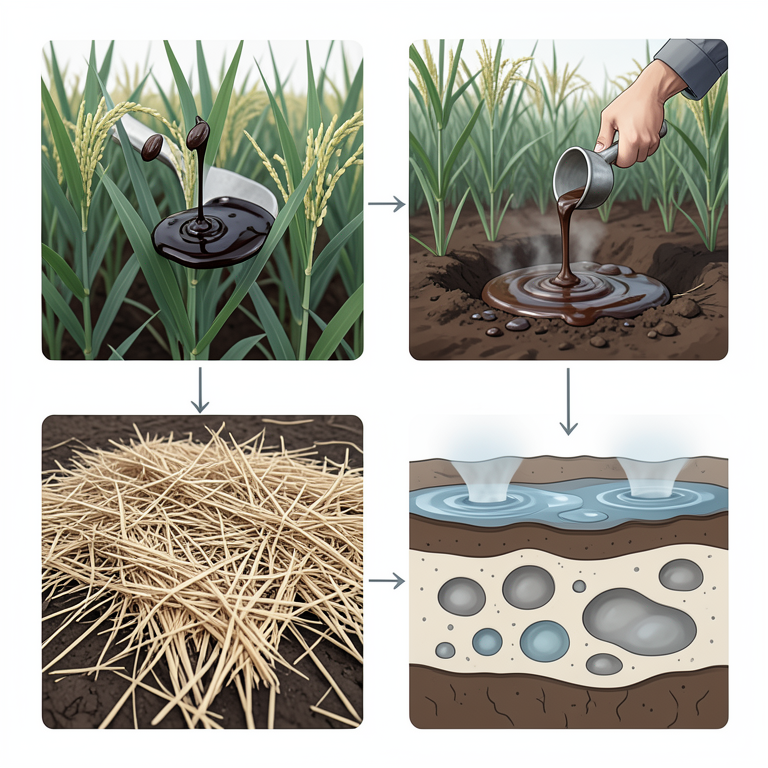
The Four Pillars of ZBNF
AI-generated conceptual illustration (Rice plants in a sustainable farm field). It explains the idea and does not show study data.
View source evidence ↗Introduction
Today, chemical-intensive agriculture has led to higher production costs and, in many cases, declining crop yields due to various factors (Intawongse & Dean, 2006; Ayansina & Oso, 2006; Sreenivasa et al., 2010; Singh et al., 2011) [11,1,20] . The repeated cultivation of the same commercial crops such as rice, wheat, cotton, and sugarcane has contributed to soil fertility depletion, degradation of topsoil, reduced soil vitality, groundwater depletion, and a significant decline in beneficial soil microbes. The continuous use of chemical fertilizers, crop residue burning, and pesticide application has led to widespread environmental pollution. These practices reduce soil micro-and macrofauna, disrupting the carbon-nitrogen balance and nitrification processes (Jenkinson, 1982; Doran et al., 1996; Shaikh & Gachande, 2015) [12,7,17] . Heavy pesticide and fertilizer application contaminates soil and can leach into groundwater, particularly with toxic heavy metals like Cadmium (Cd), Copper (Cu), Manganese (Mn), and Zinc (Zn). These heavy metals are absorbed by plants and accumulate in edible parts over time, posing severe health risks to consumers (Byrnes, 1990; Barabasz et al., 2002) [4,2] . Among these, cadmium and lead are particularly toxic, with crops like carrots, spinach, lettuce, radishes, and leafy vegetables tending to accumulate more heavy metals (Cobb et al., 2000; Mattina et al., 2003; Hough et al., 2004) [6,14,10] . The root zone of soil hosts beneficial microbial communities such as Plant Growth-Promoting Rhizobacteria (PGPR), mycorrhizae, and cyanobacteria, which support plant growth and resilience against pathogens (Glick, 1995) [9] . However, repeated herbicide use, particularly with substances like atrazine and metolachlor, reduces these beneficial microbial populations. Most Indian farmers have small landholdings, and investing heavily in inputs without achieving satisfactory yields due to pests, diseases, and unfavorable weather often increases production costs. This has led to an alarming rate of farmer suicides in India. Meanwhile, rising global populations and economic growth have spurred a higher demand for food, especially in developing countries like India. With a population constituting approximately 17.87% of the global total (world meter UNDESA, 2020) [21] and expected to reach 1.6 billion by 2050 (Smith et al., 2020) [19] , India must increase food production. In the past, India responded to these challenges by expanding cultivated land and increasing yields per unit area, supported by synthetic fertilizers and irrigation. However, these methods have led to inefficient resource use, especially in northern India, where nutrient use efficiency is particularly low (Bruinsma, 2003) [3] . Approximately 16% of India's land has agricultural potential, with the remainder unsuitable for cultivation. Increasing crop production efficiency will be essential to ensure food security in densely populated areas. However, NSSO data shows that almost 70% of agricultural households spend more than they earn, and over half are in debt, with indebtedness in states like Andhra Pradesh and Telangana as high as 90%, with average household debt around ₹1 lakh.
In response to these challenges, some farmers and institutions are exploring ancient farming practices for sustainable solutions, though these methods often lack scientific validation. NITI Aayog has recognized the need for alternative farming systems that reduce input costs while increasing productivity and profitability for small-scale farmers. These alternatives include Agnihotra Farming, Amrutpani Farming, Vedic Farming, Homeo Farming, and Zero Budget Natural Farming (ZBNF). Of these, ZBNF has gained popularity, especially in Karnataka, Andhra Pradesh, and Maharashtra, and is under consideration by the government of India. Nevertheless, before adopting or rejecting these methods, a comprehensive scientific evaluation of their efficacy, challenges, and potential impact on national food security is essential.
Zero budget natural farming
Zero Budget Natural Farming (ZBNF) is an agricultural method that requires no credit or major expenses on external inputs, relying instead on local resources. "Zero budget" refers to avoiding debt or costs, while "natural farming" focuses on chemical-free practices that draw from traditional Indian agriculture. ZBNF promotes a synergistic relationship between plants, animals, and soil to build fertility and support beneficial microorganisms (Smith et al., 2020) [19] . Developed in the 1990s by Padma Shri recipient Subhash Palekar, ZBNF emerged as an alternative to the Green Revolution, which left many farmers in debt and degraded soil health. Palekar advocates minimal input costs, soilfriendly practices like aeration, crop residue mulching, intercropping, and limited watering. ZBNF discourages intensive irrigation and deep tillage, emphasizing natural methods for pest control. Palekar notably opposes vermicomposting, citing concerns that non-native worms may introduce toxic metals into the soil. Initially gaining popularity in Karnataka in 2002, ZBNF has since expanded across states such as Andhra Pradesh, Kerala, Uttarakhand, and Himachal Pradesh. By 2019, Andhra Pradesh had converted 204,000 hectares to ZBNF across over 3,000 villages, aiming for full adoption by 2024.
The method has the endorsement of both state and central government bodies, with Prime Minister Narendra Modi expressing support for ZBNF as a sustainable future path for Indian agriculture. This approach is guided by four core principles designed to promote resilience and ecological health.
Pillars of ZBNF
The foundation of Zero Budget Natural Farming (ZBNF) rests on four main pillars that enhance soil fertility and promote sustainable agriculture. Soil microbes play a crucial role in nutrient cycles, such as the carbon and nitrogen cycles, which are essential for plant growth (Lazarovits, 1997) [13] . These pillars, as outlined by Subhash Palekar (2014) [15] , work in synergy to support natural processes in the soil and maintain ecological balance in farming systems: 1. Jeevamrutha: Microorganisms play a crucial role in transforming unavailable nutrients into forms accessible to plants within the root zone. Jeevamrutha, a microbial-rich mixture, promotes this nutrient conversion in the soil. When applied, the microbes in Jeevamrutha such as Plant Growth-Promoting Rhizobacteria (PGPR), cyanobacteria, Phosphorus-Solubilizing Bacteria (PSB), mycorrhizal fungi, and nitrogen-fixing bacteria enhance nutrient availability and act as natural antagonists to pathogens, providing biological control against diseases (Glick & Bashan, 1997; Chen et al., 1995) [8,5] .
To prepare Jeevamrutha, mix 20 kg of cow dung, 5-10 liters of cow urine, and 2 kg of legume flour, adding this mixture to irrigation tanks every 15 days or spraying 200 liters twice a month until the soil becomes enriched. Jeevamrutha supplies essential nutrients, increases microbial populations, and helps protect plants from bacterial and fungal diseases. This treatment typically only needs to be applied for the first three years until the ecosystem becomes self-sustaining. Subhash Palekar advises that one indigenous ("desi") cow, with dung naturally containing 300 to 500 crore beneficial microbes, can support up to 30 acres of land, whereas dung from imported breeds, like Jersey or Holstein, may contain more pathogens and fewer beneficial microbes. 2. Bijamrita: Bijamrita is a natural seed treatment mixture prepared using 20 liters of water, 5 kg of cow dung, 5 liters of cow urine, 50 g of lime, and a handful of soil. This blend introduces beneficial microbes to seeds, protecting crops from harmful soil-borne pathogens and seed-borne diseases. Bijamrita also guards young seedling roots against fungal infections and helps stimulate the production of growth-promoting hormones like IAA and GA3 (Sreenivasa et al., 2010) [20] .
Acchadana (Mulching
Acchadana (Mulching
Pest management in Zero Budget Natural Farming (ZBNF)
Pests and diseases are significant contributors to crop yield loss, with weeds being the most prevalent cause, followed by pests and diseases. Managing these losses is a major challenge in natural farming. One method of pest control involves using plant-based extracts to create compounds that kill or repel pests. Some natural pest protection mixtures are made by combining ingredients like buttermilk, cow milk, pepper powder, neem seeds, and green chili (Palekar, 2016) [16] . Research has explored various naturally extracted, chemical-free pest control compounds, as outlined below: 1. Agriastra: This solution is made by mixing 10 liters of local cow urine, 1 kg of tobacco leaves, 500 g of green chili, 500 g of local garlic, and neem leaf pulp crushed in 5 liters of cow urine. The mixture is stored in a cool place. To use, dilute 2 liters of this extract in 100 liters of water and spray it on crops. Agriastra effectively controls pests such as leaf roller, stem borer, fruit borer, and pod borer. 2. Brahmastra: Another method for pest control, Brahmastra is made by boiling a mixture of leaves from various plants such as neem, custard apple, guava, pomegranate, papaya, and white datura with cow urine. After boiling, the mixture is filtered and stored for future use. This extract is particularly effective against sucking pests, pod borers, and fruit borers.
Neemastra:
This pest control solution is made by mixing 5 liters of local cow urine, 5 kg of cow dung, and 5 kg each of neem leaves and neem pulp. The mixture is sealed in an airtight container for 24 hours to ferment. After fermentation, it can be used to control sucking pests and mealy bugs.
Challenges to adopting Zero Budget Natural Farming (ZBNF)
Zero Budget Natural Farming (ZBNF) is an eco-friendly, sustainable farming method that focuses on enhancing soil health, increasing beneficial microbial populations, providing chemical-free nutrients to plants, and producing toxin-free food. While ZBNF offers numerous benefits for the environment and human health, its widespread adoption remains a challenge due to several obstacles. Below are some of the major challenges faced by farmers and the broader adoption of ZBNF.
Increased labor requirements: ZBNF demands more labor compared to conventional farming practices. The manual preparation of microbial solutions and regular application of inputs like Jeevamruth and Bijamruth requires more time and effort from farmers, making it less appealing to those already struggling with labor shortages.
High demand for animal manure: ZBNF heavily relies on animal manure, particularly cow dung, for its inputs. However, the number of cattle in India is insufficient to meet the high demand for manure needed on a national scale. This scarcity limits the widespread adoption of ZBNF, especially in regions where livestock is not as abundant.
Changing consumer demand:
The changing demand for high-value crops presents another challenge. As consumer preferences shift towards high-yield, high-value crops, ZBNF may not meet the productivity demands that conventional farming can achieve, making it difficult for farmers to compete in the market.
Limited technology and high investment needs: ZBNF requires better farming technologies that emphasize manual and organic methods, unlike the mechanized tools used in conventional farming. The lack of suitable heavy machinery and implements that can be used without harming the soil poses a barrier. Additionally, significant investment in land preparation and manual labor is required, which many farmers cannot afford.
Weak agricultural market infrastructure:
There is limited market infrastructure to support and value ZBNF products on a large scale. The price of natural, chemical-free products is often not significantly higher than that of conventionally grown produce, making it economically unviable for many farmers.
Lack of scientific validation: Despite its growing popularity, there is limited scientific validation of many key components of ZBNF, such as the microbial composition and effectiveness of Jeevamruth, Bijamruth, and other natural pest control methods. Without scientific data supporting these practices, farmers may be hesitant to fully adopt them.
Restrictions on hybrid varieties: ZBNF does not permit the use of hybrid seeds, which are commonly used to increase crop yields. With a growing global population and limited food supply, hybrids are considered necessary to meet food production targets, making their exclusion a major hindrance to ZBNF adoption.
Political and scientific challenges:
The promotion of ZBNF on a large scale without scientific validation, often driven by political motives, can create skepticism among farmers. Furthermore, there is insufficient data on crop yields, making it difficult for farmers to trust the system's efficacy in producing substantial yields.
Pest and disease management: Effective pest management in ZBNF is challenging. Although natural products like Agriastra and Brahmastra are used to control pests, they are often less effective than chemical pesticides. The difficulty in controlling specific crop pests and diseases can deter farmers from adopting ZBNF.
Availability of indigenous cows:
ZBNF emphasizes the use of indigenous cows, which are considered to have pathogenfree dung rich in beneficial microbes. However, the nonavailability of these indigenous cows in certain areas limits the practice.
Lack of policy support:
A well-structured policy framework and specific standards are crucial for the success of ZBNF. However, these are often lacking, which creates confusion and inconsistency in implementation.
Limited availability of commercial formulations:
The growth stimulants and pest control solutions used in ZBNF are not available on a commercial scale, and their shelf life is limited, further hindering large-scale use.
Absence of crop-specific practices:
A comprehensive package of practices tailored to different crops grown under ZBNF is still missing. State universities and government institutions must develop and promote such practices to ensure consistency and success. Overall, while ZBNF offers promising ecological benefits, its adoption faces numerous challenges. Addressing these barriers requires collaborative efforts from the government, researchers, and extension workers to provide scientific validation, infrastructure, and support to farmers.
Opportunities to adopt Zero Budget Natural Farming (ZBNF)
The traditional farming methods associated with the Green Revolution, which rely on high-yielding varieties, chemical fertilizers, and pesticides, have led to significant degradation of soil health. These practices deplete soil nutrients, reduce the population of beneficial microbes, and lead to the accumulation of toxic substances in the soil. Furthermore, the overuse of chemicals pollutes groundwater, creating negative impacts on both the environment and human health. In addition, the burning of crop residues reduces soil organic matter and contributes to air pollution. Given the growing concerns surrounding environmental sustainability and the increasing costs associated with commercial farming, ZBNF offers a promising alternative to address these issues. Below are key opportunities that come with the adoption of ZBNF:
Conservation of nature: ZBNF practices significantly improve the microbial content and water retention capacity of soils. This is especially beneficial for drought-prone areas, as it helps maintain consistent yields despite water scarcity. The reduced application of chemical fertilizers leads to less runoff, which in turn improves water quality by preventing contamination of rivers and wetlands. Additionally, the availability of water is increased during extreme weather events, making the practice highly resilient to climate change. Reduction of health risks: ZBNF reduces the risks associated with chemical pesticide exposure. By avoiding the use of harmful chemicals, especially those found in fruits and vegetables, the practice helps reduce illnesses caused by the consumption of toxic residues. This is particularly beneficial for vulnerable groups like children, who are more susceptible to pesticide-related health issues. Furthermore, natural farming maintains ecosystems on farms and reduces the drudgery faced by women, who benefit from easier access to clean water and animal feed. Reduction in carbon emissions and carbon capture:
The practice of burning crop residues releases significant amounts of carbon into the atmosphere, with one tonne of residue burning producing approximately 400 kg of carbon. ZBNF promotes the retention or incorporation of these residues into the soil, which not only helps sequester carbon but also improves soil fertility and promotes higher yields. As more farmers shift to natural farming, such practices can significantly contribute to reducing carbon emissions and enhancing carbon capture. Social impact: ZBNF reduces the cost of cultivation by eliminating the need for expensive chemical inputs, thus improving the financial security of farmers. With stable yields and lower input costs, farmers can consistently produce crops, which ensures a more reliable income. The shift to natural farming also contributes to the overall well-being of farming communities by creating more sustainable and resilient livelihoods. Economic benefits: Studies show that every 1 USD invested in ZBNF yields direct benefits equivalent to 13 USD. These benefits include reduced cultivation costs, higher yields, lower borrowing costs, income from intercrops, and better selling prices.
Ensuring income security for farmers
To address the economic challenges faced by farmers, the creation of an Income Security Commission is recommended. This body would Balance decisions affecting the costs of production, subsidies, and living costs. Ensure that the prices of products are fair and supportive of farmers' income.
Agricultural research and training
Agricultural research must evolve to adopt an agroecological perspective. Key strategies include: Participatory research: Involve farmers directly in the research process to ensure that new technologies and methods meet their needs. Location-specific extension: Extension services should focus on context-specific, community-based approaches to restore agroecosystem health. Investing in agroecological research: More funds should be directed toward research that enhances sustainability, ecosystem health, and the development of bio-based products with longer shelf lives.
Agricultural extension services
Extension services should be restructured to focus on community-managed systems. This can be achieved by: Knowledge-based system: Shifting from a mere information-based system to a knowledge-sharing system, involving experienced farmers as resource persons to facilitate peer learning. Local level empowerment: Block-level extension services should be converted into community-managed units to increase farmer engagement and selfsufficiency.
Marketing support for farmers
Support for farmers in accessing markets is critical for the success of ZBNF. Key recommendations include: Commodity boards: Develop state-level commodity boards that support Farmer Producer Organizations (FPOs) with technical guidance, quality management, financial access, and market linkages. Infrastructure development: Build infrastructure for storage, processing, and distribution to ensure that farmers can sell their products at fair prices and minimize post-harvest losses.
Conclusion
Zero Budget Natural Farming (ZBNF) offers a sustainable and economically viable alternative to conventional farming. It significantly reduces costs related to seeds, fertilizers, and chemicals while promoting soil fertility and maintaining ecosystem health. The management of pests and diseases in ZBNF also requires a holistic understanding of the interactions within the farming ecosystem. By addressing the challenges and leveraging the opportunities of ZBNF, policies can help farmers escape the debt trap and enable them to make farming a profitable and environmentally friendly venture. A comprehensive policy framework, focused on ecological sustainability, income security, and farmer empowerment, will be essential to making ZBNF a success on a larger scale.
References
21 in the original paper- Ayansina ADV, Oso BA. Effect of two commonly used herbicides on soil microflora at two different concentrations. African Journal of Biotechnology. 2006;5(2):129-132.
- Barabasz W, Albińska D, Jaśkowska M, Lipiec J. Biological effects of mineral nitrogen fertilization on soil microorganisms. Polish Journal of Environmental Studies. 2002;11(3):193-198.
- Bruinsma J, editor. World Agriculture: Towards 2015/2030. An FAO Perspective. London: Earthscan; 2003.
- Byrnes BH. Environmental effects of N fertilizer use: An overview. Fertilizer Research. 1990;26(3):209-215.
- Chen C, Bauske EM, Musson G, Rodríguez KR. Biological control of Fusarium wilt on cotton by use of endophytic bacteria. Biological Control. 1995;5(1):8391.
- Cobb GP, Sands K, Waters M, Wixson BG, Dorward KE. Accumulation of heavy metals by vegetables grown in mine wastes. Environmental Toxicology and Chemistry. 2000;19(3):600-607.
- Doran JW, Sarrantonio M, Liebieg MA. Soil health and sustainability. Advances in Agronomy. 1996;56:1-54.
- Glick BR, Abd Bashan Y. Genetic manipulation of plant growth-promoting bacteria to enhance biocontrol of phytopathogens. Biotechnology Advances. 1997;15(3):353-378.
- Glick BR. The enhancement of plant growth by freeliving bacteria. Canadian Journal of Microbiology. 1995;41(2):109-117.
- Hough RL, Breward N, Young SD, Crout NMJ, Tye AM. Assessing potential risk of heavy metal exposure from consumption of home-produced vegetables by urban populations. Environmental Health Perspectives. 2004;112(2):215-221.
- Intawongse M, Dean JR. Uptake of heavy metals by vegetable plants grown on contaminated soil and their bioavailability in the human gastrointestinal tract. Food Additives and Contaminants. 2006;23(1):36-48.
- Jenkinson DS. The nitrogen cycle in long-term field experiments. Philosophical Transactions of the Royal Society of London. Series B, Biological Sciences. 1982;269(1165):569-582.
- Lazarovits G. Rhizobacteria for improvement of plant growth and establishment. HortScience. 1997;32(2):188-192.
- Mattina MI, Berger WI, Musante C, White JC. Concurrent plant uptake of heavy metals and persistent organic pollutants from soil. Environmental Pollution. 2003;124(3):375-378.
- Palekar S. Zero Budget Spiritual Farming; 2014 [cited 2024 Nov 23]. Available from: http://www.palekarzerobudgetspiritualfarming.org
- Palekar S. Zero Budget Natural Farming; 2016 [cited 2024 Nov 23]. Available from: http://palekarzerobudgetspiritualfarming.org
- Shaikh NF, Gachande BD. Effect of organic bio-booster and inorganic inputs on rhizosphere mycoflora population and species diversity of wheat. International Journal of Science and Research. 2015;4(2):295-302.
- Singh JS, Pandey VC, Singh DP. Efficient soil microorganisms: A new dimension for sustainable agriculture and environmental development. Agricultural Ecosystems and Environment. 2011;140(34):339-353.
- Smith J, Yeluripati J, Smith P, Nayak DR. Potential yield challenges to scale-up of zero budget natural farming. Nature Sustainability. 2020;3(4):1-6.
- Sreenivasa MN, Naik NM, Bhat SN. Beejamruth: A source for beneficial bacteria. Karnataka Journal of Agricultural Sciences. 2010;17(4):72-77.
- Worldometer. Elaboration of data by United Nations, Department of Economic and Social Affairs, Population Division, 2020 [cited 2024 Nov 23]. Available from: https://www.worldometers.info
Cited by 9
From OpenAlex, OpenCitations and reference lists read by Scinovex
- Zero budget natural farming: A sustainable approach to low-cost cultivation ↗
Jommi Bogo, Kasinam Doruk · International Journal of Chemical Studies · 2025
The groundbreaking method of sustainable agriculture known as Zero Budget Natural Farming (ZBNF) encourages environmentally friendly farming methods, improves soil health, and boosts crop yields while lowering expenses. Through the use of natural resources and the elimination of external inputs, ZBNF provides small-scale farmers with a practical way to enhance their standard of living and help create a more sustainable
- Impact of natural farming approaches on productivity of tomato (Solanum lycopersicum)
D. M. Kumawat, Mahesh Kumar, Mahaveer Suman, Dheerendra Kumar, Gunjeet Kaur, Ansari Nagar · International Journal of Horticulture and Food Science · 2025
The present investigation aimed to find out the “Impact of natural farming approaches on productivity of tomato (Solanum lycopersicum)” was carried out at the Instructional Farm (Horticulture), Career Point University, Alaniya, Kota during 2024-2025. The experiment was laid out in Randomized Block Design. Replicated thrice with 9 treatment combinations, comprising like T1 Control, T2 1.5 t/h Ghanjeevamrit + Jeevamrit 25%, T3 1.5 t/h Ghanjeevamrit + Jeevamrit 30%, T4 2 t/h Ghanjeevamrit + Jeevamrit 25%, T5 2 t/h Ghanjeevamrit + Jeevamrit 30%, T6 3 t/h Ghanjeevamrit + Jeevamrit 25%, T7 3 t/h Gha
- Global research networks in zero budget natural farming: A bibliometric perspective
N Hariraj, Cinthiya Fernandez C, Murugan PP, C Karthikeyan, Balaji Parasuraman · International Journal of Agriculture Extension and Social Development · 2025
Zero Budget Natural Farming (ZBNF) is gaining global attention as a sustainable, low-cost agricultural approach that aligns with agroecological principles. This review aims to map the global research trends, institutional collaborations, and thematic developments surrounding ZBNF through a bibliometric lens. A total of 447 publications were retrieved from the Scopus database using carefully selected keywords. After applying inclusion and exclusion criteria, 120 relevant articles were analysed using R Studio and VOS viewer to visualize patterns in scientific production, author collaboration, an
- Impact of jeevamrit and beejamrit application on growth, yield attributes of Indian mustard
Kishan Patel, Shipra Tripathi, Deepu Singh Patel, Ashutosh Singh, Anupam Dube · International Journal of Advanced Biochemistry Research · 2025
This field experiment investigated the effects of natural farming on Indian mustard during the rabi season of 2024-25 at the Agricultural Research Farm, Institute of Agriculture and Natural Sciences, Deen Dayal Upadhyay Gorakhpur University, Uttar Pradesh. The objective was to evaluate the impact of natural farming practices-specifically Jeevamrit, Ghanjeevamrit, and mulching on mustard growth, soil health, nutrient availability and economic viability. The experiment employed a Randomized Block Design (RBD) with seven treatments and three replications. Parameters such as plant height, number o
- Adoption of natural farming practices: Impact assessment of KVK training programmes
Anil Kumar S, Manjunatha Reddy TB, Shashidhar KR, Sadanand K Musharif · International Journal of Agriculture Extension and Social Development · 2025
The promotion of environment-friendly agriculture is essential in the backdrop of the environmental burden caused by chemical input-intensive farming practices prevalent since the First Green Revolution. Synthetic agrochemicals, derived from non-renewable fossil fuels, are not only diminishing in availability but may also exert pressure on foreign exchange in the future. Natural farming, which integrates traditional ecological knowledge with on-farm resource recycling, offers a sustainable alternative. This study was carried out in five adopted villages of Krishi Vigyan Kendra (KVK), Kolar dis
- Exploring the Bioactive Compounds in Herbs Grown through Zero Budget Natural Farming Techniques ↗
Peter Mwangi, Mercy Achieng · International Journal of Pharmacognosy and Life Science · 2025
Zero Budget Natural Farming (ZBNF) represents a distinct agroecological model that emphasizes natural inputs, local resource use, and cost-neutral farming. While widely acknowledged for its sustainability, there is a growing need to understand how this farming method influences the phytochemical and pharmacological profile of herbs, many of which are cultivated for their bioactive compounds. This paper explores the interplay between
- Consumer Perception of Zero Budget Natural Farming Practices in Rural Markets ↗
Meena Kumari · International Journal of Research in Marketing Management and Sales · 2025
Zero Budget Natural Farming (ZBNF) has been promoted in India as a sustainable alternative to chemical-intensive farming, aiming to reduce input costs, improve soil health, and supply chemical-free produce. While farmer adoption has been studied extensively, consumer perception—especially in rural markets—remains less documented. This paper explores rural consumer awareness, trust, willingness to pay, and buying behaviour regarding ZBNF produce, supported
- Formulation and Efficacy of Natural Herbal Medicines from Zero Budget Farm Produce ↗
Faith C Achieng, Cheruiyot . · International Journal of Pharmaceutical Research and Development · 2025
❝ 0Found by Scinovex - Assessing the Nutritional and Medicinal Potential of Zero Budget Naturally Grown Crops ↗
Ignacio Soto · International Journal of Pharmaceutical and Clinical Research · 2025
❝ 0Found by Scinovex