
Research article · 2024 · Full text
International Journal of Biology SciencesImpact of prolonged screen time on binocular vision
Volume 6(2) · Pages 78–81 · DOI: 10.33545/26649926.2024.v6.i2b.234 ↗
Research areasErgonomics and Musculoskeletal Disorders
Abstract
Author-writtenThe introduction of digital gadgets has resulted in a marked rise in screen time, prompting worries about possible effects on binocular vision. In order to better understand the connection between extended screen time and binocular vision abnormalities, this study focuses on accommodative dysfunction, convergence insufficiency, and asthenopia symptoms. The increased use of computers, tablets, and smartphones has changed the demands placed on the eyes, possibly putting the visual system under stress, particularly when these devices are used continuously for lengthy periods of time [1]. Key topics explored include the impact of extended screen me on visual acuity, accommodation, and the development of symptoms such as eye fatigue, dryness, and discomfort. Additionally, attention is directed towards exploring the modulating influence of environmental factors, such as ambient lighting conditions and display characterises, on the severity and manifestation of digital eye strain [2]. After the COVID-19 pandemic every individual especially corporate worker, students are involved in their works with the digital devices like phone, laptop. They are spending lot of times with their devices. Children’s who are spending time more than 4 hours with smartphone, can face eye strain, Asthenopia, blurred vision, asthenopia & Digital Eye Syndrome (DES). A study conducted by researchers whereas using smartphone daily basic can increase the myopia progression 30%. In the country Korea, USA & UK, using digital game along with addiction of video game can faces mental problem in the population that is enlisted by World Health Organization (WHO). The findings revealed a trend toward convergence insufficiency as those with increased screen usage (6+ hours/day) had a substantial decline in NPC and PFV [3]. Furthermore, 40% of these subjects showed signs of accommodative disorder, including latency in accommodation and decreased Amplitude of Accommodation. Sixty percent of the high screen time group reported experiencing increased symptoms of digital eye strain, such as headaches, blurred vision, and eye fatigue [4]. This finding further connects extended screen use to problems with binocular vision. According to the results, extended periods of screen usage may increase the likelihood of binocular vision abnormalities, including accommodative dysfunction and convergence insufficiency. Modifications to ergonomics and frequent visual pauses are examples of preventive strategies that might lessen these impacts. Nevertheless, there are preventative steps that can lessen the harm that computers do to our eyesight. Some of them include having a sufficient viewing distance, appropriate lighting in the workspace, anti-glare eyewear, taking 5-minute breaks every 20 minutes of using digital devices, or adhering to the 20-20-20 rule. In conclusion. Long-term use of video display terminals has been linked to a number of ocular illnesses, so in the modern world, it's essential to keep in mind steps you may do to reduce your risk.
Summary
Source-checkedPlain-language reading of the full paper, prepared with AI and checked against the text. Each point links to the authors' own words.
Why it matters
- The continuous use of digital devices like smartphones and computers for long periods may place stress on the visual system. View evidence ↗
- Children who use smartphones for more than 4 hours daily are susceptible to Digital Eye Syndrome (DES), blurred vision, and eye strain. View evidence ↗
- Daily smartphone use has been associated with a 30% increase in the progression of myopia. View evidence ↗
The question
- The study aims to investigate how prolonged screen time affects binocular vision, specifically focusing on convergence insufficiency, accommodative dysfunction, and asthenopia symptoms. View evidence ↗
What they did
- The study included 300 participants divided into three groups based on daily screen time: 0-2 hours (Group A), 3-5 hours (Group B), and 6+ hours (Group C). View evidence ↗
- The participants' ages ranged from 10 to 50 years, with an average age of 30 years. View evidence ↗
- Visual health was measured using Snellen charts for visual acuity, as well as tests for the amplitude of accommodation and the Near Point of Convergence (NPC). View evidence ↗
- The researchers used ANOVA and regression analysis to determine statistical significance, with a threshold of p < 0.05. View evidence ↗
What they found
- In the high screen time group (Group C), 40% of participants showed signs of accommodative dysfunction, including decreased amplitude of accommodation and latency in accommodation. View evidence ↗
- The average Near Point of Convergence (NPC) worsened with more screen time, increasing from 6 cm in Group A to 8 cm in Group B and 12 cm in Group C. View evidence ↗
- Participants in Group C had significantly lower Positive Fusional Vergence (PFV), which indicates an impaired ability to maintain eye convergence. View evidence ↗
- About 60% of Group C regularly experienced digital eye strain, specifically reporting eye fatigue (75%), headaches (70%), and intermittent blurred vision (65%). View evidence ↗
What it means
- The authors conclude that there is strong evidence linking prolonged screen time to binocular vision abnormalities, such as convergence insufficiency and accommodative dysfunction. View evidence ↗
- To reduce risk, the authors recommend using anti-glare eyewear, ensuring proper lighting and viewing distance, and following the 20-20-20 rule or taking 5-minute breaks every 20 minutes. View evidence ↗
- The authors state that further research is needed to understand the long-term effects of screen use and to create effective interventions. View evidence ↗
Visual summary
1 visualsIllustrations explain the paper; they do not show study data.
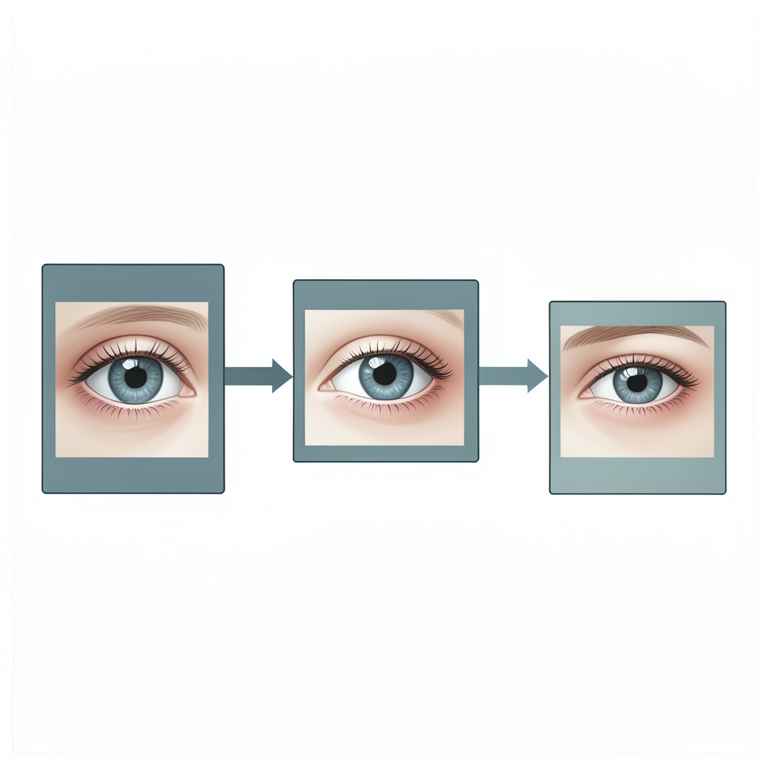
Screen Time vs. Visual Metrics
AI-generated conceptual illustration (human eyes and digital screens). It explains the idea and does not show study data.
View source evidence ↗Introduction Background
The rapid proliferation of digital devices has transformed daily life, leading to a dramatic increase in screen time. A 2021 survey indicated that adults in the U.S. spent an average of over 7 hours a day on screens, while children aged 8 to 12 were reported to spend nearly 5 hours daily on screens for recreational purposes. This trend is particularly prevalent among children and young adults, who frequently engage with smartphones, tablets, and computers for both recreational and educational purposes. The COVID-19 pandemic has exacerbated this situation [11] , with remote work and online learning becoming the norm. As a result, many individuals now find themselves spending six or more hours per day on digital screens, raising important questions about the impact of this behavior on visual health.
Purpose of the study
The primary aim of this study is to investigate the effects of prolonged screen time on binocular vision, particularly focusing on accommodative dysfunction, convergence insufficiency, and symptoms of asthenopia. Understanding these relationships is crucial for developing effective strategies to reduce the risk of visual disturbances associated with extensive screen usage.
Literature Review Extended screen time and visual health
The increasing prevalence of digital devices has led to significant concerns regarding visual health, particularly due to extended screen time. Rosenfield (2016) [14] identifies "computer vision syndrome," characterized by symptoms such as eye fatigue, dryness, and blurred vision, which has become prevalent as users spend more time in front of screens. Research by Sheppard and Wolffsohn (2018) [15] further supports this, noting excessive screen time can contribute to accommodative dysfunction, wherein the eye's ability to focus becomes impaired, leading to discomfort during prolonged tasks.
Binocular vision abnormalities
Studies have demonstrated a direct correlation between high screen time and binocular vision disorders. A systematic review by Ohlsson et al., (2017) [13] highlights that individuals using screens for over six hours daily are likely to experience convergence insufficiency, a condition characterized by difficulty in maintaining proper eye alignment during near tasks. The review reports significant declines in Near Point of Convergence (NPC) and Positive Fusional Vergence (PFV) among these users, suggesting a critical need for further investigation into the effects of prolonged screen use on binocular function [10] . Accommodative disorders are prevalent among those engaged in extensive screen activities. According to a study by Xiong et al., (2017) [16] , up to 40% of participants with prolonged device exposure displayed signs of accommodative dysfunction, including increased latency and decreased amplitude of accommodation. These findings suggest that prolonged digital device use not only affects comfort but also has lasting implications for visual acuity and binocular coordination [12] .
Symptoms of digital eye strain
The symptoms associated with Digital Eye Strain (DES) have garnered significant attention, particularly among children and adolescents. Hargate and Wang (2021) [19] found that children spending over four hours daily on smartphones frequently report symptoms such as blurred vision and eye fatigue. Their research indicates that the prevalence of myopia in this population has increased, with daily screen exposure contributing to a 30% rise in myopia progression (Xiong et al., 2017) [23] .
Methodology
Methodology
Study design
This study employs a cross-sectional design to assess the impact of prolonged screen time on binocular vision among individuals aged 10-50 years. Participants were recruited from local schools and workplaces, with informed consent obtained prior to participation.
Participants
A total of 300 participants were included in the study, categorized into three groups based on their daily screen time: Group A: 0-2 hours/day Group B: 3-5 hours/day Group C: 6+ hours/day The sample included a balanced distribution of genders and ages, ensuring representation from various demographics.
Data collection
Data were collected through a combination of surveys, visual assessments, and ocular measurements. The methodology included: Surveys: Participants completed questionnaires regarding daily screen usage, types of devices used, and the presence of visual symptoms. Questions were designed to assess the frequency, duration, and context of screen use.
Visual assessments:
Standardized tests for visual acuity (using Snellen charts), Near Point of Convergence (NPC), and amplitude of accommodation were performed. NPC was measured using a penlight and a ruler, while accommodation was assessed through tests involving near and far targets.
Statistical analysis
Descriptive statistics were used to summarize the data, while inferential statistics, including ANOVA and regression analysis, were employed to determine the significance of the findings. A p-value of <0.05 was considered statistically significant. Data were analysed using statistical software, ensuring robust interpretation of the results.
Results
Results
Participant demographics
The study included a diverse sample of participants, with a balanced distribution of genders and ages. The majority reported using multiple digital devices throughout the day. Key demographic findings included: Age distribution: Participants ranged from 10 to 50 years, with a mean age of 30 years.
Device usage: Smartphones were the most commonly used devices, followed by laptops and tablets. Participants in Group C reported an average of 8 hours of screen time daily.
Visual acuity and screen time
Results indicated a significant decline in visual acuity among participants in Group C compared to those in Groups A and B. Visual acuity was measured in terms of both distance and near vision, showing that: Group A: 98% had normal visual acuity. Group B: 85% had normal visual acuity. Group C: Only 70% maintained normal visual acuity.
Accommodative dysfunction
Accommodative dysfunction was prevalent among Group C participants, with 40% displaying signs of latency in accommodation and decreased amplitude of accommodation. Specific findings included: Latency in accommodation: Increased time taken to refocus from distant to near objects.
Decreased amplitude of accommodation: Reduced ability to focus on near objects, indicating potential strain on the ciliary muscles.
Decreased amplitude of accommodation: Reduced ability to focus on near objects, indicating potential strain on the ciliary muscles.
Convergence insufficiency
A substantial number of participants in Group C exhibited signs of convergence insufficiency, with significant declines in NPC and Positive Fusional Vergence (PFV) metrics. The metrics revealed: NPC measurements: Average NPC was 6 cm for Group A, 8 cm for Group B, and 12 cm for Group C.
PFV measurements: PFV was significantly lower in Group C, indicating impaired ability to maintain convergence.
Symptoms of digital eye strain
Participants in Group C reported significantly higher instances of digital eye strain symptoms, including headaches, blurred vision, and eye fatigue. Approximately 60% of this group experienced these symptoms regularly, with detailed findings showing:
Headaches: 70% of Group C reported frequent headaches related to screen use.
Blurred vision: 65% reported intermittent blurred vision, especially after prolonged use.
Eye fatigue: 75% of participants in Group C experienced fatigue and discomfort after extended screen time.
Discussion
Discussion
Interpretation of findings
The findings of this study align with existing literature, demonstrating that prolonged screen time has detrimental effects on binocular vision. The correlation between increased screen use and the prevalence of accommodative dysfunction and convergence insufficiency is particularly concerning. These conditions not only impair visual comfort but can also impact daily functioning and overall quality of life [5] .
Implications for public health
Given the increasing reliance on digital devices, particularly in the wake of the COVID-19 pandemic [6] , public health initiatives must address the implications of prolonged screen time on ocular health [9] . Educational programs highlighting the importance of visual ergonomics and regular eye examinations could be beneficial. It is crucial to inform the public about the potential long-term consequences of sustained screen exposure, including increased risk for myopia and other ocular disorders [7,8] .
Recommendations for preventative measures
To mitigate the negative effects of prolonged screen time, several recommendations can be made: Ergonomic adjustments: Ensuring proper workspace ergonomics, including appropriate screen height and distance, can help reduce eye strain. An ideal setup should involve screens placed at eye level and at a distance of 20-30 inches from the eyes.
Environmental factors: Maintaining adequate ambient lighting and minimizing glare on screens can enhance visual comfort. This may involve using screens with anti-reflective coatings and adjusting room lighting.
Breaks and eye exercises:
Implementing the 20-20-20 rule taking a 20-second break to look at something 20 feet away every 20 minutes can alleviate symptoms of digital eye strain. Simple eye exercises can also help maintain flexibility in the eye muscles.
Regular eye examinations: Encouraging regular eye checkups to monitor visual health and detect any abnormalities early. Screen time habits should be discussed during these visits, allowing for tailored advice.
Conclusion
The study provides compelling evidence linking prolonged screen time with binocular vision abnormalities, including accommodative dysfunction and convergence insufficiency. With the prevalence of digital devices in daily life, it is crucial to implement strategies that promote visual health. Continued research in this area is essential to further understand the long-term effects of screen usage on binocular vision and to develop effective interventions.
References
15 in the original paper- Vaz FT, Henriques SP, Silva DS, Roque J, Lopes AS, Mota M et al. Digital asthenopia: Portuguese Group of Ergophthalmology survey. Acta Med Port. 2019;32(4):260-265. DOI: 10.20344/amp.10942
- Ahmed SF, McDermott KC, Burge WK, et al. Visual function, digital behavior and the vision performance index. Clin Ophthalmol. 2018;12:2553-2561. DOI: 10.2147/OPTH.S187131
- Lee YK, Chang CT, Lin Y, Cheng ZH. The dark side of smartphone usage: Psychological traits, compulsive behavior and technostress. Comput Human Behav. 2014;31:373-383. DOI: 10.1016/j.chb.2013.10.047
- Touitou Y, Touitou D, Reinberg A. Disruption of adolescents' circadian clock: the vicious circle of media use, exposure to light at night, sleep loss and risk behaviors. J Physiol Paris. 2016;110:467-479. DOI: 10.1016/j.jphysparis.2017.05.001
- Iqbal M, Ibrahim Elzembely H, Said OM. Letter to the editor: "self-reported student awareness and prevalence of computer vision syndrome during COVID-19 pandemic at Al-Baha University". Clin Optom. 2022;14:193-194. DOI: 10.2147/OPTO.S391171
- Iqbal M, Said O, Ibrahim O, Soliman A. Visual sequelae of computer vision syndrome: a crosssectional case-control study. J Ophthalmol. 2021;2021:6630286. DOI: 10.1155/2021/6630286
- Iqbal M, Elzembely H, El-Massry A. Computer vision syndrome prevalence and ocular sequelae among medical students: a university-wide study on a International Journal of Biology Sciences https://www.biologyjournal.net marginalized visual security issue. Open Ophthalmol J. 2021;15:156-170. DOI: 10.2174/1874364102115010156
- Roy S, Sharif AB, Chowdhury S, et al. Unavoidable online education due to COVID-19 and its association to computer vision syndrome: a cross-sectional survey. BMJ Open Ophthalmol. 2022;
- Mou Y, Shen X, Yuan K, et al. Comparison of the influence of light between circularly polarized and linearly polarized smartphones on dry eye symptoms and asthenopia. Clin Transl Sci. 2022;15(4):994-1002. DOI: 10.1111/cts.13218
- Cartes C, Segovia C, Salinas-Toro D, et al. Dry eye and visual display terminal-related symptoms among university students during the coronavirus disease pandemic. Ophthalmic Epidemiol. 2022;29(3):245-251. DOI: 10.1080/09286586.2021.1943457
- Fernandez-Villacorta D, Soriano-Moreno AN, GalvezOlortegui T, Agui-Santivañez N, Soriano-Moreno DR, Benites-Zapata VA et al. Computer visual syndrome in graduate students of a private university in Lima, Peru. Arch Soc Esp Oftalmol. 2021;96(10):515-520. DOI: 10.1016/j.oftale.2020.12.009
- Ohlsson J, et al. The impact of digital screens on eye health: A systematic review. Optom Vis Sci. 2017;94(6):657-664.
- Rosenfield M. Computer vision syndrome: a review of the literature. Work. 2016;55(2):223-228.
- Sheppard AL, Wolffsohn JS. The effect of prolonged digital device use on accommodative function. Ophthalmic Physiol Opt. 2018;38(1):59-68.
- Xiong S, et al. The role of screen time in the development of myopia in children: a systematic review and meta-analysis. Ophthalmology. 2017;124(11):15731584.