
Research article · 2024 · Full text
International Journal of Horticulture and Food ScienceEffects of weed management on soybean quality and nutritional value in food production
Volume 6(2) · Pages 53–56 · DOI: 10.33545/26631067.2024.v6.i2a.229 ↗
Research areasSoybean genetics and cultivation
Abstract
Author-writtenSoybean (Glycine max L.) is a vital crop globally, known for its\r\nhigh protein and oil content. Its importance spans across human nutrition and\r\nthe animal feed industry. Effective weed management in soybean fields is\r\ncritical for maintaining crop yield and quality. This article explores the\r\nrelationship between various weed control methods—chemical, mechanical,\r\nbiological, and integrated weed management—and their impact on the quality and\r\nnutritional value of soybeans. Through a detailed review of authentic research\r\nstudies, this article highlights challenges, advancements, and sustainable\r\npractices in weed management to support food production.
Summary
Source-checkedPlain-language reading of the full paper, prepared with AI and checked against the text. Each point links to the authors' own words.
Why it matters
- Soybeans are globally important crops due to their high oil and protein content, serving both human nutrition and animal feed. View evidence ↗
- The crop is specifically valued for protein levels between 36% and 48% and oil levels typically between 18% and 24%. View evidence ↗
- Weeds negatively impact soybeans by competing for space, light, nutrients, and water, which reduces seed quality and overall yield. View evidence ↗
The question
- The study aims to examine how different weed control methods (chemical, mechanical, biological, and integrated) affect the nutritional value and quality of soybeans. View evidence ↗
What they did
- The author conducted a detailed review of existing authentic research studies to identify sustainable weed management practices. View evidence ↗
- The analysis is based on evidence gathered from numerous secondary sources. View evidence ↗
What they found
- Unmanaged weeds can introduce fungi that produce mycotoxins, contaminating seeds and risking human and animal health. View evidence ↗
- Research indicates that the herbicide glyphosate can reduce the activity of beneficial soil microbes that cycle nutrients, which may affect seed composition and growth. View evidence ↗
- Over-application of herbicides can stress the plants, resulting in reduced oil quality and lower protein synthesis. View evidence ↗
- Appropriately timed mechanical weeding can effectively control weeds without negatively impacting the quality of the crop. View evidence ↗
- Cover cropping has been found to reduce weed pressure and improve soil fertility, which leads to higher oil and protein content in the seeds. View evidence ↗
- Combining cover cropping with herbicide applications significantly improves soybean quality and yield while reducing weed pressure. View evidence ↗
- Integrated Weed Management (IWM) has proven effective in the US, Asia, and Europe for controlling glyphosate-resistant weeds (such as Conyza canadensis and Amaranthus palmeri) while maintaining economic viability and seed quality. View evidence ↗
What it means
- The author concludes that Integrated Weed Management is the most sustainable and effective approach because it reduces herbicide reliance and resistance while improving crop productivity and quality. View evidence ↗
- A limitation of IWM is that it requires significant investment, knowledge, and careful planning, necessitating farmer education and resource support. View evidence ↗
Visual summary
1 visualsIllustrations explain the paper; they do not show study data.
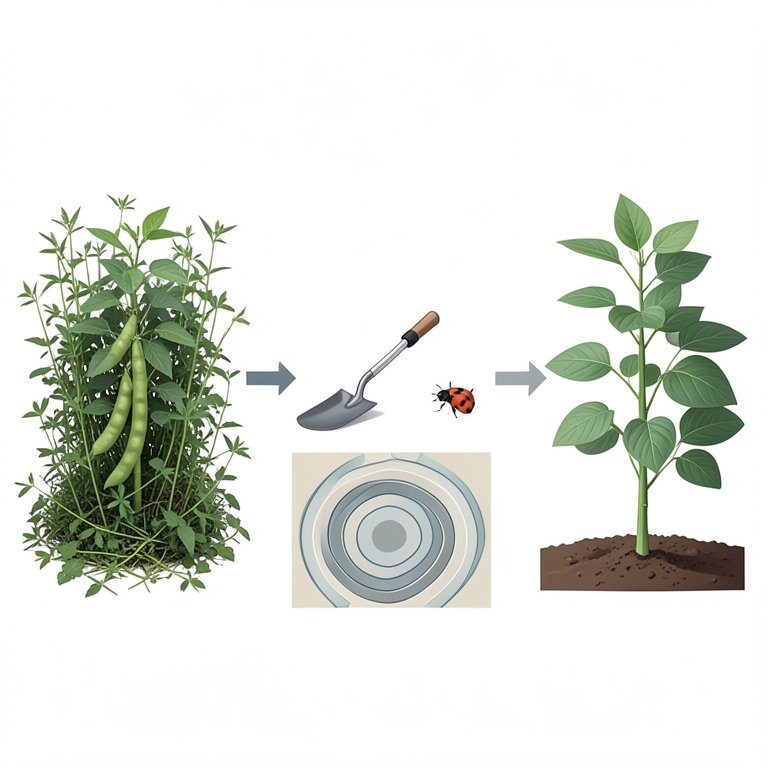
Integrated Weed Management Framework
AI-generated conceptual illustration (soybean plants). It explains the idea and does not show study data.
View source evidence ↗Introduction
Soybean is a cornerstone of modern agriculture, cultivated widely for its high nutritional and economic value. As a source of protein, oil, and bioactive compounds, soybeans contribute significantly to food security and industrial applications. However, one of the biggest challenges in soybean cultivation is weed management. Weeds compete with soybean crops for essential resources like water, light, nutrients, and space, resulting in reduced yields and compromised seed quality. Effective weed control is essential not only for protecting soybean productivity but also for preserving the nutritional value of the crop. Weeds affect soybeans in multiple ways, particularly during critical growth phases such as flowering and pod filling. If left unmanaged, they can significantly alter the crop's physiological processes, leading to smaller seeds, lower protein content, and decreased oil concentration. Moreover, the rise of herbicide-resistant weed species has complicated weed management strategies, necessitating a shift from traditional methods to more integrated and sustainable approaches. This article explores the effects of various weed management practices on soybean quality and nutritional value. It draws from numerous secondary sources, providing an evidencebased understanding of how effective weed control contributes to food production. The study further delves into the implications of chemical, mechanical, biological, and integrated weed management practices, offering insights into their advantages and limitations.
Importance of Soybean Quality in Food Production
Soybean (Glycine max L.) holds immense significance in global food production due to its rich nutritional profile and versatile applications. As one of the most widely cultivated crops, it serves as a vital source of plant-based protein and oil, meeting the demands of both human nutrition and the animal feed industry. The quality of soybeans directly impacts their value in food systems, influencing their nutritional content, market demand, and suitability for various applications. High-quality soybeans contribute to human diets through products such as tofu, soy milk, and soy protein isolates, while also playing a crucial role in the production of animal feed, biodiesel, and industrial goods. Soybeans are particularly valued for their high protein content, which ranges from 36% to 48%, and their oil content, typically between 18% and 24%. The protein in soybeans is of exceptional quality, containing all essential amino acids needed for human health. This makes soybeans a key component in vegetarian and vegan diets, as well as a preferred ingredient in protein supplements and infant formulas. Additionally, soybean oil is an important source of unsaturated fatty acids, including omega-6 and omega-3, which are essential for cardiovascular health. Beyond macronutrients, soybeans are rich in dietary fiber, isoflavones, and other bioactive compounds that offer numerous health benefits. The importance of soybeans extends beyond human nutrition to their critical role in animal feed. Soybean meal, a byproduct of oil extraction, is a high-protein feed ingredient widely used in poultry, swine, cattle, and aquaculture. The nutritional quality of soybeans directly affects the productivity and efficiency of animalbased food systems, influencing the availability of meat, dairy, and eggs in the global market. Thus, maintaining soybean quality is not only crucial for human consumption but also for ensuring the sustainability of livestock aquaculture industries. Weed management plays a significant role in determining soybean quality. Weeds compete with soybean plants for vital resources such as light, water, and nutrients, leading to reduced growth and seed development. This competition can lower the protein and oil content of soybeans, diminishing their nutritional and market value. Furthermore, weeds may harbor pathogens or contaminants that compromise the safety and usability of soybeans in food production. For example, certain weed-associated fungi produce mycotoxins that can contaminate soybean seeds, posing risks to human and animal health. The economic value of soybeans is closely linked to their quality. High-protein and high-oil soybeans are in demand for premium markets, fetching higher prices and providing greater economic returns to farmers. Conversely, poor-quality soybeans may face lower market acceptance or reduced prices, impacting the profitability of soybean cultivation. Effective weed management practices are therefore essential for protecting both the yield and quality of soybeans, ensuring their competitiveness in global markets. Soybeans also play a critical role in promoting sustainable and healthy diets. As a plant-based protein source, soybeans have a lower environmental footprint compared to animal-based proteins, requiring less land, water, and energy for production. High-quality soybeans contribute to addressing global challenges such as food insecurity, malnutrition, and climate change by supporting sustainable food systems. Products derived from highquality soybeans, such as fortified soy-based foods and oils, cater to health-conscious consumers while meeting the nutritional needs of diverse populations.
Chemical Weed Management
Chemical herbicides have been the backbone of weed management in soybean cultivation for decades. Herbicides such as glyphosate, glufosinate, and 2,4-D are widely used due to their efficiency and ability to target a broad spectrum of weed species. However, the overuse of herbicides has led to the evolution of herbicide-resistant weed populations, creating a significant challenge for farmers.
Impact of Chemical Herbicides on Soybean Quality
Herbicides influence soybean quality both directly and indirectly. Direct effects include chemical residues left in seeds, which may impact their safety and nutritional value. Indirect effects involve changes in soil health and microbial communities caused by prolonged herbicide application. For example, a study by Duke et al. (2018) revealed that glyphosate application reduced the activity of beneficial soil microbes responsible for nutrient cycling, potentially affecting soybean growth and seed composition.
In addition, herbicide-resistant weeds often require higher doses or combinations of herbicides, increasing the risk of phytotoxicity. Excessive herbicide application can stress soybean plants, leading to lower protein synthesis and reduced oil quality.
Challenges of Herbicide Resistance
Herbicide resistance has become a major concern in soybean production. Weeds such as Amaranthus palmeri (Palmer amaranth) and Conyza canadensis (horseweed) have developed resistance to multiple herbicide classes, including glyphosate and ALS inhibitors. Resistance increases the cost of weed management and necessitates the use of alternative strategies, such as pre-emergence herbicides or tank mixes with different modes of action. Studies from the United States and Brazil have documented significant economic losses due to herbicide-resistant weeds. The increasing prevalence of resistance underscores the need for integrated weed management strategies that combine chemical and non-chemical methods to maintain soybean quality and productivity.
Mechanical Weed Management
Mechanical weed control involves the physical removal or disruption of weeds through tillage, hoeing, mowing, or cultivation. This method has been used for centuries and remains an effective strategy for reducing weed pressure in soybean fields.
Advantages and Limitations
Mechanical weed control has several advantages, including its ability to eliminate weeds without chemical inputs, thereby avoiding issues related to herbicide residues. It also enhances soil aeration and disrupts weed seed banks, reducing the likelihood of future infestations. However, excessive tillage can lead to soil erosion, compaction, and nutrient loss, which may negatively affect soybean quality. A study by Melander et al. (2013) demonstrated that mechanical weeding, when timed appropriately, effectively controlled weeds in soybean fields without compromising crop quality. The study also highlighted the importance of integrating mechanical methods with other practices to maintain soil health and long-term productivity.
Biological and Cultural Weed Management
Biological weed management uses natural enemies such as insects, fungi, or bacteria to suppress weed populations. Cultural practices, on the other hand, involve strategies like crop rotation, cover cropping, and optimizing planting densities to enhance crop competitiveness against weeds.
Biological Control
Biological control methods are environmentally friendly and reduce the reliance on chemical herbicides. For example, fungal pathogens like Colletotrichum gloeosporioides have been used to target specific weed species, reducing their impact on soybean crops. While promising, biological control requires careful research to ensure that the introduced organisms do not harm non-target species or disrupt the ecosystem.
Cultural Practices
Cultural practices play a crucial role in weed management by creating unfavorable conditions for weed growth. Crop rotation disrupts weed life cycles and reduces the buildup of weed seed banks. Cover crops, such as cereal rye and hairy vetch, suppress weed emergence by shading the soil and releasing allelopathic compounds. Liebman and Davis (2000) found that cover cropping not only reduced weed pressure but also improved soil fertility, contributing to higher protein and oil content in soybean seeds.
Integrated Weed Management (IWM)
Integrated Weed Management (IWM) is a comprehensive approach that combines multiple weed control strategies to manage weed populations effectively and sustainably. By integrating cultural, mechanical, biological, and chemical methods, IWM aims to reduce reliance on a single control method, delay the development of herbicide-resistant weeds, and ensure long-term agricultural productivity. In soybean cultivation, where weed competition directly affects yield and seed quality, IWM offers a holistic solution to address the challenges of weed management while maintaining environmental sustainability. The primary goal of IWM is to target weeds at different stages of their life cycle using diverse control measures. This multifaceted approach minimizes weed competition, reduces the weed seed bank in the soil, and lowers the selection pressure for herbicide resistance. Research by Norsworthy et al. (2012) has shown that IWM practices improve the effectiveness of weed control while preserving soil health and crop quality. By combining preventative, cultural, and curative strategies, IWM reduces the environmental impact of weed management and promotes sustainable farming practices.
A key component of IWM is the integration of cultural practices, such as crop rotation, cover cropping, and adjusting planting densities. Crop rotation disrupts weed life cycles by introducing crops with different growth habits and resource requirements, preventing the dominance of specific weed species. Cover crops, such as cereal rye or hairy vetch, suppress weed germination and growth by shading the soil and releasing allelopathic compounds that inhibit weed seedling establishment. These practices not only reduce weed pressure but also enhance soil fertility and structure, benefiting soybean growth and quality. Mechanical control methods, including tillage, mowing, and hand weeding, are another essential element of IWM. These methods physically remove weeds or disrupt their growth, reducing competition with soybean plants. While mechanical control is effective, excessive tillage can lead to soil erosion and nutrient loss, underscoring the importance of combining it with other IWM practices to maintain soil health. Biological weed control, which uses natural predators, pathogens, or competitors to suppress weed populations, is gaining attention as a sustainable alternative to chemical herbicides. For example, fungal pathogens like Colletotrichum gloeosporioides have been studied for their ability to selectively target problematic weeds without harming soybean crops. Similarly, the use of grazing animals in certain systems can help manage weeds while contributing to nutrient cycling. Chemical weed control remains a critical component of IWM, but it is applied strategically to minimize resistance development and environmental impact. Rotating herbicides with different modes of action and using them in combination with non-chemical methods can enhance their effectiveness. Pre-emergence herbicides, for example, can be used alongside cultural practices like cover cropping to suppress early weed growth without over-reliance on postemergence applications. Studies by Mirsky et al. (2013) have demonstrated that integrating herbicide applications with cover cropping significantly reduces weed pressure and improves soybean yield and quality. Precision agriculture technologies, such as site-specific weed mapping and GPS-guided sprayers, are increasingly being incorporated into IWM systems. These tools allow farmers to apply control measures only where and when needed, reducing inputs, costs, and environmental risks. By leveraging technology, IWM becomes more efficient and tailored to the specific needs of individual fields. The adoption of IWM in soybean cultivation has shown promising results in addressing the dual challenges of herbicide resistance and environmental sustainability. Field trials in the United States, Europe, and Asia have demonstrated that IWM strategies can effectively control problematic weeds like glyphosate-resistant Amaranthus palmeri and Conyza canadensis while maintaining high seed quality and economic viability. Moreover, IWM systems contribute to broader ecological benefits, such as improved soil health, biodiversity, and water quality. Despite its advantages, IWM requires careful planning, knowledge, and investment. Farmers must be educated about the principles and practices of IWM and supported with access to the necessary resources and technologies. Policymakers and agricultural extension services play a crucial role in promoting the adoption of IWM through incentives, training programs, and research funding. In conclusion, Integrated Weed Management is a sustainable and effective approach to weed control in soybean cultivation. By combining diverse methods, IWM reduces the risks associated with over-reliance on chemical herbicides, addresses herbicide resistance, and enhances the quality and productivity of soybean crops. As agriculture faces growing challenges from climate change, resource constraints, and resistance issues, IWM offers a practical path forward for ensuring the sustainability of soybean production systems. Continued research, innovation, and collaboration among stakeholders will be essential to realize the full potential of IWM in modern agriculture.
Conclusion
Weed management is essential for ensuring the quality and nutritional value of soybeans in food production. While chemical herbicides remain a key tool, their overuse has led to resistance and potential quality issues. Mechanical, biological, and cultural practices provide viable alternatives that support both productivity and sustainability. Integrated Weed Management (IWM) combines these methods to offer a holistic solution, addressing the challenges of resistance and environmental impact. As the global demand for highquality soybeans continues to grow, it is imperative to adopt innovative and sustainable weed management strategies. By leveraging a combination of traditional knowledge and modern technology, farmers can ensure the production of nutritious, high-quality soybeans that meet the needs of consumers and the food industry.
References
11 in the original paper- Duke SO, Powles SB. Glyphosate-resistant weeds and crops: History, development, and prospects. Pest Manag Sci. 2018;74(5):1023-32. Available from: https://doi.org/10.1002/ps.4596
- Melander B, Rasmussen IA, Bàrberi P. Integrating physical and cultural methods of weed controlExamples from European research. Weed Sci. 2013;61(2):369-77. Available from: https://doi.org/10.1614/WS-D-12-00066.1
- Norsworthy JK, Ward SM, Shaw DR, et al. Reducing the risks of herbicide resistance: Best management practices and recommendations. Weed Sci. 2012;60(sp1):31-62. Available from: https://doi.org/10.1614/WS-D-11-00155.1
- Nuru Seid Tehulie, Tenalem Misgan, Tigist Awoke. Review on weeds and weed controlling methods in soybean (Glycine max L.). J Curr Res Food Sci. 2021;2(1):1-6.
- Mirsky SB, Ryan MR, Teasdale JR, et al. Overcoming weed management challenges in cover crop-based organic rotational no-till soybean production in the eastern United States. Weed Technol. 2013;27(1):193203. Available from: https://doi.org/10.1614/WT-D-1200078.1
- Peer FA, Abid M, Amin R, et al. Weed competition in soybean (Glycine max L.): Effects on yield and quality. Afr J Agric Res. 2013;8(21):2561-7. Available from: https://doi.org/10.5897/AJAR2012.7302
- Liebman M, Davis AS. Integration of soil, crop, and weed management in low-external-input farming systems. Weed Res. 2000;40(1):27-47. Available from: https://doi.org/10.1046/j.1365-3180.2000.00164.x
- Teasdale JR, Devine TE, Mosjidis JA, Bellinder RR, Beste CE. Growth and development of hairy vetch cultivars in the northeastern United States as influenced by planting and harvesting date. Agron J. 2007;99(5):1520-5. Available from: https://doi.org/10.2134/agronj2007.0038
- Heap I, Duke SO. Overview of the status of herbicideresistant weeds globally. Weed Technol. 2020;34(1):50-8. Available from: https://doi.org/10.1017/wet.2020.9
- Powles SB, Yu Q. Evolution in action: Plants resistant to herbicides. Annu Rev Plant Biol. 2010;61:317-47. Available from: https://doi.org/10.1146/annurevarplant-042809-112119
- Charudattan R. Biological control of weeds by means of plant pathogens: Significance for integrated weed management in modern agro-ecology. BioControl. 2001;46(2):229-60. Available from: https://doi.org/10.1023/A:1011477503215.