
Research article · 2024 · Full text
International Journal of Veterinary Sciences and Animal HusbandryOccurrence of respiratory tract disorders in brachycephalic dogs
Volume 9(5) · Pages 644–647 · DOI: 10.22271/veterinary.2024.v9.i5j.1786 ↗
Research areasNeonatal Respiratory Health ResearchNeuroscience of respiration and sleepRespiratory Support and Mechanisms
Abstract
Author-writtenThe present investigation was carried out at VCC, NTR College of Veterinary Science, Gannavaram from March to November 2023. The overall occurrence of respiratory disorders in brachycephalic dogs was 1.04% (39/3746). Higher occurrence was seen in dogs aged 2-4 years (40%), with a mean body weight of 10-15kg (43.59%), male dogs (65%), Pug (57.5%) breed in May month (28.21%).
Summary
Source-checkedPlain-language reading of the full paper, prepared with AI and checked against the text. Each point links to the authors' own words.
Why it matters
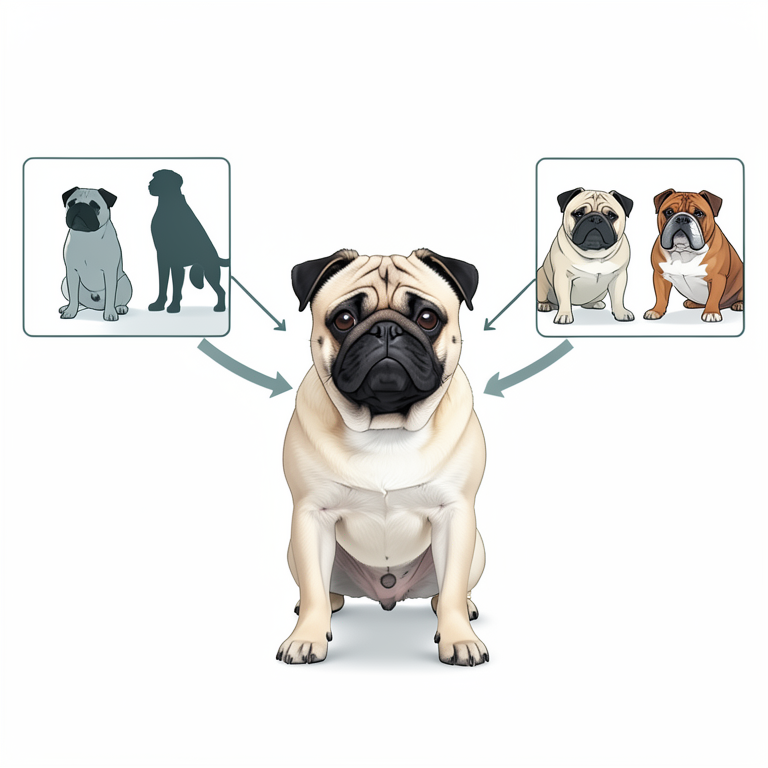
- Brachycephaly in popular dog breeds like Pugs and Bulldogs is caused by discrete mutations, resulting in a debilitating syndrome that primarily impacts the respiratory system. View evidence ↗
- Respiratory disorders in brachycephalic dogs vary in severity, ranging from mild viral infections to life-threatening Brachycephalic Obstructive Airway Syndrome (BOAS). View evidence ↗
The question
- The study aimed to investigate the occurrence of respiratory tract disorders in brachycephalic dogs at the VCC, NTR College of Veterinary Science between March and November 2023. View evidence ↗
What they did
- A control group consisting of six healthy adult dogs undergoing routine check-ups was used. View evidence ↗
- Thirty-nine brachycephalic dogs were diagnosed with respiratory disorders using clinical and radiographic findings, with confirmation via haematology, electrocardiography, pulse oximetry, and echocardiography. View evidence ↗
What they found
- Out of 3,746 dogs screened, 39 had respiratory disorders (1.04%); specifically, among the 254 brachycephalic dogs screened, 39 were affected, representing a 15.35% occurrence rate. View evidence ↗
- The highest occurrence of respiratory disorders was found in dogs aged 2-4 years, accounting for 41.03% (16/39) of the affected cases. View evidence ↗
- Respiratory disorders were more frequent in male brachycephalic dogs (65%, 26/39) compared to females (35%, 14/39). View evidence ↗
- Pugs had the highest occurrence of respiratory disorders at 56.42% (22/39), followed by Shih tzu at 30.78%, while other breeds like Boxers and Bulldogs each had a 2.56% incidence rate. View evidence ↗
- The highest percentage of cases occurred in May (28.21%, 11/39), with the lowest percentages recorded in October and November (2.56%, 1/39 each). View evidence ↗
What it means
- The authors suggest that the peak occurrence of disorders in May and June may be due to the stress caused by peak summer temperatures in Andhra Pradesh. View evidence ↗
- The authors conclude that increased body weight enhances the severity of respiratory signs associated with brachycephalic syndrome. View evidence ↗
Visual summary
3 visualsIllustrations explain the paper; charts are replotted from the paper's own table values.
Risk Factors for Brachycephalic Respiratory Disorders
AI-generated conceptual illustration (Brachycephalic dogs (specifically Pugs)). It explains the idea and does not show study data.
View source evidence ↗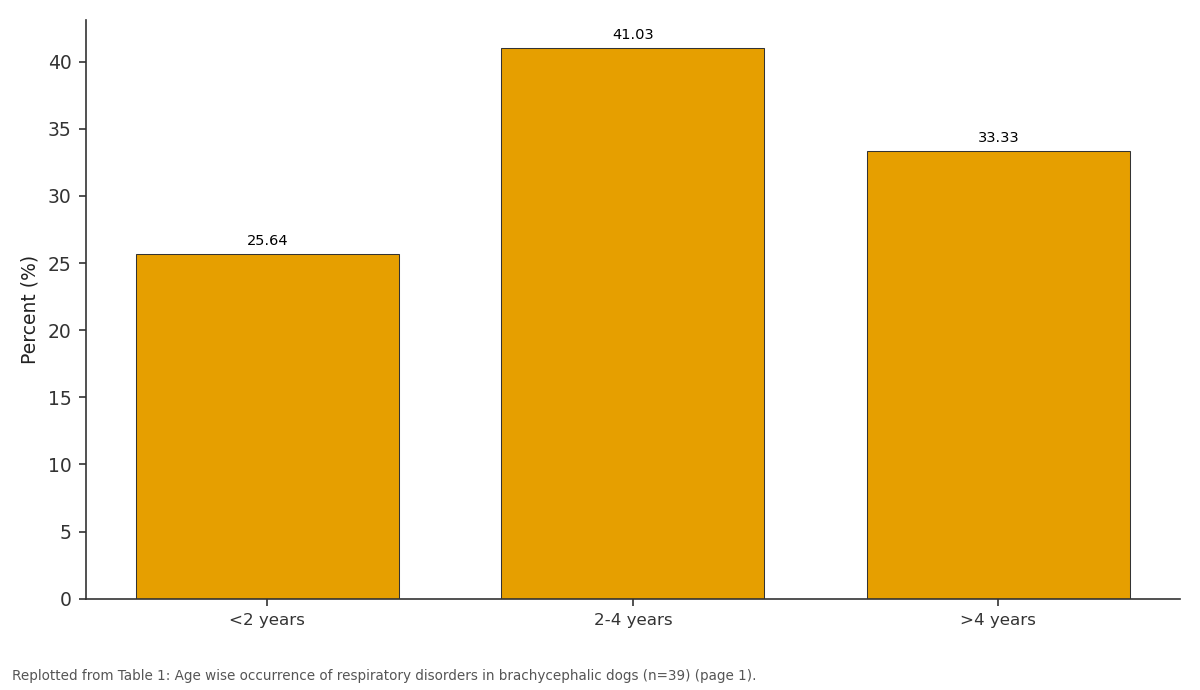
Percent (%): <2 years vs 2-4 years vs >4 years
Replotted from Table 1 (page 1) of the original paper. Every bar is the paper's own table value.
View source evidence ↗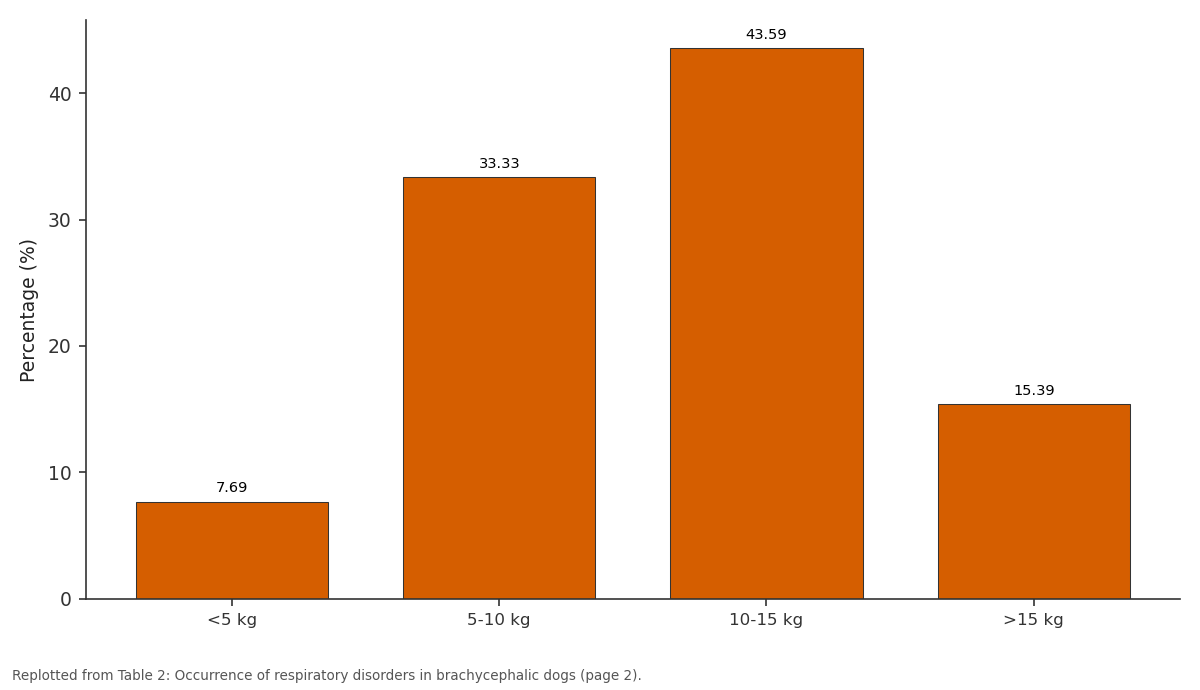
Percentage (%): <5 kg vs 5-10 kg vs 10-15 kg vs >15 kg
Replotted from Table 2 (page 2) of the original paper. Every bar is the paper's own table value.
View source evidence ↗Figures & tables
From the original paper Table 1
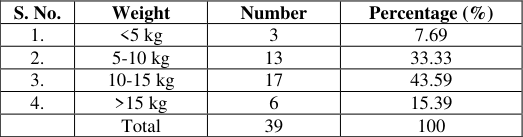 Table 2
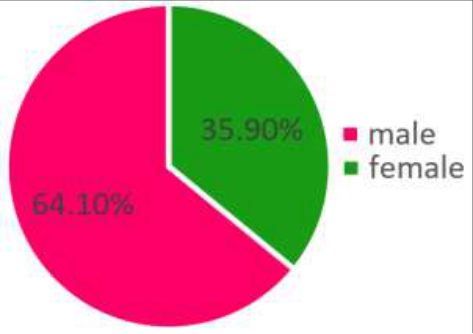 Figure 1
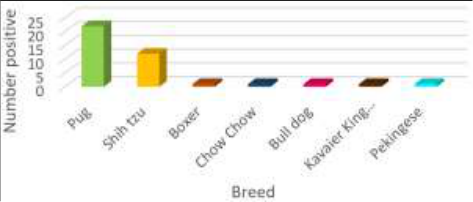 Figure 2
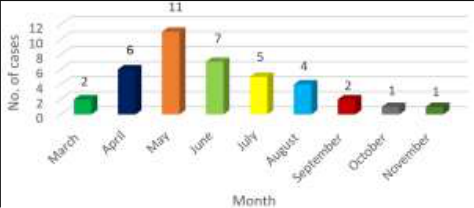 Figure 3
Introduction
The assumption that craniofacial confirmation increases the biting forces in dogs had led to the selection of brachycephalic phenotypes, but conversely the appealing looks of these brachycephalic dogs made them as companion animals. (Ekenstedt et al., 2020) [12] . Discrete mutation of the popular breeds like Bull dogs and Pugs led to brachycephaly which became an ultimately deteriorating and debilitating syndrome mainly affecting the respiratory tract. Although not all brachycephalic dogs show clinical signs, the incidence and severity of the respiratory disorders has increased which range from mild viral infections to life threatening conditions like Brachycephalic Obstructive Airway Syndrome.
Materials and Methods
Six healthy adult dogs brought to the clinic for routine general check-up constituted the healthy control group. A total number of 39 brachycephalic dogs were diagnosed with respiratory disorders by clinical and radiographic findings and confirmed by haematology, electrocardiography, pulse oximetry and echocardiographic examinations.
Results
In the present study, the occurrence of respiratory tract disorders in brachycephalic dogs was 1.04% (39/3746) out of the total number of dogs screened and 15.35 percent of the total number of brachycephalic breeds screened (n = 254).
Age wise occurrence
Age wise occurrence of respiratory disorders in brachycephalic dogs revealed the highest occurrence in dogs in the age group of 2-4 years age group (41.03%) followed by >4 years (33.33%) and <2 years age groups (25.64%).
Gender wise occurrence
In the present study, the occurrence of respiratory disorders in brachycephalic dogs was found to be higher in males (65%, 26/39) than in females (35%, 14/39).
Breed wise occurrence
The present study revealed higher occurrence of respiratory disorders in Pugs (22/39, 56.42%), when compared to other brachycephalic breeds like Shih tzu, Boxer, Bulldog, Chow Chow, Kavalier King Charles, Pekingese which had incidence rates of 30.78%, 2.56%, 2.56%, 2.56%, 2.56%, and 2.56% respectively.
Month wise occurrence
Month wise analysis of occurrence of respiratory disorders in brachycephalic breeds revealed highest% of cases in May (28.21%, 11/39) followed by June (17.95%, 7/39), April (15.38, 6/39), July (12.82%, 5/39), August (10.26%, 4/39), March and September (5.13%, 2/39) each and with lowest% of cases in October and November (2.56%, 1/39) each.
Occurrence in relation to bodyweight
The present study revealed highest incidence of respiratory disorders in brachycephalic breeds i.e., in 10-15 kg (17/39, 43.59%) body weight dogs followed by 5-10 kg body weight (33.33%), >15 kg body weight (6/39, 15.39%) and <5 kg body weight (3/39, 7.69%) dogs. [33] , Fossum et al. (2007) [18] , Findji and Drupe (2008) [17] , Fasanella et al. (2010) [15] , Trappler et al. (2011) [35] , White (2012) [36] , Meola et al. (2013) [27] , Crosse et al. (2015) [8] , Canola et al. (2018) [5] , Ekenstedt et al. (2020) [12] , Igna et al. (2021) [23] and Nakazawa et al. (2023) [28] . Everted tonsils are likely to occur which caused continuous airway strain in dogs above one year of age (Fasanella et al., 2010) [15] . Clinical signs of brachycephalic syndrome were common in young to middle aged dogs which attained sexual maturity. Higher grades of BOAS patients had more age when compared to lower grade BOAS patients which might be due to progressive nature of disease (Erjavec and Steve, 2023) [14] .
In contrast, Packer et al. (2015) [31] recorded higher incidence of respiratory disorders in BOAS at 12 months of age, Crane et al. (2017) [7] reported the age group as 5 to 11 years (median age of 9 years) and Zgank et al. (2021) [37] who reported the incidence in 22.14±12.41 months.
The occurrence of respiratory disorders in BOAS was higher in males (64.10%, 25/39) than females (35.90%, 14/39) in the present study which was in accordance with Pink et al. (2006) [33] , Huck et al. (2008) [22] , Grand and Bureau (2011) [19] , Trappler et al. (2011) [35] , Meola et al. (2013) [27] , Oechtering (2016) [29] , Zgank et al. (2021) [37] , Bagardi et al. (2023) [1] and Dimopoulou et al. (2023) which might be due to the presence of thicker soft palate in males when compared to females (Grand and Bureau 2011) [19] . In contrast, Liu et al. (2017) [25] reported higher incidence of brachycephalic syndrome in females than males as male dogs are used as stud dogs at early age and not bred until they become older. [10] , Bartels et al. (2015) [2] , O'Neil et al. (2015) [30] , Fawcet (2019) and Bonnett et al. (2023) [4] . The highest incidence in Pugs was due to increasing popularity of the Pug breed (Packer et al., 2012 and Costa et al., 2021) [32,6] . Celebrity endorsement and product advertising were the social effects which led to the excessive and suboptimal breeding thus resulting in increased problems in Pugs related to brachycephalic airway syndrome (O'Neil et al., 2015) [30] . In contrary, Findji and Drupe (2008) [17] ,
Oechtering (2016) [29] and Nakazawa et al. (2023) [28] stated highest incidence in French bulldogs (32/45), (77/158, 48.7%) and (39/160, 34.2%) respectively where Fasanella et al.
(2010) [15] and Bernaerts et al. (2010) [3] stated higher incidence in English bulldog.
In the current study, comparatively higher percentage of respiratory disorders in brachycephalic dogs was recorded in the month of May followed by June, April, July and August with least cases in October and November. Higher occurrence in these months might be due to peak summer in the months of May and June in Andhra Pradesh thus exerting stress on animals. This is in accordance with Holt (1998) [21] , Davis et al. (2017) [9] and Hall et al. (2021) [20] . Hot environment induced high levels of stress or excitement in brachycephalic dogs (Cambridge BOAS group, 2023) [13] .
In the current study respiratory disorders associated with brachycephalic syndrome were more in the dogs with weight of 10 to 15 kg (4.59%) followed by dogs with body weight of 5-10 kg (33.33%), >15 kg (15.39%) and <5kg (7.69%). This was in accordance with Trappler and Moore (2011) [35] , Packer et al. (2015) [31] , Liu et al. (2016) [24] and Chandler (2016) who also stated that increased body weight enhances the severity of respiratory signs associated with brachycephalic syndrome. Obesity affected the respiratory system in dogs which was demonstrated by whole body plethysmography which showed an increase in tidal volume in case of obese dogs. Obesity narrowed pharyngeal airway and increased upper airway collapsibility (Magalang et al., 2000) [26] .
Conclusion
Out of the 3746 dogs screened 39 dogs were found to be suffering with respiratory disorders which showed the incidence percentage as 1.04%.
Figures and tables from the paper
| S. No. | Age group | No. of brachycephalic dogs affected with respiratory disorders | Percent (%) |
|---|---|---|---|
| 1. | <2 years | 10 | 25.64 |
| 2. | 2-4 years | 16 | 41.03 |
| 3. | >4 years | 13 | 33.33 |
| Total | 39 | 100 |
Table text extracted from the original PDF; superscript letters are shown inline. The original table image is below.
View original table image
| S. No. | Weight | Number | Percentage (%) |
|---|---|---|---|
| 1. | <5 kg | 3 | 7.69 |
| 2. | 5-10 kg | 13 | 33.33 |
| 3. | 10-15 kg | 17 | 43.59 |
| 4. | >15 kg | 6 | 15.39 |
| Total | 39 | 100 |
Table text extracted from the original PDF; superscript letters are shown inline. The original table image is below.
View original table image
References
25 in the original paper- Canola RA, Sousa MG, Braz JB, Restan WAZ, Yamada DI, Silva Filho JC, et al. Cardiorespiratory evaluation of brachycephalic syndrome in dogs. Pesq Vet Bras. 2018;38:1130-1136.
- Costa J, Steinmetz A, Delgado E. Clinical signs of brachycephalic ocular syndrome in 93 dogs. Ir Vet J. 2021;74(1):1-8.
- Crane CA, Rozanski EA, Abelson AL, Delaforcade AM. Severe brachycephalic obstructive airway syndrome is associated with hypercoagulability in dogs. J Vet Diagn Invest. 2017;29(4):570-3.
- Crosse KR, Bray JP, Orbell GMB, Preston CA. Histological evaluation of the soft palate in dogs affected by brachycephalic obstructive airway syndrome. N Z Vet J. 2015;63(6):319-25.
- Davis MS, Cummings SL, Payton ME. Effect of brachycephaly and body condition score on respiratory thermoregulation of healthy dogs. J Am Vet Med Assoc. 2017;251(10):1160-5.
- De Lorenzi D, Bertoncello D, Drigo M. Bronchial abnormalities found in a consecutive series of 40 brachycephalic dogs. J Am Vet Med Assoc. 2009;235(7):835-40.
- Dimopoulou M, Engdahl K, Ladlow J, Andersson G, Hedhammar Å, Skiöldebrand E, et al. The epidemiology of upper respiratory tract disorders in a population of insured Swedish dogs (2011-2014), and its association to brachycephaly. Sci Rep. 2023;13(1):8765.
- Ekenstedt KJ, Crosse KR, Risselada M. Canine brachycephaly: anatomy, pathology, genetics and welfare. J Comp Pathol. 2020;176:109-15.
- Erjavec V, Nemec Svete A. Thrombocytosis in brachycephalic dogs with brachycephalic obstructive airway syndrome. Vet Med. 2023;68(2):57-61.
- Fasanella FJ, Shivley JM, Wardlaw JL, Givaruangsawat S. Brachycephalic airway obstructive syndrome in dogs: 90 cases (1991-2008). J Am Vet Med Assoc. 2010;237(9):1048-51.
- Fawcett A, Barrs V, Awad M, Child G, Brunel L, Mooney E, et al. Consequences and management of canine brachycephaly in veterinary practice: perspectives from Australian veterinarians and veterinary specialists. Animals. 2018;9(1):3.
- Grand JG, Bureau S. Structural characteristics of the soft palate and meatus nasopharyngeus in brachycephalic and non-brachycephalic dogs analysed by CT. J Small Anim Pract. 2011;52(5):232-9.
- Holt D. Surgery of the upper airway in the brachycephalic dog. In: Proceedings of American College of Veterinary Surgeons Symposium. 1998;1:25-31.
- Huck JL, Stanley BJ, Hauptman JG. Technique and outcome of nares amputation (Trader's technique) in immature shih tzus. J Am Anim Hosp Assoc. 2008;44(2):82-5.
- Igna C, Igna A. Brachycephalic breeds of dogs and cats - A problem in Romania as well? Rev Rom Med Vet. 2021;31(3):45-50.
- Liu NC, Adams VJ, Kalmar L, Ladlow JF, Sargan DR. Whole-body barometric plethysmography characterizes upper airway obstruction in 3 brachycephalic breeds of dogs. J Vet Intern Med. 2016;30(3):853-65.
- Meola SD. Brachycephalic airway syndrome. Top Companion Anim Med. 2013;28(3):91-6.
- Nakazawa Y, Ohshima T, Fujita M, Fujiwara-Igarashi A. Retrospective study of 1050 dogs with respiratory symptoms in Japan (2005-2020). Vet Med Sci. 2023;9(2):638-44.
- Oechtering GU, Pohl S, Schlueter C, Lippert JP, Alef M, Kiefer I, et al. A novel approach to brachycephalic syndrome. 1. Evaluation of anatomical intranasal airway obstruction. Vet Surg. 2016;45(2):165-72.
- O'Neill DG, Jackson C, Guy JH, Church DB, McGreevy PD, Thomson PC, et al. Epidemiological associations between brachycephaly and upper respiratory tract disorders in dogs attending veterinary practices in England. Canine Genet Epidemiol. 2015;2:1-10.
- Packer RMA, Hendricks A, Burn CC. Do dog owners perceive the clinical signs related to conformational inherited disorders as normal for the breed? A potential constraint to improving canine welfare. Anim Welfare. 2012;21(1):81-7.
- Pink JJ, Doyle RS, Hughes JML, Tobin E, Bellenger CR. Laryngeal collapse in seven brachycephalic puppies. J Small Anim Pract. 2006;47(3):131-5.
- Sainio K, Leroy G, Lemo N, Duran M, Villalobos A, Kucerova V. Brachycephalic breeds and brachycephalic obstructive airway syndrome (BOAS). Report, Strategy and Recommendations FCI Scientific Commission. 2020;15.07.2020.
- White RN. Surgical management of laryngeal collapse associated with brachycephalic airway obstruction syndrome in dogs. J Small Anim Pract. 2012;53(1):44-50
- Zgank Z, Nemec Svete A, Erjavec V. Blood lactate, body temperature and heart rate during submaximal exercise in dogs with brachycephalic obstructive airway syndrome: a preliminary study. Proceedings of Socratic Lectures. 2021;6:8-13.