
Research article · 2024 · Full text
International Journal of Veterinary Sciences and Animal HusbandryA review: Effects of saponin on ruminal fermentation, nutrient utilization, body weight and methane mitigation in ruminants
Volume 9(5S) · Pages 371–377 · DOI: 10.22271/veterinary.2024.v9.i5sf.1777 ↗
Research areasRuminant Nutrition and Digestive PhysiologyNatural product bioactivities and synthesisPharmacological Effects of Natural Compounds
Abstract
Author-writtenSaponins are plant secondary compounds found in shrubs and trees. While saponins derived from plants have been employed to regulate methanogenesis conducted by archaeal methanogens in the rumen, the outcomes have shown variability. Saponins divided into two groups based on their structure: triterpene and steroid glycosides. Saponins offer benefits like membrane-permeabilizing, immunostimulant, and hypocholesterolaemic properties, some saponin-containing plants can be toxic. In animal nutrition, saponins play both positive as well as negative roles. They can enhance ruminal fermentation by acting as defaunating agents, improving N-use efficiency, Reduces methane emission and potentially boosting animal performance by affecting nutrient utilization and their body weights. Moreover, studies have indicated that saponins can hinder protein digestion in the gut by interacting with cholesterol in the cell membrane, leading to cell rupture and selective elimination of ruminal protozoa. This mechanism is believed to enhance nitrogen utilization efficiency and potentially contribute to increase in animal performance. Saponin also possess antimicrobial activities and manipulating the microbial ecosystem. Overall, saponins have diverse effects, making their impact on animal health and performance complex. In conclusion, saponin proves efficacious in reducing In vivo enteric methane emissions from ruminants while concurrently improving nutrient digestibility, with an optimal utilization level not surpassing 0.5- 1% of dry matter.
Summary
Source-checkedPlain-language reading of the full paper, prepared with AI and checked against the text. Each point links to the authors' own words.
Why it matters
- Saponins are secondary metabolites naturally occurring in the fruits and foliage of shrubs and trees in tropical and sub-tropical regions. View evidence ↗
- Saponins can improve the nutritional status of animals by eliminating rumen protozoa, which enhances feed utilization and microbial protein flow. View evidence ↗
- While saponins provide benefits such as immunostimulant and hypocholesterolaemic properties, some plants containing them can be toxic. View evidence ↗
The question
- The review aims to provide insights into how saponins and saponin-containing plants affect the ruminal microbiome, fermentation patterns, metabolism, and overall ruminant performance. View evidence ↗
What they did
- The review categorizes saponins into two structural groups: steroid glycosides and triterpene. View evidence ↗
What they found
- In HF cattle rumen liquor, in vitro dry matter digestibility (IVDMD) significantly increased at soapnut levels of 1% and 2% compared to the control. View evidence ↗
- In dairy cows, adding Yucca schidigera (YS) and Quillaja saponaria (QS) at 30 and 45 g/kg DM reduced IVDMD compared to the control (44.5%), with YS reaching 40.0% and QS reaching 37.1%. View evidence ↗
- Methane production in dairy cows decreased from a control of 27.1 mg/g DM to as low as 20.1 mg/g DM with Yucca schidigera and 23.8 mg/g DM with Quillaja saponaria at the highest dose. View evidence ↗
- Tea saponin (TS) reduced methane emission by 8.5%, 15.0%, and 22.7% when included at 0.2, 0.4, and 0.8 mg/ml, respectively. View evidence ↗
- Supplementing with Sapindus rarak fruits at 0.07% of live weight resulted in a significantly higher body weight of 20.93 kg compared to 18.58 kg. View evidence ↗
What it means
- The authors conclude that saponins effectively reduce in vivo enteric methane emissions and improve nutrient digestibility, recommending an optimal level of 0.5-1% of dry matter. View evidence ↗
- High levels of saponins may be toxic to rumen microbes and could negatively impact fiber degradation, as protozoa contribute approximately 20% of this process. View evidence ↗
Visual summary
1 visualsIllustrations explain the paper; they do not show study data.
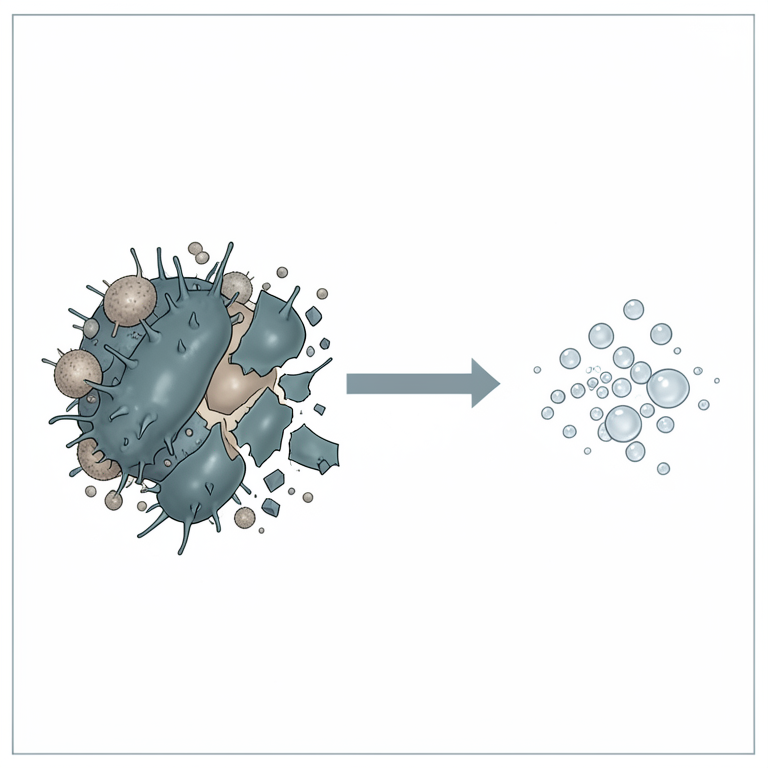
Saponin Action Mechanism
AI-generated conceptual illustration (Rumen environment with protozoa and methanogens). It explains the idea and does not show study data.
View source evidence ↗Figures & tables
From the original paper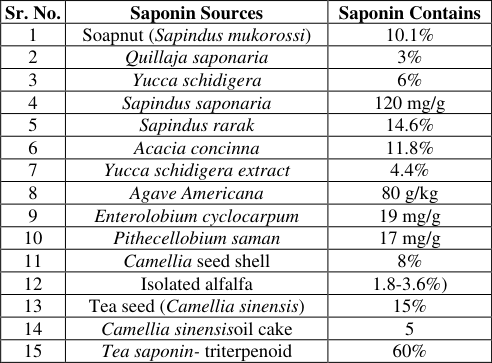 Table 1
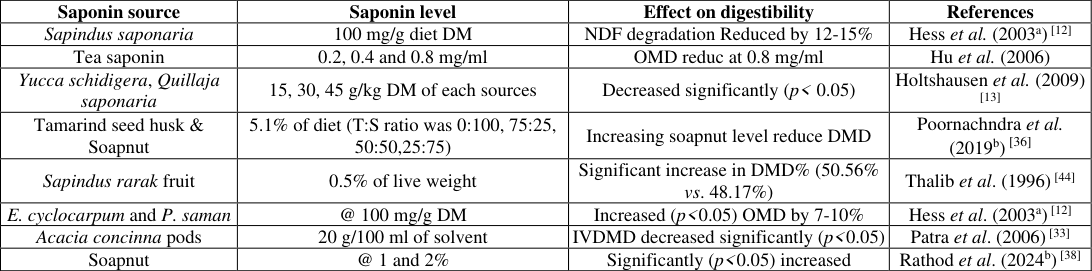 Table 2
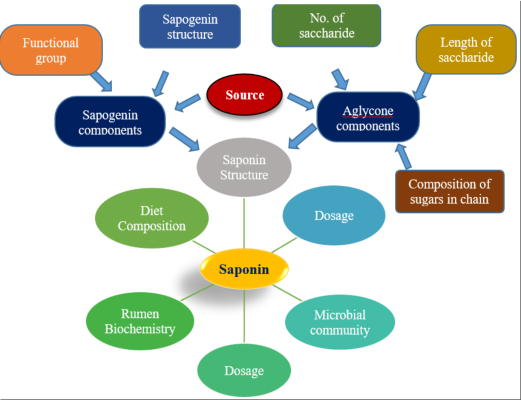 Figure 1
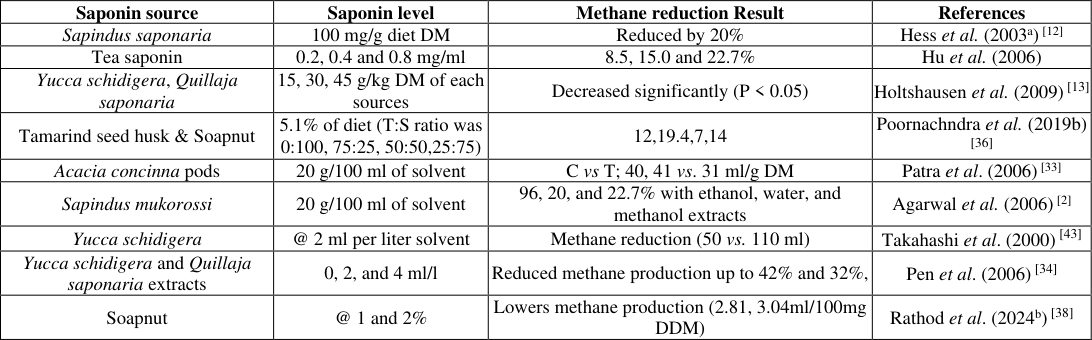 Table 3
 Table 4
 Table 5
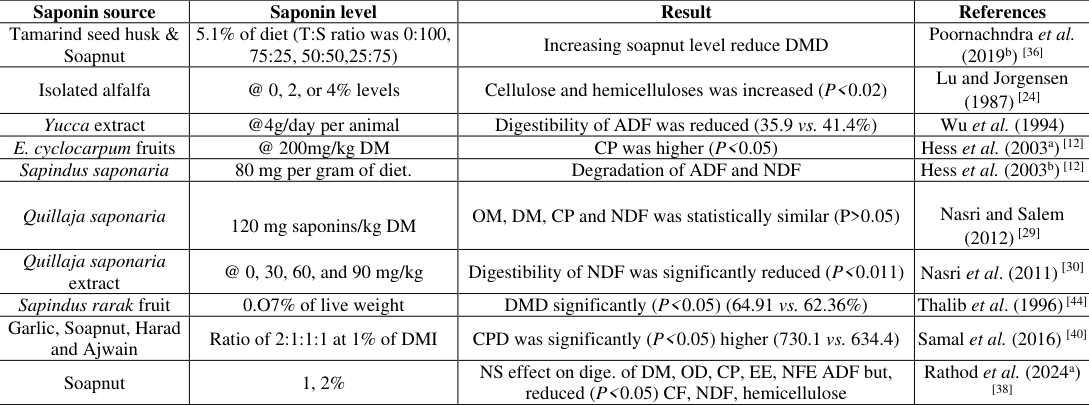 Table 6
Introduction
The term "plant secondary metabolite" (PSM), coined by Albrecht Kessel (Mathes, 1980, as referenced by Hartmann, 2007) [9] , refers to compounds found in plants beyond primary metabolic processes. These secondary metabolites are abundant in plants and often exhibit antimicrobial properties. They can be employed to control and suppress undesirable microbial growth in the rumen, effectively manipulating the microbial ecosystem for specific purposes, as highlighted by Agarwal et al. in 2006 [2] . Saponins are plant secondary compounds found in the foliage and fruits of tropical, sub-tropical shrubs and trees. They are named "saponins" because they can form stable foam in water, resembling soap. Saponins can be divided into two groups based on their structure: triterpene and steroid glycosides. These compounds play an indirect role in reducing protozoa and inducing changes in the rumen ecosystem [Finlay et al. (1994) [4,12,25] . Saponins have been documented for their antiprotozoal activity in various studies [Kamra et al. (2008) [20] , Sliwinsky et al. (2002), Hess et al. (2004) [10] , Lovett et al. (2006) [23] , and Agarwal et al. (2006)] [2] . The suppression or elimination of protozoa from the rumen, attributed to saponins, contributes to improved microbial protein flow, enhanced feed utilization efficiency, and elevated nutritional status in animals. Provided it does not compromise ruminal fiber degradation (Newbold et al., 1997) [31] . The impact of saponins on In vitro rumen fermentation and microbial composition is contingent on diet composition, as highlighted by Patra and Yu (2015) [32] . Numerous studies have explored the effects of incorporating saponin-rich plants into ruminant diet. Those investigations consistently demonstrate the potent antiprotozoal activity of saponins, suggesting their potential as an alternative to in-feed antibiotics or growth hormones for ruminants due to their defaunation properties.
In this comprehensive review, our objective is to offer enhanced insights into the impacts of saponins or saponincontaining plants on the ruminal microbiome and fermentation patterns. Additionally, we explore saponin metabolism and its effects on ruminant performance. Rumen fermentation, digestibility, and methane emission in animals are influenced by several factors, including the species and breed of the animal, its size, physiological stage, dry matter intake, and digestibility. There are two broad techniques for manipulating the rumen: genetic manipulation and non-genetic manipulation. Genetic manipulation involves developing genetically engineered rumen microbes through gene transfer or manipulation techniques (Mhathung, 2015) [28] . Non-genetic manipulation involves dietary manipulation, the use of suitable chemicals, Direct-Fed Microbials (DFM), or different types of plant secondary metabolites. So, in present review, we aim to enhance our understanding of the impact of saponins or saponin-containing plants on the Ruminal microbiome, Nutrient utilization, Methane emission and fermentation patterns. Additionally, our focus extends to exploring saponins metabolism and elucidating the influence of saponins on the performance of ruminant animals. [35] studied comparatively with saponin as well as tannin source by using rumen liquor from the cannulated crossbred male cattle. Saponin as a soapnut added @ 5.1% in diet and observed higher decrease in IVDMD in individually supplemented soapnut compared to the control (57.9% vs. 60.6%). However, increasing the level of soapnut in combination resulted in a comparatively greater decrease in IVDMD. Rathod et al. (2024 b ) [38] studied with different levels of soapnut using HF cattle rumen liquior and reported IVDMD were significantly (p<0.05) increased @ 1 and 2% soapnut compared to control. Conversely lowest (p<0.05) IVDMD values were observed at the Soapnut concentrations of 4 and 8%. Holtshausen et al. (2009) [13] studied with two saponin sources, Yucca schidigera and Quillaja saponaria and used SRL of dairy cows, both added @ 15, 30, 45 g/kg DM) and reported reduction in IVDMD at 30 and 45g with both sources compared to the control (YS: [12] also studied on Sapindus saponaria @ 100mg/g DM by using SRL of fistulated brown Swiss cow and observed 12-15% degradation (p<0.05) of neutral detergent fiber. Thalib et al. (1996) [44] conducted an experiment by using rumen liquior of sheep fed Sapindus rarak fruit. [36] Sapindus rarak fruit 0.5% of live weight Significant increase in DMD% (50.56% vs. 48.17%) Thalib et al. (1996) [44] E. cyclocarpum and P. saman @ 100 mg/g DM Increased (p<0.05) OMD by 7-10% Hess et al. (2003 a ) [12] Acacia concinna pods 20 g/100 ml of solvent IVDMD decreased significantly (p<0.05) Patra et al. (2006) [33] Soapnut @ 1 and 2% Significantly (p<0.05) increased Rathod et al. (2024 b ) [38] Their methanol-extracted Sapindus rarak fed @ 0.07% of live weight and reported significant increase in DMD% of In vitro incubation in the treatment groups (50.56% vs. 48.17%) compared to control. Hu et al. (2006) also studied by using rumen liquior of sheep and they fed different levels of tea saponin (TS) @ 0, 0.2, 0.4, and 0.8 mg/ml in the In vitro rumen fluid. They reported organic matter digestibility decreased when TS added @ 0.8 mg/ml but, not differed with @ 0.2 mg/ml as compared (57.2 vs. 60.8 vs. 61.4%) to the control. Patra et al. (2006) [33] studied the In vitro effect of plant Acacia concinna (shikakai), extracts in the rumen liquor of buffalo. Three solvents extracted: water, ethanol (95%), and methanol (98%) at a concentration of 20 g/100 ml of solvent and extracts added @ 0, 0.25 and 0.5 ml. The results showed that the In vitro DMD decreased significantly (P<0.05) with both extracts compared (0.446 vs. 0.453 vs. 0.467 g/g DM) to the control. While, Agarwal et al. (2006) [2] reported the In vitro degradability of wheat straw was adversely affected by @ 0.5 ml/30 soapnut extracts in water (9.32 vs. 28.54%), ethanol (14.67 vs. 28.02%), and methanol (6.51 vs. 30.8%) compared to control. Wang et al. (1998) [46] investigated the effects of Yucca schidigera extract (YSE) using the rumen simulation technique (RUSITEC). YSE was included in the diet at 0.5 mg/ml as a fed basis for 22 days. The results indicated a nonsignificant effect on the digestibility of dry matter and total gas production.
In vitro methane emission
Poornachandra et al. (2019 b ) [35] studied on saponin source by using rumen liquor from the cannulated crossbred male cattle. The basal diets were formulated @ 5.1% of the diet. The results reported that methane production in the test groups with higher saponin (soapnut) did not differ significantly compared to control group. Rathod et al. (2024 b ) [38] studied with different soapnut levels and observed reduction of In vitro methane gas 22.16, 15.79% with 1, 2% of soapnut in TMR. Holtshausen et al. (2009) [13] , In vitro experiments were performed on dairy cows by feeding them saponin-containing Yucca schidigera and Quillaja saponaria at three different doses of 15, 30, and 45g/kg DM, showed that significantly decreased methane production (P<0.05) with both Yucca schidigera and Quillaja saponaria at all three dose levels compared to control. The methane production values for Yucca schidigera were 24.8, 22.9, and 20.1 mg/g DM, while for Quillaja saponaria they were 25.5, 24.0, and 23.8 mg/g DM, respectively, compared to the control value of 27.1 mg/g DM. Pen et al. (2006) [34] also investigated the effect of Yucca schidigera (YSE) and Quillaja saponaria (QSE) extracts on In vitro methane production. Added @ 0, 2, and 4 ml/l and reported significantly reduction of methane production up to 42% and 32%, with YSE and QSE, respectively. Hu et al. (2005) conducted the experiments to investigate the effect of tea saponin @ 0, 0.2, and 0.4 mg/ml during In vitro methanogenesis and showed that 0.2 and 0.4 mg/ml TS decreased methane emission by 12.5% or 14.0% respectively, compared to control. [13] Tamarind seed husk & Soapnut 5.1% of diet (T:S ratio was 0:100, 75: [33] Sapindus mukorossi 20 g/100 ml of solvent 96, 20, and 22.7% with ethanol, water, and methanol extracts Agarwal et al. (2006) [2] Yucca schidigera @ 2 ml per liter solvent Methane reduction (50 vs. 110 ml) Takahashi et al. (2000) [43] Yucca schidigera and Quillaja saponaria extracts 0, 2, and 4 ml/l Reduced methane production up to 42% and 32%, Pen et al. (2006) [34] Soapnut @ 1 and 2% Lowers methane production (2.81, 3.04ml/100mg DDM) Rathod et al. (2024 b ) [38] Patra et al. (2006) [33] , studied on In vitro methanogenesis of feed using buffalo rumen liquor. Acacia concinna pods extracts were prepared using three solvents: water, ethanol (95/100 ml), and methanol (98/100 ml) at a concentration of 20 g/100 ml of solvent. The results showed that gas production was significantly higher with the extracts of A. concinna compared (40, 41 vs. 31 ml/g DM) to the control group. Hu et al. (2006) studied with tea saponin @ 0.2, 0.4 and 0.8 mg/ml in rumen fluid and reported that the addition of TS significantly reduced methane production compared to control. After 24 hours of incubation, the inclusion of 0.2, 0.4, and 0.8 mg/ml of TS reduced methane emission by 8.5%, 15.0%, and 22.7%, respectively. The researchers concluded that TS was an effective methane inhibitor, particularly when included at a concentration of 0.4 mg/ml during In vitro rumen fermentation. Agarwal et al. (2006) [2] studied In vitro methanogenesis and indicated that decrease in methane gas production was 96, 20, and 22.7% with ethanol, water, and methanol extracts, respectively compared to control. Hess et al. (2003 a ) [12] studied In vitro effect of saponin-rich tropical fruit Sapindus saponaria and E. cyclocarpum, indicated that daily methane release was reduced by up to 20% with S. saponaria, but increased by 14% with E. cyclocarpum (p<0.05). Takahashi et al. (2000) [43] investigated the In vitro effects of Yucca schidigera extracts and resulted lower production of total gas (230 vs. 430 ml) and methane (50 vs.
110 ml) with Yucca extract compared to the control.
Effect of Saponin on Body Weights
Feeding animals with saponins has been shown to enhance growth performance in various experiments. This improvement is attributed to a rise in intestinal amino acid absorption resulting from a reduction in protozoal numbers (Patra et al., 2006) [33] . In the study of Rathod et al. (2024 a ) [38] with 1 and 2% of soapnut levels in cattle, reported average weight gain was significantly (p<0.05) higher in T 1 compared to T 2 , and observed. While, treatment did not affect significantly the final body weight of HF Cross-bred cattle. Kumar et al. (2017) [22] studied with tea seed saponin on the growth parameters of eighteen male Gaddi kids. The results reported that the average daily gain and feed conversion ratio were improved (p<0.05) for the T 1 and T 2 groups compared to the control group. However, the final body weight did not differ significantly (P>0.05). Thalib et al. (1996) [44] , Hu et al.
(2006) and Meel et al. (2015) [27] reported improved body weigh in sheep, Boer goat and Rathi calves, respectively, by treatments of different saponin sources compared to the control group. Sultana et al. (2012) [42] and Holtshausen et al.
(2009) [13] reported no significance difference (P>0.05) in the final live weight of Native bulls and Holstein dairy cows, respectively. [27] saponin at different doses @ 0, 36, and 54 mg/kg DM NS Aazami et al. (2013) [1] soapnut @ 1 and 2% of DM Average weight gain (p<0.05) higher in T1 compared to T2, Rathod et al. (2024 a ) [38] 3. Effect of Saponin on Feed Intake and Nutrient Intake Poornachandra et al. (2019 a ) [35] conducted an experiment on adult cross-bred cattle to compare the effect of 5.1% phytosource soapnut as individual or combined supplementation.
Result reported that dry matter intake was not affected with the supplement of soapnut compared to the control. But, significantly (p<0.05) decreased in CP intake of saponin group compared (0.4 vs. 0.5 kg/d) to the control group. Rathod et al. (2024 a ) [38] studied with of soapnut levels in cattle. The use of soapnut @ 1% and 2% with TMR had no adverse effect on dry matter intake (kg/d and kg/100 kg b.wt.), crude protein intake, DCP% as well as DCP and TDN intake, though apparently the values were higher in T 1 followed by T 0 than in T 2 treatment. Kumar et al. (2017) [22] , Gaddi kids were supplemented with tea seed and tea seed saponin extract at levels of 2.6 and 0.4% of DMI. They reported DMI were significantly higher (P<0.05) than the control group, However, the intake of CP, DCP in grams per day (g/d) and g/kg of metabolic weight (g/kg W 0.75 ), as well as TDN was not differed significantly. [38] Sultana et al. (2012) [42] , Meel et al. (2015) [27] , and Jadhav et al. (2017) [17] who reported no adverse effects of saponin sources on nutrient intake. While Lovett et al. (2006) [23] reported reduction of CPI with adding of saponin sources YE in the diet of HF dairy cows. Nasri et al. (2011) [30] conducted an experiment on Barbarine lamb and results reported that DMI (g/kg BW 0.75 ), OMI (g/kg BW 0.75 ), CPI (g/kg BW 0.75 ), NDFI (g/kg BW 0.75 ) and water intake (ml/kg BW 0.75 ) were more or less similar among all the groups of lamb. Nasri and Salem (2012) [29] investigated the effect of oral administration of Agave Americana extract and Quillaja saponaria extracts in Barbarine female lambs. The effect of both saponins sources on DMI (g/kg W 0.75 ), OMI (g/kg W 0.75 ) and CPI (g/kg W0 .75 ) was reprted non-significant.
Effect of Saponin on Digestibility of Nutrients
Rathod et al. (2024 a ) [38] studied by using 1 and 2% of soapnut levels with TMR in HF CB cattle. The study revealed that there was no adverse effects of Soapnut on digestibility of nutrients like DM, OM, EE, NFE, ADF, and Cellulose, though the values gradually decreased with 1% and 2% supplement over the control diet. While, digestibility of fibre fractions i.e., CF, NDF and hemicelluloses were found to be decreased significantly and CP digestibility was insignificantly improved in T 1 over T 0 group. The reduction in digestibility observed may be due to defaunating effect of saponins (Jadhav et al., 2016) [18] . The non-significance results of nutrient digestibility were in accordance with Nasri and Salem (2012) [29] , Jacob et al. (2012) [16] and Aazami et al.
(2013) [1] . [36] Isolated alfalfa @ 0, 2, or 4% levels Cellulose and hemicelluloses was increased (P<0.02) Lu and Jorgensen (1987) [24] Yucca extract @4g/day per animal Digestibility of ADF was reduced (35.9 vs. [12] Quillaja saponaria 120 mg saponins/kg DM OM, DM, CP and NDF was statistically similar (P>0.05) Nasri and Salem (2012) [29] Quillaja saponaria extract @ 0, 30, 60, and 90 mg/kg Digestibility of NDF was significantly reduced (P<0.011) Nasri et al. (2011) [30] Sapindus rarak fruit 0.O7% of live weight DMD significantly (P<0.05) (64.91 vs. 62.36%) Thalib et al. (1996) [44] Garlic, Soapnut, Harad and Ajwain Ratio of 2:1:1:1 at 1% of DMI CPD was significantly (P<0.05) higher (730.1 vs. 634.4) Samal et al. (2016) [40] Soapnut 1, 2% NS effect on dige. of DM, OD, CP, EE, NFE ADF but, reduced (P<0.05) CF, NDF, hemicellulose Rathod et al. (2024 a ) [38] Poornachandra et al. (2019 a ) [35] observed the dry matter and organic matter digestibility among all the soapnut treatment groups were no significant. Samal et al. (2016) [40] reported that crude protein digestibility was significantly (p<0.05) higher in Mix-1 as compared to the control group. Kumar et al. (2017) [22] reported that digestibility of ether extract was significantly reduced (p<0.05) in the groups supplemented with saponin sources, while, Jadhav et al. (2017) [17] reported digestibility of DM, OM, EE, NDF, ADF and cellulose were reduced (p<0.05) by higher tea seed saponin compared to low and without saponin supplemented group. Meel et al. (2015) [27] studied the effect of supplementation of S. mukorossi in Rathi calves. Results reported that digestibility of DM, OM, CP, EE, CF and NFE were higher significantly (P<0.01) and ADF was higher (p<0.05) in S. mukorossi supplemented group compared to the control. While NDF and hemicellulose digestibility not affected by treatments of 3% soapnut leaves. Sultana et al. (2012) [42] studied on the twelve bulls of the Native breed fed UMS with S. mukorossi (soapnut) herbal additive. Results reported their non-significant (P>0.05) difference for the digestibility of DM, OM and ADF due to herbal additives but, a significantly (p<0.05) low digestibility of CP in the presence of as compared to the control.
Effect of Saponin on Rumen Fermentation Parameters
Poornachandra et al. (2019 a ) [35] studied on cross-bred cattle by using the 5.1% soapnut as individual or combined supplementation and reported that ammonia nitrogen was reduced significantly (p<0.05) in soapnut treatments, while, significantly (p<0.05) greater TVFA in the soapnut group than the control group. Acetate and Propionate proportion did not observed significant changes in test group and the control group. Rathod (2023) [37] studied by using 1 and 2% of soapnut levels with TMR in cattle and resulted the pH of average rumen liquor did not differ significantly (P>0.05) in treatment groups. (25.23, 25.76, 26.88 mg/dl) in SRL also not differed (P>0.05) within T 1 , T 2 , T 3 group comparatively but, higher (p<0.05) concentration at 3h post-feeding.
Ruminal pH
Meel et al. (2015) [26] and Sultana et al. (2012) [42] resulted rumen liquor pH did not affects with soapnut leaves and fruits, respectively compared to the control group. Hess et al.
(2003 a ) [12] and Wang et al. (2019) [45] reported no significant differences in rumen fluid pH, but, Agarwal et al. (2006) [2] reported a significantly lower pH value in the In vitro incubated medium compared to the control group.
Ruminal TVFA
Saponins impact volatile fatty acids (VFAs), the primary fermentation end products in the rumen. They form complexes with mucosal cell membrane sterols, altering intestinal cell permeability. This may reduce active nutrient transport mechanisms and enhance small intestine membrane permeability, facilitating the uptake of otherwise impermeable materials. While the effects of saponins on total and individual ruminal VFAs vary, some studies found no significant impact (Gunun et al., 2022, Widyarini et al., 2021, Holtshausen et al., 2009) [6,47,13] . Agarwal et al. (2006) [2] , Sliwinski et al. (2002) [41] found no significant difference, while, Meel (2014) [26] and Wang et al. (2019) [45] reported increased TVFA value in calves when used saponin sources.
Total N, ammonia N and other N utilization
Sliwinski et al. (2002) [41] , Nasri et al. (2011) [30] , Mhathung (2015) [28] , resulted total-N level did not differ, while, Meel (2014) [26] reported a highly significant effect on total nitrogen with the use of soapnut leaves supplied. Sultana et al. (2012) [42] , Nasri et al. (2011) [30] , and Mhathung (2015) [28] also reported that NH 3 -N concentration did not differ, while, Hess et al. (2004) [10] reported a significantly increaseed (p<0.01) in the ammonia concentration with Sapindus saponaria @ 250 g/kg DM. Meel (2014) [26] , Sliwinski et al. (2002) [41] , Hess et al. (2003 b ) [12] did not find a significant effect on NPN levels, whereas, Mhathung (2015) [28] reported significantly higher NPN concentrations (p<0.01) in the incubation medium with Glyricidia maculata leaves. Sliwinski et al.
(2002) [41] and Hess et al. (2003 b ) [12] not reported changes in soluble nitrogen but, Meel (2014) [26] reported a significant increase (P<0.01) in the concentration of soluble nitrogen in rumen liquor when reetha (Sapindus mukorossi) herbs were included at a rate of 3%.
Effect of Saponin on Methane Emission
Gas production, particularly methane, carbon dioxide, and hydrogen, is a key metric for assessing feed nutritive value. The presence of saponins or saponin-rich plants is anticipated to influence gas production by impacting nutrient digestion in the rumen. Poornachandra et al. (2019 a ) [35] conducted a study on 24 male adult cross breed (HF x Hallikar) cattles of 5-6 year old, to compare the effect of individual or combined supplementation of saponin source soapnut with tannin @ 5.1% in diet. The methane emission was estimated by SF 6 tracer technique at last nine day of feeding period and reported significant (p<0.05) reduction in enteric methane emission (g/day) with supplementation of soapnut combined with tannin source as compared to the control diet. Whereas, supplementation of soapnut significantly reduced (p<0.05) enteric methane emission (g) per kg intake of DM, OM or per kg intake of digestible DM, OM and NDF as compare to control group. Holtshausen et al. (2009) [13] conducted experiments to decrease enteric methane production in dairy cows by using saponin sources Yucca schidigera and Quillaja saponaria. Both saponin sources were added @ 10g/kg DM and Methane emission was measured on a subset of the animals using the SF 6 tracer technique. The result of methane production did not differ (P>0.05) as grams per day or g/kg of DMI among treatments. But, methane emission as measured by SF 6 technique was 13.7% lower than that measured in environmental chamber. Hess et al. (2004) [10] studied on six white hill lambs investigate methanogenesis and nitrogen utilization in sheep receiving tropical grass hay and concentrate diets offered with Sapindus saponaria fruits @ 250g/kg DM. On last 2day of gas measurement, using detectors in respiratory unit an Oxymat 3 for oxygen, a Binos 1001 for carbon dioxide and methane detecion. They reported an average daily methane absolute and per kg M 0.75 was reduced (p<0.01) by proportionately 0.05 and 0.09, respectively when supplemented with S. saponaria. Jayanegara et al. (2020) [19] noted that the addition of saponins from S. rarak fruits @ 0.5, 1, 1.5 and 2 mg/ml medium to two diets (high-forage or highconcentrate) did not affect gas production. The effects of saponins on methanogenic archaea numbers and methane production are controlled by several factors (Guyader et al., 2017) [8] . Saponins may reduce the activity of methane-producing mcrA genes, methane production rates, and methanogenic archaea numbers and/or activity (Guo et al., 2008, Hess et al., 2003) [7,12] . Goel and Makkar (2012) observed decreased CH 4 production (by 34-48%) with the addition of Achyranthus aspara, Tribulus terrestris, and Albizia lebbeck saponin extracts at 3, 6, or 9% dietary DM.
Conclusion
Saponins, found in plants or as extracts, offer benefits as feed or additives for ruminants. High saponin concentrations act as natural rumen manipulators, influencing microbial populations and potentially alteration of rumen metabolism. A significant effect is ruminal defaunation, suppressing ciliate protozoa and enhancing microbial protein synthesis efficiency. Saponins may also reduce methanogenesis by inhibiting ruminal methanogens. Their impact on ammonia adsorption and digesta passage alters rumen metabolism. Saponins improve nitrogen metabolism, addressing issues of poor nitrogen retention in ruminants. Effects depend on saponin types, levels, diet composition, and microbial adaptation. Identifying bioactive saponins targeting protozoa and methanogens is crucial. While most saponins are considered safe and beneficial, some types may be toxic. Saponin may be toxic at higher level to rumen microbes, since approx. 20% of fibre degradation is contributed by protozoa (Dijksha and Tamminga, 1995) [3] . Saponins are particularly effective in high-roughage diets, making them beneficial for smallholder livestock farmers in developing countries.
Figures and tables from the paper
| Sr. No. | Saponin Sources | Saponin Contains |
|---|---|---|
| 1 | Soapnut (Sapindus mukorossi) | 10.1% |
| 2 | Quillaja saponaria | 3% |
| 3 | Yucca schidigera | 6% |
| 4 | Sapindus saponaria | 120 mg/g |
| 5 | Sapindus rarak | 14.6% |
| 6 | Acacia concinna | 11.8% |
| 7 | Yucca schidigera extract | 4.4% |
| 8 | Agave Americana | 80 g/kg |
| 9 | Enterolobium cyclocarpum | 19 mg/g |
| 10 | Pithecellobium saman | 17 mg/g |
| 11 | Camellia seed shell | 8% |
| 12 | Isolated alfalfa | 1.8-3.6%) |
| 13 | Tea seed (Camellia sinensis) | 15% |
| 14 | Camellia sinensisoil cake | 5 |
| 15 | Tea saponin- triterpenoid | 60% |
Table text extracted from the original PDF; superscript letters are shown inline. The original table image is below.
View original table image
| Saponin source | Saponin level | Methane reduction Result | References |
|---|---|---|---|
| Sapindus saponaria | 100 mg/g diet DM | Reduced by 20% | Hess et al. (2003a) [12] |
| Tea saponin | 0.2, 0.4 and 0.8 mg/ml | 8.5, 15.0 and 22.7% | Hu et al. (2006) |
| Yucca schidigera, Quillaja saponaria | 15, 30, 45 g/kg DM of each sources | Decreased significantly (P < 0.05) | Holtshausen et al. (2009) [13] |
| Tamarind seed husk & Soapnut | 5.1% of diet (T:S ratio was 0:100, 75:25, 50:50,25:75) | 12,19.4,7,14 | Poornachndra et al. (2019b) [36] |
| Acacia concinna pods | 20 g/100 ml of solvent | C vs T; 40, 41 vs. 31 ml/g DM | Patra et al. (2006) [33] |
| Sapindus mukorossi | 20 g/100 ml of solvent | 96, 20, and 22.7% with ethanol, water, and methanol extracts | Agarwal et al. (2006) [2] |
| Yucca schidigera | @ 2 ml per liter solvent | Methane reduction (50 vs. 110 ml) | Takahashi et al. (2000) [43] |
| Yucca schidigera and Quillaja saponaria extracts | 0, 2, and 4 ml/l | Reduced methane production up to 42% and 32%, | Pen et al. (2006) [34] |
| Soapnut | @ 1 and 2% | Lowers methane production (2.81, 3.04ml/100mg DDM) | Rathod et al. (2024b) [38] |
Table text extracted from the original PDF; superscript letters are shown inline. The original table image is below.
View original table image
| Saponin source | Saponin level | Effect on BW | References |
|---|---|---|---|
| Sapindus rarak fruits | @ 0.07% of live weight. | Significantly higher 20.93 vs. 18.58 kg | Thalib et al. (1996) [44] |
| Tea saponin | @ 3 g/day | Higher average daily gain (94 g/day) | Hu et al. (2006) |
| S. mukorossi (soapnut) | @ 3% leaves with ration | Average daily gain (318.99 g vs. 275.83 g) were higher | Meel et al. (2015) [27] |
| saponin at different doses | @ 0, 36, and 54 mg/kg DM | NS | Aazami et al. (2013) [1] |
| soapnut | @ 1 and 2% of DM | Average weight gain (p<0.05) higher in T1 compared to T2, | Rathod et al. (2024a) [38] |
Table text extracted from the original PDF; superscript letters are shown inline. The original table image is below.
View original table image
| Saponin source | Saponin level | Effect on Intake | References |
|---|---|---|---|
| S. mukorossi leaves | 3% Leaves | Intake of N was high but excreted N contains not differed | Meel et al. (2015) [27], |
| Yucca schidigera extract | 0, 25, and 50 g/head/day | Significant reduction (p<0.05) in DMI | Lovett et al. (2006) [23] |
| Sapindus mukorossi | 5.1% | Significantly (p<0.05) decreased in CP intake | Poornachandra et al. (2019a) [35] |
| Sopanut | 1, 2% | NS | Rathod et al. (2024a) [38] |
Table text extracted from the original PDF; superscript letters are shown inline. The original table image is below.
View original table image
| Saponin source | Saponin level | Result | References |
|---|---|---|---|
| Tamarind seed husk & Soapnut | 5.1% of diet (T:S ratio was 0:100, 75:25, 50:50,25:75) | Increasing soapnut level reduce DMD | Poornachndra et al. (2019b) [36] |
| Isolated alfalfa | @ 0, 2, or 4% levels | Cellulose and hemicelluloses was increased (P<0.02) | Lu and Jorgensen (1987) [24] |
| Yucca extract | @4g/day per animal | Digestibility of ADF was reduced (35.9 vs. 41.4%) | Wu et al. (1994) |
| E. cyclocarpum fruits | @ 200mg/kg DM | CP was higher (P<0.05) | Hess et al. (2003a) [12] |
| Sapindus saponaria | 80 mg per gram of diet. | Degradation of ADF and NDF | Hess et al. (2003b) [12] |
| Quillaja saponaria | 120 mg saponins/kg DM | OM, DM, CP and NDF was statistically similar (P>0.05) | Nasri and Salem (2012) [29] |
| Quillaja saponaria extract | @ 0, 30, 60, and 90 mg/kg | Digestibility of NDF was significantly reduced (P<0.011) | Nasri et al. (2011) [30] |
| Sapindus rarak fruit | 0.O7% of live weight | DMD significantly (P<0.05) (64.91 vs. 62.36%) | Thalib et al. (1996) [44] |
| Garlic, Soapnut, Harad and Ajwain | Ratio of 2:1:1:1 at 1% of DMI | CPD was significantly (P<0.05) higher (730.1 vs. 634.4) | Samal et al. (2016) [40] |
| Soapnut | 1, 2% | NS effect on dige. of DM, OD, CP, EE, NFE ADF but, reduced (P<0.05) CF, NDF, hemicellulose | Rathod et al. (2024a) [38] |
Table text extracted from the original PDF; superscript letters are shown inline. The original table image is below.
View original table image
References
44 in the original paper- Agarwal N, Kamra DN, Chaudhary LC, Patra AK. Effect of Sapindus mukorossi extracts on In vitro methanogenesis and fermentation characteristics in buffalo rumen liquor. J Appl Anim Res. 2006;30(1):1-4.
- Dijkstra BJ, Tamminga S. Simulation of the effects of diet on the contribution of rumen protozoa to degradation of fibre in the rumen. Br J Nutr. 1995;74:617-34.
- Finlay BJ, Esteban G, Clarke KJ, Williams AG, Embley TM, Hirt RP. Some rumen ciliates have endosymbiotic methanogens. FEMS Microbiol Lett. 1994;117(2):15761.
- Goel G, Makkar HPS. Methane Mitigation from Ruminants Using Tannins and Saponins. Trop Anim Health Prod. 2012;44:729-39.
- Gunun P, Cherdthong A, Khejornsart P, Wanapat M, Polyorach S, Kang S. The Effect of Phytonutrients in Terminalia chebula Retz. on Rumen Fermentation Efficiency, Nitrogen Utilization, and Protozoal Population in Goats. Animals. 2022;12:2022.
- Guo YQ, Liu JX, Lu Y, Zhu WY, Denman SE, McSweeney CS. Effect of Tea Saponin on Methanogenesis, Microbial Community Structure and Expression of McrA Gene, in Cultures of Rumen MicroOrganisms. Lett Appl Microbiol. 2008;47:421-6.
- Guyader J, Eugène M, Doreau M, Morgavi DPP, Gérard C, Martin C. Tea Saponin Reduced Methanogenesis In vitro but Increased Methane Yield in Lactating Dairy Cows. J Dairy Sci. 2017;100:1845-55.
- Hartmann T. From waste products to ecochemicals: fifty years research of plant secondary metabolism. Phytochemistry. 2007;68(22-24):2831-46.
- Hess HD, Beuret RA, Lotscher M, Hindrichsen IK, Machmüller A, Carulla JE. Ruminal fermentation, methanogenesis and nitrogen utilization of sheep receiving tropical grass hay-concentrate diets offered with Sapindus saponaria fruits and Cratylia argentea foliage. Anim Sci. 2004;79(1):177-89.
- Hess HD, Kreuzer M, Díaz TE, Lascano CE, Carulla JE, Soliva CR. Saponin rich tropical fruits affect fermentation and methanogenesis in faunated and defaunated rumen fluid. Anim Feed Sci Technol. 2003;109(1-4):79-94.
- Hess HD, Monsalve LM, Lascano CE, Carulla JE, Díaz TE. Supplementation of a tropical grass diet with forage legumes and Sapindus saponaria fruits: Effects on In vitro ruminal nitrogen turnover and methanogenesis. Aust J Agric Res. 2003;54(7):703-13.
- Holtshausen L, Chaves AV, Beauchemin KA, McGinn SM, McAllister TA, Odongo NE. Feeding saponincontaining Yucca schidigera and Quillaja saponaria to decrease enteric methane production in dairy cows. J Dairy Sci. 2009;92(6):2809-21.
- Hu WL, Liu JX, Wu YM, Guo YQ, Ye JA. Effects of tea saponins on In vitro ruminal fermentation and growth performance in growing Boer goat. Arch Anim Nutr. 2006;60(1):89-97.
- Hu WL, Wu YM, Liu JX, Guo YQ, Ye JA. Tea saponins affect In vitro fermentation and methanogenesis in faunated and defaunated rumen fluid. J Zhejiang UnivSci B. 2005;6:787-92.
- Jacob O, Provenza FD, Wiedmeier RD, Villalba JJ. Influence of saponins and tannins on intake and nutrient digestion of alkaloid-containing foods. J Sci Food Agric. 2012;92(11):2373-8.
- Jadhav RV, Kannan A, Bhar R, Sharma OP, Bhat TK, Gulati A. Effect of tea (Camellia sinensis) seed saponin supplementation on growth performance, nutrient utilization, microbial protein synthesis and hematobiochemical attributes of gaddi goats. Anim Nutr Feed Technol. 2017;17(2):255-68.
- Jadhav RV, Kannan A, Bhar R, Sharma OP, Gulati A, Rajkumar K. Effect of tea (Camellia sinensis) seed saponins on In vitro rumen fermentation, methane production and true digestibility at different forage to concentrate ratios. J Appl Anim Res. 2016;46(1):118-24.
- Jayanegara A, Yogianto Y, Wina E, Sudarman A, Kondo M, Obitsu T. Combination Effects of Plant Extracts Rich in Tannins and Saponins as Feed Additives for Mitigating In vitro Ruminal Methane and Ammonia Formation. Animals. 2020;10:1531.
- Kamra DN, Patra AK, Chatterjee PN, Kumar R, Agarwal N, Chaudhary LC. Effect of plant extracts on methanogenesis and microbial profile of the rumen of buffalo: a brief overview. Aust J Exp Agric. 2008;48(2):175-8.
- Knapp JR, Laur GL, Vadas PA, Weiss WP, Tricarico JM. Invited review: Enteric methane in dairy cattle production: Quantifying the opportunities and impact of reducing emission. J Dairy Sci. 2014;97(6):3231-61.
- Kumar M, Kannan A, Bhar R, Gulati A, Gaurav A, Sharma VK. Nutrient intake, digestibility and performance of Gaddi kids supplemented with tea seed or tea seed saponin extract. Asian-Australas J Anim Sci. 2017;30(4):486.
- Lovett DK, Stack L, Lovell S, Callan J, Flynn B, Hawskins M. Effect of feeding Yucca schidigera extract on performance of lactating dairy cows and ruminal fermentation parameters in steers. Livest Sci. 2006;102(1-2):23-32.
- Lu CD, Jorgensen NA. Alfalfa saponins affect site and extent of nutrient digestion in ruminants. J Nutr. 1987;117(5):919-27.
- Malik PK, Singhal KK. Effect of alfalfa fodder supplementation on enteric methane emission measured by sulfur hexafluoride technique in Murrah buffaloes. Buffalo Bull. 2016;35(1):125-34.
- Meel MS, Sharma T, Dhuria RK, Pal RS, Nehra R. Influence of Sapindus mukorossi (Reetha) as herbal feed additive on rumen fermentation and nutrient digestibility in Rathi calves. Indian J Anim Nutr. 2015;32(2):164-7.
- Mhathung L. Evaluation of tree leaves for its effect on rumen fermentation and methanogenesis In vitro. MVSc thesis, National Dairy Research Institute, Karnal, India. 2015.
- Nasri S, Salem HB. Effect of oral administration of Agave Americana or Quillaja saponaria extracts on digestion and growth of Barbarine female lamb. Livest Sci. 2012;147(1-3):59-65.
- Nasri S, Salem HB, Vasta V, Abidi S, Makkar HPS, Priolo A. Effect of increasing levels of Quillaja saponaria on digestion, growth and meat quality of Barbarine lamb. Anim Feed Sci Technol. 2011;164(12):71-8.
- Newbold CJ, EIHassan SM, Wang J, Oriega ME, Wallace RJ. Influence of foliage from African multipurpose trees on activity of rumen protozoa and bacteria. Br J Nutr. 1997;78:237-49.
- Patra AK, Yu Z. Effects of adaptation of In vitro rumen culture to garlic oil, nitrate, and saponin and their combinations on methanogenesis, fermentation, and abundances and diversity of microbial populations. Front Microbiol. 2015;6:1434.
- Patra AK, Kamra DN, Agarwal N. Effect of plant extracts on In vitro methanogenesis, enzyme activities and fermentation of feed in rumen liquor of buffalo. Anim Feed Sci Technol. 2006;128(3-4):276-91.
- Pen B, Sar C, Mwenya B, Kuwaki K, Morikawa R, Takahashi J. Effects of Yucca schidigera and Quillaja saponaria extracts on In vitro ruminal fermentation and methane emission. Anim Feed Sci Technol. 2006;129(34):175-86.
- Poornachandra KT, Malik PK, Dhali A, Kolte AP, Bhatta R. Effect of combined supplementation of tamarind seed husk and soapnut on enteric methane emission in crossbred cattle. Carbon Manag. 2019;10(5):1-11.
- Poornachndra KT, Malik PK, Trivedi S, Thirumalaisamy G, Kolte AP, Dhali A. Effect of individual vs. combined supplementation of tamarind seed husk and soapnut on methane production, feed fermentation and protozoal population In vitro. Approaches Poult Dairy Vet Sci. 2019;6(4):572-81.
- Rathod SV, Pandya PR, Mathukiya GP, Sorathiya KK. Effect of Dietary Supplementation of Soapnut (Sapindus mukorossi) on Nutrient Utilization and Body Weight of HF Crossbred Cattle. Indian J Vet Sci Biotechnol. 2024;20(2):99-102.
- Rathod SV, Pandya PR, Mathukiya GP, Sorathiya KK, Dangi RK, Devalia BR. Determining the Effect of Soapnut (Sapindus mukorossi) on In vitro Methanogenesis and Dry Matter Degradation in CrossBred HF Cattle. Indian J Anim Nutr. 2024;41(2):298303.
- Samal L, Chaudhary LC, Agarwal N, Kamra DN. Impact of phytogenic feed additives on growth performance, nutrient digestion and methanogenesis in growing buffaloes. Anim Prod Sci. 2016;58(6):1056-63.
- Sliwinski BJ, Soliva CR, Machmüller A, Kreuzer M. Efficacy of plant extracts rich in secondary constituents to modify rumen fermentation. Anim Feed Sci Technol. 2002;101(1-4):101-14.
- Sultana N, Huque KS, Alimon AR. Effect of Sapindus mukorossi as herbal feed additive for ruminants. Malays J Anim Sci. 2012;15:37-44.
- Takahashi J, Miyagawa T, Kojima Y, Umetsu K. Effects of Yucca schidigera extracts, probiotic, monensin and Lcysteine on rumen methanogenesis. Asian-Australas J Anim Sci. 2000;13:499-501.
- Thalib A, Widiawati Y, Hamid H, Suherman D, Sabrani M. The effects of saponin from Sapindus rarak fruit on rumen microbes and performance of sheep. J Ilmu Ternak dan Veteriner. 1996;2(1):17-21.
- Wang B, Ma MP, Diao QY, Tu Y. Saponin-Induced Shifts in the Rumen Microbiome and Metabolome of Young Cattle. Front Microbiol. 2019;10:356.
- Wang Y, McAllister TA, Newbold CJ, Rode LM, Cheeke PR, Cheng KJ. Effect of Yucca schidigera extract on fermentation and degradation of steroidal saponins in the rumen simulation technique (Rusitec). Anim Feed Sci Technol. 1998;74:143-53.
- Widyarini S, Nagari FS, Hanim C, Bachruddin Z, Muhlisin M, Mira Yusiati L. Effect of Nigella sativa L. as Saponin Sources on In vitro Rumen Fermentation, Enzyme Activity and Nutrients Digestibility. Adv Anim Vet Sci. 2021;9:2247-57.
Cited by 1
From OpenAlex, OpenCitations and reference lists read by Scinovex
- Use of Tropical Legume Tree and Coffee Pulp to Reduce Enteric Methane Emission by Cattle Fed a Low-Quality Forage Diet ↗
Cristian Cruz-Matías, Francisca Avilés Nova, José Nahed-Toral, José Herrera-Camacho, Romeo Josué Trujillo Vázquez, Manuel González-Ronquillo et al. · Agriculture · 2026
Tanniferous forages, leaves and pods from legume trees can be used as feed additives to reduce enteric CH4 in tropical regions of the world where smallholder farmers cannot afford to purchase commercial anti-methanogenic feed additives. The present work aimed to evaluate the impact of small doses of Gliricidia sepium (G. sepium) alone or in combination with coffee pulp (COP) on…
❝ 1PDF