
Research article · 2024 · Full text
International Journal of Horticulture and Food ScienceEffects of zinc and boron application in soil on growth and yield of Papaya cv. red lady
Volume 6(2) · Pages 15–19 · DOI: 10.33545/26631067.2024.v6.i2a.223 ↗
Research areasAgricultural Science and FertilizationPapaya Research and ApplicationsPlant Micronutrient Interactions and Effects
Abstract
Author-writtenAn experiment was conducted in 2021-2022 at the Ishwardi upazila in Pabna, Bangladesh to assess the impact of zinc and boron soil application on Papaya cv. Red Lady for growth and yield. Where the experiment was lied in RCBD design with 13 treatments, viz: T0-Control (RDF), T1-4 g Zinc, T2- 8 g Zinc, T3-12 g Zinc, T4-16 g Zinc, T5-3 g Boron, T6 -6 g Boron, T7-9 g Boron, T8-12 g Boron, T9-8 g Zn + 6 g B, T10-8 g Zn + 9 g B, T11-12 g Zn + 6 g B and T12-12 g Zn + 9 g B. The highest yield (144.62 t/ha) and fruit set (29.33 fruit/plant) were found for the treatment T11-12 g Zn + 6 g B. Among the micronutrient treatments, the Papaya cultivar Red Lady treated with T11-12 g Zn + 6 g B shown to be the most effective for enhancing growth and productivity.
Summary
Source-checkedPlain-language reading of the full paper, prepared with AI and checked against the text. Each point links to the authors' own words.
Why it matters
- Micronutrients are essential for crop productivity because they are vital for plant metabolism and their deficiency can have negative consequences. View evidence ↗
- There is a lack of research regarding the specific micronutrient requirements for Papaya nutrition. View evidence ↗
The question
- The study aimed to examine how different quantities of soil-applied zinc (Zn), boron (B), and iron (Fe) affect the growth and yield of Papaya cv. Red Lady. View evidence ↗
What they did
- The experiment took place in the Ishwardi upazila of Pabna, Bangladesh, from September 2021 to September 2022. View evidence ↗
- Treatments ranged from a control (RDF only) to various doses of Zinc (4-16g), Boron (3-12g), and combined Zinc and Boron applications. View evidence ↗
- Researchers measured plant height, stem girth, leaf count, flower and fruit numbers, fruit weight, and overall yield eight months after transplanting. View evidence ↗
What they found
- Treatment T11 (12 g Zn + 6 g B) produced the best growth results, including a maximum plant height of 155 cm, stem girth of 36.46 cm, 38.50 leaves, 51.30 flowers, and 29.33 fruits per plant. View evidence ↗
- The highest individual fruit weight of 1.60 kg was achieved using treatment T11 (12 g Zn + 6 g B). View evidence ↗
- Treatment T11 resulted in the highest productivity, with a mean yield of 46.86 kg per plant and 144.62 tons per hectare. View evidence ↗
- The control group (T0) showed significantly lower values across the measured yield and growth parameters compared to the micronutrient treatments. View evidence ↗
- There was a strong positive correlation between overall yield and vegetative traits like plant height, stem girth, and leaf count, as well as reproductive traits like fruit number and weight. View evidence ↗
What it means
- The authors conclude that applying 12 g Zn + 6 g B (T11) substantially increases the yield, height, flowering, and fruiting of Papaya cv. Red Lady in Bangladesh. View evidence ↗
- The authors state that further research is needed to determine a more precise combination of micronutrients to optimize results for this cultivar. View evidence ↗
Visual summary
3 visualsIllustrations explain the paper; charts are replotted from the paper's own table values.
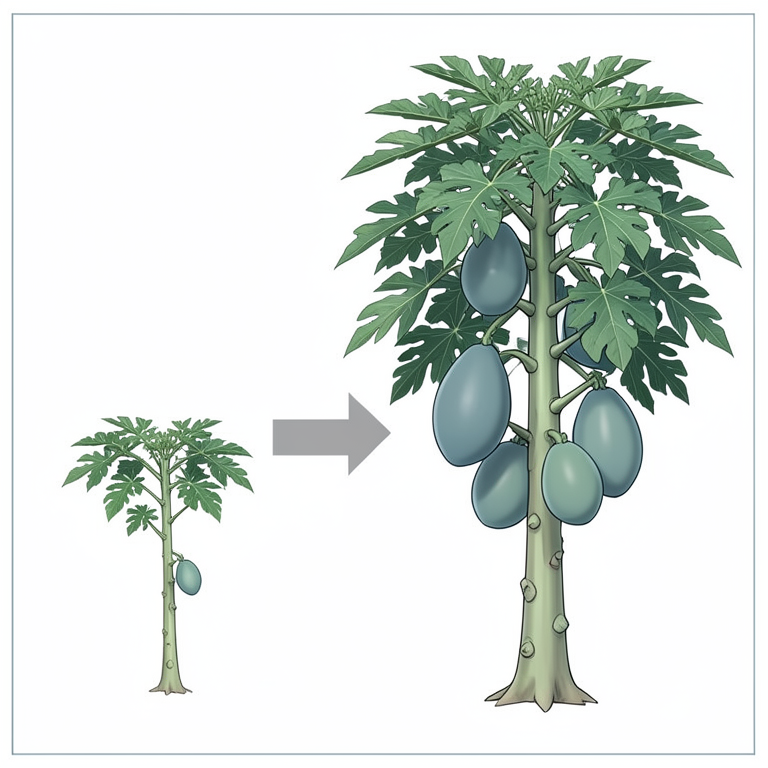
Correlation of Growth and Yield
AI-generated conceptual illustration (Papaya cv. Red Lady plants). It explains the idea and does not show study data.
View source evidence ↗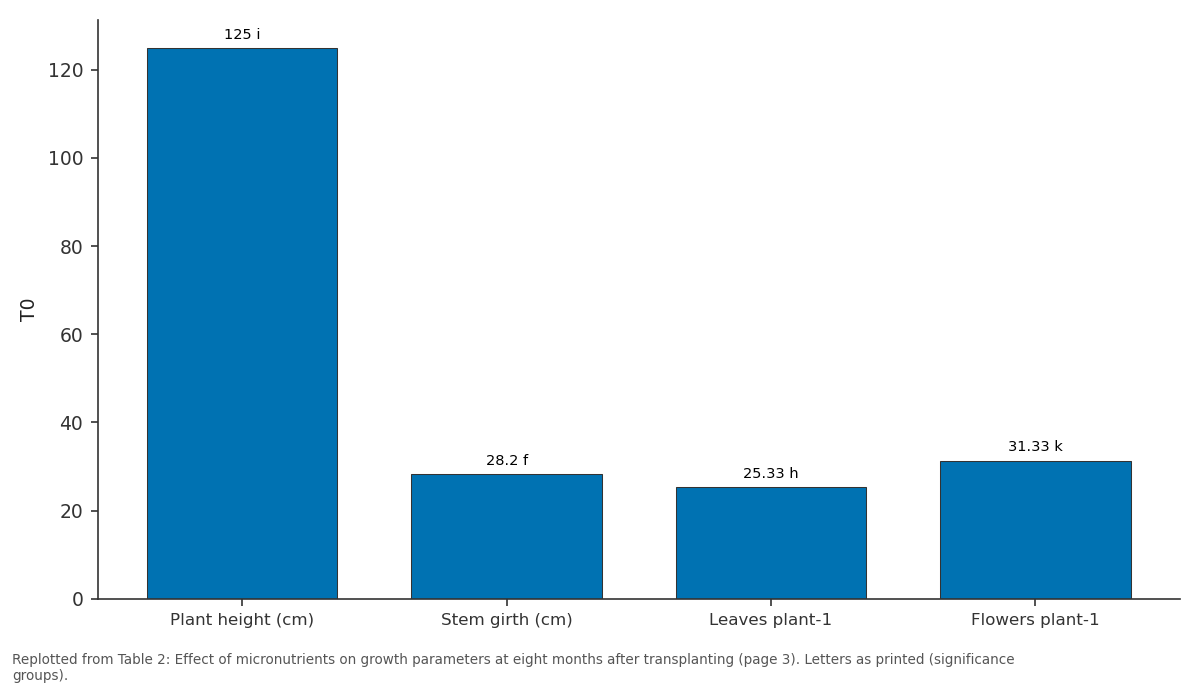
T0: Plant height (cm) vs Stem girth (cm) vs Leaves plant-1 vs Flowers plant-1
Replotted from Table 2 (page 3) of the original paper. Every bar is the paper's own table value.
View source evidence ↗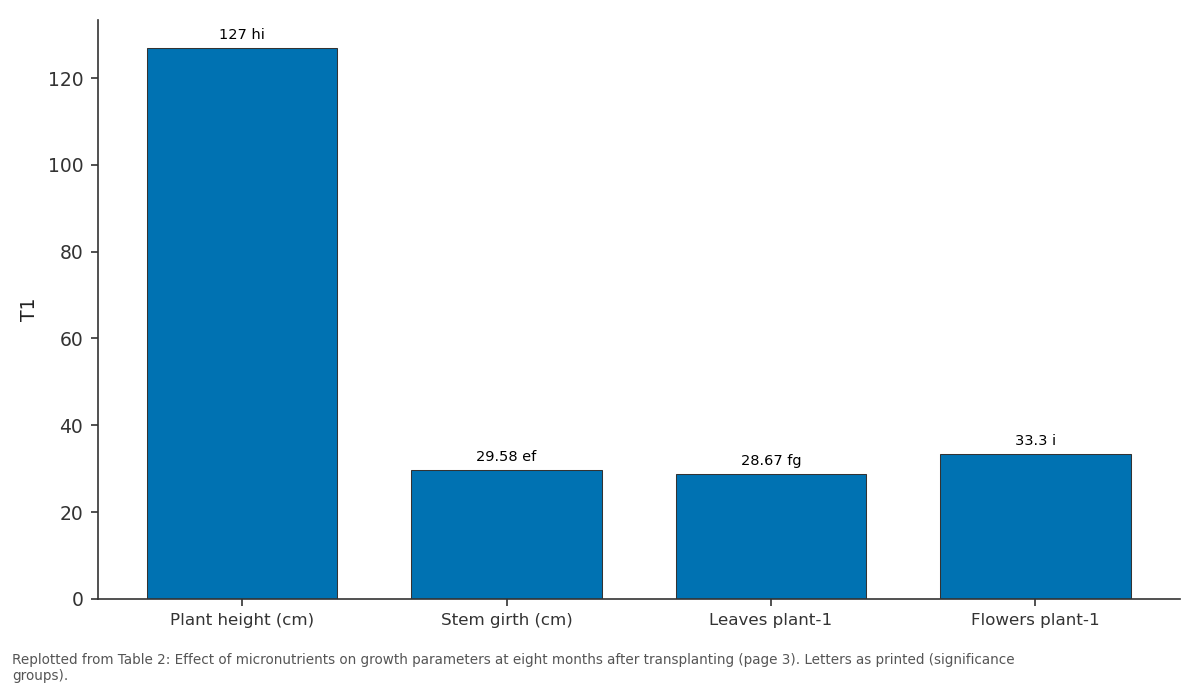
T1: Plant height (cm) vs Stem girth (cm) vs Leaves plant-1 vs Flowers plant-1
Replotted from Table 2 (page 3) of the original paper. Every bar is the paper's own table value.
View source evidence ↗Figures & tables
From the original paper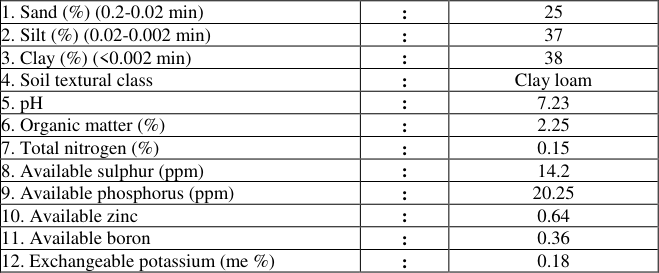 Table 1
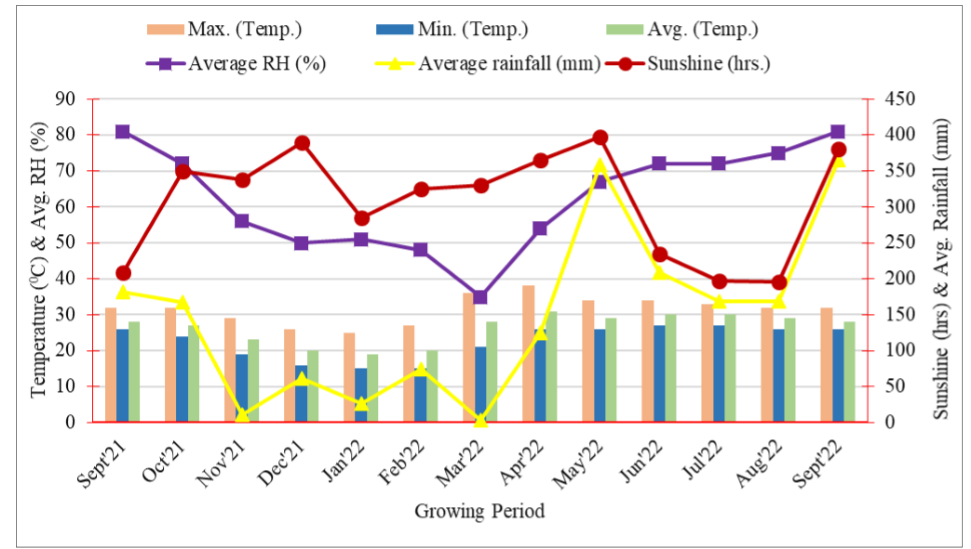 Figure 1
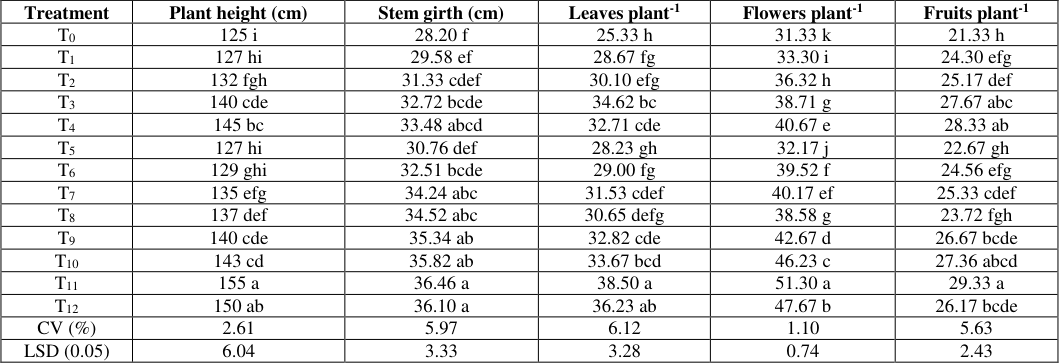 Table 2
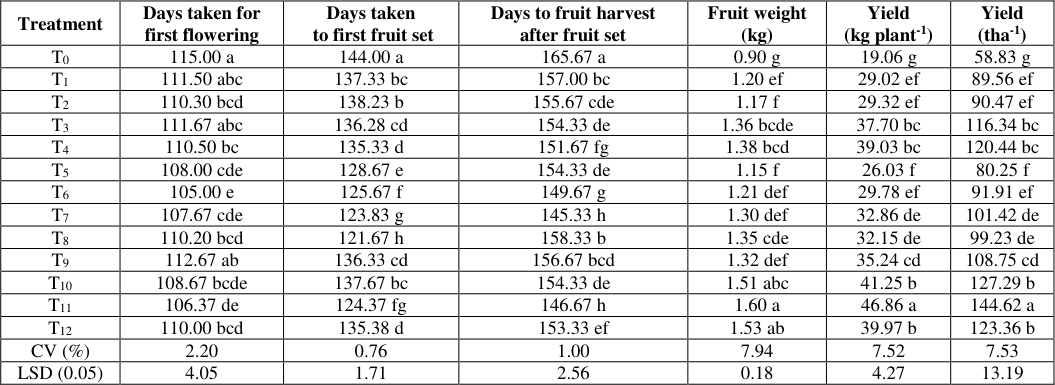 Table 3
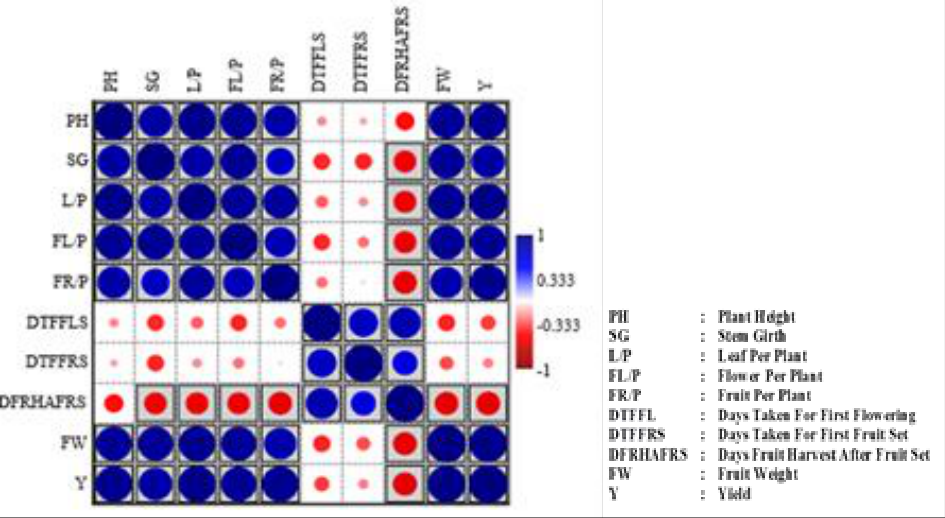 Figure 2
Introduction
The Papaya (Carica Papaya L.), also referred to as the "wonder fruit of the tropics," is a significant fruit crop in the tropical regions of the world. Due to its highest productivity and year-round fruit production, it has become more well-known and significant economically. According to BBS, (2022) [2] Bangladesh produced around 0.46 million ton of Papaya. Aside from this, Papaya is a healthful fruit with a high nutritional and medicinal value. The fruit is rich in iron, vitamin C, and vitamin A (Rashid et al., 1987) [14] . Green fruits are frequently used in salads, pickles, and cooked vegetable preparations, but ripe fruits are primarily served as a fresh desert. The beverage, culinary, pharmaceutical, and tanning industries employ papain, a proteolytic enzyme found in latex that is primarily extracted from fruits, for a variety of purposes. Papaya leaves provide therapeutic benefits as well. Papaya has earned the moniker "common man's fruit" as a result. Because of their importance to plant metabolism and the negative consequences of micronutrient deficiencies, micronutrients are crucial to crop productivity. In farmed crop species, these trace elements are also crucial for disease resistance. Additionally, these micronutrients aid in the absorption of larger nutrients and actively participate in the entire spectrum of plant metabolism, from the development of cell walls to respiration, photosynthesis, the synthesis of chlorophyll, enzyme activity, hormone synthesis, nitrogen fixation and reduction, and other processes (Das, 2003) [5] . Micronutrients, however, can significantly increase the yield of horticulture crops as well as the quality and post-harvest life of horticulture produce (Raja, 2009) [13] . Therefore, for plants to grow, yield, and have higher quality, micronutrients are almost as important as macronutrients. Very little is known about the micronutrients in Papaya, despite the fact that very few studies have been conducted on the topic of Papaya nutrition. Furthermore, the nutrient content of soils will vary greatly among agroclimatic zones. Furthermore, it seems that information about the necessary quantity of each micronutrient must be generated as Papaya grows and consistently produces flowers and fruits. With this perspective in mind, the current study was conducted to examine the impact of Zn, B, and Fe soil application quantity on Papaya cv. Red Lady growth and yield.
Materials and Methods
Materials and Methods
Study Location
In Pabna, Bangladesh, the experiment was conducted at the Ishwardi upazila between September 2021 and September 2022. The position was between latitudes 24.12°N and 89.06°E, and it was 16 inches above sea level. The soil type of the trial area is clay loam, which is characteristic of the Low High Ganges River Flood Plain Alluvial Tract (Table 1).
| 1. Sand (%) (0.2-0.02 min) | : | 25 |
|---|---|---|
| 2. Silt (%) (0.02-0.002 min) | : | 37 |
| 3. Clay (%) (<0.002 min) | : | 38 |
| 4. Soil textural class | : | Clay loam |
| 5. pH | : | 7.23 |
| 6. Organic matter (%) | : | 2.25 |
| 7. Total nitrogen (%) | : | 0.15 |
| 8. Available sulphur (ppm) | : | 14.2 |
| 9. Available phosphorus (ppm) | : | 20.25 |
| 10. Available zinc | : | 0.64 |
| 11. Available boron | : | 0.36 |
| 12. Exchangeable potassium (me %) | : | 0.18 |
Table text extracted from the original PDF; superscript letters are shown inline. The original table image is below.
View original table image
Climatic Condition
The experimental area had a subtropical climate from September 2021 to April 2022, with medium to little rainfall and significant rainfall from May 2022 to September 2022. During the growing season, 148.30 mm of rain fell on the region overall. The highest and lowest average temperatures were 31.5 °C and 19.20 °C, respectively. Figure 1 shows that the average relative humidity was 62.65% and the average number of sunshine hours was 159.72.
Fig 1: Climatic conditions during crop growing period
Fig 1: Climatic conditions during crop growing period
Experimental design and data collection
The field trial was carried out in Bangladesh's Ishwardi upazila in Pabna. Papaya (var. Red Lady) seeds were planted in tiny polythene bags. 45-day-old seedlings with equal size and vigor were sown in the field during the first week of July in the morning. The pits measured 45 × 45 × 45 cm and were spaced 1.8 meters apart in both directions. Beginning with seedling transplantation, four equal split doses of fertilizer (250 g N, 250 g P, and 500 g K per plant) were applied to the soil every two months. Thirteen treatments total, each of which was duplicated three times, were arranged in a Randomized Block Design (RBD) experiment. These were the treatments: T0-Control (RDF only), T1-4 g Zinc, T2-8 g Zinc, T3-12 g Zinc, T4-16 g Zinc, T5-3 g Boron, T6 -6 g Boron, T7-9g Boron, T8-12 g Boron, T9-8 g Zn + 6 g B, T10-8 g Zn + 9 g B, T11-12 g Zn + 6 g B, and T12-12 g Zn + 9 g B. Three, five, and seven months after transplanting, the soil was treated with micronutrients. Eight months after transplanting, observations on plant height, stem girth, and number of leaves; reproductive parameters (number of flowers and fruits per plant); fruit parameters (weight of fruits); and yield parameters (kg plant -1 and tha -1 ) were made. Plant height was measured with a scale. Ten centimeters above the ground, a reference point was marked in the trunk. From this point of reference to the growing shoot's tip, the plant's height was measured. Using a measuring tape, the stem girth was determined. Visual counting was used to record the number of leaves and flowers. After the fruit reached maturity, the number of fruits per plant was physically counted and reported as numbers per tree. Using a digital analytical balance, five Papaya fruits that were chosen at random were weighed. The average fruit weight was reported in kilograms. When the fruit was harvested, it was measured and reported in kilograms per plant. The fruit yield per hectare was calculated in tons per hectare by multiplying the yield per plant by the total number of plants that could be grown in one hectare.
Statistical analysis
Using the MSTAT computer program, a statistical analysis was performed on the mean value of the collected data. Duncan's Multiple Range Test (DMRT) was used for the examination of variance and the mean differences (Gomez and Gomez, 1984) [11] . Functional correlations between yield and yield attributes were created using the program Past 4.03.
Result and Discussion
Significant differences were observed in the vegetative parameters, including plant height and stem girth, eight months after transplanting. Additionally, the number of leaves showed a significant difference with micronutrient treatments (Table 2). However, with the treatment T11 (12 g Zn + 6 g B), the maximum plant height (155 cm), stem girth (36.46 cm), highest number of leaves (38.50), maximum number of flowers per plant, and fruit set per plant were recorded as 51.30 and 29.33, respectively, while no micronutrient treatment recorded the minimum values of vegetative parameters. Micronutrients like zinc and boron have been applied, which has improved the plant's respiration and photosynthetic efficiency while also influencing growth characteristics and increased vegetative parameters. According to Singh et al. (2010) [20] , zinc plays a role in the synthesis of tryptophan, which is the precursor of auxin, and this may explain why zinc sulphate promotes vegetative growth in Papaya. Combining zinc and boron enhanced the activities of metabolites, which in turn enhanced the metabolites in plants that are in charge of cell division, elongation, and growth (Bhalerao and Patel, 2015) [3] . The outcomes closely align with the research conducted by Ram and Bose (2000). In contrast, the treatment receiving 6g (105.00), 8 g (121.67), and 9 g (145.33) of boron was found to have the most advanced days for flowering, fruit set, and fruit harvest following fruit set (Table 2). This promptness could be because in the early stages of flower initiation, the formation of flower buds, and the synthesis of native and florigenic substances, boron is essential. In addition to promoting pollen germination, pollen tube growth, and fertilization, it also plays a role in the metabolism of glucose and the transport of hydrocarbons. Similar results were obtained in the case of Singh et al. (2010) [20] in Ranchi. In terms of reproductive parameters, eight months after transplanting, the plants treated with soil application of T11 (12 g Zn + 6 g B) displayed a higher number of flowers plant-1 (51.30) (Table 2). It might be because zinc and boron have a beneficial combined effect on flowering. According to Ryugo (1988) [16] , zinc improved the synthesis of auxin in plants, which promotes flowering. Per Pandey and Sinha (2006), iron is recognized as having a specific function in the synthesis of the chlorophyll molecule. According to Brown et al. (1995) [4] , boron controls metabolism, which includes the translocation of carbohydrates, the formation of cell walls, and RNA synthesis. Venu et al. (2014) [22] found similar outcomes with kagzi lime. Values in a column that share the same letter (s) do not significantly differ at the 5% level using LSD The treatment T11 (29.33) had the highest number of fruits, comparable to treatments T4(28.33) and T3 (27.67), while treatment T0(Control) had the lowest number of fruits (Table 2). Auxin production may have contributed to the increase in fruits per tree as a result of the combined application of micronutrients through foliar or soil application. Auxins likely helped retain fruits by lowering flower drops, which in turn increased fruit production. The outcome supported the conclusions shown in fig. by Tamboli et al. (2015) [21] . Dhinesh et al. (2007) [6] found similar results in Kinnow Mandarin. The plants treated with 12 g Zinc + 6 g Boron (T11) had the highest fruit weight values, weighing 1.60 kg, according to the results. A higher fruit weight could have been the consequence of the combined treatment of boron and zinc. Micronutrients may have contributed to the weight increase of the fruit in treated plants by facilitating the faster loading and mobilization of photoassimilates to the fruit as well as by assisting in cell division and expansion (Gurjar et al., 2015) [12] . The present findings agree with similar results found by Banik et al. (1997) [1] , Dutta and Dhua (2002) [7] , Dutta (2004) [8] in the case of mango, and Ghanta and Mitra (1993) [10] in the case of banana. The data presented in Table 3 indicates that T11 had the highest mean fruit yield per plant (46.86 kg) and the highest yield ha -1 (144.62 tons) (Table 3). Conversely, T0 had the significantly lowest values. Micronutrients have a direct impact on photosynthesis and are essential for the growth, development, and flowering of plants. As a result, there is a chance that yield and the dry matter percentage will increase. These outcomes agree with the conclusions of Tamboli et al. (2015) as shown in fig. The beneficial effects of micronutrients on growth and nutrition have also been reported in earlier studies on sapota (Saraswathy et al., 2004) [18] , kinnow mandrian (Dhinesh et al., 2007) [6] , mandarin orange (Saraswathi et al., 1998) [17] , and guava (Rathore et al., 2008) [15] . Correlations among the traits Avery significant positive correlations were found among the most of the parameters. Prominently, yield had very significant positive correlations with plant height, stem girth, leaves per plant, flowers per plant, fruits per plant and fruit weight. And very natural significant negative correlations were found among days to fruit harvest after fruit set to stem girth, leaves per plant, and flowers per plant, fruits per plant, fruit weight and yield (Figure 2). Silva et al. (2007) [19] , suggesting that, plants that present higher yield will also have higher stem diameter, fruits per plant but lower internal cavity diameter. Moreover, he also explored that selecting plants with larger stem diameter may improve yield due to high genetic correlation between those traits. Ferreira et al. (2012) [9] also evaluated correlations between morpho-agronomic traits of different Papaya accessions; stating that the increase in fruit matter and fruit numbers were correlated with higher stem diameter.
| Treatment | Days taken for first flowering | Days taken to first fruit set | Days to fruit harvest after fruit set | Fruit weight (kg) | Yield (kg plant-1) | Yield (tha-1) |
|---|---|---|---|---|---|---|
| T0 | 115.00 a | 144.00 a | 165.67 a | 0.90 g | 19.06 g | 58.83 g |
| T1 | 111.50 abc | 137.33 bc | 157.00 bc | 1.20 ef | 29.02 ef | 89.56 ef |
| T2 | 110.30 bcd | 138.23 b | 155.67 cde | 1.17 f | 29.32 ef | 90.47 ef |
| T3 | 111.67 abc | 136.28 cd | 154.33 de | 1.36 bcde | 37.70 bc | 116.34 bc |
| T4 | 110.50 bc | 135.33 d | 151.67 fg | 1.38 bcd | 39.03 bc | 120.44 bc |
| T5 | 108.00 cde | 128.67 e | 154.33 de | 1.15 f | 26.03 f | 80.25 f |
| T6 | 105.00 e | 125.67 f | 149.67 g | 1.21 def | 29.78 ef | 91.91 ef |
| T7 | 107.67 cde | 123.83 g | 145.33 h | 1.30 def | 32.86 de | 101.42 de |
| T8 | 110.20 bcd | 121.67 h | 158.33 b | 1.35 cde | 32.15 de | 99.23 de |
| T9 | 112.67 ab | 136.33 cd | 156.67 bcd | 1.32 def | 35.24 cd | 108.75 cd |
| T10 | 108.67 bcde | 137.67 bc | 154.33 de | 1.51 abc | 41.25 b | 127.29 b |
| T11 | 106.37 de | 124.37 fg | 146.67 h | 1.60 a | 46.86 a | 144.62 a |
| T12 | 110.00 bcd | 135.38 d | 153.33 ef | 1.53 ab | 39.97 b | 123.36 b |
| CV (%) | 2.20 | 0.76 | 1.00 | 7.94 | 7.52 | 7.53 |
| LSD (0.05) | 4.05 | 1.71 | 2.56 | 0.18 | 4.27 | 13.19 |
Table text extracted from the original PDF; superscript letters are shown inline. The original table image is below.
View original table image
| Treatment | Plant height (cm) | Stem girth (cm) | Leaves plant-1 | Flowers plant-1 | Fruits plant-1 |
|---|---|---|---|---|---|
| T0 | 125 i | 28.20 f | 25.33 h | 31.33 k | 21.33 h |
| T1 | 127 hi | 29.58 ef | 28.67 fg | 33.30 i | 24.30 efg |
| T2 | 132 fgh | 31.33 cdef | 30.10 efg | 36.32 h | 25.17 def |
| T3 | 140 cde | 32.72 bcde | 34.62 bc | 38.71 g | 27.67 abc |
| T4 | 145 bc | 33.48 abcd | 32.71 cde | 40.67 e | 28.33 ab |
| T5 | 127 hi | 30.76 def | 28.23 gh | 32.17 j | 22.67 gh |
| T6 | 129 ghi | 32.51 bcde | 29.00 fg | 39.52 f | 24.56 efg |
| T7 | 135 efg | 34.24 abc | 31.53 cdef | 40.17 ef | 25.33 cdef |
| T8 | 137 def | 34.52 abc | 30.65 defg | 38.58 g | 23.72 fgh |
| T9 | 140 cde | 35.34 ab | 32.82 cde | 42.67 d | 26.67 bcde |
| T10 | 143 cd | 35.82 ab | 33.67 bcd | 46.23 c | 27.36 abcd |
| T11 | 155 a | 36.46 a | 38.50 a | 51.30 a | 29.33 a |
| T12 | 150 ab | 36.10 a | 36.23 ab | 47.67 b | 26.17 bcde |
| CV (%) | 2.61 | 5.97 | 6.12 | 1.10 | 5.63 |
| LSD (0.05) | 6.04 | 3.33 | 3.28 | 0.74 | 2.43 |
Table text extracted from the original PDF; superscript letters are shown inline. The original table image is below.
View original table image
Conclusion
In order to increase the yield (144.62 t/ha) of Papaya cv. Red Lady in Bangladesh, the results of this study shown that the T11 treatment had a substantial effect on plant height, flowering, and fruiting of Papaya at the dose of 12 g Zn + 6 g B. The number of fruits produced per plant, the duration from flowering to fruit maturity, and the weight of the fruits (g) all demonstrated noteworthy benefits during this treatment. For the Papaya cv. Red Lady to yield excellent results, more research is necessary to identify a more precise combination.
Acknowledgement
AcknowledgmentsThe authors would like to express their gratitude to the scientists of the Horticulture Division at BINA in Mymensingh for their cooperation during the investigation.
References
17 in the original paper- Banik BC, Mitra SK, Sen SK, Bose TK. Interactions effects of Zinc, iron and Boron sprays on flowering and fruiting of Mango cv. Fazli. Indian Journal of Agricultural Sciences. 1997;41(3):187-192.
- Bangladesh Bureau of Statistics (BBS). Agricultural Statistical Year Book. 2022.
- Bhalerao PP, Patel BN. Effect of foliar application of Ca, Zn, Fe and B on growth, yield and quality of Papaya var. Taiwan Red Lady. Indian Journal of Horticulture. 2015;72(3):325-328.
- Brown PH, Ferguson L, Piccioni G. Boron boosts pistachio yields. Fluid Journal. 1995;33(1):53-55.
- Dhinesh BK, Dubey AK, Yadav DS. Effect of micronutrients on enhancing the productivity and quality of Kinnow mandarin. Indian Journal of Horticulture. 2007;64(3):353-356.
- Dutta P, Dhua RS. Improvement on fruit quality of Himsagar mango through application of Zinc, iron and manganese. Horticulture Journal. 2002;15(2):1-9.
- Dutta P. Effect of foliar Boron application on panicle growth, fruit retention and physico-chemical characters of Mango cv. Himsagar. Indian Journal of Horticulture. 2004;61(3):265-266.
- Ferreira JP, Schmildt O, Schmildt ER, Piantavinha EC, Cattaneo LF. Correlações entre características morfoagronômicas de acessos de mamoeiro. Enciclopédia Biosfera. 2012;8(14):246-257.
- Ghanta PK, Mitra SK. Effect of micronutrients on growth, flowering, leaf nutrient content and yield of banana cv. Giant Governor. Crop Research. 1993;6(2):284-287.
- Gurjar MK, Kaushik RA, Baraily P. Effect of Zinc and Boron on the growth and yield of kinnow mandarin. International Journal of Scientific Research. 2015;4(1):207-208.
- Raja EM. Importance of micronutrients in the changing horticultural scenario. Journal of Horticulture Science. 2009;4(1):1-27.
- Saraswathi T, Thangaraj T, Azhaklamanavalan RS, Balakrishnamurthy G. Effect of micronutrients on yield and quality of mandarin orange (Citrus reticulata Blanco). South Indian Horticulture. 1998;46:128-131.
- Saraswathy S, Balakrishnan K, Anbu S, Azakia Manavalan RS, Thangaraj T. Effect of Zinc and Boron on growth, yield and quality of sapota cv. PKM-1. South Indian Horticulture. 2004;52(1-6):41-44.
- Silva FF, Pereira GP, Ramos HCC, Damasceno Junior PC, Pereira TNS, Ide CD. Genotypic correlations of morpho-agronomic traits in Papaya and implications for genetic breeding. Crop Breeding and Applied Biotechnology. 2007;7:345-352.
- Singh DK, Ghosh SK, Paul PK, Suresh CP. Effect of different micronutrients on growth, yield and quality of Papaya (Carica Papaya L.) cv. Ranchi. Acta Horticulturae. 2010;8(2):37-41.
- Tamboli BD, Sawale DD, Jagtap PB, Nimbalkar RU, Teke SR. Effect of micronutrients on yield and fruit quality of fig on Inceptisol. Indian Journal of Horticulture. 2015;72(3):419-422.
- Venu A, Delvadia DV, Sharma LK, Gardwal PC, Makhmale S. Effect of micronutrient application on flowering, fruiting and yield of acid lime (Citrus aurantifolia L.) cv. Kagzi lime. International Journal of Tropical Agriculture. 2014;32(3-4):331-334.
Cited by 8
From OpenAlex, OpenCitations and reference lists read by Scinovex
- Effect of combined soil application of zinc and boron on fruit set and yield of Papaya cv. red lady under subtropical conditions ↗
Maria Gonzales, Carlos Silva, Aisha Mohammed, Victor Okafor · South Asian Journal of Agricultural Sciences · 2025
Papaya (Carica papaya) is a tropical fruit crop known for its economic and nutritional benefits. The fruit-set and yield of papaya can be influenced by various agronomic practices, including soil nutrient management. This research investigates the combined soil application of zinc (Zn) and boron (B) and its effects on the fruit-set and yield of Papaya cv. Red Lady under subtropical…
❝ 0PDF - Development of a simple data logging system to monitor growth response of papaya cv. red lady under zinc and boron soil treatments ↗
Maria Gonzales, David Oliveira · International Journal of Electronic Devices and Networking · 2025
This research aims to develop a simple data-logging system for monitoring the growth response of Papaya cv. Red Lady under zinc and boron soil treatments. The increasing use of micronutrient fertilizers, such as zinc and boron, in agriculture highlights the need for efficient monitoring systems that can track plant growth parameters in real-time. In this experiment, a microcontroller-based data-logging system
- Influence of soil zinc and boron enrichment on phytochemical profile and yield of papaya (cv. red lady) ↗
Manuel Rodríguez, Sofia López, Alexei Petrov · Journal of Pharmacognosy and Phytochemistry · 2025
The influence of soil zinc (Zn) and boron (B) enrichment on the phytochemical profile and yield of Papaya (cv. Red Lady) was investigated through field-based research. Zinc and boron are essential micronutrients that significantly impact plant growth, development, and secondary metabolite production. This study evaluated the effect of different concentrations of Zn and B on the morphological traits, biochemical content,
- Effect of zinc and boron fertilization on morphological traits and yield performance of papaya cv. red lady: A field based research ↗
Juan Manuel Perez, Sofia Martínez Gómez, Carlos Alberto Silva · International Journal of Advanced Academic Studies · 2025
Papaya (Carica papaya L.), a tropical fruit of significant economic and nutritional value, is highly sensitive to soil micronutrient availability, particularly zinc (Zn) and boron (B). This research evaluates the effects of varying Zn and B fertilization levels on the morphological traits and yield performance of Red Lady papaya under field conditions. The experiment was conducted using a randomized complete
- Optimization of zinc and boron soil nutrition for papaya cv. red lady: Implications for use in herbal preparations ↗
Rafael Costa, María Alejandra López, Jose F. Rodriguez · Journal of Medicinal Plants Studies · 2025
The optimization of soil nutrition is a pivotal factor for enhancing the growth and yield of crops, particularly in tropical fruits such as papaya (Carica papaya cv. Red Lady). Zinc (Zn) and boron (B) are essential micronutrients that significantly impact plant physiology, influencing both yield and fruit quality. This research explores the effects of various levels of zinc and boron
- Application of regression based AI models to forecast growth and yield of papaya (cv. red lady) in response to zinc and boron soil amendments ↗
John Smith, Maria Gonzalez, Carlos Rivera, Elena Novak · International Journal of Computing and Artificial Intelligence · 2025
The growth and yield of papaya (Carica papaya L.) are influenced by various soil amendments, among which micronutrients like zinc (Zn) and boron (B) have shown potential for improving crop productivity. This research investigates the application of regression-based Artificial Intelligence (AI) models to predict the growth and yield of papaya cv. Red Lady under different zinc and boron soil amendments.
- Effect of soil Zn and B supplementation on yield and fruit quality traits of papaya cv. red lady ↗
Carlos Hernandez, Maria Gonzalez, Ahmed Al-Farsi · Journal of Current Research in Food Science · 2025
Papaya (Carica papaya L.), a tropical fruit, is highly valued for its nutritional and medicinal properties. However, its yield and fruit quality are often limited by soil nutrient deficiencies, particularly those of Zinc (Zn) and Boron (B). This research aims to evaluate the effect of soil Zn and B supplementation on the yield and fruit quality traits of Papaya cv.
- Impact of zinc and boron soil application on nutrient uptake and leaf biochemical indices in papaya cv. red lady
José Hernández, María Gómez · International Journal of Advanced Biochemistry Research · 2025
Soil application of micronutrients like zinc (Zn) and boron (B) to soil has been studied for its role in enhancing the growth and yield of crops. This research explores the impact of soil-applied zinc and boron on nutrient uptake and leaf biochemical indices in papaya (cv. Red Lady). The experiment was conducted on a farm with papaya plants exposed to varying levels of zinc and boron treatments. The primary focus was on the changes in nutrient concentrations (N, P, K, Zn, B) and the biochemical indices of leaves, such as chlorophyll content, antioxidant enzyme activity, and lipid peroxidation.