
Research article · 2024 · Full text
International Journal of Agriculture Extension and Social DevelopmentInnovative extension approaches for climate-smart agriculture: Building farmer resilience to environmental change
Volume 7(7S) · Pages 594–600 · DOI: 10.33545/26180723.2024.v7.i7sd.1142 ↗
Research areasSustainable Agricultural Systems AnalysisAgricultural Innovations and Practices
Abstract
Author-writtenClimate change presents substantial threats to agricultural productivity and the livelihoods of rural communities, demanding innovative strategies for sustainable adaptation. Agricultural extension services are essential in promoting the dissemination and adoption of climate-smart agricultural practices that enhance resilience. This paper examines innovative extension approaches that equip farmers with the tools and knowledge to adapt to climate variability and mitigate its impacts. By leveraging advancements in technology, participatory learning, and climate adaptation strategies, extension services can improve farmers' capacity to manage resources sustainably, reduce risks, and boost productivity. Case studies of effective extension models and best practices are explored to offer a comprehensive framework for implementing climate-smart agriculture at scale.
Summary
Source-checkedPlain-language reading of the full paper, prepared with AI and checked against the text. Each point links to the authors' own words.
Why it matters
- Agriculture is vital for global food security and rural livelihoods, but it is increasingly threatened by the complex challenges of climate change. View evidence ↗
- Smallholder farmers in developing regions are particularly vulnerable to climate shocks due to a lack of necessary infrastructure and resources. View evidence ↗
- Climate-smart agriculture (CSA) is a framework designed to sustainably increase productivity, enhance climate resilience, and reduce greenhouse gas emissions. View evidence ↗
The question
- The paper aims to examine innovative agricultural extension approaches that provide farmers with the knowledge and tools to adapt to and mitigate climate variability. View evidence ↗
What they did
- The authors explore case studies of best practices and effective extension models to develop a framework for scaling up CSA. View evidence ↗
- The study utilizes comparative analysis and evaluation tables to assess different extension approaches and the impact of specific CSA practices. View evidence ↗
What they found
- Conservation tillage, adopted via digital platforms and workshops, showed a 75% adoption rate and resulted in increased yields and improved soil health. View evidence ↗
- Integrated Pest Management (IPM), promoted through radio and workshops, achieved an 80% adoption rate and increased yields while lowering pesticide costs. View evidence ↗
- Precision agriculture, delivered through digital platforms and field schools, led to significant yield increases and increased profitability, with a 50% adoption rate. View evidence ↗
- Crop rotation, adopted through field schools and peer networks, resulted in moderate yield impacts and a 60% adoption rate. View evidence ↗
- Organic farming, promoted via peer networks and field schools, had a 40% adoption rate and provided benefits such as premium market prices. View evidence ↗
- Digital platforms are highly effective for tech-savvy users due to their broad reach and real-time updates, though they are limited by rural internet access. View evidence ↗
- Farmer Field Schools are highly effective for localized adaptation by providing practical experience and peer learning, despite high costs and facilitation needs. View evidence ↗
What it means
- The authors conclude that combining modern digital technologies with traditional extension methods significantly improves the spread of climate-smart practices. View evidence ↗
- The authors recommend the adoption and refinement of innovative extension methods to build a resilient agricultural sector. View evidence ↗
- A major limitation to the adoption of innovative extension services is the lack of basic infrastructure (smartphones, internet, electricity) in remote rural areas. View evidence ↗
- The effectiveness of CSA is hindered by the insufficient training of extension agents in climate science and sustainable agriculture. View evidence ↗
Visual summary
1 visualsIllustrations explain the paper; charts are replotted from the paper's own table values.
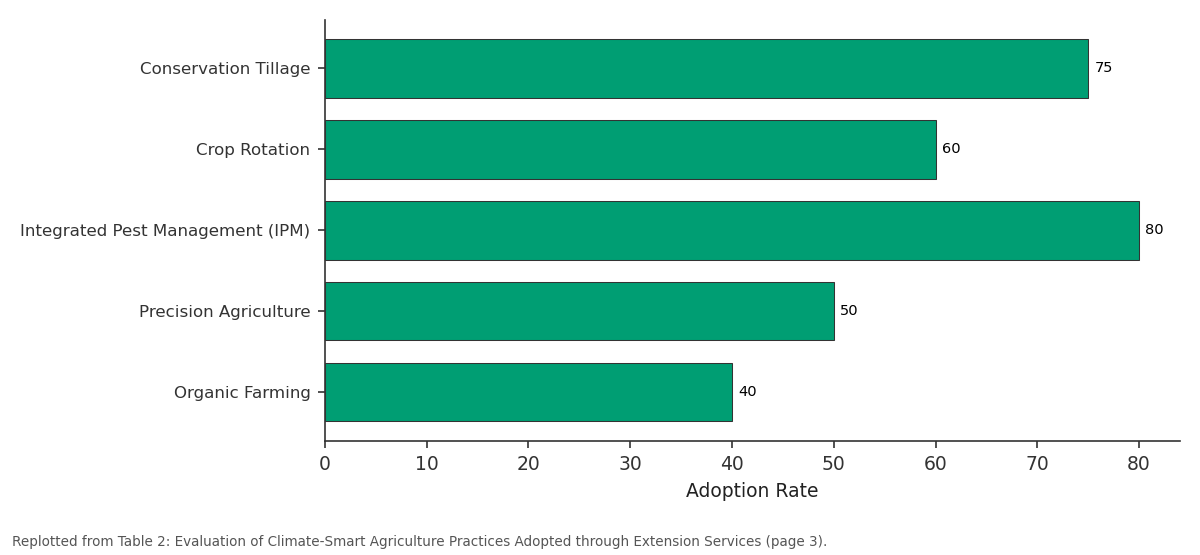
Adoption Rate: Conservation Tillage vs Crop Rotation vs Integrated Pest... vs Precision Agriculture vs Organic Farming
Replotted from Table 2 (page 3) of the original paper. Every bar is the paper's own table value.
View source evidence ↗Figures & tables
From the original paper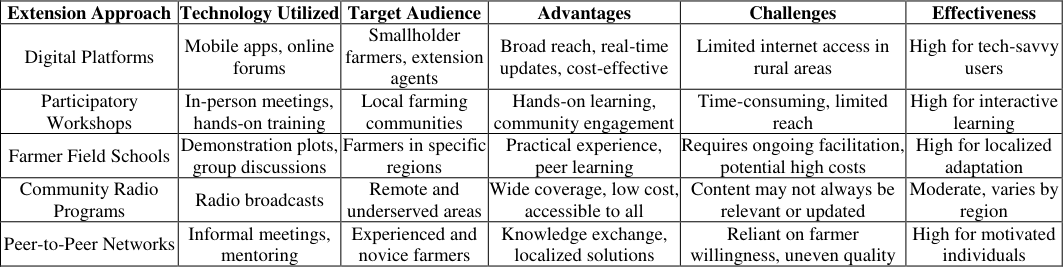 Table 1
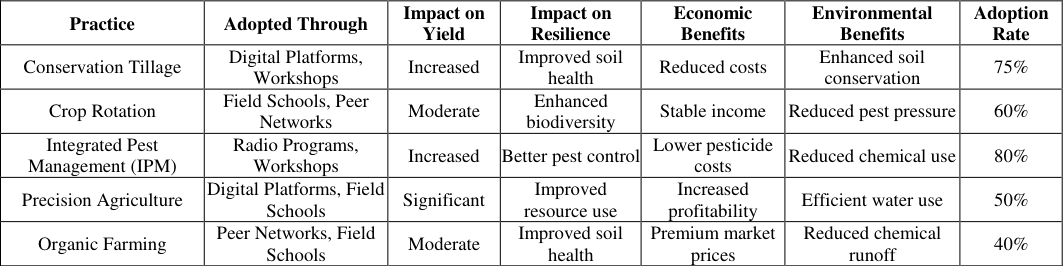 Table 2
Introduction
Agriculture is the backbone of rural livelihoods and global food security, directly supporting billions of people worldwide. However, the sector is increasingly vulnerable to the impacts of climate change, which poses complex and multifaceted challenges to agricultural productivity. Rising global temperatures, altered precipitation patterns, and the increased frequency of extreme weather events such as droughts, floods, and storms are significantly disrupting farming systems [1][2] . These changes, coupled with growing pressures on natural resources, have placed unprecedented strain on food production systems, threatening the ability of agriculture to meet the demands of a growing global population. The consequences of climate change are felt acutely by smallholder farmers, especially those in developing regions, who often lack the resources and infrastructure to effectively respond to environmental shocks. These farmers, who typically rely on rain-fed agriculture and have limited access to technology and financial services, are particularly vulnerable to the negative effects of climate variability. Without adaptive strategies, the livelihoods of these communities remain at risk, along with broader food security objectives. In this context, agricultural extension services play a critical role in equipping farmers with the knowledge and tools needed to cope with climate change. Traditionally, agricultural extension has served as the bridge between research institutions and farming communities, translating scientific advances into practical, on-the-ground applications [3][4][5] . This includes guidance on agronomic practices, pest and disease management, soil conservation, and water use. However, as climate-related challenges intensify, the need for innovative, climate-smart solutions within extension services has become more urgent. Climate-smart agriculture (CSA) has emerged as a key framework for addressing the challenges posed by climate change while promoting sustainable agricultural practices. CSA integrates three main objectives: (1) sustainably increasing agricultural productivity, (2) enhancing resilience and adaptive capacity to climate change, and (3) reducing greenhouse gas emissions. To implement CSA effectively, farmers must adopt a wide range of practices, such as improved water management techniques, the use of droughttolerant and heat-resistant crop varieties, conservation agriculture, and agroforestry systems that help maintain ecosystem services [6][7] . Agricultural extension services are instrumental in promoting the uptake of these practices by helping farmers understand and apply them in their local contexts. The role of extension services is evolving in response to the growing demand for climate-smart solutions. Extension agents must now not only provide technical advice but also support farmers in navigating the uncertainties and complexities brought about by climate change. This requires a shift from traditional top-down knowledge dissemination to more innovative and participatory approaches that place www.extensionjournal.com farmers at the centre of the learning process. In this regard, digital tools, community-based learning models, and climate forecasting systems are being integrated into extension services to enhance their reach and impact. Innovative extension approaches leverage a variety of technologies and methodologies to ensure that farmers are equipped with timely and accurate information. Digital platforms and mobile applications, for example, have the potential to provide real-time weather forecasts, early warning systems for pests and diseases, and customized agronomic advice based on local conditions. These tools enable farmers to make informed decisions on critical aspects such as when to plant, irrigate, or harvest, thereby reducing their exposure to climate risks. Moreover, participatory approaches such as Farmer Field Schools (FFS) empower farmers by fostering peer-to-peer learning and encouraging experimentation with climate-resilient practices within their own communities [8][9] . The incorporation of climate data into extension services also plays a vital role in improving farmers' adaptive capacity. Climate forecasting tools, which offer predictions on seasonal rainfall patterns, temperature shifts, and extreme weather events, provide farmers with valuable insights that inform their agricultural planning. This allows for better crop selection, efficient water use, and proactive pest and disease management, all of which are essential for maintaining productivity in the face of climate variability. Despite these innovations, numerous challenges remain in scaling up climate-smart agricultural practices through extension services. Limited financial resources, inadequate training for extension agents, and technological barriers continue to hinder the widespread adoption of CSA practices, particularly in rural and remote areas. Furthermore, the diversity of farming systems across different regions requires tailored solutions that address the specific climate risks and socio-economic conditions of each community, agricultural extension services are pivotal in enabling farmers to adapt to the impacts of climate change [10][11] . By embracing innovative, climate-smart approaches, extension systems can empower farmers to enhance their resilience, safeguard their livelihoods, and contribute to broader efforts to ensure global food security. This paper explores the most effective extension models and strategies that can support the transition to climate-smart agriculture, with a focus on building farmer resilience and promoting sustainable agricultural practices in the face of a changing climate.
The Role of Agricultural Extension in Climate-Smart Agriculture
Agricultural extension services have long served as a crucial link between research institutions and farming communities, providing farmers with the knowledge, skills, and technologies required to improve agricultural productivity. However, as climate change continues to disrupt traditional farming systems, extension services must evolve to meet the needs of farmers in increasingly unpredictable environments. Climate-smart agriculture (CSA) has emerged as a key strategy for addressing the intertwined challenges of food security, environmental sustainability, and climate resilience. To effectively implement CSA, agricultural extension systems need to adopt new strategies that align with its core objectives: sustainably increasing productivity, enhancing resilience to climate change, and reducing greenhouse gas emissions [12][13] . The first objective of CSA is to increase agricultural productivity in a sustainable manner. Given that climate change affects yields through extreme weather events and shifting growing conditions, extension services must equip farmers with innovative practices such as conservation agriculture, integrated nutrient management, and the use of improved crop varieties that are more resilient to environmental stress. Farmers need to learn about efficient water-use techniques, such as drip irrigation and rainwater harvesting, to cope with water scarcity, as well as soil management strategies that improve fertility while minimizing environmental degradation [14][15] . By disseminating these practices, extension agents play a vital role in ensuring that agricultural systems can continue to meet growing food demands without compromising longterm sustainability. The second key objective of CSA is to help farmers adapt to the impacts of climate change. Farmers must be equipped with the knowledge to assess and manage climate risks, such as shifting seasons, temperature extremes, and unpredictable rainfall patterns. Extension services can support adaptation by providing early warning systems, localized climate information, and decision-support tools [16] . For example, seasonal forecasts can help farmers determine the best planting and harvesting times, while advisory services can recommend specific crop varieties suited to changing climate conditions. Participatory approaches, such as Farmer Field Schools, foster peer learning and enable farmers to experiment with adaptation strategies that suit their specific contexts. The third objective of CSA focuses on reducing greenhouse gas emissions from agricultural practices. Extension services play a critical role in promoting low-emission farming techniques that can help mitigate climate change. These include agroforestry, which sequesters carbon in trees, and improved livestock management practices that reduce methane emissions. By incorporating such practices into extension programs, extension agents contribute to global efforts to lower agriculture's carbon footprint while maintaining productivity, agricultural extension services are central to the success of climate-smart agriculture. By promoting practices that simultaneously boost productivity, enhance resilience, and reduce emissions, extension systems can help farmers adapt to the challenges of climate change while ensuring the long-term sustainability of agricultural systems [17] . www.extensionjournal.com
Innovative Approaches to Agricultural Extension
The traditional top-down approach to agricultural extension, which relied on the transfer of knowledge from extension agents to farmers, is no longer sufficient to address the multifaceted challenges posed by climate change [18] . To build farmer resilience and ensure sustainable agricultural practices, extension services must adopt innovative methods that not only disseminate information but also actively engage farmers in the learning process. Below are some key innovative approaches that are transforming agricultural extension services to better support climate-smart agriculture.
Digital Platforms and Mobile Technology
In many parts of the world, mobile phones and digital platforms are revolutionizing the way farmers access information. These tools enable real-time communication between extension agents and farmers, providing them with timely and relevant advice on crop management, weather conditions, and pest or disease outbreaks. Mobile applications can deliver localized weather forecasts, alerting farmers to impending extreme weather events and helping them to take preventative measures [19] . In addition, they provide tailored advice on best practices for planting, irrigation, pest control, and fertilizer application based on the specific needs of each farmer. Digital platforms also allow for two-way communication, enabling farmers to ask questions, report issues, and receive feedback from extension agents. This interactive communication helps ensure that extension services are responsive to the immediate needs of farmers, particularly in times of crisis [20] . For instance, apps that provide digital advisory services and market information can enhance farmers' decision-making capacities, ultimately improving productivity and reducing vulnerability to climate risks. The increasing penetration of smartphones, even in rural areas, makes these platforms a powerful tool for reaching large numbers of farmers quickly and efficiently.
Participatory Extension Models
Participatory extension models place farmers at the centre of the knowledge transfer process, recognizing them as active agents in their own learning. Unlike traditional extension methods, which often impose external solutions on farmers, participatory approaches encourage farmers to experiment with new practices, share their experiences, and develop solutions that are adapted to local conditions [21][22] . One of the most widely used participatory models is the Farmer Field School (FFS) approach, which brings farmers together in groups to learn about crop and livestock management through hands-on activities and field-based experiments.
The FFS model fosters peer-to-peer learning, enabling farmers to exchange knowledge, learn from each other's successes and failures, and collectively develop strategies for addressing climate-related challenges. This participatory model is particularly effective in promoting climate-smart agricultural practices because it allows farmers to test and adapt innovations in real time, based on their specific environmental and socio-economic conditions. The flexibility of participatory models ensures that extension services are more closely aligned with the needs and realities of local farming communities [23] .
Climate Data and Forecasting Tools
Climate variability has made agricultural planning increasingly uncertain, but the integration of climate data and forecasting tools into extension services can provide farmers with critical information to manage these risks. By offering localized seasonal forecasts, extension agents can www.extensionjournal.com help farmers make more informed decisions about when to plant, irrigate, or harvest crops. Access to climate data also enables farmers to adopt water-saving practices during droughts, manage pests and diseases more effectively, and prepare for extreme weather events such as floods or heatwaves.
Climate forecasting tools, which analyze weather patterns and predict future conditions, offer farmers insights into potential climate risks before they materialize. This can help farmers anticipate changes in temperature, rainfall, and growing seasons, allowing them to adjust their practices accordingly [24] . For example, in regions prone to drought, farmers may receive guidance on shifting to droughttolerant crops or implementing water conservation techniques. Similarly, forecasts of pest outbreaks can inform decisions on pest management strategies, reducing crop losses and improving resilience.
Public-Private Partnerships
The [25] . Through the strategic integration of these approaches, agricultural extension systems can play a transformative role in addressing the climate crisis and safeguarding food security for future generations.
Building Farmer Resilience
In the face of climate change, building resilience among farmers is critical to ensuring long-term food security and sustainable agricultural practices. Resilience refers to the ability of farmers to adapt to climate shocks, recover from extreme weather events, and maintain productivity in the face of ongoing environmental stresses. Agricultural extension services play a pivotal role in fostering this resilience by enhancing farmers' adaptive capacities and reducing their vulnerability to climate risks. To achieve this, extension services must incorporate several key elements that address the diverse challenges posed by climate change.
Capacity Building and Training
One of the most crucial aspects of building farmer resilience is capacity building through training. Farmers need to be equipped with the knowledge and skills to adopt adaptive agricultural techniques that can mitigate the effects of climate variability. Conservation agriculture, for instance, promotes practices like minimal soil disturbance, crop rotation, and the use of cover crops, which help maintain soil health and moisture, reduce erosion, and enhance crop yields under changing weather conditions [17][18][19] . Training in conservation agriculture not only improves soil fertility but also helps farmers maintain productivity during periods of drought or heavy rainfall. Another vital technique is integrated pest management (IPM), which combines biological, cultural, and chemical methods to control pest populations in an environmentally sustainable manner. As climate change exacerbates pest pressures by altering ecosystems and extending pest lifecycles, training farmers in IPM can help them protect their crops from pests without relying on harmful pesticides. This approach not only reduces environmental degradation but also increases the resilience of farming systems by encouraging biodiversity and reducing the risk of crop failure [9] . Water conservation practices are also essential for building resilience, particularly in regions facing water scarcity due to erratic rainfall patterns or prolonged droughts. Training farmers in efficient water-use techniques, such as drip irrigation, rainwater harvesting, and mulching, enables them to make the most of available water resources. These practices can reduce the need for excessive irrigation, lower production costs, and improve crop yields, even under water-limited conditions. By integrating these adaptive techniques into extension services, farmers can be better prepared to manage the uncertainties of a changing climate.
Climate Risk Management
Effective climate risk management involves diversifying farming systems to reduce the vulnerability of farmers to the impacts of climate-induced shocks, such as droughts, floods, or pest outbreaks. Extension services can promote diversified cropping systems, which encourage farmers to grow multiple crops rather than relying on a single staple crop. This approach spreads risk across different crops, reducing the likelihood of total crop failure if one crop is negatively affected by climate variability . For example, by planting a combination of drought-resistant crops, leguminous plants, and cash crops, farmers can ensure they have both food security and income security, even during adverse conditions.
Another key aspect of climate risk management is the promotion of agroforestry, which involves integrating trees into agricultural landscapes. Agroforestry practices, such as planting nitrogen-fixing trees or fruit-bearing species www.extensionjournal.com alongside crops, provide multiple benefits, including improved soil health, increased biodiversity, and enhanced carbon sequestration. Trees can also act as natural windbreaks, reduce soil erosion, and provide shade that lowers temperatures for crops and livestock. This diversified approach creates more resilient ecosystems that can better withstand climate-related shocks while offering farmers additional sources of income through the sale of timber, fruits, or other tree products [5][6][7][8] . Agroecological approaches also play an important role in climate risk management. These approaches emphasize the use of natural processes, such as enhancing soil organic matter, recycling nutrients, and promoting biodiversity, to create more sustainable and resilient farming systems. By training farmers in agroecological techniques, extension services can help them build farming systems that are less reliant on external inputs and better able to adapt to climate change [4] .
Access to Climate Financing
One of the major barriers to building farmer resilience is the lack of access to financing for investing in climate-resilient technologies and practices. Smallholder farmers, who are often the most vulnerable to climate risks, frequently face difficulties in accessing credit or insurance due to financial constraints or the absence of suitable financial products. Without access to capital, farmers are unable to invest in technologies such as improved seed varieties, irrigation systems, or climate-resilient infrastructure that could help them adapt to changing environmental conditions. Extension services can play a crucial role in bridging this gap by facilitating access to microfinance institutions that offer tailored financial products for farmers. Microloans or low-interest credit lines can enable farmers to invest in climate-smart agricultural technologies and diversify their income streams. In addition, extension services can work with financial institutions to develop crop insurance products that protect farmers against the risks of climateinduced crop failures. Such insurance schemes provide farmers with a safety net, allowing them to recover from losses due to extreme weather events and reducing their vulnerability to future climate shocks, extension services can connect farmers with climate financing mechanisms, such as government subsidies or international climate funds, that provide financial support for climate adaptation and mitigation initiatives. For example, programs that subsidize the cost of climate-resilient seeds or water-saving technologies can make these innovations more affordable for smallholder farmers. By facilitating access to these resources, extension services help farmers build the financial resilience needed to withstand the impacts of climate change, building farmer resilience to climate change requires a multifaceted approach that combines capacity building, risk management, and financial access. Agricultural extension services must prioritize these elements to empower farmers with the knowledge, tools, and resources necessary to adapt to climate variability and mitigate its effects [4][5][6][7][8][9][10][11][12][13][14] . By integrating climate-resilient agricultural techniques, promoting diversified farming systems, and facilitating access to financial support, extension services can play a critical role in reducing the vulnerability of farmers and enhancing their capacity to thrive in an increasingly unpredictable climate. The longterm success of climate-smart agriculture depends on the ability of extension services to effectively support farmers in building resilience and ensuring the sustainability of agricultural systems in the face of climate change.
Challenges and Future Directions
Despite the promise of innovative extension approaches in promoting climate-smart agriculture (CSA), several challenges continue to impede their widespread adoption and success. These challenges range from technological barriers and institutional limitations to financial constraints and policy gaps. To fully realize the potential of agricultural extension in building farmer resilience to climate change, addressing these challenges is essential. This section explores the key obstacles to the effective implementation of innovative extension approaches and outlines future directions for overcoming these barriers. [17] .
Limited Access to Technology
Limited Access to Technology
Policy Gaps and Institutional Challenges
Policy gaps and institutional challenges also pose significant obstacles to the success of climate-smart agricultural extension services. In many countries, there is a lack of coherent policies that integrate CSA principles into national agricultural strategies. Additionally, weak coordination between government agencies, research institutions, and the private sector often results in fragmented extension services that fail to address the complex and interrelated challenges of climate change [13] .
To overcome these challenges, governments must develop and implement policies that prioritize CSA and align with broader climate adaptation and mitigation goals. Stronger institutional frameworks are needed to foster collaboration between different sectors, including agriculture, environment, finance, and technology. A multi-stakeholder approach, involving government agencies, research institutions, non-governmental organizations (NGOs), and the private sector, can enhance the effectiveness of extension services and ensure that farmers receive comprehensive and coordinated support.
Future Directions
Several strategies can be adopted to strengthen the role of agricultural extension in promoting climate-smart agriculture and building farmer resilience. Investing in digital extension services is critical for expanding the reach and impact of CSA practices. Mobile applications, digital platforms, and remote sensing technologies can provide real-time data and decision-making tools to farmers, helping them respond to climate variability and adopt sustainable practices. Capacity building for extension agents must be a priority, ensuring that they are equipped with the knowledge and skills needed to deliver climate-smart solutions effectively [2] . This includes training in the use of modern technologies, climate risk management, and participatory extension approaches that engage farmers in the decisionmaking process. Strengthening public-private partnerships is also essential for scaling up CSA practices. Collaborations between government agencies, private companies, research institutions, and NGOs can provide farmers with access to improved seeds, climate-resilient technologies, financial services, and market opportunities. By leveraging the expertise and resources of multiple stakeholders, extension services can overcome many of the funding and institutional challenges they face. Finally, developing supportive policies that integrate CSA principles into national agricultural strategies is crucial for ensuring long-term sustainability. Governments must create an enabling environment for climate-smart agriculture by investing in extension services, fostering collaboration across sectors, and aligning agricultural policies with broader climate goals. While innovative extension approaches offer a promising path toward climate-smart agriculture, significant challenges remain. Limited access to technology, insufficient training of extension agents, funding constraints, and policy gaps must be addressed to ensure the widespread adoption of CSA practices. By investing in infrastructure, capacity building, and institutional coordination, and by fostering public-private partnerships, governments and stakeholders can overcome these obstacles and create a more resilient agricultural sector capable of withstanding the impacts of climate change [18][19][20][21] . The future of climate-smart agriculture depends on the ability of extension services to evolve and adapt, ensuring that farmers have the tools, knowledge, and resources to thrive in an uncertain climate.
Conclusion
Innovative extension approaches are crucial for advancing climate-smart agriculture and enhancing farmer resilience in the face of environmental change. This study highlights that integrating modern technologies, such as digital platforms and mobile apps, with traditional extension methods can significantly improve the dissemination of climate-smart practices. Tailoring these approaches to local conditions and incorporating farmer feedback ensures that strategies are both relevant and effective. Personalized support through participatory workshops and farmer networks has proven to be beneficial, fostering a deeper understanding of climate risks and adaptation strategies. These methods not only empower farmers with knowledge but also build community solidarity around sustainable practices, it is vital to continue evolving extension services to address new challenges and leverage emerging technologies. Future research should focus on assessing the long-term impacts of these approaches, expanding successful models, and ensuring that all farmers have equitable access to support, adopting and refining innovative extension methods is essential for building a resilient agricultural sector capable of adapting to climate change. By enhancing the effectiveness of extension services, we can support farmers in implementing climatesmart practices and ensuring a sustainable future for agriculture.
Figures and tables from the paper
References
16 in the original paper- Faaij APC, de Jager D. Climate-smart agriculture: Key strategies for improving resilience and sustainability. Clim Policy. 2020;20(7):855-872. DOI: 10.1080/14693062.2020.1804241.
- IPCC. Climate change 2022: Impacts, adaptation, and vulnerability. Intergovernmental Panel on Climate Change; c2022. Available from: https://www.ipcc.ch/report/ar6/wg2/.
- Norton JB, Smith SL. Extension services for climatesmart agriculture: Innovations and practices. J Agric. Educ. Ext. 2017;23(2):135-148. DOI: 10.1080/1389224X.2017.1311470.
- Ostrom E. A polycentric approach for coping with climate change. Policy Research Working Paper Series 5095. World Bank; c2009. DOI: 10.1596/1813-94505095.
- Roudier P, Sultan B, Quiñones A, Adam B. The impact of future climate change on crop yield and food security in West Africa. Glob Environ Change. 2016;39:217228. DOI: 10.1016/j.gloenvcha.2016.05.002.
- Smit B, Skinner MW. Adaptation options in agriculture to climate change: A typology. Mitig Adapt Strat Glob Change. 2002;7(1):85-114. DOI: 10.1023/A:1015526320194.
- Safdar NA, Nikhat EAS, Fatima SJ. Cross-sectional study to assess the knowledge, attitude, and behavior of women suffering from PCOS and their effect on the skin. Acta Traditional Medicine. 2023;2(1):19-26.
- Aladel A, Khatoon F, Khan MI, Alsheweir A, Almutairi MG, Almutairi SO, et al. Evaluation of miRNA-143 and miRNA-145 Expression and Their Association with Vitamin-D Status Among Obese and Non-Obese Type2 Diabetic Patients. J Multidiscip Healthc. 2022;15:2979-2990. Available from: http://dx.doi.org/10.2147/jmdh.s391996.
- Ali S, Saeed SJ, Zahid S, Rashid I, Khatoon F, Altamimi TN, et al. Impact of Evaluation of Tumour Grade by Core Needle Biopsy on Clinical Risk Assessment and Patient Selection for Adjuvant Systemic Treatment in Breast Cancer. Pak J Med Health Sci. 2023;17(2):817-819. Available from: http://dx.doi.org/10.53350/pjmhs2023172817.
- Anbarasan S, Ramesh S. Crop science: Integrating modern techniques for higher yields. Plant Science Archives, 2022, 5(08).
- Khan MI, Hashmi MO, Abid SUH, Khan B, Iqbal H, Khatoon F, et al. Mid-Term Clinical and Echocardiographic Outcomes of Percutaneous Transvenous Mitral Commissurotomy in Patients with Rheumatic Mitral Stenosis. Pak J Med Health Sci. 2023;17(2):793-795. Available from: http://dx.doi.org/10.53350/pjmhs2023172793.
- Mathew S. Mechanisms of heavy metal tolerance in plants: A molecular perspective. Plant Science Archives. 2022;17:19.
- Khatoon F, Mohammadalshammarism, Alshammarina, Alshurtanks, Alshammari NS, Alreshidi FS, et al. Perception, awareness and attitude towards varicose veins among employees working in prolonged sitting and standing postures in Hail region, Saudi Arabia. Med Sci. 2023;27(135):1-8. Available from: http://dx.doi.org/10.54905/disssi/v27i135/e206ms2985.
- Nazneen S, Sultana S. Green Synthesis and Characterization of Cissus quadrangularis L. stem mediated Zinc Oxide Nanoparticles. Plant Science Archives, 2024, 1(05).
- Khan M, Nouman M, Hashim H, Latif S, Husain S, Sattar S, et al. A correlation biomarker between BMI and lipid peroxidation in type 2 diabetes mellitus with and without other complications. Biol. Clin. Sci. Res. J. 2023;2023(1):253. Available from: http://dx.doi.org/10.54112/bcsrj.v2023i1.253.
- Chawla R, Mondal K, Pankaj MS. Mechanisms of plant stress tolerance: Drought, salinity, and temperature extremes. Plant Science Archives, 2022, 4(08).