
Research article · 2024 · Full text
International Journal of Agriculture and Food ScienceFactors influencing smallholder maize farmers' fertilizer use under the fertilizer subsidy programme in the northern region of Ghana
Volume 6(2) · Pages 30–37 · DOI: 10.33545/2664844x.2024.v6.i2a.201 ↗
Research areasCrop Yield and Soil Fertility
Abstract
Author-writtenThis study assess the factors influencing smallholder maize farmers' fertilizer use under the fertilizer subsidy programme in the Northern Region of Ghana. The study employed a descriptive cross-sectional survey design, with a sample of 400 smallholder maize farmers in the Northern Region interviewed using a questionnaire to collect the needed data for the study. Descriptive statistics and a multinomial logistic regression model was employed to assess the drivers of farmers' decisions to apply low (less than 50 kg/acre), medium (about 100 kg/acre), high (more than 150 kg/acre), or no fertilizer at all were used to analyze the data. The results indicate that proximity to subsidized fertilizer distributors, access to credit, use of improved maize varieties, access to extension services, and availability of labor had significant positive effects on farmers' fertilizer application rates. Conversely, pest and insect attacks were found to deter farmers from applying optimal quantities of fertilizer. The study revealed that the current application rate of fertilizer among smallholder maize farmers is an average of 80 Kg of NPK and an average of 40 Kg of ammonia. While a majority of farmers apply fertilizer, the actual quantities used often deviate from the recommended rates, with some over-applying and others under-applying. The study recommends improving access to subsidized fertilizers, enhancing credit availability, promoting improved maize varieties, strengthening extension services, implementing integrated pest management strategies, and encouraging soil testing and site-specific nutrient management. By addressing these key factors, policymakers and development practitioners can work towards enhancing the efficiency and sustainability of fertilizer use among smallholder maize farmers in the region.
Summary
Source-checkedPlain-language reading of the full paper, prepared with AI and checked against the text. Each point links to the authors' own words.
Why it matters
- Maize is a critical staple crop for households in Northern Ghana. View evidence ↗
- High costs of fertilizer in the open market typically lead to low application rates among smallholder farmers. View evidence ↗
- The fertilizer subsidy programme aims to make fertilizers more affordable and available to farmers. View evidence ↗
The question
- The study aims to identify the factors that influence how smallholder maize farmers in Northern Ghana use fertilizer under the subsidy programme. View evidence ↗
What they did
- Researchers used a descriptive cross-sectional survey to collect data from 400 smallholder maize farmers via questionnaires. View evidence ↗
- Farmers were categorized as low users (<50 kg), medium users (~100 kg), or high users (100 kg NPK and 50 kg ammonia). View evidence ↗
- The study analyzed the drivers of fertilizer use using descriptive statistics and a multinomial logistic regression model. View evidence ↗
What they found
- Between 2017 and 2019, the mean application of NPK fertilizer was 89.5 kg, 88.5 kg, and 92.5 kg per acre, respectively. View evidence ↗
- The mean application of ammonia fertilizer from 2017 to 2019 was 42 kg, 41 kg, and 41.5 kg per acre, respectively. View evidence ↗
- Proximity to subsidized fertilizer distributors significantly increased the probability of farmers applying higher amounts of fertilizer. View evidence ↗
- Access to credit had a significant positive effect on the decision to apply larger quantities of fertilizer. View evidence ↗
- The use of improved maize seed varieties significantly increased the likelihood of farmers applying more fertilizer. View evidence ↗
- Access to extension services significantly increased the probability of farmers applying the high usage rate of 150 kg of fertilizer. View evidence ↗
- Availability of labor had a significant positive effect on the decision to apply various levels of fertilizer. View evidence ↗
- Pest and insect attacks significantly deterred farmers from applying optimal quantities of fertilizer. View evidence ↗
What it means
- The authors conclude that fertilizer use is positively driven by proximity to distributors, credit access, improved seeds, extension services, and labor availability. View evidence ↗
- The authors recommend that the government strategically locate subsidized fertilizer distribution points to improve accessibility for rural farmers. View evidence ↗
Visual summary
2 visualsIllustrations explain the paper; charts are replotted from the paper's own table values.
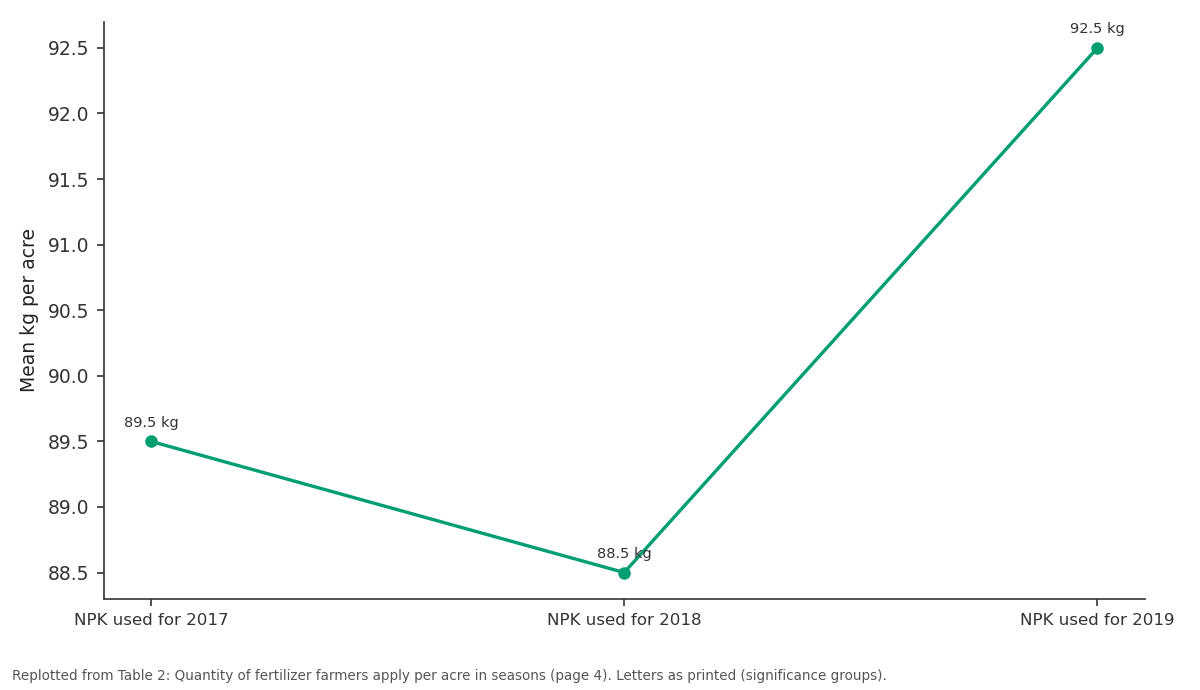
Mean: NPK used for 2017 vs NPK used for 2018 vs NPK used for 2019
Replotted from Table 2 (page 4) of the original paper. Every bar is the paper's own table value.
View source evidence ↗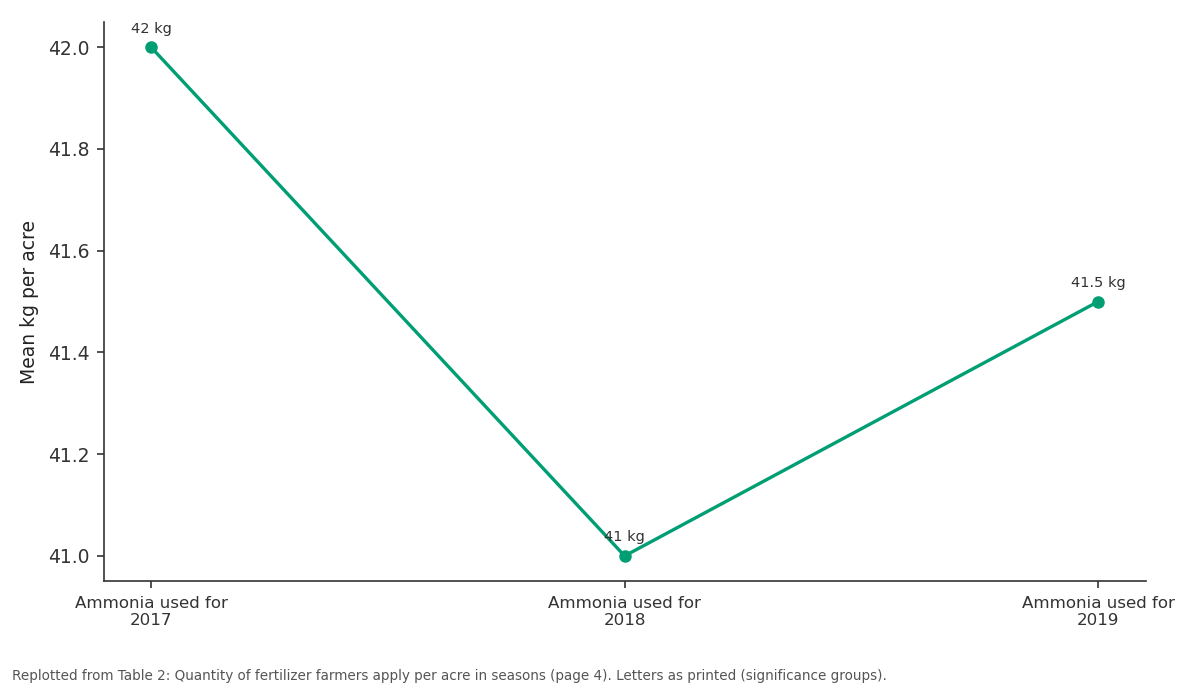
Mean: Ammonia used for 2017 vs Ammonia used for 2018 vs Ammonia used for 2019
Replotted from Table 2 (page 4) of the original paper. Every bar is the paper's own table value.
View source evidence ↗Figures & tables
From the original paper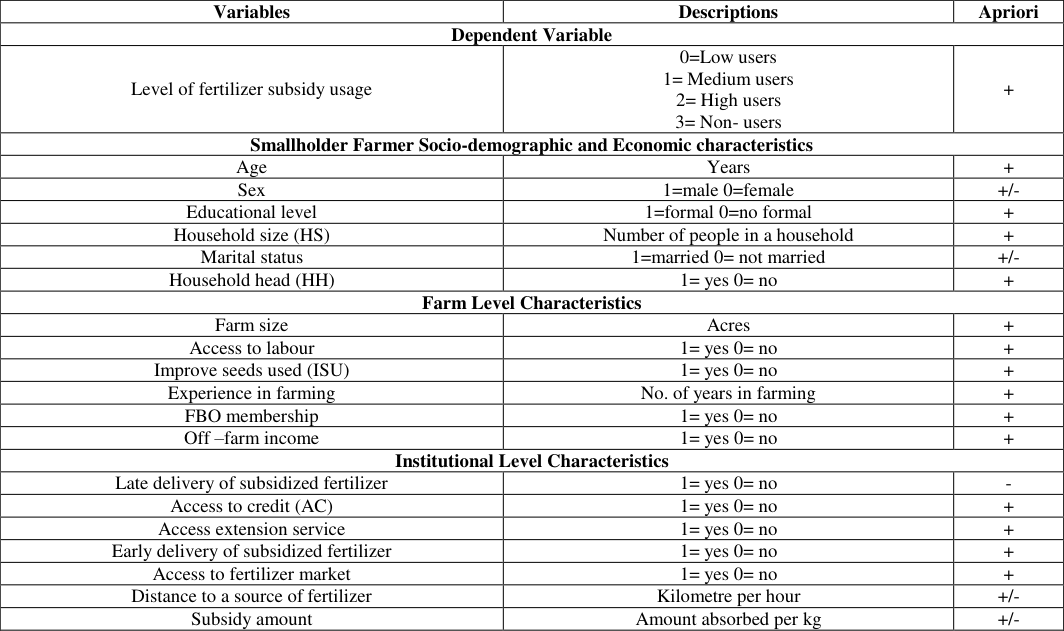 Table 1
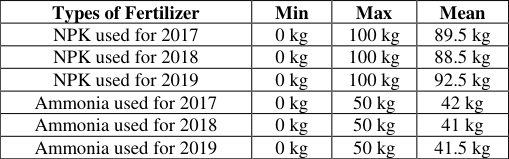 Table 2
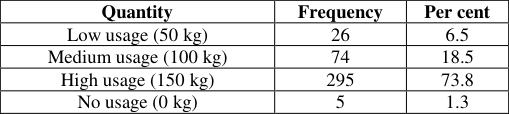 Table 3
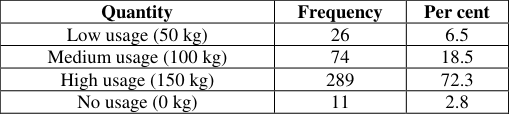 Table 4
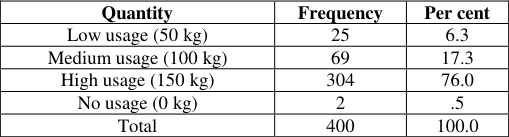 Table 5
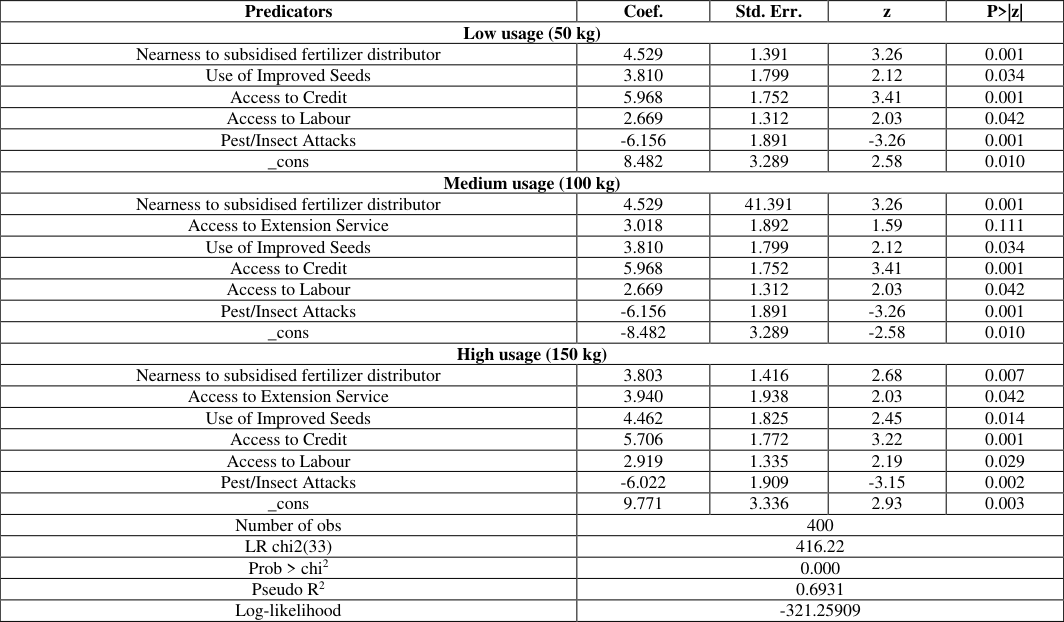 Table 6
Introduction
Maize is a major staple crop used in Northern Ghana throughout the year among households. Maize is also part of the crops supported by the fertilizer subsidy programme in Ghana (Ministry of Food and Agriculture (MoFA), 2018) [25] . Maize is in high demand for both domestic and industrial purposes in Ghana (Andam et al., 2017) [5] . The high demand for maize in Ghana for both domestic and industrial purposes has led to a government-targeted policy in increasing the productivity of maize through the provision of improved technologies and subsidy policy (Houssou, Kolavalli & Silver, 2016) [16] . It is suggested that supporting farmers with subsidized fertilizers can result in a massive increase in maize yields and ultimately bring improvement in the livelihood of farmers (Ricker-Gilbert, Jayne & Chirwa, 2011) [35] . Successive agricultural policies and programmes in Ghana have provided farmers with agricultural input subsidies to help maximize their farming potential. The fertilizer subsidy programme is to ensure the availability of subsidized fertilizers as well as guarantee affordable fertilizer prices in the market (Nyanda, 2022) [28] . This is because fertilizer in the open market is very expensive which often leads to a low application rate among smallholder farmers in Ghana (MoFA, 2012) [24] . The fertilizer subsidy programme was seen as key in addressing the high cost of fertilizer and low application rate from the existing rate of 8 kg to an average of 20 kg per hectare by farmers (Ragasa & Chapoto, 2017; Rivaie et al., 2021) [34,36] . Improved farmers' access to and use of subsidized fertilizer is expected to increase the fertilizer application rate among farmers. Applying the recommended rate of fertilizer will allow the vegetative growth to begin quickly and provide nutritional needs during the active growth of the maize plant.
Maize has a high nutrient demand for nitrogen (N), phosphorus (P) and potassium (K), in general. N is the most often restricting yield among these main nutrients. It specifies the number of leaves produced by the plants and the number of seeds per cob, thereby deciding the capacity for yield (Adu et al., 2014) [2] . The volume of mineral fertilizer to be added differs with the soil's P and K quality, its humidity level, and the variety's maturity time (Adu et al., 2014) [2] . The optimum fertilizer quality for maize, therefore, depends on the variety of seeds, past plant experience, embraced cultural practices and total field fertility. Application levels of compound fertilizer per hectare in Ghana typically average around 90 kg N. P2O5 60 kg and K2O 60 kg (Tetteh et al., 2017) [42] . Nonetheless, it is recommended that fertilizer N levels up to 120 kg/ha be used on deteriorated soils (Tetteh et al., 2017) [42] . However, it is generally, perceived that maize farmers in northern Ghana do not apply the required quantity of fertilizer on their farms. With, the fertilizer subsidy programme is expected to address this challenge of low application rates among maize. Hence, this study, therefore, seeks to assess the factors influencing smallholder maize farmers' fertilizer use under the fertilizer subsidy programme in the Northern Region of Ghana.
Methodology
The Northern Region is one of the sixteen regions of Ghana. It is located in the north of the country and it was the largest of the sixteen regions, covering an area of 70,384 square kilometres or 31 per cent of Ghana's area. Until December 2018 when the Savannah and North East Regions were created out of it (Ghana Statistical Services (GSS), 2014). The Northern Region has a generally dry climate, with only one rainy season that runs from May to October. Annual rainfall fluctuates between 750 and 1050 mm with a mean temperature of 35 °C (GSS, 2014). More than 75% of the economically active population in the region is employed in the agricultural sector (MoFA, 2018) [25] . The main economic activity taking place in the region is agriculture. Crops like yam, maize, millet, guinea corn, rice, groundnuts, beans, soya beans and cowpea, are widely grown in the region.
Research design, sampling techniques, data collection and analysis
To address the study objective, the study employed only quantitative research approach for collecting, verifying and analyzing data to give in-depth information about the factors influencing smallholder maize farmers' fertilizer use under the fertilizer subsidy programme. Furthermore, the study adopted a descriptive study design in guiding data collection. Based on the Ministry of Food and Agriculture (2018), the total population of maize farmers in the northern region is 123,626. Through the application of Cochran's (1977) [9] sample size determination formula a sample size of 400 smallholder maize farmers was found appropriate for the study. Five (5) districts were randomly selected using a simple random sampling method. The sample districts are Tolon District, Kumbungu District, Yendi Municipal, Savelugu Municipal and Mion District. This is because maize farming is widely cultivated across all districts in the region (GSS, 2014) [11] . From each sample district, four (4) communities were randomly sampled. The selection is to ensure that the researcher acquires the needed information about the concepts under study through a survey. From each sample community, random sampling was used to select twenty (20) smallholder maize farmers. Data were collected using questionnaire administration to 400 smallholder maize farmers.
Analysis of the effects of fertilizer subsidy programme on smallholder maize farmers' usage of fertilizer
Analysis of how the fertilizer subsidy programme has affected smallholder maize farmers' usage of fertilizer was achieved using frequency, percentage and multinomial logistic regression model. A multinomial logistic regression model was to examine the factors influencing farmers' level of fertilizer use on their farms. According to Tetteh et al. (2017) [42] , the recommended rate of fertilizer per acre of maize 100 kg of compound fertilizer (NPK) and 50 kg of sulphate of ammonia for Northern Ghana. Here, a smallholder maize farmer who uses less than 50 kg of either compound fertilizer (NPK) or sulphate of ammonia is considered a low user, about 100 kg of either compound fertilizer (NPK) or sulphate of ammonia is considered a medium user and 100 kg of compound fertilizer (NPK) and 50 kg of sulphate of ammonia are considered as high users. However, a smallholder maize farmer who does not apply fertilizer on his/her farm at all is considered a non-user.
Multinomial logistic model
A multinomial logistic regression model is to empirically establish the drivers of smallholder maize level of use of fertilizer subsidy programme. Multinomial logistic regression models assume that the error terms are independently and identically distributed (Plass et al., 2015) [33] . In the context of this study, an unordered multinomial logistic model is useful because it can take care of categorical dependent variables (thus, the nominal categories of dependent variables have multiple choices). The multinomial logistic regression model was used in this study to assess the factors that influence smallholder maize farmer level of use of fertilizer in FSP. Smallholder maize farmers' level of use of fertilizer subsidy programme is based on the farmers' economic status (Decision categories). These consists of the decision categories for multinomial logit model having combinations denoted as j=0 if a smallholder maize farmer uses less than 50 kg fertilizer per acre P1 (Low users), j=1 if a smallholder maize farmer uses about 100 kg fertilizer per acre P2 (Medium users), j=2 if a smallholder maize farmer uses more than 150 kg fertilizer per acre P2 (High users), j=3 if a smallholder maize farmer does not use fertilizer at all on his/her far P3 (Non-users). Drawing from the discrete choice theory of utility maximization (McFadden, 1976) [21] , smallholder maize farmer level of use of fertilizer subsidy programme is based on the option that maximizes utility subject to the inherent cost (Financial or non-financial) which is determined by perceived attribute of the fertilizer, institutional and socioeconomic characteristics of the smallholder maize farmer. Hence, following the work of Greene (2003) [13] , an unordered multinomial logistic regression model for the choices of the varieties subjected to the model was specified as follows:
The estimated equation (1) leads to a set of possibility for j th smallholder maize farmer level of use of fertilizer subsidy programme (i), in this case, fertilizer subsidy programme is P0 (Low users), P1 (Medium users), P2 (High users), P3 (Nonusers). Vector Xi describes fertilizer perceived attributes, institutional and individual socio-demographic and economic characteristics. ß j describes the vector coefficients of Xi associated with the j th fertilizer subsidy programme (Greene, 2003) [13] .
Normalization is achieved by setting ß0= 0 as presented in equation 1. Thus, obtain a vector ß j for each possibility except for the one which is a normalized alternative (A reference or base outcome). The estimated coefficients of the model can, therefore, be interpreted as the effect of the vector xi on the possibility of fertilizer subsidy programme j relative to the level of use of fertilizer subsidy programme which is a base outcome (Reference category). In this case, the reference/base outcome was subsidized fertilizer. The effect of a unit changes in any of the X explanatory variables on the probability that the i th smallholder maize farmer will use subsidy fertilizer is given by the marginal effect statistic (Greene, 2003) [13] , which is derived as follows:
Results and Discussion
Results and Discussion
Average quantity of fertilizer maize farmers applied per acre
The findings in Table 2, indicate that from 2017 to 2019, maize farmers in the study area applied a maximum of 100 kg of NPK fertilizer and 50 kg of ammonia fertilizer per acre. These application rates aligns with the general guidelines for optimal maize production, which emphasize the critical role of nitrogen (N), phosphorus (P), and potassium (K) in achieving high yields. Similar to a study conducted by Adu et al., (2014) [2] , this research underscores the importance of these nutrients, particularly nitrogen, in determining the yield potential of maize. As Adu et al.
| Types of Fertilizer | Min | Max | Mean |
|---|---|---|---|
| NPK used for 2017 | 0 kg | 100 kg | 89.5 kg |
| NPK used for 2018 | 0 kg | 100 kg | 88.5 kg |
| NPK used for 2019 | 0 kg | 100 kg | 92.5 kg |
| Ammonia used for 2017 | 0 kg | 50 kg | 42 kg |
| Ammonia used for 2018 | 0 kg | 50 kg | 41 kg |
| Ammonia used for 2019 | 0 kg | 50 kg | 41.5 kg |
Table text extracted from the original PDF; superscript letters are shown inline. The original table image is below.
View original table image
(2014) [2] highlight that the recommended application rates of chemical fertilizer per hectare in Ghana average around 90 kg N, 60 kg P2O5, and 60 kg K2O. However, in practice, the actual quantity of fertilizer applied by farmers can vary based on soil nutrient content. For instance, soils with significant degradation may require up to 120 kg/ha of nitrogen to meet the crop's nutritional demands (Adu et al., 2014) [2] . These study's findings are consistent with this recommendation, as the observed maximum fertilizer application rates fall within the suggested range for nitrogen, albeit slightly lower for phosphorus and potassium. Though, Adu et al., (2014) [2] , revealed a critical gap in the adoption of soil testing practices. Despite the recommendation for farmers to conduct soil tests before fertilizer application to tailor nutrient management strategies (Adu et al., 2014) [2] , this study suggests that many farmers may not be following this crucial step. This oversight could lead to suboptimal fertilizer use, either through overapplication or under-application, thereby affecting crop yields and economic efficiency.
Comparatively, other studies have reported varying levels of adherence to recommended agronomic practices among maize farmers. For instance, a study by Sheahan et al., (2013) [38] , found that while some farmers strictly follow the recommended fertilizer application rates, others either apply less due to financial constraints or more in an attempt to maximize yields, sometimes leading to negative environmental impacts. This study corroborates these findings, as the fertilizer application rates observed indicate a range of practices rather than a uniform adherence to guidelines. Additionally, the predominant use of NPK and ammonia fertilizers in the study area is consistent with the trends reported by Omari et al., (2017) [31] , who noted that these types of fertilizers are widely preferred by maize farmers due to their effectiveness in meeting the crop's nutritional needs. However, Omari et al., (2017) [31] also pointed out that the lack of access to affordable and timely soil testing services remains a significant barrier to the precise application of these fertilizers, a challenge echoed in our study However, on average, maize farmers applied 89.5 kg, 88.5 kg and 92.5 kg of NPK respectively from 2017 to 2019 (Table 2). The average application rate of NPK fertilizer is below the recommended rate of 100 kg of NPK fertilizer per acre. However, the results are encouraging as the marginal difference is about 12.0 kg of NPK fertilizer. In the application of ammonia, maize farmers in the study area apply a maximum of 50 kg of ammonia fertilizer on an acre of maize farm. An average of 42 kg, 41 kg and 41.5 kg respectively were applied from 2017 to 2019 on an acre of maize farm. The results suggest that farmers are leaving up to expectations in their fertilizer use. The success in fertilizer application rate can be linked to the timely delivery and availability of subsidized fertilizer under the Planting for Food and Jobs Programme. Furthermore, since the physical distance that farmers travel to obtain the subsidized fertilizer is an important determinant of the accessibility of fertilizer by a farmer (Ogada, Mwabu & Muchai, 2014) [29] , the introduction of the Planting for Food and Jobs Programme has completely reduced the physical distance challenge, where farmers now have easy access to fertilizer at a subsidized rate.
Quantity of fertilizer application per Acre
In the northern part of Ghana, soil degradation and low nutrient content are prevalent issues, as highlighted by Mensah (2015) [22] . To mitigate these challenges, research scientists have recommended that farmers should apply an average of around 90 kg N, 60 kg P2O5, and 60 kg K2O of chemical fertilizer per hectare (Adu et al., 2014) [2] . This recommendation aims to enhance soil fertility and improve crop yields. However, the results presented in Table 3 of this study indicate a divergence from these recommendations. In 2017, out of 400 maize farmers interviewed, 73.8% of the respondents applied 150 kg of fertilizer, consisting of 100 kg of NPK and 50 kg of ammonia (see Table 3). This application rate exceeds the recommended amounts, particularly in terms of nitrogen, which could have implications for soil health and environmental sustainability. Furthermore, 18.5% of the respondents applied 100 kg of fertilizer, consisting of 50 kg of NPK and 50 kg of ammonia, which is below the recommended rate. This suggests variability in fertilizer application practices among farmers, potentially due to factors such as financial constraints, access to fertilizers, and knowledge of proper application rates. Only 6.5% of the respondents applied 50 kg of NPK fertilizer, and a mere 1.3% did not apply any fertilizer to their maize farms. These findings contrast with the recommendations by Adu et al., (2014) [2] , indicating that a significant proportion of farmers are either overapplying or under-applying fertilizers, which could affect maize production and soil nutrient balance. In comparison to similar studies, it is evident that fertilizer application rates and practices vary significantly among farmers in different regions. For instance, a study by Houssou et al., (2019) [15] , found that in the central region of Ghana, farmers were more likely to adhere to recommended fertilizer application rates due to better access to agricultural extension services and input subsidies. A similar trend was observed in the 2018 farming season, where the majority, 72.3% of the respondents, applied 150 kg of fertilizer, consisting of 100 kg of NPK and 50 kg of Ammonia (See Table 4). This high percentage of respondents using a balanced mix of fertilizers aligns with findings from previous studies that emphasize the importance of a balanced nutrient application for optimal crop yield. For instance, Sitienei et al., (2017) [39] , reported that the combination of NPK and ammonia significantly improved maize yield and soil fertility in smallholder farms. Furthermore, nearly 18.5% of the respondents in the 2018 season applied 100 kg of fertilizer, which consisted of 50 kg of NPK and 50 kg of Ammonia. This practice, though less prevalent, indicates a preference for a moderate nutrient application, which was also noted in the research by Vanlauwe et al., (2015) [45] , who found that moderate fertilization practices were often adopted by farmers with limited resources or smaller farm sizes. Additionally, 6.5% of the respondents applied only 50 kg of NPK fertilizer, demonstrating a minimalist approach that might be influenced by economic constraints or local agricultural practices. This is consistent with findings by Ryan et al., (2012), which highlighted that economic factors often dictate the quantity and type of fertilizers used by farmers. Finally, 2.8% of the respondents did not apply any fertilizer to their maize farms, a trend that mirrors the findings of Adnan et al., (2018) [1] , who identified that a small fraction of farmers refrain from using fertilizers due to either financial limitations or a reliance on organic farming practices In the 2019 farming season, the majority of respondents (76.0%) applied 150 kg of fertilizer, consisting of 100 kg of NPK and 50 kg of Ammonia (see Table 4.5). This finding aligns with the study by Heffer and Prud'homme (2016) [14] , which reported a similar trend where 70% of farmers applied a combination of NPK and Ammonia fertilizers to enhance crop yield. Similarly, Tewatia and Chanda (2017) [43] found that a significant portion of farmers preferred the combined application of NPK and Ammonia, indicating its effectiveness in improving soil fertility and crop productivity. Nearly 17.3% of the respondents in the current study applied 100 kg of fertilizer, consisting of 50 kg of NPK and 50 kg of Ammonia (see Table 4.5). This is somewhat consistent with the findings of Min et al., (2021) [23] , where 20% of farmers used a lower total fertilizer application but maintained a balanced combination of NPK and Ammonia. This approach suggests a strategic use of fertilizers to optimize input costs while ensuring adequate nutrient supply to crops. Additionally, 6.3% of respondents applied only 50 kg of NPK fertilizer (see Table 4.5). This contrasts with the findings of Islam et al., (2022) [17] , who reported a higher percentage (15%) of farmers exclusively using NPK fertilizer, possibly due to regional differences in soil nutrient requirements or availability of fertilizers. However, both studies highlight a subset of farmers focusing on NPK as a primary nutrient source, with only 0.5% of respondents in the current study did not apply any fertilizer on their maize farms. The lower percentage in the current study may indicate improved access to fertilizers or better financial support for farmers
| Quantity | Frequency | Per cent |
|---|---|---|
| Low usage (50 kg) | 26 | 6.5 |
| Medium usage (100 kg) | 74 | 18.5 |
| High usage (150 kg) | 289 | 72.3 |
| No usage (0 kg) | 11 | 2.8 |
Table text extracted from the original PDF; superscript letters are shown inline. The original table image is below.
View original table image
| Quantity | Frequency | Per cent |
|---|---|---|
| Low usage (50 kg) | 26 | 6.5 |
| Medium usage (100 kg) | 74 | 18.5 |
| High usage (150 kg) | 295 | 73.8 |
| No usage (0 kg) | 5 | 1.3 |
Table text extracted from the original PDF; superscript letters are shown inline. The original table image is below.
View original table image
Factors influencing the quantity of fertilizer use by smallholder farmers per acre
This section presents results on the factors influencing the quantity of fertilizer used by smallholder farmers per acre. Table 6 present the results of the multinomial logit regression model on the predictors of smallholder maize farmers' application rate of chemical fertilizer per acre. The results of the multinomial logit regression show a loglikelihood value of -321.25909. This is significant at the 1% level of significance. This means that the explanatory variables or factors included in the model jointly explained the factors which influence the rate of fertilizer usage among farmers. a. The reference category is no usage (0 kg). b. This parameter is set to zero because it is redundant. Source: Field Survey Data, 2020
| Predicators | Coef. | Std. Err. | z | P>|z| |
|---|---|---|---|---|
| Low usage (50 kg) | ||||
| Nearness to subsidised fertilizer distributor | 4.529 | 1.391 | 3.26 | 0.001 |
| Use of Improved Seeds | 3.810 | 1.799 | 2.12 | 0.034 |
| Access to Credit | 5.968 | 1.752 | 3.41 | 0.001 |
| Access to Labour | 2.669 | 1.312 | 2.03 | 0.042 |
| Pest/Insect Attacks | -6.156 | 1.891 | -3.26 | 0.001 |
| cons _ | 8.482 | 3.289 | 2.58 | 0.010 |
| Medium usage (100 kg) | ||||
| Nearness to subsidised fertilizer distributor | 4.529 | 41.391 | 3.26 | 0.001 |
| Access to Extension Service | 3.018 | 1.892 | 1.59 | 0.111 |
| Use of Improved Seeds | 3.810 | 1.799 | 2.12 | 0.034 |
| Access to Credit | 5.968 | 1.752 | 3.41 | 0.001 |
| Access to Labour | 2.669 | 1.312 | 2.03 | 0.042 |
| Pest/Insect Attacks | -6.156 | 1.891 | -3.26 | 0.001 |
| cons _ | -8.482 | 3.289 | -2.58 | 0.010 |
| High usage (150 kg) | ||||
| Nearness to subsidised fertilizer distributor | 3.803 | 1.416 | 2.68 | 0.007 |
| Access to Extension Service | 3.940 | 1.938 | 2.03 | 0.042 |
| Use of Improved Seeds | 4.462 | 1.825 | 2.45 | 0.014 |
| Access to Credit | 5.706 | 1.772 | 3.22 | 0.001 |
| Access to Labour | 2.919 | 1.335 | 2.19 | 0.029 |
| Pest/Insect Attacks | -6.022 | 1.909 | -3.15 | 0.002 |
| cons _ | 9.771 | 3.336 | 2.93 | 0.003 |
| Number of obs | 400 | |||
| LR chi2(33) | 416.22 | |||
| Prob > chi2 | 0.000 | |||
| Pseudo R2 | 0.6931 | |||
| Log-likelihood | -321.25909 |
Table text extracted from the original PDF; superscript letters are shown inline. The original table image is below.
View original table image
The Pseudo R 2 value of 0.6931 also indicates that all the explanatory variables included in the model were able to explain about 69.3% of the rate of fertilizer usage among maize farmers (Table 6). Specifically, the results show that nearness to subsidised fertilizer distributors, access to credit and pest/insect attacks were all significant at 1% confidence level. Also, access to extension service, use of improved seeds and access to labour were all significant at 5% level.
Nearness to subsidised fertilizer distributor
Maize farmers' nearness to subsidised fertilizer distributors had a positive significant effect on farmers' decision to apply 50 kg, 100 kg and 150 kg of fertilizer on their farms at 1% significant level. Farmers who were located near subsidised fertilizer distribution had a higher probability of applying 50 kg, 100 kg and 150 kg of fertilizer on their farms by 4.529 kg and 3.803 kg respectively compared to farmers who were not located near subsidised fertilizer distribution sources if all things remain the same.
Comparing this with similar studies, the findings are consistent with the conclusions of Ghimire et al., (2015) [12] , who found that the proximity to agricultural input suppliers significantly influences the adoption and usage intensity of inputs among smallholder farmers. In their study, farmers closer to input suppliers were more likely to use the recommended amounts of fertilizer due to easier access and reduced transportation costs. Similarly, a study by Keyser et al., (2015) [18] in Africa highlighted that farmers' proximity to agro-dealers positively affects their use of improved seeds and fertilizers. The study pointed out that logistical challenges and transportation costs are significant barriers for rural farmers who are far from these dealers, which aligns with your findings that urban-located subsidized fertilizer retailers create accessibility issues for rural farmers. In contrast, other studies have shown mixed results.
For instance, the research by Alabi and Adams (2015) [4] in Nigeria revealed that while proximity to fertilizer distributors is important, other factors such as access to credit, extension services, and overall farm income also play crucial roles in determining fertilizer usage. This suggests that while nearness to distributors is a significant factor, it is not the sole determinant of fertilizer application rates among farmers.
Use of Improved Varieties of maize Seeds
The use of improved varieties of maize seeds had a positive and significant effect on farmers' decision to apply 50 kg, 100 kg, and 150 kg of fertilizer on their farms at a 5% significance level. Farmers who used improved maize varieties had a higher probability of applying 50 kg, 100 kg, and 150 kg of fertilizer on their farms by 3.810 kg and 4.462 kg, respectively, compared to farmers who did not use improved varieties of maize seeds if all things remained the same. Adoption of improved maize varieties requires the right quantity of fertilizer to achieve optimal yield. Hence, it was not surprising that improved maize varieties positively influenced smallholder maize farmers' use of fertilizer. Comparing these findings to other studies, similar positive effects of improved seed varieties on fertilizer use and yield have been documented. For instance, Akinbode and Bamire (2015) [3] found that the adoption of improved maize varieties significantly increased the likelihood of fertilizer use among smallholder farmers in Nigeria, leading to higher yields and increased farm productivity. This aligns with this study results, demonstrating the critical role of improved seed varieties in enhancing agricultural practices and outcomes. Contrastingly, Tahiru et al., (2015) [41] , observed a different trend in southern Ghana where the use of improved maize varieties did not significantly impact fertilizer application rates. This discrepancy may be due to variations in local agricultural practices, soil fertility, or access to agricultural inputs, highlighting the importance of contextual factors in determining the effectiveness of improved seed varieties. Additionally, Thierfelder et al., (2015) [44] , emphasized the importance of complementary agricultural practices, such as proper soil management and timely application of fertilizers, to fully realize the benefits of improved maize varieties. This suggests that while improved seed varieties can enhance fertilizer use and yield, a holistic approach incorporating multiple agricultural best practices is essential for achieving optimal results
Access to credit
Access to credit significantly influences farmers' fertilizer application decisions, as evidenced by the findings showing that farmers with access to credit are more likely to apply larger quantities of fertilizer compared to those without access (see Table 6). For instance, farmers with credit access applied an average of 5.968 Kg more of fertilizer than those without credit, holding other factors constant. This aligns with previous research indicating that financial constraints hinder smallholder farmers' ability to afford fertilizers and other inputs, thereby limiting their crop yields (MoFA, 2018) [25] . Conversely, farmers lacking access to credit may face difficulties in affording necessary inputs like fertilizers, potentially leading to suboptimal application rates (Liverpool-Tasie & Takeshima, 2013) [19] .
Access to labour
Access to labour had a positive and significant effect on farmers' decision to apply 50 kg, 100 kg and 150 kg of fertilizer on their farms at 5% significant level. Farmers who had access to labour had a higher probability of applying 50 kg, 100 kg and 150 kg of fertilizer on their farms by 2.669 kg and 2.919 kg as compared to farmers who do not have access to labour if all things remain the same. This finding is in agreement with Nandi, inferred from the positively significant relationship between labour availability and adoption of Agricultural innovation and concluded that labour availability is a requirement for technology adoption which increases the yield of farmers. Because improved agricultural practices require lots of labour and hence household with a relatively high labour force uses the technologies on their farmlands more than those with a low labour force.
Pest/Insect Attacks
Pest/insect attacks had a negative significant effect on farmers' decision to apply 50 kg, 100 kg and 150 kg of fertilizer on their farms at 5% significant level. Farmers whose farms were affected by pest/insect attacks had a higher probability of applying 50 kg, 100 kg and 150 kg of fertilizer on their farms by 6.156 kg and 6.022 kg as compared to farmers whose farms were not affected by pest/insect attacks if all things remain the same. This indicates a direct correlation between pest pressures and agricultural input decisions among smallholder maize farmers. In contrast, other studies have highlighted similar deterrent effects of pest and insect invasions on farm profitability and investment in agricultural inputs (Wyckhuys et al., 2020) [46] . These findings underscore the widespread challenges posed by pests and insects in agricultural production, affecting both yield potential and economic outcomes for farmers (Bottrell & Schoenly, 2018; Snyder et al., 2020) [7,40] . Thus, the reluctance among smallholder farmers to use fertilizers due to pest pressures appears to be a consistent theme across various agricultural crops (Chinseu et al., 2019) [8] .
Access to extension service
Access to extension service had a positive and significant effect on farmers' decision to apply 150 kg of fertilizer on their farms at 5% significant level. Farmers who had access to extension service had a higher probability of applying 150 kg of fertilizer on their farms by 3.940 kg compared to farmers who do not have access to extension service if all things remain the same. Fertilizer application requires some level of knowledge and techniques, hence, smallholder farmers' exposure to extension officers would help in increasing farmers' knowledge on the timing of fertiliser application, application rate and observation of agronomic precautional measures. This finding aligns with previous studies that have also highlighted the pivotal role of extension services in improving agricultural practices (Argaw et al., 2023; Noah & Abidoye, 2019) [6,27] . Farmers with access to extension services demonstrated a notably higher likelihood of applying the recommended fertilizer amount compared to those without such access (Martey et al., 2014) [20] . Furthermore, the study underscores the importance of extension services in enhancing farmers' knowledge and skills related to fertilizer application techniques, timing, and agronomic best practices. Similar studies have shown that increased exposure to extension officers correlates with improved agricultural productivity and adherence to recommended farming practices (Pan et al., 2018; Okoffo et al., 2016) [32,30] . Thus, the positive influence of extension services on fertilizer usage among smallholder maize farmers is consistent with broader findings on the impact of extension programs in agricultural development (Gebrehiwot, 2015) [10] .
Conclusion and recommendation
The study concluded that proximity to subsidized fertilizer distributors, access to credit, use of improved maize varieties, access to extension services, and availability of labor all had significant positive effects on farmers' decisions to apply higher amounts of fertilizer per acre. Conversely, pest and insect attacks were found to deter farmers from applying optimal quantities of fertilizer. The study further concluded that while a majority of farmers apply fertilizer, the actual quantities used often deviate from the recommended rates, with some over-applying and others under-applying. This variability highlights the need for targeted interventions to promote judicious and efficient use of fertilizers among smallholder farmers. Also, government should improve access to subsidized fertilizer distribution points are strategically located and easily accessible to rural farmers can significantly increase fertilizer usage rates.
Figures and tables from the paper
| Variables | Descriptions | Apriori |
|---|---|---|
| Dependent Variable | ||
| Level of fertilizer subsidy usage | 0=Low users 1= Medium users 2= High users 3= Non- users | + |
| Smallholder Farmer Socio-demographic and Economic characteristics | ||
| Age | Years | + |
| Sex | 1=male 0=female | +/- |
| Educational level | 1=formal 0=no formal | + |
| Household size (HS) | Number of people in a household | + |
| Marital status | 1=married 0= not married | +/- |
| Household head (HH) | 1= yes 0= no | + |
| Farm Level Characteristics | ||
| Farm size | Acres | + |
| Access to labour | 1= yes 0= no | + |
| Improve seeds used (ISU) | 1= yes 0= no | + |
| Experience in farming | No. of years in farming | + |
| FBO membership | 1= yes 0= no | + |
| Off –farm income | 1= yes 0= no | + |
| Institutional Level Characteristics | ||
| Late delivery of subsidized fertilizer | 1= yes 0= no | - |
| Access to credit (AC) | 1= yes 0= no | + |
| Access extension service | 1= yes 0= no | + |
| Early delivery of subsidized fertilizer | 1= yes 0= no | + |
| Access to fertilizer market | 1= yes 0= no | + |
| Distance to a source of fertilizer | Kilometre per hour | +/- |
| Subsidy amount | Amount absorbed per kg | +/- |
Table text extracted from the original PDF; superscript letters are shown inline. The original table image is below.
View original table image
| Quantity | Frequency | Per cent |
|---|---|---|
| Low usage (50 kg) | 25 | 6.3 |
| Medium usage (100 kg) | 69 | 17.3 |
| High usage (150 kg) | 304 | 76.0 |
| No usage (0 kg) | 2 | .5 |
| Total | 400 | 100.0 |
Table text extracted from the original PDF; superscript letters are shown inline. The original table image is below.
View original table image
References
35 in the original paper- Adnan N, Nordin SM, Rahman I, Noor A. The effects of knowledge transfer on farmers decision making toward sustainable agriculture practices: In view of green fertilizer technology. World J Sci. Technol Sustain Dev. 2018;15(1):98-115.
- Akinbode WO, Bamire AS. Determinants of adoption of improved maize varieties in Osun State, Nigeria. J Agric Ext Rural Dev. 2015;7(3):65-72.
- Argaw B, Yehuala K, Aschalew A. Review on the role of agricultural extension service on increasing farm productivity in Ethiopia. Int. J Finance Res. 2023;4(2):77-89.
- Bottrell DG, Schoenly KG. Integrated pest management for resource-limited farmers: challenges for achieving ecological, social and economic sustainability. J Agric Sci. 2018;156(3):408-426.
- Chinseu E, Dougill A, Stringer L. Why do smallholder farmers dis-adopt conservation agriculture? Insights from Malawi. Land Degrad Dev. 2019;30(5):533-543.
- Cochran S, Banner D. Spall studies in uranium. J Appl Phys. 1977;48(7):2729-2737.
- Gebrehiwot KG. The impact of agricultural extension on households' welfare in Ethiopia. Int J Soc Econ. 2015;42(8):733-748.
- Ghimire R, Huang W, Poudel MP. Adoption intensity of agricultural technology: Empirical evidence from smallholder maize farmers in Nepal. Int. J Agric Innov Res. 2015;4(1):139-146.
- Houssou N, Asante-Addo C, Andam KS, Ragasa C. How can African governments reach poor farmers with fertiliser subsidies? Exploring a targeting approach in Ghana. J Dev Stud. 2019;55(9):1983-2007.
- Islam MS, Bell RW, Miah MM, Alam MJ. Unbalanced fertilizer use in the Eastern Gangetic Plain: The influence of Government recommendations, fertilizer type, farm size and cropping patterns. PLoS One. 2022, 17(7).
- Liverpool-Tasie LS, Takeshima H. Input promotion within a complex subsector: fertilizer in Nigeria. Agric Econ. 2013;44(6):581-594.
- Martey E, Wiredu AN, Etwire PM, Fosu M, Buah SSJ, Bidzakin J, et al. Fertilizer adoption and use intensity among smallholder farmers in Northern Ghana: A case study of the AGRA soil health project. Sustain Agric Res. 2014, 3(1).
- McFadden D. A comment on discriminant analysis" versus" logit analysis. In: Annals of Economic and Social Measurement. 1976;5(4):511-523.
- Mensah AK. Role of revegetation in restoring fertility of degraded mined soils in Ghana: A review. Int. J Biodivers Conserv. 2015;7(2):57-80.
- Min J, Sun H, Wang Y, Pan Y, Kronzucker HJ, Zhao D, et al. Mechanical side-deep fertilization mitigates ammonia volatilization and nitrogen runoff and increases profitability in rice production independent of fertilizer type and split ratio. J Clean Prod. 2021;316:128370.
- Ministry of Food and Agriculture (MoFA). Performance of the Agricultural Sector in Ghana: 20062012. GDP at 2006 Prices by Economic Activity: 20062012; c2012.
- Ministry of Food and Agriculture (MoFA). Agricultural in Ghana: Facts and Figures 2010. Statistics, Research and Information Directorate (SRID), Government of Ghana (GOG);
- Nandi JA, Haruna SK, Abudu S. Analysis of socioeconomic factors influencing farmers' adoption of rice varieties with high yielding and weed suppressing abilities in Kano River Irrigation Project (KRIP). J Agric Forestry Soc Sci. 2012, 10(1).
- Noah OA, Abidoye AG. Effective agricultural extension service: A strategy for improving food production in Nigeria. Entrep J Manag Sci. 2019;6(1):13-26.
- Ogada MJ, Mwabu G, Muchai D. Farm technology adoption in Kenya: A simultaneous estimation of inorganic fertilizer and improved maize variety adoption decisions. Agric Food Econ. 2014;2(1):1-18.
- Okoffo ED, Mensah M, Fosu-Mensah BY. Pesticides exposure and the use of personal protective equipment by cocoa farmers in Ghana. Environ Syst Res. 2016;5:1-15.
- Omari RA, Sarkodee-Addo E, Fujii Y, Oikawa Y, Bellingrath-Kimura SD. Impacts of fertilization type on soil microbial biomass and nutrient availability in two agroecological zones of Ghana. Agronomy. 2017;7(3):55.
- Pan Y, Smith SC, Sulaiman M. Agricultural extension and technology adoption for food security: Evidence from Uganda. Am J Agric Econ. 2018;100(4):10121031.
- Plass J, Augustin T, Cattaneo M, Schollmeyer G. Statistical modelling under epistemic data imprecision: some results on estimating multinomial distributions and logistic regression for coarse categorical data. In: ISIPTA. 2015;15:247-256.
- Ragasa C, Chapoto A. Moving in the right direction? The role of price subsidies in fertilizer use and maize productivity in Ghana. Food Sec. 2017;9(2):329-353.
- Ricker-Gilbert J, Jayne TS, Chirwa E. Subsidies and crowding out: A double-hurdle model of fertilizer demand in Malawi. Am J Agric Econ. 2011;93(1):2642.
- Rivaie AA, Barus J, Meithasari D, Asnawi R. Improving the quality of acid soils to increase soybean yields and farmer's incomes. In: IOP Conference Series: Earth and Environmental Science. 2021;648(1):012059.
- Ryan J, Sommer R, Ibrikci HAYR. Fertilizer best management practices: A perspective from the dryland West Asia-North Africa region. J Agron Crop Sci. 2012;198(1):57-67.
- Sheahan M, Black R, Jayne TS. Are Kenyan farmers under-utilizing fertilizer? Implications for input intensification strategies and research. Food Policy. 2013;41:39-52.
- Sitienei RC, Onwonga RN, Lelei JJ, Kamoni P. Use of Dolichos (Lablab Purpureus L.) and combined fertilizers enhance soil nutrient availability, and maize (Zea Mays L.) yield in farming systems of Kabete Sub County Kenya. Agric Sci Res J. 2017;7(2):47-61.
- Snyder LD, Gómez MI, Power AG. Crop varietal mixtures as a strategy to support insect pest control, yield, economic, and nutritional services. Front Sustain Food Syst. 2020;4:60.
- Tahiru F, Fosu M, Gaiser T, Becker M, Inusah BI, Mutari A, et al. Fertilizer and genotype effects on maize production on two soils in the northern region of Ghana. Sustain Agric Res. 2015, 4(4).
- Thierfelder C, Matemba-Mutasa R, Rusinamhodzi L. Yield response of maize (Zea mays L.) to conservation agriculture cropping system in Southern Africa. Soil Tillage Res. 2015;146:230-242.
- Vanlauwe B, Descheemaeker K, Giller KE, Huising J, Merckx R, Nziguheba G, et al. Integrated soil fertility management in sub-Saharan Africa: unravelling local adaptation. Soil. 2015;1(1):491-508.
- Wyckhuys KA, Lu Y, Zhou W, Cock MJ, Naranjo SE, Fereti A, et al. Ecological pest control fortifies agricultural growth in Asia-Pacific economies. Nat Ecol Evol. 2020;4(11):1522-1530.