
Research article · 2024 · Full text
International Journal of Veterinary Sciences and Animal HusbandryFactors influencing pet dog ownership in Bengaluru City
Volume 9(5S) · Pages 147–151 · DOI: 10.22271/veterinary.2024.v9.i5sc.1694 ↗
Research areasHuman-Animal Interaction StudiesZoonotic diseases and public healthRabies epidemiology and control
Abstract
Author-writtenA study was carried out to explore the varying approaches to pet dog ownership in Bengaluru city, focusing on differences between purebred and non-descript dogs, as well as the unique considerations for different sizes of purebred dogs. A structured questionnaire was administered to 400 pet dog owners at Veterinary College Bangalore for compiling information on owner demographics and general pet information. Data was categorized by breed (purebred vs. non-descript) and purebred size (toy, medium, large). Frequency and summary statistics were calculated to identify the predominant data trends. The study found that most dog owners were employed, around 35 years old, and belonged to nuclear families. There were no significant differences in age or family type between owners of purebred vs. non-descript dogs or different sizes of purebred dogs. However, educational background and motivations for dog ownership did differ. Purebred dog owners were more likely to be graduates and keep dogs as a passion, while non-descript dog owners were more likely to have a college degree and keep dogs for security. The majority of pet dogs, regardless of breed or size, were male and around 4 years old. Purebred dogs were generally heavier and more likely to be obtained from friends at a younger age for a higher price compared to non-descript dogs. Purebred dogs were also more likely to be playful and friendly with strangers and children, while non-descript dogs exhibited more bored, irritable, and aggressive temperaments and were more likely to be occasionally aggressive with strangers.
Summary
Source-checkedPlain-language reading of the full paper, prepared with AI and checked against the text. Each point links to the authors' own words.
Why it matters
- India has a massive dog population, with approximately 10.2 million pet dogs and 62 million stray dogs as of 2024. View evidence ↗
- The methods and motivations for owning purebred dogs versus non-descript (desi or indie) dogs can vary significantly. View evidence ↗
- Dog ownership approaches also differ by the size of the dog, influenced by the owner's lifestyle, preferences, and available space. View evidence ↗
The question
- The study aimed to explore different approaches to pet dog ownership in Bengaluru, specifically comparing purebred and non-descript dogs and examining the impact of purebred size. View evidence ↗
What they did
- The sample consisted of 295 purebred dog owners (divided into 89 toy, 149 medium, and 57 large breeds) and 105 non-descript dog owners. View evidence ↗
- The study used ANOVA for numerical data comparison and chi-square tests for ordinal data. View evidence ↗
What they found
- Educational backgrounds differed by breed type: 49.2% of purebred owners were graduates, while 66.7% of non-descript owners had completed the 12th Standard. View evidence ↗
- While self-companionship was the top motive for both, purebred owners were more likely to keep dogs as a passion (31.9%) and non-descript owners for security (30.5%). View evidence ↗
- Male dogs were more prevalent among purebreds (68.51%) than among non-descript dogs (58.1%). View evidence ↗
- The average purchase price for purebred dogs (Rs. 11,868.81) was significantly higher than for non-descript dogs (Rs. 581.43). View evidence ↗
- Non-descript dogs were significantly more likely to exhibit bored, irritable, or aggressive temperaments and be occasionally aggressive with strangers compared to purebreds. View evidence ↗
- Among purebred owners, those with large breeds were much more likely to keep their dogs for security (36.8%) than owners of toy (4.5%) or medium (8.1%) breeds. View evidence ↗
- The average age of the dogs (4.33 ± 0.107 years) did not differ significantly across breed types or purebred sizes. View evidence ↗
What it means
- The authors conclude that a significant socio-demographic divide exists between owners of purebred and non-descript dogs in Bengaluru regarding education, occupation, purpose, and acquisition. View evidence ↗
- The authors found that differences among owners of purebred dogs were much less pronounced when comparing different breed sizes. View evidence ↗
Visual summary
2 visualsIllustrations explain the paper; charts are replotted from the paper's own table values.
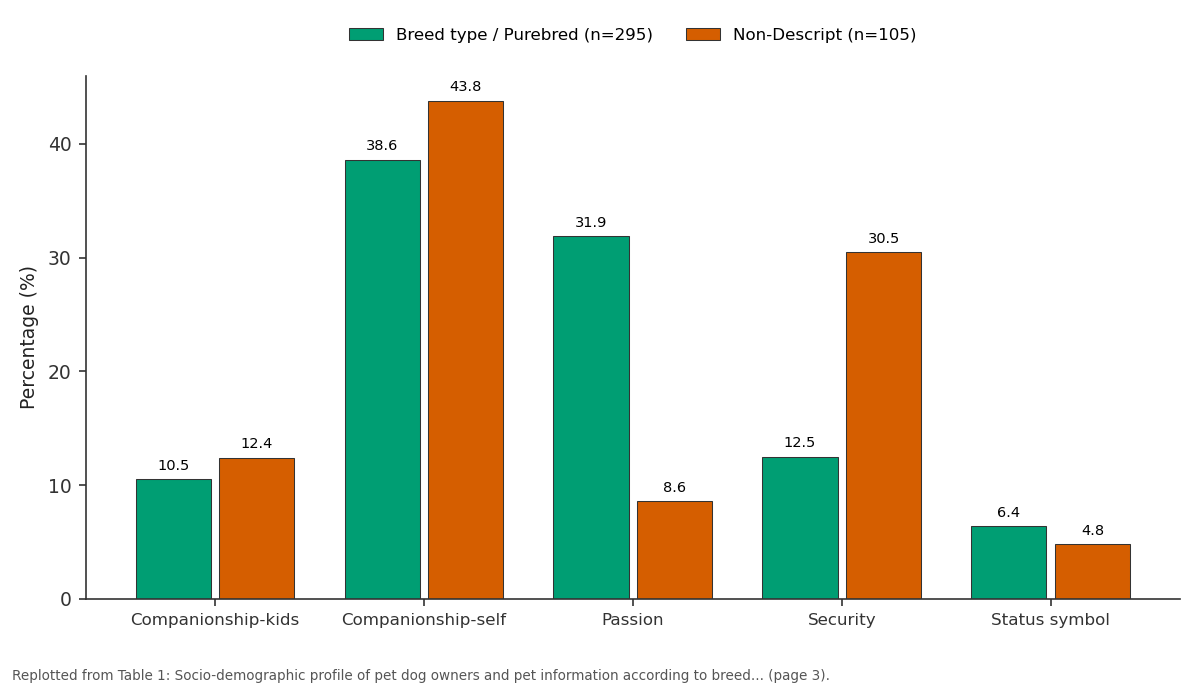
Breed type / Purebred (n=295) and Non-Descript (n=105): Companionship-kids vs Companionship-self vs Passion vs Security vs Status symbol
Replotted from Table 1 (page 3) of the original paper. Every bar is the paper's own table value.
View source evidence ↗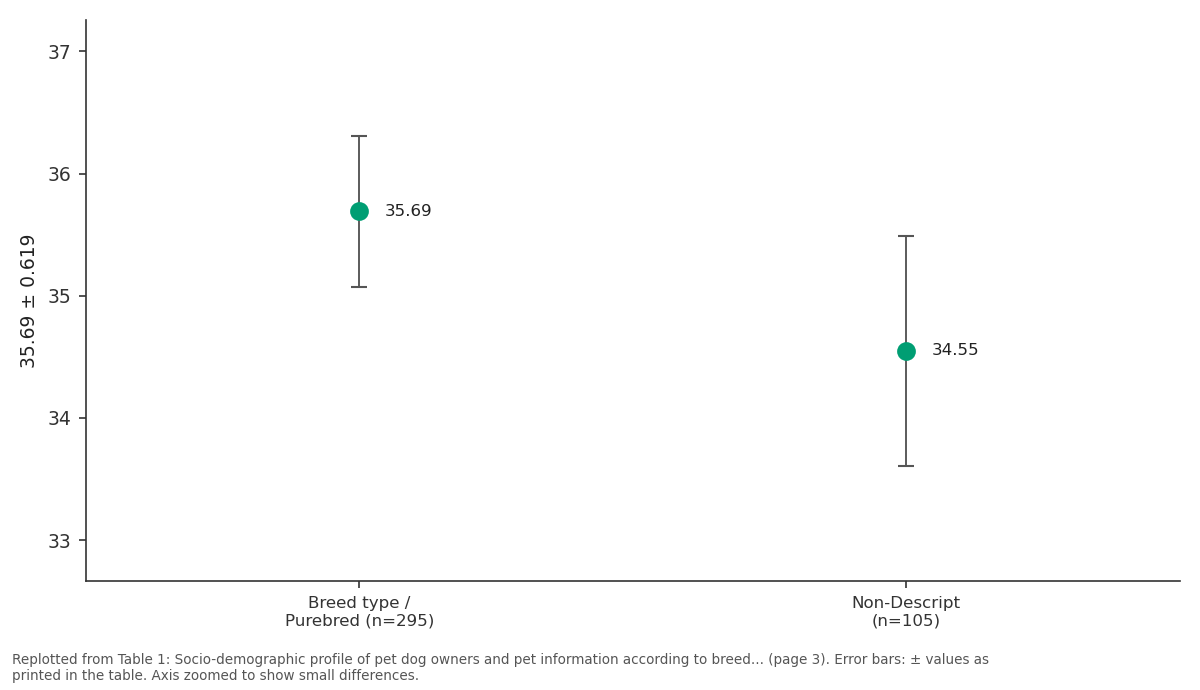
35.69 ± 0.619: Breed type / Purebred... vs Non-Descript (n=105)
Replotted from Table 1 (page 3) of the original paper. Every bar is the paper's own table value.
View source evidence ↗Figures & tables
From the original paper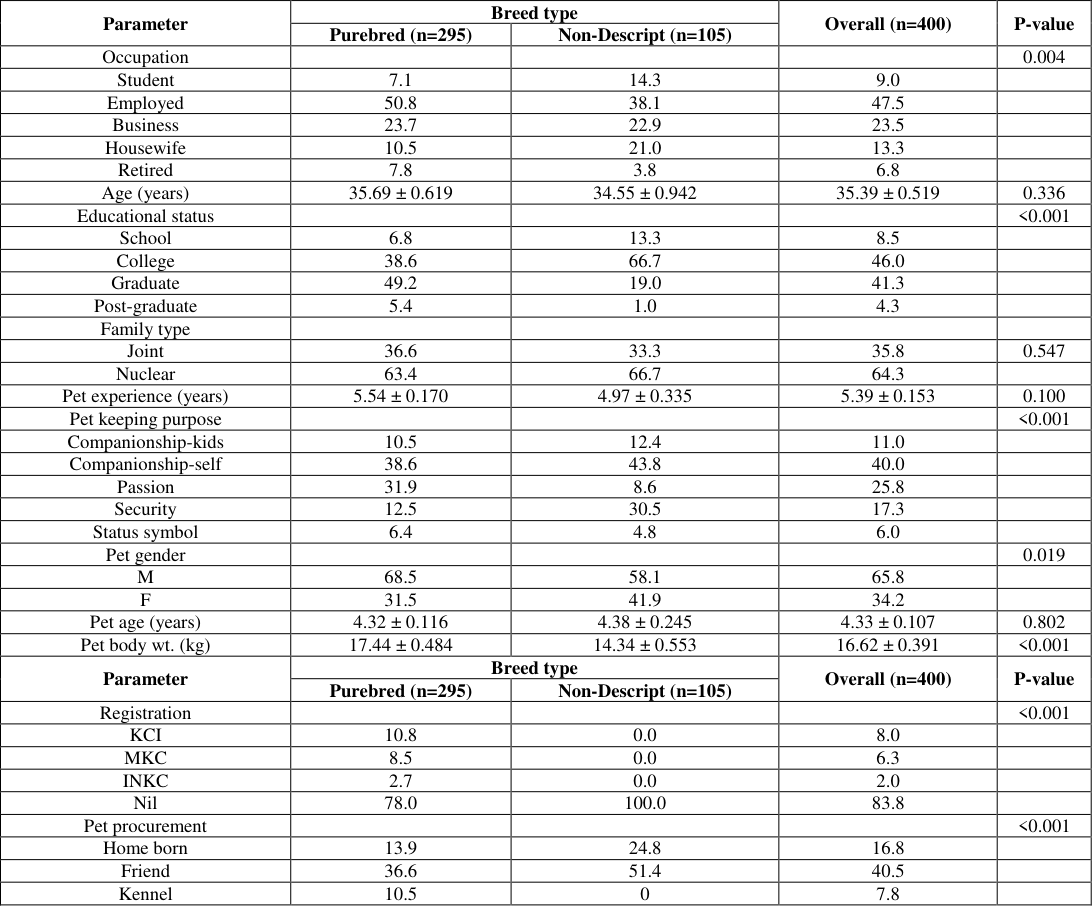 Table 1
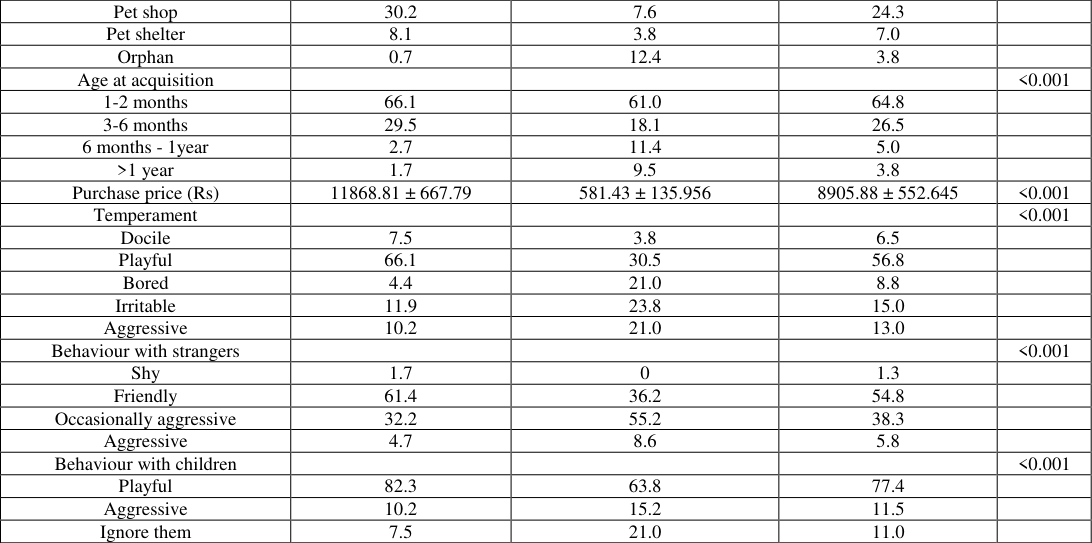 Table 2
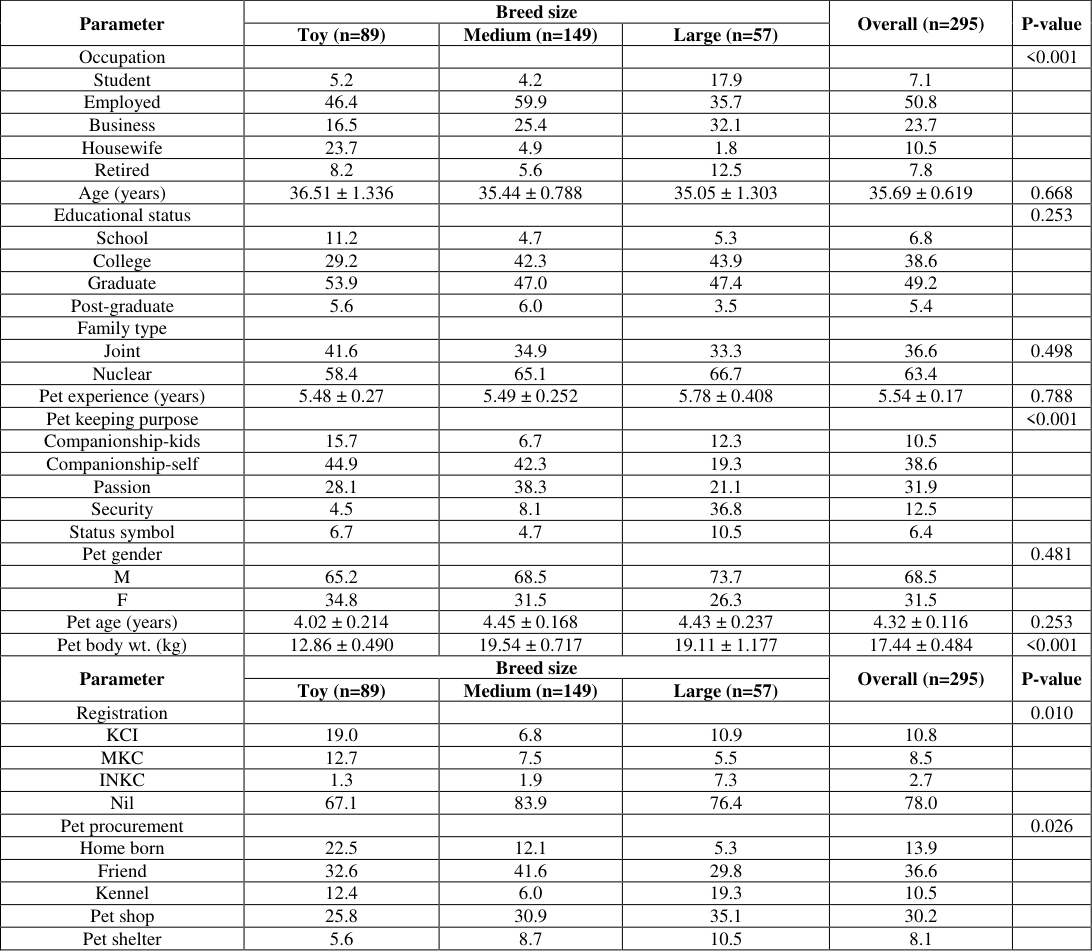 Table 2
Introduction
India has a large and diverse dog population, with millions of both pet and stray (Indian Pariah) dogs. As of 2024, the country has approximately 10.2 million pet dogs, while the stray dog population is around 62 million (World Population Review, 2024) [13] . While there is no definitive statistic on pet dog ownership in Karnataka, a systematic estimation survey by the Bruhat Bengaluru Mahanagara Palike (BBMP) in 2023 found that the city has nearly 2.8 lakh stray dogs, a reduction of 31,000 from the figures in 2019. Approaches towards keeping purebred dogs and non-descript (desi or indie) dogs can differ significantly (Sharma, 2022) [12] . Purebred dog owners often prioritize specific breed traits, appearance, and pedigree (Mehta, 2021) [7] . Conversely, non-descript dog owners typically adopt from shelters or streets, valuing uniqueness and resilience. The approach towards keeping dogs of various sizes can differ based on factors like space availability, lifestyle and preferences (Johnson, 2023) [5] . Owners of small breeds often prioritize indoor living and may focus on socialization to prevent fear aggression. They might require less exercise but more attention due to their size and vulnerability. Medium-sized dog owners typically enjoy a balance between indoor and outdoor activities, requiring moderate exercise and space. Large breed owners often emphasize ample space, robust training, and regular exercise to manage their energy levels and prevent behavioural issues. Regardless of size, responsible ownership involves meeting each dog's specific needs for health, exercise, and socialization (Green, 2023) [3] . This research aimed to explore the varying approaches to pet dog ownership in Bengaluru city, focusing on differences between purebred and non-descript dogs, as well as the unique considerations for different sizes of purebred dogs. Understanding these differences are crucial for investigating how different approaches impact the welfare of dogs. They can also help in formulating public policies regarding pet breeding, adoption and ownership regulations; providing insights to pet owners, breeders and animal welfare organizations on responsible dog ownership practices tailored to different breeds and backgrounds.
Materials and Methods
The study was conducted at the Veterinary College Clinic in Bengaluru, Karnataka. Four hundred pet dog owners were interviewed using a structured questionnaire after pre-testing and refinement. Owners of dogs at least one year old were included to ensure detailed information. Data was classified by breed type (purebred vs non-descript) and purebred breed size (toy, medium, large) based on American Kennel Club guidelines. In total, information was collected from 295 purebred dog owners (89 toy, 149 medium, 57 large breeds) and 105 non-descript dog owners. The study collected detailed information on various aspects of pet dog management in Bengaluru. Owner demographics included age, occupation, education, family type, and pet keeping experience. Pet information included breed, age, weight, registration details, temperament, and how the pet was acquired. Frequency and summary statistics were calculated to identify the predominant management practices. Comparison of numerical data was done using ANOVA and that of ordinal data was done using the chi square test.
Results and Discussion
The socio-demographic profile of pet dog owners and general pet information in Bengaluru city according to breed type and purebred breed size is given in Table 1 and 2, respectively.
| Parameter | Breed type | — | Overall (n=400) | P-value |
|---|---|---|---|---|
| Purebred (n=295) | Non-Descript (n=105) | |||
| Occupation | 0.004 | |||
| Student | 7.1 | 14.3 | 9.0 | |
| Employed | 50.8 | 38.1 | 47.5 | |
| Business | 23.7 | 22.9 | 23.5 | |
| Housewife | 10.5 | 21.0 | 13.3 | |
| Retired | 7.8 | 3.8 | 6.8 | |
| Age (years) | 35.69 ± 0.619 | 34.55 ± 0.942 | 35.39 ± 0.519 | 0.336 |
| Educational status | <0.001 | |||
| School | 6.8 | 13.3 | 8.5 | |
| College | 38.6 | 66.7 | 46.0 | |
| Graduate | 49.2 | 19.0 | 41.3 | |
| Post-graduate | 5.4 | 1.0 | 4.3 | |
| Family type | ||||
| Joint | 36.6 | 33.3 | 35.8 | 0.547 |
| Nuclear | 63.4 | 66.7 | 64.3 | |
| Pet experience (years) | 5.54 ± 0.170 | 4.97 ± 0.335 | 5.39 ± 0.153 | 0.100 |
| Pet keeping purpose | <0.001 | |||
| Companionship-kids | 10.5 | 12.4 | 11.0 | |
| Companionship-self | 38.6 | 43.8 | 40.0 | |
| Passion | 31.9 | 8.6 | 25.8 | |
| Security | 12.5 | 30.5 | 17.3 | |
| Status symbol | 6.4 | 4.8 | 6.0 | |
| Pet gender | 0.019 | |||
| M | 68.5 | 58.1 | 65.8 | |
| F | 31.5 | 41.9 | 34.2 | |
| Pet age (years) | 4.32 ± 0.116 | 4.38 ± 0.245 | 4.33 ± 0.107 | 0.802 |
| Pet body wt. (kg) | 17.44 ± 0.484 | 14.34 ± 0.553 | 16.62 ± 0.391 | <0.001 |
| Parameter | Breed type | Overall (n=400) | P-value | |
| Purebred (n=295) | Non-Descript (n=105) | |||
| Registration | <0.001 | |||
| KCI | 10.8 | 0.0 | 8.0 | |
| MKC | 8.5 | 0.0 | 6.3 | |
| INKC | 2.7 | 0.0 | 2.0 | |
| Nil | 78.0 | 100.0 | 83.8 | |
| Pet procurement | <0.001 | |||
| Home born | 13.9 | 24.8 | 16.8 | |
| Friend | 36.6 | 51.4 | 40.5 | |
| Kennel | 10.5 | 0 | 7.8 |
Table text extracted from the original PDF; superscript letters are shown inline. The original table image is below.
View original table image
Pet owner's age:
The data indicates that neither breed type nor purebred breed size had any significant influence on the owner's age, with overall values of 35.39 ± 0.519 years. These findings are in contrast with those of Ravindranath et al. (2022) [9] and Sakshi (2015) [10] who reported that the majority of dog owners (51.66%) were middle-aged, and Cherryl et al. (2023) [2] and Athilakshmy et al. (2020) [1] who reported that most pet owners were younger than 35 years of age. The age of pet dog owners varies due to a complex interplay of life stage needs, lifestyle factors, personal preferences, and societal influences. The variations could also be due to the fact that the Covid-19 pandemic undeniably boosted pet dog ownership in India, as pets provided companionship and a sense of purpose for many.
Educational status: While significant differences were noticed in the educational status of pet dog owners based on their ownership of purebreds or non-descripts, purebred breed size had no significant effect. The majority of purebred (49.2%) pet dog owners were graduates whereas most nondescript (66.7%) pet dog owners had completed 12 th Standard. Similar findings were reported by Sakshi (2015) [10] and Ravindranath et al. (2022) [9] , while a higher number of owners completing school level were observed by Cherryl et al. (2023) [2] . The high percentage of graduates among purebred owners underscores a broader trend where individuals with higher education levels are more likely to own purebred dogs, irrespective of breed size, potentially due to the financial and time resources needed for pet care.
Family type: Neither breed type nor purebred breed size had any significant influence on the family type of pet owners, with most families (64.3%) being nuclear. This broadly aligns with the findings of Ramyasri (2019) [8] . This could be attributed to the predictable and stable routines often found in nuclear families, providing the resources and time needed to care for pets. Additionally, the companionship of a dog may be particularly valued in nuclear family settings, where the pet can play a central role in family activities and emotional bonding.
Experience in keeping pet dogs: The data indicates that both breed type and breed size did not have any significant influence on this parameter, with overall values of 5.39 ± 0.153 years. This aligns with the findings of Athilakshmy et al. (2020) [1] , who reported that the majority of pet owners had significant experience in dog rearing (66.1%). In contrast, Sakshi (2015) [10] found that most pet owners had low experience in dog rearing (77.07%). These results suggest that the length of time individuals have owned dogs is relatively consistent regardless of specific breed characteristics, implying that factors like personal preference, lifestyle, or attachment to dogs play a more crucial role in determining pet ownership duration.
Purpose of keeping the pet dog: While the majority of purebred (38.6%) and non-descript (43.8%) pet dog owners keep their pets for self-companionship, more purebred dog owners kept pet dogs as a passion (31.9%) and more nondescript dog owners kept them for security (30.5%). More owners of large dog breeds (36.8%) kept dogs for security as compared to other purebreds. Similar findings were reported by Sakshi (2015) [10] This suggests that the primary motivation for dog ownership is the emotional and psychological benefits that pets provide, such as companionship, joy, and stress relief.
Pet dog gender: Significantly higher number of purebreds (68.51%) were male as compared to non-descripts (58.1%). While differences among purebreds of various sizes were not significant, a greater number of large-sized dogs were male. Comparable findings were reported by Hedge et al. (2009) [4] and Athilakshmy et al. (2020) [1] . The preponderance of males in this study could be due to temperament and management issues. In most breeds, male dogs are most often more affectionate and thrive on human fuss, whereas female dogs tend to be a little more independent and mostly are not so demanding of attention. This may lead to a preference for males when companionship and security are the primary purpose of rearing.
Pet dog age and weight:
The age of the pet was not significantly influenced either by breed type or purebred breed size, with overall values of 4.33 ± 0.107 years. Comparable findings were reported by Hedge et al. (2009) [4] and Sakshi (2015) [10] . The similar average pet age across breed types and sizes indicates that factors beyond breed may have a greater impact on a dog's age, such as owner care practices, access to veterinary care, environmental factors and genetics. As expected, the study found highly significant differences in the body weight of pet dogs based on both breed type and purebred breed size.
Pet dog registration:
While most of the purebred (78.0%) dogs were not registered with any kennel club, the Kennel Club of India was the most popular (10.8%). Among the purebreds, kennel club registration was significantly higher in toy breeds (19.0%). Similar findings were reported by Sakshi (2015) [10] , whereas Sawaimul et al. (2009) [11] reported that almost all pets in Nagpur city (96%) were registered. Many purebreds were not registered with any club, which could be due to reasons such as owners opting out for personal preference or cost considerations; the lower registration rate among medium-sized breeds compared to toy breeds might result from differences in owner demographics, participation in dog shows, or perceived importance of registration within different dog-owning communities.
Pet procurement:
The study revealed significant differences in how pet dogs were procured based on breed type and purebred breed size. While most purebred (36.6%) and nondescript (51.4%) dog owners obtained their pets from friends, procurement from pet shops and kennels was more common in purebreds. Owners of toy breeds (32.6%) and mediumsized breeds (41.6%) primarily got their pets from friends, whereas large breeds were mainly obtained from pet shops (35%). While most pets were acquired at the age of 1-2 months (64.8%), significantly higher number of non-descript dogs were acquired at older ages as compared to purebreds; differences among purebreds of various sizes being non-significant. Pet owners are possibly influenced by traditional norms, breeder practices, or convenience, suggesting a widespread perception that this age range is ideal for pet acquisition due to the belief that younger puppies are easier to train and integrate into their new homes. As expected, purchase price of purebreds (Rs. 11,868.81) was substantially higher than that of non-descript dogs (Rs. 581.43). However, no significant differences were noticed among purebreds of different sizes, possibly due to the huge range in prices of dogs, which, in turn, depended on the pedigree, health and breed characteristics.
Pet temperament: While most of the purebred and nondescript pet dogs had a playful temperament and were playful with children, a significantly higher number of non-descript dogs had bored, irritable and aggressive temperament; were occasionally aggressive with strangers; and ignored children. While purebreds of various sizes did not differ significantly as regards behaviour with strangers and children, significantly higher toy breed owners reported irritable and aggressive temperament. Lund et al. (1996) [6] associated several problematic behavioural issues with the lack of training. Purebred, medium-sized and large dog breeds often exhibit more playfulness compared to non-descript and toy breeds, likely due to breed-specific traits and selection criteria.
Conclusion
It can be concluded that there is a significant sociodemographic divide in the ownership of pet dogs in Bengaluru city, in terms of occupation, educational status, purpose of keeping pets, and pet acquisition process of purebreds as compared to non-descript dogs. In contrast, differences among owners of purebred pet dogs of different sizes were much fewer. A detailed study of these factors can foster informed decision-making among stakeholders and aid in the understanding of human-dog relationships in diverse contexts.
Figures and tables from the paper
| Pet shop | 30.2 | 7.6 | 24.3 | — |
|---|---|---|---|---|
| Pet shelter | 8.1 | 3.8 | 7.0 | |
| Orphan | 0.7 | 12.4 | 3.8 | |
| Age at acquisition | <0.001 | |||
| 1-2 months | 66.1 | 61.0 | 64.8 | |
| 3-6 months | 29.5 | 18.1 | 26.5 | |
| 6 months - 1year | 2.7 | 11.4 | 5.0 | |
| >1 year | 1.7 | 9.5 | 3.8 | |
| Purchase price (Rs) | 11868.81 ± 667.79 | 581.43 ± 135.956 | 8905.88 ± 552.645 | <0.001 |
| Temperament | <0.001 | |||
| Docile | 7.5 | 3.8 | 6.5 | |
| Playful | 66.1 | 30.5 | 56.8 | |
| Bored | 4.4 | 21.0 | 8.8 | |
| Irritable | 11.9 | 23.8 | 15.0 | |
| Aggressive | 10.2 | 21.0 | 13.0 | |
| Behaviour with strangers | <0.001 | |||
| Shy | 1.7 | 0 | 1.3 | |
| Friendly | 61.4 | 36.2 | 54.8 | |
| Occasionally aggressive | 32.2 | 55.2 | 38.3 | |
| Aggressive | 4.7 | 8.6 | 5.8 | |
| Behaviour with children | <0.001 | |||
| Playful | 82.3 | 63.8 | 77.4 | |
| Aggressive | 10.2 | 15.2 | 11.5 | |
| Ignore them | 7.5 | 21.0 | 11.0 |
Table text extracted from the original PDF; superscript letters are shown inline. The original table image is below.
View original table image
| Parameter | Breed size | — | — | Overall (n=295) | P-value |
|---|---|---|---|---|---|
| Toy (n=89) | Medium (n=149) | Large (n=57) | |||
| Occupation | <0.001 | ||||
| Student | 5.2 | 4.2 | 17.9 | 7.1 | |
| Employed | 46.4 | 59.9 | 35.7 | 50.8 | |
| Business | 16.5 | 25.4 | 32.1 | 23.7 | |
| Housewife | 23.7 | 4.9 | 1.8 | 10.5 | |
| Retired | 8.2 | 5.6 | 12.5 | 7.8 | |
| Age (years) | 36.51 ± 1.336 | 35.44 ± 0.788 | 35.05 ± 1.303 | 35.69 ± 0.619 | 0.668 |
| Educational status | 0.253 | ||||
| School | 11.2 | 4.7 | 5.3 | 6.8 | |
| College | 29.2 | 42.3 | 43.9 | 38.6 | |
| Graduate | 53.9 | 47.0 | 47.4 | 49.2 | |
| Post-graduate | 5.6 | 6.0 | 3.5 | 5.4 | |
| Family type | |||||
| Joint | 41.6 | 34.9 | 33.3 | 36.6 | 0.498 |
| Nuclear | 58.4 | 65.1 | 66.7 | 63.4 | |
| Pet experience (years) | 5.48 ± 0.27 | 5.49 ± 0.252 | 5.78 ± 0.408 | 5.54 ± 0.17 | 0.788 |
| Pet keeping purpose | <0.001 | ||||
| Companionship-kids | 15.7 | 6.7 | 12.3 | 10.5 | |
| Companionship-self | 44.9 | 42.3 | 19.3 | 38.6 | |
| Passion | 28.1 | 38.3 | 21.1 | 31.9 | |
| Security | 4.5 | 8.1 | 36.8 | 12.5 | |
| Status symbol | 6.7 | 4.7 | 10.5 | 6.4 | |
| Pet gender | 0.481 | ||||
| M | 65.2 | 68.5 | 73.7 | 68.5 | |
| F | 34.8 | 31.5 | 26.3 | 31.5 | |
| Pet age (years) | 4.02 ± 0.214 | 4.45 ± 0.168 | 4.43 ± 0.237 | 4.32 ± 0.116 | 0.253 |
| Pet body wt. (kg) | 12.86 ± 0.490 | 19.54 ± 0.717 | 19.11 ± 1.177 | 17.44 ± 0.484 | <0.001 |
| Parameter | Breed size | Overall (n=295) | P-value | ||
| Toy (n=89) | Medium (n=149) | Large (n=57) | |||
| Registration | 0.010 | ||||
| KCI | 19.0 | 6.8 | 10.9 | 10.8 | |
| MKC | 12.7 | 7.5 | 5.5 | 8.5 | |
| INKC | 1.3 | 1.9 | 7.3 | 2.7 | |
| Nil | 67.1 | 83.9 | 76.4 | 78.0 | |
| Pet procurement | 0.026 | ||||
| Home born | 22.5 | 12.1 | 5.3 | 13.9 | |
| Friend | 32.6 | 41.6 | 29.8 | 36.6 | |
| Kennel | 12.4 | 6.0 | 19.3 | 10.5 | |
| Pet shop | 25.8 | 30.9 | 35.1 | 30.2 | |
| Pet shelter | 5.6 | 8.7 | 10.5 | 8.1 |
Table text extracted from the original PDF; superscript letters are shown inline. The original table image is below.
View original table image
References
10 in the original paper- Athilakshmy P, Kumaravel P, Vimalrajkumar N. General dog management practices followed and constraints faced by pet owners in Chennai: An empirical study. Int J Curr Microbiol App Sci. 2020;9(10):674-682.
- Cherryl DM, Kanchana K, Arunkumar SB, Vijaylaxmi IM. Socio-economic status of pet dog owners in Tirupati, Andhra Pradesh. J Pharm Innov. 2023;12(2):2709-2711.
- Green T. Responsible dog ownership: meeting health, exercise, and socialization needs. Canine Care Quart. 2023;9(2):78-86.
- Hedge MR, Kuralkar P, Nuzhat S, Raja AA. Dog rearing practices in Akola city of Vidarbha region. Indian J Anim Res. 2009;43(3):226-227.
- Johnson M. Approaches to keeping dogs of various sizes: factors influencing space, lifestyle, and preferences. Canine Care Quart. 2023;7(3):45-58.
- Lund JD, Agger JF, Vestergaard KS. Reported behaviour problems in pet dogs in Denmark: age distribution and influence of breed and gender. Prev Vet Med. 1996;28(1):33-48.
- Mehta S. Prioritization of breed traits, appearance, and pedigree among purebred dog owners. J Canine Genet Behav. 2021;14(1):32-41.
- Ravindranath R, Rajeev TS, Jiji RS, Mohan SK, Davis J. Profile of commercial dog breeders in Kerala. J Pharm Innov. 2022;11(4):1939-1942.
- Sawaimul AD, Ghule SS, Ali SZ, Sahare MG, Patil LV. Preference for breed and feeding practices for dog rearing in Nagpur city of Maharashtra. Vet World. 2009;2(3):109-110.
- Sharma R. Approaches towards keeping purebred dogs and non-descript dogs. Dog Care J. 2022;7(2):45-52.