
Research article · 2024 · Full text
International Journal of Advanced Chemistry ResearchEnhanced photo catalytic properties for environmental applications of non-metal doped nickel oxide
Volume 6(2) · Pages 60–65 · DOI: 10.33545/26646781.2024.v6.i2a.229 ↗
Research areasTransition Metal Oxide Nanomaterials
Abstract
Author-writtenThis study investigates the process of hydrothermal synthesis to create a nano-composite (NiO-BS-GO) by incorporating Boron (B) and Sulfur (S) into Nickel Oxide (NiO) together with Graphene Oxide (GO). The resulting nanocomposite exhibits improved photocatalytic characteristics. The combination demonstrated a substantial enhancement in both optical and photocatalytic degradation of methylene blue (MB) and Rhodamine B (RhB) when exposed to visible light. This improvement is credited to the greater surface area, enhanced charge separation, and increased absorption of visible light. The nanocomposite composed of NiO-BS-GO exhibited remarkable stability and reusability, indicating its promising suitability for environmental remediation purposes.
Summary
Source-checkedPlain-language reading of the full paper, prepared with AI and checked against the text. Each point links to the authors' own words.
Why it matters
- Water pollution is a critical environmental issue that necessitates the development of effective photocatalysts for wastewater treatment. View evidence ↗
- Industrial effluents containing organic pollutants, such as dyes, pesticides, and herbicides, are major contributors to water pollution. View evidence ↗
- Nickel Oxide (NiO) shows potential as a photocatalyst, but its activity requires improvement to be more effective. View evidence ↗
The question
- The study aims to enhance the photocatalytic characteristics of NiO by doping it with Boron (B) and Sulfur (S) and incorporating Graphene Oxide (GO). View evidence ↗
What they did
- The NiO-BS-GO composite was synthesized using 1.5g nickel nitrate hexahydrate, 0.2g boric acid, 0.3g thiourea in 40mL deionized water, and 0.5g graphene oxide with 30 minutes of ultrasonication. View evidence ↗
- The synthesis involved a hydrothermal process where the mixture was heated in a 100 mL Teflon-lined autoclave at 180 °C for 12 hours. View evidence ↗
- Photocatalytic activity was tested by adding 50 mg of catalyst to 100 mL of 10 mg/L Methylene Blue (MB) solution and exposing it to a 300 W Xenon lamp with a visible light filter. View evidence ↗
What they found
- SEM imaging showed that the NiO-BS-GO composite has a sheet-like structure, differing from the spherical shape of pure NiO. View evidence ↗
- The BET analysis determined that the NiO-BS-GO nanocomposites have a specific surface area of 25.24 m²/g. View evidence ↗
- UV-vis spectroscopy indicated a reduced band gap energy for the composite, enhancing its ability to absorb visible light. View evidence ↗
- The NiO-BS-GO composite showed significantly improved optical and photocatalytic degradation of Methylene Blue (MB) and Rhodamine B (RhB) under visible light. View evidence ↗
- The NiO-BS-GO nanocomposite demonstrated high stability and the ability to be reused. View evidence ↗
What it means
- The authors conclude that NiO-BS-GO is highly suitable for various environmental applications, including wastewater treatment, air purification, soil remediation, and sustainable coatings. View evidence ↗
- The authors state that the integration of GO with B and S doping improved photocatalytic performance by enhancing electron transport and reducing electron-hole recombination. View evidence ↗
Visual summary
1 visualsIllustrations explain the paper; they do not show study data.
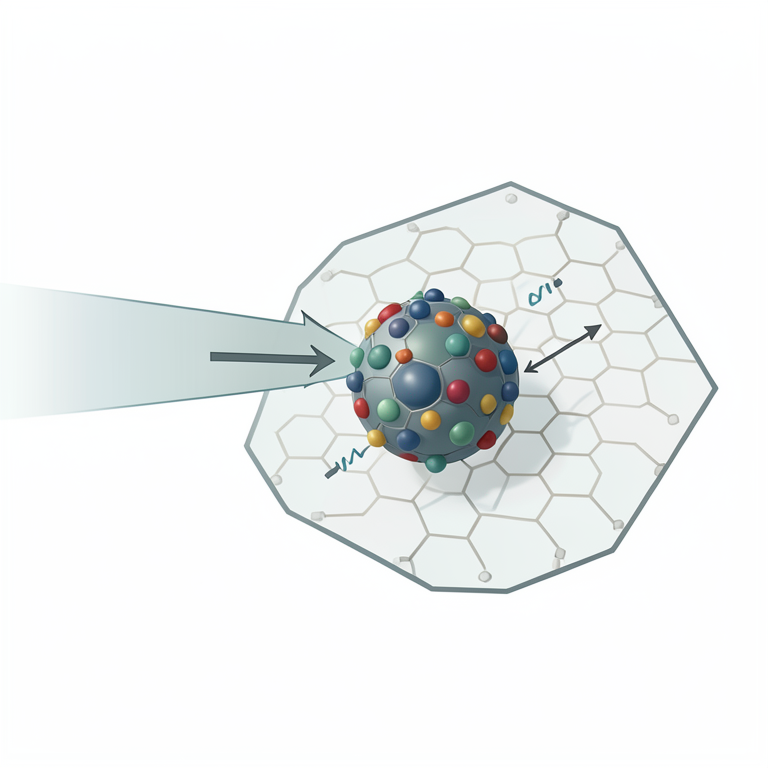
Mechanism of Enhanced Photocatalysis
AI-generated conceptual illustration (non-metal doped nickel oxide nanoparticles on graphene oxide sheets). It explains the idea and does not show study data.
View source evidence ↗Figures & tables
From the original paper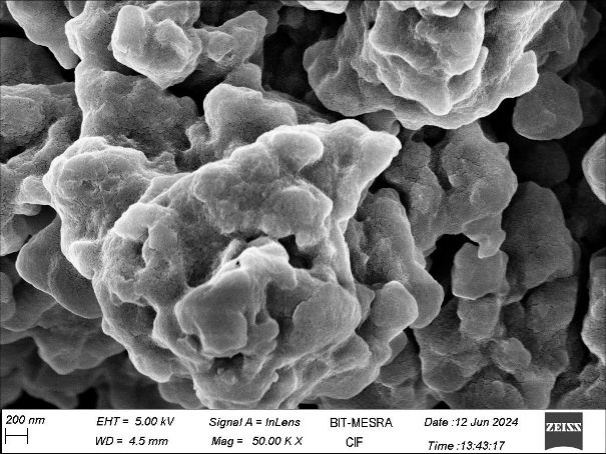 Figure 1
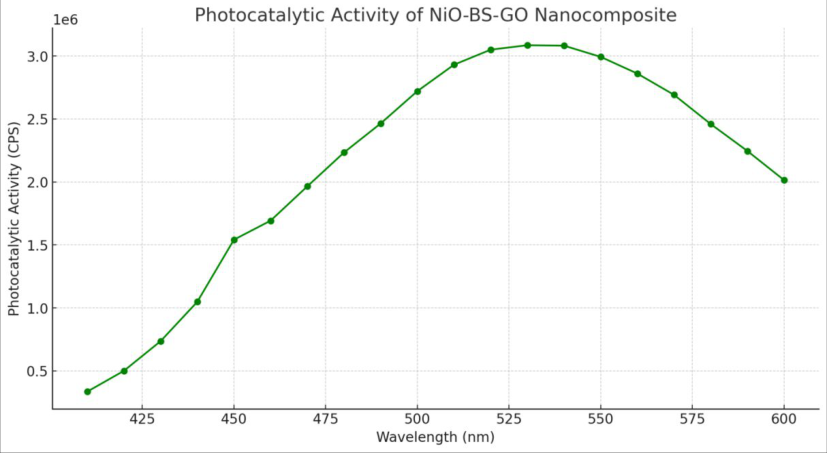 Figure 2
Introduction
Water pollution is a pressing environmental problem that requires effective photocatalysts for treating wastewater [1][2][3][4] . Nickel Oxide (NiO) exhibits potential, but its photocatalytic activity needs enhancement. The characteristics can be enhanced by doping NiO with Boron (B) and Sulfur (S) and adding Graphene Oxide (GO) [5][6] . Water is an essential and diverse feature for all living organisms, and contamination of water resources demands careful consideration [7][8] . Industrial effluent, including pesticides, herbicides, dyes, and organic pollutants, is a significant source of water pollution [9][10][11] . Even trivial amounts of these pollutants can significantly impact ecosystems and contribute to climate change [12] . The dyeing processes and various industrial activities release effluents containing colorful, nonbiodegradable, and hazardous chemicals. Such wastewater is a major contributor to methane emissions (about 10%), leading to global warming. Thus, treating wastewater before its release into rivers is imperative to minimize environmental damage. Non-biodegradable chemicals and soluble dyes are among the primary causes of water pollution [13,14] . Due to overcrowding, food consumption, and industrialization, water pollution is rising [15,16] . In developing countries, lakes and rivers are heavily contaminated, making this problem worse. Water shortages and microbiological and chemical pollution plague many rural communities. The UNO estimates that 50% of impoverished nations' populations suffer from health issues from dirty drinking water. Even though the world possesses 3% freshwater reserves, only 0.01% is appropriate for human use, and waterborne illnesses kill 5 million people annually [17][18][19] . As population grows, freshwater scarcity for sustainable living becomes a serious challenge [20] . Graphene Oxide (GO) is ideal for visible-light-responsive nanocomposites. Because GO speeds up light-induced charge carrier recombination [21][22][23][24][25][26] . Graphene Oxide (GO) accepts electrons from copper sulfide's conduction band [27][28][29] . This mechanism slows recombination by lengthening electron paths [30] . When Boron (B) is doped into the π-framework of GO, flaws increase its surface area, generating more adsorptive sites for pollutant molecules [31][32][33] . Doped graphene oxide contains nitrogen, phosphorus, iodine, and boron [34][35] .
International Journal of Advanced Chemistry Research https://www.chemistryjournals.net
Boron doping is notable because its size matches graphene oxide, allowing it to fit into the lattice structure and increase charge resistance [36][37][38] . BGO has been intensively explored for its potential in environmental and energy applications because boron adds active sites around graphene oxide's edges [39,40] . Photo catalytic pollutant breakdown using B-doped graphene oxide and semiconductor materials has received little attention [41][42][43][44] . Because graphene oxide is selectively doped with non-metal atoms. BGO-based nanocomposites' ability to degrade pollutants needs further study [45][46][47][48] .
This study shows a very efficient two-step technique for creating BGO-CuS by doping carbon-based Graphene Oxide (GO) with non-metal (B) and linking it with CuS via hydrothermal synthesis [49][50][51][52][53] . The novel nanocatalyst was tested for its photocatalytic breakdown of Methylene Blue (MB) in sunshine [54][55][56] . Boron as a dopant in graphene oxide reduced the bandgap and increased electrical conductivity. The initiative seeks to build a photocatalyst that increases photocatalytic activity under sunlight [57][58] .
Materials and Methods
Materials and Methods
Synthesis of NiO/GO composite with B and S doping
The composite was fabricated by a hydrothermal technique: Combine 1.5 grams of nickel nitrate hexahydrate (Ni(NO₃)₂•6H₂O), 0.2 grams of boric acid (H₃BO₃), and 0.3 grams of thiourea (CH₄N₂S) in 40 milliliters of deionized water. Introduce 0.5 grams of graphene oxide (GO) and subject it to ultra-sonication for a duration of 30 minutes.
Place the mixture into a Teflon-lined autoclave with a capacity of 100 mL and heat it at a temperature of 180 °C for a duration of 12 hours. Rinse the product using deionized water and ethanol, followed by drying at a temperature of 60 °C for duration of 24 hours [59][60][61][62] . The XRD patterns verified the presence of a face-centered cubic structure in NiO, along with extra peaks suggesting the successful doping of B and S, as well as the presence of GO. The Scanning Electron Microscope (SEM) images revealed that the NiO-BS-GO composite possesses a sheetlike structure, which is distinct from the spherical shape of pure NiO. The presence of Ni, B, S, O, and carbon (from GO) was confirmed using EDX analysis. The UV-vis spectroscopy analysis showed that the composite material had a reduced band gap energy, which suggests that it has an improved ability to absorb visible light.
Characterization techniques
Characterization techniques
BET analysis and optical analysis of nanocomposites
The specific surface area of nanocomposites such as NiO-BS-GO can be determined using nitrogen gas adsorption data and the Brunauer-Emmett-Teller (BET) method. In a study, the BET surface areas of these nanocomposites were found to be 25.24 m²/g. This high surface area indicates that doping results in a significant increase in surface area.
The relationship between doping and structural integrit
The structural stability of NiO can be enhanced by doping it with Boron (B) and Sulfur (S). The substitution of nickel and oxygen atoms in the NiO lattice with boron and sulfur atoms results in the formation of a stronger structure that exhibits enhanced resistance to deterioration over time. The use of Graphene Oxide (GO) creates a robust and pliable framework that sustains the NiO particles. Graphene oxide (GO) sheets function as a framework, preventing the clustering of NiO particles and preserving a large surface area, which is essential for efficient photocatalytic performance.
Enhanced electrical charge division and decreased combination of charges
The process of charge separation is enhanced by the combination of B and S doping and the integration of GO, resulting in improved charge separation. The recombination of electrons and holes in photo catalysis is mitigated due to the presence of dopants, which induce localized states that effectively capture and immobilize the charge carriers. Enhanced Electron Transfer: The inclusion of GO improves the channel for electron transfer, hence diminishing the likelihood of electron-hole recombination. As a result, this enhances the efficiency of photo catalytic activities and extends the effective lifespan of the material.
Increased surface area and catalytic sites
The Nano composite structure, consisting of Graphene Oxide (GO) sheets dispersed with Nickel Oxide (NiO) particles, offers an expanded surface area. This guarantees the presence of a greater number of active sites for photo catalytic processes, hence improving both the overall activity and stability. Catalytic sites are formed by the introduction of dopants and Graphene Oxide (GO). These sites exhibit enhanced reactivity and stability by effectively inhibiting the sintering or agglomeration of NiO particles, hence preserving the active surface area.
Photocorrosion resistance Photocorrosion resistance:
The addition of Boron (B) and Sulfur (S) to NiO improves its ability to resist photocorrosion. Photocorrosion is a prevalent problem in photo catalysts, characterized by the deterioration of the material due to extended exposure to light. Dopants serve to enhance the stability of the NiO lattice, hence reducing its vulnerability to photo corrosion. GO Protection: Graphene Oxide (GO) functions as a protective barrier that absorbs a portion of the photogenerated holes, thereby diminishing the oxidative stress on nickel oxide (NiO) particles. This defensive mechanism additionally improves the resilience of the composite.
Discussion
Due to its photocatalytic and stability, the NiO-BS-GO nanocomposite is a diverse and powerful environmental solution. Multiple applications of this sophisticated material have shown remarkable efficiency, contributing to environmental sustainability.
It can be used in following applications 1. Aquatic filtration and effluent processing:
The nanocomposite effectively remediates industrial and municipal wastewater by degrading organic pollutants including colors and medications. Its visible light photocatalytic activity breaks down persistent organic pollutants (POPs), minimizing their environmental impact.
Air purification:
Air purification:
Acknowledgement
AcknowledgementWe would like to acknowledge the PG department of chemistry Ranchi University Ranchi Jharkhand for kind support and providing technical support.
Figures and tables from the paper
References
60 in the original paper- Chen Z, Xu YJ. Ultrathin TiO 2 layer coated-CdS spheres core-shell nanocomposite with enhanced visible-light photoactivity. ACS Appl Mater Interfaces. 2013;5(23):13353-13363.
- Deng Y, Chen Y, Chen B, Ma J. Preparation, characterization and photocatalytic activity of CuBi 2 O 4 /NaTaO 3 coupled photocatalysts. J Alloys Compd. 2013;559:116-122.
- Sudrajat H, Babel S. A new, cost-effective solar photoactive system N-ZnO@polyester fabric for degradation of recalcitrant compound in a continuous flow reactor. Mater Res Bull. 2016;83:369-378.
- Sudrajat H, Babel S. An innovative solar photoactive system N-WO 3 @polyester fabric for degradation of amaranth in a thin-film fixed-bed reactor. Sol Energy Mater Sol Cells. 2016;149:294-303.
- Sudrajat H, Sujaridworakun P. Insights into structural properties of Cu species loaded on Bi 2 O 3 hierarchical International Journal of Advanced Chemistry Research https://www.chemistryjournals.net structures for highly enhanced photocatalysis. J Catal. 2017;352:394-400.
- He H, Yin J, Li Y, Zhang Y, Qiu H, Xu J, et al. Size controllable synthesis of single-crystal ferroelectric Bi4Ti3O12 nanosheet dominated with facets toward enhanced visible-light-driven photocatalytic activities. Appl Catal B Environ. 2014;156-157:35-43.
- Liu L, Li Y, Yuan S, Ge M, Ren M, Sun C, et al. Nanosheet-based NiO microspheres: controlled solvothermal synthesis and lithium storage performances. J Phys Chem C. 2010;114(1):251-255.
- Christy AJ, Umadevi M. Novel combustion method to prepare octahedral NiO nanoparticles and its photocatalytic activity. Mater Res Bull. 2013;48(12):4248-4254.
- Loudon JC. Antiferromagnetism in NiO observed by transmission electron diffraction. Phys Rev Lett. 2012;109(26):267404.
- Ji Z, Natu G, Wu Y. Cyclometalated ruthenium sensitizers bearing a triphenylamino group for p-type NiO dye-sensitized solar cells. ACS Appl Mater Interfaces. 2013;5(18):8641-8648.
- Beak YW, An YJ. Microbial toxicity of metal oxide nanoparticles (CuO, NiO, ZnO, and Sb 2 O 3 ) to Escherichia coli, Bacillus subtilis, and Streptococcus aureus. Sci Total Environ. 2011;409(8):1603-1608.
- Wan X, Yuan M, Tie SL, Lan S. Effects of catalyst characters on the photocatalytic activity and process of NiO nanoparticles in the degradation of methylene blue. Appl Surf Sci. 2013;277:40-46.
- Salavati-Niasari M, Mir N, Davara F. A novel precursor in preparation and characterization of nickel oxide nanoparticles via thermal decomposition approach. J Alloys Compd. 2010;493(1-2):163-168.
- Wu L, Wu Y, Wei H, Shi Y, Hu C. Synthesis and characteristics of NiO nanowire by a solution method. Mater Lett. 2004;58(17-18):2700-2703.
- Wang D, Xu R, Wang X, Li Y. NiO nanorings and their unexpected catalytic property for CO oxidation. Nanotechnology. 2006;17(4):979-983.
- Alagiri M, Ponnusamy S, Muthamizhchelvan C. Synthesis and characterization of NiO nanoparticles by sol-gel method. J Mater Sci. Mater Electron. 2012;23(3):728-732.
- Wu Z, Wang Y, Sun L, Mao Y, Wang M, Lin C. An ultrasound-assisted deposition of NiO nanoparticles on TiO2 nanotube arrays for enhanced photocatalytic activity. J Mater Chem A. 2014;2(21):8223-8229.
- Anandan S, Lee GJ, Chen PK, Fan C, Wu JJ. Removal of orange II dye in water by visible light assisted photocatalytic ozonation using Bi2O3 and Au/Bi 2 O 3 nanorods. Ind Eng Chem Res. 2010;49(20):9729-9737.
- Bao DH, Chiu TW, Wakiya N, Shinozaki K, Mizutani N. Structural and electrical characteristics of chemicalsolution-derived (Bi, La)4Ti 3 O 12 thin films with various Bi 2 O 3 template layers. J Appl Phys. 2003;93(1):497503.
- Leontie L. Optical properties of bismuth oxide thin films prepared by reactive magnetron sputtering. J Optoelectron Adv Mater. 2006;8(3):1221-1224.
- Shuk P, Wiemhofer HD, Guth U, Gopel W, Greenblatt M. Oxide ion conducting solid electrolytes based on Bi 2 O 3 . Solid State Ionics. 1996;89(1-2):179-196.
- Pan C, Li X, Wang F, Wang L. Synthesis of bismuth oxide nanoparticles by the polyacrylamide gel route. Ceram Int. 2008;34(2):439-441.
- Xiaohong W, Wei Q, Weidong H. Thin bismuth oxide films prepared through the sol-gel method as photocatalyst. J Mol Catal a Chem. 2007;261(2):167171.
- Oudghiri-Hassani H, Rakass S, Al Wadaani FT, Alghamdi KJ, Omer A, Messali M, et al. Synthesis, characterization and photocatalytic activity of α-Bi 2 O 3 nanoparticles. JTUSCI. 2015;9(4):508-512.
- Pugazhenthiran N, Sathishkumar P, Murugesan S, Anandan S. Effective degradation of acid orange 10 by catalytic ozonation in the presence of Au-Bi 2 O 3 nanoparticles. Chem Eng J. 2011;168(3):1227-1233.
- Lin G, Tan D, Luo F, Chen D, Zhao Q, Qiud J, et al. Fabrication and photocatalytic property of α-Bi 2 O 3 nanoparticles by femtosecond laser ablation in liquid. J Alloys Compd., 2010, 507(1).
- Malathy P, Vignesh K, Rajarajan M, Suganthi A. Enhanced photocatalytic performance of transition metal doped Bi 2 O 3 nanoparticles under visible light irradiation. Ceram Int. 2014;40(1):101-107.
- Balachandran S, Swaminathan M. Facile fabrication of heterostructured Bi 2 O 3 -ZnO photocatalyst and its enhanced photocatalytic activity. J Phys Chem C. 2012;116(50):26306-26312.
- Ye LQ, Zan L, Tian LH, Peng TY, Zhang JJ. The 001 facets-dependent high photoactivity of BiOCl nanosheets. Chem Commun. 2011;47(25):6951-6953.
- Zhu LY, Xie Y, Zheng XW, Yin X, Tian XB. Oxidative catalytic cracking of n-butane to lower alkenes over layered BiOCl catalyst. Inorg Chem. 2002;41(18):45604566.
- Zhang X, Ai ZH, Jia FL, Zhang LZ. Generalized onepot synthesis, characterization, and photocatalytic activity of hierarchical BiOX (X = Cl, Br, I) nanoplate microspheres. J Phys Chem C. 2008;112(3):747-753.
- Briand GG, Burford N. Bismuth compounds and preparations with biological or medicinal relevance. Chem Rev. 1999;99(9):2601-2658.
- Armelao L, Bottaro G, Maccato C, Tondello E. Bismuth oxychloride nanoflakes: Interplay between composition-structure and optical properties. Dalton Trans. 2012;41(16):5480-5485.
- Song JM, Mao CJ, Niu HL, Shen YH, Zhang SY. Hierarchical structured bismuth oxychlorides: selfassembly from nanoplates to nanoflowers via a solvothermal route and their photocatalytic properties. CrystEngComm. 2010;12(12):3875-3881.
- Zhang KL, Liu CM, Huang FQ, Zheng C, Wang WD. Study of the electronic structure and photocatalytic activity of the BiOCl photocatalyst. Appl Catal B Environ. 2006;68(3-4):125-129.
- Geng J, Hou WH, Lv YN, Zhu JJ, Chen HY. Onedimensional BiPO 4 nanorods and two-dimensional BiOCl lamellae: fast low-temperature sonochemical synthesis, characterization, and growth mechanism. Inorg Chem. 2005;44(23):8503-8509.
- Deng H, Wang J, Peng Q, Wang X, Li Y. Controlled hydrothermal synthesis of bismuth oxyhalide nanobelts and nanotubes. Chem Eur J. 2005;11(20):6519-6524.
- Henle J, Simon P, Frenzel A, Scholz S, Kaskel S. Nanosized BiOX (X = Cl, Br, I) particles synthesized in reverse microemulsions. Chem Mater. 2007;19(3):366373.
- Peng HL, Chan CK, Meister S, Zhang XF, Cui Y. Shape evolution of layer-structured bismuth oxychloride nanostructures via low-temperature chemical vapor transport. Chem Mater. 2009;21(2):247252.
- Zhang X, Zhao L, Fan C, Liang Z, Han P. Effects of oxygen vacancy on the electronic structure and absorption spectra of bismuth oxychloride. Comput Mater Sci. 2012;61:180-184.
- Shtarev DS, Makarevich KS, Shtareva AV, Blokh AI, Syuy AV. Application of pyrolitic method of synthesis for preparation of calcium bismuthate based photocatalyst. Proc SPIE. 2016;10176:101761L-2.
- Hameed A, Gombac V, Montini T, Graziani M, Fornasiero P. Synthesis, characterization and photocatalytic activity of NiO-Bi 2 O 3 nanocomposites. Chem Phys Lett. 2009;472(4-6):212-216.
- Yang Q, Zhong J, Li J, Chen J, Xiang Z, Wang T, et al. Photo-induced charge separation properties of NiO/Bi 2 O 3 heterojunctions with efficient simulated solar-driven photocatalytic performance. Curr Appl Phys. 2017;17(4):484-487.
- Chai SY, Kim YJ, Jung MH, Chakraborty AK, Jung D, Lee WI. Heterojunctioned BiOCl/ Bi2O3 , a new visible light photocatalyst. J Catal. 2009;262(1):144-149.
- Wang C, Shao C, Liuc Y, Zhang L. Photocatalytic properties BiOCl and Bi 2 O 3 nanofibers prepared by electrospinning. Scr Mater. 2008;59:332-335.
- Sun X, Zhang Y, Li P, Guo D, Zi H, Guo J, et al. Heterostructure nano-NiO/BiOCl composites with advanced adsorption and photocatalytic performance for organic dyes. J Alloys Compd. 2018;736:22-28.
- Hao YJ, Li FT, Wang SS, Chai MJ, Liu RH, Wang XJ. One-step combustion synthesis of β-Bi 2 O 3 -NiO/Ni composites and their visible light photocatalytic performance. Mat Sci Eng B. 2014;186:41-47.
- Shan LW, Wang GL, Liu LZ, Wu Z. Band alignment and enhanced photocatalytic activation for αBi2O3/BiOCl (001) core-shell heterojunction. J Mol Catal A: Chem. 2015;406:145-151.
- Gao B, Chakraborty AK, Yang JM, Lee WI. Visiblelight photocatalytic activity of BiOCl/Bi3O4Cl nanocomposites. Bull Korean Chem Soc. 2010;31:1941-1944.
- Najafian H, Manteghi F, Beshkar F, Salavati-Niasari M. Efficient degradation of azo dye pollutants on ZnBi38O58 nanostructures under visible-light irradiation. Sep Purif Technol. 2018;195:30-36.
- Shobeiri SA, Mousavi-Kamazani M, Beshkar F. Facile mechanical milling synthesis of NiCr2O4 using novel organometallic precursors and investigation of its photocatalytic activity. J Mater Sci Mater Electron. 2017;28:8108-8115.
- Beshkar F, Khojasteh H, Salavati-Niasari M. Flowerlike CuO/ZnO hybrid hierarchical nanostructures grown on copper substrate: glycothermal synthesis, characterization, hydrophobic and anticorrosion properties. Materials. 2017;10:697.
- Zhu S, Yang C, Li F, Li T, Zhang M, Cao W. Improved photocatalytic Bi 2 WO 6 /BiOCl heterojunctions: Onestep synthesis via an ionic-liquid assisted ultrasonic method and first-principles calculations. Mol Catal. 2017;435:33-48.
- Luo Y, Huang Q, Li B, Dong L, Fan M, Zhang F. Synthesis and characterization of Cu 2 O-modified Bi 2 O 3 nanospheres with enhanced visible light photocatalytic activity. Appl Surf Sci. 2015;357A:1072-1079.
- Zhao Q, Liu X, Xing Y, Liu Z, Du C. Synthesizing Bi 2 O 3 /BiOCl heterojunctions by partial conversion of BiOCl. J Mater Sci. 2017;52:2117-2130.
- Lin S, Cui W, Li X, Sui H, Zhang Z. Cu 2 O NPs/Bi 2 O 2 CO 3 flower-like complex photocatalysts with enhanced visible light photocatalytic degradation of organic pollutants. Catal Today. 2017;297:237-245.
- Chen F, Yang Q, Wang S, Yao F, Sun J, Wang Y, et al. Efficient degradation of atrazine by mesoporous Bi 2 O 2 CO 3 photocatalyst under visible light irradiation: performance and mechanism. Appl Catal B: Environ. 2017;200:180-190.
- He W, Wang Y, Duan W, Ding J, Zhu M, Song L, et al. Effective degradation of different dyes over visiblelight-driven BNNS/β-Bi 2 O 3 composites. J Alloys Compd. 2018;749:447-456.
- Wang X, Xu C, Li X, Zhang Q, Wang S, Niu Y, et al. Facile synthesis of 2D BiOCl/BiOI heterojunctions with improved visible light photoactivity. CrystEngComm. 2017;19:4070-4078.
- He L, Cheng H, Hu J, Xie Y. Ultrathin Bi 2 O 3 nanosheets: intermediate-microwave-assisted fast preparation and their application in photocatalysis. CrystEngComm. 2016;18:3775-3778.