
Research article · 2024 · Full text
International Journal of Veterinary Sciences and Animal HusbandryClinical management of pre-partum cervico-vaginal prolapse in an advanced pregnant Murrah buffalo
Volume 9(5) · Pages 89–91 · DOI: 10.22271/veterinary.2024.v9.i5b.1655 ↗
Research areasReproductive Physiology in LivestockVeterinary Medicine and SurgeryAnimal health and immunology
Abstract
Author-writtenA Murrah buffalo in its fourth parity was presented with the history of nine-month pregnancy with cervicovaginal prolapse. The detailed gynaecological examination of the buffalo revealed whole anterior vagina and cervix hanging out from vulva with minor lacerated wound over the vaginal surface. Animal was restrained properly; vaginal mass was thoroughly cleaned after evacuation of the bladder. The prolapsed mass was repositioned into the pelvic cavity followed by retention of the prolapsed mass by horizontal mattress suture. Adequate treatment ensured uneventful recovery of buffalo without any complications.
Summary
Source-checkedPlain-language reading of the full paper, prepared with AI and checked against the text. Each point links to the authors' own words.
Why it matters
- Buffaloes are critical to India's dairy industry, providing 45% of the country's milk production. View evidence ↗
- Cervico-vaginal prolapse, where the cervix and vagina protrude from the vulva, is a common obstetrical issue that impairs reproductive performance by delaying estrus and increasing calving intervals. View evidence ↗
- The condition is primarily driven by hormonal changes in the final trimester of pregnancy, where increased estrogen and relaxin relax pelvic ligaments and soft tissues. View evidence ↗
The question
- The study aims to detail the clinical management of cervico-vaginal prolapse in a Murrah buffalo during advanced pregnancy. View evidence ↗
What they did
- The subject was a seven-year-old Murrah buffalo in her fourth parity and ninth month of pregnancy. View evidence ↗
- Management began with cleaning the prolapsed mass with a 1:1000 potassium permanganate solution and administering 2% lignocaine (1 ml/100 kg) as an epidural anesthetic to reduce straining. View evidence ↗
- The prolapsed mass was manually repositioned into the pelvic cavity and secured using a horizontal mattress suture at the vulvar opening. View evidence ↗
- Post-operative care included 500 ml I/V Ringer's Lactate, 700 mg I/M Ceftiofur sodium, 10 ml I/M Chlorpheniramine maleate, 12 ml I/M Flunixin meglumine, and 10 ml I/M Belamyl, with antibiotics and fluids continued for five days. View evidence ↗
What they found
- Initial examination showed the entire anterior vagina and cervix protruding from the vulva, accompanied by minor lacerations on the vaginal surface. View evidence ↗
- The prolapsed mass obstructed the urethral opening, preventing the animal from urinating for 12 hours prior to presentation. View evidence ↗
- The animal recovered without complications; sutures were removed after 10 days, and parturition occurred 20 days after treatment. View evidence ↗
What it means
- The authors conclude that with proper treatment and management, animals with cervico-vaginal prolapse can successfully deliver live calves and conceive again. View evidence ↗
- Managing prepartum prolapse is challenging because horizontal sutures must be removed immediately if the animal begins parturition. View evidence ↗
Visual summary
1 visualsIllustrations explain the paper; they do not show study data.
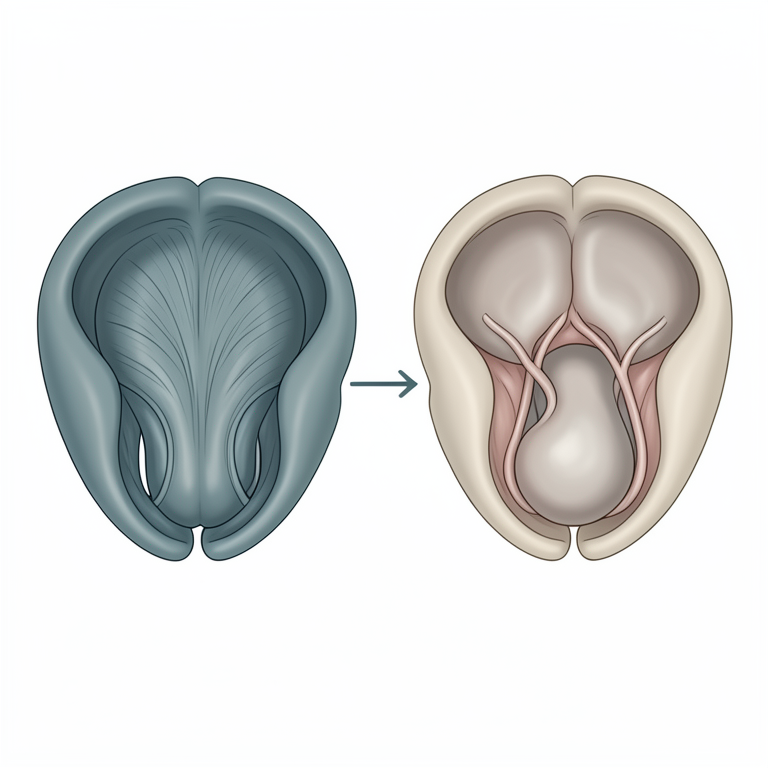
Hormonal Mechanism of Prolapse
AI-generated conceptual illustration (pregnant Murrah buffalo). It explains the idea and does not show study data.
View source evidence ↗Figures & tables
From the original paper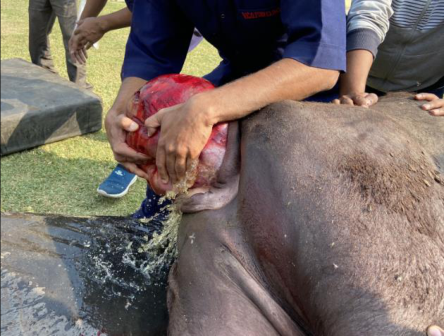 Figure 1
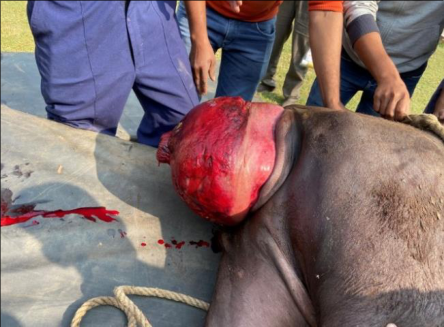 Figure 2
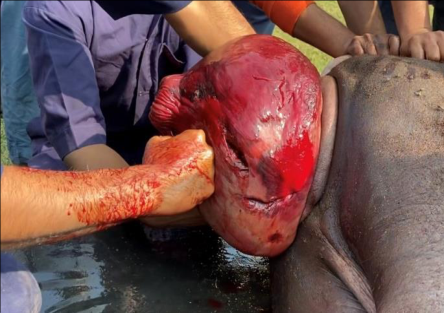 Figure 3
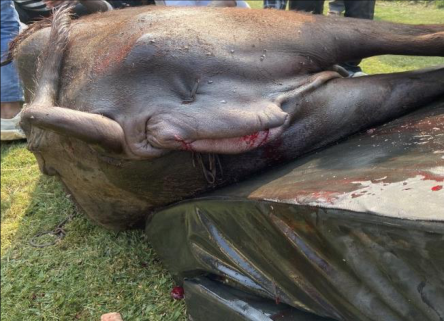 Figure 4
Introduction
Buffaloes are the backbone of the dairy industry, contributing 45% of milk produced in India (Annual Report, DAHD-2022-23). Cervico-vaginal prolapse is a condition that occurs in ruminants, usually during late pregnancy. Alternatively known by various names such as Throwing the rose, pushing out the button, bearing the trouble, throwing the rede and showing the rede. Cervico-vaginal prolapse is protrusion of cervix and vagina out of the vulvar lips. It is a routine obstetrical problem which decreases productive and reproductive performance by increasing length of postpartum return to estrus, reducing conception rate and increase in calving interval. It is one of the common gestational disorder of the aged female buffaloes during their last trimester of pregnancy. An important risk factor for vaginal prolapse is tissue relaxation associated with increased intra-abdominal pressure during pregnancy (Kahn et al., 2005) [4] . This condition mainly affects buffaloes due to hormonal changes that occur during the last trimester of pregnancy, specifically an increase in estrogen and relaxin production that causes relaxation of the pelvic ligaments and structures surrounding soft tissue (Akhtar et al., 2012; Wolfe et al., 2009) [1,10] . Some secondary factors have the ability to increase intraabdominal pressure such as fat accumulation in the abdomen, rumen relaxation; Large fetuses, multiple fetuses and sometimes mountainous terrain also contribute to vaginal prolapse (Drost, 2007) [2] . Dietary factors such as hypocalcaemia and the presence of clover in pastures have also been linked to this disorder (Hosie et al.,1991; Miesner and Anderson, 2008) [3,6] . Irritation and swelling of vaginal mucosa after eversion tend to increase straining and formation of extensive prolapse (Kahn, 2005) [4] . The present case report detailed about management of cervico-vaginal prolapse in advanced pregnant Murrah buffalo.
Case History and Clinical Observations
A seven-year-old Murrah buffalo in her fourth parity and nine-month pregnancy was presented to the Referral Veterinary Polyclinic, ICAR-IVRI, Izatnagar, Bareilly with an anamnesis of severe straining, restlessness and a very big size of round mass protruding from vulva from past 24 hours. The vaginal mucus of protruded mass was moist, bloody black patches and soft. Also, there were signs of traumatised necrosis. Animal had not urinated since previous 12 hours because of hanging cervico-vaginal mass and obstructing the urethral opening.
Cervix was completely closed and no discharge was present. Animal showed intermittent tenesmus. Physiological vital parameters like temperature, pulse rate, respiratory rate were within the normal range.
Treatment and Discussion
General condition of animal was evaluated. The animal was placed in a trevis and the prolapsed mass was thoroughly cleaned using a 1:1000 dilution of potassium permanganate solution. To minimize straining, 2% lignocaine was used for the epidural anaesthetic at a dose rate of 1 ml per every 100 kg of body weight. POP-IN spray (Natural Remedies, Bengalore, India) is applied to the prolapsed mass to reduce its size. It was difficult to repel the mass in a standing position due to the heavy weight of the mass, so after that, the animal was taken into the grass and cast in the bedding material in right lateral recumbency. Prolapsed mass was lifted up to evacuate the urine (Fig1) since animal had not urinated since previous day. Hindquarters were elevated around 2-2 ½ feet. The uterus was securely repelled into the pelvic cavity, initially from the base of prolapsed mass followed by whole mass was placed inside the pelvic cavity with the help of fist and hands so as to not create any tear on the prolapsed mass (Fig3). The vulvar opening was sutured using horizontal mattress involving the tough skin portion near the vulva (Fig4). The animal was administered with inj. RL (500 ml, I/V) and antibiotic (Ceftiofur sodium-Edfur, Vetedge Pvt. Ltd.)-700 mg I/M, antihistaminic (Chlorpheniramine maleate-10 ml I/M), anti-inflammatory (Flunixin meglumine, 12 ml I/M) with supportive therapy (Belamyl 10 ml I/M; Fluids). The antibiotic and fluid therapy was continued for 5 more days. It was recommended to spray fly repellent such as Topicure spray (Natural Remedies, Bengalore, India) to keep the perineal region and are around the sutures clean. The suture was removed after 10 days and the animal parturated after 20 days of treatment. Animal recovered uneventfully without any complications. Prepartum cervico-vaginal prolapse is a frequently observed complication, beginning two months before parturition in buffaloes, often with a history of prolapse in previous gestations. It is associated with a plethora of factors that influence its occurrence. Hormonal disturbances influence the incidence of this condition. Hormones like estrogen and progesterone play an important role in maintaining pregnancy, and any sort of imbalance in their activity may lead to prolapse. The main cause of prolapse is thought to be the hormonal changes that occur during the last trimester of pregnancy, particularly estrogen, which relaxes the pelvic ligaments and surrounding soft structures (Thota et al., 2003) [8] . The exact etiology of uterine prolapse is not clearly understood, however hypocalcaemia (Roberts, 2004) [7] , mineral deficiency, poor uterine tone, increased straining, conditions that increase the intra-abdominal pressure including tympany, excessive estrogen content in the feed (Kumar and Yasotha, 2015) [5] . It may be linked to hereditary traits and nutritional imbalances as well. Prepartum prolapse in which there are some days left for parturition is somehow difficult to manage because if we place sutures in horizontal fashion then it is needed to get them removed after some days and if animal initiates parturition, it becomes important to remove the suture immediately. Animals with cervico-vaginal prolapse when properly treated and managed may deliver live calf and conceive successfully in future.
Figures and tables from the paper
References
7 in the original paper- Akhtar MS, Lodhi LA, Ahmad I, Qureshi ZI, Muhammad G. Serum ovarian steroid hormones and some concentrations in pregnant Nili-Ravi buffaloes with or without pre-partum vaginal prolapse. Pak Vet J. 2012;32(2):265-268.
- Drost M. Complications during gestation in the cow. Theriogenology. 2007;68(3):487-491.
- Hosie BD, Low JC, Bradley HK, Robb J. Nutritional factors associated with vaginal prolapse in ewes. Vet Rec. 1991;128(9):204-208.
- Kumar AS, Yasotha A. Correction and management of total uterine prolapse in a crossbred cow. J Agri Vet Sci. 2015;8(1):14-16.
- Miesner MD, Anderson DE. Management of uterine and vaginal prolapse in the bovine. Vet Clin North Am Food Anim Pract. 2008;24(2):409-419.
- Thota C, Gangula PRR, Dong YL, Yallampalli C. Changes in the expression of calcitonin receptor-like receptor, receptor activity-modifying protein (RAMP) 1, RAMP2, and RAMP3 in rat uterus during pregnancy, labor, and by steroid hormone treatments. Biol Reprod. 2003;69(4):1432-1437.
- Vicenti L, Gula M, Carazzone W, Fortina R, Quaranta G. Serum profiles of estradiol 17β, progesterone and some electrolytes in pregnant cows of the Piedmont breed with vaginal prolapse. Atti Soc Ital Buiatria. 1992;24:559-564.
Cited by 1
From OpenAlex, OpenCitations and reference lists read by Scinovex
- Clinical and haemato-biochemical assessment of herbal therapy in the treatment of genital prolapse in buffaloes
YV Pridhvidhar Reddy, Y Nagendra Reddy, M Satish Chandra · International Journal of Advanced Biochemistry Research · 2026
Genital prolapse is a common and life-threatening obstetrical emergency in buffaloes, particularly during the peri-parturient period. The present study was undertaken to evaluate the clinical efficacy and haemato-biochemical changes associated with herbal therapy in the management of vaginal and uterine prolapse in buffaloes. A total of forty buffaloes presented with genital prolapse were selected and categorized into two major conditions, namely vaginal prolapse (n = 20) and uterine prolapse (n = 20). Animals in each condition were further divided into two treatment groups: Pop-in herbal spra