
Research article · 2024 · Full text
International Journal of Agriculture Extension and Social DevelopmentA study on knowledge and attitude of farmer towards agriculture technology management agency in Prayagraj district
Volume 7(9) · Pages 355–359 · DOI: 10.33545/26180723.2024.v7.i9e.1068 ↗
Research areasAgricultural Economics and PracticesLivestock Management and Performance ImprovementAgricultural Systems and Practices
Abstract
Author-writtenATMA is a government agency in India that focuses on improving agricultural efficiency and productivity through technology centres at district and block levels. It provides tribal farmers with access to improved seed varieties, crop management technologies, and techniques. A study using multi-stage sampling selected 120 respondents from various villages, revealing that awareness of ATMA positively correlates with factors like age, caste, family size, education, land holding, social involvement, extension participation, management orientation, and yearly income with information source. However, there was no significant positive link found between attitude and family type, employment, housing style, innovativeness, and economic motive.
Summary
Source-checkedPlain-language reading of the full paper, prepared with AI and checked against the text. Each point links to the authors' own words.
Why it matters
- The Agricultural Technology Management Agency (ATMA) was established in 1999 by the Indian government to improve agricultural production and farmer empowerment by integrating research and extension work. View evidence ↗
- ATMA provides technical knowledge to farmers using a network of technology centers at the block and district levels, utilizing extension camps and demonstration sites. View evidence ↗
- A key focus of ATMA is providing tribal farmers with improved seed varieties and crop management technologies to increase resource efficiency. View evidence ↗
The question
- The study aimed to examine the extent of knowledge that farmers in the Prayagraj District have regarding the ATMA programme. View evidence ↗
- The research also sought to categorize and analyze the attitude levels of farmers toward the ATMA programme. View evidence ↗
What they did
- The researchers used purposive sampling to select the Prayagraj district and multi-stage sampling to select the final participants. View evidence ↗
- The study sample consisted of 120 respondents, selected by randomly picking three villages per block and five respondents per village. View evidence ↗
What they found
- Among beneficiary respondents, the largest group (48.33%) possessed a medium level of knowledge about the ATMA programme. View evidence ↗
- In contrast, a majority of non-beneficiary respondents (58.33%) were found to have a high level of knowledge about the programme. View evidence ↗
- Beneficiary respondents showed a predominantly positive attitude, with 58.33% categorized as having a high attitude level. View evidence ↗
- Non-beneficiary respondents mostly exhibited a medium attitude level (56.67%) toward the programme. View evidence ↗
- Regarding the adoption of advanced production technology, 61.67% of beneficiaries gave a fully correct response, while 63.33% of non-beneficiaries gave an incorrect response. View evidence ↗
- When asked about increasing yield by 10-15%, 46.67% of beneficiaries were fully correct, whereas 63.33% of non-beneficiaries were incorrect. View evidence ↗
What it means
- The authors conclude that the ATMA programme has successfully increased awareness and improved crop yields by promoting advanced agricultural practices. View evidence ↗
- The authors note that limited publicity and implementation challenges prevent farmers in remote areas from accessing available resources. View evidence ↗
- To enhance impact, the authors recommend using targeted marketing, community engagement, and local partnerships. View evidence ↗
Visual summary
3 visualsIllustrations explain the paper; charts are replotted from the paper's own table values.
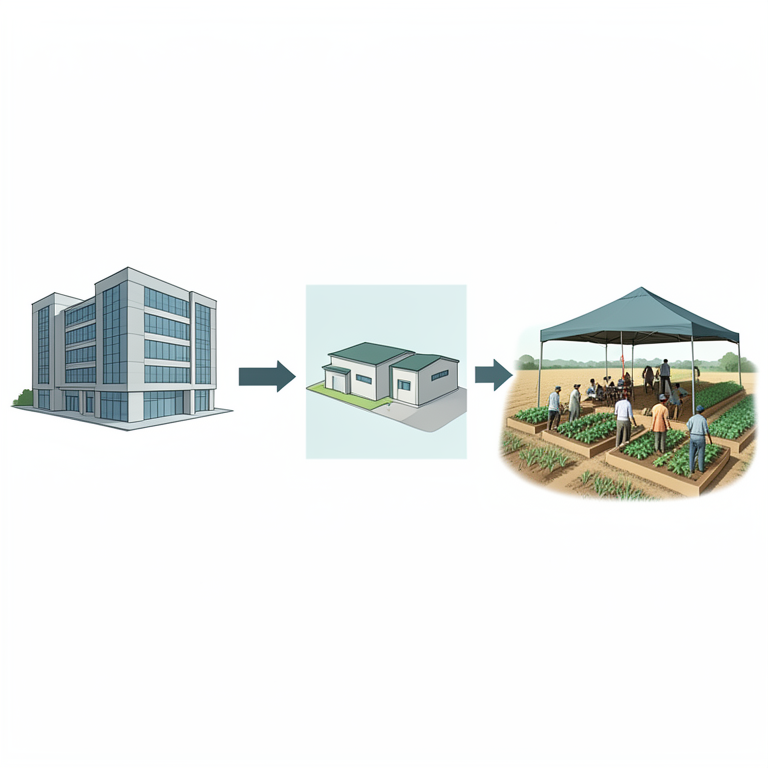
ATMA Operational Structure
AI-generated conceptual illustration (Indian farmers and agricultural technology centers in Prayagraj district). It explains the idea and does not show study data.
View source evidence ↗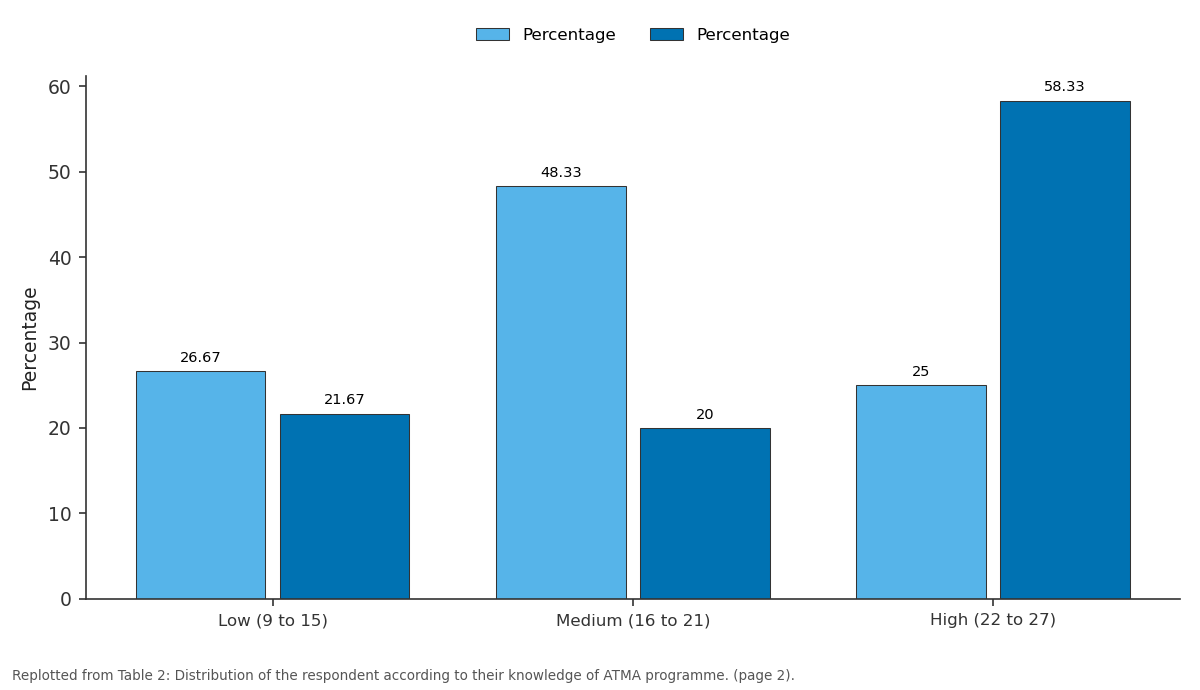
Percentage and Percentage: Low (9 to 15) vs Medium (16 to 21) vs High (22 to 27)
Replotted from Table 2 (page 2) of the original paper. Every bar is the paper's own table value.
View source evidence ↗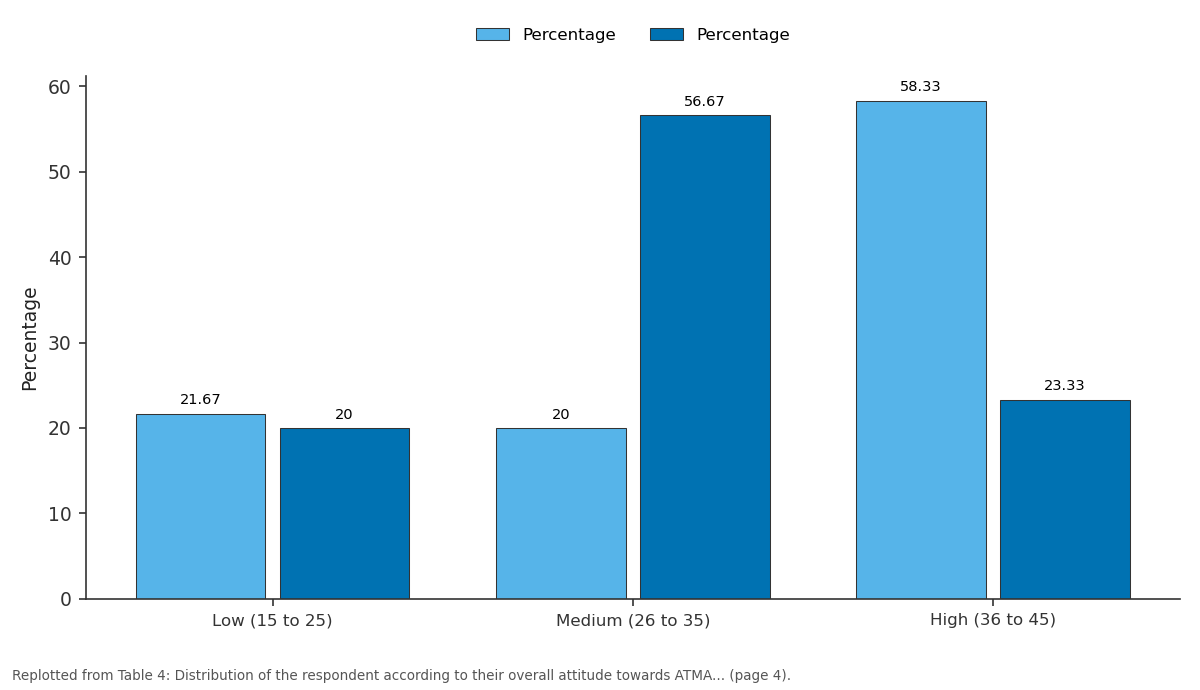
Percentage and Percentage: Low (15 to 25) vs Medium (26 to 35) vs High (36 to 45)
Replotted from Table 4 (page 4) of the original paper. Every bar is the paper's own table value.
View source evidence ↗Figures & tables
From the original paper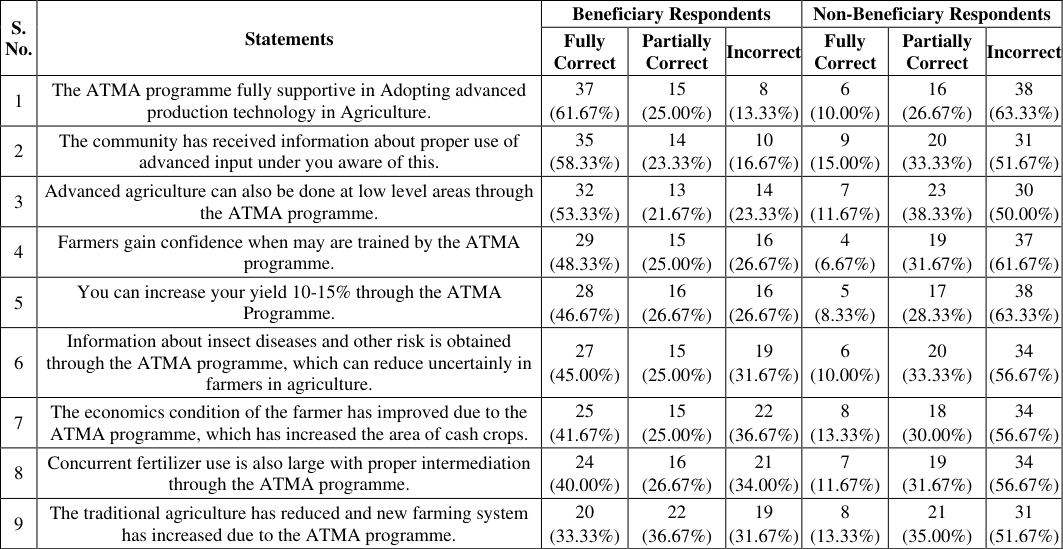 Table 1
 Table 2
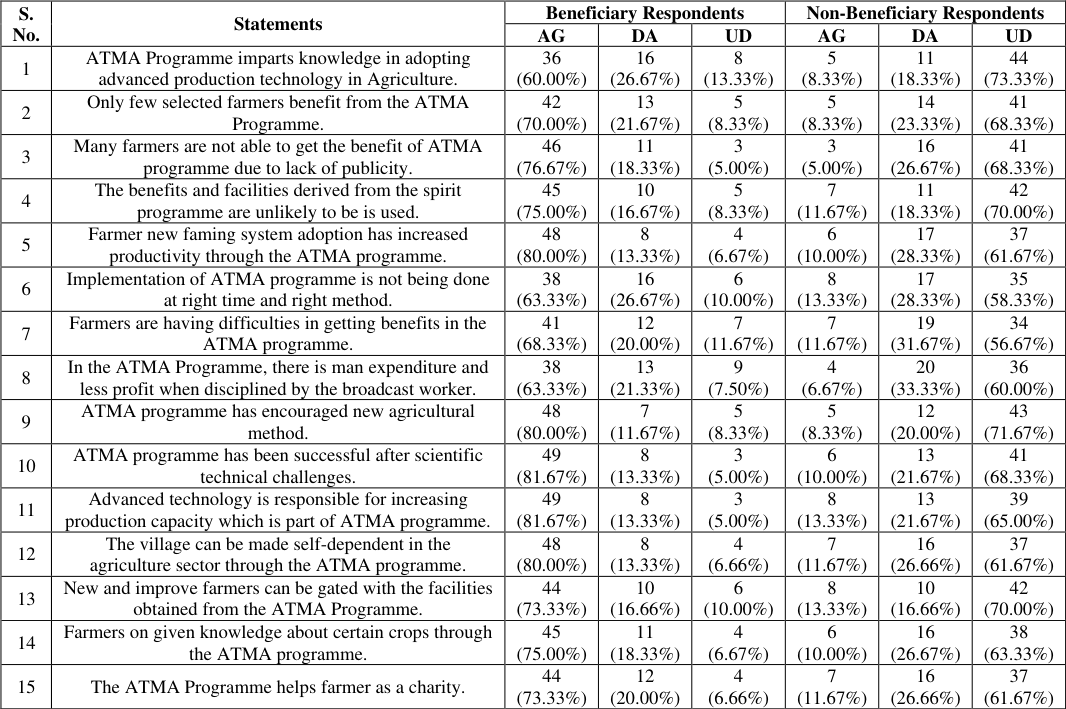 Table 3
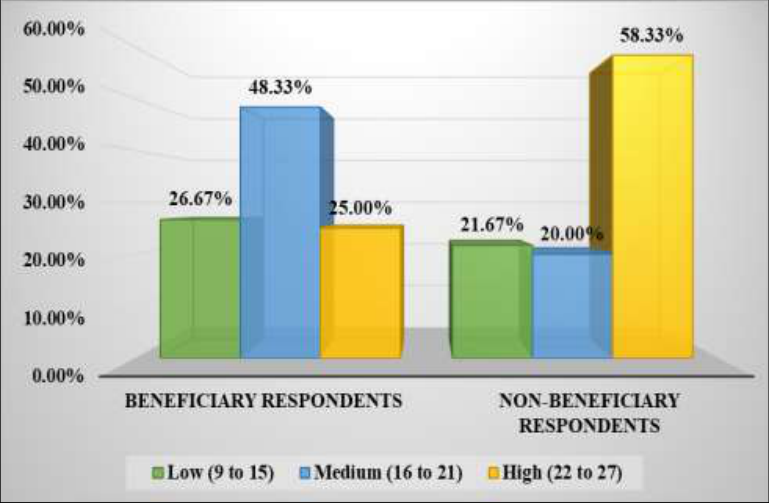 Figure 1
 Table 4
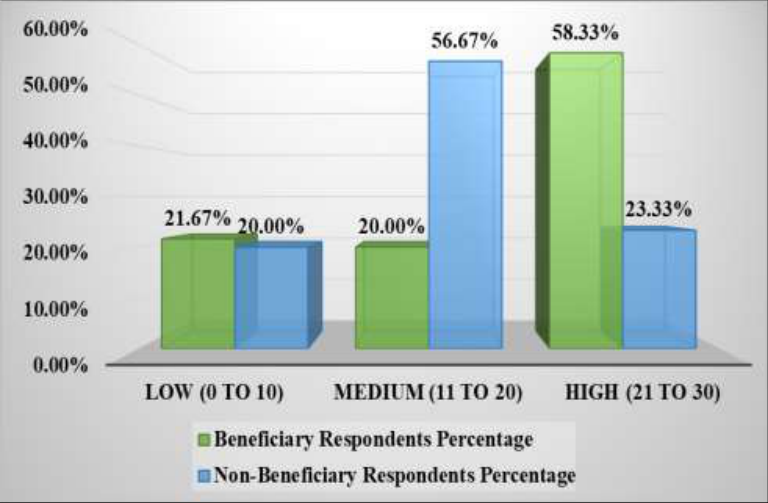 Figure 2
Introduction
The Agricultural Technology Management Agency (ATMA) is an autonomous organization initiated in 1999 by the Ministry of Agriculture, GOI under the National Agricultural Technology Project (NATP). Its objective is to integrate research and extension work with stakeholder support to enhance agriculture production, marketing access, capacity building, and farmer empowerment for sustainable agriculture development. ATMA adopts a holistic approach to agricultural development, aiming to improve efficiency and productivity, enhance farmers' income, and strengthen inter-linkages between stakeholders. The agency operates through a network of technology centers at district and block levels, providing technical know-how to farmers through demonstration sites, extension camps, and technical support from state-level experts. The initiatives undertaken by ATMA focus on providing tribal farmers with access to improved seed varieties, crop management technologies, improved agricultural techniques, and necessary support to efficiently use these resources. ATMA also provides training and extension activities at the grass-root level, focusing on skill development and proper resource management. The agency has been successful in creating health awareness, encouraging better agricultural practices, and improving the quality of life among tribal communities. It has also reduced poverty in rural areas, increased agriculture production, improved livelihoods of farmers, and reduced health risks associated with illiteracy.
Research Methodology
A present study used multi-stage sampling to select samples for a study. The districts was chosen through purposive sampling, with Prayagraj district being chosen due to ATMA's facilities for farmers. The blocks were chosen from Rajrooppur, Sirsa, Majhgawan, Sirauni, Rampur, Khaga, Handia, and Unchahar. The villages were chosen based on the maximum area covered under the Agricultural Technology Management Agency (ATMA) Programme. From each block, three villages were randomly selected, and from each village, five respondents were selected, constituting 120 respondents. The study also measured dependent and independent variables based on available literature and expert opinions in the field of extension.
Results and Discussion Knowledge Level of Respondents in ATMA Programme
This part of the chapter deals with impact of Agricultural Technology Management Agency (ATMA) programme on its respondent farmers in Prayagraj District of Uttar Pradesh. Knowledge as a body of understood information possessed by an individual is one of the important components of behavioural aspect. On this ground, it was realized imperative to examine the extent of knowledge of respondents about ATMA programme.
Distribution of respondent respondents according to their knowledge about ATMA programme in Prayagraj District
A study categorized respondents into low, medium, and high knowledge levels about ATMA programme, focusing on individual aspect-wise knowledge to identify areas of good knowledge and areas of lack, aiming to improve future focus. The ATMA (Agricultural Technology Management Agency) programme has significantly impacted its beneficiaries, encouraging the adoption of advanced agricultural practices, such as modern farming techniques and sustainable practices. This has led to increased productivity and efficiency in agricultural operations. The programme has also built participants' confidence through comprehensive training sessions, workshops, and hands-on demonstrations. The economic conditions of beneficiaries have improved, leading to higher yields and income. However, non-beneficiaries have shown lower awareness of advanced agricultural practices, limiting their potential for growth and adaptation in a competitive agricultural landscape. The ATMA programme contributes to a more resilient agricultural sector, enabling farmers to meet modern farming challenges and improve their livelihoods. The table 2 revealed that out of 60 respondent, (48.33%) showed medium knowledge status, (26.67%) of respondent indicated low knowledge status, whereas (25.00%) depicted high knowledge ATMA respondent who were beneficiaries.
| S. No. | Category | Beneficiary Respondents | — | Non-Beneficiary Respondents | — |
|---|---|---|---|---|---|
| Frequency | Percentage | Frequency | Percentage | ||
| 1 | Low (9 to 15) | 16 | 26.67 | 13 | 21.67 |
| 2 | Medium (16 to 21) | 29 | 48.33 | 12 | 20.00 |
| 3 | High (22 to 27) | 15 | 25.00 | 35 | 58.33 |
| Total | 60 | 100.00% | 60 | 100.00% |
Table text extracted from the original PDF; superscript letters are shown inline. The original table image is below.
View original table image
Study also revealed that out of 60 respondents, (20.00%) showed medium knowledge status, (21.67%) of respondent indicated low knowledge status, whereas (58.33%) depicted high knowledge of non-beneficiary ATMA respondents. www.extensionjournal.com
Distribution of respondent respondents according to their Attitude about ATMA programme in Prayagraj District
To get an overview of the attitude level of respondents about ATMA programme, the respondents were categorized in to low, medium and high level of attitude group on the basis of calculated mean score and standard deviation. Individual aspect wise attitude of respondents was also worked out for drawing a picture about the areas where respondents had attitude and where they were lacking, so that areas where respondents had low level of attitude can be given more importance in future. The ATMA Programme has made significant strides in imparting knowledge and promoting advanced agricultural practices, leading to increased awareness and improved crop yields. However, the programme faces barriers such as limited publicity and implementation challenges. Many farmers, particularly in remote areas, remain unaware of the resources and support available. Implementation challenges include logistical issues, inadequate training for facilitators, and insufficient follow-up support. To improve the programme's impact, targeted marketing campaigns, community engagement, and partnerships with local organizations are needed. Addressing implementation challenges through better training, ongoing support, and streamlining logistical processes will ensure the knowledge is effectively translated into practice. A more inclusive and well-executed programme could lead to improved livelihoods, food security, and a more resilient agricultural sector. Table 4 shows that out of 60 respondents, (58.33%) had high attitude, (21.67%) had low attitude, (20.00%) had medium attitude of the ATMA respondent who were beneficiaries. Among the non-beneficiaries of ATMA respondents, (56.67%) had medium attitude, (20.00%) had low attitude, and (23.33%) had high attitude.
| S. No. | Category | Beneficiary Respondents | — | Non-Beneficiary Respondents | — |
|---|---|---|---|---|---|
| Frequency | Percentage | Frequency | Percentage | ||
| 1 | Low (15 to 25) | 13 | 21.67 | 12 | 20.00 |
| 2 | Medium (26 to 35) | 12 | 20.00 | 34 | 56.67 |
| 3 | High (36 to 45) | 35 | 58.33 | 14 | 23.33 |
| Total | 60 | 100.00 | 60 | 100.00 |
Table text extracted from the original PDF; superscript letters are shown inline. The original table image is below.
View original table image
Conclusions
It has been concluded form the present study that, out of 60 beneficiary respondents, the majority demonstrated a medium level of knowledge, with some showing lower and others higher level of knowledge among the beneficiaries of ATMA. In comparison, 60 non-beneficiary respondents were more likely to exhibit a higher knowledge level, while others had medium or low knowledge. When analyzing attitudes, a significant portion of the beneficiary respondents displayed a strong positive attitude, while others had medium or lower attitudes. Among 60 non-beneficiaries, the majority had a medium attitude, with fewer respondents showing either low or high attitudes about ATM programme.
Figures and tables from the paper
| S. No. | Statements | Beneficiary Respondents | — | — | Non-Beneficiary Respondents | — | — |
|---|---|---|---|---|---|---|---|
| Fully Correct | Partially Correct | Incorrect | Fully Correct | Partially Correct | Incorrect | ||
| 1 | The ATMA programme fully supportive in Adopting advanced production technology in Agriculture. | 37 (61.67%) | 15 (25.00%) | 8 (13.33%) | 6 (10.00%) | 16 (26.67%) | 38 (63.33%) |
| 2 | The community has received information about proper use of advanced input under you aware of this. | 35 (58.33%) | 14 (23.33%) | 10 (16.67%) | 9 (15.00%) | 20 (33.33%) | 31 (51.67%) |
| 3 | Advanced agriculture can also be done at low level areas through the ATMA programme. | 32 (53.33%) | 13 (21.67%) | 14 (23.33%) | 7 (11.67%) | 23 (38.33%) | 30 (50.00%) |
| 4 | Farmers gain confidence when may are trained by the ATMA programme. | 29 (48.33%) | 15 (25.00%) | 16 (26.67%) | 4 (6.67%) | 19 (31.67%) | 37 (61.67%) |
| 5 | You can increase your yield 10-15% through the ATMA Programme. | 28 (46.67%) | 16 (26.67%) | 16 (26.67%) | 5 (8.33%) | 17 (28.33%) | 38 (63.33%) |
| 6 | Information about insect diseases and other risk is obtained through the ATMA programme, which can reduce uncertainly in farmers in agriculture. | 27 (45.00%) | 15 (25.00%) | 19 (31.67%) | 6 (10.00%) | 20 (33.33%) | 34 (56.67%) |
| 7 | The economics condition of the farmer has improved due to the ATMA programme, which has increased the area of cash crops. | 25 (41.67%) | 15 (25.00%) | 22 (36.67%) | 8 (13.33%) | 18 (30.00%) | 34 (56.67%) |
| 8 | Concurrent fertilizer use is also large with proper intermediation through the ATMA programme. | 24 (40.00%) | 16 (26.67%) | 21 (34.00%) | 7 (11.67%) | 19 (31.67%) | 34 (56.67%) |
| 9 | The traditional agriculture has reduced and new farming system has increased due to the ATMA programme. | 20 (33.33%) | 22 (36.67%) | 19 (31.67%) | 8 (13.33%) | 21 (35.00%) | 31 (51.67%) |
Table text extracted from the original PDF; superscript letters are shown inline. The original table image is below.
View original table image
| S. No. | Statements | Beneficiary Respondents | — | — | Non-Beneficiary Respondents | — | — |
|---|---|---|---|---|---|---|---|
| AG | DA | UD | AG | DA | UD | ||
| 1 | ATMA Programme imparts knowledge in adopting advanced production technology in Agriculture. | 36 (60.00%) | 16 (26.67%) | 8 (13.33%) | 5 (8.33%) | 11 (18.33%) | 44 (73.33%) |
| 2 | Only few selected farmers benefit from the ATMA Programme. | 42 (70.00%) | 13 (21.67%) | 5 (8.33%) | 5 (8.33%) | 14 (23.33%) | 41 (68.33%) |
| 3 | Many farmers are not able to get the benefit of ATMA programme due to lack of publicity. | 46 (76.67%) | 11 (18.33%) | 3 (5.00%) | 3 (5.00%) | 16 (26.67%) | 41 (68.33%) |
| 4 | The benefits and facilities derived from the spirit programme are unlikely to be is used. | 45 (75.00%) | 10 (16.67%) | 5 (8.33%) | 7 (11.67%) | 11 (18.33%) | 42 (70.00%) |
| 5 | Farmer new faming system adoption has increased productivity through the ATMA programme. | 48 (80.00%) | 8 (13.33%) | 4 (6.67%) | 6 (10.00%) | 17 (28.33%) | 37 (61.67%) |
| 6 | Implementation of ATMA programme is not being done at right time and right method. | 38 (63.33%) | 16 (26.67%) | 6 (10.00%) | 8 (13.33%) | 17 (28.33%) | 35 (58.33%) |
| 7 | Farmers are having difficulties in getting benefits in the ATMA programme. | 41 (68.33%) | 12 (20.00%) | 7 (11.67%) | 7 (11.67%) | 19 (31.67%) | 34 (56.67%) |
| 8 | In the ATMA Programme, there is man expenditure and less profit when disciplined by the broadcast worker. | 38 (63.33%) | 13 (21.33%) | 9 (7.50%) | 4 (6.67%) | 20 (33.33%) | 36 (60.00%) |
| 9 | ATMA programme has encouraged new agricultural method. | 48 (80.00%) | 7 (11.67%) | 5 (8.33%) | 5 (8.33%) | 12 (20.00%) | 43 (71.67%) |
| 10 | ATMA programme has been successful after scientific technical challenges. | 49 (81.67%) | 8 (13.33%) | 3 (5.00%) | 6 (10.00%) | 13 (21.67%) | 41 (68.33%) |
| 11 | Advanced technology is responsible for increasing production capacity which is part of ATMA programme. | 49 (81.67%) | 8 (13.33%) | 3 (5.00%) | 8 (13.33%) | 13 (21.67%) | 39 (65.00%) |
| 12 | The village can be made self-dependent in the agriculture sector through the ATMA programme. | 48 (80.00%) | 8 (13.33%) | 4 (6.66%) | 7 (11.67%) | 16 (26.66%) | 37 (61.67%) |
| 13 | New and improve farmers can be gated with the facilities obtained from the ATMA Programme. | 44 (73.33%) | 10 (16.66%) | 6 (10.00%) | 8 (13.33%) | 10 (16.66%) | 42 (70.00%) |
| 14 | Farmers on given knowledge about certain crops through the ATMA programme. | 45 (75.00%) | 11 (18.33%) | 4 (6.67%) | 6 (10.00%) | 16 (26.67%) | 38 (63.33%) |
| 15 | The ATMA Programme helps farmer as a charity. | 44 (73.33%) | 12 (20.00%) | 4 (6.66%) | 7 (11.67%) | 16 (26.66%) | 37 (61.67%) |
Table text extracted from the original PDF; superscript letters are shown inline. The original table image is below.
View original table image
References
4 in the original paper- Ayenew W, Lakew T, Kristos EH. Agricultural technology adoption and its impact on smallholder farmer's welfare in Ethiopia. Afr J Agric Res. 2020 Mar;15(3):431-445. doi: 10.5897/AJAR2019.14302. ISSN: 1991-637X.
- Chandra HSN, Kadian KS, Kale RB. Identifying the factors affecting coordination among different agencies with ATMA in Andhra Pradesh, India. Int J Curr Microbiol App Sci. 2017 Nov;6(11):890-899.
- Dangore AP, Wakle PK, Raut AG. Constraints faced by agricultural technology school students in receiving knowledge and skills. Int J Curr Microbiol App Sci. 2020 Dec;9(12):282-285.
- Yadav R, Kasana MK, Dave P. Impact of ATMA on enhancing socio-economic condition of small and marginal farmers in India. Int J Sci Res. 2018 Jun;7(6):1030-1038.