
Research article · 2024 · Full text
International Journal of Veterinary Sciences and Animal HusbandryClinical and haemato biochemical parameters of open vs. closed pyometra in canines
Volume 9(5) · Pages 32–33 · DOI: 10.22271/veterinary.2024.v9.i5a.1643 ↗
Research areasVeterinary Medicine and SurgeryReproductive Physiology in Livestock
Abstract
Author-writtenPyometra is a life-threatening reproductive disease characterized by accumulation of pus in the uterus of intact bitches. The study was conducted on 12 cases of canine pyometra viz., open (n=6) and closed (n=6) pyometra at teaching veterinary clinical complex, College of Veterinary Science, Tirupati. The hematological parameters revealed severe anemia, leukocytosis with shift to left. The serum biochemical parameters estimations revealed slight elevation in alkaline phosphate (ALP), alanine aminotransferase (ALT) but no marked difference in blood urea nitrogen (BUN) and creatinine values between the two groups. In the present study there was no significant difference in haemato biochemical parameters between open and closed pyometra. However, the uterine sac diameter of open and closed pyometra differ significantly (p
Summary
Source-checkedPlain-language reading of the full paper, prepared with AI and checked against the text. Each point links to the authors' own words.
Why it matters
- Pyometra is a dangerous reproductive condition in intact female dogs where pus collects in the uterus. View evidence ↗
- Closed cervix pyometra is considered more dangerous than open pyometra because the pus has no way to exit, necessitating urgent care to prevent death. View evidence ↗
- The most effective tools for diagnosing pyometra include blood tests (haemato biochemical parameters), ultrasound, and X-rays. View evidence ↗
The question
- The study aimed to compare the clinical and haemato biochemical parameters between dogs with open pyometra and those with closed pyometra. View evidence ↗
What they did
- The research involved 12 dogs divided equally into two groups: 6 with open pyometra and 6 with closed pyometra. View evidence ↗
- Blood was collected using EDTA vials for hematology and separate anticoagulant-free vacutainers for serum biochemical analysis. View evidence ↗
- Data were analyzed using an independent sample t-test via SPSS version 24. View evidence ↗
What they found
- Both open and closed pyometra groups exhibited anemia, characterized by hemoglobin (Hb) and total erythrocyte count (TEC) levels below normal ranges. View evidence ↗
- Both groups showed leukocytosis (elevated white blood cell count) accompanied by neutrophilia and a left shift. View evidence ↗
- Closed pyometra cases showed higher levels of leukocytosis and a higher percentage of band cells, suggesting greater disease severity. View evidence ↗
- While mean values for BUN, creatinine, ALP, and ALT were slightly elevated above normal, there was no statistically significant difference in these biochemical parameters between the open and closed groups. View evidence ↗
- Ultrasound showed a significant difference (p<0.05) in uterine horn diameter, with closed pyometra measuring 27.11±2.71 mm compared to 14.35±0.85 mm for open pyometra. View evidence ↗
What it means
- The authors conclude that closed cervix pyometra is more severe, as evidenced by higher haemato biochemical values and larger uterine horn diameters compared to open pyometra. View evidence ↗
- The authors recommend using a combination of blood biochemical parameters and ultrasound findings to diagnose pyometra and assess its severity. View evidence ↗
Visual summary
3 visualsIllustrations explain the paper; charts are replotted from the paper's own table values.
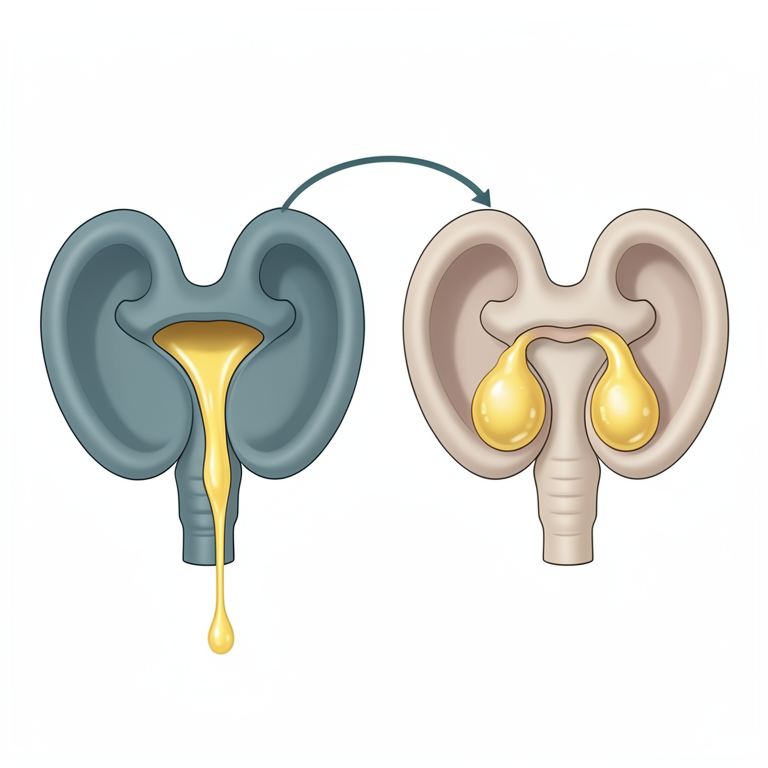
Open vs Closed Pyometra Concept
AI-generated conceptual illustration (canine uterus). It explains the idea and does not show study data.
View source evidence ↗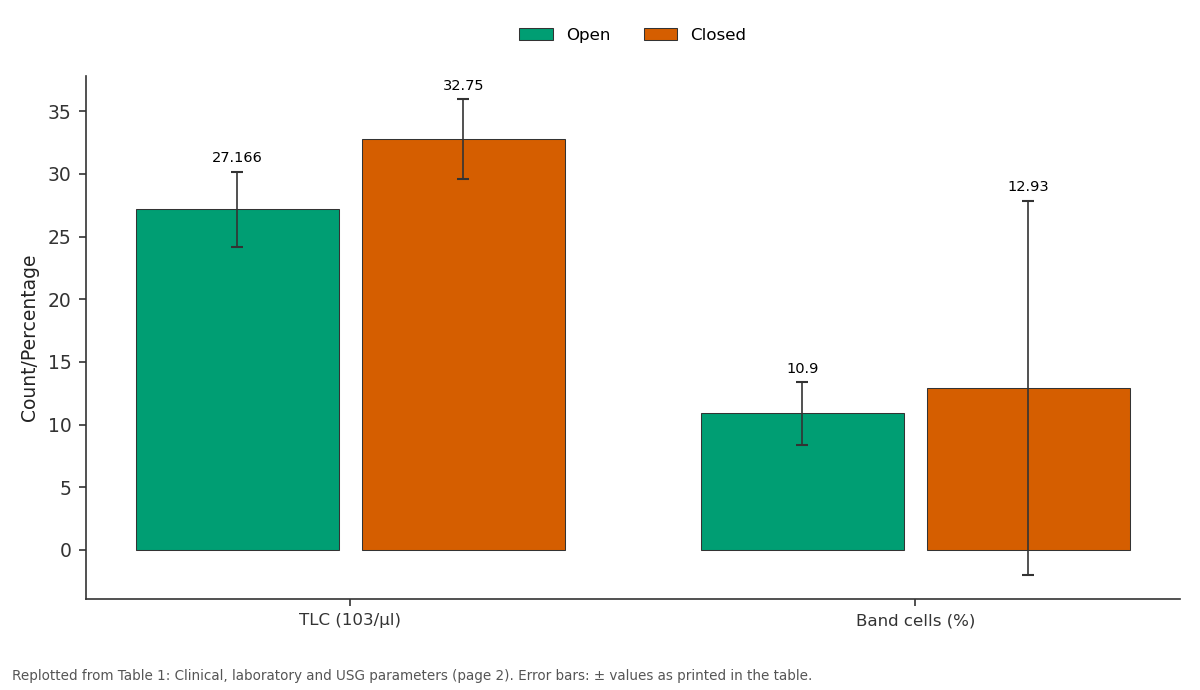
Open and Closed: TLC (103/µl) vs Band cells (%)
Replotted from Table 1 (page 2) of the original paper. Every bar is the paper's own table value.
View source evidence ↗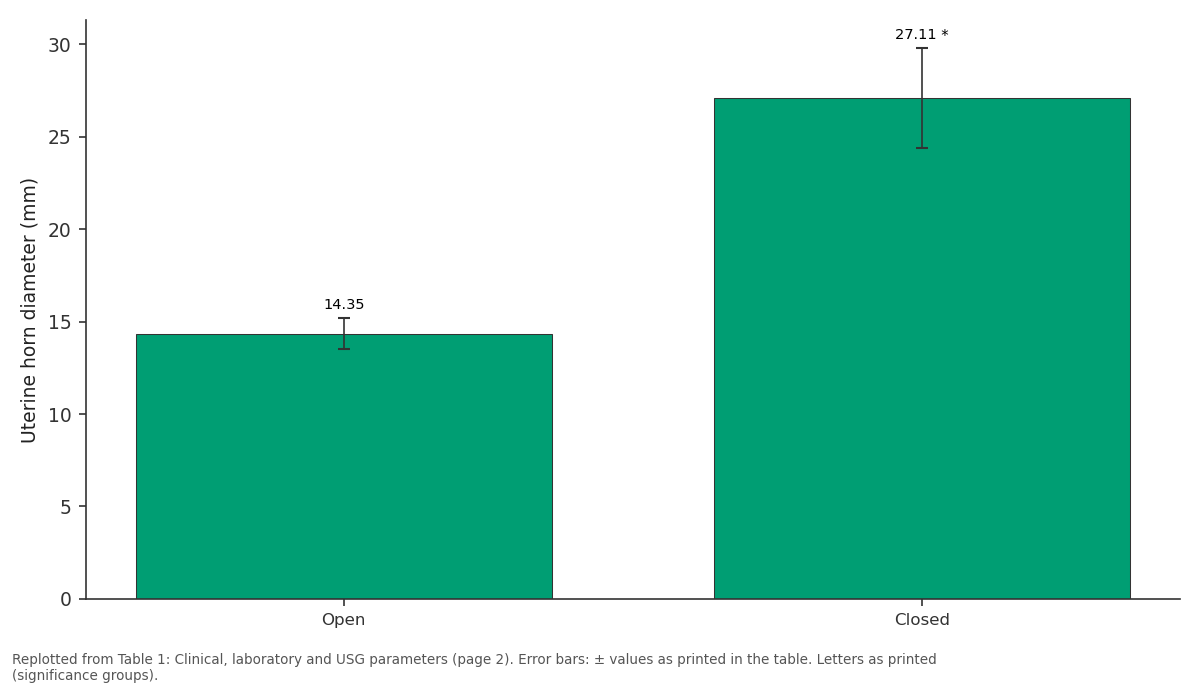
Uterine horn diameter (mm): Open vs Closed
Replotted from Table 1 (page 2) of the original paper. Every bar is the paper's own table value.
View source evidence ↗Figures & tables
From the original paper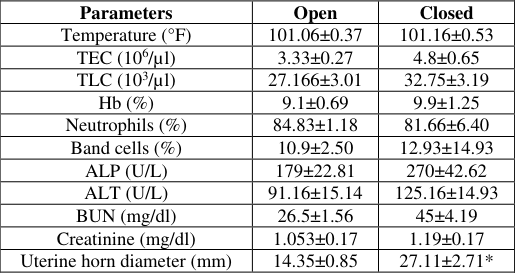 Table 1
Introduction
Canine pyometra is the condition characterized with accumulation of purulent secretions in the uterus of bitches with an open (open pyometra) or closed cervix (closed pyometra) mostly occur during diestrus i.e., during progesterone dominant phase. Generally, the cervical canal opens in response to estrogen and closes in response to progesterone, which are ovarian hormones (Lee et al., 2016) [4]. Estrogen works by relaxing the cervix, allowing the microorganisms of vaginal microbiota to enter the uterus during proestrus and estrus, and increasing the number of progesterone receptors in the endometrium, which leads to the proliferation of endometrial glands and enhancement of their function resulting in intensification of fluid secretion besides causing the closure of cervix during diestrus. Secretion provides an environment favorable to bacterial growth and associated with reduced inflammatory response, favors the establishment of disease. (Anjos et al., 2021) [2].
In open cervix pyometra the clinical signs include pyrexia, vomitions, anorexia, foul odour discharges from vagina whereas the clinical signs of closed cervix are inappetence, vomitions, polydipsia, distension of abdomen. Between the both conditions closed cervix pyometra is more dangerous as there is no outlet for the pus so immediate diagnosis and treatment are necessary to prevent further complications which leads to death of the animal. When it comes to diagnosis the estimation of haemato biochemical parameters, ultrasonography and radiography are the best diagnostic aids. The most followed treatment modality for bitches with closed pyometra is complete ovariohysterectomy whereas in open pyometra medical treatment in a combination of antiprogesterones, antiprolactins, prostaglandins and antibacterial drugs are used based on severity.
Materials And Methods
The present study was conducted on 12 dogs where they were divided into 2 groups in which group 1 (n=6) had open and group 2 (n=6) had closed pyometra at teaching veterinary clinical complex, College of Veterinary Science, Tirupati. Blood samples were collected in vials containing EDTA for hematological evaluation. Serum was collected in separate vacutainers without anticoagulant for biochemical analysis. The statistical analysis was done through the SPSS version 24 by using independent sample t- test.
VET 2024; 9(4): 32-33 B Bhavani Department of Veterinary Gynaecology and Obstetrics College of Veterinary science Sri Venkateswara Veterinary University, Tirupati, Tirupati District, Andhra Pradesh, India B Abhay Kumar Department of Veterinary Gynaecology and Obstetrics College of Veterinary science Sri Venkateswara Veterinary University, Tirupati, Tirupati District, Andhra Pradesh, India K Anusha Department of Veterinary Gynaecology and Obstetrics College of Veterinary science Sri Venkateswara Veterinary University, Tirupati, Tirupati District, Andhra Pradesh, India U Vinod Department of Animal Genetics and Breeding, College of Veterinary science, Sri Venkateswara Veterinary University, Tirupati, Tirupati District, Andhra Pradesh, India B Bhavani Department of Veterinary Gynaecology and Obstetrics College of Veterinary science Sri Venkateswara Veterinary University, Tirupati, Tirupati District, Andhra Pradesh, India https://www.veterinarypaper.com How to Cite This Article Kumar A, Bhavani. Clinical and haemato biochemical parameters of open vs. closed pyometra in canines. International Journal of Veterinary Sciences and Animal Husbandry. 2024;9(5):32-33. Creative Commons (CC) License This is an open access journal, and articles are distributed under the terms of the Creative Commons Attribution-NonCommercial- ShareAlike 4.0 International (CC BY-NC-SA 4.0) License, which allows others to remix, tweak, and build upon the work non- commercially, as long as appropriate credit is given and the new creations are licensed under the identical terms.
Results And Discussion
According to the result of the study both open and closed pyometra cases had anemia with lower Hb, TEC than normal ranges. The total leukocyte count of both groups showed leukocytosis along with neutrophilia, shift to left. The range of leukocytosis and percentage of band cells were more in closed pyometra indicating its severity. The biochemical parameters give an idea about the extent of damage that occurred due to the endotoxins released by disease causing bacteria.
The mean serum BUN, creatinine, ALP, ALT values are slightly higher than the normal values. However, there was no significant difference in the hemato biochemical parameters between open and closed pyometra. On ultrasonographic examination the mean uterine horn diameter of closed pyometra was more than the open pyometra showing a significant difference (p<0.05) between them (Lee et al., 2016) [4]. (Table 1). Table 1: Clinical, laboratory and USG parameters Parameters Open Closed Temperature (°F) 101.06±0.37 101.16±0.53 TEC (106/µl) 3.33±0.27 4.8±0.65 TLC (103/µl) 27.166±3.01 32.75±3.19 Hb (%) 9.1±0.69 9.9±1.25 Neutrophils (%) 84.83±1.18 81.66±6.40 Band cells (%) 10.9±2.50 12.93±14.93 ALP (U/L) 179±22.81 270±42.62 ALT (U/L) 91.16±15.14 125.16±14.93 BUN (mg/dl) 26.5±1.56 45±4.19 Creatinine (mg/dl) 1.053±0.17 1.19±0.17 Uterine horn diameter (mm) 14.35±0.85 27.11±2.71*
| Parameters | Open | Closed |
|---|---|---|
| Temperature (°F) | 101.06±0.37 | 101.16±0.53 |
| TEC (106/µl) | 3.33±0.27 | 4.8±0.65 |
| TLC (103/µl) | 27.166±3.01 | 32.75±3.19 |
| Hb (%) | 9.1±0.69 | 9.9±1.25 |
| Neutrophils (%) | 84.83±1.18 | 81.66±6.40 |
| Band cells (%) | 10.9±2.50 | 12.93±14.93 |
| ALP (U/L) | 179±22.81 | 270±42.62 |
| ALT (U/L) | 91.16±15.14 | 125.16±14.93 |
| BUN (mg/dl) | 26.5±1.56 | 45±4.19 |
| Creatinine (mg/dl) | 1.053±0.17 | 1.19±0.17 |
| Uterine horn diameter (mm) | 14.35±0.85 | 27.11±2.71* |
Table text extracted from the original PDF; superscript letters are shown inline. The original table image is below.
View original table image
Conclusion
From the present study we can conclude that there was difference in haemato biochemical parameters and uterine horn diameter of open and closed cervix pyometra. And when we compare between the 2 groups the values were more in closed pyometra than open indicting the severity of closed cervix pyometra. According to this study haemato biochemical parameters along with ultrasonographic findings helps as good diagnostic tools for pyometra diagnosis and also useful to know the disease severity. By knowing these conditions, we can choose the line of treatment and estimate the prognosis of the disease.
References
5 in the original paper- Achary KH, Rath PK, Panda SK, Mishra BP, Jena B, Mishra R. Pathomorphological, haemato-biochemical and diagnostic imaging studies in canine pyometra. Indian J Anim Res. 2024;58(1):135-140.
- Dos Anjos MS, Bittencourt RF, Biscarde CE, de Andrade Silva MA, dos Santos ES, Junior LD, et al. Canine pyometra: interferences of age and type in blood count and serum biochemistry. Rev Bras Cienc Vet. 2021;28(3):167-173.
- Gourav SS, Chacko L, Vergis J. Haemato-biochemical profile among clinical cases of canine pyometra; c2022.
- Lee JA, Kim IH, Hwang DY, Kang HG. Ultrasonography, affected age, hematology, and clinical signs according to open or closed cervix in dogs with pyometra. J Vet Clin. 2016;33(6):362-367.
- Sachan V, Kumar A, Agrawal JK, Saxena A. Etiopathology and blood biochemistry alterations in canine pyometra: A review; c2019.