
Research article · 2024 · Full text
International Journal of Agriculture Extension and Social DevelopmentAssessing soil pollution vulnerability in agricultural systems: Insights from farmer and stakeholder perceptions
Volume 7(9) · Pages 228–231 · DOI: 10.33545/26180723.2024.v7.i9d.1036 ↗
Research areasAgricultural Innovations and Practices
Abstract
Author-writtenSoil is an essential and dynamic component of the ecosystem, influencing crop productivity, food safety, and human health. However, rapid urbanization, industrialization, and agricultural practices have significantly contributed to soil pollution, particularly in the form of metals and other pollutants. This study examines the vulnerability of agricultural soils to pollution, focusing on the perceptions of farmers and stakeholders in the Thrissur and Palakkad districts of Kerala, India. The primary objective is to assess how different agricultural systems—rice-based, banana-based, and vegetable-based—are affected by various pollution sources. The research was conducted in six panchayaths across the two districts, with data collected from 90 farmers and 30 other stakeholders through structured interviews. A total of 120 participants provided insights into pollution sources such as the use of chemical fertilizers, pesticides, sewage, and industrial waste. Vulnerability indices were calculated based on perceived pollution levels, categorizing the regions into high, moderate, and low pollution zones. Key findings reveal that Puzhakkal, a rice-based system, exhibited the highest soil pollution vulnerability, mainly due to slash-and-burn agriculture and improper waste disposal. Water pollution caused by garbage and plastic waste was a significant concern across all systems. The banana and vegetable systems in Alathur and Puthur also showed moderate to high pollution levels from sewage and pesticide use. These findings underscore the need for targeted interventions, such as promoting sustainable farming practices, waste management, and pollution monitoring to mitigate soil degradation. The implications of this study are crucial for policy makers and agricultural extension programs, offering insights into localized pollution risks and potential strategies to improve soil health and agricultural productivity in Kerala.
Summary
Source-checkedPlain-language reading of the full paper, prepared with AI and checked against the text. Each point links to the authors' own words.
Why it matters
- Soil is a critical ecosystem component that directly impacts human health, food safety, and the productivity of crops. View evidence ↗
- Industrialization, rapid urbanization, and certain agricultural practices have led to significant soil pollution, especially through the introduction of metals. View evidence ↗
- Metal(loid) pollutants are non-degradable and persistent, meaning they can accumulate in soil and enter the human food chain via plant uptake. View evidence ↗
What they did
- The research was conducted in the Palakkad and Thrissur districts of Kerala, India, chosen for their high density of farmers and production of key crops. View evidence ↗
- Data was collected via structured interviews from a total sample of 120 participants, consisting of farmers and various stakeholders (such as NGOs and local administrators). View evidence ↗
- The researchers used perceived pollution levels to calculate vulnerability indices, which categorized regions as low, moderate, or high pollution zones. View evidence ↗
What they found
- In the rice-based system of Puzhakkal, slash-and-burn agriculture was the most concerning pollution source, with an index of 86.67. View evidence ↗
- In Alathur's banana-based system, water pollution from plastic and garbage was the primary concern, recording an index of 77.33. View evidence ↗
- In the vegetable-dominated system of Puthur, sewage material pollution was the most pressing issue, with a high index of 76.00. View evidence ↗
- Perceived soil pollution was moderate in Alathur (64.59), Puthur (62.22), and Nadathara (61.33), while Pananchery and Madakkathara both had low levels with indices of 60.00. View evidence ↗
- In Nadathara, industrial waste (73.33) and sewage material (74.66) were both perceived as high-vulnerability pollution sources. View evidence ↗
What it means
- The authors conclude that there is an urgent need for targeted extension programs that promote waste management, pollution mitigation, and sustainable farming. View evidence ↗
- The authors recommend the creation of stronger policy frameworks to implement adaptive measures and support the monitoring of pollution. View evidence ↗
Visual summary
2 visualsIllustrations explain the paper; charts are replotted from the paper's own table values.
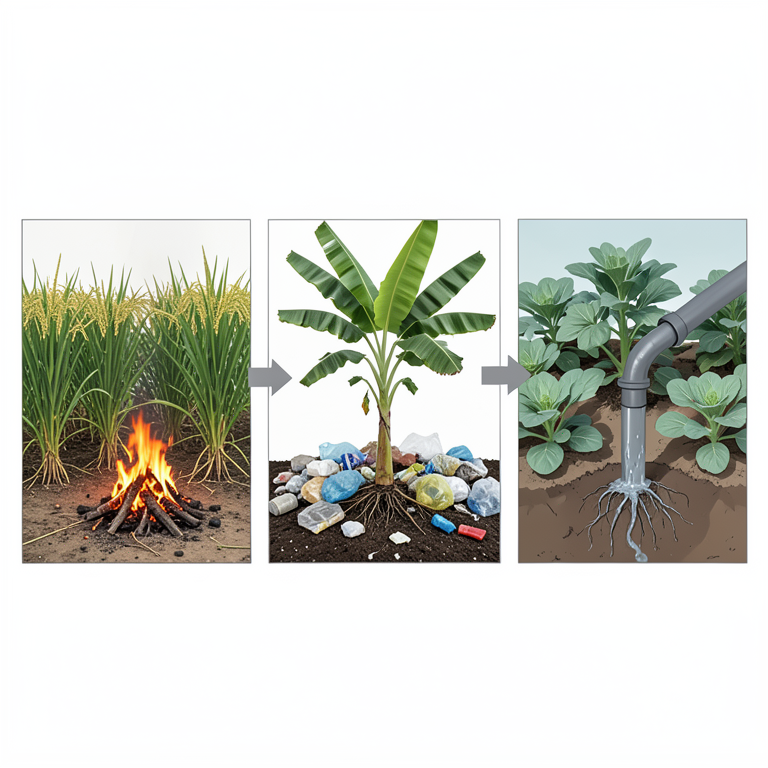
Agricultural System Pollution Sources
AI-generated conceptual illustration (Rice plants, banana plants, and vegetable crops in agricultural fields). It explains the idea and does not show study data.
View source evidence ↗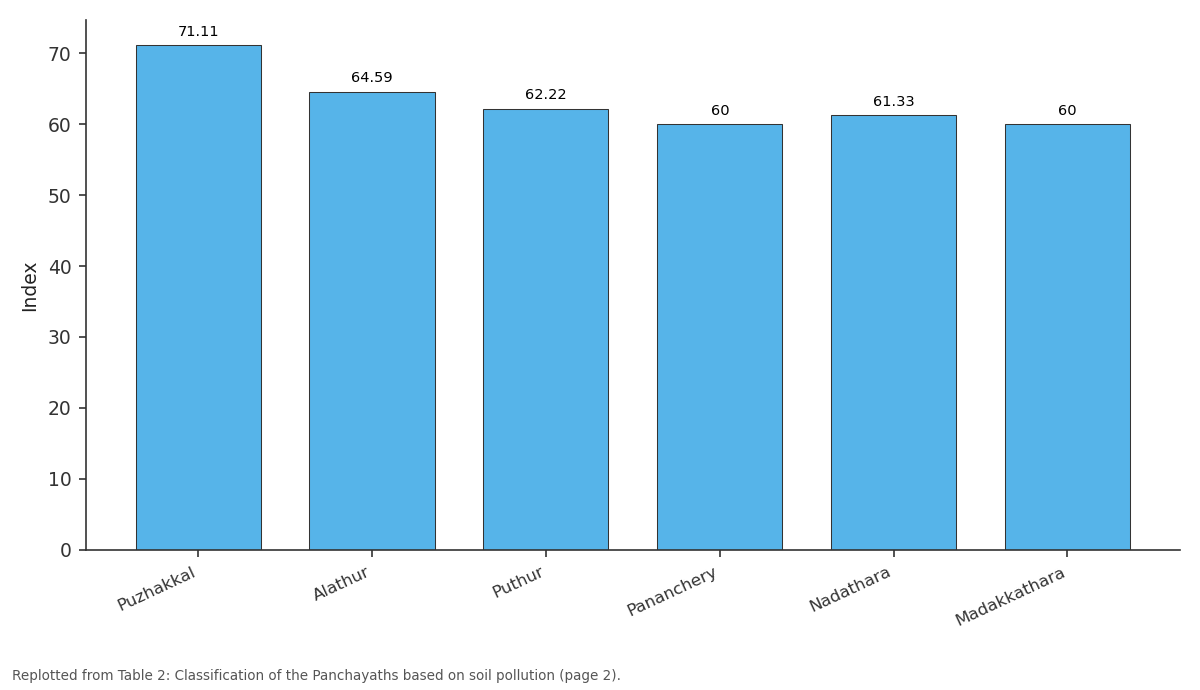
Index: Puzhakkal vs Alathur vs Puthur vs Pananchery vs Nadathara
Replotted from Table 2 (page 2) of the original paper. Every bar is the paper's own table value.
View source evidence ↗Figures & tables
From the original paper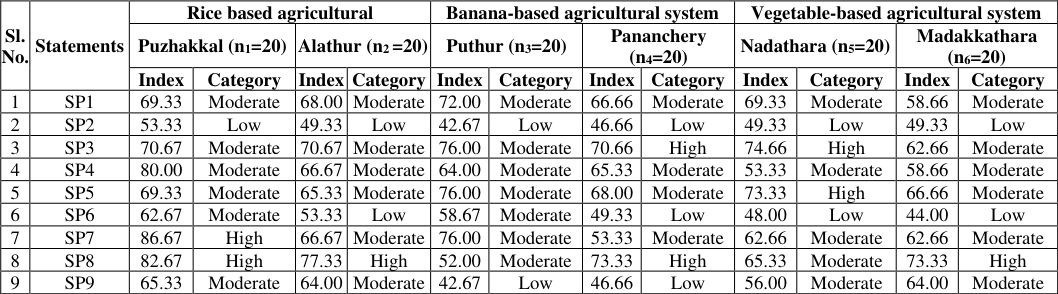 Table 1
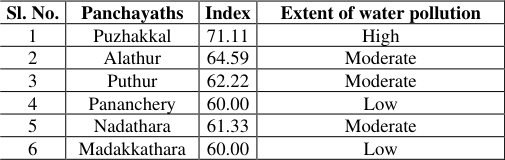 Table 2
Introduction
Soil, a vital and dynamic component of our ecosystem, plays a fundamental role in sustaining human life and promoting social development. Its quality directly affects food safety, crop productivity, and ultimately human health. However, the rapid urbanization and industrialization of recent decades have led to significant soil and environmental pollution. This pollution is increasingly recognized as a major environmental issue in many regions, including Iran (Mishra et al., 2016; Khan et al., 2021) [5,4] . Among the various pollutants affecting soil, metal(loid)s have garnered particular concern. These inorganic elements, with densities greater than 5 g/cm³, include arsenic, cadmium, chromium, cobalt, copper, lead, mercury, nickel, uranium, and zinc (Sezgin et al., 2023) [9] . While metal(loid)s are naturally present in soil at low levels, human activities such as industrial emissions, mining operations, and the use of chemical fertilizers and pesticides can lead to their accumulation and high levels of contamination (Wuana & Okieimen, 2011; Rashid et al., 2023) [12,8] . Soil pollution from metal(loid)s can arise from various sources, including the discharge of industrial wastes, use of leaded gasoline, application of chemical fertilizers and pesticides, wastewater irrigation, and coal combustion (Sonon & Gaskin, 2009; Zhuang et al., 2020) [11,14] . Notably, phosphorus fertilizers often contain high concentrations of metals such as cadmium, copper, and lead, while livestock manures and wastewater sludge can also contribute to metal(loid) contamination (Zarcinas et al., 2004) [13] . The presence of elevated levels of metal(loid)s in agricultural soils poses significant risks to crop health and productivity. These pollutants can adversely affect soil quality, leading to reduced crop yields and compromised food safety. Metal(loid)s are persistent and non-degradable in the environment, and their accumulation in soil can result in high uptake by plants, which then enter the food chain, potentially impacting human health (Huang et al., 2019; Peirovi-Minaee et al., 2023) [3,7] . Several metal(loid)s, such as lead, cadmium, and mercury, are non-essential and toxic to human health. Prolonged exposure to these elements can lead to severe health issues, including cancers, neurological disorders, and developmental problems in children (Papillomaviruses, 2011; Singh & Kalamdhad, 2011) [6,10] . Consequently, the contamination of soil with metal(loid)s is a significant concern for both developed and developing nations, necessitating vigilant monitoring and remediation efforts to prevent further soil degradation (Alturiqi et al., 2020; Ahmad et al., 2021) [2,1] . In this scenario, it is important to study the vulnerability of farmer perceptions. www.extensionjournal.com This study is crucial for assessing farmers' vulnerability to soil pollution in Thrissur and Palakkad, Kerala. It provides insights into the impact of environmental pollution on agriculture, highlights farmers' awareness and adaptive capacities, and informs targeted interventions to mitigate pollution effects and enhance farm resilience.
Methodology
Thrissur and Palakkad districts were chosen for this study due to their high concentration of farmers and their significant role in Kerala's production of rice, bananas, and vegetables. The research focuses on these major crops, selecting Puzhakkal Kole Panchayath, in Thrissur and Alathur in Palakkad for rice systems. For vegetables and bananas, the study includes Puthur and Pananchery Panchayaths for bananas and Nadathara and Madakkathara Panchayaths for vegetables, all in Thrissur. Thirty farmers from each Panchayath (15 per Panchayath) and 30 other stakeholders, including administrators, development personnel, local governance members, general public, and NGOs, were interviewed. The total sample size is 120, with farmers randomly selected in consultation with local agricultural officers. This approach ensures a comprehensive analysis of soil pollution impacts and stakeholder perspectives in these key agricultural regions.
Results
The categorization of panchayaths based on soil pollution vulnerability is based on the perceived statements collected from 15 farmers and 5 stakeholders from each panchayath using mean and standard deviation, providing insights into the local perspectives on environmental degradation across different agricultural systems. Table1 results indicates that the the rice-based agricultural system of Puzhakkal, participants indicated moderate vulnerability to most pollution sources, with the highest concern being slash and burn agricultural practices (SP7) having a pollution index of 86.67. This was followed by concerns over water pollution due to garbage and plastic waste (SP8) with an index of 82.67. The use of chemical fertilizers (SP1) and sewage material (SP3) also contributed moderately to soil pollution based on their perceptions. For the banana-based agricultural system of Alathur, the farmers and stakeholders perceived moderate vulnerability to most pollution sources, with a particularly high concern for water pollution caused by garbage and plastic (SP8), which had an index of 77.33. Indiscriminate pesticide use (SP4) and sewage pollution (SP3) were other significant concerns, while soil-borne pathogens (SP2) were perceived as contributing less to soil pollution with a low index of 49.33. Soil is polluted due to excess use of chemical fertilizers, SP2: Soil is polluted by soil borne pathogens, SP3: Soil is polluted due to sewage material, SP4: Soil is polluted due to indiscriminate pesticide use, SP5: Soil is polluted due to industrial and urban waste, SP6: Soil is polluted due to use of herbicides, SP7: Soil is polluted due to slash and burn agriculture practice, SP8: Water is polluted due release of garbage/plastic to water bodies and SP9: Soil is polluted due to occurrence of heavy wind and flood
| Sl. No. | Statements | Rice based agricultural | — | — | — | Banana-based agricultural system | — | — | — | Vegetable-based agricultural system | — | — | — |
|---|---|---|---|---|---|---|---|---|---|---|---|---|---|
| Puzhakkal (n1=20) | Alathur (n2 =20) | Puthur (n3=20) | Pananchery (n4=20) | Nadathara (n5=20) | Madakkathara (n6=20) | ||||||||
| Index | Category | Index | Category | Index | Category | Index | Category | Index | Category | Index | Category | ||
| 1 | SP1 | 69.33 | Moderate | 68.00 | Moderate | 72.00 | Moderate | 66.66 | Moderate | 69.33 | Moderate | 58.66 | Moderate |
| 2 | SP2 | 53.33 | Low | 49.33 | Low | 42.67 | Low | 46.66 | Low | 49.33 | Low | 49.33 | Low |
| 3 | SP3 | 70.67 | Moderate | 70.67 | Moderate | 76.00 | Moderate | 70.66 | High | 74.66 | High | 62.66 | Moderate |
| 4 | SP4 | 80.00 | Moderate | 66.67 | Moderate | 64.00 | Moderate | 65.33 | Moderate | 53.33 | Moderate | 58.66 | Moderate |
| 5 | SP5 | 69.33 | Moderate | 65.33 | Moderate | 76.00 | Moderate | 68.00 | Moderate | 73.33 | High | 66.66 | Moderate |
| 6 | SP6 | 62.67 | Moderate | 53.33 | Low | 58.67 | Moderate | 49.33 | Low | 48.00 | Low | 44.00 | Low |
| 7 | SP7 | 86.67 | High | 66.67 | Moderate | 76.00 | Moderate | 53.33 | Moderate | 62.66 | Moderate | 62.66 | Moderate |
| 8 | SP8 | 82.67 | High | 77.33 | High | 52.00 | Moderate | 73.33 | High | 65.33 | Moderate | 73.33 | High |
| 9 | SP9 | 65.33 | Moderate | 64.00 | Moderate | 42.67 | Low | 46.66 | Low | 56.00 | Moderate | 64.00 | Moderate |
Table text extracted from the original PDF; superscript letters are shown inline. The original table image is below.
View original table image
Figures and tables from the paper
| Sl. No. | Panchayaths | Index | Extent of water pollution |
|---|---|---|---|
| 1 | Puzhakkal | 71.11 | High |
| 2 | Alathur | 64.59 | Moderate |
| 3 | Puthur | 62.22 | Moderate |
| 4 | Pananchery | 60.00 | Low |
| 5 | Nadathara | 61.33 | Moderate |
| 6 | Madakkathara | 60.00 | Low |
Table text extracted from the original PDF; superscript letters are shown inline. The original table image is below.
View original table image
References
12 in the original paper- Ahmad W, Alharthy RD, Zubair M, et al. Toxic and heavy metals contamination assessment in soil and water to evaluate human health risk. Sci Rep. 2021;11:17006. Available from: https://doi.org/10.1038/s41598-021-94616-4
- Alturiqi AS, Albedair LA, Ali MH. Health risk assessment of heavy metals in irrigation water, soil and vegetables from different farms in Riyadh district, Saudi Arabia. J Elementol. 2020;25(4):1269-1281.
- Huang Y, Wang L, Wang W, Li T, He Z, Yang X. Current status of agricultural soil pollution by heavy metals in China: A meta-analysis. Sci Total Environ. 2019;651:3034-3042. Available from: https://doi.org/10.1016/j.scitotenv.2018.10.185
- Khan S, Naushad M, Lima EC, Zhang S, Shaheen SM, Rinklebe J. Global soil pollution by toxic elements: Current status and future perspectives on the risk assessment and remediation strategies -A review. J Hazard Mater. 2021;417:126039. Available from: https://doi.org/10.1016/j.jhazmat.2021.126039
- Mishra RK, Mohammad N, Roychoudhury N. Soil pollution: Causes, effects and control. Van Sangyan. 2016;3:1-14.
- Peirovi-Minaee R, Alami A, Moghaddam A, Zarei A. Determination of concentration of metals in grapes grown in Gonabad vineyards and assessment of associated health risks. Biol Trace Elem Res. 2023;201(2):3541-3552.
- Rashid A, Schutte BJ, Ulery A, Deyholos MK, Sanogo S, Lehnhoff EA, et al. Heavy metal contamination in agricultural soil: Environmental pollutants affecting crop health. Agronomy. 2023;13:1521. Available from: https://doi.org/10.3390/agronomy13061521
- Sezgin N, Kinda S, Temelli UE, Sezgin N. Pollution indices assessment of metal concentrations in Karabuk soil samples. Int J Agric Environ Food Sci. 2023;7(4):384-398.
- Singh J, Kalamdhad AS. Effects of heavy metals on soil, plants, human health and aquatic life. Int J Res Chem Environ. 2011;1(1):15-21.
- Wuana RA, Okieimen FE. Heavy metals in contaminated soils: A review of sources, chemistry, risks and best available strategies for remediation. Int Sch Res Not. 2011;2011:402647.
- Zarcinas BA, Ishak CF, McLaughlin MJ, Cozens G. Heavy metals in soils and crops in Southeast Asia: 1 Peninsular Malaysia. Environ Geochem Health. 2004;26(4):343-357.
- Zhuang Z, Mu HY, Fu PN, Wan YN, Yu Y, Wang Q, et al. Accumulation of potentially toxic elements in agricultural soil and scenario analysis of cadmium inputs by fertilization: A case study in Quzhou county. J Environ Manage. 2020;269:110797. Available from: https://doi.org/10.1016/j.jenvman.2020.110797