
Research article · 2024 · Full text
International Journal of Advanced Chemistry ResearchRate studies of CoO catalysed autoxidation of S(IV) inhibited by methanol in alkaline medium
Volume 6(2) · Pages 40–45 · DOI: 10.33545/26646781.2024.v6.i2a.226 ↗
Research areasThermal and Kinetic AnalysisCatalysis and Hydrodesulfurization StudiesInorganic and Organometallic Chemistry
Abstract
Author-writtenThe influence of methanol on CoO catalysed S(IV) oxidation in alkaline medium was studied. The kinetics of atmospheric autoxidation of sulphur (IV) by CoO in the pH range 7.34-9.40 has been studied and based on the observed results a free radical mechanism is operative and a rate law has been proposed. Hence the results are useful for modeling rain water acidity and therefore a great use of meteorology and atmospheric chemistry. d[S(lV)]/dt = (k1+ k2[CoO]) [S(lV)]/1 + B [Methanol].
Summary
Source-checkedPlain-language reading of the full paper, prepared with AI and checked against the text. Each point links to the authors' own words.
Why it matters
- Atmospheric chemistry research is essential for understanding climate change, air quality, and how the atmosphere interacts with other environmental systems. View evidence ↗
- Trace metal ions found in atmospheric systems act as catalysts that oxidize aqueous sulfur dioxide (SO2) into acid sulfate. View evidence ↗
- Metal oxides are a key component of the suspended particulate matter present in the Earth's atmosphere. View evidence ↗
The question
- The study aims to investigate the kinetics of CoO-catalyzed sulfur (IV) autoxidation in an alkaline medium (pH 7.34 to 9.40) and determine how methanol affects the reaction mechanism. View evidence ↗
What they did
- Reactions were performed in 0.15-liter Erlenmeyer flasks open to ambient air to allow for the exchange of atmospheric oxygen. View evidence ↗
- The experimental temperature was maintained at 33±0.1 °C. View evidence ↗
- To prevent the reaction from being limited by oxygen mass exchange, the mixture was stirred magnetically at 1600±100 rpm. View evidence ↗
- Reaction kinetics were monitored by periodically withdrawing samples and using iodometric titration in a slightly alkaline medium to measure unreacted S(IV). View evidence ↗
What they found
- Both the uncatalyzed and CoO-catalyzed autoxidation of S(IV) exhibited first-order dependence on the concentration of S(IV). View evidence ↗
- Increasing the concentration of methanol from 1x10⁻⁶ mol dm-3 to 1x10⁻⁴ mol dm-3 resulted in a decrease in the reaction rate. View evidence ↗
- In the presence of methanol, the apparent empirical energy of activation for the reaction was 43.23 kJ mol-1. View evidence ↗
- For the CoO-catalyzed reaction, the inhibition parameter B was calculated to be 2.1×10³ mol-1 dm3. View evidence ↗
What it means
- The authors conclude that methanol acts as a free radical scavenger, indicating that a free radical mechanism is operative in the CoO-catalyzed autoxidation of aqueous sulfur dioxide in alkaline media. View evidence ↗
- The findings are useful for modeling rainwater acidity, providing value to the fields of meteorology and atmospheric chemistry. View evidence ↗
Visual summary
3 visualsIllustrations explain the paper; charts are replotted from the paper's own table values.
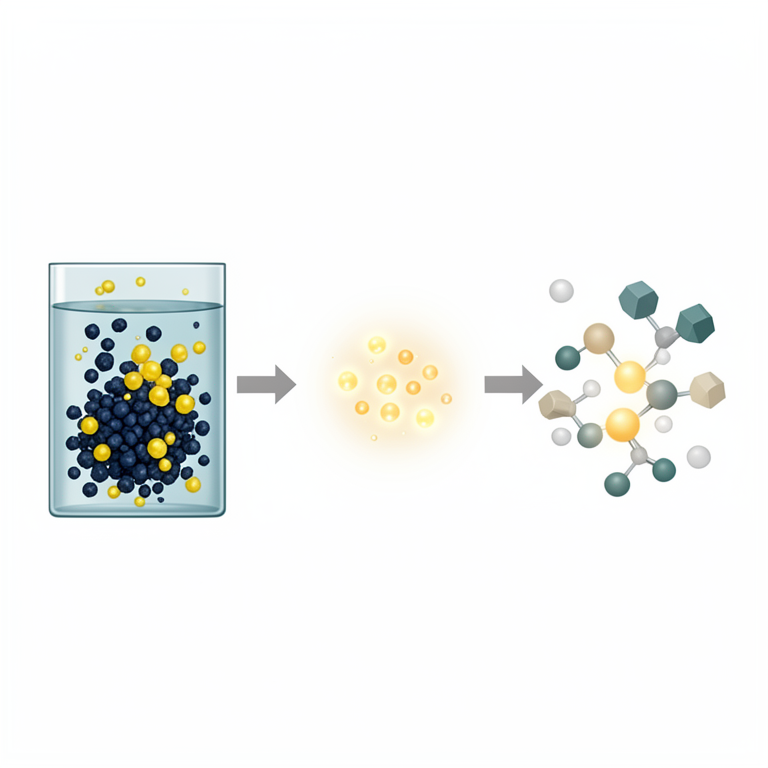
Free Radical Scavenging Mechanism
AI-generated conceptual illustration (Cobalt oxide particles, sulfur species, and methanol molecules in an alkaline aqueous solution). It explains the idea and does not show study data.
View source evidence ↗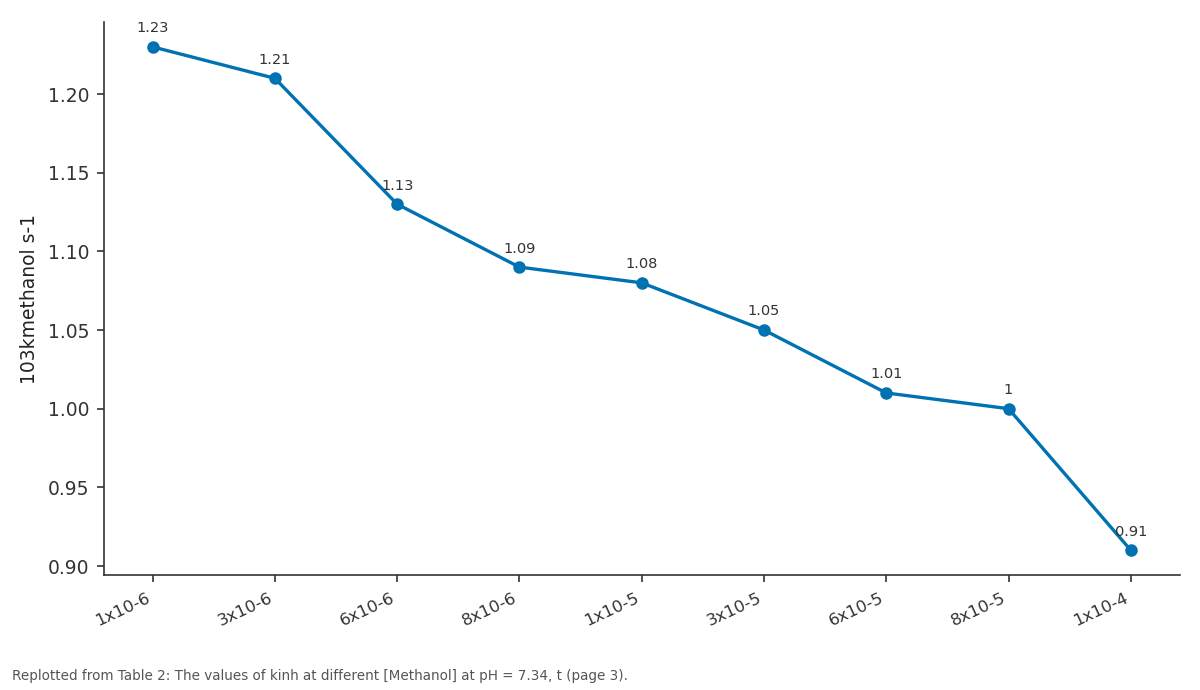
103kmethanol s-1: 1x10⁻⁶ vs 3x10⁻⁶ vs 6x10⁻⁶ vs 8x10⁻⁶ vs 1x10⁻⁵
Replotted from Table 2 (page 3) of the original paper. Every bar is the paper's own table value.
View source evidence ↗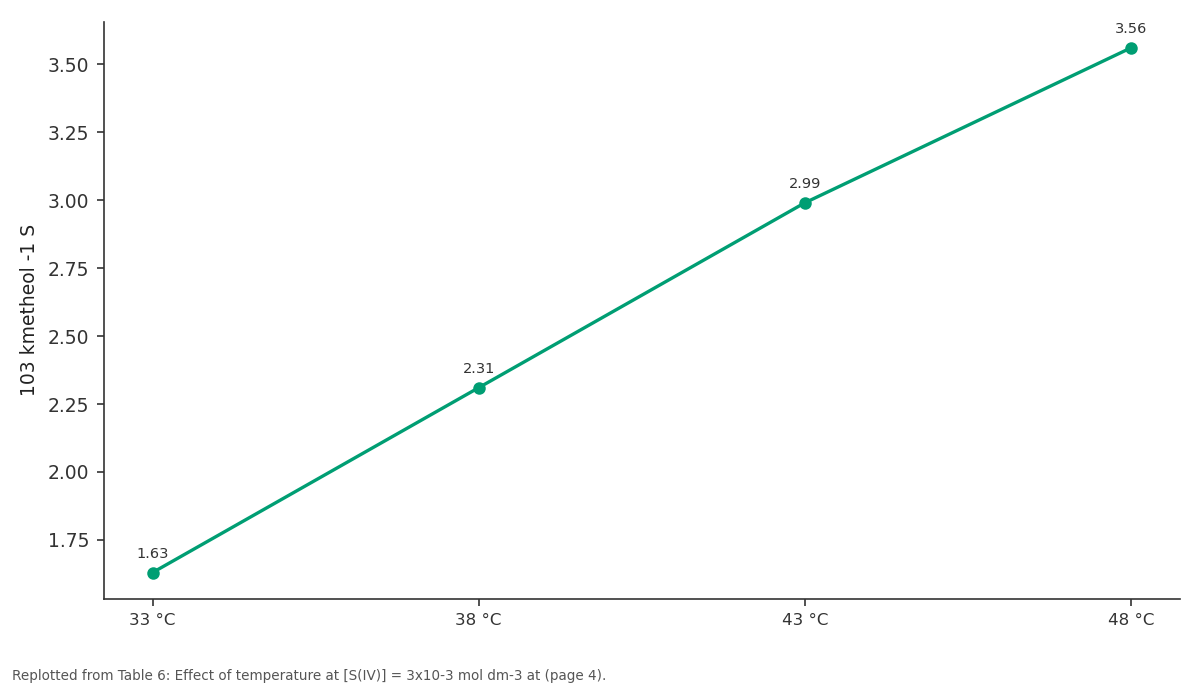
103 kmetheol -1 S: 33 °C vs 38 °C vs 43 °C vs 48 °C
Replotted from Table 6 (page 4) of the original paper. Every bar is the paper's own table value.
View source evidence ↗Figures & tables
From the original paper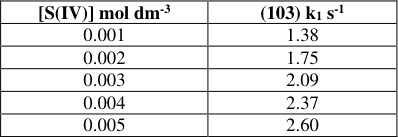 Table 1
![The disappearance of [S(IV)] with time in air saturated suspensions at S(IV)] =3x10⁻³ mol dm-3 at pH = 7.34, t = 33 °C](/api/enrichment-assets/5210cf92b33456667176b58f536e069e42cc36791982bb68f40e8cc9ed9191f9.png) Figure 1
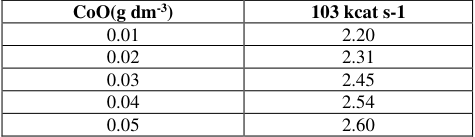 Table 3
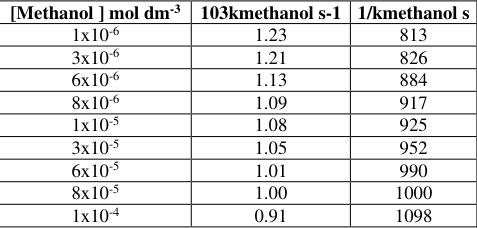 Table 2
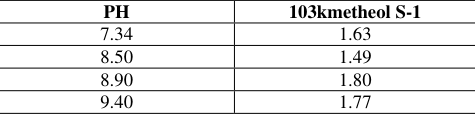 Table 4
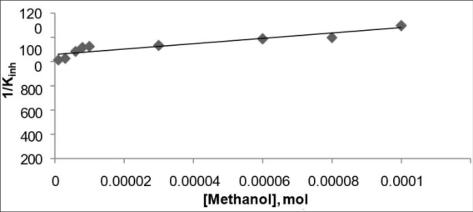 Figure 2
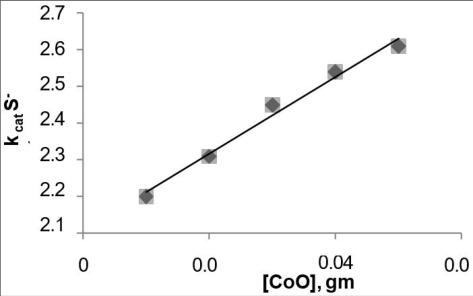 Figure 3
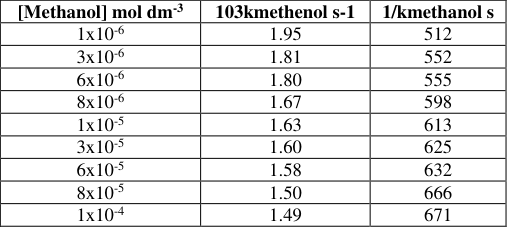 Table 5
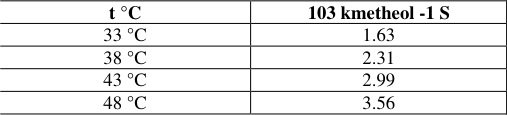 Table 6
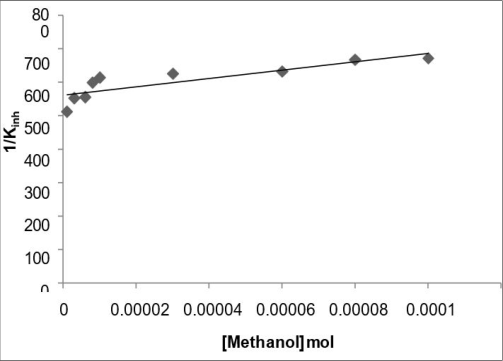 Figure 4
Introduction
Atmospheric chemistry is the study of chemical processes occurring in the Earth's atmosphere. It explores the composition, reactions, and transformations of chemical species in the air, including pollutants, greenhouse gases, and naturally occurring compounds. Understanding atmospheric chemistry is crucial for elucidating air quality, climate change, and the interactions between the atmosphere and other environmental systems. Many types of studies have been done on the atmospheric oxidation of S (IV) in the recent past, in aerosols and in bulk aqueous phase. The trace metal Ions which are part of all atmospheric systems and are catalyzing the oxidation of aqueous SO 2 in to acid sulfate. In with the oxidation of S(IV) by transition metal ions and their role in catalyzing the dioxide-S(IV) systems [1][2][3] . The metal oxides, which are present in the Atmosphere are integral part of suspended particulate matter. The role of various metal oxides such as CoO [4] ; CO 2 O 3 [5] ; Ni 2 O 3 [6] ; CuO [7] ; MnO 2 [8] ; and Cu 2 O [9] ; and MnO 2 [10] in acidic medium has been studied and given a two term rate law. Gupta [11] et al., studied the inhibiting effect of alcohol on the CoO, CO 2 O 3 and Ni 2 O 3 catalysed autoxidation reaction in alkaline medium and proposed a radical mechanism. The effect of alcohols has been studied on several catalysed S(IV) autoxidation in the effect of silver (I) catalyzed autoxidation of S(IV) in acetate buffer medium [11][12] . To explain these results and inhibition effect of organic compounds, the radical mechanism involving SO 3 , SO 4 and SO radicals was proposed [13] . Further experiments were conducted for finding reactivity of oxysulphur radicals with organics, which proved that these compounds react with SO 4 the reactions with SO 3 and SO 5 appeared to be quite slow and hence unimportant. The methanol inhibition of the uncatalysed autoxidation of HSO 3 -was investigated by Connick et al., (1995) [14] to shed more light on a mechanism of initiation in the absence of transition metal ions. Connick and Zhang (1996) [15] showed that in the presence of manganous ions the inhibition by methanol is more complex than indicated by simply adding to the overall reaction mechanism the step by which sulphate radicals are scavenged. This led us to investigate the kinetics of sulfur (IV) autoxidation catalyzed by CoO in the pH range 7.34 -9.40 and the effect of methanol has been studied in alkaline media to delineate the nature of the mechanism.
Experimental
The experimental procedure was exactly the methodology described earlier by Prasad et al., [16][17][18] . All chemical substances utilized were of analytical grade, and their solutions were prepared using double-distilled water. The reactions were carried out in 0.15-liter Erlenmeyer flasks, exposed to ambient air to facilitate the exchange of atmospheric oxygen. Each flask was situated within a beaker with an inlet at the lower part and an outlet at the upper part to enable the circulation of thermostatic water, maintaining the desired temperature at 33±0.1 °C. The reaction were started by adding the desired volume of standard Na 2 SO 3 solution for the reaction combination containing different added substances like buffer and catalyst oxide. The reaction mixture was continuously and magnetically stirred at 1600±100 rpm to permit the part of atmospheric oxygen and to save the reaction from becoming oxygen mass exchange controlled. The kinetic studies were conducted in a buffered medium, maintaining a constant pH throughout the entire reaction process. For this purpose, a 10 cm 3 of buffer medium from of Na 2 HPO 4 (0.08 mol dm -3 ) and KH 2 PO 4 (0.02 mol dm -3 ) was used to create a basic alkaline medium with a total volume of 100 cm 3 , thus achieving the desired pH. The kinetic were followed by withdrawing the aliquot samples periodically and titrating the unreacted S(IV) iodometrically in slightly alkaline medium as described earlier. The reproducibility of the replicate measurements was generally better than compared to ± 10%. All calculations were conducted using MS Excel [19] .
Product analysis
When the reaction was complete, the separation of CoO was accomplished through filtration and the determination of Sulphate was estimated gravimetrically. This involved the precipitation of sulfate ions as BaSO 4 , using standared procedure [20] .
The product analysis showed the recovery of sulphate to be 98+2%., in all cases in agreement with eq. ( 1)
Results
Results
Preliminary investigation
The kinetics of both uncatalysed and CoO Catalysed reaction were studied in alkaline medium in pH 7.34-9.40 and temperature 33 °C. In both of the cases, the first order dependence of S(IV) was observed in the kinetics data treatment for the determination of first order rate constant k 1 was calculated from log [S(IV)] versus time, t. The plots were shown in fig 1 it is observed that both the uncatalysed and CoO catalysed autoxidation of S (IV) reaction is inhibited by methanol. -
d [S(IV)] /dt= k 1 [S(IV)]
d [S(IV)] /dt= k 1 [S(IV)]
Dependence of methanol
To examine the effect of methanol inhibitor on the autoxidation of S(IV) in alkaline medium. Methanol was varied from 1x10 -6 mol dm -3 to 1x10 -4 mol dm -3 and observed that the rate of the reaction decreased by increasing methanol. The results are given in Table 2.
| [Methanol ] mol dm-3 | 103kmethanol s-1 | 1/kmethanol s |
|---|---|---|
| 1x10⁻⁶ | 1.23 | 813 |
| 3x10⁻⁶ | 1.21 | 826 |
| 6x10⁻⁶ | 1.13 | 884 |
| 8x10⁻⁶ | 1.09 | 917 |
| 1x10⁻⁵ | 1.08 | 925 |
| 3x10⁻⁵ | 1.05 | 952 |
| 6x10⁻⁵ | 1.01 | 990 |
| 8x10⁻⁵ | 1.00 | 1000 |
| 1x10⁻⁴ | 0.91 | 1098 |
Table text extracted from the original PDF; superscript letters are shown inline. The original table image is below.
View original table image
The nature of the [S(IV)] dependence in presence of methanol did not change and remains first order. The first order rate constant k inh , in the presence of methanol was defined by rate law (3)
The value of first order rate constant k inh in the presence of methanol decreased with increasing [Methanol] in agreement with the rate law.
Where B is inhibition parameter for rate inhibition the equation ( 4) on rearrangement becomes
In accordance with the equation ( 5 [Methanol ] mol dm -3 103kmethanol s-1 1/kmethanol s 1x10 -6 1.23 813 3x10 -6 1.21 826 6x10 -6 1.13 884 8x10 -6 1.09 917 1x10 -5 1.08 925 3x10 -5 1.05 952 6x10 -5 1.01 990 8x10 -5 1.00 1000 1x10 -4 0.91 1098
CoO catalysed reaction
The kinetics of CoO Catalysed autoxidation of S(IV) was studied in alkaline medium without inhibitor methanol.
[S(IV)] variation
The dependence of S(IV) on reaction rate was studied by varying [S(IV)] from 1x10 -3 mol dm -3 to 5x10 -3 mol dm
From the plot in fig. 3 the values of intercept is equal to k 1 and slope is equal to k 2 were found to be 4.6x10 2 s and 1.7x10 3 mol -1 dm 3 s at pH = 7.34, t = 33 o C, in alkaline buffer medium. [Methanol] mol dm -3 103kmethenol s-1 1/kmethanol s 1x10 -6 1.95 512 3x10 -6 1.81 552 6x10 -6 1.80 555 8x10 -6 1.67 598 1x10 -5 1.63 613 3x10 -5 1.60 625 6x10 -5 1.58 632 8x10 -5 1.50 666 1x10 -4 1.49 671
Effect of temperature
The values of k obs were determined at different temperatures in the range of 33 °C to 48 °C. The results are given in Table 6. By plotting a graph between log k v/s 1/T yield us an apparent empirical energy of activation 43.23 kJ mol -1 in the presence of methanol.
| t °C | 103 kmetheol -1 S |
|---|---|
| 33 °C | 1.63 |
| 38 °C | 2.31 |
| 43 °C | 2.99 |
| 48 °C | 3.56 |
Table text extracted from the original PDF; superscript letters are shown inline. The original table image is below.
View original table image
Discussion
In aqueous solution SO 2 is present in four forms SO 2 .H 2 O, HSO 3 -1 , SO 3 -2 , S 2 O 3 -2 governed by the following equations.
In the range of pH (7.34-9.40), S(IV) would generally be present as SO 3 2-. Since the reaction rate of under study not dependent on pH, we have considered that only SO 3 -2 species to be reactive. In some modifications the autoxidation reactions of sulfur (IV) take place in the heterogeneous aqueous phase catalysed by a metallic oxide the development of surface complexes through the adsorption of sulfur (IV) and O 2 on the surface of the molecule and oxidation. Sulfur(IV) proposed oxidation states. In the heterogeneous reaction in strong liquid state of MnO 2 and S(IV), Halperin and Taube [21] reported that the sulfite particles bind to the outside of the strong MnO 2 through the oxygen molecule. In the current study, the oxygen dependence shows that the arrangement of the surface complex proceeds rapidly through the adsorption of O 2 to the surface of the CoO molecule. Bigelow et al., (1898) [22] studied the influence of alcohols such as ethanol, propanol and butanol on the reaction between sodium sulfite and O 2 and found that these alcohols limited the reaction rate. Backstrom (1929) [23] also studied the inhibiting effect of aliphatic alcohols (ethanol, isopropanol, secondary butanol, benzyl alcohol) on the autoxidation of sodium sulfite in a soluble medium (initial pH 8.4). Backstrom (1934) [24] proposed a mechanism to prevent a highly inhibitory oxidation reaction in the chain between sodium sulfite and oxygen. Connick and Zhang (1996) [25] reported that when Mn+ 2 particles are considered, methanol inhibition is more unpredictable. Grgic et al., (1998) [26] examined the inhibition influence of oxalate, acetic acid and formate on the Fe-catalyzed autoxidation of S(IV) at estimated pH values of 2.8, 3.7 and 4.5 and found that oxalate it has a strong inhibiting effect on the reaction rate due to reduced measurement of the chemically dynamic Fe (III) particle complexation with oxalate. Bostjan Podkrajsek et al., (2006) [27] investigated the influence of carboxylic acids on the Mn (II) catalyzed oxidation of sulfur (IV) and found that mono carboxylic acids inhibit oxidation and the more influence of caused formic acids.
In alkaline medium, the rate of the reaction catalysed by CoO is exceptionally slowed by the addition of formic acid, such as that of ethanol, reported by Gupta et al. [28] . This shows the activity of a radical mechanism that includes oxysulfur -free radicals, such as SO 3 -•, SO 4 -• and SO 5 -• [28, 29, 30] . The inhibition is caused by the interception of SO 4 -• by inhibitors such as ethanol and benzene, etc. Gupta et al. [28] a radical mechanism operate has been reported to work on reaction where the value of inhibition parameter is between 103 and 104. In the current study, the inhibition parameter is found to be 2.5×10³ mol dm-3, which lies within a similar range. Based on the observed results, including the inhibition by formic acids, the following radical mechanism is proposed which similar to that proposed by Gupta et al. in the ethanol inhibition of the CoO catalyst reaction [31][32][33] .
By Since the reaction is completely stopped in the presence of methanol at 1x10 -4 mol dm -3 , So the steps ( 18) and (22) appear to be unimportant. The step ( 23) is ignored because the reaction is completely seized in the presence of higher concentration of methanol by omission and substitution from the above mechanism the following rate law can be obtain (27).
Prasad et al. and Gupta et al. [28] proposed a similar mechanism for the CoO catalysed autoxidation of sulfur dioxide inhibited by ethanol, which leads to the same rate law. By comparing the derived rate law with the experimental rate law, we observe the similarity in these two. The calculated value of inhibition parameter B is 2.1×10 3 mol -1 dm 3 . Which is in the range of 10 3 to 10 4 . So on the basis of calculated value of B. We concluded that methanol act as a free radical scavenger in the CoO catalysed autoxidation of aqueous sulfur dioxide in alkaline medium and a free radical mechanism can work in this mechanism.
Conclusion
The following conclusions are deduced from the results of the methanol inhibited CoO catalysed autoxidation of S(IV) was that methanol inhibits the oxidation of S(IV) with the fast influence. The value of Inhibition factor of both uncatalysed and CoO catalysed autoxidation of S(IV) in the present study are in the range of 10 3 -10 5 which shows that free radical mechanism is operative in this case also.
Environmental importance
Organics are able to inhibit the oxidation of SO 2 so rain water acidity can be controlled. They increase the life span of SO 2 so vegetation, national buildings, monuments, fishes of water bodies and human being are not affected by rain water acidity. The results are useful for modeling rain water acidity and therefore a great use of meteorology and atmospheric chemistry. This study is important in understanding the mechanism of the atmospheric oxidation of S(IV) by O 2
Acknowledgement
AcknowledgementThe authors pay their sincere gratitude to Principal, Government postgraduate college, Jhalawar (India) for providing necessary research facilities to accomplish this study.
Figures and tables from the paper
| [S(IV)] mol dm-3 | (103) k1 s-1 |
|---|---|
| 0.001 | 1.38 |
| 0.002 | 1.75 |
| 0.003 | 2.09 |
| 0.004 | 2.37 |
| 0.005 | 2.60 |
Table text extracted from the original PDF; superscript letters are shown inline. The original table image is below.
View original table image
| CoO(g dm-3) | 103 kcat s-1 |
|---|---|
| 0.01 | 2.20 |
| 0.02 | 2.31 |
| 0.03 | 2.45 |
| 0.04 | 2.54 |
| 0.05 | 2.60 |
Table text extracted from the original PDF; superscript letters are shown inline. The original table image is below.
View original table image
| PH | 103kmetheol S-1 |
|---|---|
| 7.34 | 1.63 |
| 8.50 | 1.49 |
| 8.90 | 1.80 |
| 9.40 | 1.77 |
Table text extracted from the original PDF; superscript letters are shown inline. The original table image is below.
View original table image
| [Methanol] mol dm-3 | 103kmethenol s-1 | 1/kmethanol s |
|---|---|---|
| 1x10⁻⁶ | 1.95 | 512 |
| 3x10⁻⁶ | 1.81 | 552 |
| 6x10⁻⁶ | 1.80 | 555 |
| 8x10⁻⁶ | 1.67 | 598 |
| 1x10⁻⁵ | 1.63 | 613 |
| 3x10⁻⁵ | 1.60 | 625 |
| 6x10⁻⁵ | 1.58 | 632 |
| 8x10⁻⁵ | 1.50 | 666 |
| 1x10⁻⁴ | 1.49 | 671 |
Table text extracted from the original PDF; superscript letters are shown inline. The original table image is below.
View original table image
References
27 in the original paper- Prasad DSN, Mehta RK, Parashar P, Madnawat PVS, Rani A, Singh U, et al. Kinetics of surface-catalyzed autoxidation of aqueous sulfur dioxide in cobalt (III) oxide suspensions. J Indian Chem Soc. 2003;80:391394.
- Prasad DSN, Rani A, Gupta KS. Surface-catalyzed oxidation of S (IV) in aqueous silica and copper (II) oxide suspensions. Environ Sci. Technol. 1992;26:1361-1368.
- Gupta KS, Singh R, Saxena D, Manoj SV, Sharma M. Role of manganese dioxide in the autoxidation of sulfur (IV) in oxic and anoxic suspensions. Ind. J Chem. 1999;38A:1129-1138.
- Gupta KS, Jain U, Singh A, Mehta RK, Manoj SV, Prasad DSN, et al. Kinetics and mechanism of the osmium (VIII)-catalyzed autoxidation of aqueous sulfur dioxide in acidic and alkaline media. J Indian Chem. Soc. 2004;81:1083-1092.
- Mudgal PK, Sharma A, Mishra CD, Bansal SP, Gupta KS. Kinetics of ammonia and ammonium ion inhibition of the atmospheric oxidation of aqueous sulfur dioxide by oxygen. J Atmos Chem. 2008;61:31-55.
- Sharma H, Sharma AK, Kumar M, Prasad DSN. The influence of succinic acid on the kinetics of the atmospheric oxidation of dissolved SO 2 catalyzed by CO 2 O 3 . Int J Emerg Technol. 2019;10(3):8286.
- Manoj SV, Mishra CD, Sharma M, Rani A, Jain R, Bansal SP, et al. Iron, manganese and copper concentrations in wet precipitations and kinetics of the oxidation of SO 2 in rain water at two urban sites, Jaipur and Kota, in western India. Atmos Environ. 2000;34:4479-4486.
- Ghosh MK, Rajput SK. Kinetics and mechanism of lanthanum (III) catalyzed oxidation of D-galactose by cerium (IV) in aqueous acidic medium. J Applicable Chem. 2012;1(4):541-550.
- Meena V, Dayal Y, Saxena D, Rani A, Chandel CP, Gupta KS, et al. The influence of diesel-truck exhaust particles on the kinetics of the atmospheric oxidation of dissolved sulfur dioxide by oxygen. Environ Sci. Pollut. Res. 2016;23(17):17380-17392.
- Meena V, Dayal Y, Rathore DS, Chandel CP, Gupta KS. Inhibition of aquated sulfur dioxide autoxidation by aliphatic, acyclic, aromatic, and heterocyclic volatile organic compounds. Int. J Chem. Kinet. 2017;49(4):221-233.
- Connick RE, Zhang Y-X. Kinetics and mechanism of oxidation of HSO 3 -by O 2 . 2. The manganese (II) catalyzed reaction. Inorg. Chem. 1996;35:4613-4621.
- Connick RE, Zhang Y-X, Lee S, Adamic R, Chieng P. Kinetics and mechanism of oxidation of HSO 3 -by O 2 . Inorg Chem. 1995;34:4543-4553.
- Hussain F, Begam S, Singh J, Sharma AK, Prasad DSN. Kinetics of aniline inhibited uncatalyzed and CO 2 O 3 catalyzed autoxidation of S (IV) in atmospheric environment. Asian J Chem. Environ Res. 2018;11:6067.
- Hussain F, Begam S, Sharma AK, Prasad DSN. Effect of isopropyl alcohol on autoxidation of S (IV) catalyzed by CO 2 O 3 in alkaline medium. Bull Pure Appl. Sci. 2018;37(1):9-18.
- Hussain F, Begam S, Sharma AK, Prasad DSN. CO 2 O 3 catalyzed oxidation of SO 2 in aqueous solution differing effect of benzamide in alkaline medium. Chem Sci Trans. 2018;7(4):600-609.
- Hussain F, Begam S, Sharma AK, Prasad DSN. Kinetics and mechanism of CO 2 O 3 catalyzed autoxidation of sulphite and inhibition by sodium benzoate. J Inst Chemists (India). 2018;90(4):104-119.
- Begam S, Hussain F, Singh J, Sharma AK, Prasad DS. Kinetics of sodium sulphite oxidation catalyzed by CO 2 O 3 and inhibited by ethylene glycol. Asian J Res Chem. 2018;11(3):610-616.
- Halperin J, Taube H. The transfer of oxygen atoms in oxidation reduction reactions, IV. The reactions of hydrogen peroxide with sulfite and thiosulfate and of oxygen, manganese dioxide and of permanganate with sulfite. J Am Chem Soc. 1952;74:375-380.
- Bigelow SL. Catalytic effects in the oxidation of sodium sulfite by air oxygen. Z Physik Chem. 1898;26:493-532.
- Alyea HN, Backstrom HLJ. The inhibitive action of alcohols on the autoxidation of sodium sulfite. J Am Chem Soc. 1929;51:90-107.
- Backstrom HLJ. The chain mechanism of the autoxidation of sodium sulfite solutions. Z Physik Chem (B). 1934;25:122-138.
- Connick RE, Zhang Y-X. Kinetics and mechanism of oxidation of HSO 3 -by O 2 . 2. The manganese (II) catalyzed reaction. Inorg Chem. 1996;35:4613-4621.
- Grgic I, Dovzan A, Bercic G, Hudnik V. The effects of atmospheric organic compounds on the Fe-catalyzed S(IV) autoxidation in aqueous solution. J Atmos. Chem. 1998;29:315-337.
- Podkrajsek B, Grgic I, Tursic J, Bercic G. Influence of atmospheric carboxylic acids on catalytic oxidation of sulfur (IV). J Atmos Chem. 2006;54:103-120.
- Sharma AK, Sharma R, Prasad DS. Role of organics in atmospheric catalytic autoxidation of aqueous sulphur dioxide in acidic medium. Malaysian J Chem. 2017;19(1):1-2.
- Sharma AK, Sharma R, Prasad DS. Kinetics of isoamyl alcohol and aniline inhibited uncatalyzed and Ag (I) catalyzed autoxidation of S (IV) in acidic medium. Asian J Res Chem. 2017;10(3):251-258.
- Sharma AK, Sharma R, Prasad DSN. Effect of aliphatic mono carboxylic acids and alcohols on Ag (I) catalyzed oxidation of SO 2 in aqueous solution. J Mater Environ Sci. 2018;9(6):1829-1837.