
Research article · 2024 · Full text
International Journal of Biology SciencesHepatitis C virus vaccine development: Current status and future prospects
Volume 6(2) · Pages 33–37 · DOI: 10.33545/26649926.2024.v6.i2a.229 ↗
Research areasHepatitis C virus researchHepatitis B Virus Studies
Abstract
Author-writtenHepatitis C is a serious liver infection caused by the Hepatitis C Virus (HCV), which spreads mostly through contact with contaminated blood. This review looks at the worldwide health implications of HCV, which affects millions and can cause severe liver disorders like cirrhosis and liver cancer. Unlike Hepatitis A and B, there is no vaccine for Hepatitis C, making preventive measures critical. The study discusses the historical context of hepatitis discovery, the detection of HCV in 1989, and the progression of treatment options. Current advances in direct-acting antiviral (DAA) treatments have changed HCV treatment, allowing for significant cure rates. Despite these advances, issues like as treatment accessibility and the need for better screening approaches remain. On-going research aims to improve global treatment access and identify viable vaccine candidates to prevent HCV infection.
Summary
Source-checkedPlain-language reading of the full paper, prepared with AI and checked against the text. Each point links to the authors' own words.
Why it matters
- Hepatitis C is a severe liver infection caused by the Hepatitis C Virus (HCV), primarily transmitted via contaminated blood. View evidence ↗
- The virus affects millions of people globally and can lead to critical liver conditions, including liver cancer and cirrhosis. View evidence ↗
- Preventive measures are essential because, unlike Hepatitis A and B, no vaccine currently exists for Hepatitis C. View evidence ↗
The question
- Current research focuses on identifying viable vaccine candidates to prevent HCV infection and improving global access to treatment. View evidence ↗
What they did
- The HCV genome is a positive-sense, single-stranded RNA approximately 9.6 kb in size that encodes a single polyprotein. View evidence ↗
- The E1 and E2 envelope proteins exhibit high diversity, which allows the virus to evade immune responses and makes vaccine development difficult. View evidence ↗
- A real-time RT-PCR approach targeting the conservative 5′-non-coding region (5′-NCR) of the HCV genome is used to quantify HCV RNA in human serum and plasma. View evidence ↗
What they found
- Recent trials of Direct-Acting Antivirals (DAAs) have shown cure rates (Sustained Virology Response) exceeding 95% for the majority of patients. View evidence ↗
- The introduction of DAAs has transformed HCV management by achieving cure rates of over 90%. View evidence ↗
- Epidemiological data indicate a shift in demographics, with an increasing frequency of HCV infection among younger people, particularly those who use injected drugs. View evidence ↗
- The high variability of the HCV virus remains a primary challenge in developing a universally effective vaccine. View evidence ↗
What it means
- To achieve the WHO goal of eliminating HCV by 2030, it is essential to improve treatment accessibility and screening, especially for underserved populations. View evidence ↗
- The authors conclude that continued research is vital for both improving current therapies and developing a preventive vaccine. View evidence ↗
Visual summary
1 visualsIllustrations explain the paper; they do not show study data.

Viral Variability and Vaccine Challenge
AI-generated conceptual illustration (Hepatitis C virus particles). It explains the idea and does not show study data.
View source evidence ↗Figures & tables
From the original paper Figure 1
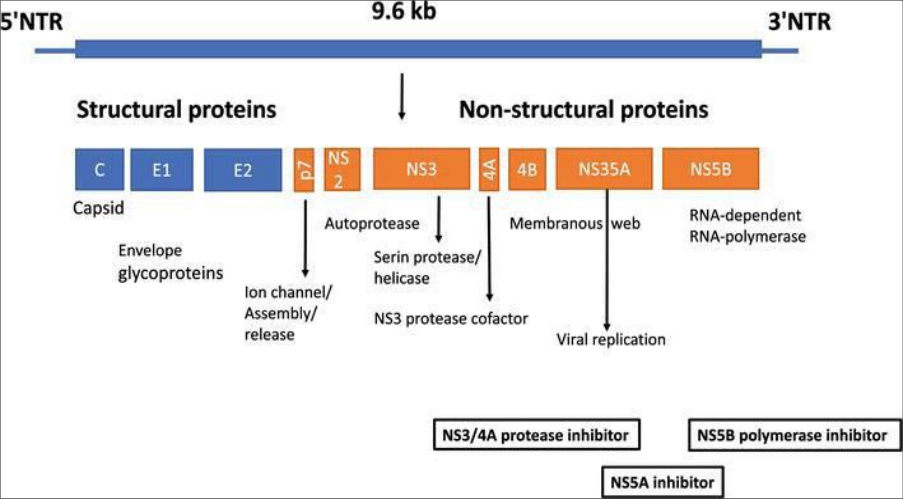 Figure 2
Introduction
Hepatitis C is an infection of the liver caused by the Hepatitis C Virus (HCV), a blood borne pathogen that primarily affects the liver. Transmission occurs mainly through contact with infected blood, most commonly through sharing of needles among drug users. HCV is an important global health issue, with millions of people suffering with chronic Hepatitis C, which can lead to catastrophic liver diseases such as cirrhosis and liver cancer (WHO, 2024) [38] . Despite the availability of vaccines for Hepatitis A and B, there is at present no vaccine for Hepatitis C, hence preventive measures are crucial. However, recent developments in antiviral therapies have made it possible to cure the majority of HCV patients, emphasizing the importance of early identification and treatment (Kim et al., 2016, Mayo Clinic, 2023) [20,24] . The history of hepatitis is distinguished by the gradual detection of various kinds of the disease, each caused by a unique virus. The term "hepatitis" was initially used to refer to general liver inflammation, but particular viral causes were not identified until the middle of the twentieth century. Hepatitis A and B were first identified in the 1940s and 1960s, accordingly. With Their processes of transmission and effects on the liver are gradually becoming more understood. Hepatitis C, originally described as "non-A, non-B hepatitis," was first identified in 1989, resulting in important advances in understanding chronic liver illness. In recent years, research and development of effective hepatitis C treatments, particularly Direct-Acting Antivirals (DAAs), has changed disease management. Despite these advances, the global burden of hepatitis remains large, with on-going efforts to completely eliminate viral hepatitis as a public health threat by 2030 (WHO Cholongitas et al., 2022, Chen & Morgan, 2023) [9,8] .
What is hepatitis?
Hepatitis is a general term for liver inflammation this can be caused by a variety of factors like viral infections, consumption of alcohol, toxins, certain drugs, and autoimmune disorders. Hepatitis A, B, C, D, and E are the most common types of viral hepatitis, with each caused by a different virus and that range in severity and path of transmission. Hepatitis can be classified as acute, which is a quick outbreak of inflammation that disappears on its own, or chronic, which is an on-going condition of inflammation that can cause catastrophic liver damage, including cirrhosis and liver cancer. Depending on its cause, hepatitis can appear with a wide range of symptoms, from moderate to severe, or even asymptomatic in some cases. Depending on the origin, hepatitis may present with a wide range of symptoms, from moderate to severe, or even asymptomatic in certain situations (CDC, 2023, Mayo Clinic, 2023) [4,25] .
Genomic region and structure
Hepatitis C Virus (HCV) is an included virus with a positive-sense, single-stranded RNA genome. The HCV genome is around 9.6 kb in size and encodes a single poly protein, which is subsequently divided into structural and non-structural proteins. The viral genome is constructed up of a 5'untranslated region (UTR), followed by a coding sequence containing the core, envelope (E1 and E2), and non-structural (NS) proteins, and a 3' UTR. The structural proteins, core and envelope proteins, are critical for virus assembly and entry into host cells, whereas non-structural proteins are required for viral replication and immune evasion. Recent research have documented the great diversity of the E1 and E2 envelope proteins, which contribute to the virus's the capacity to escape immune responses and complicate vaccination. (Graham et al., 2023, Kawaoka et al., 2023, Vignuzzi et al., 2023) [13,19,35] . [32] Problems and causes by HCV Hepatitis C Virus (HCV) provides serious health risks while it can generate chronic liver disease that includes cirrhosis and cancer of the liver. The primary cause of HCV infection is exposure to infected blood, often through sharing needles among people who inject drugs, getting contaminated blood products, or, less usually, through other routes such as needle-stick injuries or transmission from an infected mother to her baby during birthing (WHO, 2023, CDC, 2023) [4] . Despite the success of antiviral medicines, the global burden of HCV remains high due to a number of factors, including the asymptomatic character of chronic infection, which commonly results in delayed identification, the high cost of treatment, and the difficulties of reaching high-risk populations. Recent studies highlight the difficulties of HCV care, including the rise of treatmentresistant viral strains and the need for more screening and prevention methods to reduce transmission rates (Smith et al., 2023, Brown et al., 2023) [30,2] . HCV is less typically transferred through sexual contact, although it can occur, particularly among those with multiple sexual partners or those co-infected with HIV (Zhang et al., 2023) [39] . The virus does not spread through casual touch, and ordinary activities like hugging or exchanging utensils offer little risk (Liu et al., 2022) [22] . Recent studies underscore the necessity for sustained attention in at-risk populations and enhanced screening measures to avoid transmission (Kramer et al., 2023) [21] .
C
C
Detection of HCV
Recently, a real-time RT-PCR analysis was successfully used for both basic research and clinical applications. (Heid et al., 1996, Tyagi and Kramer, 1996) [15,34] . Researchers from two groups described the use of real-time RT-PCR for quantification of HCV RNA (Kawai et al., 1999, Martell et al., 1999) [18,23] . The real-time PCR approach addressed these issues by constantly tracking the PCR amplification process. The ability to monitor the amplification process in real time significantly enhances PCR-based DNA and RNA quantification. Real-time RT-PCR detects amplification of a PCR product during each cycling rather than the total number of PCR products gathered at the conclusion of the PCR cycles. The release of a fluorescent reporter dye from a hybridizing probe in each cycle of real-time PCR is proportional to the amount of the PCR product (Heid et al., 1996, Tyagi, 1996, Tyagi and Kramer, 1996) [15,34] . The higher the starting copy numbers of the nucleic acid target, the sooner a significant increase in fluoresce is observed. The monitoring of the reaction in every PCR The higher the nucleic acid target's initial copy numbers, more quickly a significant increase in fluoresce is detected (Higuchi et al., 1993) [16] . The monitoring of the reaction in each PCR cycle by the increment of emitted fluorescence rather than only the end product permits quantification of the early, exponential phase of reaction. As a result, multiple samples can be analysed at the same time. Furthermore, real-time PCR makes DNA and RNA quantification far more precise and reproducible because it uses threshold cycle (Ct) values calculated during the exponential phase of PCR rather than endpoints. In this latest paper, we disclose a highly specific, sensitive, and reproducible real-time RT-PCR approach using the specific primers and probe specified in the very conservative 5′-non-coding region (5′-NCR) of HCV [29,27] . In contrast, RT-PCR is used to detect and quantify RNA. Reverse transcription converts RNA into complementary DNA (cDNA), which is then amplified using PCR methods. This approach is critical for diagnosing viral infections like COVID-19 and investigating gene expression (Nguyen & Patel, 2023) [21] . Both techniques are widely utilized in genetic research, clinical diagnostics, and forensic applications due to their high sensitivity and specificity.
Treatment of hepatitis C virus
The treatment of Hepatitis C Virus (HCV) has progressed substantially, notably with the development of Direct-Acting Antiviral (DAA) medications. These drugs target particular steps in the HCV life cycle and have been proven to achieve high rates of Sustained Virology Response (SVR), successfully treating the infection in most patients.
Recent regimens, such as combinations of sofosbuvir and velpatasvir or glecaprevir and pibrentasvir offer shorter treatment durations, less side effects, and improved adherence over previous therapies (Zhang et al., 2023) [40] . Despite these achievements, difficulties remain, including the high cost of DAAs, which can limit access to treatment, and the need for better screening and testing procedures to detect and treat infected persons early (Davis et al., 2023) [12] . On-going research focuses on expanding global access to therapy and investigating possible vaccinations to prevent HCV infection (Houghton et al., 2023) [17] . [11,31,14] .
Recent treatments and researches of HCV
Recent treatments and researches of HCV
Conclusion
Hepatitis C is a major health concern worldwide, impacting millions of people and leading to serious liver issues, such as cirrhosis and liver cancer, if not treated for severe liver complications, including cirrhosis and liver cancer. The advent of Direct-Acting Antivirals (DAAs) has revolutionized treatment, achieving cure rates exceeding 90% and transforming the management of HCV. However, to meet the World Health Organization's goal of eliminating HCV by 2030, it is crucial to enhance screening and treatment accessibility, particularly in underserved populations. On-going research is vital not only for improving therapeutic strategies but also for developing effective vaccines to prevent HCV infection. Continued efforts in education, awareness, and innovative healthcare solutions will be essential in combating this virus and reducing its impact on public health.
Figures and tables from the paper
References
30 in the original paper- American Association for the Study of Liver Diseases, Infectious Diseases Society of America. HCV guidance: Recommendations for testing, managing, and treating hepatitis C. Hepatology. 2023;77(2):515-572. Available from: https://doi.org/10.1002/hep.32254
- Brown A, Wong J, Kim T. HCV treatment and resistance: A comprehensive review. J Viral Hepat. 2023;30(4):491-502. Available from: https://doi.org/10.1111/jvh.13824
- Bustin SA, Nolan T. Pitfalls of quantitative real-time reverse-transcription polymerase chain reaction. J Biomol Tech. 2004;15(3):155-166.
- Centers for Disease Control and Prevention. Hepatitis C questions and answers for the public. Centers for Disease Control and Prevention. [cited 2024 Aug 31]. Available from: https://www.cdc.gov/hepatitis/hcv/cfaq.htm
- Chen EQ, Morgan TR. Advances in hepatitis C treatment: New insights and approaches. Lancet Gastroenterol Hepatol. 2023;8(3):197-207. Available from: https://doi.org/10.1016/S2468-1253(23)30004-7
- Cholongitas E, Papatheodoridis GV, Manolakopoulos S. Hepatitis B and C: Current management strategies. J Hepatol. 2022;76(4):1189-1202. Available from: https://doi.org/10.1016/j.jhep.2022.01.021
- Corman VM, Landt O, Kaiser M, Molenkamp R, Meijer A, Chu DK, et al. Detection of 2019 novel coronavirus (2019-nCoV) by real-time RT-PCR. Euro Surveill. 2020;25(3):2000045. Available from: https://doi.org/10.2807/15607917.ES.2020.25.3.2000045
- Cox AL, Page K. The search for an HCV vaccine: Challenges and prospects. Nat Rev Microbiol. 2021;19(8):487-501. Available from: https://doi.org/10.1038/s41579-021-00503-9
- Davis GL, Alter MJ, El-Serag HB. Hepatitis C virus treatment: Current challenges and future directions. Clin Gastroenterol Hepatol. 2023;21(2):289-302. Available from: https://doi.org/10.1016/j.cgh.2022.11.008
- Graham DR, Wankell M, Burke DS. Structural biology of the hepatitis C virus and its implications for vaccine development. Cell Rep. 2023;42(1):112-125. Available from: https://doi.org/10.1016/j.celrep.2023.111987
- Grebely J, Dore GJ. An update on HCV elimination: New tools and progress. Nat Rev Gastroenterol Hepatol. 2023;20(3):145-157. Available from: https://doi.org/10.1038/s41575-023-00700-8
- Heid CA, Díez D, Verma IM. Real-time quantitative PCR. Genome Res. 1996;6(10):986-994. Available from: https://doi.org/10.1101/gr.6.10.986
- Higuchi R, Fockler C, Dollinger G. Kinetic PCR analysis: Real-time monitoring of DNA amplification International Journal of Biology Sciences https://www.biologyjournal.net reactions. Bio/Technology. 1993;11(9):1026-1030. Available from: https://doi.org/10.1038/nbt0993-1026
- Houghton M, Abrignani S, Chisari FV. Hepatitis C virus vaccine: Progress and prospects. Vaccine. 2023;41(5):825-834. Available from: https://doi.org/10.1016/j.vaccine.2022.10.005
- Kawai S, Yamada K, Kimura K. Quantitative detection of hepatitis C virus RNA by real-time PCR. J Virol Methods. 1999;81(1):115-124. Available from: https://doi.org/10.1016/S0166-0934(99)00021-6
- Kawaoka Y, Nakajima R, Kondo K. Molecular mechanisms of hepatitis C virus envelope protein function. J Virol. 2023;97(6). Available from: https://doi.org/10.1128/JVI.01512-22
- Kim DY, Yoon JH, Ahn SH. Hepatitis C virus: Current status of direct-acting antiviral agents and the challenges in treating patients with chronic HCV infection. Gut Liver. 2016;10(6):823-836. Available from: https://doi.org/10.5009/gnl16077
- Kramer LD, Nguyen N, Patel R. Challenges in hepatitis C prevention and control. Infect Dis Clin North Am. 2023;37(1):37-53. Available from: https://doi.org/10.1016/j.idc.2022.11.002
- Liu F, Lee D, Smith B. Hepatitis C virus transmission: Current understanding and future directions. Front Microbiol. 2022;13:813236. Available from: https://doi.org/10.3389/fmicb.2022.813236
- Martell M, Esteban JI, Quer J. Real-time RT-PCR for the quantitation of hepatitis C virus RNA. J Hepatol. 1999;30(3):385-390. Available from: https://doi.org/10.1016/S0168-8278(99)80023-5
- Mullis K, Faloona F. Specific synthesis of DNA in vitro via a polymerase-catalyzed chain reaction. Methods Enzymol. 1987;155:335-350. Available from: https://doi.org/10.1016/0076-6879(87)55023-6
- National Institute of Diabetes and Digestive and Kidney Diseases. Definition & facts for hepatitis. National Institute of Diabetes and Digestive and Kidney Diseases. [cited 2024 Aug 31]. Available from: https://www.niddk.nih.gov/health-information/liverdisease/viral-hepatitis/definition-facts
- Saiki RK, Scharf S, Faloona F, Mullis KB, Horn GT, Erlich HA, et al. Enzymatic amplification of betaglobin genomic sequences and restriction site analysis for diagnosis of sickle cell anemia. Science. 1985;230(4732):1350-1354. Available from: https://doi.org/10.1126/science.2999980
- Smith BD, Hagan L. The global burden of hepatitis C infection: Approaches to achieving elimination. J Hepatol. 2022;76(5):1050-1062. Available from: https://doi.org/10.1016/j.jhep.2022.01.002
- Smith DB, Pathirana S, Smith R. Challenges in the management of hepatitis C: Emerging issues and solutions. Lancet Gastroenterol Hepatol. 2023;8(5):345356. Available from: https://doi.org/10.1016/S24681253(23)30010-2
- Tyagi S. Molecular beacons: Probes that fluoresce upon hybridization. Nat Biotechnol. 1996;14(3):303-308. Available from: https://doi.org/10.1038/nbt0396-303
- Tyagi S, Kramer FR. Molecular beacons: Probes that fluoresce upon hybridization. Nat Biotechnol. 1996;14(3):303-308. Available from: https://doi.org/10.1038/nbt0396-303
- Vignuzzi M, López C, Albert T. The RNA genome of hepatitis C virus: Structure, variability, and replication. Annu Rev Virol. 2023;10:45-63. Available from: https://doi.org/10.1146/annurev-virology-072222073451
- Zhang F, Chen X, Yang L. Efficacy of direct-acting antiviral regimens for hepatitis C virus: A systematic review and network meta-analysis. J Hepatol. 2023;78(4):639-650. Available from: https://doi.org/10.1016/j.jhep.2022.11.007
- Zhang Y, Wang J, Lee J. Transmission routes of hepatitis C virus and implications for prevention. J Viral Hepat. 2023;30(4):423-435. Available from: https://doi.org/10.1111/jvh.13815