
Research article · 2024 · Full text
International Journal of Agriculture Extension and Social DevelopmentEconomic impacts of climate change on agricultural productivity
Volume 7(7) · Pages 597–602 · DOI: 10.33545/26180723.2024.v7.i7h.1006 ↗
Research areasSustainable Development and Environmental PolicyClimate change impacts on agricultureAgricultural Economics and Policy
Abstract
Author-writtenClimate change is increasingly recognized as a critical challenge to agricultural productivity, with far-reaching economic implications across the globe. This article delves into the economic impacts of climate change on agriculture, emphasizing the multifaceted effects of temperature fluctuations, altered precipitation patterns, extreme weather events, and shifts in growing seasons. These climatic changes disrupt crop yields, affect livestock health, and challenge the stability of the broader agricultural economy. For instance, rising temperatures can accelerate crop maturation, leading to reduced yields, while erratic rainfall patterns and extreme weather events such as floods and droughts can devastate crops and livestock, resulting in significant economic losses. The economic consequences of these impacts are particularly severe for smallholder farmers, who often lack the resources to adapt to changing conditions, making them more vulnerable to income loss and food insecurity. Moreover, climate-induced changes in agricultural productivity can disrupt global food supply chains, leading to increased food prices and trade imbalances. This article also examines potential adaptation strategies, including the adoption of climate-smart agricultural practices, investment in research and development for resilient crop varieties, and the implementation of financial support systems like insurance and credit access for farmers. Additionally, the role of policy and institutional support in facilitating these adaptations is discussed, highlighting the need for coordinated efforts at local, national, and international levels. By addressing these challenges, the agricultural sector can enhance its resilience to climate change, safeguarding food security and economic stability.
Summary
Source-checkedPlain-language reading of the full paper, prepared with AI and checked against the text. Each point links to the authors' own words.
Why it matters
- Agriculture is a critical component of the global economy, especially for developing nations where it supports livelihoods and food security. View evidence ↗
- Because agriculture depends heavily on weather, it is extremely vulnerable to the effects of climate change. View evidence ↗
- The IPCC warns that global average temperatures could rise by 1.5°C as early as 2030 if current trends persist. View evidence ↗
The question
- The paper aims to examine how temperature changes, precipitation patterns, extreme weather, and shifting growing seasons economically impact agriculture. View evidence ↗
What they did
- The authors analyze adaptation strategies such as climate-smart practices, R&D for resilient crops, and financial support systems. View evidence ↗
What they found
- For wheat, an observed temperature increase of +2°C above the optimal range of 15-20°C is associated with a 15% yield reduction, leading to reduced income and increased costs. View evidence ↗
- Rice yields may decrease by 20% with a +3°C temperature increase over the 20-25°C optimal range, contributing to higher food prices and import reliance. View evidence ↗
- A +2.5°C increase above the 18-23°C optimal range for maize is linked to a 10% yield loss, resulting in farmer debt and export market losses. View evidence ↗
- Soybean yields can drop by 12% with a +2°C increase over the 20-25°C optimal range, causing market volatility and lower profitability. View evidence ↗
- In Sub-Saharan Africa, decreased rainfall leads to droughts and reduced yields, which in turn increase import costs and food prices. View evidence ↗
- Increased rainfall in Southeast Asia causes water logging and crop damage, resulting in reduced yields and higher remediation costs. View evidence ↗
- Extreme weather events can be catastrophic, as seen with Cyclone Idai in 2019, which caused over $2 billion in economic losses across Mozambique, Zimbabwe, and Malawi. View evidence ↗
- Climate change also affects livestock, where heat stress reduces weight gain, milk production, and reproductive success. View evidence ↗
- Smallholder farmers are the most vulnerable to these economic impacts because they lack the resources and technology needed to adapt. View evidence ↗
What it means
- The authors recommend adopting climate-smart practices, including integrated pest management, conservation agriculture, and crop diversification, to help farmers adapt. View evidence ↗
- The authors conclude that increased investment in R&D is essential to develop water management techniques and resilient crop varieties. View evidence ↗
Visual summary
1 visualsIllustrations explain the paper; they do not show study data.
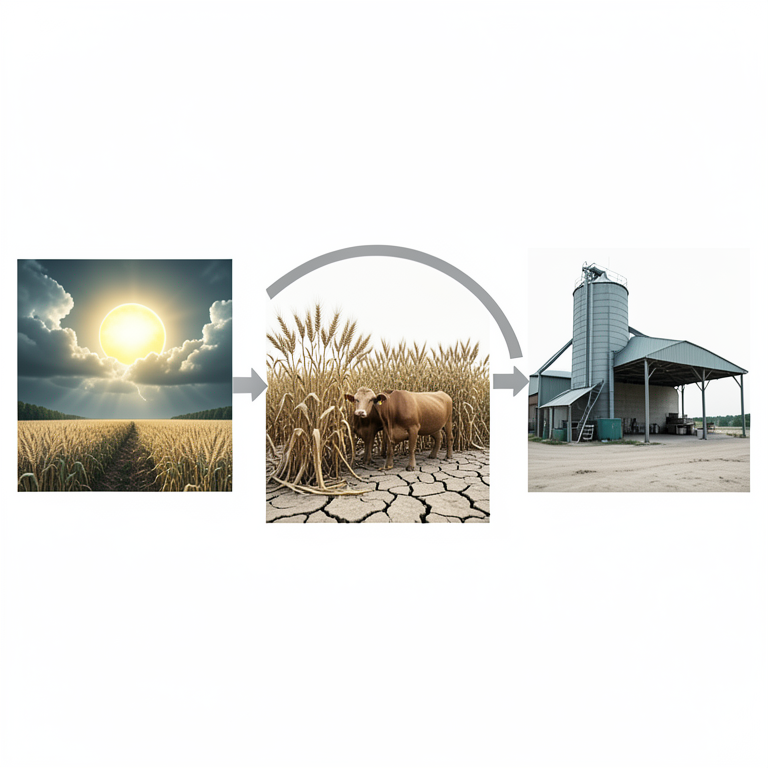
Climate Stressors and Agricultural Impacts
AI-generated conceptual illustration (Wheat fields and cattle in a rural landscape). It explains the idea and does not show study data.
View source evidence ↗Figures & tables
From the original paper Table 1
 Table 2
Introduction
Agriculture stands as a fundamental pillar of the global economy, playing a particularly vital role in the economic structures of developing countries [1][2] . It provides livelihoods for billions of people and is a primary source of food security, underpinning the sustenance of communities worldwide. The sector contributes significantly to national incomes, exports, and employment, especially in rural areas where agricultural activities are often the main economic drivers [3][4][5] . However, the inherent dependence of agriculture on climatic conditions makes it highly susceptible to the impacts of climate change. Climate change, characterized by rising global temperatures, shifting precipitation patterns, and increasing frequency and intensity of extreme weather events, poses a formidable challenge to agricultural productivity. The Intergovernmental Panel on Climate Change (IPCC) has consistently warned that if current trends continue, the world could see an increase in average global temperatures by 1.5°C as early as 2030, with even more drastic changes in the latter half of the century. These climatic shifts are already being felt in agricultural systems worldwide, manifesting in reduced crop yields, altered growing seasons, and increased vulnerability to pests and diseases [6] . In many regions, the traditional farming calendars are being disrupted as growing seasons shift and the predictability of weather patterns diminishes. This uncertainty places additional strain on farmers, particularly smallholder farmers in developing countries, who often lack the resources and infrastructure to adapt to these rapid changes. For example, in sub-Saharan Africa, where rain-fed agriculture is predominant, changes in rainfall patterns have led to inconsistent crop production, threatening food security and exacerbating poverty in already vulnerable communities [7][8][9] . Moreover, the economic consequences of climate change on agriculture extend beyond the immediate effects on crop yields and livestock production. They have far-reaching implications for the broader agricultural economy, including input markets, labor markets, and food supply chains. As agricultural productivity declines, the costs of production increase, leading to higher food prices and reduced access to affordable food. This situation is particularly dire in low-income countries, where a significant portion of household income is spent on food [1012] . Consequently, climate change not only threatens food security but also amplifies social and economic inequalities. Extreme weather events, such as floods, droughts, and hurricanes, are becoming more frequent and intense due to climate change. These events can cause catastrophic damage to agricultural infrastructure, including irrigation systems, www.extensionjournal.com storage facilities, and transportation networks, further undermining agricultural productivity. For instance, the 2019 Cyclone Idai in Mozambique, Zimbabwe, and Malawi devastated vast areas of farmland, leading to food shortages and economic losses estimated at over $2 billion. Such events highlight the increasing vulnerability of the agricultural sector to climate-related risks and underscore the need for robust adaptation and mitigation strategies [1315] . The economic impacts of climate change on agriculture also reverberate through global trade systems. As regions experience varying degrees of productivity changes, trade patterns are likely to shift, with some countries facing reduced export potential while others grapple with increased import dependence [16][17][18][19] . This could lead to greater volatility in global food markets, affecting food availability and prices on an international scale. Understanding the economic impacts of climate change on agriculture is crucial for developing effective adaptation strategies and policies. Policymakers, researchers, and stakeholders in the agricultural sector must collaborate to devise and implement measures that enhance the resilience of agricultural systems to climate change. This includes promoting climate-smart agricultural practices, investing in research and development for climate-resilient crops, and strengthening institutional support for farmers [20][21][22] . By doing so, it is possible to safeguard agricultural productivity, ensure food security, and sustain the livelihoods of millions of people around the world in the face of an increasingly volatile climate.
Effects of climate change on agricultural productivity Temperature fluctuations
Temperature fluctuations due to climate change represent one of the most direct and impactful threats to agricultural productivity. As global temperatures rise, the delicate balance required for optimal crop growth is increasingly disrupted [23] . Crops such as wheat, rice, and maize, which are staple foods for a large portion of the world's population, are particularly vulnerable to temperature changes. These crops have specific temperature ranges within which they thrive, and even slight deviations can have significant effects on their growth and yields. Higher temperatures can accelerate the maturation process of crops, leading to shorter growing periods. While this may initially seem beneficial, it often results in reduced yields and lower-quality produce. Rapid maturation typically limits the time available for photosynthesis, the process by which plants convert sunlight into the energy needed for growth. As a result, crops may not develop fully, leading to smaller grains or fruits, lower nutritional content, and decreased overall productivity. For example, in wheat, a critical staple crop, elevated temperatures during the grain-filling period can reduce grain size and weight, directly impacting yields [24] . Moreover, temperature extremes, such as heat waves, can cause even more severe damage. Prolonged exposure to high temperatures can lead to heat stress in plants, which may cause wilting, reduced growth, and increased susceptibility to pests and diseases. In regions where temperatures exceed the tolerance levels of local crops, the impacts can be devastating, leading to crop failures and significant economic losses for farmers. Temperature fluctuations also negatively impact livestock.
Heat stress in animals can reduce milk production, decrease weight gain, and impair reproductive success, all of which contribute to lower productivity in the livestock sector. For example, dairy cows exposed to high temperatures produce less milk due to decreased feed intake and altered metabolic processes. Similarly, heat stress in poultry can lead to lower egg production and reduced meat quality. In summary, temperature fluctuations driven by climate change are already impacting agricultural productivity, with significant implications for global food security [25][26][27] . The reduced yields, lower-quality produce, and diminished livestock productivity caused by rising temperatures underscore the need for urgent adaptation measures to protect agricultural systems and the livelihoods that depend on them.
Changing Precipitation Patterns
Climate change is significantly altering precipitation patterns, resulting in both increased intensity of rainfall in some regions and prolonged droughts in others. These shifts present major challenges for agriculture, as consistent and predictable water availability is crucial for crop growth and livestock health [28][29] . The disruption of traditional precipitation patterns can lead to severe consequences for planting and harvesting schedules, water resource management, and overall agricultural productivity. In regions where rainfall becomes more intense, the risk of water logging and soil erosion increases. Excessive rainfall can saturate soils, preventing proper root development and reducing oxygen availability to plants. Waterlogged conditions are detrimental to crops like rice and wheat, leading to stunted growth and lower yields. Additionally, heavy rainfall can cause soil erosion, washing away nutrient-rich topsoil and further diminishing the land's capacity to support healthy crop production. This erosion can also lead to sedimentation in water bodies, disrupting local ecosystems and water quality [30][31][32][33] . Conversely, areas experiencing prolonged droughts face significant water scarcity, which can be devastating for crops reliant on consistent irrigation [34] . Drought conditions stress plants, leading to reduced growth, wilting, and lower yields. In extreme cases, drought can cause complete crop failure, particularly in regions where rain-fed agriculture is predominant [30][31] . Water scarcity also heightens competition for limited water resources, potentially leading to conflicts and exacerbating the vulnerability of communities dependent on agriculture. The economic implications of changing precipitation patterns are profound. Reduced agricultural output due to erratic rainfall and droughts can lead to higher food prices, squeezing household budgets and increasing food insecurity [32] . Farmers, especially smallholders, may experience reduced income, pushing them further into poverty. Additionally, the increased incidence of pests and diseases in changing climatic conditions can further strain agricultural productivity and economic stability.
Extreme weather events
The frequency and intensity of extreme weather events, such as hurricanes, floods, and droughts, are expected to increase due to climate change [35] . These events can cause significant damage to crops, livestock, and infrastructure, leading to substantial economic losses. For instance, floods www.extensionjournal.com can destroy entire harvests, while droughts can lead to widespread crop failures [33] . The economic costs of such events are enormous, not only in terms of immediate losses but also in long-term impacts on agricultural productivity and rural livelihoods.
Shifts in Growing Seasons
Climate change is causing shifts in growing seasons, with some regions experiencing earlier or later planting and harvesting periods. These shifts can disrupt traditional farming practices and reduce the suitability of certain crops for specific regions. For example, a warming climate may make it difficult to grow certain crops in their current regions, forcing farmers to switch to alternative crops or practices, which may not be as economically viable. This can lead to reduced agricultural productivity and increased costs for farmers, further exacerbating the economic impact.
Impact on Smallholder Farmers
Smallholder farmers are particularly vulnerable to the economic impacts of climate change. These farmers often have limited resources and access to technology, making it difficult to adapt to changing conditions [34] . As a result, they are more likely to experience reduced yields and income, which can push them further into poverty. The economic vulnerability of smallholder farmers also has broader implications for food security, as they are often the primary producers of food in many regions.
Food Security and Global Trade
The economic impacts of climate change on agricultural productivity also have significant implications for food security and global trade. Reduced agricultural output can lead to higher food prices, making it more difficult for lowincome households to access adequate nutrition. Additionally, changes in agricultural productivity can disrupt global trade patterns, as countries that rely on agricultural exports may face reduced income, while those that depend on imports may experience increased costs [26] . These changes can exacerbate existing inequalities and contribute to global food insecurity.
Adaptation Strategies and Policy Measures
To mitigate the economic impacts of climate change on agricultural productivity, it is crucial to develop and implement robust adaptation strategies and supportive policy measures. These approaches are vital for enhancing the resilience of agricultural systems and ensuring the sustainability of food production in the face of climatic changes.
Improved Agricultural Practices
One of the most effective ways to adapt to climate change is by adopting climate-smart agricultural practices. These practices include crop diversification, conservation agriculture, and integrated pest management, all of which can help farmers respond to changing environmental conditions. Crop diversification, for instance, reduces the risk of total crop failure by spreading risk across different crops with varying resilience to climate stressors. Conservation agriculture, which emphasizes minimal soil disturbance, crop rotation, and cover cropping, helps maintain soil health, improve water retention, and reduce erosion, thereby enhancing the resilience of farming systems [38] . Integrated pest management (IPM) combines biological, physical, and chemical methods to control pests and diseases in a way that minimizes environmental impact and supports long-term agricultural productivity. By integrating these practices, farmers can better manage the risks associated with climate change and reduce potential economic losses.
Investment in Research and Development
Increased investment in agricultural research and development (R&D) is essential for developing new technologies and practices that can help farmers adapt to climate change. This includes breeding new crop varieties that are more resilient to extreme temperatures, drought, and other climate-related stressors. For example, developing drought-resistant or heat-tolerant crop varieties can significantly enhance productivity in regions facing water scarcity or rising temperatures. Additionally, R&D can lead to advancements in water management and irrigation techniques, such as precision irrigation systems that optimize water use efficiency. These innovations are critical for sustaining agricultural productivity in the face of increasingly erratic weather patterns. Public and private sector investment in R&D is necessary to accelerate the development and dissemination of these technologies, ensuring that farmers have access to the tools they need to adapt to climate change effectively [39] .
Explanation of Tables
Table 2 shows the effects of changing precipitation patterns on agricultural production in different regions. It includes the type of precipitation change, its impact on crop production, and the resulting economic effects, such as increased food prices and higher import costs.
| Region | Precipitation Change | Impact on Crop Production | Economic Impact |
|---|---|---|---|
| Southeast Asia | Increased rainfall | Water logging, crop damage | Reduced yields, increased costs of remediation |
| Sub-Saharan Africa | Decreased rainfall | Drought, reduced yields | Higher food prices, increased import costs |
| Mediterranean Region | Variable precipitation | Irregular crop production | Increased instability in food prices |
| North America | Increased variability | Unpredictable growing seasons | Higher insurance premiums, unstable incomes |
Table text extracted from the original PDF; superscript letters are shown inline. The original table image is below.
View original table image
Financial Support and Insurance
Providing financial support and insurance to farmers is another crucial adaptation strategy. Climate change introduces new risks to agriculture, including increased variability in yields and the potential for catastrophic losses due to extreme weather events. To help farmers manage these risks, governments and financial institutions should offer access to credit, subsidies for climate-resilient technologies, and insurance schemes that protect against crop and livestock losses. Access to credit enables farmers to invest in climate-smart technologies and practices, while subsidies can reduce the financial burden of adopting new methods. Insurance schemes, such as weather-indexed insurance, provide a safety net for farmers, ensuring that they are compensated in the event of crop failure or significant yield reductions due to climate-related factors. By reducing financial risk, these measures can encourage farmers to adopt more resilient practices and sustain their livelihoods in the face of climate change.
Policy and Institutional Support
Effective adaptation to climate change in agriculture also requires strong policy and institutional support.
Governments and international organizations must develop and implement policies that create an enabling environment for innovation and adaptation.
Figures and tables from the paper
| Crop | Optimal Temperature Range (°C) | Observed Temperature Increase (°C) | Impact on Yield | Economic Consequences |
|---|---|---|---|---|
| Wheat | 15-20 | +2 | -15% yield | Increased costs, reduced income |
| Rice | 20-25 | +3 | -20% yield | Higher food prices, import reliance |
| Maize | 18-23 | +2.5 | -10% yield | Losses in export markets, farmer debt |
| Soybean | 20-25 | +2 | -12% yield | Lower profitability, market volatility |
Table text extracted from the original PDF; superscript letters are shown inline. The original table image is below.
View original table image
References
36 in the original paper- Ahmed M, Sharma P. The impact of climate change on crop yields: A meta-analysis. J Environ Manage. 2022;304:113901. https://doi.org/10.1016/j.jenvman.2022.113901
- Bansal S, Sharma A. Climate change and its impact on agriculture in developing countries. Glob Environ Change. 2021;69:102273. https://doi.org/10.1016/j.gloenvcha.2021.102273
- Bashir MK, Schilizzi S. Climate change adaptation strategies for smallholder farmers: A review. Agric. Syst. 2023;208:103536. https://doi.org/10.1016/j.agsy.2023.103536 www.extensionjournal.com
- Beddington J, Asaduzzaman M, Clark M. Achieving food security in the face of climate change, population growth, and resource constraints. Lancet. 2012;380(9830):2050-260. https://doi.org/10.1016/S0140-6736(12)61250-0
- Challinor AJ, Watson J, Lobell DB. A meta-analysis of crop yield under climate change and adaptation. Nat Clim. Change. 2014;4(4):287-291. https://doi.org/10.1038/nclimate2153
- Dell M, Jones BF, Olken BA. What do we learn from the weather? The impact of temperature shocks on growth in economic development. J Econ Lit. 2014;52(3):487-512. https://doi.org/10.1257/jel.52.3.487
- Fischer G, Shah M, van Velthuizen H. Climate change and agricultural vulnerability. Int. J Global Environ Issues. 2002;2(4):247-266. https://doi.org/10.1504/IJGENVI.2002.001209
- Folberth C, Müller C. Assessing the impact of climate change on global agricultural productivity. Nat Clim. Change. 2021;11(3):198-206. https://doi.org/10.1038/s41558-021-01009-0
- Hasegawa T, Fujimori S. Climate change impacts on global food production: An integrated assessment. Global Environ Change. 2021;66:102218. https://doi.org/10.1016/j.gloenvcha.2021.102218
- Iizumi T, Ramankutty N. The influence of climatic variability on global crop yield. Nat Commun. 2015;6:7242. https://doi.org/10.1038/ncomms8242
- Lobell DB, Gourdji SM. The influence of climate change on global crop productivity. Plant Physiol. 2012;160(4):1686-1697. https://doi.org/10.1104/pp.112.208298
- Mendelsohn R, Dinar A. Climate change and agriculture: An economic analysis of the effects of climate change on agricultural production and food prices. Agric. Econ. 2009;40(3):345-361. https://doi.org/10.1111/j.1574-0862.2009.00390.x
- Nelson GC, Rosegrant MW. Food security, farming, and climate change to 2050. IFPRI Food Policy Report. International Food Policy Research Institute; c2010. Available from: https://www.ifpri.org/publication/foodsecurity-farming-and-climate-change-2050
- Ort DR, Long SP. Limits on the yield of C3 crops: What do we know and how do we know it? J Exp. Bot. 2014;65(5):1659-1664. https://doi.org/10.1093/jxb/eru018
- Rosenzweig C, Hillel D. Climate Change and the Future of Agriculture. Annu Rev Environ Resour. 2015;40:25-44. https://doi.org/10.1146/annurevenviron-102014-021225
- Schlenker W, Roberts MJ. Nonlinear effects of weather on corn yields. Appl. Econ Perspect. Policy. 2009;31(3):247-271. https://doi.org/10.2139/ssrn.1152323
- Seo SN, Mendelsohn R. Climate change impacts on animal husbandry in Africa: A Ricardian analysis. Afr. J Agric Resour Econ. 2008;2(1):1-15. Available from: https://www.ajare.org/ajare/index.php/ajare/article/view /112
- Wheeler T, Von Braun J. Climate change impacts on global food security. Science. 2013;341(6145):508-513. https://doi.org/10.1126/science.1239402
- Wolf J, Schneider UA. The impact of climate change on global agricultural productivity and food security. Food Sec. 2012;4(1):39-51. https://doi.org/10.1007/s12571-011-0174-2
- Zhang X, Kumar S. Assessing the impact of climate change on agricultural yield in various regions: A global perspective. Environ Res Lett. 2022;17(2):024003. https://doi.org/10.1088/1748-9326/ac4d8c
- Adams RM, Hurd BH. Climate change and agriculture: An economic analysis of impacts and adaptations. Agric. Econ. 1999;21(2):185-95. https://doi.org/10.1016/S0169-5150(99)00014-2
- Lellapalli Rithesh. Defense Mechanisms and Disease Resistance in Plant-Pathogen Interactions. Plant Sci. Arch. 2020;1:01-04. https://doi.org/10.51470/PSA.2020.5.4.01
- Branca G, McCarthy N. Climate-smart agriculture: An approach for managing climate risks. Mitig Adapt Strateg Glob Change. 2013;18(1):117-137. https://doi.org/10.1007/s11027-012-9385-8
- Nazneen S, Sultana S. Green Synthesis and Characterization of Cissus quadrangularis L. stem mediated Zinc Oxide Nanoparticles. Plant Sci. Arch., 2024, 1(05).
- Hansen J, Ruedy R. Global surface temperature change. Rev. Geophys., 2015, 48(4). https://doi.org/10.1002/2015RG000482
- Afreen N, Jones I. Plant pathology: Advances in disease diagnosis and management. Plant Sci. Arch. 2022;14:16.
- Afroz N. Exploring traditional medicine in South Africa: A review of ethnobotanical studies on medicinal plants. Plant Sci. Arch. 2022;14:14-18.
- Bhuvaneswari R, Saravanan KR, Vennila S, Suganthi S. The Role of Epigenetics in Plant Breeding Understanding Heritable Changes beyond DNA Sequence. Plant Sci. Arch; c2020. p. 22-25. https://doi.org/10.51470/PSA.2020.5.1.22
- Anbarasan S, Ramesh S. Crop science: Integrating modern techniques for higher yields. Plant Sci. Arch., 2022, 5(08).
- Chawla R, Mondal K, Pankaj MS. Mechanisms of plant stress tolerance: Drought, salinity, and temperature extremes. Plant Sci. Arch., 2022, 4(08).
- Lobell DB, Field CB. Global scale climate-crop yield relationships and the impacts of recent warming. Environ Res Lett. 2007;2(1):014002. https://doi.org/10.1088/1748-9326/2/1/014002
- Anbarasan S, Ramesh S. Photosynthesis efficiency: Advances and challenges in improving crop yield. Plant www.extensionjournal.com Sci. Arch. 2022;19-21.
- Bhuvaneswari R, Saravanan KR, Vennila S, Suganthi S. Precision Breeding Techniques: CRISPR-Cas9 and Beyond in Modern Plant Improvement. Plant Sci. Arch. 2020;17-21. https://doi.org/10.51470/PSA.2020.5.1.17
- Rathna Kumari BM. Biofortification Strategies for Enhancing Nutrient Content in Staple Crops: Progress, Challenges, and Future Directions. Plant Sci. Arch.; c2020. p. 07-10. https://doi.org/10.5147/PSA.2020.5.1.07
- Moriondo M, Bindi M. Climate change impact on crop yield and adaptation strategies in Europe. Clim. Change. 2007;81(1):73-96. https://doi.org/10.1007/s10584-006-9167-4
- Rathna Kumari BM. Exploring the antiviral properties of dietary plant extracts against SARS-CoV-2: A comprehensive review. Plant Sci. Arch., 2022, 8(10).