
Research article · 2024 · Full text
International Journal of Agriculture Extension and Social DevelopmentComparative analysis of performance determinants in agri-start-ups across continents
Volume 7(8) · Pages 614–623 · DOI: 10.33545/26180723.2024.v7.i8i.996 ↗
Research areasEntrepreneurship Studies and InfluencesFirm Innovation and Growth
Abstract
Author-writtenIn the rapid evolving landscape of global entrepreneurship, start-ups across different continents are shaping the future of various industries with innovations. Startups are essential to the search for innovative solutions to the climate emergency. The issue is that startups typically don't last long enough to be successful. Hence we attempted to identify the performance determinants of start-ups in different continents. In this paper we used data from web of science, Scopus, and ProQuest using different search strings. Through advanced search we found 14404 studies out of them 71 studies satisfied our inclusion-exclusion criteria. From these 71 studies from different continents we conducted a systematic literature review to identify the performance determinants of start-ups using NviVo-14 software, while the answer of frequently faced problem or questions were given based on the generalization of all these studies. Based on our results we found that product market fit was most dominating factor to perform in start-up business, so the co-founder should emphasized on developing the good product-market-fit in the early stage of start-up venture? This study might help the new co-founder of different countries to learn how to start the novel business and it would contribute to develop suitable strategy to perform well.
Summary
Source-checkedPlain-language reading of the full paper, prepared with AI and checked against the text. Each point links to the authors' own words.
Why it matters
- Start-ups are considered vital for finding innovative solutions to address the global climate emergency. View evidence ↗
- A significant problem in the entrepreneurship landscape is that start-ups often fail before they can achieve success. View evidence ↗
- Despite the importance of the sector, research specifically focusing on agriculture and related agri-start-ups has been largely overlooked. View evidence ↗
The question
- The study aimed to identify the factors that determine the performance of agri-start-ups across different continents and to provide answers to common problems faced in the start-up industry. View evidence ↗
What they did
- The researchers searched for relevant publications using the Scopus, Web of Science, and ProQuest databases. View evidence ↗
- Out of 14,404 initial records identified, 71 studies met the specific inclusion and exclusion criteria for the final analysis. View evidence ↗
- The 71 selected studies were analyzed using NviVo-14 software via a content analysis methodology. View evidence ↗
- The analyzed studies were distributed across Asia (19), Europe (16), Northern America (13), Southern America (10), Oceania (7), and South Africa (6). View evidence ↗
What they found
- Product-market fit (PMF) or the core idea was found to be the most dominant performance determinant across all studied countries. View evidence ↗
- In Asia, the primary determinants of performance were product-market fit, followed by the business model and marketing. View evidence ↗
- In Europe, the business model and product-market fit were equally the most important determinants, followed by founder decisions on founding, team management, and external alliances. View evidence ↗
- In Northern America, the most important determinants were the idea or product-market fit, followed by team competitive advantage, marketing, and the business model. View evidence ↗
- In Oceania, product-market fit was the top determinant, followed by team competitive advantage, marketing, business model, and funding. View evidence ↗
- In South Africa, the business model was the most important determinant, followed by product-market fit/idea, with funding and founder decision-making being equally significant. View evidence ↗
- In South America, the primary determinant was the idea or product-market fit, followed by founder decision-making, marketing decisions, the business model, and time realization. View evidence ↗
- Across the board, organizational factors were the most influential class of determinants, followed by interpersonal and external factors. View evidence ↗
What it means
- The authors conclude that because product-market fit is the most dominating factor, co-founders should prioritize its development during the early stages of their venture. View evidence ↗
- The authors state that this study can assist new co-founders globally in learning how to start a business and developing strategies for better performance. View evidence ↗
Visual summary
2 visualsIllustrations explain the paper; charts are replotted from the paper's own table values.
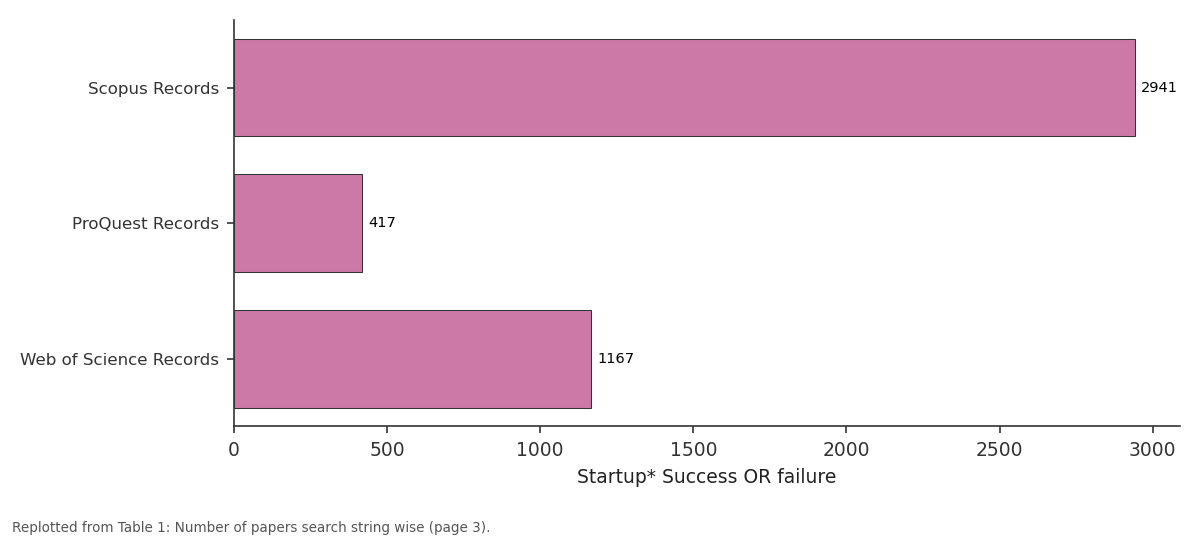
Startup* Success OR failure: Scopus Records vs ProQuest Records vs Web of Science Records
Replotted from Table 1 (page 3) of the original paper. Every bar is the paper's own table value.
View source evidence ↗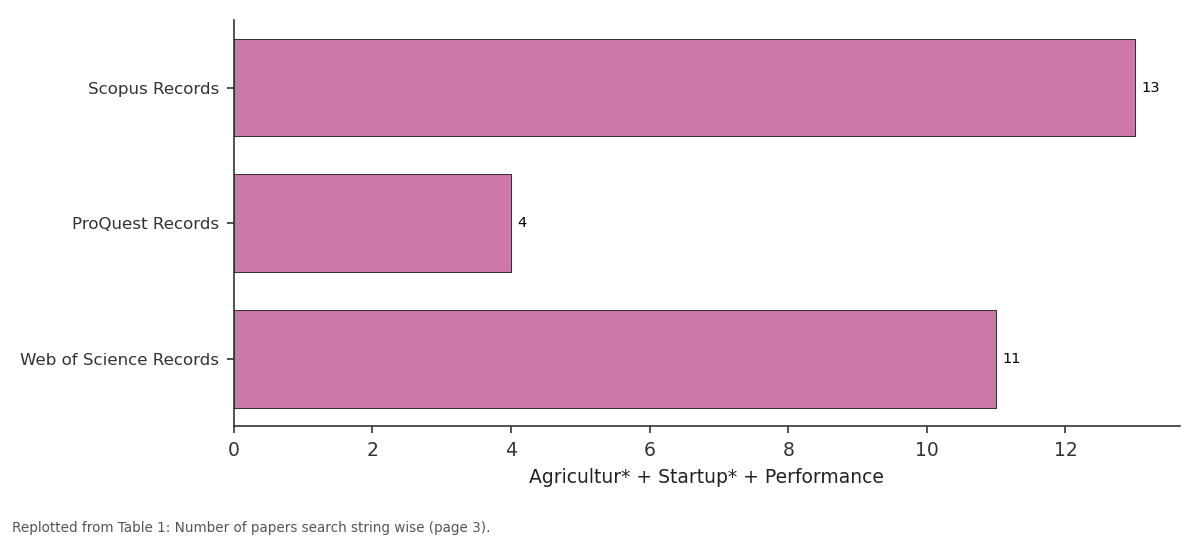
Agricultur* + Startup* + Performance: Scopus Records vs ProQuest Records vs Web of Science Records
Replotted from Table 1 (page 3) of the original paper. Every bar is the paper's own table value.
View source evidence ↗Figures & tables
From the original paper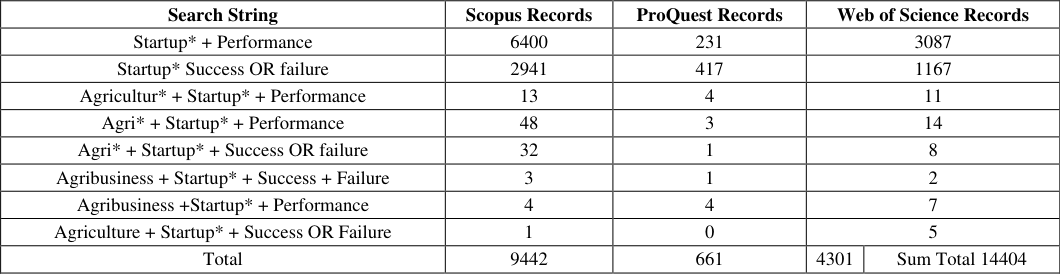 Table 1
 Table 2
 Table 3
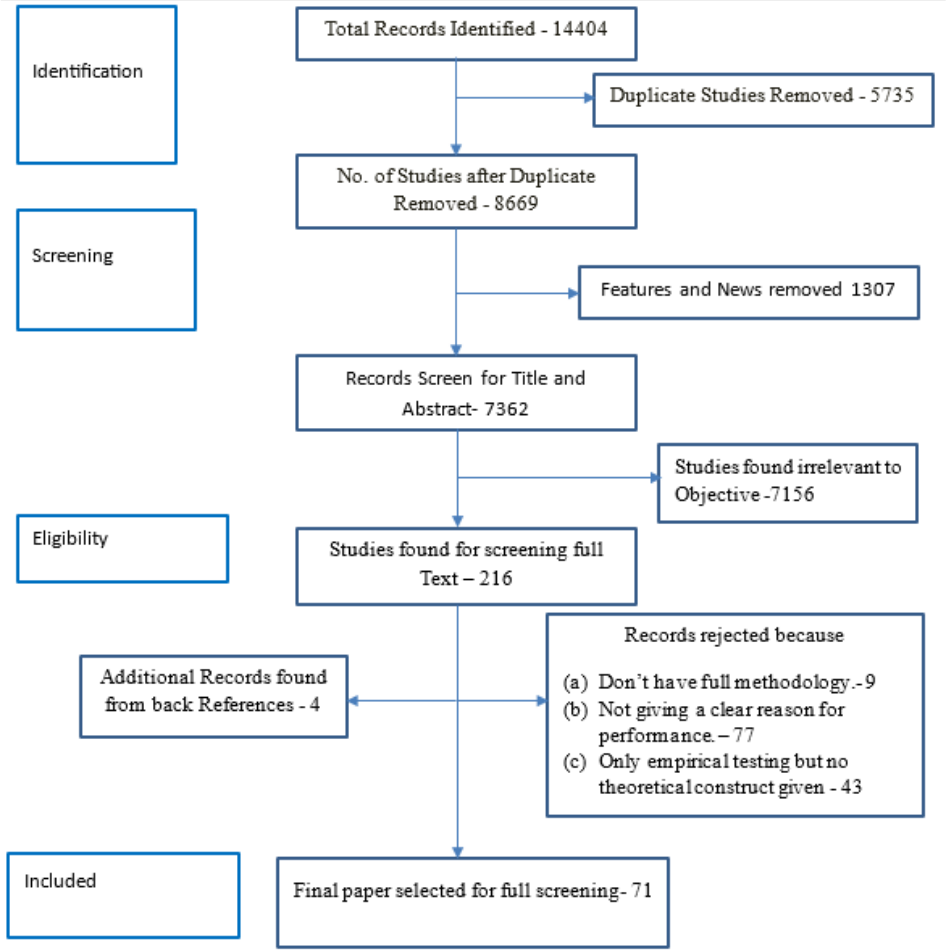 Figure 1
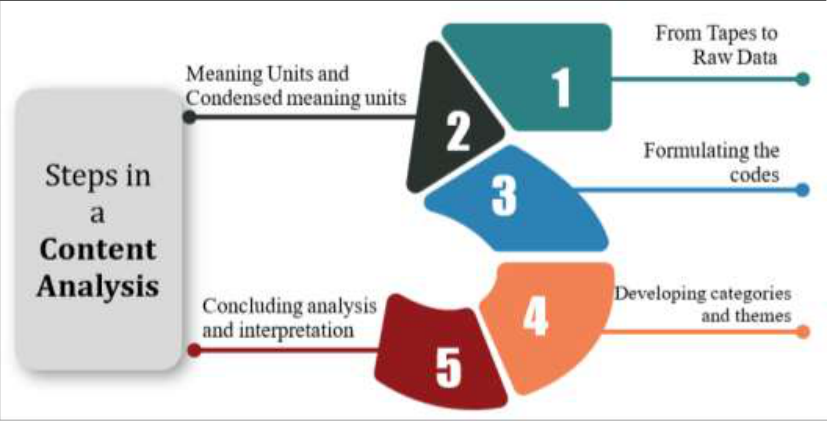 Figure 2
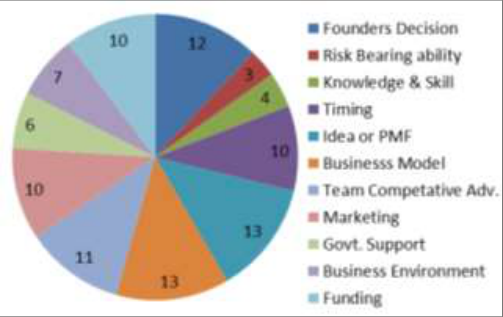 Figure 4
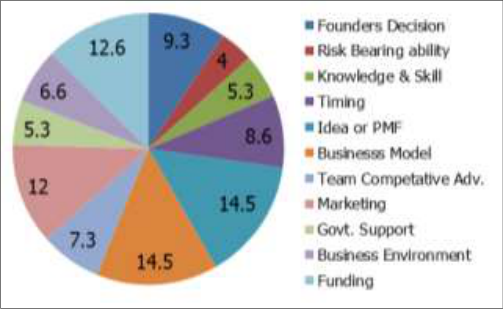 Figure 3
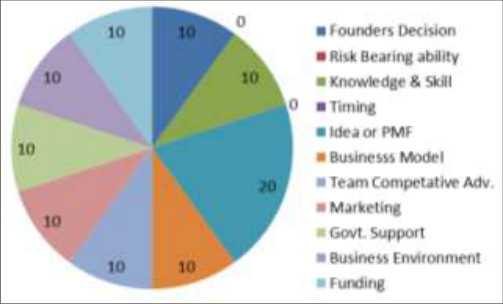 Figure 8
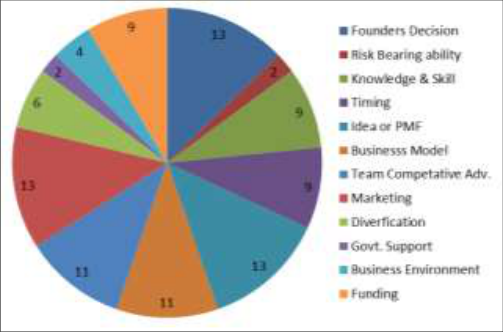 Figure 7
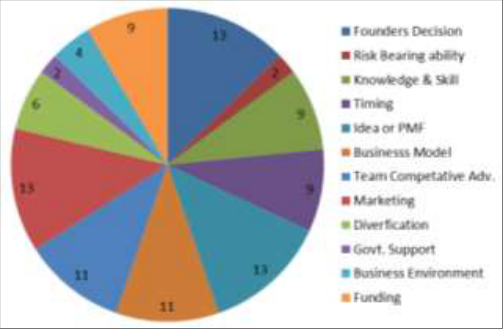 Figure 6
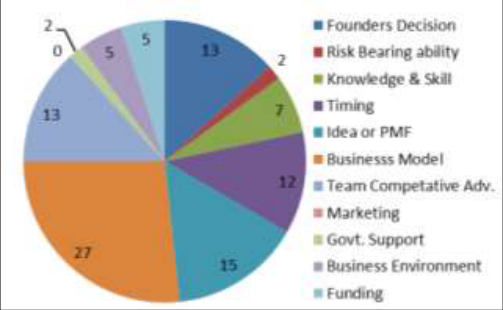 Figure 5
Introduction
In the rapid evolving landscape of global entrepreneurship, start-ups across different continents are shaping the future of various industries with innovations. Europe is the most represented region in the Emerging Ecosystems ranking, with a 42% share in the Top 100 Emerging Ecosystems, followed by North America with a 27% share. The spirit of innovation is prevalent and driven by startups that are developing world-changing technologies. "By fostering the startup ecosystem the economies overall growth and welfare can be boosted. In essence, fostering a vibrant startup ecosystem is not just advantageous, but essential for any countries sustained competitiveness, economic vitality, and effective response to societal changes. The market dynamics, production and application of knowledge have been getting the innovative frame. Everyday many innovators are coming in business with innovation and especially after the covid-19 agri-start-ups in Asian and African countries getting very faster growth but the funding and number of unicorn are declining science 2021 because of business expectation. The business expectation is not only affection the start-ups but also startups growth which is also affecting the business expectation and this might be one of reason of poor performance of start-ups but the performance varies with start-up ecosystem and economic state. Startups are essential to the search for innovative solutions to the climate emergency. The issue is that startups typically don't last long enough to be successful. That's why performance evaluation is a common method used by researchers to determine what makes startups successful. But research on agriculture and related fields is mostly ignored. To promote the agribusiness startups globally demands intense study on understanding the reason of poor performance of start-ups and developing general framework for start-ups to get rid out different problems including financial losses and market instability, which will not only promote the start-ups but also create the innovative culture through supporting the innovators coming with high ambition to revolutionize.
Review of Literature
The performance of start-ups depends on start-up ecosystem and interaction of start-ups with dynamic economic forces. Hence, Lizarelli et al. (2022) [46] conducted a systematic literature review to identify the success factors of lean startups using preferred reporting items for systematic review and meta-analysis and found that the most cited performance factor was the support of top management for the implementation of start-ups, followed by customer feedback, minimum viable product to satisfy the customer's www.extensionjournal.com need, and team quality. We can generalize these performance determinants into three basic categories based on the stimulus and response of determinants, which are personal attributes of entrepreneurs, organizational attributes, and the external environment. The personal attribute includes top management and minimum viable product based on the idea of the founder, while organizational and external factors include team quality and customer feedback. According to the CB Insight report (2017) [17] , the most influential performance determinants of start-ups were lack of product-market fit or lack of demand for the product (42%) followed by lack of market for their goods and services (14%). To perform better in uncertain market demands, when delivering the product, having the necessary technology to be more innovative or tackling major difficulties and being unable to address these problems counts the most. The members of the ideal cofounder's team should have the necessary abilities, enthusiasm, and work experience to work in startups. The timing of entry is critical because it can significantly affect how quickly startups might grow (Insights, 2017) [17] . While, Lussier & Corman (1996) [48] considered ten variables capital, record keeping, industry experience, staffing, professional advisor, planning, minority, parent-owned business, industry experience, and economic timing, to identify which factor is more influential on start-ups performance, and identified that Professional advisor was the most important performance determinants followed by planning, and education was important performance determinants. To identify the influencing factors of technology business start-ups conducted a quantitative study. The author surveyed 300 young startup's CEO and got 205 valuable responses. The data were analyzed using SPSS 22 and PLS 3.2.9 and found that network capability, technology commercialization capability, and exit strategy were the most important determinants of the start-up's performance. While, Klotz et al. (2014) [39] identified the most important determinants of performance and whether soft skills (passion and vision) or hard skills (previous experience) are important for the performance of start-ups. Authors identified that almost 60% of new start-ups venture fail due to organizational factors despite having experience. According to the author performing well in a diverse entrepreneurial climate, the new firm requires having a clear strategic vision and entrepreneurial passion along with soft hard skills. Through hard skills, entrepreneurs can generate a resource base but for the team to perform collectively well requires strong motive and intent. Kim et al. 2018 [38] identified critical success factors in designing business start-ups using the analytic hierarchy process (AHP). The author classified the success of design business start-ups into four classes of determinants (1) entrepreneurship (2) innovation, (3) technology, and (4) economics. The entrepreneurial factors include the entrepreneur's competency, adventure tendency, desire to accomplish, goal orientation, and risk sensitivity, while the innovation category includes entrepreneurial motivation, progressive thinking, self-development, idea commercialization, and market orientation opportunity switch. The technology category includes creative technology utilization, technology knowledge marketoriented technology, and high technology globalization, while the economics category includes continuous investment, venture capital utilization, raising venture funds, and financial resource retention. Among all these determinants idea commercialization was the most important success factor followed by goal orientation, and entrepreneur competency in all categories. If we compare individual category wise among the five determinants of entrepreneurship, goal creation was the important performance determinant, while among the five determinants of innovation, idea commercialization was the most important performance determinant, and in category 3 rd (technology), creative team utilization was most important performance determinants, and among five determinants of 4 th category, continuous investment was most important performance determinants (B. Kim et al., 2018b) [38] . De Oliveira Silva et al., (2022) [22] identified that start-ups performance depends on dynamic capability which can be measured in four senses that are market competency and opportunity recognition, absorption capacity, integration, and innovation. Recognition of market opportunity requires in-depth market research to take advantage of a niche market and other un-explorable market segments. Absorptive capacity (ability to identify new external information, assimilate, and use it for organization) provides a competitive advantage if external information is used based on the organization's strength. The author stated accelerators are any organization that assists start-ups by providing them input needed to enhance their performance and success, where performance can be measured in financial (based on certain revenue generation) and nonfinancial (achievement of objectives, and this definition have a broader scope) aspects. Attempted to identify the pattern and extent to which founders play an important role in the performance of start-ups, and found that founders not only play a role in managing the internal business environment but the investment and capital decisions in the firm by external sources depend on the entrepreneurial capacity and growth rate of start-ups. So if the founder replaced by new one than the new investors will attempt to get the advantage of new investment opportunity so firms capital structure will alter and have a positive effect on startups performance while if only founders internal position in start-ups altered than it will hurt performance. Similarly, attempted to identify the competitive advantage of product innovation, market intelligence, and pricing capability on a start-up's performance, these parameters are called dynamic capability. Dynamic capability means the firm's ability to integrate, build, and reconfigure internal and external competencies to address a rapidly changing environment. So, to take a competitive advantage by combining different resources it's necessary to offer products either at incentivized prices or innovative or value-added products. The author identified that timing and location also play important roles in performance. The marketing strategy influences the performance have broad implication because it's integrated with the broad external economic situation like affordable price setting policy depending on income distribution pattern and demographic features so market research plays an important role in determining start-ups www.extensionjournal.com performance. Hence performance determinants and how it affects the start-ups varies with start-up ecosystem and economic system, but we didn't find any study which attempted to identify the comparative analysis and answer the frequently faced problems of cofounders or innovators who want to initiate the new start-up venture. Hence to answer these problems we formulated these two objectives, 1 st to identify the performance determinants of agri-start-ups of different continents, and 2 nd to answer the frequently asked problems in the start-ups industry.
Data and Methodology
The SCOPUS, Web of Science core collection (Thompson Reuters), and ProQuest database were referred for searching research publications on given relevant search string. Only the English language and start-ups as restrictive gates were used to identify more relevant studies in advanced search in different databases. While the frequently asked questions were answered using the generalization of results of content analysis.
Inclusion and exclusion criteria
To select relevant studies for synthesizing detailed knowledge about agribusiness start-ups' performance we included the following inclusion-exclusion criteria.
Table 2: Inclusion Criteria
Table 2: Inclusion Criteria
Inclusion Criteria Inclusion criteria
Inclusion Criteria Inclusion criteria
Research focus
Studies that identify performance parameters, desirable those who classified these parameters, and selected studies that give a detailed analysis of how particular determinants affect a start-up's performance.
Quantitative empirical studies
Only those quantitative studies are included that explain how particular determinants affect a start-up's performance based on quantitative testing.
Language
Only English language studies included
Review schema
To review systematically and access the results qualitatively, we followed the PRISMA-2020 methodology of systematic review. We found a total of 14404 records from different databases out of which only 71 studies satisfied the inclusion-exclusion criteria.
Among the selected studies 19 studies were conducted in Asia, 16 studies in Europe, 13 studies in Northern America, 10 studies in Sothern America, 7 studies in Oceania, and 6 studies were conducted in South Africa. The selected studies (71 studies) were analyzed using the NviVo-14 software through content analysis methodology which involves the following five steps: www.extensionjournal.com (Source: http://www.prisma-statement.org/Extensions/ScopingReviews) 1. Meaning unit and condensed meaning unit: this step involves converting the direct verbal responses into a meaningful unit in uniform language and descriptive. At the time of data collection, it's very essential to collect the relevant needed data and the sample should be big enough to represent to representation of the population. Selecting and putting relevant information demands reading the entire content (transcript) or listening to recordings many times to develop the concept and meaning intact. The condensed involves shortening the sentences to meaningful units. 2. From tape to raw data: If tape data at this still were not meaning were converted into meaningful units based on the semi-structure questions and study purpose designed for content analysis using Nvivo-14.
Formulating the codes:
After converting the raw data into a meaningful unit to prepare the codes, the codes were bullet points that gave a clear connection between interviewed condensed information and the study's desired questions. To capture the in-depth interpretation of the collected information the child-codes should be made based on which were the sub-category or in-depth information about the coded information. 4. Developing categories and themes: After developing codes and sentiments the next step is to develop the themes in which we generalize the statements and makes the statements uniform, here the overreaching impression is seen in the results and method, so we go through the content analysis where the content analysis done by the Nvivo-14.
Concluding analysis and interpretation:
To conclude the results of performance determinants results were discussed with the previous studies results.
Results
Factor responsible for start-ups performance (According systematic review) Personal Factors: Factors which can be controlled or depends on co-founders capability. These factors includes CEO decision making capability, entrepreneurial capability, knowledge and skill and experience of co-founders Organizational factors: These factors depend on organizations team quality. This factor includes product market fit, business model, team strength and comparative advantage then other firms, networking power.
External Factors: These factors include government support, business environment, and external support. Based on our selected studies we found the clear dominance of PMF or idea over the other determinants followed by team strength and competitive advantage, knowledge and skill of co-founder and networking strategy used, while among the external factors external business environment was most performance determinants which was affecting the founder's intent, managerial strength and also help in developing the business model based the collaboration and taking advantage of alliances. The overall dominance of any determinant for particular doesn't mean it will be dominant for all continents so we explored importance of each determinants continent wise.
Key performance determinants of start-ups in Asia and Europe
The performance determinants for start-ups, particularly in the field of agri-start-ups, exhibit variations based on location and other demographic factors related to the ultimate customer. To gain a more profound understanding, we conducted an analysis of these determinants on a continent-specific basis. Through a systematic review, we identified that in Asia, the primary performance determinants were product-market fit, followed by the business model and marketing. Notably, in this review, the authors classified the business model and marketing as distinct factors to emphasize their specific roles within the overall business framework. In terms of external factors, funding emerged as the most crucial performance determinant, followed by government support and the business environment. Among personal factors, the founder's decision-making held the utmost significance as a performance determinant, with time realization during the start-up's initial stages following closely. In Europe the major performance determinants were business model and PMF equally important followed by founders' decision regarding founding and team management and external alliance and advantages, while the third most important determinant of performance was strength and competitive advantage of team over competitors.
Key performance determinants in South America and Northern America
The most performance determinant of start-ups performance www.extensionjournal.com in South America was idea or product market fit followed by founders' decision making regarding different activities, marketing decision, business model and time realization. Among the interpersonal factors the founder's decision making and time realization was most important factor followed by knowledge and skill of founders. The most important determinants in Northern America were idea or product market fit followed by competitive advantage of team, marketing and business model. The founder's decision marketing and business model was equally important followed by time realization knowledge and skill. Among the external factors the funding and business environment was most important performance determinant, while among the three major classes the organizational factor was most important class followed by interpersonal factor and external factors. The one of main trend noticed the product market fit or idea was most important determinants in all countries, while the major class affecting the performance was organizational factors followed by inter-personal factors and external factors.
Key performance determinants in Oceania and South Africa
We found two studies from Oceania continent (one from New Zealand and another from Australia), from the only two studies we couldn't predict the performance determinants for entire continent but the trend noticed regarding performance determinants of start-ups showed the similar trend as the other continent regarding major class.
The most important class affecting the start-ups performance was organizational factor, but the second major class affecting performance was external factors followed by interpersonal factors in both Oceania and South Africa.
The most important performance determinants in Oceania were PMF followed by team competitive advantage, marketing, business model and funding which are external factor having similar extent, while the most important performance determinants in South Africa was business model followed by PMF or idea and funding was equality important as founders' decision making.
Conclusion and Discussion
Start-ups are companies that, when they introduce novel products or services to the market, have the potential to expand rapidly in an environment of uncertainty. Success as a performance indicator is contingent upon several factors, such as the personalities of the founders, the caliber of their ideas, the timing of their start-ups, their capacity to obtain capital and outside support, their capacity to reap the benefits of strategic alliances, their business models, the decisions made by their CEOs, the caliber of their teams, their marketing strategies, and their tactics. Startups are essential to the search for creative answers to the climate emergency. The issue is that startups typically don't last long enough to be successful. That's why performance evaluation is a common method used by researchers to determine what makes startups successful (Asgari et al., 2022) [8] . Even though performance depends on a variety of factors and varies depending on the technological field and startup stage, not all factors equally affect performance. Depending on the stage of operation and the health of the economy, risks and challenges might occur at any stage of a start-up. The struggling start-ups are unable to scale, thus they remain in the early stages until failing and disappearing in the end. Businesses' success and survival, according to Al Issa, (2020) [4] ; Liu & Bell, (2019b) [45] mostly depend on the strategic choices made by the founders or entrepreneurs, which are a product of their own values and beliefs. The founder's personality traits, the calibre of the team in startups, and external factors like the economy and the regulatory environment all have an impact on strategic decisions. Therefore, it is crucial to understand the cognitive thought process and characteristics of how entrepreneurs deal with their thoughts and emotions when making decisions (Caputo et al., 2015) [15] A person's entrepreneurial spirit can be seen in their capacity to combine input and input services to gain advantages like strategic partnerships, innovate, and organize a business for improved profitability, especially in a highly risky business environment (Drejeris et al., 2021) [24] . So the co-founder should first analyse the performance determinants of business ecosystem according to their product or service including start-ups ecosystem to perform well. This study might help the new co-founder of different countries to learn how to start the novel business and it would contribute to develop suitable strategy to perform well.
Figures and tables from the paper
| Search String | Scopus Records | ProQuest Records | Web of Science Records | — |
|---|---|---|---|---|
| Startup* + Performance | 6400 | 231 | 3087 | |
| Startup* Success OR failure | 2941 | 417 | 1167 | |
| Agricultur* + Startup* + Performance | 13 | 4 | 11 | |
| Agri* + Startup* + Performance | 48 | 3 | 14 | |
| Agri* + Startup* + Success OR failure | 32 | 1 | 8 | |
| Agribusiness + Startup* + Success + Failure | 3 | 1 | 2 | |
| Agribusiness +Startup* + Performance | 4 | 4 | 7 | |
| Agriculture + Startup* + Success OR Failure | 1 | 0 | 5 | |
| Total | 9442 | 661 | 4301 | Sum Total 14404 |
Table text extracted from the original PDF; superscript letters are shown inline. The original table image is below.
View original table image
| Exclusion Criteria | — |
|---|---|
| Publication Type | Excludes book chapters or books, conferences, news, proceedings, dissertations, and feature |
| Unity Analysis | Excluded studies that are not related to start-ups performance measures |
| Research Focus | Studies that do not show research methodology, analysis, and discussion are not included in this study |
Table text extracted from the original PDF; superscript letters are shown inline. The original table image is below.
View original table image
References
73 in the original paper- Adobor H. Entrepreneurial failure in agribusiness: evidence from an emerging economy. Journal of Small Business and Enterprise Development. 2020;27(2):237258. https://doi.org/10.1108/JSBED-04-2019-0131
- Albourini F, Ahmad AMK, Abuhashesh M, Nusairat NM. The effect of networking behaviors on the success of entrepreneurial startups. Management Science Letters. 2020a;10(11):2521-2532. https://doi.org/10.5267/j.msl.2020.3.043
- Albourini F, Ahmad AMK, Abuhashesh M, Nusairat NM. The effect of networking behaviors on the success of entrepreneurial startups. Management Science Letters. 2020b;10(11):2521-2532. https://doi.org/10.5267/j.msl.2020.3.043
- Al Issa HE. The impact of improvisation and financial bootstrapping strategies on business performance. EuroMed Journal of Business. 2020;16(2):171-194. https://doi.org/10.1108/EMJB-03-2020-0022
- Alves AC, Barbieux D, Reichert FM, Tello-Gamarra J, Zawislak PA. Innovation and dynamic capabilities of the firm: Defining an assessment model. Revista de Administração de Empresas. 2017;57:232-244.
- Arenius PM, Minniti M. Perceptual variables and nascent entrepreneurship. Small Business Economics. 2005;24:233-247.
- Arksey H, O'Malley L. Scoping studies: towards a methodological framework. International Journal of Social Research Methodology. 2005;8(1):19-32.
- Asgari T, Daneshvar A, Chobar AP, Ebrahimi M, Abrahamyan S. Identifying key success factors for startups with sentiment analysis using text data mining. International Journal of Engineering Business Management. 2022;14. https://doi.org/10.1177/18479790221131612
- Bagis M, Kryeziu L, Kurutkan MN, et al. Youth entrepreneurial intentions: A cross-cultural comparison. Journal of Enterprise Communities: People and Places in the Global Economy. 2022. https://doi.org/10.1108/jec-01-2022-0005
- Balcaen S, Ooghe H. Ernst & Young Chair of Growth Management. Vlerick Leuven Gent Management School; 2004.
- Baum JAC, Calabrese T, Silverman BS. Don't go it alone: Alliance network composition and startups' performance in Canadian biotechnology. Strategic Management Journal. 2000;21(3):267-294. https://doi.org/10.1002/(SICI)10970266(200003)21:3<267::AID-SMJ89>3.0.CO;2-8
- Blank TH. When incubator resources are crucial: Survival chances of student startups operating in an academic incubator. The Journal of Technology Transfer. 2021;46(6):1845-1868.
- Brandstätter H. Personality aspects of entrepreneurship: A look at five meta-analyses. Personality and Individual www.extensionjournal.com Differences. 2011;51(3):222-230. https://doi.org/10.1016/j.paid.2010.07.007
- Caseiro N, Coelho A. The influence of business intelligence capacity, network learning and innovativeness on startups performance. Journal of Innovation and Knowledge. 2019;4(3):139-145. https://doi.org/10.1016/j.jik.2018.03.009
- CB Insight report. 2017.
- Chin TL, Amy YC, Tan HC, Abina BM. Drivers of new venture digitalization among Malaysian SMEs: A conceptual model. International Journal of Application on Economics and Business (IJAEB). 2023;1(3):14251440.
- Chung WY, Lee JG, Seo J, Kim J, Jo Y, Lee D. From whom should ICT startups raise capital? The effect of ownership structure on efficiency in new ICT startups. International Review of Economics & Finance. 2022;82:82-91.
- Cogliser CC, Brigham KH. The intersection of leadership and entrepreneurship: Mutual lessons to be learned. Leadership Quarterly. 2004;15:771-799.
- Dahlqvist J, Davidsson P, Wiklund J. Initial conditions as predictors of new venture performance: A replication and extension of the Cooper et al. study. Enterprise and Innovation Management Studies. 2000;1:1-17.
- de Oliveira Silva RH, Marques KCM, da Silva Faia V, Lavarda CEF. Influence of organizational configurations on startup performance. Revista Contabilidade e Finanças. 2022;33(90). https://doi.org/10.1590/1808-057x20211415
- Díaz-Santamaría C, Bulchand-Gidumal J. Econometric estimation of the factors that influence startup success. Sustainability (Switzerland). 2021;13(4):1-14. https://doi.org/10.3390/su13042242
- Drejeris R, Miceikiene A, Baranauskiene J. A new approach to entrepreneurship measurement of agricultural business entities: A case of Lithuania. SAGE Open. 2021;11(2). https://doi.org/10.1177/21582440211006684
- Ferratti GM, Neto MS, Candido SE. Controversies in an information technology startup: A critical actornetwork analysis of the entrepreneurial process. Technology in Society. 2021;66:101623.
- Fritsch M, Brixy U, Falck O. The effect of industry, region, and time on new business survival: A multidimensional analysis. Review of Industrial Organization. 2006;28:285-306.
- Gill G, Hoppe U. The business professional doctorate as an informing channel: A survey and analysis. International Journal of Doctoral Studies. 2009;4:27-42.
- Gudfinnsson K, Strand M, Berndtsson M. Analyzing business intelligence maturity. Journal of Decision Systems. 2015;24(1):37-54.
- Habiburrahman, Prasetyo A, Raharjo TW, Rinawati HS, Trisnani, Eko BR, et al. Determination of critical factors for success in business incubators and startups in East Java. Sustainability (Switzerland). 2022;14(21). https://doi.org/10.3390/su142114243
- Hannula M, Pirttimaki V. Business intelligence empirical study on the top 50 Finnish companies. Journal of American Academy of Business. 2003;2(2):593-599.
- Hormiga E, Batista-Canino RM, Sánchez-Medina A. The impact of relational capital on the success of new business start-ups. Journal of Small Business Management. 2011;49(4):617-638. doi: 10.1111/j.1540-627X.2011.00339.x.
- Hyytinen A, Pajarinen M, Rouvinen P. Does innovativeness reduce startup survival rates? Journal of Business Venturing. 2015;30(4):564-581. doi: 10.1016/j.jbusvent.2014.10.001.
- Iqbal M, Suzianti A. New product development process design for small and medium enterprises: A systematic literature review from the perspective of open innovation. Journal of Open Innovation: Technology, Market, and Complexity. 2021;7(153):1-20.
- Isa SSM, Abidin NZ, Yahaya I. A framework of ecoinnovation strategies and competitive advantages in contractor firms. International Journal of Supply Chain Management. 2019;8(6):1076-1083.
- Kellermanns F, Walter J, Crook TR, Kemmerer B, Narayanan V. The resource-based view in entrepreneurship: A content-analytical comparison of researchers' and entrepreneurs' views. Journal of Small Business Management. 2016;54:26-48.
- Kim B, Kim H, Jeon Y. Critical success factors of a design startup business. Sustainability. 2018;10(9):2981. doi: 10.3390/su10092981.
- Klotz AC, Hmieleski KM, Bradley BH, Busenitz LW. New venture teams: A review of the literature and roadmap for future research. Journal of Management. 2014;40(1):226-255.
- Konsek-Ciechońska J. Startup companies, challenges in Poland. Knowledge-International Journal. 2019;30:112.
- Larrañeta B, Zahra SA, González JLG. Enriching strategic variety in new ventures through external knowledge. Journal of Business Venturing. 2012;27(4):401-413.
- Liao J, Gartner WB. The influence of pre-venture planning on new venture creation. Journal of Small Business Strategy. 2007;18(2):1-20.
- Lin P, Zhang X, Yan S, Jiang Q. Dynamic capabilities and business model innovation of platform enterprise: A case study of DiDi Taxi. Scientific Programming. 2020;2020:8841368.
- Liu P, Bell R. Exploration of the initiation and process of business model innovation of successful Chinese www.extensionjournal.com ICT enterprises. Journal of Entrepreneurship in Emerging Economies. 2019;11(4):515-536. doi: 10.1108/JEEE-09-2018-0094.
- Lizarelli FL, Torres AF, Antony J, Ribeiro R, Salentijn W, Fernandes MM, Campos AT. Critical success factors and challenges for Lean Startup: A systematic literature review. The TQM Journal. 2022;34(3):534551. doi: 10.1108/TQM-06-2021-0177.
- Lopez Hernandez AK, Fernandez-Mesa A, EdwardsSchachter M. Team collaboration capabilities as a factor in startup success. Journal of Technology Management & Innovation. 2018;13(4):1-15.
- Lussier RN, Corman J. A business success versus failure prediction model for entrepreneurs with 0-10 employees. Journal of Small Business Strategy. 1996;7(1):21-36.
- Macpherson A, Holt R. Knowledge, learning and small firm growth: A systematic review of the evidence. Research Policy. 2007;36(2):172-192.
- Macmillan IC, Siegel R, Narasimha PNS. Criteria used by venture capitalists to evaluate new venture proposals. Journal of Business Venturing. 1985;1:119128.
- Marullo C, Casprini E, Di Minin A, Piccaluga A. Ready for take-off: How open innovation influences startup success. Creativity and Innovation Management. 2018;27(4):476-488. doi: 10.1111/caim.12272.
- Mauricio J, Cachay D. Critical success factors for technology-based startups. International Journal of Entrepreneurship and Small Business. 2021;42(4):1-20.
- Mercandetti F, Larbig C, Tuozzo V, Steiner T. Technology Innovation Management Review. 2017;7(12).
- Munn Z, Peters MD, Stern C, Tufanaru C, McArthur A, Aromataris E. Systematic review or scoping review? Guidance for authors when choosing between a systematic or scoping review approach. BMC Medical Research Methodology. 2018;18:1-7.
- Moensted M. Strategic networking in small high tech firms. International Entrepreneurship and Management Journal. 2007;3:15-27.
- Norton WI, Moore WT. The influence of entrepreneurial risk assessment on venture launch or growth decisions. Small Business Economics. 2006;26:215-26.
- Pham QT, Pham DK. The success of e-commerce startups: An empirical study in Vietnam. International Journal of Innovation. 2021;9(3):622-645. doi: 10.5585/iji.v9i3.20233.
- Preisendörfer P, Bitz A, Bezuidenhout FJ. Business start-ups and their prospects of success in South African townships. South African Review of Sociology. 2012;43(3):3-23. doi: 10.1080/21528586.2012.727542.
- Rompho N. Operational performance measures for startups. Measuring Business Excellence. 2018;22(1):31-41. https://doi.org/10.1108/MBE-06-2017-0028.
- Saghaian S, Mohammadi H, Mohammadi M. Factors affecting success of entrepreneurship in agribusinesses: Evidence from the city of Mashhad, Iran. Sustainability (Switzerland). 2022;14(13). https://doi.org/10.3390/su14137700.
- Santisteban J, Mauricio D. Systematic literature review of critical success factors of information technology startups. Academy of Entrepreneurship Journal. 2017;23(2).
- Saridakis G, Georgellis Y, Muñoz Torres RI, Mohammed AM, Blackburn R. From subsistence farming to agribusiness and nonfarm entrepreneurship: Does it improve economic conditions and well-being? Journal of Business Research. 2021;136:567-579. https://doi.org/10.1016/j.jbusres.2021.07.037.
- Saura JR, Palos-Sanchez P, Grilo A. Detecting indicators for startup business success: Sentiment analysis using text data mining. Sustainability (Switzerland). 2019;11(3). https://doi.org/10.3390/su11030917.
- Sebora TC, Lee SM, Sukasame N. Critical success factors for e-commerce entrepreneurship: An empirical study of Thailand. Small Business Economics. 2009;32(3):303-316. https://doi.org/10.1007/s11187007-9091-9.
- Sevilla-Bernardo J, Sanchez-Robles B, HerradorAlcaide TC. Success factors of startups in research literature within the entrepreneurial ecosystem. Administrative Sciences. 2022;12(3). https://doi.org/10.3390/admsci12030102.
- Skala A. The startup as a result of innovative entrepreneurship. In: Digital startups in transition economies. Springer International Publishing; 2019. p. 1-40. https://doi.org/10.1007/978-3-030-01500-8_1.
- Skawińska E, Zalewski RI. Success factors of startups in the EU-a comparative study. Sustainability (Switzerland). 2020;12(19). https://doi.org/10.3390/su12198200.
- Spiegel O, Abbassi P, Zylka MP, Schlagwein D, Fischbach K, Schoder D. Business model development, founders' social capital and the success of early stage internet start-ups: A mixed-method study. Information Systems Journal. 2016;26(5):421-449. https://doi.org/10.1111/isj.12073.
- Tajpour M, Razavi SM. The effect of team performance on the internationalization of digital startups: The mediating role of entrepreneurship. International Journal of Human Capital in Urban Management. 2021;8(1):17-30. https://doi.org/10.22034/IJHCUM.2023.01.02.
- Thorpe R, Holt R, Macpherson A, Pittaway L. Using knowledge within small and medium-sized firms: A systematic review of the evidence. International Journal of Management Reviews. 2005;7(4):257-281.
- Tranfield D, Denyer D, Smart P. Towards a methodology for developing evidence-informed www.extensionjournal.com management knowledge by means of systematic review. British Journal of Management. 2003;14(3):207-222.
- van Gelderen M, Thurik R, Bosma N. Success and risk factors in the pre-startup phase. Small Business Economics. 2006;26:319-335.
- Vu HM. A review of dynamic capabilities, innovation capabilities, entrepreneurial capabilities and their consequences. Journal of Asian Finance, Economics and Business. 2020;7:485-494.
- Wijekoon A, Salunke S, Athaide GA. Customer heterogeneity and innovation-based competitive strategy: A review, synthesis, and research agenda. Journal of Product Innovation Management. 2021;38:315-333.
- Zacharakis A, Meyer D. The potential of actuarial decision models: Can they improve the venture capital investment decision? Journal of Business Venturing. 2000;15:323-346.
- Zach S, Baldegger U. Leadership in start-ups. International Small Business Journal. 2017;35:157-177.
- Zhao B, Ziedonis R. State governments as financiers of technology startups: Evidence from Michigan's R&D loan program. Research Policy. 2020;49(4):103926.
- Zortea-Johnston E, Darroch J, Matear S. Business orientations and innovation in small and medium sized enterprises. International Entrepreneurship and Management Journal. 2012;8:145-164.