
Research article · 2024 · Full text
International Journal of Agriculture Extension and Social DevelopmentThe constraints of production and marketing of farm produce in different farming system
Volume 7(8) · Pages 604–609 · DOI: 10.33545/26180723.2024.v7.i8i.994 ↗
Research areasAgricultural Economics and Practices
Abstract
Author-writtenIndian agriculture, contributing 18.8% to the Gross Value Added (GVA) as of 2022, is a fundamental pillar of the country's economy, employing nearly 54% of the workforce. Despite its importance, farmers in India face significant production and marketing challenges. This study examines these constraints across four farming systems—Crop + Sheep (C+Sh), Crop + Dairy (C+D), Crop + Dairy + Sericulture (C+D+S), and Crop + Dairy + Horticulture (C+D+H)—by surveying 30 farmers in Kolar district. The data, analyzed using Garrett's ranking technique, highlights that inadequate water availability (mean score: 75.13) is the most critical production constraint, followed by irregular rainfall distribution (mean score: 74.03) and non-availability of inputs at crucial times (mean score: 68.26). In marketing, low prices for produce (mean score: 69.90) and high price fluctuations (mean score: 62.23) are the most pressing challenges. The findings underscore the need for targeted interventions to address these issues, which are vital for enhancing the sustainability and profitability of India's diverse farming systems.
Summary
Source-checkedPlain-language reading of the full paper, prepared with AI and checked against the text. Each point links to the authors' own words.
Why it matters
- Agriculture is a cornerstone of the Indian economy, employing approximately 54% of the workforce and contributing 18.8% to the Gross Value Added as of 2022. View evidence ↗
- Integrated farming enterprises have become a necessary strategy for many Indian farmers due to shrinking farm sizes, population growth, and monsoon failures. View evidence ↗
- Diversified farming systems help farmers mitigate environmental risks and achieve more stable production and family subsistence. View evidence ↗
The question
- The study aims to examine production and marketing constraints across four specific farming systems in the Kolar district. View evidence ↗
What they did
- Data was collected via personal interviews using a structured schedule from 30 farmers, split equally between Kolar and Malur taluks. View evidence ↗
- The researchers used Garrett's ranking technique to prioritize the production and marketing challenges reported by the farmers. View evidence ↗
- The study analyzed data pertaining to the 2022-23 agricultural year. View evidence ↗
What they found
- In the Crop + Sheep system, inadequate water availability was the top production constraint with a mean score of 75.13. View evidence ↗
- Low prices for produce (mean score 69.90) and high price fluctuations (mean score 62.23) were the primary marketing constraints for the Crop + Sheep system. View evidence ↗
- For the Crop + Dairy system, inadequate water availability was again the primary crop production constraint, scoring 79.16. View evidence ↗
- In the Crop + Dairy system, the most significant livestock marketing constraint was the low price for milk paid by cooperative societies (score 68.46). View evidence ↗
- In the Crop + Dairy + Sericulture system, inadequate water availability remained the top production constraint with a score of 79.53. View evidence ↗
- High price fluctuations (score 67.33) were the leading marketing constraint for crops in the Crop + Dairy + Sericulture system. View evidence ↗
- Unlike other systems, the Crop + Dairy + Horticulture system identified irregular electricity supply as the top production constraint (score 75.20). View evidence ↗
- In the Crop + Dairy + Horticulture system, low prices for produce (score 69.70) were the primary marketing constraint for crops. View evidence ↗
What it means
- The authors conclude that a whole-farm approach integrating various enterprises is essential to optimize resources and increase productivity. View evidence ↗
- The authors recommend strategic interventions focusing on water management, timely input availability, and better market infrastructure. View evidence ↗
- The authors state a need for future research to examine the impacts of climate change on farming systems and develop adaptive strategies. View evidence ↗
Visual summary
3 visualsIllustrations explain the paper; charts are replotted from the paper's own table values.
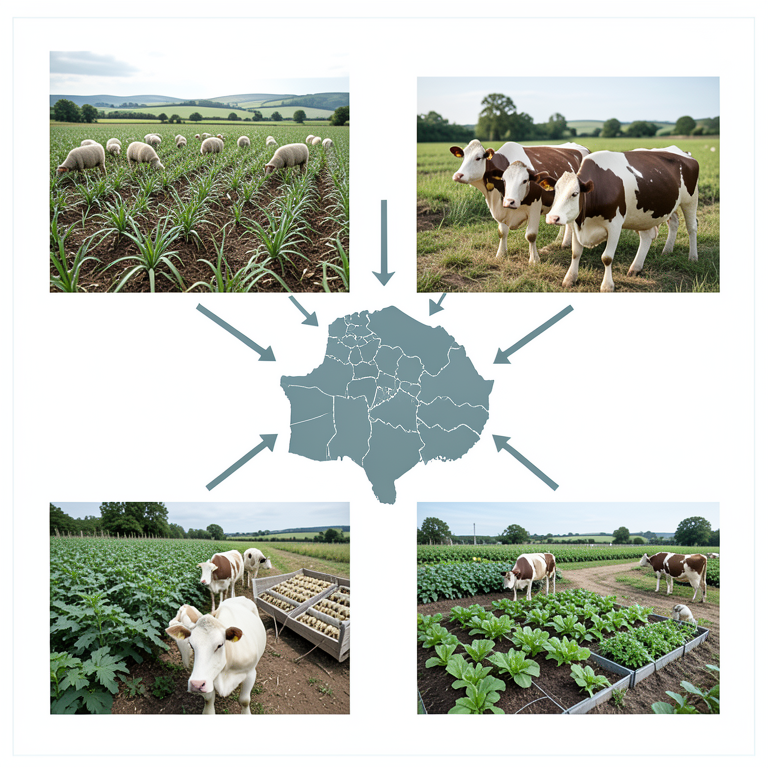
Study Scope Overview
AI-generated conceptual illustration (Mixed farming systems including crops, sheep, dairy cows, silkworms, and vegetable gardens). It explains the idea and does not show study data.
View source evidence ↗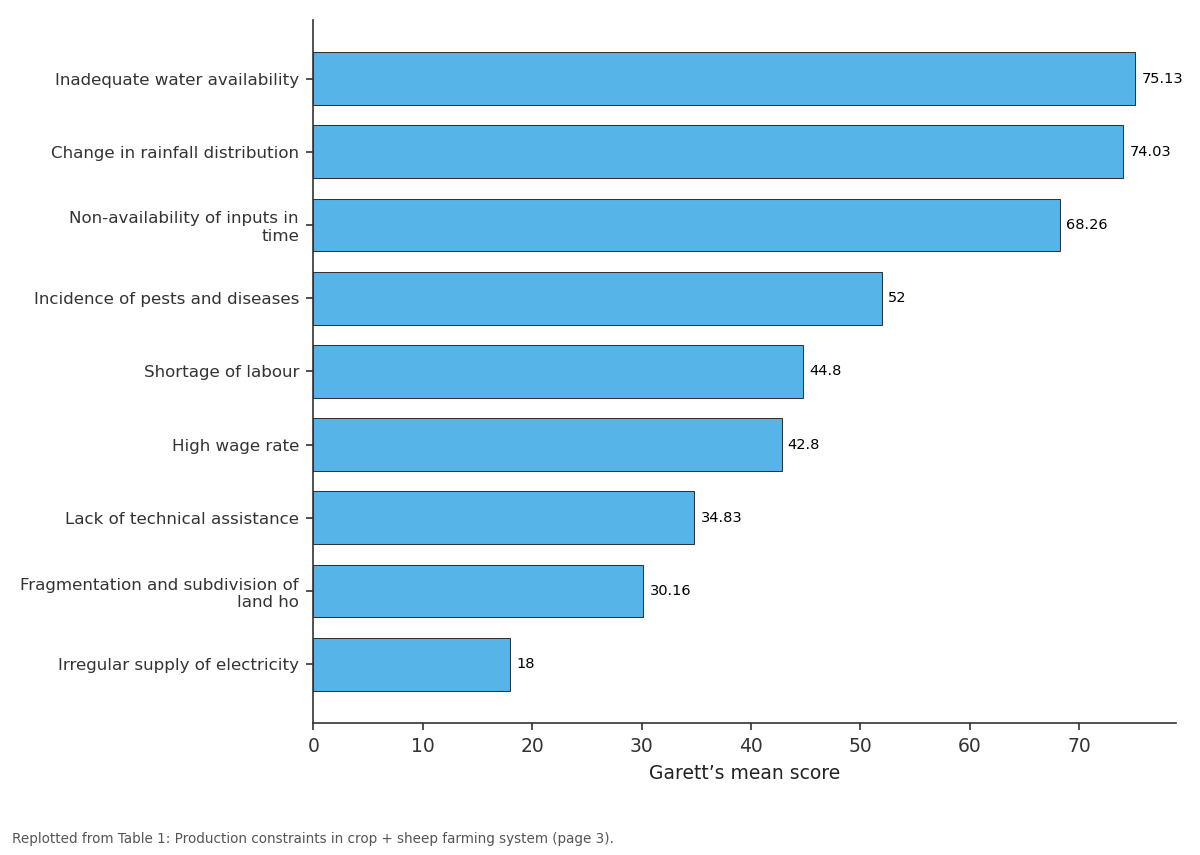
Garett’s mean score: Inadequate water... vs Change in rainfall... vs Non-availability of... vs Incidence of pests and... vs Shortage of labour
Replotted from Table 1 (page 3) of the original paper. Every bar is the paper's own table value.
View source evidence ↗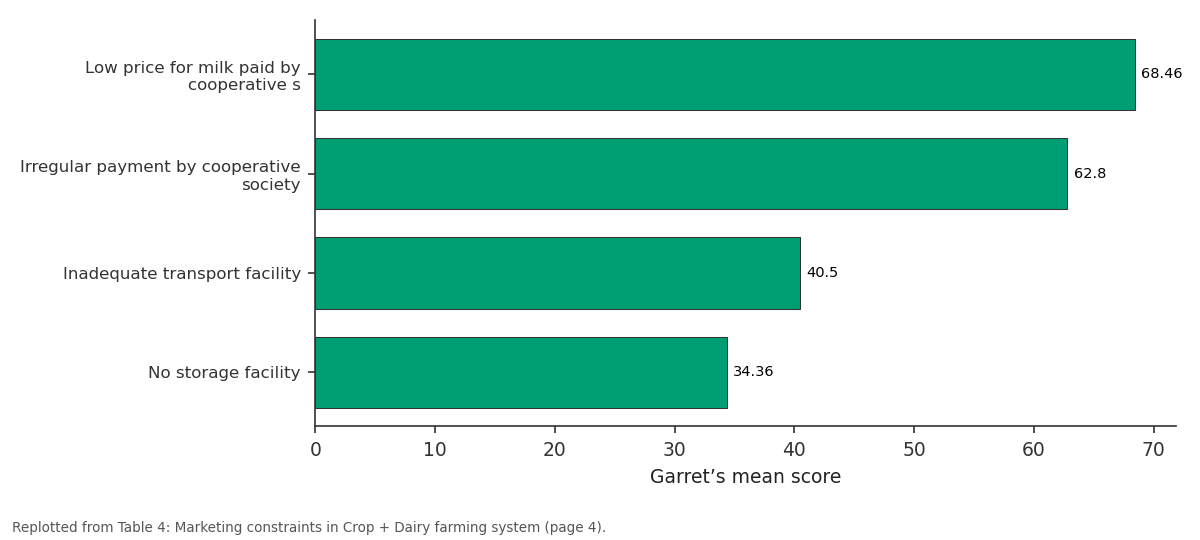
Garett’s mean score: Low price for milk paid... vs Irregular payment by... vs Inadequate transport... vs No storage facility
Replotted from Table 4 (page 4) of the original paper. Every bar is the paper's own table value.
View source evidence ↗Figures & tables
From the original paper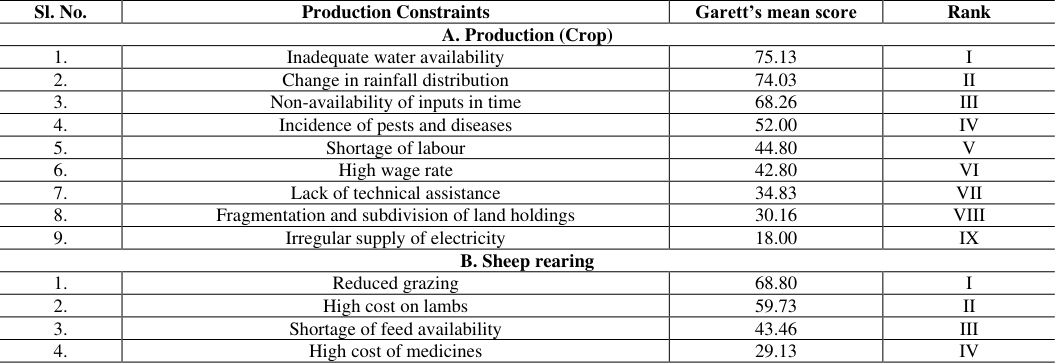 Table 1
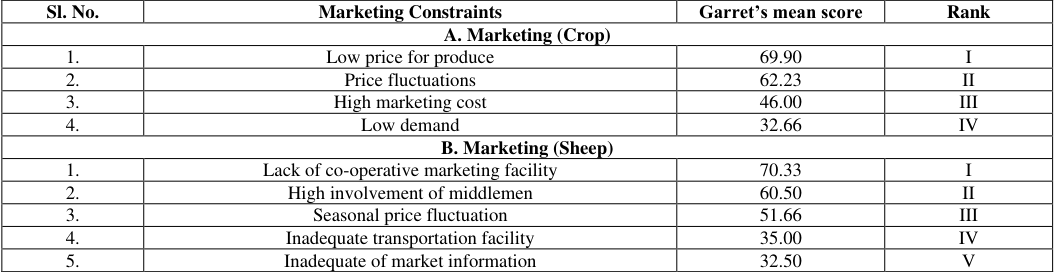 Table 2
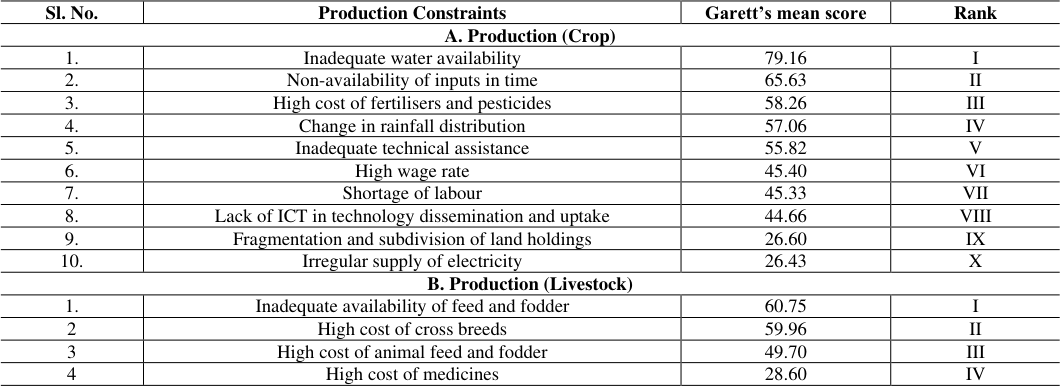 Table 3
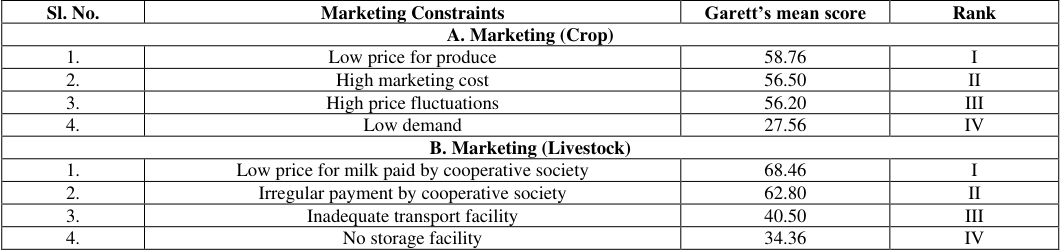 Table 4
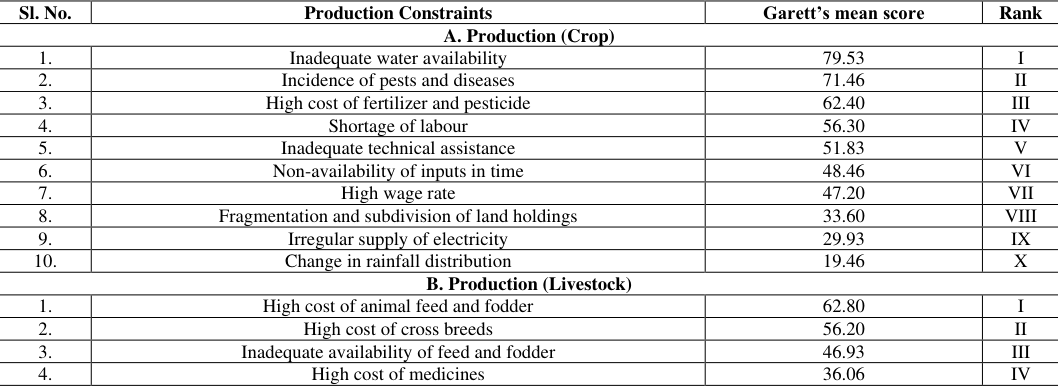 Table 5
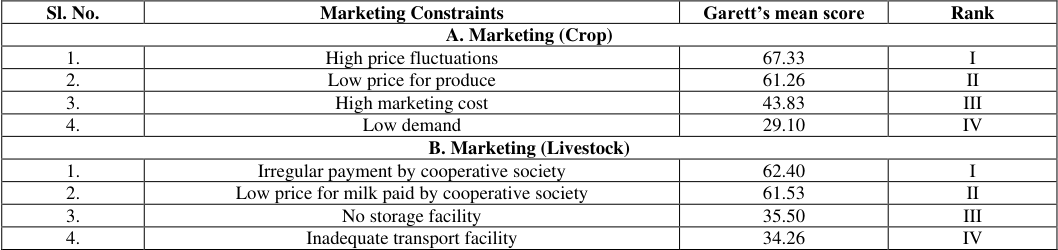 Table 6
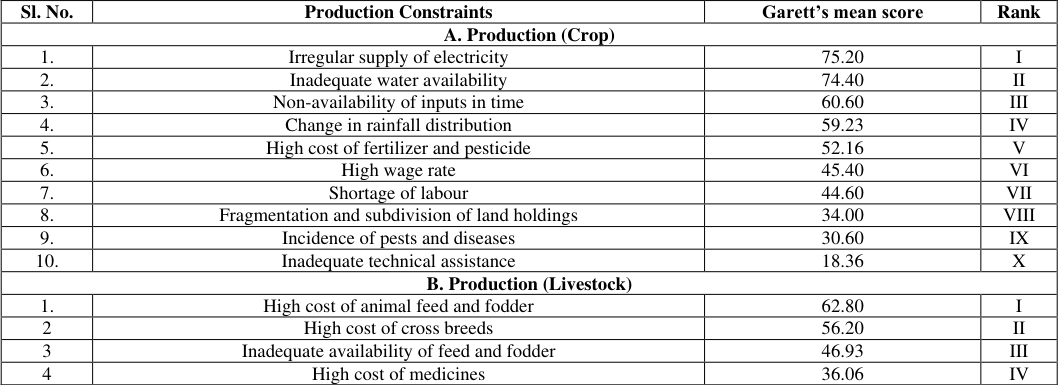 Table 7
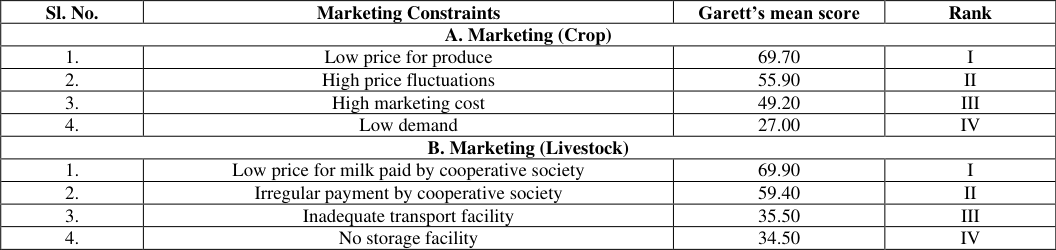 Table 8
Introduction
Agriculture continues to play a pivotal role in the Indian economy, contributing approximately 18.8 percent to the Gross Value Added (GVA) as of 2022. Despite the challenges posed by an expanding population, recurring monsoons, and environmental stresses, the sector remains a backbone of the country's socio-economic framework. A significant portion of the Indian farming community consists of small and marginal farmers, who rely on a diversified approach to farming to sustain their livelihoods. This Introduction chapter delves into the complexities of the production and marketing constraints faced by farmers in various farming systems across India. The remarkable growth of Indian agriculture over the last five and half decades, that is, after the initiation of Green Revolution technologies, has assisted in an era of self-reliance in food grain production at 315.6 million tonnes in 2022-23 (Anonymous, 2023) [1] . In the international arena, India claims the top spot for buffalo population, ranks second in the population of goats and fish, hosts the second-largest poultry market, and is fifth in the population of camels, which are experiencing a rapid growth rate according to the 2019 census (Anonymous 2019) [2][3] .
Significance of Farming Systems in India
Traditional farming systems in India, honed over centuries, are characterized by mixed farming practices. These systems often involve the integration of crop production with other enterprises such as dairy, poultry, sericulture, fisheries, and beekeeping. This diversified approach helps farmers achieve stability in production, provides subsistence for their families, and mitigates risks from weather aberrations and other environmental challenges. However, the evolving global scenario demands a scientific touch to these traditional practices, paving the way for more sustainable farming systems that can adapt to changing conditions.
The Role of Crop Diversification
Crop diversification has emerged as a crucial strategy to increase farm income and ensure food, nutrition, and ecological security. India's traditional cereal-based cropping systems, though vital, often yield relatively low returns. The shift towards more flexible cropping systems that include income-elastic goods such as horticultural products has provided farmers with opportunities to diversify their income sources. Moreover, the focus on value-added, export-oriented crops has gained importance, offering avenues for economic growth and poverty alleviation. This shift has been instrumental in addressing some of the production constraints faced by Indian farmers, particularly those related to income instability and market access. www.extensionjournal.com
Challenges in Indian Agriculture
Despite the progress, Indian agriculture faces several challenges. The high population growth rate, increasing demand for essential commodities, and persistent issues like poverty, low-income levels, and inadequate infrastructure are significant constraints. Additionally, environmental factors such as recurrent droughts and floods, coupled with the prevalence of pests and diseases, further exacerbate these challenges. The remarkable growth in food grain production, particularly following the Green Revolution, has led to India achieving self-reliance in food production. However, sustaining this growth in the face of rising food demands and limited agricultural land remains a critical concern.
Farming System Approach
A farming system is a natural resource management unit operated by a farm household, encompassing a range of economic activities, both on-farm and off-farm. This holistic approach considers the entire farm as an interdependent entity, where various enterprises compete for limited resources such as land, labor, and capital. In India, where small and marginal farmers dominate the landscape, specialized farming practices often prove unsustainable. The gradual reduction in farm size due to land subdivision, coupled with challenges like monsoon failures and population growth, has made vertical expansion through integrated farming enterprises the only viable option for many farmers. The farming system approach is seen as a resource management strategy aimed at achieving economic and sustained productivity. It emphasizes the need for a wholefarm approach to minimize risks and maximize production and profit. By understanding the linkages and complementarities between different components within various farming systems, farmers can optimize resource use and enhance their overall farm output. This approach is crucial for addressing the constraints of production and marketing in different farming systems, particularly in the context of smallholder and marginal farming.
Vegetable-Based Farming Systems
In recent decades, there has been a growing interest in vegetable-based farming systems as a means of sustaining natural resources, increasing farm income, and meeting the diversified demand for food, fodder, and fiber. Vegetable farming systems offer a viable option for small and marginal farmers, who often struggle with the constraints of traditional cereal-based systems. These systems are wellsuited to the resource base of small farmers and provide opportunities for higher returns, thereby enhancing their economic viability. The adoption of appropriate farming systems, particularly those that integrate vegetable-based cropping, is essential for meeting the diverse needs of a growing population. By focusing on these systems, farmers can achieve better resource management, reduce risks associated with market fluctuations, and improve their overall farm productivity. The importance of understanding the interdependencies within the farming system cannot be overstated, as it is key to developing strategies that can effectively address the constraints faced by farmers in production and marketing.
Methodology
The primary data for the study was collected from 30 sample farmers from Kolar and Malur taluks of Kolar district (15 farmers from each taluk) through personal interview methods with the help of a pre-tested structured schedule. The four majorly practiced farm enterprises in the study area were Crop + Sheep (C + Sh), Crop + Dairy (C + D), Crop + Dairy + Horticulture (C + D + H), Crop + Dairy + Sericulture (C + D + S). The collected data pertains to the agricultural year 2022-23. The collected data were classified, processed and presented in order to bring out generalisation of facts from which meaningful inference can be drawn. Garrett's ranking technique was used to rank the production and marketing constraints faced by a farmer in the study area. The order of the merit given by the respondents was converted into percent position using the formula. The percent position of each rank was converted to scores by referring to the table given by Garrett and Woodworth (1969). Then, for each factor, the scores of individual respondents were summed up and divided by the total number of respondents for whom scores were gathered. The mean score for all factors/constraints was ranked, following the decision criteria that higher the value, the more important is the order of preference by respondents.
Results and Discussion
Constraints in the production and marketing of farm produce Garrett ranking technique was used to rank the most important constraints/challenges in the study area. In crop production, about nine constraints were prioritized, and depicted in the table 1 the major constraints faced by the C + Sh farming system was inadequate water availability, which can severely affect crop growth and yield, as water is essential for irrigation and sustaining plant life, followed by change in rainfall distribution which is due to the farm may be experiencing irregular or unpredictable rainfall patterns, which can impact crop planning and cultivation practices. Too much or too little rainfall at the wrong times can be detrimental to crops. Non-availability of inputs at required time stood at third position, the availability of agricultural inputs such as seeds, fertilizers, and pesticides are crucial for successful crop production. Delays or shortages in obtaining these inputs can disrupt farming operations and reduce yields. Electricity failure/ irregular supply of electricity stood at the last rank. In sheep production, four constraints were listed. Among them, reduced grazing land ranked first this is due to overgrazing in the available areas, negatively affecting the quality and quantity of forage and ultimately impacting the health and productivity of the sheep, followed by higher lamb/kid cost, shortage of feed and high cost of medicine stood at third and fourth position, respectively. This indicates that there may be difficulties in providing an www.extensionjournal.com adequate amount of nutritious feed for the sheep. Adequate nutrition is vital for the health, growth, and reproduction of sheep. A shortage of feed can lead to malnutrition and reduced productivity in the flock. The result of the present research study is in line with that of previous studies of Kumar, et al., (2019) [6] who studied about the constraints in the production and marketing of vegetables faced by the Haryana farmers, where the major production related constraints expressed by vegetable growers were lack of information about cultivation of vegetables, higher cost of fertilizers, seeds and labour and their unavailability when needed, lack of suitable cold storage facilities, high cost of storage, costly weedicides, spurious plant protection chemicals, and lack of credit. With respect to the marketing of crops grown in C + Sh farming system presented in the Table 2, the major constraint faced by the farmers is low price for their produce, followed by high price fluctuation and high marketing cost. This is due to the instability in prices which makes it challenging for farmers to plan their sales and income and expenses related to transportation, storage, and other aspects of getting their crops to market similar findings were found in Bhutia et al. (2017) [4] . High cost of medicines 29.13 IV
| Sl. No. | Marketing Constraints | Garret’s mean score | Rank |
|---|---|---|---|
| A. Marketing (Crop) | |||
| 1. | Low price for produce | 69.90 | I |
| 2. | Price fluctuations | 62.23 | II |
| 3. | High marketing cost | 46.00 | III |
| 4. | Low demand | 32.66 | IV |
| B. Marketing (Sheep) | |||
| 1. | Lack of co-operative marketing facility | 70.33 | I |
| 2. | High involvement of middlemen | 60.50 | II |
| 3. | Seasonal price fluctuation | 51.66 | III |
| 4. | Inadequate transportation facility | 35.00 | IV |
| 5. | Inadequate of market information | 32.50 | V |
Table text extracted from the original PDF; superscript letters are shown inline. The original table image is below.
View original table image
| Sl. No. | Production Constraints | Garett’s mean score | Rank |
|---|---|---|---|
| A. Production (Crop) | |||
| 1. | Inadequate water availability | 75.13 | I |
| 2. | Change in rainfall distribution | 74.03 | II |
| 3. | Non-availability of inputs in time | 68.26 | III |
| 4. | Incidence of pests and diseases | 52.00 | IV |
| 5. | Shortage of labour | 44.80 | V |
| 6. | High wage rate | 42.80 | VI |
| 7. | Lack of technical assistance | 34.83 | VII |
| 8. | Fragmentation and subdivision of land holdings | 30.16 | VIII |
| 9. | Irregular supply of electricity | 18.00 | IX |
| B. Sheep rearing | |||
| 1. | Reduced grazing | 68.80 | I |
| 2. | High cost on lambs | 59.73 | II |
| 3. | Shortage of feed availability | 43.46 | III |
| 4. | High cost of medicines | 29.13 | IV |
Table text extracted from the original PDF; superscript letters are shown inline. The original table image is below.
View original table image
In the case of marketing of sheep, farmers are facing lack of cooperative marketing facility, followed by seasonal price fluctuation and lack of market information and lack of transportation facility which ranked at fifth and fourth position, respectively. The result of the present research study is in line with that of previous study by Kumar, et al., (2019) [6] who identified the constraints in the production and marketing of vegetables faced by the Haryana farmers where major marketing related constraints included lack of market information, higher price fluctuation, higher amount of price spread, malpractices in weighing and storing of vegetables, problem of storage facilities, lack of processing industries/units, higher price fluctuations, high cost of labour, high transportation cost, and delay in payments. Inadequate of market information 32.50 V
In Table 3, the major constraints and challenges faced by the Kolar farmers in C + D farming system are presented. In crop production, ten constraints were identified, out of which inadequate water availability was the major one faced by the farmers, followed by non-availability of inputs at appropriate time and high cost of fertilizer and pesticide stood at second and third position, respectively. Electricity failure/ irregular supply of electricity stood at the last rank and these results are aligned with Singh et al. (2013) [8] .
| Sl. No. | Production Constraints | Garett’s mean score | Rank |
|---|---|---|---|
| A. Production (Crop) | |||
| 1. | Inadequate water availability | 79.16 | I |
| 2. | Non-availability of inputs in time | 65.63 | II |
| 3. | High cost of fertilisers and pesticides | 58.26 | III |
| 4. | Change in rainfall distribution | 57.06 | IV |
| 5. | Inadequate technical assistance | 55.82 | V |
| 6. | High wage rate | 45.40 | VI |
| 7. | Shortage of labour | 45.33 | VII |
| 8. | Lack of ICT in technology dissemination and uptake | 44.66 | VIII |
| 9. | Fragmentation and subdivision of land holdings | 26.60 | IX |
| 10. | Irregular supply of electricity | 26.43 | X |
| B. Production (Livestock) | |||
| 1. | Inadequate availability of feed and fodder | 60.75 | I |
| 2 | High cost of cross breeds | 59.96 | II |
| 3 | High cost of animal feed and fodder | 49.70 | III |
| 4 | High cost of medicines | 28.60 | IV |
Table text extracted from the original PDF; superscript letters are shown inline. The original table image is below.
View original table image
In dairy production four constraints/ challenges were listed in which non-availability of feed and fodder was the major constraint which is due to inadequate water availability to grow fodder crops. High cost of improved breeds ranked second position. With respect to marketing of crops grown in C + D farming system as presented in Table 4, indicated that the major constraints faced by the farmers were low price for produce followed by high marketing cost. This is due to the price fluctuations in the market causing difficulty to farmers to predict and plan the income from various enterprises. www.extensionjournal.com In case of marketing of livestock, farmers faced major constraints like low milk prices from cooperative society followed by irregular payment by cooperative society which stood at second position and inadequate storage and transport facility at third and fourth position, respectively.
| Sl. No. | Marketing Constraints | Garett’s mean score | Rank |
|---|---|---|---|
| A. Marketing (Crop) | |||
| 1. | Low price for produce | 58.76 | I |
| 2. | High marketing cost | 56.50 | II |
| 3. | High price fluctuations | 56.20 | III |
| 4. | Low demand | 27.56 | IV |
| B. Marketing (Livestock) | |||
| 1. | Low price for milk paid by cooperative society | 68.46 | I |
| 2. | Irregular payment by cooperative society | 62.80 | II |
| 3. | Inadequate transport facility | 40.50 | III |
| 4. | No storage facility | 34.36 | IV |
Table text extracted from the original PDF; superscript letters are shown inline. The original table image is below.
View original table image
These constraints can have a substantial impact on the profitability and sustainability of the C + D farming system, and addressing them may require strategic planning and policy interventions similar findings were found with Mawase and Sarawgi (2014) [7] . No storage facility 34.36 IV Table 5 presents the major constraints faced by C + D + S farming system. The top production constraint was inadequate water availability, followed by incidence of pest and diseases and high cost of fertilizer and pesticide stood at second and third position. Change in rainfall distribution stood at the last rank. In livestock production, there are about four constraints/ challenges were listed. Out of which high farmers facing high cost of animal feed and fodder as a major constraint followed by high cost of improved breeds ranked second position.
| Sl. No. | Production Constraints | Garett’s mean score | Rank |
|---|---|---|---|
| A. Production (Crop) | |||
| 1. | Inadequate water availability | 79.53 | I |
| 2. | Incidence of pests and diseases | 71.46 | II |
| 3. | High cost of fertilizer and pesticide | 62.40 | III |
| 4. | Shortage of labour | 56.30 | IV |
| 5. | Inadequate technical assistance | 51.83 | V |
| 6. | Non-availability of inputs in time | 48.46 | VI |
| 7. | High wage rate | 47.20 | VII |
| 8. | Fragmentation and subdivision of land holdings | 33.60 | VIII |
| 9. | Irregular supply of electricity | 29.93 | IX |
| 10. | Change in rainfall distribution | 19.46 | X |
| B. Production (Livestock) | |||
| 1. | High cost of animal feed and fodder | 62.80 | I |
| 2. | High cost of cross breeds | 56.20 | II |
| 3. | Inadequate availability of feed and fodder | 46.93 | III |
| 4. | High cost of medicines | 36.06 | IV |
Table text extracted from the original PDF; superscript letters are shown inline. The original table image is below.
View original table image
With respect to marketing of crops grown in C + D + S farming system, the major constraints faced by the farmers were low price for produce, low demand, high marketing cost, and high price fluctuations. Out of which high price fluctuation stood first followed by low price for produce is presented in Table 6.
| Sl. No. | Marketing Constraints | Garett’s mean score | Rank |
|---|---|---|---|
| A. Marketing (Crop) | |||
| 1. | High price fluctuations | 67.33 | I |
| 2. | Low price for produce | 61.26 | II |
| 3. | High marketing cost | 43.83 | III |
| 4. | Low demand | 29.10 | IV |
| B. Marketing (Livestock) | |||
| 1. | Irregular payment by cooperative society | 62.40 | I |
| 2. | Low price for milk paid by cooperative society | 61.53 | II |
| 3. | No storage facility | 35.50 | III |
| 4. | Inadequate transport facility | 34.26 | IV |
Table text extracted from the original PDF; superscript letters are shown inline. The original table image is below.
View original table image
In the case of livestock marketing, farmers facing major constraints included irregular payment by Cooperative Society which ranked in first position followed by low milk price from cooperative society stood at second position followed by no storage facility and inadequate transport facility with third and fourth position respectively and these results showed analogue results with Kraaijvanger et al.
Major constraints and challenges faced in C + D + H farming system followed by sample farmers in Kolar is presented in Table 7. In crop production, there are about ten constraints, out of which inadequate water availability is the major production constraints, followed by change in rainfall distribution and non-availability of inputs at appropriate time stood at second and third position. Electricity failure / irregular supply of electricity stood at the last rank. In livestock production, there are about four constraints/ challenges were listed. Out of which high cost of animal feed and fodder stood at first position followed by high cost of improved breeds. Costly medicine takes fourth position in ranking. www.extensionjournal.com With respect to marketing of crops grown in Crop + Dairy + Horticulture farming system, major constraints faced by farmers are low price for produce, low demand, high marketing cost, and high price fluctuations. Out of which low price for produce ranked first followed by high price fluctuation, high marketing cost stood at third position and low demand is in fourth position is presented in the Table 8.
| Sl. No. | Marketing Constraints | Garett’s mean score | Rank |
|---|---|---|---|
| A. Marketing (Crop) | |||
| 1. | Low price for produce | 69.70 | I |
| 2. | High price fluctuations | 55.90 | II |
| 3. | High marketing cost | 49.20 | III |
| 4. | Low demand | 27.00 | IV |
| B. Marketing (Livestock) | |||
| 1. | Low price for milk paid by cooperative society | 69.90 | I |
| 2. | Irregular payment by cooperative society | 59.40 | II |
| 3. | Inadequate transport facility | 35.50 | III |
| 4. | No storage facility | 34.50 | IV |
Table text extracted from the original PDF; superscript letters are shown inline. The original table image is below.
View original table image
| Sl. No. | Production Constraints | Garett’s mean score | Rank |
|---|---|---|---|
| A. Production (Crop) | |||
| 1. | Irregular supply of electricity | 75.20 | I |
| 2. | Inadequate water availability | 74.40 | II |
| 3. | Non-availability of inputs in time | 60.60 | III |
| 4. | Change in rainfall distribution | 59.23 | IV |
| 5. | High cost of fertilizer and pesticide | 52.16 | V |
| 6. | High wage rate | 45.40 | VI |
| 7. | Shortage of labour | 44.60 | VII |
| 8. | Fragmentation and subdivision of land holdings | 34.00 | VIII |
| 9. | Incidence of pests and diseases | 30.60 | IX |
| 10. | Inadequate technical assistance | 18.36 | X |
| B. Production (Livestock) | |||
| 1. | High cost of animal feed and fodder | 62.80 | I |
| 2 | High cost of cross breeds | 56.20 | II |
| 3 | Inadequate availability of feed and fodder | 46.93 | III |
| 4 | High cost of medicines | 36.06 | IV |
Table text extracted from the original PDF; superscript letters are shown inline. The original table image is below.
View original table image
In case of marketing of livestock, major constraints were low milk prices from cooperative society which stood at first position followed by irregular payment by cooperative society which ranked at second position. Inadequate transport facility and no storage facility stood at third and fourth position. From all the farming system Kolar farmers facing inadequate water availability as a major constraint, as this district does not have surface irrigation facility followed by change in rainfall distribution and non-availability inputs in time. Which is due to the lack of surface irrigation facilities in the district. This makes the region highly dependent on rainfall, and any changes in rainfall distribution can exacerbate the water scarcity issue. Additionally, delays in obtaining necessary agricultural inputs can further hinder farm productivity, making water availability a critical concern for farming in this area. Hence, the null hypothesis "Fluctuations in rainfall is the major production constraint in farming system and low price received by farmers is the major constraint in marketing of farm produce" is accepted Mawase and Sarawgi (2014) [7] .
The findings of the present study are in par line with the previous studies conducted by Singh et al. (2013) [8] where farmers opined that major constraints are the nonavailability of newly developed high-yielding variety seeds in crop production, Lack of crossbred and exotic breed animals in Animal husbandry and Lack of availability of improved good planting material suitable for local conditions in Horticulture, respectively.
Conclusion
The research highlights the multifaceted constraints in the production and marketing of farm produce within different farming systems in India. Inadequate water availability emerges as the most critical production constraint, severely impacting crop yield and overall farm productivity. The challenges are compounded by irregular rainfall distribution and the non-availability of essential inputs, leading to decreased agricultural output. In livestock production, high costs of feed, fodder, and improved breeds further strain farmers' resources. On the marketing front, the study finds that low prices for produce and high price fluctuations are significant barriers to farmers' economic viability. These constraints are particularly detrimental in the absence of cooperative marketing facilities, leading to farmers receiving lower returns on their investments. The high involvement of middlemen, coupled with inadequate transportation and storage facilities, exacerbates the situation, making it difficult for farmers to achieve sustainable income levels. The findings underline the importance of adopting a wholefarm approach that integrates various farming enterprises to optimize resource use and enhance productivity. Strategic interventions, such as improved water management practices, timely availability of inputs, and enhanced market infrastructure, are essential to mitigate these challenges. Addressing these constraints is crucial for enhancing the sustainability and profitability of Indian farming systems, particularly for small and marginal farmers who are most vulnerable to these issues.
Future Scope
Future research should focus on developing and implementing innovative strategies to overcome the identified production and marketing constraints in Indian farming systems. Emphasis should be placed on enhancing water management practices, given its critical role in agricultural productivity. Additionally, research could explore the potential of digital platforms to provide timely market information and reduce the influence of middlemen, thereby improving farmers' access to markets. There is also a need for studies that examine the impact of climate change on farming systems and develop adaptive strategies to mitigate its effects. By addressing these areas, future work can contribute to the development of more resilient and sustainable farming systems in India.
References
7 in the original paper- Anonymous. 2023. pib.gov.in.
- Anonymous. 2019. Agriculture statistics. Available from: www.faostat.fao.org.
- Anonymous. 2019. Agriculture statistics. Available from: www.indiastat.com.
- Bhutia TL, Kamal RK, Mohanty S, Kumar U. Constraints analysis in the crop-livestock farming systems of small and marginal farmers of Bihar. SKUAST Journal of Research. 2017;19(1):92-96.
- Kraaijvanger R, Almekinders CJM, Veldkamp A. Identifying crop productivity constraints and opportunities using focus group discussions: A case study with farmers from Tigray. NJAS-Wageningen Journal of Life Sciences. 2016;78:139-151.
- Kumar A, Yadav Sumita MK, Rohila AK. Constraints faced by the farmers in production and marketing of vegetables in Haryana. Indian Journal of Agricultural Sciences. 2019;89(1):153-160.
- Singh H, Sharma SK, Dashora LN, Burark SS, Meena GL. Characterization and economics of farming systems in southern Rajasthan. Annals of Arid Zone. 2013;52(1):67-70.