
Research article · 2024 · Full text
International Journal of Agriculture Extension and Social DevelopmentWomen participation in backyard poultry rearing: A study in South Bengaluru
Volume 7(8) · Pages 590–595 · DOI: 10.33545/26180723.2024.v7.i8i.992 ↗
Research areasLivestock and Poultry ManagementSilkworms and Sericulture ResearchAgricultural Systems and Practices
Abstract
Author-writtenThis study examines the participation of women in backyard poultry rearing and explores consumer preferences for backyard poultry meat and eggs in South Bengaluru. The results reveal that women play a dominant role in backyard poultry activities, particularly in management tasks such as feeding (90%), watering (90%), and chick supervision (87.5%). Women were also heavily involved in the selection of poultry breeds, with 60 per cent participating in this crucial decision-making process. The study indicates that the preference for local and non-descript breeds is driven by their low-cost maintenance and higher economic returns, making them a sustainable choice for rural households. The consumer preference analysis highlights a strong inclination towards backyard poultry meat and eggs, primarily due to their superior nutritional value and taste compared to commercially produced alternatives. The study found that a unit change in the age of consumers increased backyard poultry meat consumption by 0.75 kg, while an increase in purchase frequency resulted in a 1.2 kg rise in consumption. These findings emphasize the growing demand for backyard poultry products among health-conscious consumers, particularly those aged 30 to 50 years. The logit model used in the analysis showed a high accuracy rate of 84.4%, predicting that the majority of consumers prefer backyard poultry meat for its health benefits, including the absence of antibiotic growth promoters and additives.
Summary
Source-checkedPlain-language reading of the full paper, prepared with AI and checked against the text. Each point links to the authors' own words.
Why it matters
- Agriculture is a critical pillar of the Indian economy, serving as the primary livelihood for approximately 61% of the population. View evidence ↗
- Traditional backyard poultry farming in rural and tribal India is an important tool for reducing poverty, creating jobs, and fighting malnutrition. View evidence ↗
- Free-range poultry products are often viewed as healthier options with lower cholesterol, benefiting vulnerable groups like children and nursing mothers. View evidence ↗
The question
- The study aims to analyze how women participate in backyard poultry rearing and to determine consumer preferences for these products in South Bengaluru. View evidence ↗
What they did
- The research was conducted in the Bengaluru South and Ramanagara taluks using data collected during the 2021-22 period. View evidence ↗
- Primary data was gathered via purposive sampling from 40 backyard poultry farmers, five traders, and five butchers. View evidence ↗
- A logit function was employed to analyze the relationship between consumer socio-economic traits and their purchase of backyard poultry chicken. View evidence ↗
What they found
- Women were the majority of those involved in backyard poultry rearing, representing 62.50% of respondents compared to 37.50% for men. View evidence ↗
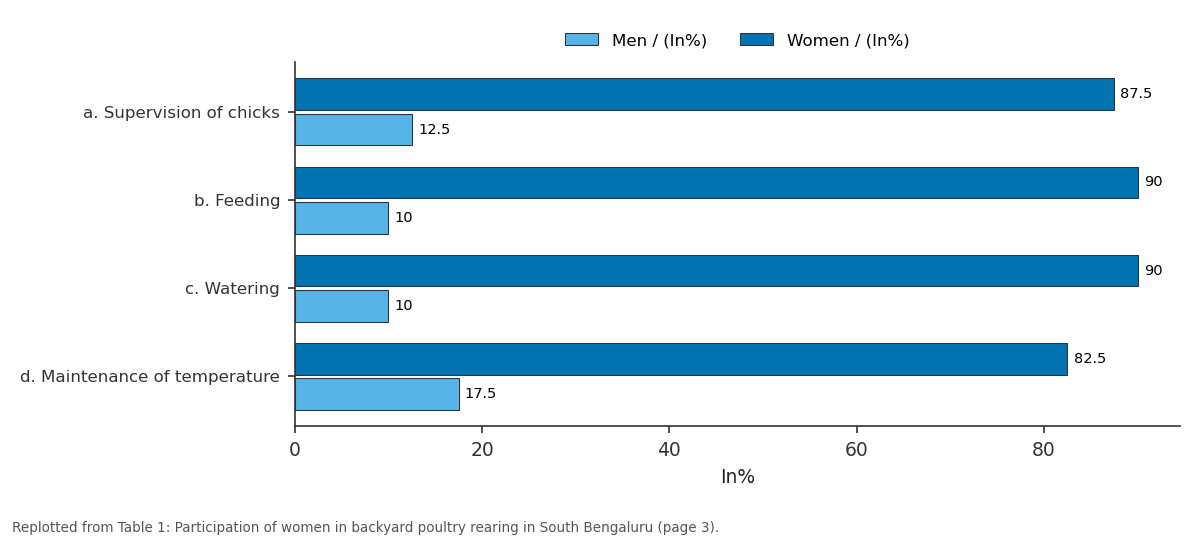
- Women dominated management tasks, handling feeding (90%), watering (90%), and chick supervision (87.5%). View evidence ↗
- Women played a larger role in the selection of poultry breeds, participating in 60% of these decisions. View evidence ↗
- Men were more involved in medical care, specifically vaccination, which they handled in 75% of cases. View evidence ↗
- The logit model correctly predicted 84.40% of cases, confirming that most consumers prefer backyard poultry meat for its taste and nutritional value. View evidence ↗
- The primary drivers for purchasing backyard poultry eggs were nutritive value (46.67%) and taste (33.33%). View evidence ↗
What it means
- The authors conclude that backyard poultry farming is vital for supporting rural livelihoods and empowering women in South Bengaluru. View evidence ↗
- The authors state a need for future research to specifically examine how backyard poultry farming impacts the nutritional status of vulnerable groups like the elderly, children, and women. View evidence ↗
Visual summary
2 visualsIllustrations explain the paper; charts are replotted from the paper's own table values.
Men / (In%) and Women / (In%): a. Supervision of chicks vs b. Feeding vs c. Watering vs d. Maintenance of...
Replotted from Table 1 (page 3) of the original paper. Every bar is the paper's own table value.
View source evidence ↗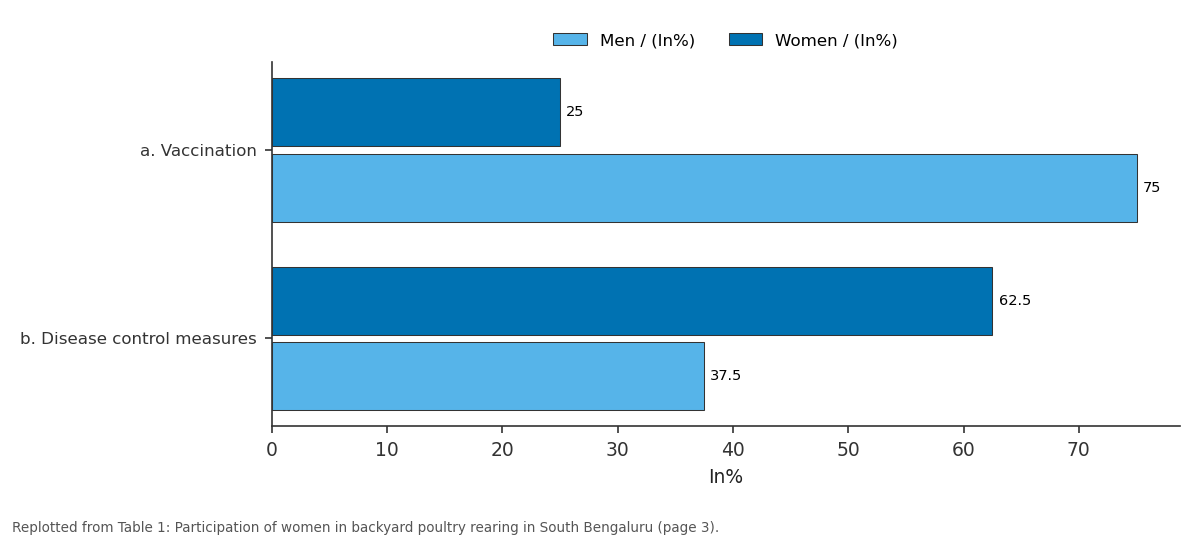
Men / (In%) and Women / (In%): a. Vaccination vs b. Disease control...
Replotted from Table 1 (page 3) of the original paper. Every bar is the paper's own table value.
View source evidence ↗Figures & tables
From the original paper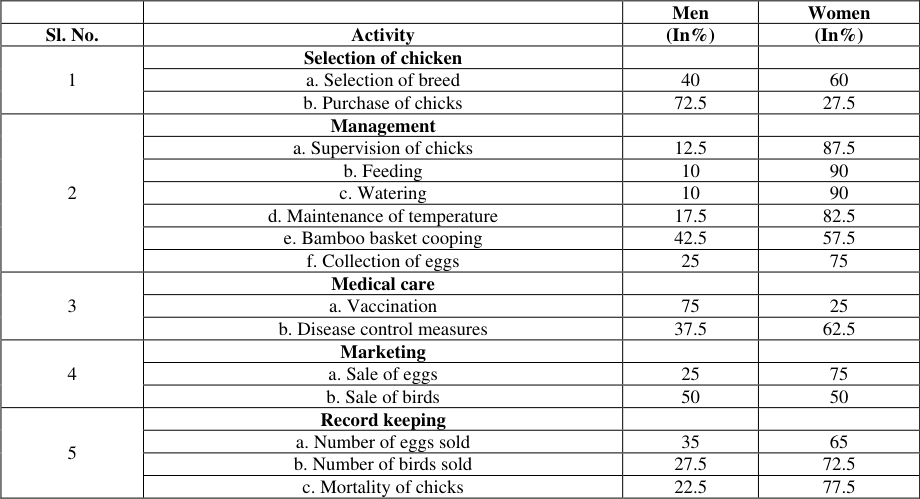 Table 1
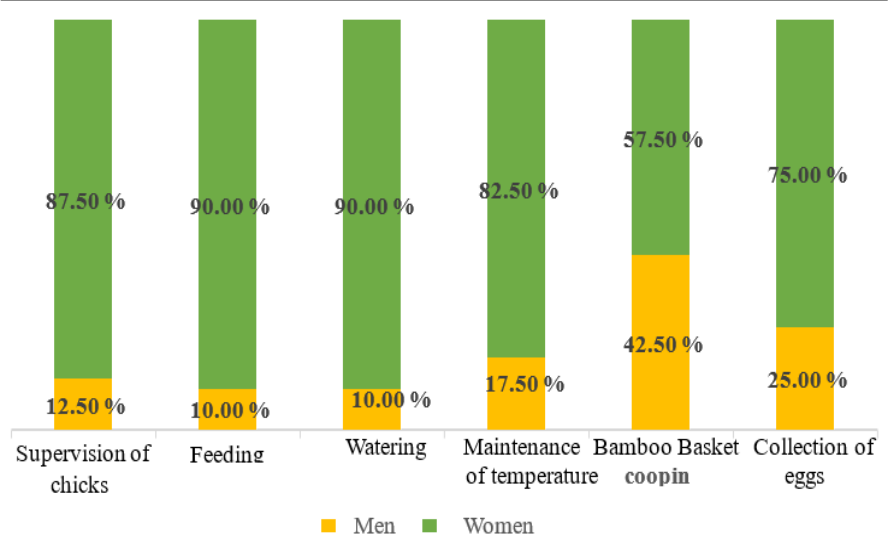 Figure 1
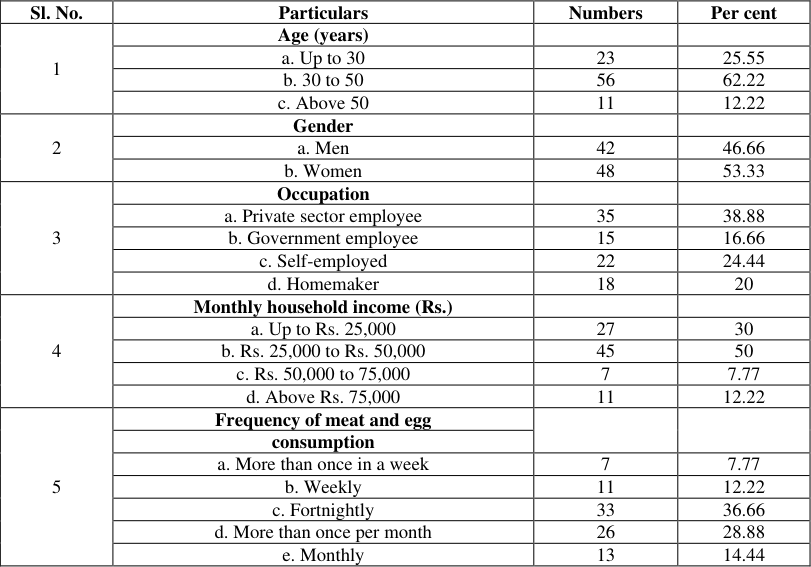 Table 2
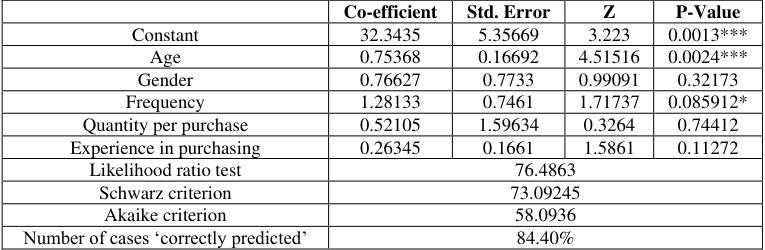 Table 3
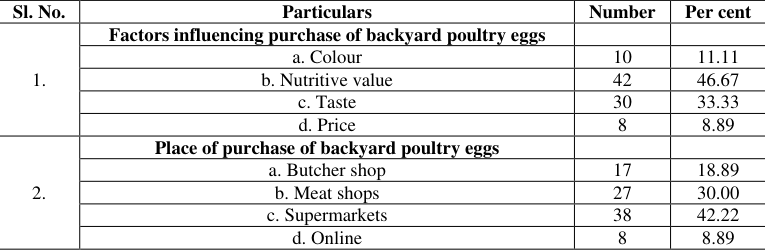 Table 4
Introduction
Agriculture has long been recognized as the backbone of the Indian economy. It remains the primary source of livelihood for about 61per cent of the country's population, who rely on farming and related activities for their income. As of 2020-2021, the agriculture sector contributed 20.20 per cent to India's total Gross Value Added (GVA), underscoring its importance in the broader economic landscape. In comparison, the services sector accounted for 53.89per cent, and the industry sector made up 25.92 per cent of the GVA during the same period (India Budget, 2021) [1] . Within the agricultural framework, the poultry sector has experienced a remarkable transformation over the past few decades. What was once a mere backyard activity has evolved into a major commercial agro-based industry. Today, India stands as the third-largest egg producer globally, holding a 7 per cent share in the world market, following giants like China, which dominates with 40 per cent, and the USA with 28 per cent. In chicken production, India ranks fourth, contributing 16.20 per cent to global output, after China (36%), Brazil (28%), and the USA (17%) (Anonymous, 2021) [1] .
The significance of the livestock sector, including poultry, cannot be overstated in the context of rural development and employment. According to the 20th Livestock Census conducted in 2019, India's livestock population totalled 536.76 million, comprising cattle (36%), goats (27.70%), buffaloes (20.50%), sheep (13.80%), and pigs (1.70%). Other animals, including yaks, mithun, mules, horses, ponies, donkeys, and camels, together constitute 0.30per cent of the livestock population. The livestock sector provides employment to about 9per cent of the nation's workforce, highlighting its role in sustaining rural livelihoods. The sector expanded at a Compound Annual Growth Rate (CAGR) of 8.24 per cent from 2014-15 to 2018-19, reflecting its dynamic contribution to the economy (Livestock Census, 2019) [3] . Poultry farming, particularly, has become an integral part of India's agricultural economy, significantly contributing to both employment generation and Gross Domestic Product (GDP). A notable aspect of poultry farming in India is the coexistence of large-scale commercial operations alongside traditional backyard poultry farming. According to the 19th Livestock Census, around 30 million farmers are engaged in www.extensionjournal.com raising backyard chickens, contributing approximately 18per cent (18.41 billion eggs) of the total egg production in India, which stands at 103.32 billion eggs (Basic Animal Husbandry Statistics, 2019) [3] . Backyard poultry farming has been a traditional practice in India, particularly in rural and tribal areas. It serves as an essential tool for combating malnutrition, reducing poverty, and creating job opportunities in remote regions. Native chicken breeds, such as Kadaknath, Aseel, Nicobari, Danki, Tellicherry, and Haringhata Black, are still widely raised in free-range environments across India. These native breeds are not only integral to the cultural and agricultural heritage of rural communities but also play a significant role in food security, contributing 11per cent of the country's total egg production (Chatterjee & Rajkumar, 2015; Kumaresan et al., 2008) [5,9] . The economic and nutritional benefits of backyard poultry farming extend far beyond simple income generation. For instance, it enhances soil fertility, with 15 hens capable of producing 1.1 to 1.2 kg of manure per day. This natural fertilizer is vital for maintaining the productivity of smallscale farms, which are often the lifeline of rural communities. Furthermore, products from rural poultry farming, such as eggs and meat, tend to fetch higher prices in the market compared to those from industrial poultry production. This is because free-range poultry farming is often perceived as healthier, producing eggs and meat with lower cholesterol levels, which are particularly beneficial for vulnerable populations, including pregnant women, nursing mothers, and young children (Dolberg, 2004; Otte & Joachim, 2006; Ahuja & Sen, 2007) [7,11,4] . The backyard poultry sector is instrumental in promoting food and nutrition security among the poorest households. It provides a reliable source of protein, which is critical in regions where access to other sources of nutrition is limited. The practice also reduces livelihood insecurity, offering rural families a consistent and sustainable source of income. The commercial poultry sector complements these efforts, particularly in urban and peri-urban areas, where large-scale production has become an effective tool for addressing malnutrition, creating jobs, and reducing rural poverty.
Materials and Methods
The present study was confined to analyse the profitability and marketing of backyard poultry birds and eggs. Bengaluru South taluk of Bengaluru Urban district and Ramanagara taluk of Ramanagara district were purposively selected for the study. The data / information collected pertained to the year 2021-22. Purposive sampling method was adopted for selection of 40 backyard poultry farmers, five butcher and five traders of the backyard poultry birds and eggs to collect the primary data. Descriptive statistics such as mean and percentages were used for analysing the data pertaining to the study, an attempt was made to study the consumer preference and motivating factors to prefer backyard poultry chicken rather than broiler chicken by the sample consumers. The relationship between socioeconomic characteristics of the consumers and their backyard poultry chicken purchase is analyzed using logit function. In this analysis, the dependent variable (Yi), backyard poultry chicken is nutritional value and taste or not. If Yi is the random variable (dichotomous), it can be assumed that Y takes the values 0 or 1, where 1 represents when the consumer responds positively to nutritional value and taste of backyard poultry chicken otherwise it takes the value 0. The model is: Motivation for purchase of backyard poultry chicken (yes/xi) = α + ∑βiXi+ e where, Yi = '1' if consumer gives positive answer to particular variable, otherwise '0' α = constant term Xi = independent variable (socio-demographic factors of the consumers) βi = logistic coefficients for the ith independent variable (log odds ratio) e= error term The explanatory variables specified in the model are age (in years), gender (male = 1, female = 0), frequency of purchase (more than once per week = 0, weekly = 1, fortnightly = 2, more than once per month = 3, monthly = 4) experience in purchasing (in years), quantity per purchase (in kg). The data was tabulated, coded and analyzed using GRETL statistical computer programme. The depended variable (positive response to nutritional value and taste of backyard poultry chicken) was regressed on selected explanatory variables to identify the variables which highly influence the purchase of backyard poultry chicken.
Results and Discussion
Results and Discussion
Women participation in backyard poultry rearing
The results regarding participation of women in backyard poultry rearing is presented in Table 1. The average flock size was found to be 28 birds. Majority of respondents (62.50%) were women, whereas, 37.50 per cent men were involved in backyard poultry rearing. The results indicate that women (60%) took active participation in the selection of breeds. Most of the respondents were found to rear local / non-descript breeds of poultry birds and only a few backyard poultry owners reared improved backyard poultry breeds like Giriraja, Swarnadhara, etc. The backyard poultry readers preferred local / non-descript breeds for production of eggs and meat as these birds could be reared with low-cost investment and easily managed by the households, yielding higher economic returns. In the case of management, aspects like supervision of chicks (87.50%), feeding (90.00%), watering (90.00%), maintenance of temperature (82.50%), bamboo basket cooping (57.50%) and collection of eggs (75.00%) were executed by women. Fig. 1 represents participation of men and women in backyard poultry rearing. Women took care of the chicks to keep them safe from predators and to reduce the mortality rate of young chicks. Women had significant knowledge about the supply of daily feed (three times a day) and clean water requirement to the birds. The birds were allowed to forage for their own food depending upon the housing area in the backyard, and they fed on insects, earthworms, grains, agricultural residue, vegetables, and kitchen scraps in the backyard of the house. Proper temperature during hatching of eggs and brooding of hens was maintained by women using sand, sawdust, wood, and husk of crops. During the night, birds were provided with proper shelter by putting in cages, sheds, or in the bamboo baskets, and women frequently collected the eggs laid by birds and stored them in proper places for further utilization in breeding, consumption, and marketing. www.extensionjournal.com
| — | — | Men | Women |
|---|---|---|---|
| Sl. No. | Activity | (In%) | (In%) |
| 1 | Selection of chicken | ||
| a. Selection of breed | 40 | 60 | |
| b. Purchase of chicks | 72.5 | 27.5 | |
| 2 | Management | ||
| a. Supervision of chicks | 12.5 | 87.5 | |
| b. Feeding | 10 | 90 | |
| c. Watering | 10 | 90 | |
| d. Maintenance of temperature | 17.5 | 82.5 | |
| e. Bamboo basket cooping | 42.5 | 57.5 | |
| f. Collection of eggs | 25 | 75 | |
| 3 | Medical care | ||
| a. Vaccination | 75 | 25 | |
| b. Disease control measures | 37.5 | 62.5 | |
| 4 | Marketing | ||
| a. Sale of eggs | 25 | 75 | |
| b. Sale of birds | 50 | 50 | |
| 5 | Record keeping | ||
| a. Number of eggs sold | 35 | 65 | |
| b. Number of birds sold | 27.5 | 72.5 | |
| c. Mortality of chicks | 22.5 | 77.5 |
Table text extracted from the original PDF; superscript letters are shown inline. The original table image is below.
View original table image
The above findings are similar to the study conducted by Nirmala et al., (2020) [10] who assessed backyard poultry farming in West Godavari district of Andhra Pradesh. The study found that the involvement of women was more in housing, feeding, watering, healthcare, and breeding which contributed to a larger extent in increasing the household income of the family. Further, it was found that women in comparison to men, were also involved in taking disease control measures (62.50%) by adopting proper housing practices for separating the birds when they are infected with disease, followed by marketing activity such as sale of eggs (75.00%), where eggs were sold to the nearest households, or nearby shops in the villages, in record keeping activities such as number of eggs sold (65.00%), number of birds sold (72.50%), and mortality of chicks (77.50%).
Participation of men in backyard poultry rearing was found to be more in activities such as vaccination (75.00%), treatment of birds was done by men due to the insufficient veterinary services in villages. Both men and women were equally involved in sale of birds, they sold the birds at their own doorstep, butchers, and at village market.
The results of the present study prove that the null hypothesis "women have greater participation than men in backyard poultry rearing" has been accepted The above findings are similar to the study conducted by Chaturvedani et al., (2014) [6] who examined decision making pattern followed by tribal backyard poultry rearers in Bastar district of Chhattisgarh. The study revealed that average independent women participation in poultry rearing was more in housing activities, health care activities, and feeding activities, but participated less in breeding, consumption, and marketing activities.
Consumer preference for backyard poultry meat and eggs General information of consumers
The general information of consumers is presented in Table 2.
| Sl. No. | Particulars | Numbers | Per cent |
|---|---|---|---|
| 1 | Age (years) | ||
| a. Up to 30 | 23 | 25.55 | |
| b. 30 to 50 | 56 | 62.22 | |
| c. Above 50 | 11 | 12.22 | |
| 2 | Gender | ||
| a. Men | 42 | 46.66 | |
| b. Women | 48 | 53.33 | |
| 3 | Occupation | ||
| a. Private sector employee | 35 | 38.88 | |
| b. Government employee | 15 | 16.66 | |
| c. Self-employed | 22 | 24.44 | |
| d. Homemaker | 18 | 20 | |
| 4 | Monthly household income (Rs.) | ||
| a. Up to Rs. 25,000 | 27 | 30 | |
| b. Rs. 25,000 to Rs. 50,000 | 45 | 50 | |
| c. Rs. 50,000 to 75,000 | 7 | 7.77 | |
| d. Above Rs. 75,000 | 11 | 12.22 | |
| 5 | Frequency of meat and egg | ||
| consumption | |||
| a. More than once in a week | 7 | 7.77 | |
| b. Weekly | 11 | 12.22 | |
| c. Fortnightly | 33 | 36.66 | |
| d. More than once per month | 26 | 28.88 | |
| e. Monthly | 13 | 14.44 |
Table text extracted from the original PDF; superscript letters are shown inline. The original table image is below.
View original table image
Age of consumers
Age is one of the fundamental traits of a person that is connected to maturity, physical health, work effectiveness, and degree of production. Majority (62.22%) of the belonged to the age group of 30 to 50 years followed by age groups of up to 30 years (25.55%), and above 50 years (12.22%). The sample comprised of 42 men (46.66%) and 48 women (53.33%).
Occupation of consumers
The term "occupation" refers to one's regular or primary employment or business, particularly as a means of support which is regarded as the main source of revenue. Majority (38.88%) of the consumers were private sector employees followed by self-employed (24.44%), homemakers (20.00%), and Government employees (15.00%).
Monthly household income of consumers
The analysis of diverse sources of household income is important to know the role of different components of income for the livelihood of a family and tends to influence the extent of purchase of backyard poultry meat and eggs Majority (50%) of the consumers had monthly household income ranging from Rs. 25,000 to Rs. 50,000, followed by 30.00 per cent of them with monthly household income ranging up to Rs. 25,000, 12.22 per cent of the consumers had monthly household income of above Rs. 75,000, and about seven per cent of them with monthly household income from Rs. 50,000 to Rs. 75,000.
Frequency of meat and egg consumption
Frequency is influenced by consumer attitudes and behaviour about eating habits and diet identities that include the consumption of meat and eggs. With regard to frequency of meat and egg consumption, it was found that majority (36.66%) of the consumers consumed fortnightly, followed by those (28.88%) who consumed more than once per month, monthly (14.44%), weekly (12.22%), and more than once in a week (7.77%).
Consumer preference for backyard poultry meat
Consumer preference for backyard poultry meat is represented in table 3. It was analyzed using logit function. Consumers preferred backyard poultry for its nutritional value and taste. It was observed that a unit change in age resulted in an increase in the consumption by 0.75 kg, which was found to be significant at one per cent level, whereas, a unit change in frequency resulted the increase in consumption by 1.2 kg, which is significant at ten per cent level.
| — | Co-efficient | Std. Error | Z | P-Value |
|---|---|---|---|---|
| Constant | 32.3435 | 5.35669 | 3.223 | 0.0013*** |
| Age | 0.75368 | 0.16692 | 4.51516 | 0.0024*** |
| Gender | 0.76627 | 0.7733 | 0.99091 | 0.32173 |
| Frequency | 1.28133 | 0.7461 | 1.71737 | 0.085912* |
| Quantity per purchase | 0.52105 | 1.59634 | 0.3264 | 0.74412 |
| Experience in purchasing | 0.26345 | 0.1661 | 1.5861 | 0.11272 |
| Likelihood ratio test | 76.4863 | |||
| Schwarz criterion | 73.09245 | |||
| Akaike criterion | 58.0936 | |||
| Number of cases ‘correctly predicted’ | 84.40% |
Table text extracted from the original PDF; superscript letters are shown inline. The original table image is below.
View original table image
Consumers from the age group 30 to 50 years highly preferred backyard poultry meat because of health consciousness and awareness owing to backyard poultry birds being free from antibiotic growth promoters and additives. The backyard poultry readers do not use antibiotic growth promoters such as antibiotics, probiotics, prebiotics, www.extensionjournal.com exogenous enzymes, antioxidants, etc., and additives like arsenic, which are very common in commercial poultry rearing. Backyard poultry meat is free from all the illeffects, whereas due to low life cycle of commercial birds, the feed that fattens the chicken results in unhealthy fat being passed to the consumers. Backyard poultry meat is tastier compared to broiler meat because of the varied diet consumption of the birds. Also, there is lower cooking losses in backyard poultry meat as it has better water holding capacity. As a result of all these factors, the consumers prefer consumption of backyard poultry meat frequently irrespective of its high price.
The other factors like gender, quantity per purchase, and experience in purchasing were not significant because people irrespective of gender preferred to have backyard poultry meat, while quantity of purchase and purchase experience remains same irrespective of unit change in frequency.
The model has higher likelihood value (76.48) and Schwarz criterion value (73.09) indicates that model is a good fit.
The number of cases correctly predicted in the model is 84.40 per cent which indicates that majority of respondents prefer backyard poultry meat for its nutritional value and taste.
The results of the present study are in tune with Augustine and Shukla (2017) [8] who assessed the consumer preferences and market potential for the backyard poultry rearing system in Kumi district of Uganda. They also indicated that poultry traders mainly dealt with indigenous chicken breeds as the customers preferred it due to taste and less chemical residues. The backyard poultry eggs are rich in vitamin E, beta carotene, omega-3 fatty acids when compared to commercially produced eggs. The good taste is because of richly coloured yolk and dietary pattern of backyard poultry birds. Further it is believed that brown coloured egg shell is harder when compared to white coloured egg shell. Majority of the consumers bought backyard poultry egg from nearby supermarkets (42.22%), followed by meat shop (30.00%), butcher shop (18.89%), and online (8.89%). In supermarkets, eggs are placed under refrigerated condition with proper packaging and labelling, where eggs are clean and crack-free. Consumers purchased eggs on a weekly basis from meat shops and butchers, based on their diet. Consumers purchased eggs through online platforms such as licious, big basket, etc., because of convenience. Hence, the null hypothesis that "consumers prefer meat and eggs of backyard poultry compared to broiler" has been accepted
The above findings are similar to the study conducted by Raha (2000) [12] who analysed the poultry industry in Bangladesh and found that indigenous chicken was better than broilers in terms of taste and quality of meat. Indigenous chicken was sold at much higher prices than the broiler. The consumers preferred brown-shelled eggs to white-shelled eggs owing to nutrition and the prices of brown-shelled eggs were higher than that of white-shelled eggs in the market.
Conclusion
The study concludes that backyard poultry farming plays a crucial role in the socio-economic landscape of South Bengaluru, particularly in empowering women and supporting rural livelihoods. The significant participation of women in various aspects of poultry management, from breed selection to feeding and healthcare, underscores their vital role in sustaining this traditional agricultural practice. The economic benefits of backyard poultry are substantial, providing a reliable source of income for rural households and contributing to food security through the production of eggs and meat. Moreover, the study highlights the strong consumer preference for backyard poultry products, driven by their perceived superior nutritional value and taste compared to commercially produced alternatives. This preference is particularly pronounced among healthconscious consumers in the 30 to 50-year age group, who value the absence of antibiotic growth promoters and other additives in backyard poultry meat. The findings also suggest that backyard poultry farming has the potential to address key challenges in rural development, including poverty alleviation, food security, and women's empowerment. By providing a sustainable source of income and nutritious food, backyard poultry farming can play a vital role in improving the quality of life for rural communities. Furthermore, the study's use of the logit model to predict consumer preferences demonstrates the growing demand for healthier and tastier food options, reinforcing the importance of supporting and promoting backyard poultry farming in both rural and urban areas.
Future Scope
The findings of this research point to several avenues for future investigation and development. Firstly, there is a need for further studies on the impact of backyard poultry farming on the nutritional status of rural households, particularly in relation to vulnerable groups such as women, children, and the elderly. Additionally, research could explore the potential for scaling up backyard poultry farming to meet the growing demand for organic and freerange poultry products in urban markets. The development of training programs for women involved in backyard poultry rearing could also be a focus, with an emphasis on improving poultry management practices, disease control, and marketing skills. Moreover, future studies could investigate the role of technology in enhancing the productivity and profitability of backyard poultry farming, such as the use of mobile apps for record-keeping, disease monitoring, and connecting farmers with markets. Finally, there is scope for policy-oriented research to explore the ways in which government support, in the form of subsidies, training, and infrastructure development, can further promote and sustain backyard poultry farming as a viable livelihood option in rural areas.
Acknowledgement
AcknowledgementThe present research paper contains the observations from the master's research of the corresponding author and approved by the University of Agricultural Sciences, GKVK, Bangalore, thus we want to thank the institution for rendering the required facilities for successful completion of the present work. I am further thankful to Institute of Agribusiness management for aiding for the present research work.
Figures and tables from the paper
| Sl. No. | Particulars | Number | Per cent |
|---|---|---|---|
| 1. | Factors influencing purchase of backyard poultry eggs | ||
| a. Colour | 10 | 11.11 | |
| b. Nutritive value | 42 | 46.67 | |
| c. Taste | 30 | 33.33 | |
| d. Price | 8 | 8.89 | |
| 2. | Place of purchase of backyard poultry eggs | ||
| a. Butcher shop | 17 | 18.89 | |
| b. Meat shops | 27 | 30.00 | |
| c. Supermarkets | 38 | 42.22 | |
| d. Online | 8 | 8.89 |
Table text extracted from the original PDF; superscript letters are shown inline. The original table image is below.
View original table image
References
8 in the original paper- Anonymous. National action plan for egg & poultry2022 for doubling farmers' income by 2022. Department of Animal Husbandry, Dairying & Fisheries, Ministry of Agriculture & Farmers Welfare, Government of India; c2021.
- Chatterjee RN, Rajkumar U. An overview of poultry production in India. Indian J Anim Hlth. 2015;54(2):89108.
- Chaturvedani AK, Lal N, Chander M, Hussain K. Decision-making pattern followed by tribal backyard poultry rearers in Bastar district of Chhattisgarh. The Indian Journal of Veterinary Sciences and Biotechnology. 2014;10(2):62-63.
- Dolberg F. Livestock and livelihoods: Challenges and opportunities for Asia in the emerging market environment. FAO. 2004;1(1).
- Iisa A, Shukla R. A study of consumer preferences and market potential for poultry products in Kumi district of Uganda. Int J Curr Microbiol Appl Sci. 2017;6(10):2800-2813. DOI: 10.20546/IJCMAS.2017.610.332.
- Kumaresan A, Bujarbaruah KM, Pathak KA, Chhetri B, Ahmed SK, Haunshi S. Analysis of a village chicken production system and performance of an improved dual-purpose chicken under a subtropical hill agroecosystem in India. Trop Anim Health Prod. 2008;40(1):395-402. DOI: 10.1007/s11250-008-9107-1.
- Nirmala TV, Reddy AD, Subbaiah KV, Raju GS, Deepthi V, Sree EK, et al. Backyard poultry farming: A tool for tribal women empowerment in West Godavari district of Andhra Pradesh. J Entomol Zool Stud. 2020;8(6):1177-1180.
- Otte J. The hen which lays the golden eggs: Why backyard poultry are so popular? PPLPI Feature. 2006;1(1):55-57.