
Research article · 2024 · Full text
International Journal of Agriculture Extension and Social DevelopmentStudies on the shelf life of green pepper (Capsicum annuum) under different organic packaging materials
Volume 7(8) · Pages 521–526 · DOI: 10.33545/26180723.2024.v7.i8h.975 ↗
Research areasPostharvest Quality and Shelf Life Management
Abstract
Author-writtenThe research study titled "Studies on the Shelf Life of Green Pepper (Capsicum annuum) Under Different Organic Packaging Materials" was carried out in the laboratory at ITM University, Sitholi Gwalior (M.P).This study investigates the shelf life of green pepper (Capsicum annuum) when stored under various organic packaging materials.With increasing consumer demand for sustainable and environmentally friendly packaging, this research aims to evaluate the effectiveness of different organic materials in preserving the sensory and nutritional quality of green peppers.Nine different organic packaging treatments were applied to green peppers, each with three replications, to assess their impact on shelf life.Parameters such as color, texture, flavor, and overall freshness were monitored throughout the storage period.Additionally, changes in nutritional content, weight loss, and microbial load were analyzed.The results indicate that certain organic packaging materials significantly extended the shelf life of green peppers while maintaining their quality compared to conventional packaging.Notably, packaging materials that allowed for moderate moisture regulation and gas exchange were most effective in preserving the peppers' sensory attributes.This study provides valuable insights into sustainable packaging solutions that could benefit both consumers and producers by reducing food waste and promoting the use of biodegradable materials in the food industry.The findings indicated that the packaging materials can determine the lifespan of capsicum (Capsicum annuum).Transparent polythene (T3) emerged as the best treatment among all.
Summary
Source-checkedPlain-language reading of the full paper, prepared with AI and checked against the text. Each point links to the authors' own words.
Why it matters
- Capsicum fruits are nutritionally valuable, containing vitamins A and C as well as various phytochemicals like flavonoids and carotenoids. View evidence ↗
- There is a growing consumer demand for sustainable packaging, making it important to find organic materials that can preserve the quality of green peppers. View evidence ↗
The question
- The study aimed to investigate how different organic packaging materials affect the shelf life of green peppers (Capsicum annuum). View evidence ↗
What they did
- The experiment used a Completely Randomized Design (CRD) with three replications and nine different packaging treatments, including materials like banana leaf, cotton, and transparent polythene. View evidence ↗
- Physical parameters were measured at intervals of zero, three, six, nine, and twelve days after preservation. View evidence ↗
- Sensory quality was evaluated based on taste, flavor, texture, color, and overall acceptability. View evidence ↗
What they found
- Transparent polythene (T3) was the most effective for maintaining fruit weight, starting at 72.49 g on day one and ending at 49.08 g on day twelve. View evidence ↗
- The control group (T0) showed the lowest fruit weights, decreasing from 55.89 g on day one to 37 g by day twelve. View evidence ↗
- Transparent polythene (T3) produced the highest fruit volumes over the twelve-day period, ranging from 55.81 to 30.66 cm. View evidence ↗
- The brown bag treatment (T2) was superior in maintaining fruit diameter, with measurements from 7.0 cm on day one to 5.2 cm on day twelve. View evidence ↗
- Transparent bags (T3) maintained the highest pH values, starting at 5.70 and ending at 4.56 over twelve days. View evidence ↗
- Paper straw (T4) was the best for sensory quality, scoring highest in color (9), texture (8), flavor (7), taste (6), and overall acceptability (7). View evidence ↗
What it means
- The authors concluded that transparent polythene (T3) is the best packaging material for extending the lifespan of capsicum across physical, biochemical, and sensory criteria. View evidence ↗
Visual summary
3 visualsIllustrations explain the paper; charts are replotted from the paper's own table values.
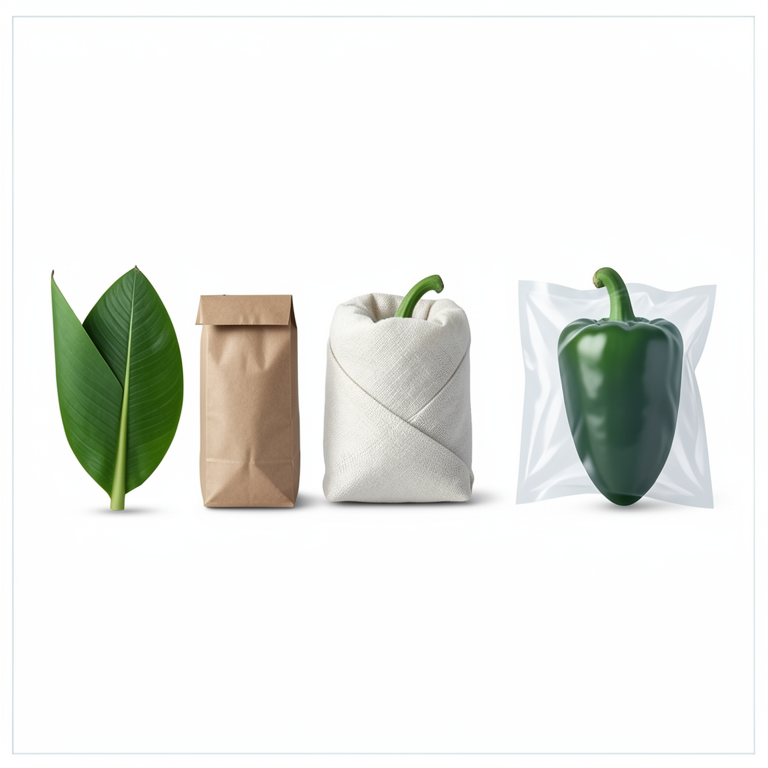
Packaging Treatment Comparison
AI-generated conceptual illustration (green pepper (Capsicum annuum) and organic packaging materials). It explains the idea and does not show study data.
View source evidence ↗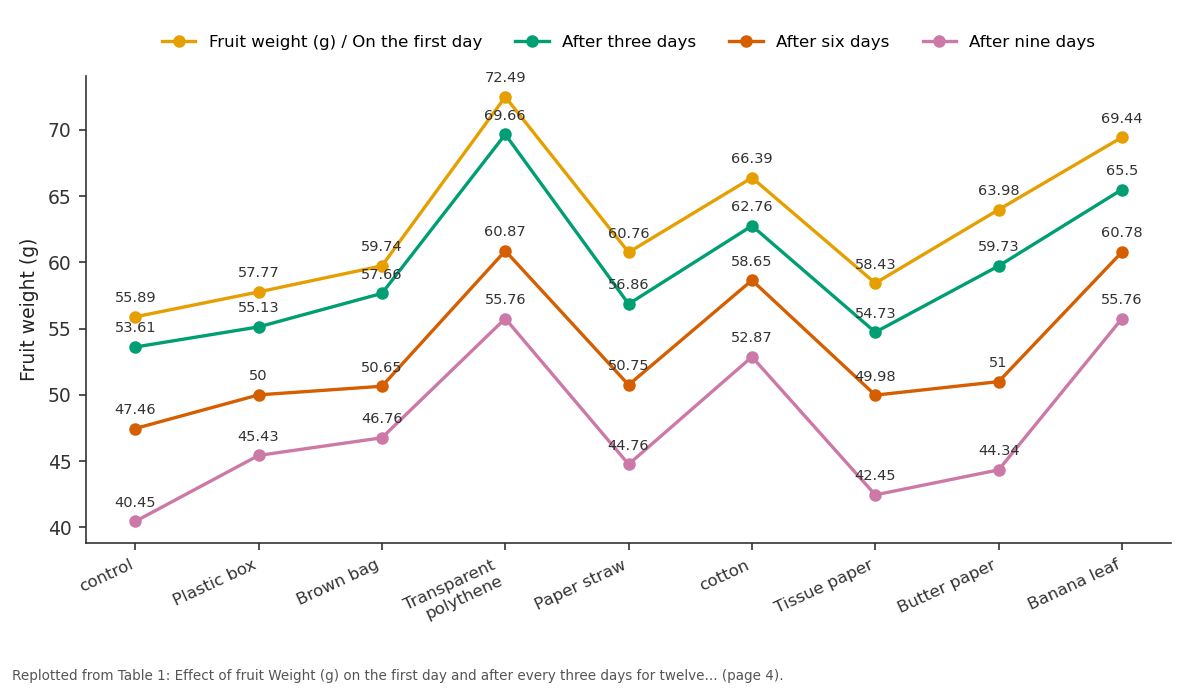
Fruit weight (g) / On the first day and After three days and more: control vs Plastic box vs Brown bag vs Transparent polythene vs Paper straw
Replotted from Table 1 (page 4) of the original paper. Every bar is the paper's own table value.
View source evidence ↗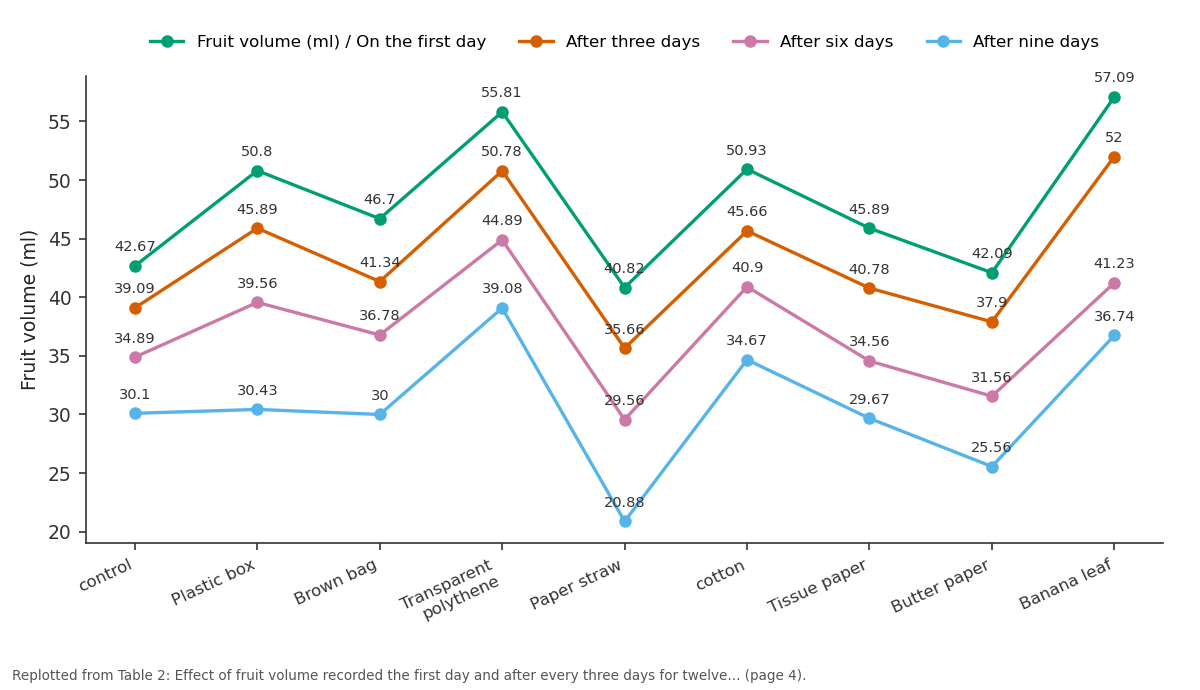
Fruit volume (ml) / On the first day and After three days and more: control vs Plastic box vs Brown bag vs Transparent polythene vs Paper straw
Replotted from Table 2 (page 4) of the original paper. Every bar is the paper's own table value.
View source evidence ↗Figures & tables
From the original paper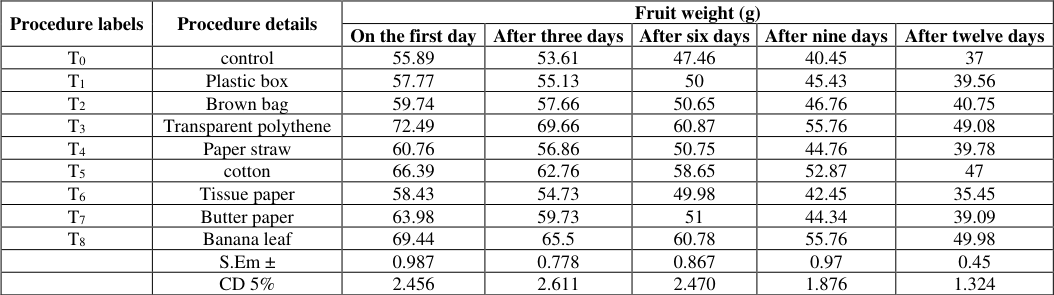 Table 1
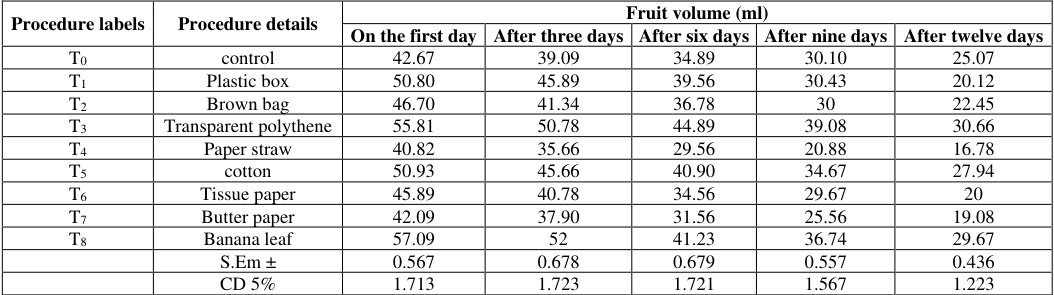 Table 2
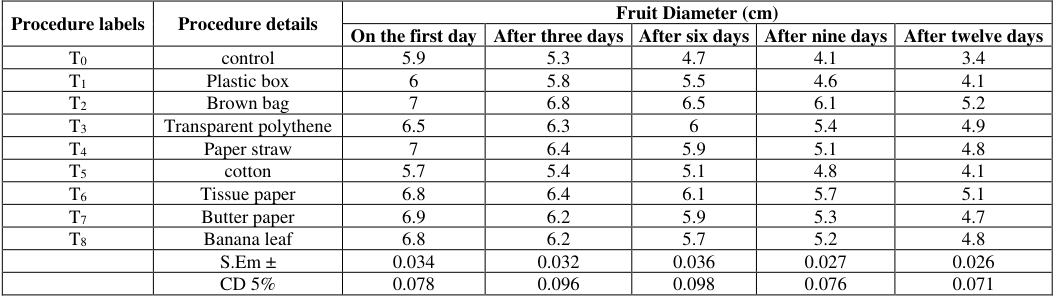 Table 3
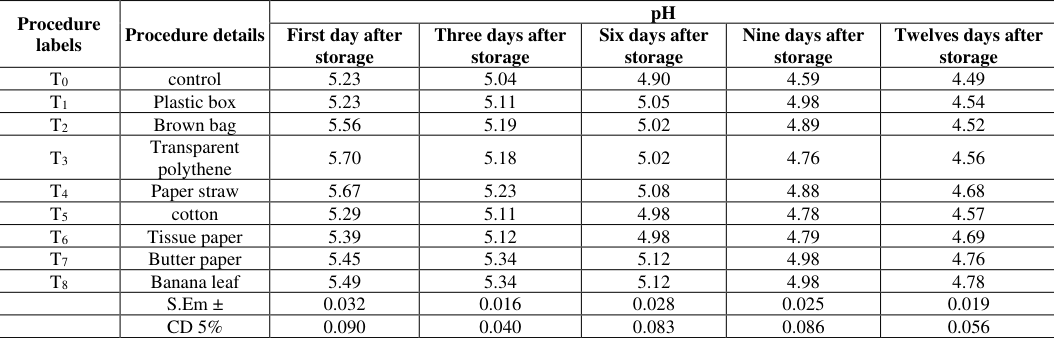 Table 4
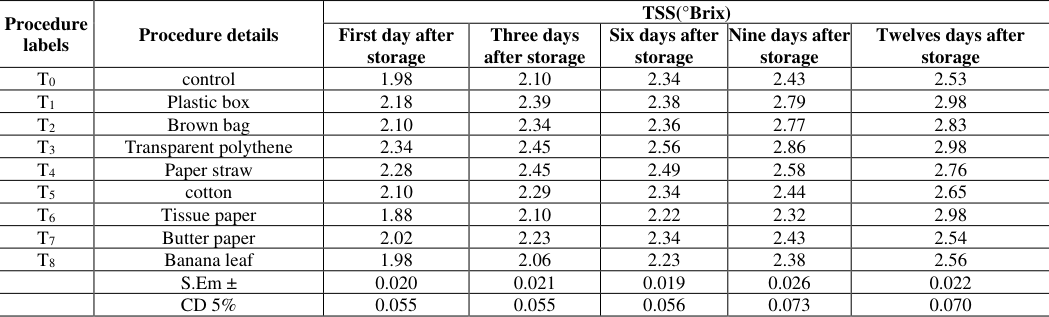 Table 5
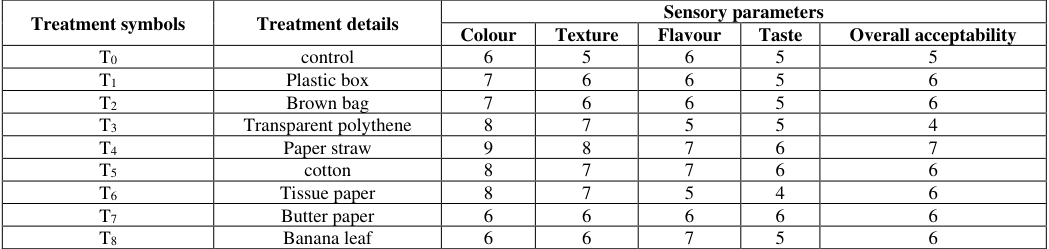 Table 6
Introduction
Capsicum, commonly known as pepper, encompasses a diverse subfamily of the Solanaceae family. Originated from Americas, they are now cultivated worldwide for their culinary, medicinal, and ornamental values. The genus includes a variety of species such as Capsicum annuum, Capsicum frutescens, and Capsicum chinense, which produce fruits varying widely in shape, size, color, and pungency. These fruits, often referred to as chili peppers, bell peppers, or sweet peppers, have become integral to numerous cuisines globally, contributing to both flavor and nutritional value. Capsicum fruits are rich in vitamins, particularly C and A, and contain variety phytochemicals, including capsaicinoids, carotenoids, and flavonoids. Capsaicinoids, responsible for the pungency of chili peppers, have garnered significant attention for their potential health benefits. These compounds exhibit antiinflammatory, antioxidant, and analgesic properties, which have been linked to reduced risks of continous sickness related to heart, cancer and IDDM, color of peppers and offer antioxidant benefits, enhancing immune function and protecting against cellular damage. Capsicum cultivation holds substantial economic importance, particularly in regions where pepper farming is a major agricultural activity. The global demand for capsicum, driven by both fresh and processed markets, has led to extensive research on improving yield, pest resistance, and fruit quality. Advances in agricultural practices, breeding techniques, and biotechnology have aimed at enhancing the productivity and sustainability of capsicum cultivation. Moreover, the economic value of capsicum extends beyond agriculture into industries such as pharmaceuticals, cosmetics, and food processing. Some of these plants are used as spices, vegetables, or drugs. The fruit of Capsicum plants have a variety of names processing. Some of these plants are utilized for flavouring, foods, or medications. The Capsicum plant's fruit is known by many different names. In Britain and the United States, they are commonly referred to as long peppers, jalapeno or cayenne peppers, or simply pepper. The temperate variant is known as bell pepper in UK and the USA, capsicum in New Zealand and Australia, and paprika in some other places. Capsicums emerged in USA and are now grown all over the world. Despite being used extensively, its utilization and significance remains a continuous need for research to address various challenges and explore untapped potential. This thesis aims to investigate several key aspects of capsicum, including genetic diversity, phytochemical composition, and potential health benefits. Through this comprehensive investigation, the thesis aims to contribute to the understanding of capsicum's genetic diversity, phytochemical richness, and health-promoting properties, while also addressing the practical aspects of its cultivation and utilization. Such behaviors are detrimental to health care www.extensionjournal.com (Ravi et al. 2011) [35] . There is a pressing demand for reliable science that lowers diaphoresis and insubstantial drope of aqua during keeping stage. Colorful capsicums are in high demand in metropolitan marketplaces. The need is primarily motivated by the accommodation and dining sectors. Based on the variety and time of year, conventionally cultivated green capsicum normally produces 20-40 tons/ha in 4-5 months. Green and colored capsicums may be farmed in domes over 7-10 months, delivering approximately 80-100 t per hectare. The practice of protected agriculture has a number of benefits including increased output and production, an improved growing environment for plants, safety from severe weather and severe temperatures, and reduced harm from bug disease and pest infestations. Aids in continuous production throughout the year while boosting production by a couple of times. Capsicum types are mostly distinguished by their ripe hue, they may vary to different hues. When choosing a crop variety, consider whether it is immune to diseases, delivers a greater quantity of fruit, provides a more even vegetables, or is better suited for present market needs. The crops may be cultivated all the time in covered facilities with adjustable climate and humidity ratio (RH). The perfect climate for this crop is 25 to 30 degrees Celsius during daylight hours and 18-20 °C at late hours, with a moisture content of between fifty and sixty percent. Fruit development is impacted by conditions that exceed 35 °C or dip below 12 °C. Modified atmosphere packaging and low ambient preservation extend the lifespan of fruits and vegetables wrapped in plastic films by combining the natural respiration process of the produce with the regulated flow of gases within the container. Peppers benefit marginally from this method (Ismael et al., 1995) [36] . Maintaining a moderate atmospheric pressure between 2 and 5 percent for peppers and between 3 and 5 percent for jalapeños slows maturation and respiration during transit and storage while also slightly improving freshness. However, at a temperature of 10 degrees Celsius, elevated levels of carbon dioxide can cause calyx discoloration, skin cracking, fading, and shrinking in spicy peppers. When the atmosphere is maintained at 5-9 °C for approximately three to four weeks, with an average relative humidity of around ninety percent, the quality of the produce is better preserved. The study, titled "Studies on the shelf life of green pepper (Capsicum annuum) under different organic packaging materials" was performed at ITM's Horticulture department research lab University in Gwalior (MP).
Materials and methods
The present section discusses the components and techniques used in the continuing experiment on 'the shelf life of green pepper (Capsicum annuum) in different sustainable packaging supplies'. The research was carried out at the ITM University Experimental Center in Gwalior, Madhya Pradesh. The investigation relied heavily on several research approaches. The resources and methods used are highlighted the one that follows:
Trial site
The trial was conducted at the Research lab., ITM university, Gwalior (M.P).
Experimental details
The research study was set up in CRD with three different runs. Each copy included nine approaches with varying wrapping type such as plastic box, brown bag, transparent polythene, paper straw, cotton, tissue, butter paper and banana leaf.
Observations recorded
During the experimentation period, data were collected on various parameters and subdivided into different categories according to standard procedures.
The average weight of the fruit was calculated after the final picking. It was measured with the help of weighing scale. The findings are in agreement with
The fruit volume has been determined via the fluid displacement process using a measuring cylinder and expressed in milliliters.
Fruit diameter
It was measured with a vernier scale and measured in cm. pH of fruits pH was recorded at the interval of three days and measured with pH meter.
TSS
Upon smashing the fruit tests, the pulp was removed employing a cloth made of cotton. The resulting solution was utilized to measure Total Soluble Solids (TSS) in degrees Brix (°Brix) using a computerized device. Refractometer on the first day and every three days for twelve days after preservation.
Sensory parameters
The attributes will be evaluated on the following points:
Results
Results
The results indicated that different packing materials significantly influenced the fruit weight at various storage intervals. The treatment T 3 (Transparent Polythene) was discovered to be the best possible wrapping solution for increasing the lifespan of fruit with the maximum fruit weights recorded as 72.49 g, 69.66 g, 60.87 g, 55.76 g, and 49.08 g on the first day and after every three days for twelve after preservation respectively. This procedure was comparable to the T 1 (plastic box) treatment at 0, 6, and 12 days after storage, and treatments T 1 , T 2 , T 4 , and T 7 yielded similar results. However, the minimum weights of 55.89 g, 53.61 g, 47.46 g, 40.45 g, and 37 g on the first day and after every three days for twelve after preservation were recorded in the Control (To). The findings are in the agreement with Kader et al., (2002) [37] and Mahajan et al., (2008) [38] .
The result showed that transparent polythene T 3 was the optimal wrapping treatment for extending the life span of green peppers produced the highest fruit volume [37] and Mahajan et al., (2008) [38] .
The results presented in the table indicate that the maximum diameters of the green peppers, measured on the first day and after every three days for twelve after preservation, were observed in Treatment T 2 (brown bag). The diameters were 7.0, 6.8, 6.5, 6.1, and 5.2 cm, respectively, and this treatment was significantly superior among all the treatments. In contrast, the minimum diameters were observed in Treatment T 0 , with measurements of 5.9, 5. [37] . [37] and Mahajan et al., (2008) [38] .
TSS (°Brix) on the first day and after every three days for twelve days after preservation
The results revealed that the treatment T 3 (transparent polythene) was seen to be the most efficient material for improving the lifespan of green pepper. The TSS values for this treatment were (2.34, 2.45, 2.56, 2.86, and 2.98 °Brix) on the first day and after every three days for twelve days after preservation respectively. This treatment was comparable to treatment T 1 (plastic box) at the same intervals. However, the minimum TSS values of (1.98, 2.10, 2.34, 2.43, and 2.53 Brix) at 0, 3, 6, 9, and 12 days after storage were recorded in treatment T 0 (Control). The findings are in the agreement with Lee et al., (2000) [39] and Kader et al., (2002) [37] .
Sensory parameters
The results indicated that different packing materials significantly influenced the sensory parameters of green pepper. The treatment T 4 (Paper straw) was identified as the most suitable wrapping for improving lifespan of green pepper. It achieved the highest scores in sensory evaluations: color (9), texture (8), flavor (7), taste (6), and overall acceptability (7). In contrast, the lowest scores for these sensory parameters were observed in treatment T 0 (Control), with color (6), texture (5), flavor (6), taste (5), and overall acceptability (5). The findings are in the agreement with Kader et al., (2002) [37] and Stone et al., (2004) [40] . www.extensionjournal.com
Conclusion
The results showed that different packing materials, such as plastic boxes, brown bags, transparent polythene, paper straw, cotton, tissue paper, butter paper, and banana leaf, had a substantial impact on the shelf life of capsicum. The treatment T 3 (transparent polythene) was determined to be the best packing material treatment for extending the lifespan of capsicum, with the highest physical, biochemical, and sensory criteria. However, the minimal physical, biochemical, and sensory indicators were assessed in treatment To (Control).
Figures and tables from the paper
| Procedure labels | Procedure details | Fruit weight (g) | — | — | — | — |
|---|---|---|---|---|---|---|
| On the first day | After three days | After six days | After nine days | After twelve days | ||
| T0 | control | 55.89 | 53.61 | 47.46 | 40.45 | 37 |
| T1 | Plastic box | 57.77 | 55.13 | 50 | 45.43 | 39.56 |
| T2 | Brown bag | 59.74 | 57.66 | 50.65 | 46.76 | 40.75 |
| T3 | Transparent polythene | 72.49 | 69.66 | 60.87 | 55.76 | 49.08 |
| T4 | Paper straw | 60.76 | 56.86 | 50.75 | 44.76 | 39.78 |
| T5 | cotton | 66.39 | 62.76 | 58.65 | 52.87 | 47 |
| T6 | Tissue paper | 58.43 | 54.73 | 49.98 | 42.45 | 35.45 |
| T7 | Butter paper | 63.98 | 59.73 | 51 | 44.34 | 39.09 |
| T8 | Banana leaf | 69.44 | 65.5 | 60.78 | 55.76 | 49.98 |
| S.Em ± | 0.987 | 0.778 | 0.867 | 0.97 | 0.45 | |
| CD 5% | 2.456 | 2.611 | 2.470 | 1.876 | 1.324 |
Table text extracted from the original PDF; superscript letters are shown inline. The original table image is below.
View original table image
| Procedure labels | Procedure details | Fruit volume (ml) | — | — | — | — |
|---|---|---|---|---|---|---|
| On the first day | After three days | After six days | After nine days | After twelve days | ||
| T0 | control | 42.67 | 39.09 | 34.89 | 30.10 | 25.07 |
| T1 | Plastic box | 50.80 | 45.89 | 39.56 | 30.43 | 20.12 |
| T2 | Brown bag | 46.70 | 41.34 | 36.78 | 30 | 22.45 |
| T3 | Transparent polythene | 55.81 | 50.78 | 44.89 | 39.08 | 30.66 |
| T4 | Paper straw | 40.82 | 35.66 | 29.56 | 20.88 | 16.78 |
| T5 | cotton | 50.93 | 45.66 | 40.90 | 34.67 | 27.94 |
| T6 | Tissue paper | 45.89 | 40.78 | 34.56 | 29.67 | 20 |
| T7 | Butter paper | 42.09 | 37.90 | 31.56 | 25.56 | 19.08 |
| T8 | Banana leaf | 57.09 | 52 | 41.23 | 36.74 | 29.67 |
| S.Em ± | 0.567 | 0.678 | 0.679 | 0.557 | 0.436 | |
| CD 5% | 1.713 | 1.723 | 1.721 | 1.567 | 1.223 |
Table text extracted from the original PDF; superscript letters are shown inline. The original table image is below.
View original table image
| Procedure labels | Procedure details | Fruit Diameter (cm) | — | — | — | — |
|---|---|---|---|---|---|---|
| On the first day | After three days | After six days | After nine days | After twelve days | ||
| T0 | control | 5.9 | 5.3 | 4.7 | 4.1 | 3.4 |
| T1 | Plastic box | 6 | 5.8 | 5.5 | 4.6 | 4.1 |
| T2 | Brown bag | 7 | 6.8 | 6.5 | 6.1 | 5.2 |
| T3 | Transparent polythene | 6.5 | 6.3 | 6 | 5.4 | 4.9 |
| T4 | Paper straw | 7 | 6.4 | 5.9 | 5.1 | 4.8 |
| T5 | cotton | 5.7 | 5.4 | 5.1 | 4.8 | 4.1 |
| T6 | Tissue paper | 6.8 | 6.4 | 6.1 | 5.7 | 5.1 |
| T7 | Butter paper | 6.9 | 6.2 | 5.9 | 5.3 | 4.7 |
| T8 | Banana leaf | 6.8 | 6.2 | 5.7 | 5.2 | 4.8 |
| S.Em ± | 0.034 | 0.032 | 0.036 | 0.027 | 0.026 | |
| CD 5% | 0.078 | 0.096 | 0.098 | 0.076 | 0.071 |
Table text extracted from the original PDF; superscript letters are shown inline. The original table image is below.
View original table image
| Treatment symbols | Treatment details | Sensory parameters | — | — | — | — |
|---|---|---|---|---|---|---|
| Colour | Texture | Flavour | Taste | Overall acceptability | ||
| T0 | control | 6 | 5 | 6 | 5 | 5 |
| T1 | Plastic box | 7 | 6 | 6 | 5 | 6 |
| T2 | Brown bag | 7 | 6 | 6 | 5 | 6 |
| T3 | Transparent polythene | 8 | 7 | 5 | 5 | 4 |
| T4 | Paper straw | 9 | 8 | 7 | 6 | 7 |
| T5 | cotton | 8 | 7 | 7 | 6 | 6 |
| T6 | Tissue paper | 8 | 7 | 5 | 4 | 6 |
| T7 | Butter paper | 6 | 6 | 6 | 6 | 6 |
| T8 | Banana leaf | 6 | 6 | 7 | 5 | 6 |
Table text extracted from the original PDF; superscript letters are shown inline. The original table image is below.
View original table image
References
30 in the original paper- Zhang D, Quantick P. Effects of chitosan coating on the physiological and quality characteristics of fresh green bell peppers. Postharvest Biol Technol. 1997;12(1):6369.
- Akunyili DN, Ogbogu C. Effects of Solanum melongena (garden egg) on some visual functions of visually active Igbos of Nigeria. J Ethnopharmacol. 2003;86:135-138.
- Gontard N. Active modified atmosphere packaging of fresh fruits and vegetables: Modeling with tomatoes and oxygen absorber. J Food Sci. 2003;68(5):17361741.
- Kudachikar VB, Kulkarni SG. Effect of modified atmosphere packaging on the shelf life of plantains (Musa paradisiaca) under evaporative cooling storage conditions. J Food Sci Technol. 2004;41(6):646-651.
- Tan H, Zhou Q, Luo Y. Storage life and quality of sweet peppers as affected by pre-storage treatments and packaging. J Food Eng. 2004;65(3):355-360.
- Kader AA. Increasing food availability by reducing postharvest loss of fresh produce. Acta Hortic. 2005;682:2169-2176.
- Madhavi M, Srihari D, Dilipbabu J. Effect of post harvest ethrel treatment on ripening and quality of sapota. Indian J Hortic. 2005;62(2):187-189.
- Kudachikar VB, Kulkarni SG, Vasantha MS, Aravinda Prasad B, Aradhya SM. Effects of modified atmosphere packaging on shelf life and fruit quality of banana stored at low temperature. J Food Sci Technol. 2007;44(1):74-78.
- Mathew A, Kudachikar VB, Ravi R. Effect of ionizing radiation and modified atmosphere packaging on shelf life and quality of tomato stored at low temperature. J Food Sci Technol. 2007;44(6):633-635.
- Akbudak B, Akbudak N. Effects of hot water treatment and modified atmosphere packaging on the quality and cold storage life of cherry tomatoes. J Food Sci Technol. 2007;44(2):216-219.
- Kumar PR, Sinha SN, Sinha JP. Studies on packaging materials for storing cauliflower seeds in modified atmosphere. J Agric Engg. 2008;45(2):71-73.
- Bhande SD, Ravindra MR, Goswami TK. Respiration rate of banana fruit under aerobic conditions at different storage temperatures. J Food Eng. 2008;87:116-123.
- Asrey R, Singh RY, Jain RK, Kumbar A. Maturity transpiration and storage study in strawberry fruit. Food Sci Technol. 2008;45(6):540-543. www.extensionjournal.com
- Lumpkin TA. Perspective from the World Vegetable Center: Human health effects of fruits and vegetables. Acta Hortic. 2009;841:254-248.
- Ali B. Effect of long-term controlled atmosphere storage on the sensory quality of tomatoes. J Food Sci. 2009;15(4):569-577.
- Opara LU, Al-Ani MR. Effects of packaging materials and storage conditions on quality of fresh green bell pepper. J Food Agric Environ. 2010;8(3-4):104-108.
- Akanitapichat P, Phraibung K, Nuchklang K, Prompitakkul S. Antioxidant and hepatoprotective activities of five eggplant varieties. Food Chem Toxicol. 2010;48:3017-3021.
- Abbasi KS, Anjum N, Sammi S, Masud T, Ali S. Effect of coatings and packaging materials on the keeping quality of mangoes (Mangifera indica L.) stored at low temperature. Pak J Nutr. 2011;10(2):129-138.
- Martínez-Sánchez A, Allende A, Bennett RN, Gil MI. Microbial, nutritional, and sensory quality of green and red peppers stored in different modified atmosphere packages. J Food Sci. 2011;76(9)
- Majubwa RO, Msogoya TJ, Maerere AP. Effects of local storage practices on deterioration of African eggplant (Solanum aethiopicum L.) fruits. Tanzan J Agric Sci. 2015;14(2):106-111.
- Ashtiani SHM, Golzarian MR, Motie JB, Emadi B, Jamal NN, Mohammadinezhad H. Effect of loading position and storage duration on the textural properties of eggplant. Int J Food Prop. 2016;19(4):814-825.
- Asem A, Hassan SA, Arisha HME, Bardisi AA, Ibraheim SKA. Effect of some packaging materials on quality attributes of tomato fruits (Solanum lycopersicum L.) during cold storage and after shelf-life period. Middle East J Agric Res. 2016;5(4):687-700.
- Ashenafi H. Shelf life and quality of tomato (Lycopersicon esculentum Mill.) fruits as affected by different packaging materials. Afr J Food Sci. 2018;12(2):21-27.
- Jois SN, Prasad KN, Shalini NS. Enhancement of shelf life of brinjal during storage using pranic agriculture protocol. Eco Env & Cons. 2019;25(3):1251-1254.
- Barragan J, Franco A, López J, Perez-Cervera C. Effect of storage conditions on physicochemical characteristics and phenolic compounds of eggplant (Solanum melongena L.). Rev Cienc Agrí. 2019;36(2):5-16.
- Yahia EM. Postharvest handling and packaging of fresh produce: Implications for food safety and quality. Acta Hortic. 2019;1233:43-50.
- Ravi V, Rao MS, Mohanty A, et al. Evaluation of a therapeutic protocol for the reduction of symptoms associated with sweating and dehydration. J Trop Med. 2011;5(3):45-52.
- Ismael S, Farag M, Munir N. Modified atmosphere packaging of vegetables: effect on quality and shelf life. Food Technol. 1995;49(4):132-138.
- Mahajan BVT, Nair B, Sethi R. Postharvest management of capsicum: Impact of different packaging materials on quality and shelf life. Postharvest Biol Technol. 2008;48(2):137-143.
- Lee SK, Kader AA. Preharvest and postharvest factors affecting the quality of fresh fruits and vegetables. Postharvest Biol Technol. 2000;21(3):205-212.
Cited by 1
From OpenAlex, OpenCitations and reference lists read by Scinovex
- Post-harvest Handling and Storage of Chilli Peppers ↗
Himjyoti Dutta, Geetarani Liklam Loushigam · Springer eBooks · 2026
❝ 1