
Research article · 2024 · Full text
International Journal of Agriculture Extension and Social DevelopmentKnowledge regarding improved maze cultivation practices of the respondent of Begusarai district in Bihar
Volume 7(8) · Pages 539–542 · DOI: 10.33545/26180723.2024.v7.i8h.978 ↗
Research areasAgricultural Economics and Practices
Abstract
Author-writtenThe study was conducted in Begusarai district of Bihar state. The data were collected by interview method by using pre structured schedule and later appropriate statistical analysis was done to find out the meaningful results. The study analyzed the knowledge level of 120 respondents in the Begusarai District about maize production techniques. The findings revealed that that majority of the respondents 61 (51%) fell in the medium knowledge level group, whereas 26 percent respondents were observed in the high knowledge level group and remaining 23 per cent respondents formed low knowledge level group. It is hereby concluded that majority of farmers were having medium level of knowledge followed by high and low knowledge level, respectively.
Summary
Source-checkedPlain-language reading of the full paper, prepared with AI and checked against the text. Each point links to the authors' own words.
Why it matters
- Maize is a highly productive cereal crop that holds significant value in the global market. View evidence ↗
- Bihar is a major contributor to India's maize production, providing about 9-10% of the national total with average yields between 3 and 3.5 tonnes per hectare. View evidence ↗
- The successful adoption of improved agricultural technologies depends heavily on the farmers' knowledge of those recommendations. View evidence ↗
The question
- The primary objective of the study was to determine the level of knowledge farmers in the Begusarai district have regarding improved maize cultivation practices. View evidence ↗
What they did
- Data collection was performed using an interview method with a pre-structured schedule. View evidence ↗
- The researchers measured several independent variables, including socio-economic factors like age, education, income, land size, and exposure to mass media. View evidence ↗
What they found
- The highest percentage of fully correct responses (44%) was for knowledge of how to access agricultural extension services. View evidence ↗
- Knowledge of integrated pest management practices was relatively low, with 43% of respondents giving incorrect answers. View evidence ↗
- Annual income, media exposure, risk-taking ability, progressiveness, and scientific orientation were all significantly correlated with the farmers' knowledge level at the 0.01% significance level. View evidence ↗
- Education, employment, land holding size, and family type were significantly linked to knowledge levels at the 0.05% significance level. View evidence ↗
- Age, marital status, and the type of home did not have a significant impact on the farmers' knowledge levels. View evidence ↗
- The adoption of improved practices was significantly connected to annual income, media exposure, risk-taking ability, progressiveness, and scientific orientation at the 0.01% significance level. View evidence ↗
What it means
- The authors conclude that most farmers in the study area possess a medium level of knowledge regarding improved maize cultivation. View evidence ↗
- The authors suggest that by utilizing their existing knowledge and skills, these farmers can increase yields and overall agricultural productivity. View evidence ↗
Visual summary
2 visualsIllustrations explain the paper; charts are replotted from the paper's own table values.
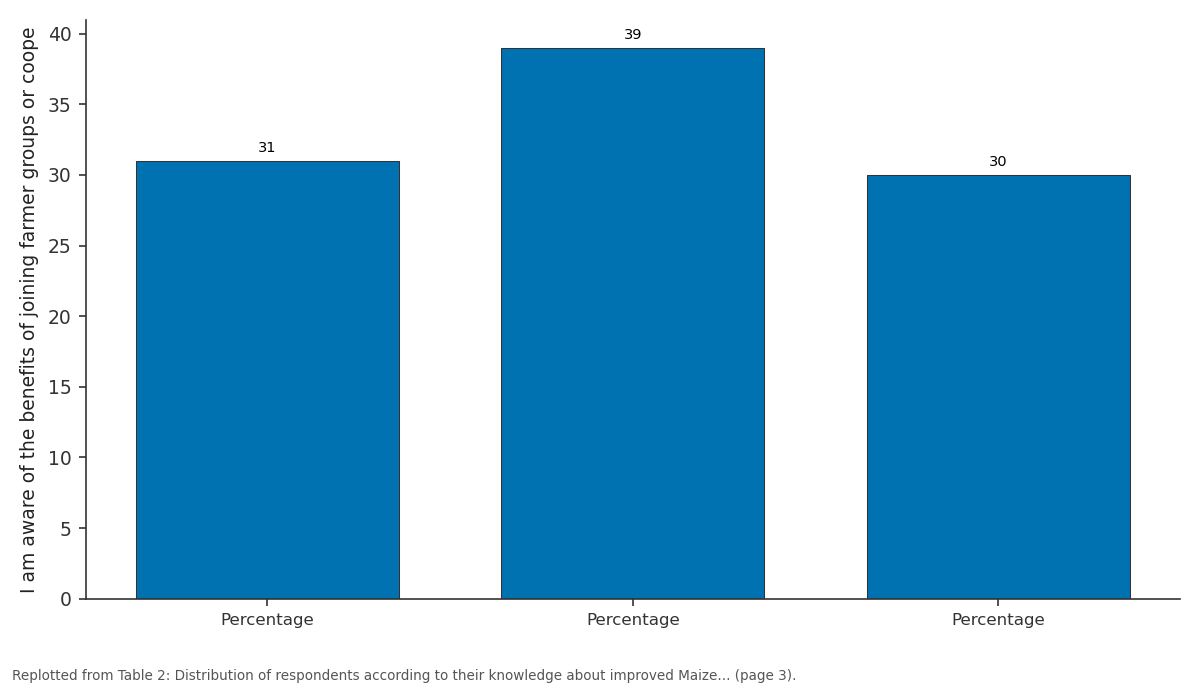
I am aware of the benefits of joining farmer...: Percentage vs Percentage vs Percentage
Replotted from Table 2 (page 3) of the original paper. Every bar is the paper's own table value.
View source evidence ↗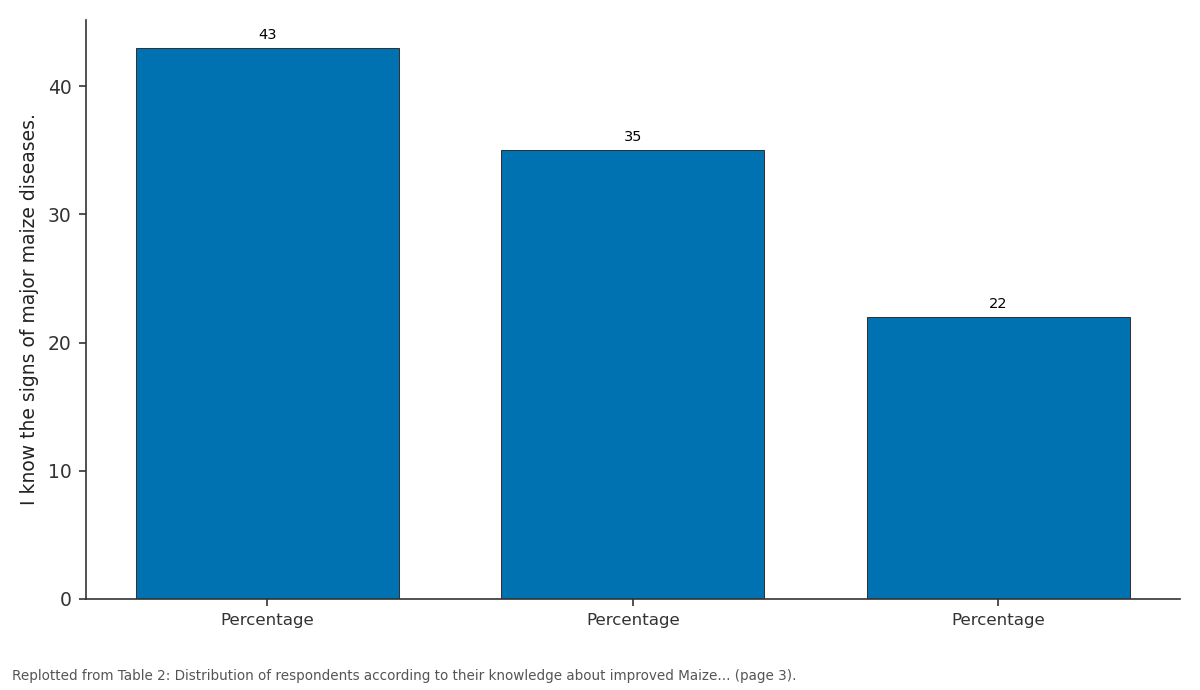
I know the signs of major maize diseases.: Percentage vs Percentage vs Percentage
Replotted from Table 2 (page 3) of the original paper. Every bar is the paper's own table value.
View source evidence ↗Figures & tables
From the original paper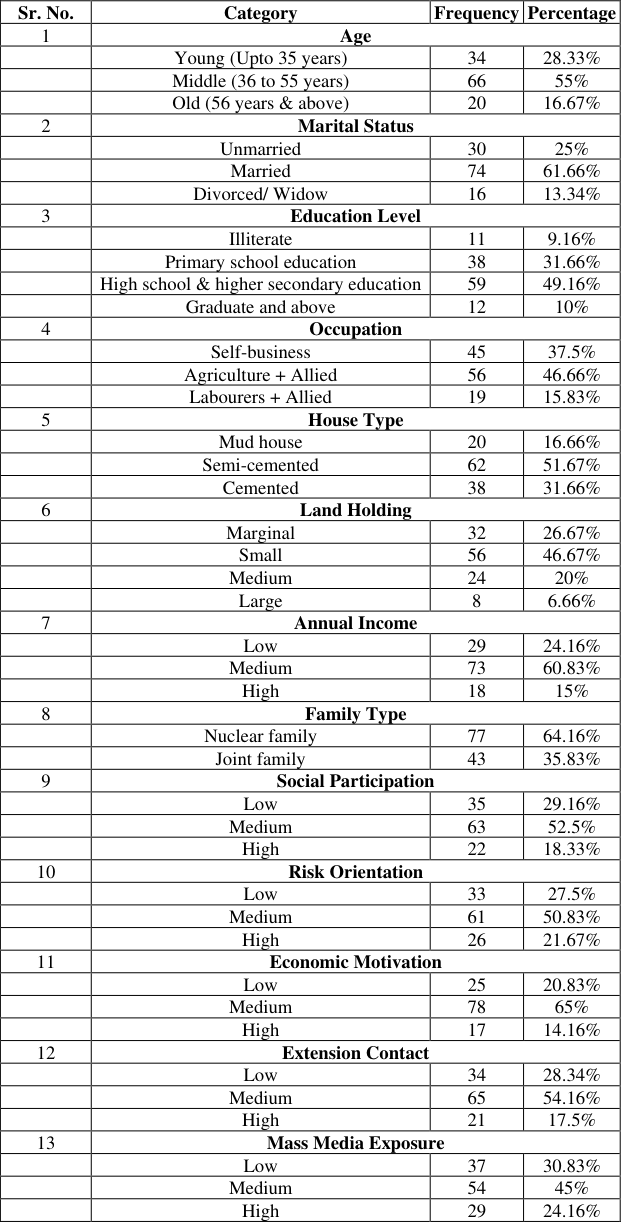 Table 1
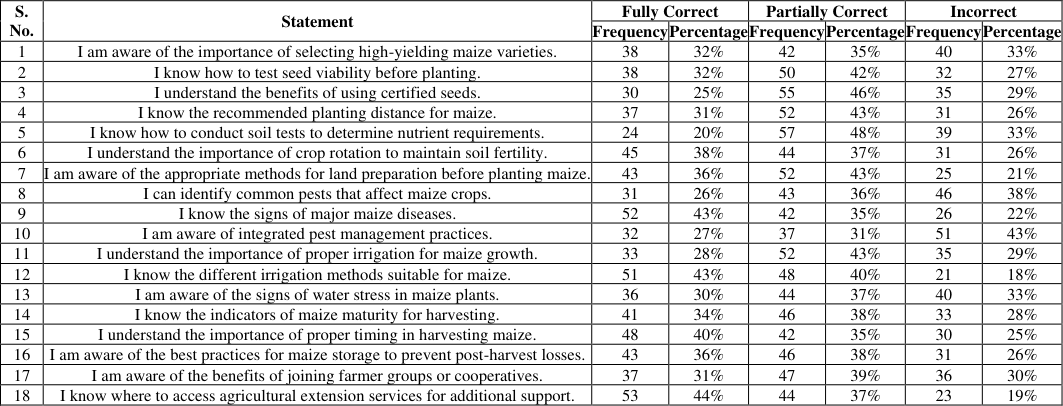 Table 2
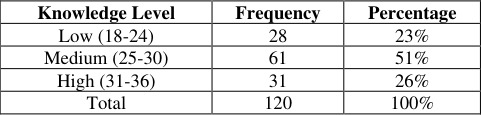 Table 3
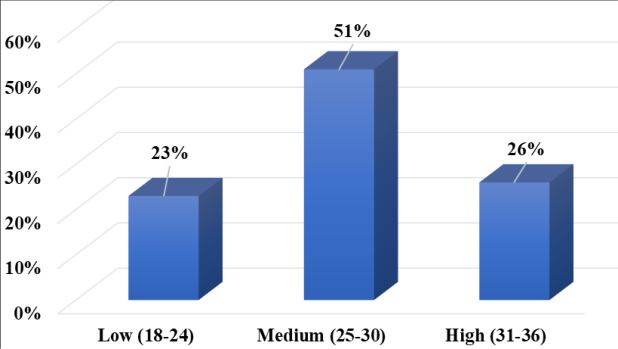 Figure 1
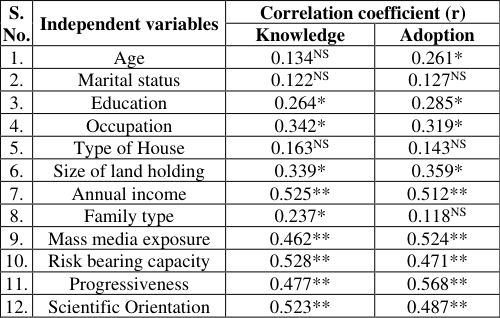 Table 4
Introduction
Maize, also known as corn, is a highly productive cereal crop with a significant global market value. It is grown across various states in India, with Bihar being a prominent contributor. Bihar, located in the eastern part of India, has favourable agro-climatic conditions for maize cultivation, with an average yield of 3 to 3.5 tonnes per hectare. The state contributes significantly to the total maize production of the country, with a share of around 9-10%. (Kumar K., Bhatia J. and Kumar M., 2018) [5] . Government initiatives, such as the National Food Security Mission (NFSM) and Rashtriya Krishi Vikas Yojana (RKVY), have been instrumental in boosting maize production in Bihar. However, maize farmers in Bihar face challenges like fluctuating market prices, pest attacks, and climate-related issues. Access to irrigation and proper storage facilities also pose significant hurdles for maize farmers. Future prospects for Bihar's maize production include continuous efforts from the government and the adoption of modern agricultural practices. Research and development in high-yielding and pest-resistant maize varieties will play a crucial role in sustaining growth. Improved technologies for higher maize production, such as suitable crop establishment techniques, integrated nutrient management strategies, and pest management, are recommended for higher maize production. Indian farmers are increasingly adopting new agricultural technologies to improve crop yields. However, traditional practices still influence adoption rates, even among farmers with sound economic conditions and formal education. The adoption of these technologies is not always driven by profit motives alone. Knowledge of recommended technologies is crucial for successful adoption. Despite India's competent agricultural research and extension systems, many practices are not widely accepted by farmers. The differential rate of adoption of farm technologies is attributed to personal and socio-economic characteristics of farmers. To ensure food security and increase maize productivity, new technologies and scientific cultivation methods should be adopted. A detailed study on knowledge and adoption levels is needed to understand farmers' constraints and promote maize cultivation.
Research Methodology
This study uses a descriptive research design to accurately and methodically describe a population, situation, or phenomenon. The research methodology involves observing and describing a subject's behaviour without taking any action. The study was conducted in Begusarai district of Bihar state, known as the 'Industrial Capital of Bihar', which is spread over 1,918 km2. The district is characterized by its large number of maize growers and its rich cultural, geographical, and agricultural aspects. The study selected Begusarai district due to its large number of farmers and its well-known industrial importance. Out of 18 blocks, six were selected based on the maximum area under maize crops. Out of 63 villages, six were selected based on the maximum area under maize crops. From each village, twenty respondents were randomly selected, resulting in a www.extensionjournal.com total of 120 respondents for the study. Initially, 26 independent variables were identified based on literature and consultation with scientists. Out of these, 11 variables with relevance to the study were selected. The study measured various variables, including age, educational status, occupational status, family size, annul income, land holding size, extension agent contact, social participation, mass media exposure, source of information, and risk bearing capacity. Dependant variables included knowledge of the farmers and adoption of the farmers. The study aims to correlate findings with the prevailing conditions in Begusarai district.
Objectives of the study
To ascertain the knowledge regarding improved maize cultivation practices of the respondents.
Results and Discussion
Results and Discussion
Knowledge level of respondents towards improved Maize production practices in Begusarai District
This section of the chapter addresses the respondents' current level of knowledge on enhanced maize production techniques in the Begusarai district. One of the key elements of the behavioural aspect is knowledge, which is the body of recognized information that an individual possesses.
Because of this, it became clear that it was essential to find out how much the respondents knew about better maize production techniques. Table 2 shows that respondents have a strong understanding of maize cultivation, including seed selection, soil testing, pest identification, irrigation, and post-harvest practices.
| S. No. | Statement | Fully Correct | — | Partially Correct | — | Incorrect | — |
|---|---|---|---|---|---|---|---|
| Frequency | Percentage | Frequency | Percentage | Frequency | Percentage | ||
| 1 | I am aware of the importance of selecting high-yielding maize varieties. | 38 | 32% | 42 | 35% | 40 | 33% |
| 2 | I know how to test seed viability before planting. | 38 | 32% | 50 | 42% | 32 | 27% |
| 3 | I understand the benefits of using certified seeds. | 30 | 25% | 55 | 46% | 35 | 29% |
| 4 | I know the recommended planting distance for maize. | 37 | 31% | 52 | 43% | 31 | 26% |
| 5 | I know how to conduct soil tests to determine nutrient requirements. | 24 | 20% | 57 | 48% | 39 | 33% |
| 6 | I understand the importance of crop rotation to maintain soil fertility. | 45 | 38% | 44 | 37% | 31 | 26% |
| 7 | I am aware of the appropriate methods for land preparation before planting maize. | 43 | 36% | 52 | 43% | 25 | 21% |
| 8 | I can identify common pests that affect maize crops. | 31 | 26% | 43 | 36% | 46 | 38% |
| 9 | I know the signs of major maize diseases. | 52 | 43% | 42 | 35% | 26 | 22% |
| 10 | I am aware of integrated pest management practices. | 32 | 27% | 37 | 31% | 51 | 43% |
| 11 | I understand the importance of proper irrigation for maize growth. | 33 | 28% | 52 | 43% | 35 | 29% |
| 12 | I know the different irrigation methods suitable for maize. | 51 | 43% | 48 | 40% | 21 | 18% |
| 13 | I am aware of the signs of water stress in maize plants. | 36 | 30% | 44 | 37% | 40 | 33% |
| 14 | I know the indicators of maize maturity for harvesting. | 41 | 34% | 46 | 38% | 33 | 28% |
| 15 | I understand the importance of proper timing in harvesting maize. | 48 | 40% | 42 | 35% | 30 | 25% |
| 16 | I am aware of the best practices for maize storage to prevent post-harvest losses. | 43 | 36% | 46 | 38% | 31 | 26% |
| 17 | I am aware of the benefits of joining farmer groups or cooperatives. | 37 | 31% | 47 | 39% | 36 | 30% |
| 18 | I know where to access agricultural extension services for additional support. | 53 | 44% | 44 | 37% | 23 | 19% |
Table text extracted from the original PDF; superscript letters are shown inline. The original table image is below.
View original table image
They are well-equipped to make informed decisions and implement best practices in their activities. They are aware of the importance of choosing high-quality seeds for optimal crop yield, soil testing for soil health, pest identification and control measures, irrigation practices for adequate water during critical growth stages, and post-harvest practices for proper storage and handling techniques. This strong grasp of key aspects of maize cultivation is expected to lead to higher yields, improved crop quality, and enhanced agricultural productivity. By leveraging their knowledge and skills, respondents can achieve higher yields, improved crop quality, and enhanced overall agricultural productivity. 4 shows that, at the 0.05 percent significance level, the independent variables-education, employment, amount of land holding, and family type-were substantially linked with the knowledge level of maize farmers. At the 0.01 percent significance level, the annual income, exposure to the media, risk-taking ability, progressiveness, and scientific orientation were shown to be substantially connected with the knowledge level of maize farmers. However, the knowledge level of maize farmers was not significantly impacted by age, marital status, or kind of home. At the 0.05 percent significance level, there was a significant correlation found between the adoption level of maize farmers and independent factors, including education, occupation, and quantity of land holding. At the 0.01 percent significance level, the adoption of maize farmers was substantially connected with annual income, exposure to the media, risktaking ability, progressiveness, and scientific orientation. On the other hand, age is adversely connected at the 0.05 percent significance level with the adoption level of maize farmers, whereas marital status, dwelling type, and family type are not significant.
Conclusion
The study examines the knowledge level of respondents in the Begusarai District regarding improved maize production techniques. The respondents were divided into 120 groups based on their knowledge level. The majority of respondents were aware of the importance of selecting high-yielding maize varieties, testing seed viability before planting, using certified seeds, knowing the recommended planting distance, conducting soil tests, understanding crop rotation, land preparation methods, identifying pests, understanding major maize diseases, integrated pest management practices, proper irrigation, water stress, indicators of maize maturity for harvesting, proper timing in harvesting, best practices for maize storage, joining farmer groups or cooperatives, and accessing agricultural extension services. The data showed that the respondents had a strong understanding of various aspects related to maize cultivation, including seed selection, soil testing, pest identification, irrigation, and post-harvest practices. They were well-equipped to make informed decisions and implement best practices in their activities. The respondents' ability to identify pests and implement pest control measures is crucial for protecting their maize crops from potential damage. Their knowledge of irrigation practices suggests they are aware of providing adequate water to their crops, especially during critical growth stages. The findings suggest that the respondents have a strong grasp of key aspects related to maize cultivation, which bodes well for their success in this agricultural endeavour. By leveraging their knowledge and skills, they are likely to achieve higher yields, improve crop quality, and enhance their overall agricultural productivity.
Figures and tables from the paper
| Sr. No. | Category | Frequency | Percentage |
|---|---|---|---|
| 1 | Age | ||
| Young (Upto 35 years) | 34 | 28.33% | |
| Middle (36 to 55 years) | 66 | 55% | |
| Old (56 years & above) | 20 | 16.67% | |
| 2 | Marital Status | ||
| Unmarried | 30 | 25% | |
| Married | 74 | 61.66% | |
| Divorced/ Widow | 16 | 13.34% | |
| 3 | Education Level | ||
| Illiterate | 11 | 9.16% | |
| Primary school education | 38 | 31.66% | |
| High school & higher secondary education | 59 | 49.16% | |
| Graduate and above | 12 | 10% | |
| 4 | Occupation | ||
| Self-business | 45 | 37.5% | |
| Agriculture + Allied | 56 | 46.66% | |
| Labourers + Allied | 19 | 15.83% | |
| 5 | House Type | ||
| Mud house | 20 | 16.66% | |
| Semi-cemented | 62 | 51.67% | |
| Cemented | 38 | 31.66% | |
| 6 | Land Holding | ||
| Marginal | 32 | 26.67% | |
| Small | 56 | 46.67% | |
| Medium | 24 | 20% | |
| Large | 8 | 6.66% | |
| 7 | Annual Income | ||
| Low | 29 | 24.16% | |
| Medium | 73 | 60.83% | |
| High | 18 | 15% | |
| 8 | Family Type | ||
| Nuclear family | 77 | 64.16% | |
| Joint family | 43 | 35.83% | |
| 9 | Social Participation | ||
| Low | 35 | 29.16% | |
| Medium | 63 | 52.5% | |
| High | 22 | 18.33% | |
| 10 | Risk Orientation | ||
| Low | 33 | 27.5% | |
| Medium | 61 | 50.83% | |
| High | 26 | 21.67% | |
| 11 | Economic Motivation | ||
| Low | 25 | 20.83% | |
| Medium | 78 | 65% | |
| High | 17 | 14.16% | |
| 12 | Extension Contact | ||
| Low | 34 | 28.34% | |
| Medium | 65 | 54.16% | |
| High | 21 | 17.5% | |
| 13 | Mass Media Exposure | ||
| Low | 37 | 30.83% | |
| Medium | 54 | 45% | |
| High | 29 | 24.16% |
Table text extracted from the original PDF; superscript letters are shown inline. The original table image is below.
View original table image
| Knowledge Level | Frequency | Percentage |
|---|---|---|
| Low (18-24) | 28 | 23% |
| Medium (25-30) | 61 | 51% |
| High (31-36) | 31 | 26% |
| Total | 120 | 100% |
Table text extracted from the original PDF; superscript letters are shown inline. The original table image is below.
View original table image
| S. No. | Independent variables | Correlation coefficient (r) | — |
|---|---|---|---|
| Knowledge | Adoption | ||
| 1. | Age | 0.134NS | 0.261* |
| 2. | Marital status | 0.122NS | 0.127NS |
| 3. | Education | 0.264* | 0.285* |
| 4. | Occupation | 0.342* | 0.319* |
| 5. | Type of House | 0.163NS | 0.143NS |
| 6. | Size of land holding | 0.339* | 0.359* |
| 7. | Annual income | 0.525** | 0.512** |
| 8. | Family type | 0.237* | 0.118NS |
| 9. | Mass media exposure | 0.462** | 0.524** |
| 10. | Risk bearing capacity | 0.528** | 0.471** |
| 11. | Progressiveness | 0.477** | 0.568** |
| 12. | Scientific Orientation | 0.523** | 0.487** |
Table text extracted from the original PDF; superscript letters are shown inline. The original table image is below.
View original table image
References
8 in the original paper- Adarsh S, Jacob J, Giffy T. Role of pulses in cropping systems: A review. Agric Rev. 2019;40:185-191.
- Ahire RD, Karhale RS, Kadam RP. Constraints faced by the respondents and their suggestions in adopting maize production technology. Agric Update. 2015;10(4):335-339.
- Chahande AB, Ghadge RM. A study of the knowledge of maize growers and its association with their selected characteristics. Int J Trop Agric. 2016;34(7).
- Kanhadar BR, Kamble VB, Mundhe SD. Relational analysis of profile of beneficiaries of BDN-711 (red gram variety) and its socio-economic impact. Int J Curr Microbiol Appl Sci. 2019;8(7).
- Kumari VM, Kumar MA, Singh N. Study on socioeconomic profile of the selected pulses growing farmers in Mahabubnagar district of Telangana state. Int J Agric Sci. 2018;10(12):6428-6431.
- Prasad K, Doharey RK, Singh SN, Singh RK, Pandey RK, Atarey S, et al. Effect of independent variables on knowledge extent of farmers about maize crop. Prog Res. 2016;11(Special-IV):2639-2643.
- Sai MVS, Revati GD, Ramya R, Swaroop AM, Maheswari E, Kumar MM. Knowledge and perception of farmers regarding pesticide usage in a rural farming village, southern India. Indian J Occup Environ Med. 2019;23(1):32-36.
- Singh AK, Singh D, Singh A, Singh M, Kumar A. Knowledge and attitude of the farmers towards raised bed and other improved production technology of maize for climate resilient agriculture. Indian J Ext Educ. 2016;52(3 & 4):135-140.