
Research article · 2024 · Full text
International Journal of Agriculture Extension and Social DevelopmentGender differences in mental health problems of adolescents: A cross-sectional study on school students in Haryana state
Volume 7(8) · Pages 527–533 · DOI: 10.33545/26180723.2024.v7.i8h.976 ↗
Research areasPoverty, Education, and Child Welfare
Abstract
Author-writtenBackground: A significant portion of children and teenagers of school age exhibit signs and symptoms of mental health problems. Children and adolescents with poor mental health may experience personal, academic, and social challenges. Differences in gender can also have a significant impact on mental health. Objectives: This study aims to show whether there is a difference between mental health problems of girl and boy students in Haryana state. Methods: The study population of this cross-sectional study consisted of male and female students aged 11-17 years, in the 6th to 12th grades studying in Government Sen. Sec. schools of two districts of Haryana state within the academic year of 2020-2021. The Strengths and Difficulties Questionnaire for adolescence, a standardized Persian version intended to screen teenagers aged 11 to 17 for mental health issues, was the instrument used to evaluate the mental health of students. Results: Results disclosed that male adolescents had more conduct problem, hyperactivity problem and peer problem as compared to female students. Female students in both districts had more emotional problems but demonstrated better pro social behavior. Statistically significant differences were found between family environment perceived by adolescent boys and girls. Adolescent boys perceived better family environment than adolescent girls. Results of peer relationships of children as per sex show that males had high bullying (M=2.02) and victimization (M=1.97) while female students had better pro-social behavior (M=2.64). Conclusions: Boys about preventing conduct, hyperactivity, and peer problem and strengthening pro-social behaviors require attention and effective action. A better family environment and good peer relationships for both sexes can reduce these problems. So the study suggests interventions designed to enrich both the peer relationship and family environment of students.
Summary
Source-checkedPlain-language reading of the full paper, prepared with AI and checked against the text. Each point links to the authors' own words.
Why it matters
- Many school-aged children and teenagers show signs of mental health problems, which can lead to difficulties in their social, academic, and personal lives. View evidence ↗
- The home environment, including parenting styles and family relationships, significantly influences the mental health of adolescents. View evidence ↗
The question
- The study aimed to determine if there are differences in mental health problems between male and female students in the state of Haryana. View evidence ↗
What they did
- This cross-sectional study collected data between November 2020 and February 2021 from four government schools in the Hisar and Fatehabad regions of Haryana. View evidence ↗
- The study sample included 240 students aged 11 to 17 (grades 6 to 12), consisting of 30 males and 30 females from each of the four schools. View evidence ↗
- Mental health was assessed using the student version of the Strengths and Difficulties Questionnaire (SDQ), a standardized tool for teenagers aged 11 to 17. View evidence ↗
- The researchers used the Family Climate Scale (FCS) and the Peer Relationship Questionnaire to evaluate the students' family environments and peer relationships. View evidence ↗
What they found
- In the Fatehabad district, male students showed higher mean scores for conduct (2.16), hyperactivity (1.16), and peer problems (1.61), while female students had more emotional problems (1.41). View evidence ↗
- In the Hisar district, males had higher mean scores for conduct (1.93), hyperactivity (1.19), and peer problems (1.78), whereas females had more emotional problems (1.30). View evidence ↗
- Regarding peer relationships, males had higher mean scores for bullying (2.02) and victimization (1.97), while females demonstrated better pro-social behavior (2.64). View evidence ↗
What it means
- The authors concluded that female adolescents in Haryana experience more emotional difficulties and stronger pro-social behavior, while males experience more conduct, hyperactivity, and peer problems. View evidence ↗
- The study recommends implementing interventions that improve both the family environment and peer relationships to mitigate adolescent mental health problems. View evidence ↗
- The authors state that the results cannot be generalized to a larger population due to the small sample size. View evidence ↗
- The study was limited to survey data; the authors suggest that future research should use interviews, observations, or longitudinal case studies for more depth. View evidence ↗
Visual summary
3 visualsIllustrations explain the paper; charts are replotted from the paper's own table values.
Gender-Specific Mental Health Trends
AI-generated conceptual illustration (adolescent boys and girls). It explains the idea and does not show study data.
View source evidence ↗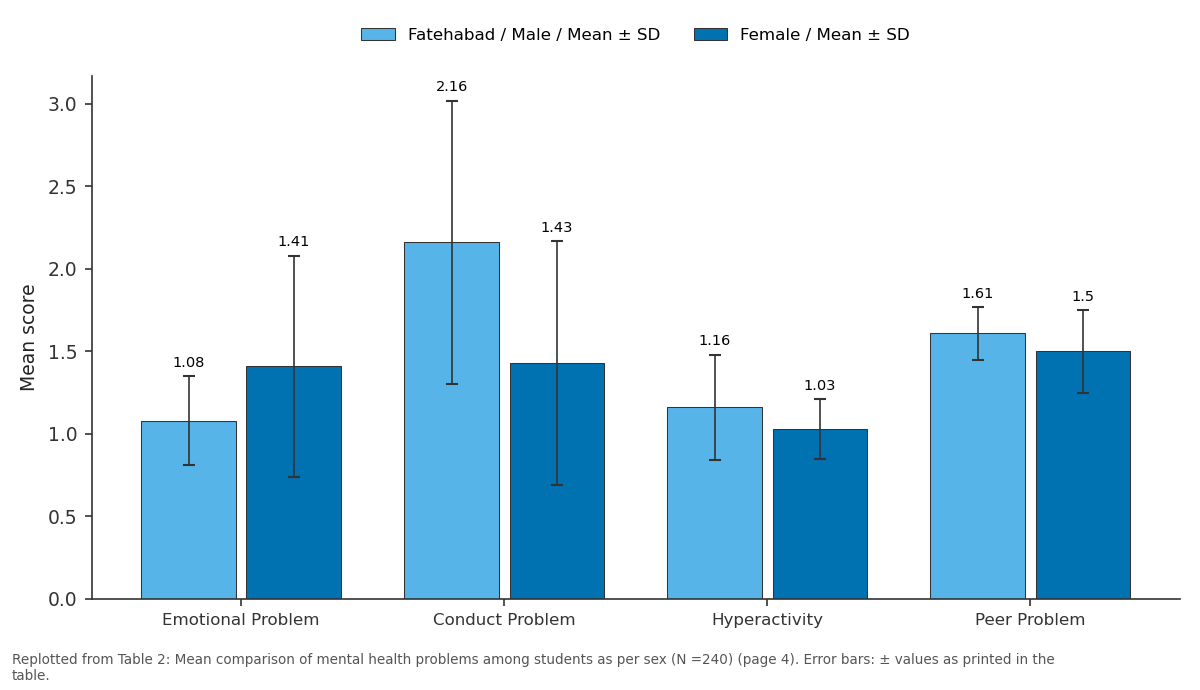
Fatehabad / Male / Mean ± SD and Female / Mean ± SD: Emotional Problem vs Conduct Problem vs Hyperactivity vs Peer Problem
Replotted from Table 2 (page 4) of the original paper. Every bar is the paper's own table value.
View source evidence ↗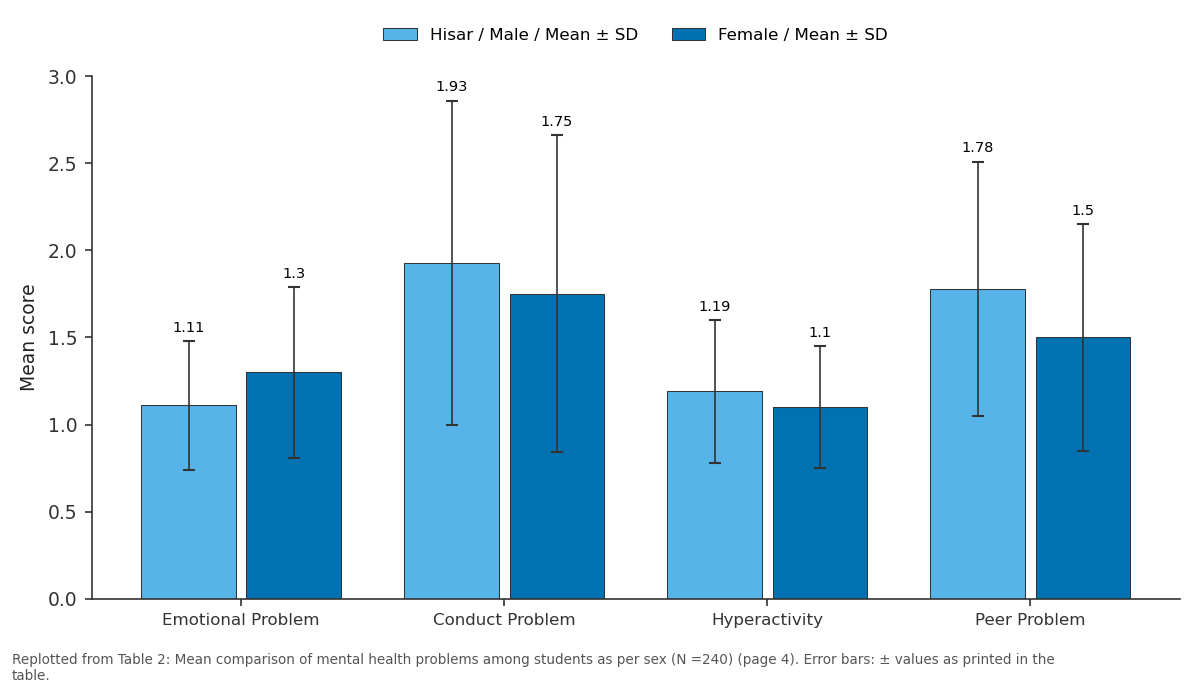
Hisar / Male / Mean ± SD and Female / Mean ± SD: Emotional Problem vs Conduct Problem vs Hyperactivity vs Peer Problem
Replotted from Table 2 (page 4) of the original paper. Every bar is the paper's own table value.
View source evidence ↗Figures & tables
From the original paper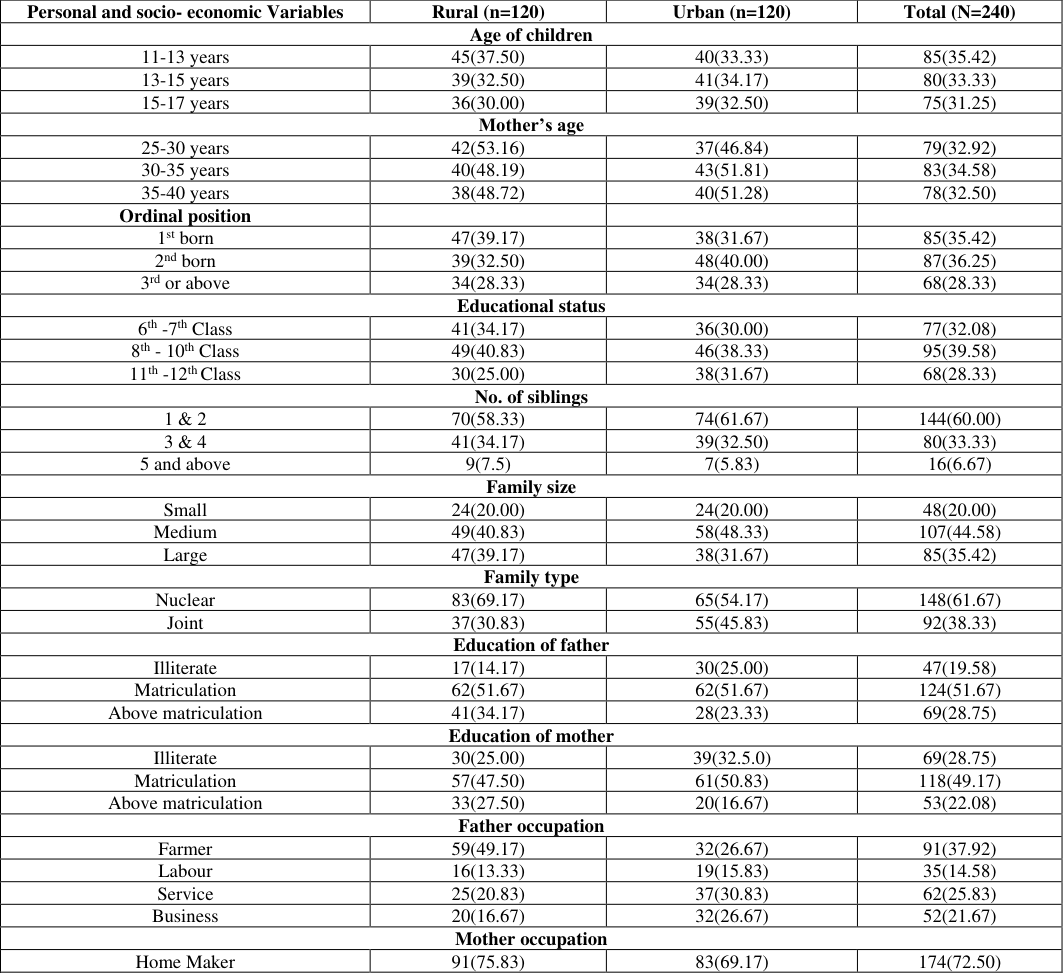 Table 1
 Table 2
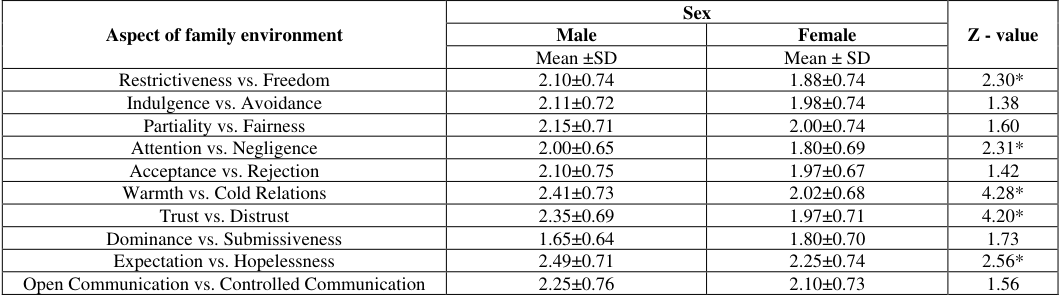 Table 3
 Table 4
Introduction
The adolescent years represent a unique window of opportunity for human development, marked by increased stress, anxiety, and behavioral changes that make this period difficult for young people (Campbell et al., 2021; Murad et al., 2003; Stehlik, 2018) [1][2][3] . Research indicates that roughly half of all mental illnesses develop in adolescence (Kessler et al., 2007) [4] and adolescents who experience mental health problems may face difficulties in their personal, academic, and social lives (European Network of Ombudspersons for Children, 2018) [5] . Mental health disorders that occur during adolescence have a wide range of impacts and implications for both adolescence and adulthood in terms of mental health outcomes as well as other aspects of a person's life (Department of Health, 2014) [6] . Adolescence is therefore a crucial time to look at the long-term development of mental health disorders because it is during this time that young people go through puberty and encounter new stressors like peer conflict, sexual exploration, and academic stress (Berg et al., 2017; Schafhuser et al., 2017) [7,8] . According to recent adolescent population surveys, boys are more likely to experience externalizing problems and girls are more likely to experience internalizing disorders like depression or anxiety. These findings also show that the prevalence of mental health issues and the types of disorders vary somewhat between the sexes (Campbell et al., 2021; Green et al., 2005; Van Droogenbroeck et al., 2018) [1,9,10] . Numerous hypotheses pertaining to psychological wellbeing and mental health outcomes throughout adolescence have put forth factors that determine gender differences and their consequences (Esteban-Gonzalo et al., 2020) [11] . It has been estimated that 3-18% of school-age children and adolescents have substantial problems since a significant portion of them exhibit indications and symptoms of mental health issues (Demyttenaere et al., 2004; Fletcher et al., 2008) [12,13] . Sadly, there are situations when parents and teachers of teenagers cannot accurately assess whether these issues are present in teenagers. As a result, many of these students do not receive the necessary support to address these issues (Brand et al., 2012; Wille et al., 2008; Alavi et al., 2010; Ravens-Sieberer et al., 2008) [14][15][16][17] . Emotional www.extensionjournal.com symptoms, behavioral issues, hyperactivity/inattention, peer interaction issues, and prosocial actions are some ways that these issues can be categorized and recognized (Goodman et al., 2010; Tehranidoost et al., 2008) [18,19] . The term "emotional disorders" refers to the heightened and aberrant expressions of an adolescent's emotions, such as fear, anxiety, and sadness, according to his or her developmental stage. Recurring and persistent patterns of behavior that violate other people's fundamental rights or fundamental societal norms and laws relevant to their age are known as conduct problems. Restlessness and lack of concentration are synonymous with hyperactivity and inattention. Pro social behaviors are linked to the adolescent's relationship with others in the family and his bond outside the home, particularly with peers and classmates (Goodman et al., 2010; Tehranidoost et al., 2008) [18,19] . Adolescent mental health issues are significantly influenced by the familial environment. Many elements, including family relationships, parenting style, and general home environment, can have a big impact on a child's mental health. While stressful or unfavorable surroundings can cause a variety of mental health difficulties, supportive and stable family environments frequently contribute to greater mental health. (Sarwar, 2016) [20] Depending on their sex, teenagers might be affected differently by the entire home environment. Boys, for example, may experience different discipline methods than girls, which may have an impact on their mental health. Another relevant risk factor that has been proposed to explain the gender variations in mental health issues is peer interactions. Peer relationships become more noticeable as a person enters adolescence and experiences a shift in the personal and social environment. According to Brown and Larson (2009) [21] , peer relationships have a big impact on teenagers' attitudes, behaviors, and emotional health. In these situations, females frequently exhibit higher levels of empathy, sensitivity to peer suffering, and fear of peer rejection than do males (McDonald et al., 2010; Rose and Rudolph, 2006) [22,23] , leading to severe internalizing symptoms (Purdie and Downey, 2000) [24] . Gender differences must be taken into consideration in order to accurately assess and understand the epidemiological data of any illness or condition connected to community health (Afifi, 2007) [25] . Gender variations may also have a significant impact on mental health (Mohwinkel et al., 2018) [26] . So the present study was conducted to determine the prevalence of mental health problems in Indian students studying in Government Sen. Sec. schools, aiming to identify the most vulnerable groups of Indian adolescents in terms of mental health problems with an emphasis on the difference between boys and girls.
Methodology
In this school-based cross-sectional study, we collected data from Nov 2020 to Feb 2021. We purposively invited 4 Government schools from urban and rural areas in the Hisar and Fatehabad regions of Haryana State to participate in the study. In each school, we invited male (30) and female (30) students aged 11-17 years (6 th to 12 th grades). The total sample for the present study consists of 240 respondents. The Strengths and Difficulties Questionnaire (SDQ), a standardized Persian version (Goodman 2002) [27] designed to evaluate teenagers aged 11 to 17 for mental health issues, was utilized as the assessment instrument for the mental health of the adolescents. There are five categories on this 25-item questionnaire: prosocial behaviors, hyperactivity/inattention disorder, peer interaction issues, emotional difficulties, and conduct issues. The student, parent, and instructor versions are all included in the SDQ. The person has the choice to select "not true," "definitely true," or "slightly true" for each item. In the current investigation, the student versions from the classroom were utilized. Every item receives a score of either 1 or 2. The pro social behaviors score is calculated individually from 0 to 10, while the problems score goes from 0 to 40. The total score is the sum of the scores of the first four categories (apart from pro social behaviors). A self-developed questionnaire was used to obtain sociodemographic information of respondents. The SDQ and demographic information questionnaire were completed by students themselves. Family environment and peer relationship status of students were assessed by the Family Climate Scale (FCS) by Shah (2006) [28] and the Peer Relationship Questionnaire by Rigby and Slee (1994) [29] , respectively. Since the data gathering process was anonymous, neither the tutors' nor the school's management could see the answers of respondents. Data analysis was performed using SPSS software.
Results
Results
Personal and socio-economic profile of students
The personal information includes age, gender, ordinal position, and number of siblings of adolescents. The socioeconomic information includes educational status, parental occupation, parental education family type, family size, and monthly income.
Personal and socio-economic profile of rural and urban students
Table 1 represents the personal and socio-economic profile of students from rural and urban areas. The data indicate that the majority of the respondents (37.50%) fall in the age group of 11 to 13 years in rural areas in urban areas the maximum (34.17%) adolescents fall in the age group of 13 to 15 years. More than half (53.16%) of mother's belonged to age group 25-30 years in rural areas. Whereas in urban areas maximum mothers were (51.81%) belonged to age group 30-35 years. For ordinal position it was seen that 39.17 per cent of students from rural areas and 31.67 per cent of urban area were first born, followed by 2 nd born (32.50% in rural areas and 40.00% in urban areas) and 3 rd born or latter born (28.33 per cent of the respondents from rural areas and a similar pattern was observed in urban areas). Regarding education of respondents, the result revealed that 32.8 percent respondents were studying in 6 th and 7 th grade, 39.58 percent were in 8 th to 10 th grade and 28.33 percent were studying in 11 th and 12 th grade. Further regarding the number of siblings, the maximum respondents (60.83%) were having one or two siblings, followed by 33.33 per cent with 3 to 4, and only 5.83 per cent respondents had 5 and above siblings. As family is concerned, results indicated that the maximum (44.58%) respondents belonged to medium www.extensionjournal.com size families (5 to 6 members), followed by 35.42 per cent of the respondents belonged to large size families (more than 6 members), and 20.00 per cent of the respondents had small size families (up to 4 members). Results clearly envisaged that the majority (61.67%) of families were nuclear in their family structure and only 38.33 per cent had a joint family structure. The Majority (54.17 and 69.17%) of respondents belonged to nuclear families in both rural and urban areas respectively. With regards to father's education, 51.67 per cent of respondent's fathers were educated up to matriculation, followed by 28.75 per cent were above matriculation, and the rest, 28.75 per cent respondent's father were illiterate. As far as mother's education is concerned, results pinpointed that 49.17 per cent of mothers were educated up to matriculation, 28.75 per cent were illiterate, and 22.03 per cent were above matriculation. Further, the occupational status of parents indicated that the majority of fathers of rural adolescents were farmers (49.17%), followed by service (20.83%), and the rest were engaged in business (16.67%) and labour (13.33%). Result regarding urban area shows that 30.83 percent of fathers of the respondents were involved in service, followed by business/ farming (26.67%) and labor (15.83%). The majority of mothers of adolescents in rural and urban areas were homemakers (75.83 and 69.17%, respectively), while 12.50 per cent mothers of rural and 17.50 per cent mothers of urban children were in service. Less number of rural mothers (11.67%) was engaged in labour than urban mothers (13.33%). Results further highlighted that maximum respondents (46.67%) in rural areas and 48.33 per cent in urban areas had monthly family income up to Rs. 10000-20000, a smaller number of respondents from rural areas (20.00%) had monthly income below Rs.10000 than respondents from urban areas (29.17%), and 33.33 per cent and 22.50 per cent of urban and rural respondents had more than Rs. 20000 per month, respectively.
| Personal and socio- economic Variables | Rural (n=120) | Urban (n=120) | Total (N=240) |
|---|---|---|---|
| Age of children | |||
| 11-13 years | 45(37.50) | 40(33.33) | 85(35.42) |
| 13-15 years | 39(32.50) | 41(34.17) | 80(33.33) |
| 15-17 years | 36(30.00) | 39(32.50) | 75(31.25) |
| Mother’s age | |||
| 25-30 years | 42(53.16) | 37(46.84) | 79(32.92) |
| 30-35 years | 40(48.19) | 43(51.81) | 83(34.58) |
| 35-40 years | 38(48.72) | 40(51.28) | 78(32.50) |
| Ordinal position | |||
| 1st born | 47(39.17) | 38(31.67) | 85(35.42) |
| 2nd born | 39(32.50) | 48(40.00) | 87(36.25) |
| 3rd or above | 34(28.33) | 34(28.33) | 68(28.33) |
| Educational status | |||
| 6th -7th Class | 41(34.17) | 36(30.00) | 77(32.08) |
| 8th - 10th Class | 49(40.83) | 46(38.33) | 95(39.58) |
| 11th -12th Class | 30(25.00) | 38(31.67) | 68(28.33) |
| No. of siblings | |||
| 1 & 2 | 70(58.33) | 74(61.67) | 144(60.00) |
| 3 & 4 | 41(34.17) | 39(32.50) | 80(33.33) |
| 5 and above | 9(7.5) | 7(5.83) | 16(6.67) |
| Family size | |||
| Small | 24(20.00) | 24(20.00) | 48(20.00) |
| Medium | 49(40.83) | 58(48.33) | 107(44.58) |
| Large | 47(39.17) | 38(31.67) | 85(35.42) |
| Family type | |||
| Nuclear | 83(69.17) | 65(54.17) | 148(61.67) |
| Joint | 37(30.83) | 55(45.83) | 92(38.33) |
| Education of father | |||
| Illiterate | 17(14.17) | 30(25.00) | 47(19.58) |
| Matriculation | 62(51.67) | 62(51.67) | 124(51.67) |
| Above matriculation | 41(34.17) | 28(23.33) | 69(28.75) |
| Education of mother | |||
| Illiterate | 30(25.00) | 39(32.5.0) | 69(28.75) |
| Matriculation | 57(47.50) | 61(50.83) | 118(49.17) |
| Above matriculation | 33(27.50) | 20(16.67) | 53(22.08) |
| Father occupation | |||
| Farmer | 59(49.17) | 32(26.67) | 91(37.92) |
| Labour | 16(13.33) | 19(15.83) | 35(14.58) |
| Service | 25(20.83) | 37(30.83) | 62(25.83) |
| Business | 20(16.67) | 32(26.67) | 52(21.67) |
| Mother occupation | |||
| Home Maker | 91(75.83) | 83(69.17) | 174(72.50) |
Table text extracted from the original PDF; superscript letters are shown inline. The original table image is below.
View original table image
Mean comparison of family environment of students on the basis of sex
Sex-wise comparative analysis of the family environment status of students is shown in Table 3. Comparative analysis of mean scores depicts that males were comparatively better in restrictiveness vs. freedom (M=2.10), indulgence vs. avoidance (M=2.11), partiality vs. fairness (M=2.15), attention vs. negligence (M=2.00), acceptance vs. rejection (M= 2.10), warmth vs. cold relations (M=2.41), trust vs. distrust (M=2.35), expectation vs. hopelessness (M=2.49) and open communication vs. controlled communication (M=2.25). Females were better only in dominance vs. submissiveness (M=1.80). Further results revealed significant differences in restrictiveness vs. freedom (z=2.30*), attention vs. negligence (z=2.31*), warmth vs. cold relations (z=4.28*), trust vs. distrust (z=4.20*) and expectation vs. hopelessness (z=2.56*) as per sex.
| Aspect of family environment | Sex | — | Z - value |
|---|---|---|---|
| Male | Female | ||
| Mean ±SD | Mean ± SD | ||
| Restrictiveness vs. Freedom | 2.10±0.74 | 1.88±0.74 | 2.30* |
| Indulgence vs. Avoidance | 2.11±0.72 | 1.98±0.74 | 1.38 |
| Partiality vs. Fairness | 2.15±0.71 | 2.00±0.74 | 1.60 |
| Attention vs. Negligence | 2.00±0.65 | 1.80±0.69 | 2.31* |
| Acceptance vs. Rejection | 2.10±0.75 | 1.97±0.67 | 1.42 |
| Warmth vs. Cold Relations | 2.41±0.73 | 2.02±0.68 | 4.28* |
| Trust vs. Distrust | 2.35±0.69 | 1.97±0.71 | 4.20* |
| Dominance vs. Submissiveness | 1.65±0.64 | 1.80±0.70 | 1.73 |
| Expectation vs. Hopelessness | 2.49±0.71 | 2.25±0.74 | 2.56* |
| Open Communication vs. Controlled Communication | 2.25±0.76 | 2.10±0.73 | 1.56 |
Table text extracted from the original PDF; superscript letters are shown inline. The original table image is below.
View original table image
Comparison of peer relationship status of students on the basis of sex
Comparison of peer relationship status of students on the basis of sex and area has been portrayed in Table 4. Results of the mean comparison of peer relationships of students as per sex show that males had high bullying (M=2.02) and victimization (M=1.97) while female students had high prosocial (M=2.64). Further significant differences were found in bullying (z=2.54*) and victimization (z=3.45*). www.extensionjournal.com [30] . Van et al. (2018) [10] also found a significant difference between mental health problems of adolescent girls and boys.
| Aspects of peer relationship | Sex | — | Z- value |
|---|---|---|---|
| Male | Female | ||
| Mean ±SD | Mean ±SD | ||
| Bullying | 2.02±0.66 | 1.81±0.68 | 2.54* |
| Victimization | 1.97±0.71 | 1.66±0.68 | 3.45* |
| Pro-Social | 2.63±0.28 | 2.64±0.31 | 0.26 |
Table text extracted from the original PDF; superscript letters are shown inline. The original table image is below.
View original table image
In the present study, we found that male adolescents had more conduct problem, hyperactivity problem and peer problem as compared to female students. Female students had more emotional problems but demonstrated better pro social behavior. Studies by Srinath et al. (2005) [31] and Malhotra et al. (2009) [32] also showed that emotional problems were more frequent in girls and behavioral issues in boys. But these studies did not find a statistically significant difference in gender. According to research by Sachs-Ericsson & Ciarlo (2000) [33] , men are more likely to engage in antisocial conduct and abuse drugs, whereas women are more likely to suffer from illnesses that have their roots in anxiety and despair. Bartels et al. (2011) [30] also showed that there was a higher percentage of females with internalized difficulties, particularly in relation to certain internalized symptom areas, such as somatic complaints, withdrawal/depressed, and anxiety/depressed. In contrast, men score highly when it comes to externalized conduct, particularly when it comes to violating the law. According to Clarke et al. (2011) [34] , it's critical to provide women the opportunity to voice their opinions rather than letting other professionals be more outspoken about their actions.
In the present study statistically significant differences were found between family environment perceived by adolescent boys and girls. Adolescent boys perceived better family environment than adolescent girls. Differences in family environments based on sex can lead to various behavioral outcomes. For instance, boys who are expected to conform to traditional masculine norms might exhibit more aggression or risk-taking behaviors if they feel they must suppress emotions or vulnerabilities. Conversely, girls might experience pressure to excel in social and academic domains, potentially leading to stress or anxiety if they feel they cannot meet these expectations. Balda et al. (2019) [35] conducted a study on "Family Environment as Perceived by Adolescent Boys and Girls" and found that boys perceived more expressiveness, acceptance, and caring attitude and more independence in their families as compared to girls. However, compared to teenage boys, girls thought their families were more structured and in charge. Positive parenting techniques are essential in preventing the emergence of psychosocial issues in teenage children, especially in female adolescents.
Parents and other caregivers should be made aware of this. Bayer et al. (2008) [36] and Sato et al. (2019) [37] demonstrated that family conflict and less cohesive family environments were associated with childhood emotional and behavioral problems.
Results of peer relationships of children as per sex in the present study showed that male students had high bullying and victimization, while female students had better prosocial behavior. Peer connections are like the oxygen that allows bullying to flourish; they can be used as a stick or as a source of embarrassment for victims, but even one supportive friend can lessen the negative effects of being teased. According to Useche et al. (2023) [38] , male youths are more likely to engage in acts of bullying and victimization. Gender variations in the development of prosocial behavior were observed by Van et al. (2018) [10] . In contrast, Abdullahi and Kumar (2016) [39] suggest that males and females are both almost equal on most of the pro social behavior dimensions.
Conclusion
The female respondents showed stronger pro-social behavior and more emotional difficulties, while the male teenagers had higher conduct, hyperactivity, and peer problems.
The reason for these results is that both adolescent boys and girls perceived the different family environment and peer relationship status. Emotional and behavioral difficulties of adolescents in Haryana; require attention. Developing strong and positive relationships with peers and family members could help mitigate mental health problems among adolescents in Haryana.
Based on the results of the present research, few recommendations
▪ In terms of future research, in-depth investigations are needed in this field with a large sample of similar age groups to increase the generalization of the results. ▪ Training should be given to parents to adopt a more positive attitude towards both sex children as a parent. ▪ Respectful behavior should be implemented in families as it is one of the crucial factors for a strong parentchild bond. ▪ The results from this study suggest interventions designed to enrich both the peer relationship and family environment of children. ▪ Respectable parenting practices can help the child and benefit the family as a whole. Events that emphasize a new way of parenting, or that include family, school, peer, and community, can be effective. ▪ For keeping the mental health elasticity of school www.extensionjournal.com children, practices of yoga, pranayama, and regular medication should be boosted at the school level.
Informed Consent: All the collected information was confidential, and participation in the project was completely free. The students and their parents participated in the study only if they had conscious willingness and consent.
Implication of the study:
The findings of the present study will be valuable for counselors, institutions, and agencies working for children for suitable counseling, planning therapeutic strategies, designing and developing the services for (maintaining behavioral problems of the person) better family and peer relationships of children, which help in maintaining their mental health status.
Limitation of the study:
The data of the present study has been collected only through a survey. For in-depth information gathering, additional techniques such as interview schedules, longitudinal case studies, observation, etc., can be included. Due to the small sample size, the research judgments can't be generalized for a large population. Schools were not very welcoming due to the pandemic situation of COVID-19, which made the researcher make many visits to take information.
Figures and tables from the paper
| Mental Health Problems | Fatehabad | — | Z - value | Hisar | — | Z - value |
|---|---|---|---|---|---|---|
| Male | Female | Male | Female | |||
| Mean ± SD | Mean ± SD | Mean ± SD | Mean ± SD | |||
| Emotional Problem | 1.08±0.27 | 1.41±0.67 | 3.54* | 1.11±0.37 | 1.30±0.49 | 2.40* |
| Conduct Problem | 2.16±0.86 | 1.43±0.74 | 4.98* | 1.93±0.93 | 1.75±0.91 | 1.07 |
| Hyperactivity | 1.16±0.32 | 1.03±0.18 | 2.74* | 1.19±0.41 | 1.10±0.35 | 1.29 |
| Peer Problem | 1.61±0.16 | 1.50±0.25 | 2.87* | 1.78±0.73 | 1.50±0.65 | 2.22* |
| Pro social | 1.26±0.63 | 1.13±0.43 | 1.32 | 2.08±0.62 | 1.75±0.76 | 2.61* |
Table text extracted from the original PDF; superscript letters are shown inline. The original table image is below.
View original table image
References
33 in the original paper- Campbell O, Bann D, Patalay P. The gender gap in adolescent mental health: A cross-national investigation of 566,829 adolescents across 73 countries. SSM Popul Health. 2021;100742.
- Murad SD, Joung IM, van Lenthe FJ, Bengi-Arslan L, Crijnen AA. Predictors of self-reported problem behaviours in Turkish immigrant and Dutch adolescents in the Netherlands. J Child Psychol Psychiatry. 2003;44(3):412-23. DOI: 10.1111/1469-7610.00131.
- Kessler RC, Amminger GP, Aguilar-Gaxiola S, Alonso J, Lee S, Ustün TB. Age of onset of mental disorders: a review of recent literature. Curr Opin Psychiatry. 2007;20(4):359-364. DOI: 10.1097/YCO.0b013e32816ebc8c.
- Berg MT, Simons RL, Barr A, Beach SR, Philibert RA. Childhood/Adolescent stressors and allostatic load in adulthood: Support for a calibration model. Soc Sci Med. 2017;193:130-139.
- Schafhuser K, Allemand M, Schwarz B. The development of self-representations during the transition to early adolescence: The role of gender, puberty, and school transition. J Early Adolesc. 2017;37:774-804.
- Green H, McGinnity Á, Meltzer H, Ford T, Goodman R. Mental health of children and young people in Great Britain, 2004. Basingstoke: Palgrave Macmillan; c2005.
- Van Droogenbroeck F, Spruyt B, Keppens G. Gender differences in mental health problems among adolescents and the role of social support: results from the Belgian health interview surveys 2008 and 2013. BMC Psychiatry. 2018;18:1-9.
- Esteban-Gonzalo S, Esteban-Gonzalo L, CabanasSánchez V, Miret M, Veiga OL. The investigation of gender differences in subjective wellbeing in children and adolescents: the UP&DOWN study. Int J Environ Res Public Health. 2020;17:27-32.
- Demyttenaere K, Bruffaerts R, Posada-Villa J, Gasquet I, Kovess V, Lepine JP, et al. Prevalence, severity, and unmet need for treatment of mental disorders in the World Health Organization World Mental Health Surveys. JAMA. 2004;291(21):2581-2590. DOI: 10.1001/jama.291.21.2581.
- Fletcher J, Wolfe B. Child mental health and human capital accumulation: the case of ADHD revisited. J Health Econ. 2008;27(3):794-800. DOI: 10.1016/j.jhealeco.2007.10.010.
- Brand R, Wolff W, Hoyer J. Psychological symptoms and chronic mood in representative samples of elite student-athletes, deselected student-athletes and comparison students. Sch Ment Health. 2012;5(3):166174. DOI: 10.1007/s12310-012-9095-8.
- Wille N, Bettge S, Wittchen HU, Ravens-Sieberer U; BELLA study group. How impaired are children and adolescents by mental health problems? Results of the BELLA study. Eur Child Adolesc Psychiatry. 2008;17 Suppl 1:42-51. DOI: 10.1007/s00787-008-1005-0.
- Alavi A, Mohammadi MR, Joshaghani N, MahmoudiGharaei J. Frequency of psychological disorders amongst children in urban areas of Tehran. Iran J Psychiatry. 2010;5(2):55-59.
- Ravens-Sieberer U, Wille N, Erhart M, Bettge S, Wittchen HU, Rothenberger A, et al. Prevalence of mental health problems among children and adolescents in Germany: results of the BELLA study within the National Health Interview and Examination Survey. Eur Child Adolesc Psychiatry. 2008;17 Suppl 1:22-33. DOI: 10.1007/s00787-008-1003-2.
- Goodman A, Lamping DL, Ploubidis GB. When to use broader internalising and externalising subscales instead of the hypothesised five subscales on the Strengths and Difficulties Questionnaire (SDQ): data from British parents, teachers and children. J Abnorm Child Psychol. 2010;38(8):1179-1191. DOI: 10.1007/s10802-010-9434-x.
- Tehranidoost M, Mahmoudi-Gharaei J, Alavi A, Mohammadi MR, Shahrivar Z, Saadat S. Children mental health problems: Parent report form of Strengths and Difficulties Questionnaire. Iran J Psychiatry. 2008;3(1):26-31.
- Sarwar S. Influence of parenting style on children's behaviour. J Educ Educ Dev. 2016;3(2):222-249.
- McDonald KL, Bowker JC, Rubin KH, Laursen B, Duchene MS. Interactions between rejection sensitivity and supportive relationships in the prediction of www.extensionjournal.com adolescents' internalizing difficulties. J Youth Adolesc. 2010;39:563-74.
- Rose AJ, Rudolph KD. A review of sex differences in peer relationship processes: potential trade-offs for the emotional and behavioral development of girls and boys. Psychol Bull. 2006;132:98.
- Purdie V, Downey G. Rejection sensitivity and adolescent girls' vulnerability to relationship-centered difficulties. Child Maltreat. 2000;5:338-549.
- Afifi M. Gender differences in mental health. Singapore Med J. 2007;48(5):385-391.
- Mohwinkel LM, Nowak AC, Kasper A, Razum O. Gender differences in the mental health of unaccompanied refugee minors in Europe: a systematic review. BMJ Open. 2018;8(7). DOI: 10.1136/bmjopen2018-022389.
- Rigby K, Slee PT. Dimensions of interpersonal relating among Australian school children and their implications for psychological well-being. J Soc Psychol. 1994;133(1):33-42.
- Bartels M, van Beijsterveldt CEM, Middeldorp CM, Boomsma DI. Adolescent self-report of emotional and behavioral problems: Interactions of genetic factors with sex and age. J Can Acad Child Adolesc Psychiatry. 2011;20(1):35-52.
- Srinath S, Girimaji SC, Gururaj G, et al. Epidemiological study of child & adolescent psychiatric disorders in urban & rural areas of Bangalore, India. Indian J Med Res. 2005;122(1):67-79.
- Malhotra S, Kohli A, Kapoor M, et al. Incidence of childhood psychiatric disorders in India. Indian J Psychiatry. 2009;51(2):101-107.
- Sachs-Ericsson N, Ciarlo JA. Gender, social roles, and mental health: An epidemiological perspective. Sex Roles. 2000;43(9):605-628.
- Clarke G, Boorman G, Nind M. 'If they don't listen I shout, and when I shout they listen': Hearing the voices of girls with behavioural, emotional and social difficulties. Br Educ Res J. 2011;37(5):765-780. DOI: 10.1080/01411926.2010.492850.
- Balda S, Sangwan S, Kumari A. Family environment as perceived by adolescent boys and girls. Int J Curr Microbiol Appl Sci. 2019;8:2262-2269. DOI: 10.20546/ijcmas.2019.801.237.
- Bayer J, Hiscock H, Ukoumunne O, et al. Early childhood aetiology of mental health problems: a longitudinal population-based study. J Child Psychol Psychiatry. 2008;49(11):1166-1174.
- Sato J, Biazoli CE, Salum GA, et al. Associations between children's family environment, spontaneous brain oscillations and emotional and behavioral problems. Eur Child Adolesc Psychiatry. 2019;28:835845.
- Useche SA, Valle-Escolano R, Valle E, Colomer-Pérez N. Gender differences in teenager bullying dynamics and predictors of peer-to-peer intimidation. Heliyon. 2023;9(9). DOI: 10.1016/j.heliyon.2023.e20243.
- Abdullahi A, Kumar S. Gender differences in prosocial behaviour. Int J Indian Psychol. 2016;3(4):173-175.