
Research article · 2024 · Full text
International Journal of Agriculture Extension and Social DevelopmentEffect of spraying with nano, traditional nutrient solution, and cytokinin on some vegetative traits for orange seedlings grafted on rangpur (Citrus aurantium L.) rootstock
Volume 7(8) · Pages 01–06 · DOI: 10.33545/26180723.2024.v7.i8a.870 ↗
Research areasPlant Physiology and Cultivation StudiesPlant Growth Enhancement TechniquesPlant responses to water stress
Abstract
Author-writtenPresent investigation was carried out at the Khaykan district, southeast of Babil province, during the period 1/9/2023 to 1/6/2024, on Six-month-old orange seedlings grafted on Rangpur rootstock. The aim of the study is to examine the effect of spraying with nano nutrient solutions at concentrations (0.1.2 g/L), traditional nutrient solutions at concentrations 1.g/L, and cytokinin at concentrations (0, 50, 100, 200 mg/L) and their interactions in the vegetative traits of seedlings. The results indicated that spraying seedlings with the single and combined study treatments led to a significant increase in seedling height, stem diameter, number of branches, number of leaves, leaf area, and average dry weight of the shoot, as treatment with the nano nutrient solution 1 gm/L with a cytokinin concentration of 200 mg/L was superior. By obtaining the highest rates for these characteristics compared to the control treatment.
Summary
Source-checkedPlain-language reading of the full paper, prepared with AI and checked against the text. Each point links to the authors' own words.
Why it matters
- Oranges are the most widely cultivated citrus species globally, with a world production of 75.57 million tons. View evidence ↗
- The Rangpur rootstock is commonly used for grafting oranges because it resists drought, high soil salinity, heavy soil conditions, and gum disease. View evidence ↗
- Orange seedlings grafted on Rangpur rootstock typically grow slowly and take a long time to reach the fruiting stage, which increases production costs. View evidence ↗
The question
- The study aimed to examine how spraying nano nutrient solutions, traditional nutrient solutions, and cytokinin, as well as their interactions, affected the vegetative traits of orange seedlings. View evidence ↗
What they did
- The experiment was conducted from September 1, 2023, to June 1, 2024, in the Khaykan district of Babil province using six-month-old orange seedlings grafted on Rangpur rootstock. View evidence ↗
- The experiment involved 16 treatments with three replicates, using a total of 420 seedlings (5 seedlings per experimental unit). View evidence ↗
- Data were analyzed using the Gen Stat program, and means were compared using the least significant difference (L.S.D) test at a 0.05 probability level. View evidence ↗
What they found
- The combination of 1 g/L nano fertilizer and 200 mg/L cytokinin produced the maximum seedling height of 68.09 cm, compared to 48.42 cm in the control group. View evidence ↗
- The highest average stem diameter was 11.90 mm for seedlings treated with 1 g/L nano fertilizer and 200 mg/L cytokinin, while the control group was 6.59 mm. View evidence ↗
- The maximum number of branches (9.89 per seedling) was achieved with 1 g/L nano fertilizer and 200 mg/L cytokinin, compared to 4.27 in the control. View evidence ↗
- Seedlings treated with 1 g/L nano fertilizer and 200 mg/L cytokinin had the highest average number of leaves (76.37), while the control had the lowest (37.18). View evidence ↗
- The combination of 1 g/L nano fertilizer and 200 mg/L cytokinin resulted in the largest leaf area of 1824.37 cm², compared to 925.23 cm² in the control. View evidence ↗
What it means
- The authors recommend using a 1 g/L nano nutrient solution as it positively affects most studied traits and is economically advantageous. View evidence ↗
Visual summary
1 visualsIllustrations explain the paper; they do not show study data.
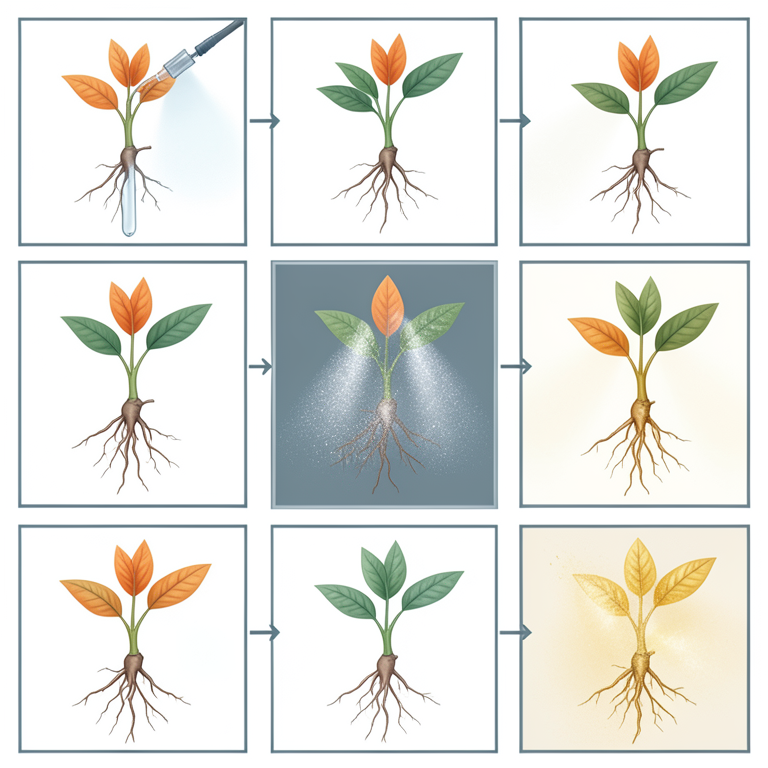
Experimental Factorial Design
AI-generated conceptual illustration (orange seedlings grafted on rangpur rootstock). It explains the idea and does not show study data.
View source evidence ↗Figures & tables
From the original paper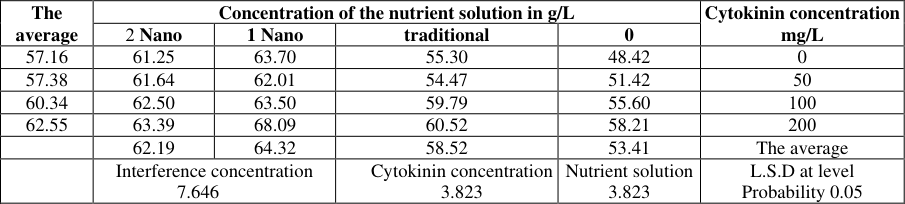 Table 1
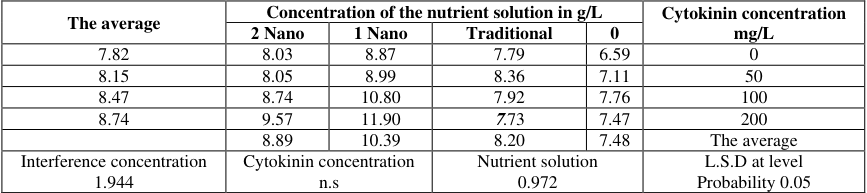 Table 2
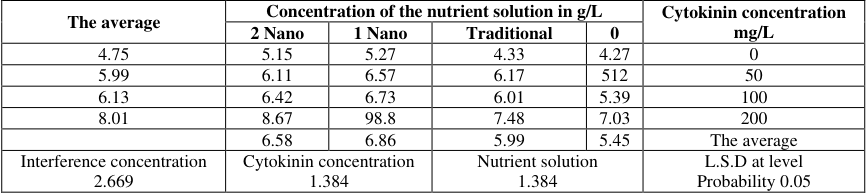 Table 3
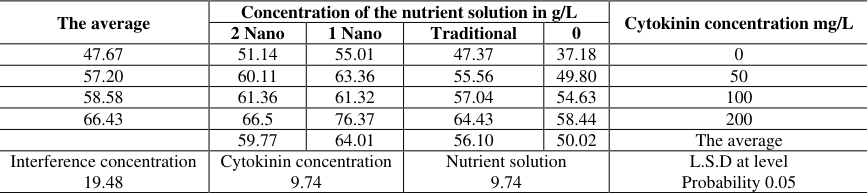 Table 4
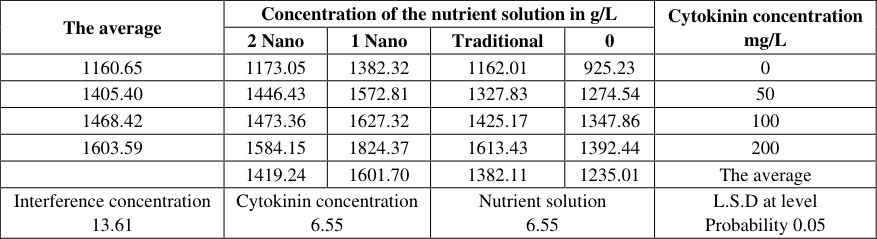 Table 5
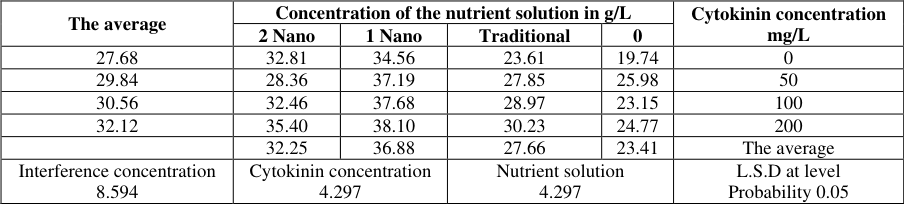 Table 6
Introduction
Orange (Citrus sinensis. L) belong to genus Citrus, which belongs to Rutaceae family. Orange trees grown in tropical and subtropical regions approximately located between the latitudes of 35• north and 35• south. Because of the organoleptic characteristics and the high nutraceutical value (especially to high content of antioxidants), oranges fruit are particularly appreciated (Seminara et al., 2023) [21] Orange is the most citrus species cultivated in the world, orange's world production reaching 75.57 million tons in a harvested area of 9.93 million hectares (FAO, 2023). Oranges are considered one of the most important fruit trees for local consumption in Iraq, as the number of trees is about (6,383,881) trees, and the quantity of production amounted about (142,717) tons, with an average production of one tree is approximately 22.4 kg. Baghdad province ranks first in number of trees and production. (CSO, 2021). Grafting is one of the most successful methods of citrus propagation (Hussain et al., 2017) [12] . Rangpur is one of the most widely used rootstocks for grafting oranges (Carvalho et al., 2022) [4] . Rangpur is considered one of the rootstoks that resist thirst and high levels of salts in the soil (Shirin and Ihsan, 2023), withstands heavy soil conditions (Shanmukha et al., 2023) [22] , and It is resistant to gum disease caused by Phytophthora citrophthora (Azevedo et al., 2006) [2] Orange seedlings grafted on Rangpur rootstock are characterized by; slow growth (Ferrer et al., 2022) [11] , needs a long time to reach the fruiting stage (Kumar et al., 2024) [13] , which leads to increased production costs. To overcome such situations, methods are used that help increase or accelerate the growth of seedlings, including a nutrient solution and cytokines. The nutrient solution (traditional and Nano) contains macro-and micro-nutrients that are considered determinants of plant growth and development (Kumar et al., 2021; Parwiz and Monib, 2023) [14,17] . Cytokines help increase cell division, branches, leaf area and the plant's efficiency in absorbing nutrients and thus increase its growth (Prasad, 2022; Sosnowski et al., 2023) [18, 25] . The research aims, through the use of both cytokines and the nutrient solution, to improve vegetative and root growth, accelerate the growth of orange seedlings, make them reach the appropriate size, shorten the time needed to reach the fruiting stage, overcome the slow growth of seedlings, and determine the best concentration of the study factors.
Materials and Methods
Six-month-old orange seedlings grafted on Rangpur rootstock, planting in 7kg plastic pots, were selected with uniform growth as much as possible from a certified citrus production nursery belonging to the Iraqi Ministry of Agriculture / General Directorate of Horticulture and Forestry in the Holy Karbala Governorate / Hindiyah District, to study the effect of spraying with nano-and conventional fertilizer and cytokinin solution on the most important growth indicators for these seedlings. The experiment was implemented following a randomized complete block design (R.C.B.D.) as a factorial experiment (4 × 4). Two factors consist of one concentration (1. g/L) of traditional fertilizer, three concentrations (0.1.2 g/L) of Nano-fertilizer and four concentrations (0, 50, 100, 200 www.extensionjournal.com mg/L) of cytokinin. The experiment included (16) treatments with three replicates, and the experimental unit included 5 seedlings, thus the number of seedlings used in the experiment was 420 seedlings. The results were analyzed using the Gen Stat program, and the averages were compared using the least significant difference (L.S.D) test at a probability level of 0.05.
The following traits were measured 1. Average seedling height (cm): The height of the seedling was measured from the grafting area to the top of the seedling using a metric tape measure for all seedlings in the experimental unit, and the average was calculated for them. 2. Average stem diameter (mm): The diameters of the seedlings were measured using an electronic Vernier caliper at a distance of 5 cm from the grafting area, and the average was calculated for each experimental unit. 3. Average number of total branches (branch/seedling): The total number of lateral branches on the main stem of each seedling was counted and the average was extracted 4. Number of leaves (leaf/seedling): All leaves on the seedling and for all plants in the experimental unit were counted and the average was calculated. 5. Leaf area of seedling (cm2/seedling): The leaf area of the seedling was calculated by extracting the average leaf area by multiplying (maximum length x maximum width x 0.66), according to what was stated by Chou, G.J. 1966 [5] . Then, the total area of the seedling was extracted by multiplying the average leaf area by the number of leaves and the average was extracted. 6. Average dry weight of shoots (gm. Seedling-1): The vegetative parts (leaves, vegetative branches, and stem) were placed in perforated paper bags after being cut into small pieces and dried in an electric oven at a temperature of 70° until the weight was constant. They were weighed using a sensitive scale for each treatment, and the rate was extracted. The reason for the increase in the growth rate of seedlings is due to the effect of the nutrient solution in filling the plant's need for mineral elements necessary for photosynthesis, respiration, and various metabolic processes, as the nutrient solution contains primary elements (NPK) and microelements (Mn, B, Cu, Zn, Fe) in quantities balanced in the process of cell division and elongation (El-Amary and El-Sayed, 2021) [7] . The reason for the increase in seedling height as a result of treating them with cytokinin may be attributed to its role in Building proteins and enzymes for the process of cell division and expansion, which led to an increase in osmotic pressure within them, and then absorbing an amount of water and nutrients, and this reflected positively in increasing plant growth indicators, including seedling height.
Results and
Results and
It has been found from the results presented in Table (2) that treatment with Nano fertilizer had a significant effect on the average stem diameter, the maximum average stem diameter when treated with 1 g/L nano fertilizer reached (10.39 mm), while in the comparison treatment it was about (7.48 mm). However, treating seedlings with cytokinin did not significantly affect the average stem diameter. Regarding the interaction between the nutrient solution and cytokinin, they had a significant effect on the average stem diameter. From the results, we notice that the concentration of 1 g/L with 200 mg/L cytokinin was superior (11.90 mm). The lowest rates were in the comparison treatment, as it reached (6.59 mm). www.extensionjournal.com The reason for the increase in stem diameter as a result of spraying the nutrient solution may be due to the important nutritional elements the solution contains, such as nitrogen, iron, and zinc, which are involved in many vital processes that occur in the plant, such as the formation of amino acids, proteins, and enzymes that encourage increased cell divisions and cell elongation. Tissue growth increases, which leads to an increase in the activity of the cambium layer, which when divided gives this increase in diameter (Wloch et al., 2023).
Average number of branches (branch/seedling)
We notice from the results of Table (3) that spraying with the nutrient solution has a significant effect on the average number of branches, as the 1 g/L nano fertilizer treatment outperformed by giving it the highest rate of (6.86 branches/seedling), while the comparison treatment gave the lowest rate of (5.45 branches/seedling). Spraying with cytokinin also had a significant effect on the average number of branches, as it reached the highest rate when treated with a concentration of 200. mg/L to (9.01 shoots/seedling), while the comparison treatment gave the lowest rate for this trait, amounting to (4.75 shoots/seedling). It is noted that the interaction of study factors had a significant effect on this characteristic, and the highest rate of number of branches was reached when using 1 g/L nano fertilizer with 200 mg/L of cytokinin, and it reached (9.89 branches/seedling) compared to the lowest rate (4.27 branches/plant) in the comparison treatment. The reason for the increase in the number of main branches as a result of using the nutrient solution may be attributed to its role because it contains many nutrients that have a positive effect on the vital processes within the plant and increase the process of photosynthesis, which is reflected in the increase in the number of branches (Fathi, 2022) [9] . The reason for the increased number of branches in seedlings treated with cytokinin is due to its role in increasing division, expansion, and increasing the number of branches (Sharma et al., 2022; Wu et al., 2021) [23,29] .
Average number of leaves (leaf/seedling)
The results of Table (4) indicate that the treatment with the nutrient solution significantly affected the average number of leaves, as the 1 gm/liter nano fertilizer treatment was superior in giving it the highest rate of (64.01 leaves/seedling), while the comparison treatment gave the lowest rate of (50.02 leaves/seedling). It is also noted from the same table that treating seedlings with cytokinin has a significant effect on the average number of leaves, as the highest rate reached (66.43 leaves/seedling) when treated with a concentration of 200 mg/liter, while the comparison treatment gave the lowest rate for this trait (47.67 leaves/seedling). As for the results of the interaction between. The study factors had a significant effect on this trait, as the seedlings treated with a concentration of 1 g/L of nano fertilizer and a concentration of 200 mg/L of cytokinin excelled by obtaining the highest average number of leaves (76.37 leaves/seedling) compared to the lowest rates (37.18 leaves/seedling). In the comparative treatment. The reason for the increase in the number of leaves as a result of spraying the nutrient solution and cytokinin is due to the same reasons that explained the increase in the height of the seedlings, and the number of branches, as by increasing these characteristics, the number of leaves increases.
The results in Table (5) confirm that treating seedlings with the nutrient solution had a significant effect on the average leaf area, as the seedlings treated with a concentration of 1 g/liter of nano fertilizer excelled by giving them the highest rate of (1601.70 cm2), while the comparison treatment gave the lowest rate of (1235.01 cm2). Spraying seedlings with concentrations of cytokinin also increased the leaf area By increasing the concentration, the largest leaf area was (1603.59 cm2) at the concentration of 200 mg/L, with a significant difference from the comparison treatment, which gave the lowest leaf area (1160.65 cm2). The interaction between the concentrations of the nutrient solution and the cytokinin concentrations gave a significant effect on the leaf area of the seedlings. The highest leaf area reached (1824.37 cm2) in the treatment with 1 g/L nano fertilizer with 200 mg/L cytokinin, compared to the lowest rate of 925.23 cm2 in the comparison treatment. The increase in leaf area as a result of spraying with the nutrient solution, especially when spraying more than once, may be due to the nutrient solution containing a group of elements such as nitrogen, which is a necessary element for most of the vital processes that occur within the plant, as it contributes to increasing the rate of cell division and elongation, i.e. an increase. In their size and number, which results in increasing in leaf area (Taiz and Zeiger, 2002) [27] ? Iron also has a role in increasing the leaf area because it is involved in the formation of cytochromes that are important in the process of photosynthesis and respiration, as it was found that 80% of the total iron is found in the chloroplasts. This shows its importance in the process Photosynthesis, through which food is manufactured and in turn increases the leaf area (Abou Seeda et al., 2021; Rout and Sahoo, 2015) [1,20] . Zinc also plays an important role in increasing this trait because it helps build the amino acid tryptophane, which is the basic substance for the synthesis of the natural hormone (IAA), which increases cell division and expansion, as evidenced by its deficiency in leaves being accompanied by a decrease in leaf area (Mosa et [16,26,10] . The role of cytokinin in increasing leaf area is also due to increasing leaf growth as a result of cell elongation and increasing the effectiveness of leaves in the photosynthesis process, thus increasing vegetative growth (Sosnowski et al., 2023; Carnelos et al., 2022) [3] . Or the reason may be attributed to the spraying treatments leading to an increase in vegetative growth, especially the number of leaves, in addition to (seedling height, diameter, branch length, and number of branches), which was reflected. To increase the paper space.
Average dry weight of shoots (gm. Seedling -1 )
It is clear from the results of Table (6) that the highest rate of dry weight of shoots (36 grams) was achieved in seedlings treated with a concentration of nano fertilizer of 1 grams/liter, and it differed significantly from the control treatment, whose seedlings produced the lowest rates, which is (23.41 grams). Spraying seedlings with cytokinin also had a significant effect in increasing the average dry weight For the shoots, the concentration used increased until this rate reached its highest weight (32.12 grams) in the seedlings treated with a concentration of 200 mg/L, while the lowest rates were (27.68 grams) in the untreated seedlings. The results of the interaction between the nutrient solution and cytokinin confirmed the presence of a significant effect on this trait, as the seedlings treated with a concentration of 1 g/l nano fertilizer with the highest concentration of cytokinin excelled by giving them the highest dry weight rate (38.10 g) compared to the lowest rates (19.74 g) for dry weight in Untreated seedlings. The reason for the increase in the dry weight of the shoots of seedlings treated with the nutrient solution and cytokinin is due to the increase in the height of the seedlings, the number of branches, the number of leaves, and the leaf area, which leads to an increase in this trait. www.extensionjournal.com
Conclusion and Recommendation
From the results obtained in the study, it is clear that spraying with both Nano nutrient solution (1.g/L) and cytokinin (200.mg/L) achieved a significant increase in all the vegetative traits studied. The interaction between Nano nutrient solution (1.g/L) and cytokinin (200.mg/L) had a positive effect on most vegetative traits. Therefore, the study recommends using Nano nutrient solution (1.g/L) because it has an effect on most of the studied traits and is the best from an economic standpoint.
Figures and tables from the paper
References
28 in the original paper- Seeda AMA, EL-Sayed AA, Yassen AA, Abou El-Nour EAA, Zaghloul SM, Mervat GM. Nickel, iron and their diverse role in plants: A review, approaches and future prospective. Middle East Journal of Applied Sciences. 2021;10(2):196-219. DOI: 10.36632/mejas/2020.10.2.21
- Azevedo FA, Mourão Filho FAA, Mendes BMJ, Almeida WAB, Schinor EH, Pio R, et al. Genetic transformation of Rangpur lime (Citrus limonia Osbeck) with the bO (bacterio-opsin) gene and its initial evaluation for Phytophthora nicotianae resistance. Plant Molecular Biology Report. 2006;24:185-196. https://doi.org/10.1007/BF02914057
- Carnelos D, Lozano-Miglioli J, Giardina E, Tognetti J, di Benedetto AH. Cytokinin action revisited: leaf anatomical changes play a key role in 6benzylaminopurine-driven growth promotion in potgrown lettuce. Revista Chapingo Serie Horticultura. 2022;28(2):109-133. doi: 10.5154/r.rchsh.2021.07.015
- Carvalho DUD, Junior RPL, Yada IFU, Tazima ZH. Trifoliate orange-related rootstocks enhance the horticultural performance of 'Shamouti' sweet orange under humid subtropical conditions. Agriculture. 2022;12:1782. https://doi.org/10.3390/agriculture12111782
- Chou GJ. A new method of measuring the leaf area of Citrus. Acta Horticulturae Scientiae. 1966;5:7-20.
- Central Statistical Organization Iraq (CSO). Citrus tree production report for 2020. 2021. Available from: https://cosit.gov.iq/documents/agriculture/agri_other/ful l%20report
- El-Amary E, El-Sayed AE. Effect of foliar spray of some micronutrient mixtures and biofertilizers (EM) on growth, yield and fruit quality of Sultani fig in northwest coast. Egyptian Journal of Desert Research. 2021;7(12):129-147. doi:10.21608/EJDR.2021.55251.1078
- Fathi A. Role of nitrogen (N) in plant growth, photosynthesis pigments, and N use efficiency: a review. Agrisost. 2022;28:1-8. https://doi.org/10.5281/zenodo.714358
- Ahmed FK, Hamed NA, Ibrahim MA, ELazazy AM. Effect of tryptophan and some nutrient elements foliar application on yield and fruit quality of Washington Navel orange. Journal of Horticultural Science & Ornamental Plants. 2017;9(2):86-97. DOI: 10.5829/idosi.jhsop.2017.86.97
- Ferrer V, Paymal N, Quinton C, Costantino G, Paoli M, Froelicher Y, Ollitrault P, Tomi F, Luro F. Influence of the rootstock and the ploidy level of the scion and the rootstock on sweet orange (Citrus sinensis) peel essential oil yield, composition and aromatic properties. Agriculture. 2022;12:214. https://doi.org/10.3390/agriculture12020214
- Hussain Z, Khadija F, Aziz A, Khan MN, Salik MR, Anwar R. Evaluation of different grafting methods to citrus cultivars. Citrus Research & Technology. 2017;38(2):1-5. http://dx.doi.org/10.4322/crt.ICC100
- Kumar A, Bhuj BD, Dhar S. New approaches of root stocks in fruit production: a review. Open Access Journal of Botanical Insights. 2024;2(1):000109. DOI: 10.23880/oajbi-16000109
- Kumar S, Kumar S, Mohapatra T. Interaction between macro-and micro-nutrients in plants. Frontiers in Plant Science. 2021;12:665583. doi: 10.3389/fpls.2021.665583
- Helal MEM, Ashour NE, Merwad MM, Mansour AEM. Effect of some growth regulators and boron on fruiting and quality of orange. Middle East Journal of Agriculture Research. 2019;8(2):594-599. https://www.curresweb.com/mejar/mejar/2019/594599.pdf
- Mosa WFA, Ali HM, Abdelsalam NR. The utilization of tryptophan and glycine amino acids as safe alternatives to chemical fertilizers in apple orchards. Environmental Science and Pollution Research. 2021;28:1983-1991. https://doi.org/10.1007/s11356-020-10658-7
- Parwiz Niazi, Abdul Wahid Monib. Function of macronutrients in plant growth and human. International Journal of Science & Engineering Development Research. 2023;8(4):1265-1274.
- Prasad R. Cytokinin and its key role to enrich the plant nutrients and growth under adverse conditions -an update. Frontiers in Genetics. 2022;13:883924. doi: 10.3389/fgene.2022.883924 www.extensionjournal.com
- Martins RC, Leonel S, Souza JMA, Leonel M, Duarte Filho J, Napoleão GM, Monteiro LNH, Teixeira FP. Performance and fruit ripening of red orange tree grafted onto two rootstocks. Journal of Agricultural Science. 2022;14(12):114-129. DOI:10.5539/jas.v14n12p114
- Rout GY, Sahoo S. Role of iron in plant growth and metabolism. Reviews in Agricultural Science. 2015;3:1-24. https://doi.org/10.7831/ras.3.1
- Seminara S, Bennici S, Di Guardo M, Caruso M, Gentile A, La Malfa S, Distefano G. Sweet orange: evolution, characterization, varieties, and breeding perspectives. Agriculture. 2023;13(2):264. https://doi.org/10.3390/agriculture13020264
- Shanmukha Raja VNP, Siva Rama Krishna V, Pushpavathi Y, Sree Latha P, Nischala A. Studies on pre-bearing performance of various rootstocks in sweet orange (Citrus sinensis) cv. Sathgudi. The Pharma Innovation Journal. 2023;12(10):1750-1753. https://www.thepharmajournal.com/archives/?year=202 3&vol=12&issue=10
- Sharma S, Kaur P, Gaikwad K. Role of cytokinins in seed development in pulses and oilseed crops: current status and future perspective. Frontiers in Genetics. 2022;13:940660. doi: 10.3389/fgene.2022.940660
- Jabar SS, Ethbeab IJ. The influence of salinity levels of irrigation water and spraying with alpha-tocopherol on some vegetative qualities of Citrus Rangpur origin (Citrus limonia). Fifth International Conference for Agricultural and Environment Sciences. 2023;23-24 November. IOP Conference Series: Earth and Environmental Science. DOI 10.1088/1755-1315/1158/4/042041
- Sosnowski J, Truba M, Vasileva V. The impact of auxin and cytokinin on the growth and development of selected crops. Agriculture. 2023;13(3):724. https://doi.org/10.3390/agriculture13030724
- Suganya A, Saravanan A, Manivannan N. Role of zinc nutrition for increasing zinc availability, uptake, yield, and quality of maize (Zea mays L.) grains: an overview. Communications in Soil Science and Plant Analysis. 2020;51(15):2001-2021. doi:10.1080/00103624.2020.1820030
- Taiz L, Zeiger E. Plant physiology. 3rd ed. Sinauer Associates; Massachusetts, USA; 2002.
- Włoch W, Iqbal M, Jura-Morawiec J. Calculating the growth of vascular cambium in woody plants as the cylindrical surface. Botanical Review. 2023;89:237249. https://doi.org/10.1007/s12229-023-09291-z
- Wu W, Du K, Kang X, Wei H. The diverse roles of cytokinins in regulating leaf development. Horticulture Research. 2021;8:118. https://doi.org/10.1038/s41438-021-00558-3