
Research article · 2024 · Full text
International Journal of Agriculture Extension and Social DevelopmentAwareness of G2C services among rural farmers in Sagar, Madhya Pradesh: An analytical study
Volume 7(8) · Pages 309–314 · DOI: 10.33545/26180723.2024.v7.i8e.928 ↗
Research areasAgricultural Economics and PracticesSocial and Economic Development in India
Abstract
Author-writtenG2C (Government to Citizen) information services under the e-Governance programme have become a focal area because this reflects the development of our country at grass root level. The present study has been carried out to analyze the different information need of farmers and their awareness of ICT and G2C services. It also attempts to study use of different G2C services offered by government and the challenges faced by the farmers in using these services. A survey was carried out in district of Sagar, Madhya Pradesh and 5 villages were randomly selected. Convenience sampling method was used for data collection. The findings of the survey bring to light that 93.3% of farmers perceive a need for information related to agriculture with 90% farmers indicating a regular need for information on crop diseases, pesticides, and compost fertilizers. But, only 32% farmers are aware of ICT based Agri-services and are using G2C information service. It was found that most of the citizens surveyed are not familiar with the services and their accessibility to the same is poor.
Summary
Source-checkedPlain-language reading of the full paper, prepared with AI and checked against the text. Each point links to the authors' own words.
Why it matters
- Agriculture and its allied sectors are fundamental to India's economy, contributing 18.3% of the total Gross Value Added (GVA) in 2023. View evidence ↗
- A lack of access to timely and relevant information for farmers in India negatively impacts agricultural productivity and growth. View evidence ↗
- Government-to-Citizen (G2C) services are designed to provide farmers with extensive information to assist them directly in their farming operations. View evidence ↗
What they did
- Researchers used a structured questionnaire to collect primary data from farmers across five selected villages in the Sagar district of Madhya Pradesh. View evidence ↗
- The sample consisted of 75 farmers (15 per village) who were exclusively engaged in crop production. View evidence ↗
What they found
- The most frequent information needs for farmers were related to compost fertilizers and crop diseases/pesticides, cited by 90% of respondents. View evidence ↗
- Digital competency is low among the farmers, with 68% reporting they are completely incapable of using digital tools. View evidence ↗
- Only 32% of the farmers were aware of ICT-based agricultural services, while 68% were unaware. View evidence ↗
- Among the small group of farmers aware of ICT services, 91.7% were also aware of and utilized G2C services. View evidence ↗
- The primary use of G2C services among aware farmers was for agricultural subsidy registration (83.3%). View evidence ↗
- Most farmers who used G2C services (77.2%) reported being moderately satisfied with them. View evidence ↗
- The most significant challenge reported by farmers was a lack of awareness regarding the latest agricultural developments (90.7%). View evidence ↗
What it means
- The authors conclude that a lack of ICT skills and awareness of modern tools prevents farmers from using G2C services, and they recommend that the government focus on imparting these skills. View evidence ↗
- The authors state that a more in-depth analysis is required to fully understand the gap between farmer assumptions and the actual assistance received. View evidence ↗
Visual summary
2 visualsIllustrations explain the paper; charts are replotted from the paper's own table values.
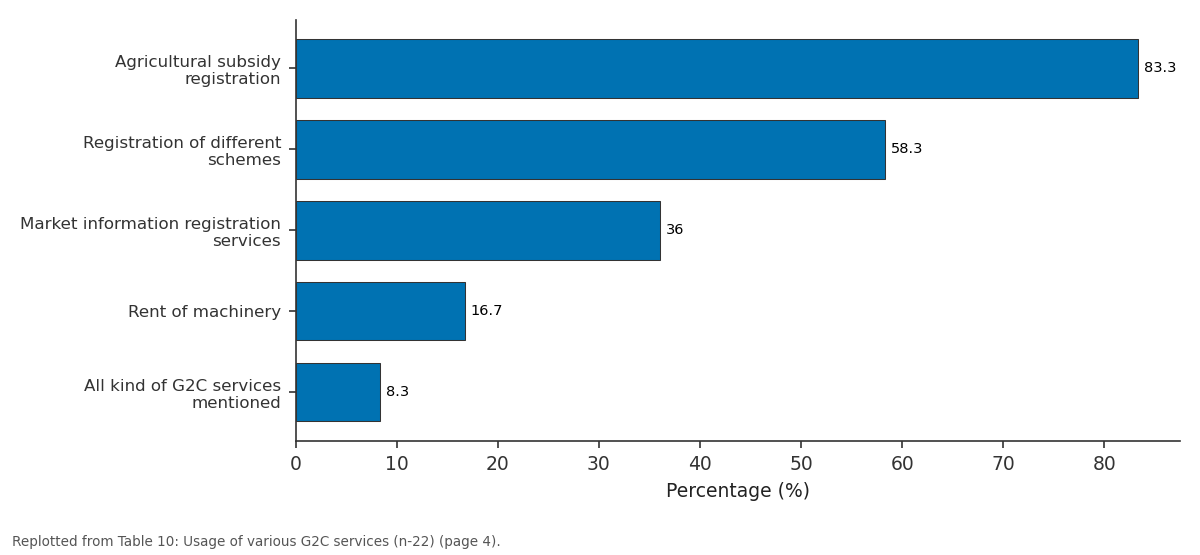
Percentage (%): Agricultural subsidy... vs Registration of... vs Market information... vs Rent of machinery vs All kind of G2C...
Replotted from Table 10 (page 4) of the original paper. Every bar is the paper's own table value.
View source evidence ↗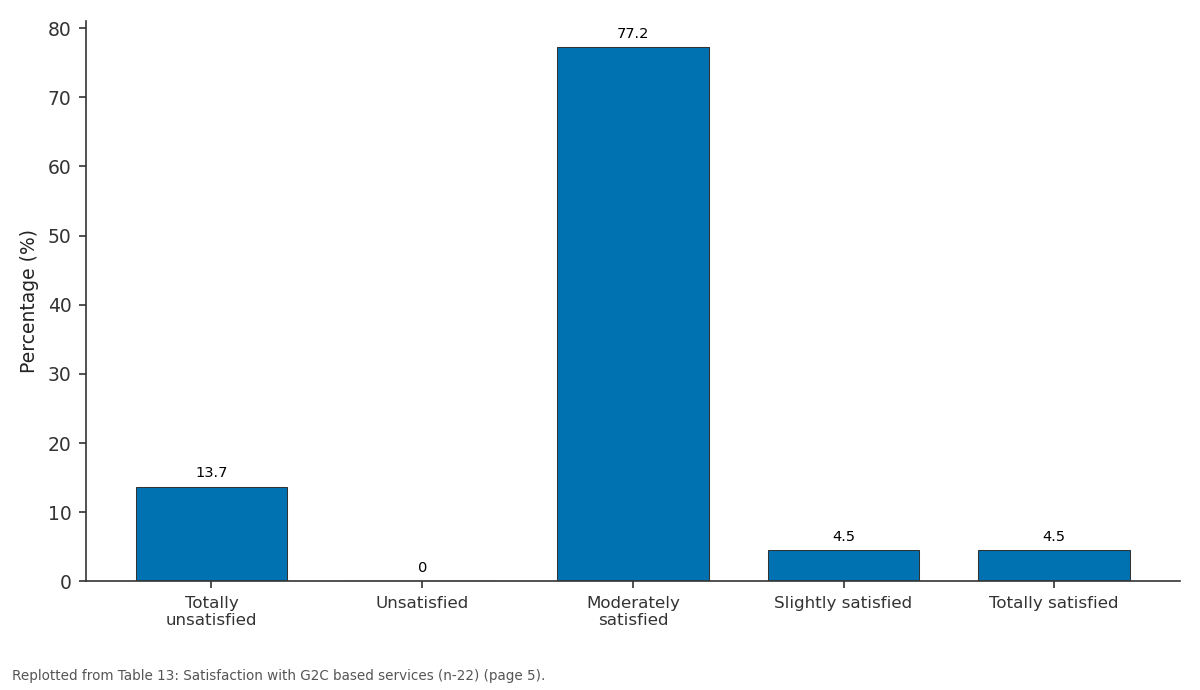
Percentage (%): Totally unsatisfied vs Unsatisfied vs Moderately satisfied vs Slightly satisfied vs Totally satisfied
Replotted from Table 13 (page 5) of the original paper. Every bar is the paper's own table value.
View source evidence ↗Figures & tables
From the original paper Table 1
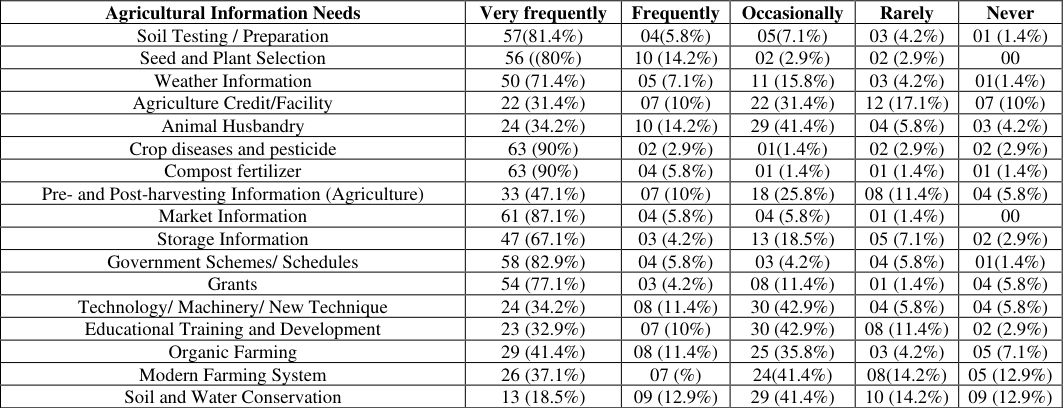 Table 2
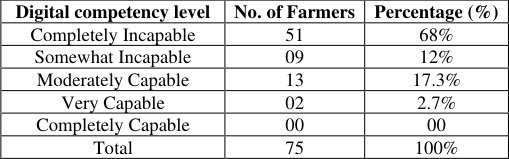 Table 4
 Table 3
 Table 5
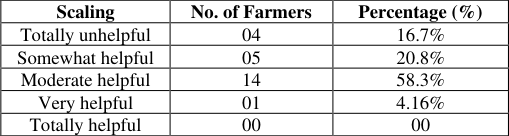 Table 8
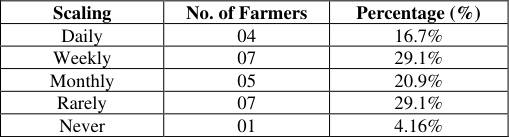 Table 6
 Table 9
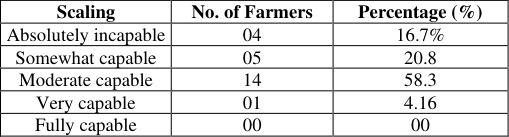 Table 7
 Table 10
 Table 11
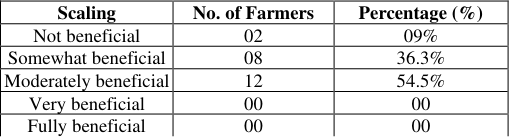 Table 12
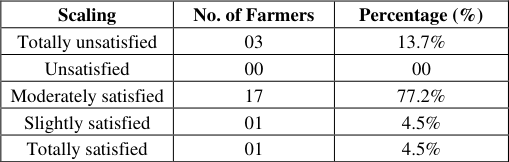 Table 13
 Table 14
Introduction
India is primarily an agriculture-based economy with GVA (Gross Value Added) of agriculture and allied sectors being 18.3% of the total economy of our country in year 2023 (Ministry of Agriculture & Farmers Welfare) [3] . According to Census of India 2011, 68.85% of Indian population live in rural areas and earn their livelihood from agriculture and allied activities (Govt. of India, 2011) [9] . According to FAO (2011), sharing information is critical for agricultural sectors in order to overcome disparities in expertise and communication inequities, thereby ending the cycle of deprivation. Furthermore, the relevance of ICTs in offering information accessibility in order to improve food availability and livelihoods for farmers was recognised and officially acknowledged at the World Summit on the Information Society (WSIS) 2003-2005 (IICD, 2007) [5] . Huge amount is being spent on agricultural education, research and development. Farming in India is being undertaken by a large section of population under extremely diverse conditions, who do not have access to relevant and timely information which adversely affect agricultural growth and productivity (Minten et al, 2011) [12] . All efforts in agricultural education, research and extension are directed towards the end-users, i.e farmers who are required to access right agricultural information and utilize it in their farm land. Relevant and reliable information can improve agriculture related factors, such as human resources, money, and management skills on farming.
The term "E-governance" refers to an ICT-enabled strategy for governing. It enables government to communicate with rural areas, allowing individuals to make inquiries about their concerns and monitor the progress of answers. World Bank and government-financed e-governance initiatives are currently active, including Meghdoot in Madhya Pradesh and Bhoomi in Karnataka. The NICNET network, supported by approximately 700 VSATs, enables countrywide data communication linkages linking areas and capitals of states for administrative preparation and other purposes (KP, 2019) [11] . E-Governance uses ICT to revolutionize government functions by improving interaction, providing services, and collaborating with residents, enterprises, and other agencies. This results in greater effectiveness, accountability, and availability. The National e-Governance Plan (NeGP) serves a critical role in this change by providing direct information accessibility via government-to-citizen (G2C) platforms (National e-governance-division) [13] . In the agriculture industry, G2C services give farmers an infinite amount of information, directly assisting them on the ground level. But, because farmers are generally illiterate they least understand the essence of information and it is also difficult for them to express their information needs. In present day situation, the farming system is going to be modernized and scientific methods are being applied in farming. In this situation, there is a greater need to ascertain the spectrum of information needs of the farmers. www.extensionjournal.com
The present study focuses on evaluating information literacy and awareness of G2C services among rural farmers in Sagar, Madhya Pradesh. It will help us to understand the challenges faced by the farmers in accessing and using G2C services and give recommendations to bridge the gaps and reap maximum benefits of government efforts. The study will be of significance and interest not only for the farming community but also for information intermediaries and policy makers.
Literature survey
In India, E-governance is still developing in the ICT-driven information society even though many other countries already have well developed similar projects. There has been a lack of investigation on G2C information services under E-governance in India, despite a recent wave of studies on other facets of E-governance. The government has launched many programmes in the agriculture sector to give farmers G2C access to information. Information intermediaries have been trying to find out how present systems can meet the research, education and extension needs of agricultural sector. According to Cun and Xu (2013) [ 4] most farmers have no formal schooling and poor comprehension of information. They have poor literacy skills and are unaware of the substantial advantages of agricultural information. Glendenning et al. (2012) [7] state that extension programmes should be tailored to meet the diverse information requirements of various farmer groups. They suggest developing strategies to fit the particular conditions of each farmer group for successful outreach and impact. Gohain (2017) [8] emphasizes on importance of information literacy (IL) to raise agricultural yield. Through IL initiatives like Krishimelas, live demonstrations, media broadcasts, and partnerships with local authorities and instructors, scientists and extension staff in agriculture may efficiently spread knowledge. Patil et al. (2008) [15] explored that Indian farmers have an immense need for forecast and market information. However, a number of obstacles, including a lack of education, the high price of information acquisition and an overall absence of awareness about the information resources, prevent them from accessing this crucial information. Yadav et al. (2011) [16] found that while both tribal and non-tribal populations acknowledge the value of mobile devices in obtaining information, they are unaware of certain crucial ICT resources.They highlighted how G2C efforts like IT-Kiosks, E-choupal, and Gyandoot may improve the development of agriculture and rural areas in India. In order to enhance agricultural procedures and information sharing, the study suggested a paradigm that integrated climate smart techniques with those of research, extension, farmers, ICT, markets, and end users (Behera, 2015) [1] . Patel (2016) [14] emphasised the necessity of ongoing innovation in realising the transformational potential of digital platforms in agricultural and rural contexts. Chandra (2016) [2] emphasised the importance of rural incubation centres in promoting GIS technology adoption. Study showed that collaboration with the Digital India initiative would equip farmers with crucial information to make educated decisions. It emphasises the need to use ICT to improve G2C governance and achieve SMART governance (Simple, Moral, Reliable, Flexible, and Transparent). Jena et al. (2023) [10] examined the Digital India plan and identified critical hurdles for farmers employing digital technology in agriculture. The primary difficulties included a lack of government digital service centres (PFI 289), low quality of information (PFI 287), and a misunderstanding of the positive aspects of ICT (PFI 283). These impediments, which include restricted availability, access, knowledge, and interest, hamper growth. Increasing farmers' digital knowledge and expertise is crucial. Gautam et al. (2021) [6] investigated the influence of internet-based services on agriculture in Uttar Pradesh's Central Zone. The study found that 64.88% of farmers utilised Jansevakendra for their farming operations, 46.22% utilised the agriculture site, and 48.44% used message and chatting services. However, just 37.77% of farmers expressed a desire for agricultural applications. The study concluded that the lack of recognition of government portals and applications might be attributed to ineffective leadership and inadequate promotion.
Objectives
The basic objectives of the study are, 1. To identify information needs of farmers related to farming. 2. To find how effectively farmers use ICT services. 3. To assess the awareness of G2C Agri-services among farmers and its role in agriculture production.
Give recommendations for better utilization of G2C
Give recommendations for better utilization of G2C
Methodology
The present study is based on survey research with the primary goal to identify the key factors associated with the information needs and awareness of G2C information services of the farmers. A structured questionnaire/schedule was prepared for collecting primary data. The following five villages in the district of Sagar, Madhya Pradesh -1. Mohli; 2. Pipariya Karkat; 3. Bilehra; 4. Pathariya Jatt; and 5. Bamhori Bika, were selected for collection of data from the farmers. Total 75 questionnaires were distributed, 15 questionnaires in each village. The data collected was analyzed and suggestions have been made based on findings.
The study is limited to only those farmers who are exclusively involved in crop production and do not have any other occupation.
Results and Discussion
The study was primarily aimed at determining the information needs and assessment of digital literacy competency and awareness of G2C services of the farmers. A total of 75 questionnaires/schedules were distributed in the selected study area, with 15 questionnaires distributed in each village under study namely, 1. Mohli; 2. Pipariya Karkat; 3. Bilehra; 4. Pathariya Jatt; and 5. Bamhori Bika.
Response rate was 100% (n=75). The data collected from the respondents is presented in the tabular form. The analysis has been organized in three parts.
Information Need and Search Capabilities of Farmers
This covers tables that detail the information needs of farmers, their search capabilities, and the types of information they most frequently require for agricultural operations. www.extensionjournal.com
Exploring Farmers Awareness and Engagement with ICT-based Agri-services
This section provides statistics on farmer awareness and use of ICT-based Agri-services. It investigates how frequently farmers use these services, their ability to use them, and their attitudes on ICT's role in increasing agriculture productivity. It also investigates how farmers use ICT in their regular agricultural operations, notably the buying and selling of crops. www.extensionjournal.com Table 8 shows that according to responses on the basis of helpfulness 04 (16.7%) said that ICT-based services are totally unhelpful, 05 (20.8%) somewhat helpful, 14 (58.3%) moderately helpful and only 1(4.16%) found them to be very helpful and none found them to be totally helpful.
| Scaling | No. of Farmers | Percentage (%) |
|---|---|---|
| Totally unhelpful | 04 | 16.7% |
| Somewhat helpful | 05 | 20.8% |
| Moderate helpful | 14 | 58.3% |
| Very helpful | 01 | 4.16% |
| Totally helpful | 00 | 00 |
Table text extracted from the original PDF; superscript letters are shown inline. The original table image is below.
View original table image
Leveraging G2C Services: Awareness and Utilization
Indian government has made many efforts to provide G2C services to farmers and hence it is imperative to find about the awareness and utilization of these services by farmers. The data collected from the respondents in this regard has been tabulated in the following tables. Table 9 shows that, out of the 24 farmers who are aware of ICT based Agri-services, 22 (91.7%) farmers are also aware of G2C services and utilize these services without any barrier. Further attempt was made to understand which G2C services were being used by the respondents who are aware of these services. Hence, further analysis is based on (n-22) farmers. Table 12 shows that on a scale of usefulness, data showed that 02 (9%) farmers found the services not helpful, 08 (36.3%) found them somewhat beneficial, and 12 (54.5%) found them moderately beneficial. According to the research, none of the farmers rated the services as very beneficial and fully beneficial. several organisations and institutions would be useful. 3. Enhancing connectivity to the internet is a crucial priority for boosting the use of resources at the local level and for individuals. 4. In the chosen study location, the researcher discovered that the lack of libraries and information centres is a significant disadvantage. As a result, the government should create these facilities, since they would be extremely beneficial. 5. Establish neighborhood assistance desks and call centres to assist farmers in using internet services and apps. 6. Utilise virtual meetings and remote consulting services to link farmers to agricultural professionals for assistance and problems. 7. There is need to appoint government officers who mainly work in ground level and aware those resources in villages areas. www.extensionjournal.com
| Scaling | No. of Farmers | Percentage (%) |
|---|---|---|
| Not beneficial | 02 | 09% |
| Somewhat beneficial | 08 | 36.3% |
| Moderately beneficial | 12 | 54.5% |
| Very beneficial | 00 | 00 |
| Fully beneficial | 00 | 00 |
Table text extracted from the original PDF; superscript letters are shown inline. The original table image is below.
View original table image
| Sl. No. | Awareness and Utilisation | Yes | No |
|---|---|---|---|
| 1. | Awareness of G2C services | 22 (91.7%) | 02 (8.3%) |
| 2. | Utilisation of G2C services in Agriculture | 22 (91.7%) | 02 (8.3%) |
Table text extracted from the original PDF; superscript letters are shown inline. The original table image is below.
View original table image
The study conclude that central as well as the state governments have developed strategies to disseminate information to the farmer community. Despite a wide range of reform initiatives in agricultural extension in India in the past decades, the coverage of, access to, and quality of information provided to marginalized and poor farmers is uneven. It is the time to know why farmers are not accessing information and where information gaps exist, despite the variety of extension approaches in India. As a major area of study, the G2C information services under the e-Governance initiatives is expected to enhance the active participation of the general public in governance. However, the present study reveals that farmers lack ICT skills and awareness about latest agricultural tools and techniques and this acts as a barrier in utilizing the ICT based Agri-services and G2C information service. Government should focus on imparting ICT skills to farmers. In order to fully address these challenges, a more in-depth analysis is required to understand It seeks to bridge the gap between farmers' assumptions and the actual assistance they receive by shedding light on how G2C information offerings are offered to farmers.
Figures and tables from the paper
| Information Need | No. of Farmers | Percentage (%) |
|---|---|---|
| Perceived | 70 | 93.3% |
| Not Perceived | 05 | 6.7% |
| Total | 75 | 100% |
Table text extracted from the original PDF; superscript letters are shown inline. The original table image is below.
View original table image
| Agricultural Information Needs | Very frequently | Frequently | Occasionally | Rarely | Never |
|---|---|---|---|---|---|
| Soil Testing / Preparation | 57(81.4%) | 04(5.8%) | 05(7.1%) | 03 (4.2%) | 01 (1.4%) |
| Seed and Plant Selection | 56 ((80%) | 10 (14.2%) | 02 (2.9%) | 02 (2.9%) | 00 |
| Weather Information | 50 (71.4%) | 05 (7.1%) | 11 (15.8%) | 03 (4.2%) | 01(1.4%) |
| Agriculture Credit/Facility | 22 (31.4%) | 07 (10%) | 22 (31.4%) | 12 (17.1%) | 07 (10%) |
| Animal Husbandry | 24 (34.2%) | 10 (14.2%) | 29 (41.4%) | 04 (5.8%) | 03 (4.2%) |
| Crop diseases and pesticide | 63 (90%) | 02 (2.9%) | 01(1.4%) | 02 (2.9%) | 02 (2.9%) |
| Compost fertilizer | 63 (90%) | 04 (5.8%) | 01 (1.4%) | 01 (1.4%) | 01 (1.4%) |
| Pre- and Post-harvesting Information (Agriculture) | 33 (47.1%) | 07 (10%) | 18 (25.8%) | 08 (11.4%) | 04 (5.8%) |
| Market Information | 61 (87.1%) | 04 (5.8%) | 04 (5.8%) | 01 (1.4%) | 00 |
| Storage Information | 47 (67.1%) | 03 (4.2%) | 13 (18.5%) | 05 (7.1%) | 02 (2.9%) |
| Government Schemes/ Schedules | 58 (82.9%) | 04 (5.8%) | 03 (4.2%) | 04 (5.8%) | 01(1.4%) |
| Grants | 54 (77.1%) | 03 (4.2%) | 08 (11.4%) | 01 (1.4%) | 04 (5.8%) |
| Technology/ Machinery/ New Technique | 24 (34.2%) | 08 (11.4%) | 30 (42.9%) | 04 (5.8%) | 04 (5.8%) |
| Educational Training and Development | 23 (32.9%) | 07 (10%) | 30 (42.9%) | 08 (11.4%) | 02 (2.9%) |
| Organic Farming | 29 (41.4%) | 08 (11.4%) | 25 (35.8%) | 03 (4.2%) | 05 (7.1%) |
| Modern Farming System | 26 (37.1%) | 07 (%) | 24(41.4%) | 08(14.2%) | 05 (12.9%) |
| Soil and Water Conservation | 13 (18.5%) | 09 (12.9%) | 29 (41.4%) | 10 (14.2%) | 09 (12.9%) |
Table text extracted from the original PDF; superscript letters are shown inline. The original table image is below.
View original table image
| Digital competency level | No. of Farmers | Percentage (%) |
|---|---|---|
| Completely Incapable | 51 | 68% |
| Somewhat Incapable | 09 | 12% |
| Moderately Capable | 13 | 17.3% |
| Very Capable | 02 | 2.7% |
| Completely Capable | 00 | 00 |
| Total | 75 | 100% |
Table text extracted from the original PDF; superscript letters are shown inline. The original table image is below.
View original table image
| Information Searching | No. of Farmers | Percentage (%) |
|---|---|---|
| Capable | 51 | 68% |
| Not Capable | 24 | 32% |
| Total | 75 | 100% |
Table text extracted from the original PDF; superscript letters are shown inline. The original table image is below.
View original table image
| Sl. No. | ICT based Agri-services | Yes | No |
|---|---|---|---|
| 1. | Aware | 24 (32%) | 51 (68%) |
| 2. | Using ICT based services for Buying and Selling our agriculture product | 02 (8.3%) | 22 (91.7%) |
Table text extracted from the original PDF; superscript letters are shown inline. The original table image is below.
View original table image
| Scaling | No. of Farmers | Percentage (%) |
|---|---|---|
| Daily | 04 | 16.7% |
| Weekly | 07 | 29.1% |
| Monthly | 05 | 20.9% |
| Rarely | 07 | 29.1% |
| Never | 01 | 4.16% |
Table text extracted from the original PDF; superscript letters are shown inline. The original table image is below.
View original table image
| Scaling | No. of Farmers | Percentage (%) |
|---|---|---|
| Absolutely incapable | 04 | 16.7% |
| Somewhat capable | 05 | 20.8 |
| Moderate capable | 14 | 58.3 |
| Very capable | 01 | 4.16 |
| Fully capable | 00 | 00 |
Table text extracted from the original PDF; superscript letters are shown inline. The original table image is below.
View original table image
| G2C Information Services | No. of Farmers | Percentage (%) |
|---|---|---|
| Agricultural subsidy registration | 20 | 83.3% |
| Registration of different schemes | 14 | 58.3% |
| Market information registration services | 09 | 36% |
| Rent of machinery | 04 | 16.7% |
| All kind of G2C services mentioned | 02 | 8.3% |
Table text extracted from the original PDF; superscript letters are shown inline. The original table image is below.
View original table image
| Access to G2C services | No. of Farmers |
|---|---|
| Without any mediator | 22 (100%) |
| With mediator | 00 |
Table text extracted from the original PDF; superscript letters are shown inline. The original table image is below.
View original table image
| Scaling | No. of Farmers | Percentage (%) |
|---|---|---|
| Totally unsatisfied | 03 | 13.7% |
| Unsatisfied | 00 | 00 |
| Moderately satisfied | 17 | 77.2% |
| Slightly satisfied | 01 | 4.5% |
| Totally satisfied | 01 | 4.5% |
Table text extracted from the original PDF; superscript letters are shown inline. The original table image is below.
View original table image
| Challenges related to the utilization of information and services | Strongly Agree | Agree | Disagree |
|---|---|---|---|
| Lack of awareness and knowledge about latest development | 68 (90.7%) | 07 (9.3%) | 00 |
| Lack of Available information | 61 (81.3%) | 12 (16%) | 02 (2.7%) |
| Lack of technical guidance by authorities and challenges | 62 (82.7%) | 07 (9.3%) | 06 (8%) |
| Access Problem | 05 (6.7%) | 11 (14.7%) | 59 (78.7%) |
| Lack of Time | 07 (9.3%) | 08 (10.7%) | 60 (80%) |
| Lack of Guidance | 62 (82.7%) | 07 (9.3%) | 06 (8%) |
Table text extracted from the original PDF; superscript letters are shown inline. The original table image is below.
View original table image
References
9 in the original paper- Chandra Ch S. Linking digital India as a tool for curbing farmers suicides -A case study of Telangana state. Scholedge Int J Management Dev. 2016;3(3):7488. DOI: 10.19085/journal.sijmd030302.
- Cun J, Xu X. Analysis of Chongqing agricultural informatization promoting urban-rural integration. In: International Academic Workshop on Social Science (IAW-SC-13); 2013. Atlantis Press; c2013. p. 647-651.
- Gautam NK, Singh VK, Mishra M, Rathaur A. Role of digital services in capacity building of farmers in the central zone of Uttar-Pradesh. Int. J Curr. Microbiol. Appl Sci. 2021;10(2):2679-2684. DOI: 10.20546/ijcmas.2021.1002.294.
- Glendenning CJ, Babu SC, Asenso-Okyer K. Information search behaviors of Indian farmers: Implications for extension services. J Agric. Educ. Ext. 2012;18(5):493-507. DOI: 10.1080/1389224X.2012.707064.
- Gohain HK. Importance of information literacy in agricultural productivity: A case study of farmers of Jorhat district of Assam. TRANS Asian J Mark Manag Res. 2017;6(8):71-82. Available from: https://tarj.in/wpcontent/uploads/paper/TAJMMR/2017/TAJMMRAUGUST-2017.pdf#page=71.
- Jena P, Chauhan AS, Tigga AS, Kumar S, Kumari M, Behera SK, et al. Problems faced by farmers using digital tools in agriculture in central zone of India. Asian J Agric Ext Econ Sociol. 2023;41(10):311-316.
- KP S. Digital India towards development of agriculture and rural development: An overview. Int J Economics Manag. 2019;1(1):1-7. Available from: https://dergipark.org.tr/en/download/article-file/837671.
- Patel A. Digital India reaching to small, marginal & women farmers. Int. J Sci. Res. Comput. Sci. Eng. Inform Technol. 2016;1(2):46-53. Available from: https://www.academia.edu/download/53206483/CSEIT 16126.pdf.
- Yadav C, Punjabi NK, Sharma FL, Samota SD. Awareness of farmers about modern communication media in Udaipur district of Rajasthan. Raj J Ext. Edu. 2011;19:90-93. Available from: http://www.rseeudaipur.org/wpcontent/uploads/2013/02/202.pdf.