
Research article · 2024 · Full text
International Journal of Agriculture Extension and Social DevelopmentKnowledge of stakeholders towards agricultural skill development training programme
Volume 7(8) · Pages 339–341 · DOI: 10.33545/26180723.2024.v7.i8e.934 ↗
Research areasAgricultural Innovations and Practices
Abstract
Author-writtenIn India, a wide range of training programs are frequently organized with a particular focus on rural communities, farmers and economically disadvantaged groups. These programs aim to equip individuals with the necessary knowledge and skills to enhance their livelihoods. Training serves as a fundamental process through which individuals acquire new skills, develop positive attitudes and gain essential knowledge. This process is crucial not only for those entering a new profession but also for those seeking to improve their productivity within an existing organization or enterprise. By fostering the development of human resources, training plays a vital role in empowering individuals and strengthening communities. In first stage, out of seven FTCs of Saurashtra, four FTCs will be selected for the study on the basis of maximum number of farmers were got training under Farmer Training Centre (FTC). A tentative list of 42 statements was drafted keeping in view the applicability of statements suited to the area of study. The collected statements were edited in the light of the suggested criteria. The result showed less than half (48.75 percent) of trained stakeholders had high level of knowledge, whereas 39.37 percent had medium and 11.88 percent had low level of knowledge about improved agricultural practices. The probable reason of this finding might be the advantage of information gained during attending training.
Summary
Source-checkedPlain-language reading of the full paper, prepared with AI and checked against the text. Each point links to the authors' own words.
Why it matters
- Agricultural training programs in India are designed to provide rural communities and disadvantaged farmers with the skills and knowledge needed to improve their livelihoods. View evidence ↗
- Training is viewed as the primary method for transferring new agricultural technologies to farmers. View evidence ↗
The question
- The study aimed to evaluate the knowledge levels of stakeholders regarding the agricultural skill development training programme. View evidence ↗
What they did
- The research was carried out in the Saurashtra region of Gujarat during the 2021-22 period. View evidence ↗
- The study selected four Farmer Training Centres (FTCs) from seven in Saurashtra based on the number of trained farmers, with two villages selected per FTC. View evidence ↗
- The sample consisted of 160 trained farmers selected via multistage purposive sampling and 160 randomly selected untrained farmers from the same villages. View evidence ↗
- Knowledge of improved farming practices was measured using a teacher-made knowledge test. View evidence ↗
- A scoring system totaling 100 was developed, with weightages for different practices determined by expert scientists and extension workers. View evidence ↗
What they found
- Among trained stakeholders, 48.75% had a high level of knowledge, 39.37% had a medium level, and 11.88% had a low level regarding improved agricultural practices. View evidence ↗
- Among untrained stakeholders, 53.12% possessed a medium level of knowledge, while 27.50% had a low level and 19.38% had a high level. View evidence ↗
- Trained stakeholders had a higher mean knowledge score (76.51) compared to untrained stakeholders (68.46). View evidence ↗
What it means
- The authors conclude that training provided by Farmer Training Centres (FTCs) significantly improved the knowledge levels of the stakeholders. View evidence ↗
Visual summary
1 visualsIllustrations explain the paper; they do not show study data.
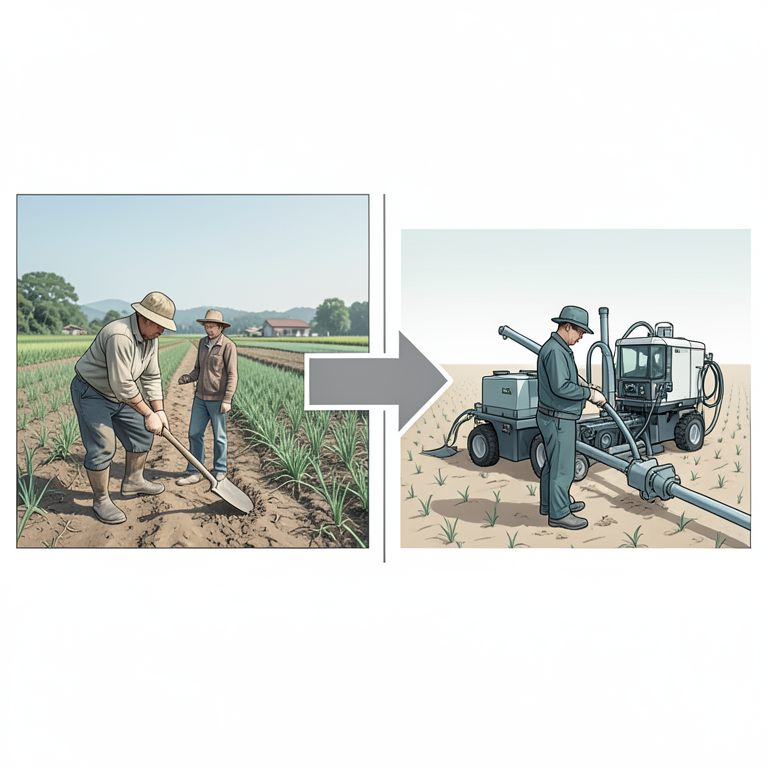
Impact of Training on Knowledge
AI-generated conceptual illustration (smallholder farmers in a rural agricultural field). It explains the idea and does not show study data.
View source evidence ↗Figures & tables
From the original paper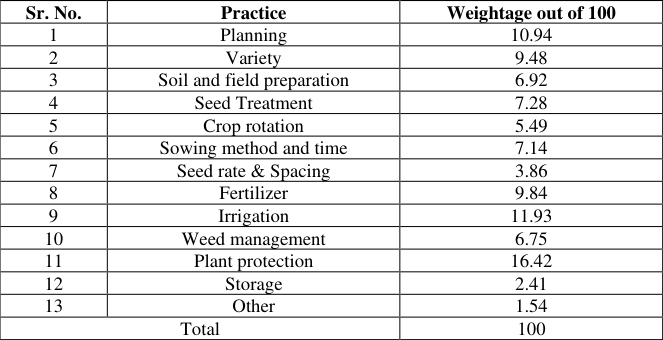 Table 1
 Table 2
 Table 2
 Table 3
Introduction
Training is considered the most important activity for transferring agricultural technologies to farmers. Hence, it is crucial to analyse the institutional training imparted to the farmers at Farmer Training Centre. The history of the wellorganized farmers training programme in India can be traced back to 1948 with the inception of Etawah pilot project.
Training, an age-old concept, serves the therapeutic function of shaping individuals' knowledge, skills and attitudes necessary for effective performance in their roles. Programs aimed at agricultural and community development seek to impart information, knowledge and skills, fostering the exchange of experiences and opinions while addressing doubts and challenges. Training ensures individuals possess the specific knowledge, skills and attitudes required to meet established standards. It typically involves four fundamental components: acquiring knowledge of the skill, observing skilled models, practicing the skill and reinforcing newly acquired behaviors. Lynton and Pareek (1990) said that "Training is a process by which the desire, knowledge, attitude, skill and ideas are inculcated, fostered and reinforced in an organism". A systematically arranged training programme aids in the production of desirable changes in the behavior of people. In India various training programmes are conducted especially for rural people, farmers and weaker section for knowledge and skill development. Training is a process of acquisition of new skills, attitude and knowledge in the context of preparing for entry into a vocation or improving productivity in an organization or enterprise. Agricultural skill development training programme sanctioned under gender audit programme for more productive varieties and training and education programme for farmers. Government of Gujarat sanctioned a programme of "Agricultural Skill Development Training Programme for Women Farmers" in the year 2012-13. Afterwords in the year of 2013-14, government have sanctioned this programme jointly. Under this programme, selected women farmers, male farmers and youth have trained and guided in agricultural and allied aspects in scientific method. The programme has completed eight years. Now, it is necessary to study how the Agricultural Skill Development Training Programme has made an impact on perception of farmers.
Objective
To study the knowledge of stakeholders towards agricultural skill development training programme.
Methodology
The present study was conducted in Saurashtra region of Gujarat state during 2021-22. Ex-post facto research design www.extensionjournal.com was followed for carrying out the study. In first stage, out of seven FTCs of Saurashtra, four FTCs will be selected for the study on the basis of maximum number of farmers were got training under Farmers Training Centre (FTC). Two villages from each FTC will be selected, thus forty farmers selected from each village. The villages from FTCs will be selected on the basis of information given by Farmers Training Centre. At the second stage, twenty trained farmers will be selected by multistage purposive sampling method from each selected village. Thus, total 160 trained farmers will be selected as sample for the study. The equal number of untrained farmers also will be randomly selected from the same villages. For measuring the knowledge of stakeholders about improved farming practices of crop, the teacher made knowledge test was used. The knowledge was measured by asking the questions regarding recommended improved farm practices. A comprehensive list of all the practices adopted by stakeholders under above sub heads was prepared. The different weightage was given to each practice. The weightage of particular practice was determined by seeking the opinions of the expert scientist and extension workers, considering the total score 100 (Table 1). High level of Knowledge >Mean + S.D.
| Sr. No. | Practice | Weightage out of 100 |
|---|---|---|
| 1 | Planning | 10.94 |
| 2 | Variety | 9.48 |
| 3 | Soil and field preparation | 6.92 |
| 4 | Seed Treatment | 7.28 |
| 5 | Crop rotation | 5.49 |
| 6 | Sowing method and time | 7.14 |
| 7 | Seed rate & Spacing | 3.86 |
| 8 | Fertilizer | 9.84 |
| 9 | Irrigation | 11.93 |
| 10 | Weed management | 6.75 |
| 11 | Plant protection | 16.42 |
| 12 | Storage | 2.41 |
| 13 | Other | 1.54 |
| Total | 100 |
Table text extracted from the original PDF; superscript letters are shown inline. The original table image is below.
View original table image
Results and Discussion
It is the body of understood information possessed by an individual with respect to improved agricultural practices.
As discussed in the research methodology, a teacher made knowledge index was developed and used. The knowledge scores of respondents were calculated and a unit score was rewarded for each correct response. The respondents' knowledge of improved agricultural practices is presented in Table 2. This finding of trained stakeholders was in partially conformity with findings of Dubey and Srivastava (2007) [1] , Dubey et al. (2008) [2] , Rathore and Dhakar (2012) [7] , Malabasari and Hiremath (2016) [3] , Roy et al. (2016) [8] , Pandey et al. (2017) [4] , Patel et al. (2019) [5] , Poshiya et al. www.extensionjournal.com (2019) [6] and Sipai et al. (2019) [10] .
| No. | Categories | Trained (n=160) | — | Untrained (n=160) | — |
|---|---|---|---|---|---|
| Frequency | Percentage | Frequency | Percentage | ||
| 1. | Low level of knowledge (< Mean – S D.) | 19 (<72.93) | 11.88 | 44 (< 64.78) | 27.50 |
| 2 | Medium level of knowledge (Mean ± S.D.) | 63 (72.93 to 80.09) | 39.37 | 85 (64.78 to 72.14) | 53.12 |
| 3. | High level of knowledge (> Mean + S D.) | 78 (>80.09) | 48.75 | 31 (>72.14) | 19.38 |
| Total | 160 | 100.00 | 160 | 100.00 | |
| Mean | 76.51 | 68.46 | |||
| Standard deviation | 3.58 | 3.68 |
Table text extracted from the original PDF; superscript letters are shown inline. The original table image is below.
View original table image
| Sr. No. | Level of knowledge | Range |
|---|---|---|
| 1. | Low level | < Mean – S.D. |
| 2 | Medium level | between Mean ± S.D. |
| 3. | High level | >Mean + S.D. |
Table text extracted from the original PDF; superscript letters are shown inline. The original table image is below.
View original table image
In case of untrained stakeholders Table 2 reveals that more than half (53.12 percent) of the respondents had medium level of knowledge while 27.50 percent and 19.38 percent had low and high level of knowledge, respectively. The knowledge of trained stakeholders is generally higher than that of untrained stakeholders due to their exposure to structured learning and development opportunities. This structured learning ensures they are well-versed in the current methodologies, tools and strategies that can enhance their effectiveness and efficiency. As a result, they possess a deeper understanding of their domain, enabling them to make informed decisions and contribute more effectively to their roles. On the other hand, untrained stakeholders, who lack formal training and access to continuous education, may rely on outdated information and traditional methods. This gap in knowledge can limit their ability to perform optimally and respond to new challenges effectively. This finding of untrained stakeholders was in partially conformity with findings of Dubey et al. (2008) [2] , Rathore and Dhakar (2012) [7] , Sarma et al. (2013) [9] and Patel et al.
(2019) [5] . From the Table 3, it can be observed that the Z calculated is less than Z tab. Therefore, it is inferred that there was significant difference in knowledge level of trained and untrained stakeholders. The study of Table inferred that the significance level of t test calculated is less than "t" tabulated at 95 percent level of significance. Thus, it can be said that there was significant difference among the knowledge level of stakeholders. Thus, from Table 3 it can be concluded that the trained stakeholders had statistically significant higher knowledge level than untrained stakeholders. Therefore, it can be concluded that training conducted by FTCs were able to create a significant advantage to knowledge level of stakeholders.
| — | Knowledge level of trained stakeholders | Knowledge level of untrained stakeholders |
|---|---|---|
| Mean | 16.51 | 12.41 |
| Standard Deviation | 3.58 | 3.41 |
| Sample Size | 160 | 160 |
| Z cal | 9.084 | |
| Z tab at 95% los | 1.96 |
Table text extracted from the original PDF; superscript letters are shown inline. The original table image is below.
View original table image
Conclusion
The majority (48.75 percent) of trained stakeholders had high level of knowledge followed by 39.37 percent and 11.88 percent had medium and low level of knowledge, respectively. In case of untrained stakeholders more than half (53.12 percent) had medium level of knowledge while 27.50 percent and 19.38 percent had low and high level of knowledge, respectively. Among the respondents, the trained stakeholders had statistically significantly higher knowledge level than untrained stakeholders. Therefore, it can be concluded that training conducted by FTCs was able to create a significant advantage to knowledge level of stakeholders.
References
10 in the original paper- Dubey AK, Srivastava JP. Effect of training programme on knowledge and adoption behaviour of farmers on wheat production technologies. Indian J Ext. Educ. 2007;7(3):41-43.
- Dubey AK, Srivastva JP, Singh RP, Sharma VK. Impact of KVK training programme on socio-economic status and knowledge of trainees in Allahabad district. Indian J Ext Educ. 2008;8(3):60-61.
- Malabasari RT, Hiremath US. Effect of Krishi Vigyan Kendra training programmes on knowledge and adoption of home science and agricultural technologies. J Farm Sci. 2016;29(2):251-256.
- Pandey A, Gupta N, Pandey A, Singh S. Impact of vocational training on value addition in knowledge and adoption of rural women. Indian J Ext. Educ. 2017;53(3):36-39.
- Patel DK, Kumar S, Singh U, Pandey VK. Impact of training on cauliflower cultivation in perspective of knowledge and adoption. Indian J Ext. Educ. 2019;55(2):136-138.
- Poshiya VK, Pandya RD, Khodifad PB. Impact of training programme on knowledge regarding value addition by tribal farm women. Gujarat J Ext. Educ. 2019;30(1):5-7.
- Rathore RS, Dhakar SD. Impact of KVK training programme on knowledge and adoption of guava crop technologies in Chittorgarh district of Rajasthan. Indian Res J Ext Educ. 2012;2:123-124.
- Roy S, Bug TK, Prasad A, Yadav SK. Impact analysis of training intervention on potato growing tribal farmers of Meghalaya. Indian Res. J Ext. Educ. 2016;16(10):116-119.
- Sarma H, Talukdar RK, Mishra P. Impact of training on knowledge level of integrated rice-fish farming practices. Indian J Ext Educ. 2013;13(1):35-38.
- Sipai SA, Zala MB, Khadayata KG. Impact of farm technology training centre on knowledge of cucurbitaceous growers. Gujarat J Ext. Educ. 2019;30(2):133-136.